
On this page
-
Departments (1)
-
Text (15)
-

Untitled Article
-

Untitled Article
-

Untitled Article
-

Untitled Article
-

Untitled Article
-

Untitled Article
-

Untitled Article
-

Untitled Article
-

Untitled Article
-

Untitled Article
-
Untitled Article
-

Untitled Article
-

Untitled Article
-

3i3attX\rdpis, ice.
-

Untitled Article
Note: This text has been automatically extracted via Optical Character Recognition (OCR) software. The text has not been manually corrected and should not be relied on to be an accurate representation of the item.
-
-
Transcript
-
Note: This text has been automatically extracted via Optical Character Recognition (OCR) software. The text has not been manually corrected and should not be relied on to be an accurate representation of the item.
Additionally, when viewing full transcripts, extracted text may not be in the same order as the original document.
Untitled Article
IA 1 ES IT BITTEN EXPRESSLY T 9 R THE "NOBTHEBN STAB . " BT CHABTICS . THE EMIGRANTS . so . in . " Trade * unfeeling train Usurp the land and dispossess the swain . " GoldsmiiA >* o evil is more to be dcplered , whether \ ro regard the indiTidual sufferers or the nation generally , than emigration . Alaa , that this eTil should t > vtr have established itself in England I but woe to Englishmen , who instead of checking , promote its progress . , Emigration is supposed to be the mere efflux of a surplus population , and nnder this erroneous idea it is considered
jjgseg . oal- Bnt -who does not know that our country might be made to yield bread enough for ourselves ¦ and to spare for others- Why then should the cuiti-¦ niaa of the soil be driTen like T&grants to seek-f ood in a foreign land ? Are there not numerous extensive tracts purposely kept barren , because the sport of the rich is preferred to the'living of the poor ? And do no ; tbe fowls of tie air , the beasts of the field , and the fUfces of the sea multiply in exhanstlesa profusion around ? Besides , has not Great Britain power to compel the produce of other countries to its Bhores , jo that the ¦ wide world may be said to be our harvest field ? Say not , then , that England contains too many Eng !" " fitHien .
If there be no natural necessity that any of the inhabitants of our Isle of ProTidence should exile themaelTes , is it not a species of infatuated policy that creates an artificial necessity by which the most useful of our people are expelled ? The indnstrions farmer who raises lood fo * others cannot obtain it for himself . Instead of encouragirg bis truly beneficial efforts , " a parricidal OoTeroment imposes burthens which oblige him to throw down his implements in despair , and he is forced to quit hU ungrateful country in the uncartain hope of procuring thai maintenance abroad which is denied homeTie with in
him at . patriot departs feelings - Tertod , for he carries within him the indignant conscioa&ess that his failure is not occasioned by his own ¦ want of icfinstry , er the want of reseurces in the country , whether internal or external ; but from the injustice , moi cpolj and oppression of its rulers . Paradoxical as it rasy zppeax , it is nevertheless true that cui national distress does not proceed from poverty , but from wealth—fr ^ m the misappropriation of the' rights of labouring men by a usurping aristocracy and tyrannical capitalists , luxury disdains homely produce and seeks its eopplies from extraneous ciimpg .
Another cause of the depression which tfflicts the agriculturists is the greedy sway of the avaricious manufacturers ; aboriginal agriculture is sacrificed to indigenous fcade . To appease the selfish clamours of free traders , farmers are doomed to toil in , vain ; yet thcu ^ n reduced ts extremity by unmerited oppression -they never think of turning their sickles into Bwords , but quietly leave the land where neither landlord nor mill-lord allowB them to lire , and strive by patient labour in a far foreign clime , to remove the privations they bad become subject to in their own conntry . May their unrequited services in tins world be recompensed in a better !
England , onse the merry mother of a happy family , has now become a step-dame to her lawful brood . Tha hardy sons of her soil who would identify th 6 ir lives with their native land , whose feelings are as unsophisticated si the free elements that invigorate their freshened dales ; whose patriarchal pursuits nourish in them the fcia&iiest nature ; these true-born English yeomen are to be ceglected that a spnriousrace , sprang from foreign settlers may be favoured—beings who , spider-like , weuld £ pin their own bowels for profit ; whose principles fluctuate with their profits , whose allegiance shifts ¦ with their trade , and who would make England a trades-body dependent upon the custom of other nations , losing which she would become a bankrupt . -The cuckoo from abroad has got into our nest , and not content with her harbourage there , she casts out the genuine brood upon the pricks .
It were an easy task to compare the moral as well as political character of the agriculturist and the manufacturer , bat as character depends in a great measure upon occupation , I will avoid a comparison that might be deemed invidious , and in its stead contrast the psist and preaept appearance of rural life . M . ilton says or Eings " Sometimes with secure delight Tbe upland hamlets will invite , When the merry bells ring round , And the jocund rebecks Bound ; To many a youth and many a maid , Dancing in tbe chequer ed shade , And young and old come forth to play , "CDon a sunshine holiday . "
"Who can read this without mentally joining in the dance ? And do such scenes now exist in poetical description only ? Alas , the happiness that in those days was no fiction , is now succeeded by as real misery . Two centuries of Wbiggism and Toryism—of factions and class legislation , have sufficed to throw down the maypoles , —to expatriate the merry-makers , to send young and old to the bastile—and now , instead of the youths and maids with their jecund rebecks / making a circle of delight roand the greenwood tree , we see the indigo-dyed police -whose demon scowl has Eeared . away all pleasure and all innocence .
The callous townsman may be regardless of the countryman ' s distress ; but ought not the general' ruin of his country to make him look beyond his own particular interests ? Emigrants are but escaping f roai the evil day that hangs over England . Trade may bring capital into the country , bnt money is only artificial Wealth . Should cur intercourse with foreign nations be cut off , where will the manufacturer find a customer , and how will he obtain bread when the farmer has gone and left the land , the true mine o * wealth , impoverished ? England has frequently been successful in her wars , but then sha fought against foreigners . Her best defenders are becoming the adopted sous of America—of that America which broke from British thraldom , and is now free to revenge herself . Past events Bhould be a lesson and a warning . Oh , then , let ns cease to consider emigration as a common sewer that drains our land of its refuse population . They are the best and most useful of our people that thus depart , leaving the idle and profligate behind .
The following tale founded on facts may illustrate some o ! the foregoing remarks . In Dauby Dale , Yorkshire , there is a small But rural aud romantic farm situated at the foot of a precipitous crag . It is worth while climbiDg that crag to view the Taried scene beneath . Sometimes , at break of day , misty vapcurs roll off the top of the moor down into the dale and fill it completely . Any one might easily imagine that the ocean had overflowed the land , and that he stood upon a cliff to mark its progress . As the morning advances this seeming sea gradually evaporates , and all the characteristic features of the valley are one by one revealed in the eleir sunlight The fertile lands , intersected in every direction with hedges and dotted with trees , pretest a perfect contrast to the sombre and uniform moors above . A brook , edged with trees that
Btoop as if to drink its waters , rnns playfully in and out of view through the middle of this narrow vale , and may be called the living tenant of this landscape . In the back ground , the distant mountains assimilate * ith the clouds ; in the foreground they rise bold and distinct like threatening giants whose crushing weight , and not tbs unwieldy skill , imposes terror . The crag itself is interspersed with large moss-grown stones , Titanian fragments , that have fallen from the rocky clifis above , whose , beetling brows scowl destruction on s . 11 beneath . Covered with wild herbage , among which grow irregular clumps of dwarf bushes and trees , this soot has more the appearance of a covert
for birds and beasts of prey , than a range fer domestic cattle . Immediately below standsthe cottage , looking upon the cultivated lands that spread down to the brook ' s brink . Nor is the eye alone gratified in this interesting scsre . In spring , a concert led by the loud thrush on the top of the loftiest tree , snd fiiled with every variety of sound from the shrill treble of the piping ¦ wren to the deep bass of the mellow dove , makes the crag ring with notes of joy . The lover of nature in her ¦ wildest or softest aspect 3 may sit and view a scene that trill map itself upon his mind , or listen to woodland micstrelsy that ehames even M . ainz £ r " s singiiig million * .
Leaving this charming prospect , let us bend our steps i to the cottage , which is as picturesque as " the scene i around . A stranger would not distinguish it from the ; outbuildings where cattle are lodged . The thatched ' roof is long and low , and overgrown with dark moss , ' above ¦ which thehoaseleek peers—the windows are very j narrow and look more like peep-holes than inlets of : light . It is oVvious that this hut has been built ' with- i out any preconcerted plan—so far from comulting elegance , convenience has scarcely been attended to . j The outhouses form an irregular group of dilapidated i buildings—a little garden lays oddly between , and on j the outskirts of this primitive homestead , is an orchard whose trees are so old as to be nearly barren . The poultry on the dunghill and' in the pool render the place lively with confused motions and discordant i Bounds . - I
Richard Bobinson was the tenant cf this sequestered farm . His father had lived in the stirring times of war ¦ w hen the nation -weakened its internal strength in the Tain pursuit of foreign power . Ill-directe i ambition is Bare to recsil—reaction is a natnral consequence of overweening exertion . The money -which Richard ' s lather saved before the times suffered their present relapse , he bequeathed with his example and certain prudent m » Tim « to his son who succeeded to a long hereditary tenancy that 'wa » doomed to terminate In him . According to the custom of the country , tbe funeral of hit aged parent was celebrated -with a feast as though tbe survivors were resolved by tbe most natural means
to avirt the fate of tbe deceased from themselves . When the mourning relatives bad vented tbe free expressions of their grief , their sense of the ^ rorth of the departed , and had complied with the forms of ceremony Bichard entered on the management of the farm determined to merit though he might not obtain the success that bad rewarded hia father * efforts .- Our fanner ' s family at this time consisted of himself and bis good wife with theii son and daughter—the ' ° « ner a stoat lsd that saved his father instead of a hired servant— the latter a comely maiden that assisted her mother in the same capacity . Tfeeii eld grandmother sat the livelong day in tke warm chimcey nook , me-
Untitled Article
chanically knitting or spinning , while the scenes of her past life shifted before her mind ' s eye , like a revolving diorama . By dint of industry sad economy this family of farmers kept their ground though the times were fast retrog&ding , and if not happy they were at least eonteat . Tbe routine of each day ' s labour -was planned tbe evening before—its regular discharge left them to enjoy -without interruption their boors of rest , which were always cheered with recreation . Tasks were undertaken for pastime—pleasure and profit seemed to be bound up
with every sheaf of corn . The father took frequent occasion from bis werk to make ingenious exemplifications of moral virtue—the Bon sung heroic strains to animate a spirit already too prone to enterpriz 9—the mother enforced her advice by delivering it in the accent of gentle reproof—the daughter sung tender ditties which increased her rather too morbid sensibility—bnt tbe old dames ' s voice was seldom heard except wbea raised against some innovation of fashion or when poured in expressions of maudlin pity upon some object of love or distress . Thus oid the members of this connected family evince their relative stations in it .
In the long winter evenings a circle of neighbours would oftentimes gather round the large turf fire that lay heaped up on the open hearth . There , while the wind shook the old dwelling , as if angry at being barred out—while the hail clattered against the windows , and the scream of tbe owl arose like the cry of one benighted in the storm , tbe heedless and nappy inmates entertained each other with the sayings and doings of their forefathers . Tbe adventores of a talker , whose tongue performs feats which tbe arm had never done —who tells what might have happened , if what did happen be not worth tbe telling ; in a word , whose imagination supplies all tbe deficiencies of reality , this irnportant-jheraonsge , as needful to enliven as tbe fire to warm the cempany , was no more wanting here than in more refined societies . The bustling wife would use the privilege of her sex to speak freely the pertinent joke ; the daughter listened in silence , as she bent over her sewing ; none laughed so heartily as the son ; bnt mirth had lost iU power on his aged grandmother , who dosed the while in her soft arm chair .
Could Ambitien have stooped to enter this lowly abode , there might he have found health and content lovingly comforting each other . On a summer ' s Sabbath the quiet rays of the sun rested calmly upon the simple furniture , an image of that peace which the world cannot give . The oaken panels , polished by the rubbing of successive generations , shone black as jet ; the articles of use were burnished , and served likewise for ornaments ; the old clock constantly clacked in a comer , like a gossip whom age has made garrulous ; tbe pictured emblems of Faith , Hope , and Charity indicated that those virtues had chosen this obscure cottage for their retreat from a hostile world . Here Piety might have found a refuge , and dwelt a rural hermit hera
Sometimes the bid state of the markets would lead to a discussion of the hardness of tbe times . Upon this topic Bichard was listened to with much deference ; for besides that his success gave much weight to his opinions , his experience and natural good sense bad procured for him the honourable post of pariah arbitrator . Likehisprototype , 'PoorRichard , " onr Richard used to speak apothegms . He would say— " Tbe times are bad . but folks are worse . Their fathers were earners , but the sons are spenders . A shilling would procure a good dinner , and if we do not uesd it ourselves there axe many that do , and so way we at some future tims : we should think of this before we waste a shilling . You
m&y always spend faster than you can earn . Luxuries are far dearer than necessaries , and indeed are dear at any price . What is sold is low-priced ; what is bought is high . No wonctr that extravagant sons sink faster back than their careful fathers went forward . They walk slowly to work , tut gallop to sport . I feelieve those fanns are few that will not keep a comfortable house , and this is all that can be expected nowa-days . To be sure , misfortunes will foil the best management" Thus Bpake Richard , whose prosperity exemplified the value of bis precepts ; but little did he foresee that adversity would prove their inefficacy when cases are altered by circumstances .
Incited by the love of adventure common to highspirited youth Bichard ' s son went one evening without his father ' s knowledge and shot a bare . Directed by tbe report of the gun , the gamekeeper intercepted the ycung poacher ' s retreat and dtmanded his booty . The boy with much reluctance complied , hoping thus to appease the insatiate man of authority , but in vain . The gun was next demanded—this bad been borrowed and therefore the lad was determined to run all risks , rather than give it up . A struggle ensued— the keeper ¦ vras thrown and the victor ran off with the weapon of contention . This simple quarrel was greatly exaggerated —the lad was summoned , convicted , and sent to prison . Though much vexed at his son , Bichard could not but feel more resentment against his persecutor . After v . iinly endeavouring to compound matters , his wife and he repaired to the assize town to do what could be done for their boy .
The eyes of justice have been bandaged by law—right is weighed in her left hand—tbe sword is wielded instead of the balance . Bichard attended at his son ' s trial and heard the sentence of banishment pronounced against him—his own peace of mind was banished at the sound . The lad , with whose existence tbe best par t of his own had been identified , who had been the object of so much csre and pains , who had new become capable and was willing to requite bis parents—such a son to be ignominiougly torn from them and sent in such a manner to such a doom ! Bichard with his wife retired into a corner of the court and wept bitterlythey could not comfort each other , and the lawyers , thinking probably that they were beyond consolation , never attempted to console them .
When this sorrowful couple returned home they found their only remaining child in tears—the sight made their own flow anew for they naturally deemed that her brother ' s bereavement had occasioned her grief , but it sprung from a deeper source . A youth , who had volunteered his services during Bichard's temporary absence , had improved the opportunity thus unsuspectingly afforded him to accomplish the ruin of his daughter , regardless of the affliction that bad already befallen this ill-fated family . Poverty did not restrain him from committing a crime , the consequences of which it disabled him from remedying , and double
villain was be who could thus knowingly take advantage of tbe simple confidence reposed in him by an artless maiden to betray her to shame and want When informed of the situation of his daughter Richard heaved one sigh , looked up and then went his way without Baying a word . His son had been taken from him not by the decree of heaven , bnt of unjust man , and sent to a barbarous land—bis daughter , instead of being a comfort to him when he most needed it , had become a disgraceful burthen that added to the weight of bis griefs , and bowed bis spirits lower than the worst times could have sunk it His fireside no more attracted his neighbours . All these things were against him . ( To be amduded in our next . )
Untitled Article
( COPY . ) ADDRESS OF THE WATKINS' TESTIMONIAL COMMITTEE TO JOHN WATKINS . On presenting you , Sir , with a token of the love and good-will of the metropolitan Chartists for the beneficence and kindneBs -which you have always evinced towards the working classes in your disinterested labours and writings in the people ' s cause , we take the opportunity to express to yon the trust and reliance which we place in yonr fidelity and constancy , and to signify to you our admiration of your abilities and the value which we put upc-n their exercise in the field of ChartiBm . We would also acknowledge our estimation of your prudence , foresight , and love of justice , and conclude with assuring you of our respect and confidence so long as you pursue your present consistent course . We are , &e .
ME . WA 1 KINS' REPLY . Gentlemen , —If I accept this mark of your approval and esteem , it is for the sake of the cause ; for I well knew that had I not served that cause faithfully you would not have deemed me worthy of it . I accept it then as a token of your gratitude for past services , and of encouragement for the future , and that others may see you are not forgetful of your friends , but wish that their example may hold forth as an incentive to others to deserve similar marks of esteem This , I take it , is the true use of such tokens , to encourage us all in " patient perseverance in well-doing . " I shall for ever cherish the remembrance of your favour , and I trust that my conduct will shew that I merited it 1 am , Gentlemen , Yous Bbothes Chabtist . N . B . —All persons in the country desirous to add to the London Testimonial will please to forward their mites to tbe office of the Northern Star .
Untitled Article
TO THE CHARTISTS OP SCOTLAND . Beothzk Chartists—In my last I stated shortly the present state of the six districts in Scotland , and it will now be proper to point out tbe duties which an Executive will have to perform . Recent events have shewn us that the public mind among the working classes is running in three different channels—a small portion are looking to the movement for Complete Suffrage—among the middle class they may be considered the timid and the aristocratic There is a consi derable portion who are still labouring under the exploded idea that Trades Unions and Strikes are a remedy for the byHs of clan legislation . The patriotism and intelligence of tbe working population , bare unequivocally declared for Chartist suffrage , as tbe only and sufficient security for moderate labour , permanent employment , cheap government , and tbe establishment of national and individual liberty .
It is tbe dnty , and will be found to be tbe only sound policy for tbe Chartist , to pay no attention to either of these movements . Complete Suffrage , if honestly taken up and persevered in , u Chartism . Trades Unions and a Strike for wages is an ism that has lost its charms . In this its last effort , tbe Chartists , in no sense , ought to identify themselves with it , as such identification would be tantamount to an impeachment of the Charter being a remedy . It would ba highly desirable at the present time that the Scottish ExecutiTe be formed and hold a meeting asearly as possible ; and the place 1 presume ought to be Edinburjb , m the most centra ^
Untitled Article
being tbe easiest of access from all the six centres . There are questions of vital importance awaiting their determination . 1 . How ought the Cbartista to beat the Complete Suffrage movement in Scotland . 2 . How far is it proper for the Chartists to interfere in Strikes , and in declarations for a particular rate of wages , as Chartists . 3 . Another subject of -vital importance demanding their consideration is , to ascartain the number of those who held Chartist principles in proportion to tbe adult population of tbe place each member represents . 4 . Another matter of great importance to the success of our movement is a declaration from this executive against all -violence and unlawful proceedings . 5 . To take into consideration tbe despotic doctrine laid down by tbe Home Secretary , that a constable was to jndge of what constituted a legal meeting . If so we may consider tbe Habeas Corpus act suspended in this conntry .
6 . That the names and addresses of all those at present lecturing upon the Charter be collected and officially reported through the Siar , as there is great danger likely to result from inattention to this matter . It cannot be disputed but that these are subjects of great importance . An error committed upon any one of these , injures or retards the progress of tbe cause ; entire and complete nniformity of action is desirable A declaration through a properly elected executive is tbe only means whereby it can be secured . It was the duty of the nominal General Secretary for Scotland , who was appointed on the 3 rd January last , to have corresponded with tbe six centres , and have
ascertained their views upon these important subjects , as it is reported that he is now installed secretary to tbe Complete Suffrage Association of Glasgow : thus the means to convene these six centres is removed , it now , belongs to themselves to appoint a time and elect representatives to settle the subjects mentioned , with others that might be added to it . Tbe West Midland District has elected their delegate somo time since , their election having fallen npon Mr . A . Duncan . I trust teen that they will proceed to tbeir election , so as that the Chartists in Scotland may act with the Bpirit of unanimity and brotherly confidence , as men who are engaged in-a great and good cause , ready to sacrifice every selfish consideration for tbe general good .
I am , respected friends . Yours , truly , David Thompson . P . S . As I have received communications already wishing me to lay before this district the propriety of getting up a delegate meeting , I am quite agreeable to serve those districts intending to elect representatives . If they think of sending their communications to me I will lay them before the Association of Alloa , and this District , and make arrangements with tbe friends in Edinburgh for their meeting . D . T . AUca , 29 th August , 1842 .
Untitled Article
? TO MB . PATBICK RAFTER , OF THE IRISH UNIVERSAL SUFFRAGE ASSOCIATION . LETTEfi L Aye , roar in his train let them orators lash Their fanciful spirits to pamper his pride—Not thus did tby Grattan indignantly lash Hia soul o ' er the freedom implored and denied . Byron . Mr dear Rafter , —Tha reign of Toryism has commenced here in true earnest , and tbe base Whigs have succeeded in laying tbe foundation stone of another bloody and brutal structure ! They are loud in their laudations of what a splendid edifice it will be ! But the people of England deserve to be eternal slaves if they ever again lay their bricks and mortar for them .
So O'Connell has come out for the Six Points . Have I not always told you he would ds so , when deprived of Whig patronage and power , and that he would endeavour to make stepping-stones of the sham Radicals to regain it . I know your sentiments too well to believe that you can for a moment join in the supposition that O'Connell is a sincere patriot . I also believe that you are not the man to lend yourself to the propagation of any other opinion against yonr sense and judgment You know what my opinions are on this subject , and you also know , from your close and personal intercourse with me for the last sixteen years , that I am not the man to bow down before the " golden calf " today , that I yesterday proclaimed a cold , bloated , heartless idoL No , no man shall say to me
" Is it madness or meanness that clings to thee now ? Were he God as he is , but the commonest clay , With scarce fewer wrinkles than sins on his brow , Such servile devotion ought shame thee away . " No one would be more ready than I would to make any sacrifice , if I tbought it were for the public good ; but , looking as I do , a little beyond the water ' s edge , I will never embark in a vessel when I know that the old admiral , boatswain , and most of the crew believe her not to be sea worthy ; and that they are only locking out for a shallow to get safely on shore , that they may leave her and her unwary passengers ( after taking their passage money ) to perish on tbe rocks ,
and breakers that surround them ! Yon know , and I know that this has been done in Ireland time after time ; but again and again has a fresh frigate been rigged out ; and again and again have we heard the old captain ' s cry , " Come along , my boys , pay your fare , we ' re now just going to start for the port of freedom ! " Have we not often started hsr with 100 , 000 cheers from the bay of Dunleary ; but alas , have we not always seen her return dismantled and taltered , and her hardy rrews ( the forties and the tythe victims ) wracked and destroyed . ' while her Admiral was skulking under the gunwale of the Kingstown and Hollyhead steamer ! And this is the man , forsooth , who is to make England again
" The envy of surrounding nations ;" and Ireland " Great , glorious , and free , first flower of tbe earth , And first gem of the sea !" You will bear in mind the many attempts that Mr . O'Connell has made to get the English people to give up their leaders , and also tbe many attempts be has made to cause them to abandon Universal Suffrage for General Suffrage ! Household Suffrage . ' Complete Suffrage ! Well , all these have failed , and as I have foretold you , he now come 3 to the last kick ; for like Yorick ' s skull , " to this favour h 9 must come . " Bat what a sight is here , ay countrymen ; the man who assisted in penning the Charter , then denouncing it , is obliged by the force of events to come back , tired , without any one pitying him , to the very spot from whence
be started , changing as completely aa the compass in a whirlwind , the dolphin , or the camelisn . The times really seem to have as much effect on him as a tcuch of the hand to tbe sensative plant . You will also bear in mind that Mr . O Cornell has been a member and a principal adviser of the Anti-Corn Law League ; yeu will also remark that he rather ludicrously apologised for his absence at the late Anti-Corn Law League , held in London juat before the present outbreak , end when Mr . George Thompson , tbeir secretary , made Euett a violent speech against the Government , and in which soma very strong threats were hel-i out . I have seen this speech printed and posted in many towns , and on even the huts of the fishermen in Hastings , along the coast . Now it is a well known fact that tbe League premeditated stopping the mills for some time before they did so ; but did Mr . O'Connell ( whom we cannot conceive to be ignorant of their intentions ) either expose
or denour . ee such an infernal scheme ! couple this with his desire to get shut of tbe Chartist leaders , and you ha-ve th 6 why and the wherefore bsund up in a little Whig wrapper . Ah I the rascals , if they could only get shut of the leaders they think the people could be easily made to follow , and I am sorry to say that toe many cf the Chartist leaders have taken the bait that was laid for them , while they are now quite crazy because Mr . O'Connor was too wide awake for them to be caught by their chaff , and they are now crying coward at him because be did not givo the Xory bullets a chance of trying tbe softness of his heart , while had he been fool-bardy enough to display his useless bravery , tbe rascals who now call him coward would be the first to exult in the arrest of the " hotbrained agitator , " or the inglorious death of a man who could allow himself to be made a second Jack Kade , to gratify the thirsty blood-bounds whose burning throats were parching for & second Peteiloo ! like Satan ,
" Armed with hell-flames and Tury , all at once O ' er heaven ' s high towers to force resistless way . " Of one thing I am convinced , that the Leaguers have been much disappointed at tho strike . They have been foiled in most of their deep laid plots to break up the present organization , and the foiling of which has rendered O'Conneli ' s long batched address a rather rotten reed for him to lean upon . There is enough of virtue in the pe-pie of England , though they were deprived of every leader , to scout from their councils tbe traducer of their wives and daughters , and the betrayer of 509 , 000 of his own confiding countrymen . They still remember the cry of the factory babes ; nor do they forget the Glasgow cotton spinners , the Dorchester labourers , nor the saout of exultation at the fate of the betrayed Frost No , do ; tbe men of England will not join with the man who could coldly and callously look on while the blood of the men of Clare is still crying for TengeaDce They still remember , if he shamelessly forget , the massacre of Rathcormao ! of Chnrcbtown ! of Wallstown and Carrickahaugh ! I am , dear Rafter , Your ' s in the good cause , L . T . Clahct . London , August 29 tb , 1842 .
Untitled Article
TO THB BX > ITOB 6 F THE MOBTHEBS StAB . Bravo ! bravo 1 Mr . Hill , fire away at the Complete Saf&ageites ! This is the last shift of the Liberals . Bang at them ! I see clearly you have got tbe right scent . All the paltry dregs , the riddlings and refuse of tbe " Liberal , " together with a few of our would-be amateur , half-gentleman Chartists , have thought to work wonders , and make an honest penny by the new dodge . I have watched tbeir manceuTres in Birmingham , and will give you the result in a few words . They irortally hate every man that is known as a whole hog Cuartist , and are . -wQaaerfully dvU to tbOM who are
Untitled Article
ttoderate , and not Tiolent . Those Chartists who will dc < w and scrape before a middle-class money-grubber , a ff ™ " ^ ^ that Feargus O'Connor is too violent , * ° * ** # " •« » . feaWdoals wto are full of life , energy mif ^ TL * tte CMBe ' to 0 * <* " » ' «*« ««« * & j L with * « m- reception . « J o ° J penly " ^ "Peatery declared in the Chartot Room in Birmingham , that it they offered to join "; , VOt ° r iieilJd " ^^ to * it ; tor they would tw « ° . Vnp 0 Be of « estfoying our union . ?«! ' P ™* ° «» t like about denunciationbnt I
W > , St ' - ^^ r-s a smock-faced animal , wholikes tomb htasJrirtaagainst genteel coat * My dear Sir , I have had » goo * deal of experience amongst politicians , and I never knew one of yonr genUel , aceommodatisg , squeamish fellow * to be worth a blackberry ^ therefore , I take pride in the manner jn which ye * are laying on the whip . Keep them up to the collar . If you once allow any of those counterfeits to pass as genuine we are thrown back :
Some of our prudent friends may suggest the proprlety of conciliation , thinking that by so doing , tbe middle-clMs jurymen might be favourable to us poor t ? £ , in limbo - Never mind that , don't leave ^ he Liberals a leg to stand on ; this is their last shift , and let them know that they most either take the Chartist or T « ry 81 de cf the question . I get to hear how you are getting on , and give you thanks for yen * late articles . You can hardly imagine how pleasing it is to bvtbb O s £ rebnried aliTe ' to know that the aentinel I remember well that in March , 1840 , when poor Holfeerry , Peddfe , Brooke , Duffy , Ashton , Martin , my seir , and about twenty more , were in York Castle H& \ L et receWin 8 sentence , some of them remarked that the cause would g » down during the incarceration of so many of the most aotive Chartists ; but the immediate reply of about a dozen wav " the Star will keep it up ; •¦ and so it proved .
My paper is full ; I again thank you for being always there when wanted . I have been now a month in solitary confinement ; but am in capital health . I am yours , In the good ' eause , George White .
Untitled Article
PROOF OF MIDDLE-CLASS SYMPATHY . TO THiC EDITOR OF THE MOBTHEBN STAR . Sir , —In passing through a few colliery districts of Durham , and Northumberland , I have learned a few facts , namely , any one who has the least desire for freedom can not obtain employment upon the most tediouB terms , that is to say , they can only be employed from day to day , bo that if it is found that any slave thus employed shall look into the Northern Siar , or any Dther liberal paper , such slaves are , without a day ' s notice , discharged from their employ and turned oat of their cottages .
You must understand , sir , that employers here ore both coal mine , cottage , and slave proprietors , for if a man desires work and is willing to saoriaca political principle , he may he a slave for twelve months , and after being thus bound he cannot abstain from work a single day without a note from the colliery doctor , without being subject to imprisonment—neither are the colliers allowed to have a doctor of their own choosing—such gentlemen ate to be selected by the master miners . If a collier takes in a lodger who does not work on the same establishment , the cslper must pay one shilling and sixpence a-week more rent fer such lodger . School masters are of the same appointment , for it happened a few weeks ago that a poor man , although the first scholar in the whole colliery , was roosted out of the neighbourhood , and was not allowed to have either a school or employment because his mind was tinged a little with thinking about politics .
The coal-masters are supremely good , pious , and religious . The other day , a raviDg madman cried out in the street , " Thank God ! no man need go into the pit " ( hell ) , when a poor slave cried out , " What a d d lie , for I have to go into the pit ( coal pit ) every day , and work there from twelve to fourteen hours , or me and my family muBt starve . " The lazy , canting knave had to walk about his business . If colliers are only found talking about politics over a pot of beer , it becomes bard work for the publican to get bis licence renewed . Yau may judge for yourself how things are here , when some of the coal masters are magistrates . They know too well that if the People ' s Charter was made the basis of all future legislation , it would 6 Te long be impossible for any of them to have a supreme control over the labour and lives of a thousand slaves and tbeir families .
By inserting the above in your next Star , as my proof of middle class sympathy , you will very much oblige , A Chartist Labourer in the Colliery Districts for ttw last month , Peter Rigby . Neweastle-upon-Tyne , Sept 25 , 1842 .
Untitled Article
FURTHER EXAMINATION OF MR . B M ' CARTNEY , AT THE NEW-BAILEY , MANCHESTER .
( From our own Correspondent . ) On Friday last , at a little before two o ' clock in the afternoon , Mr . D . Maude took his seat upon the bench , and after disposing of the night charges , Mr . M'Cartney was placed at the bar to answer a charge of attending illegal meetings , and using seditious and inflammatory language at the same . Mr . Inspector Wolfenden , of the Pendleton police force , saidthatit would be in the recollection of the magistrate that h * arrested tbs prisoner at his reaHence in Liverpool , on » warrant for attending an illegal meeting at Eectes , on the 10 th of August , and tbat at his ( Wolfenden ' a ) request , the prisoner was remanded on last Friday until to-day , to allow him time to make out another charge cgainst the prisoner at the bar , and that he was n&w able to prove tbat the prisoner
attended aa illegal nesting at Leigh on the 11 th of August , and that at the said meeting ho m&de use of seditious and inflamraatory language . Mr . Mautfe—Have you any witnesses ? Policeman—Yts . Timothy Taylor was then sworn , when the following questions were asked by the magistrate :- — Mr . Maude—What ia your name ? Witness—Timothy Taylor . Mr . Maude—What trade an you ? Witness—A silk weaver , Mr . Maude—Where do you live 1 Witness—NearLeigb . Mr . Maude—Were you at a meeting on the 11 th of August Witness—Yes .
Mr . Maude—Did the people at that meeting stop any mills ? Witness—I believe they stopt Mr . Iaherwood ' s mill , but Mr . Jones stopt his when he sjw the mob coming , for ftar they would do any damage . Mr . Maude—Did any of them go on to the premises of Mr . Jones ? Witness—No . One man asked the engineer if tha plug was out of the boiler , and he said " No ; but I will go and take it out , " Mr . Maude—Who said he would go and take id out ? Witness—The Engineer . It was the engineer himself that pulled out the plug . , Mr . Maude—Did they make much noise ? Witness—Yea .
Mr , Maude—What kind of a noise was it ? Witness—Shouting . ¦ Mr . Maude—What time of the day was thia ? Witness—About noon . Mr . Maude—Did you see the prisoner there ? Witness—No . Mr . Maude—At what time of the day was the meeting held ? Witness—At sight Mr . Maude—What did you hear at the meeting ? WitnesB—When I went to tha meeting there was a man speaking , and he advised the people not to return to work again until the Charter was the law of tho land , and that tho Charier would give them Universal Suffrage , Vote by Ballot , and Annual Parliaments ; he also mentioned the other points of the Charter . Mr . Maude—Did he tell them how they were to get the Charter ?
Witness—Yes ; he told them . they must get it by moral force ; that they mnst ask for their rights in a moral and peaceable manner from their fellow men ; and if they refused them , then they must trust to their own right arms ; aye , and their bodies , too , and their long zig-zag click clack bits of steel ; and that the Repealers of Ireland were ready to join them to obtaia their rights any day . Mr . Maude—Is the prisoner the person that was speaking at that meeting , and made use of the language that you have stated ? The witness paused for several minutes , and made
no answer . Mr . Maude—Come , now , tell us if the prisoner be the person that made use of that language 1 The witness still hesitating , the magistrate again asked him for an answer . Witness—I cannot justly say whether it is the same person or not . Mr . Maude—You are not positive ? Witness—No . ¦ Mr . Maude—Do you swear that the prisoner is the person that spoke at the meeting ? Witness—No , I cannot swear that the prisoner is the same person . Mr . Maude—But you think , to the best of your recollection , that it ie the same person ?
Witness—Yes ; I think that the person is like the person that spoke at tho meeting , but I cannot positively svrear that it is the same . Mr . Maude—Was it dark ? Witness—No ; it was dusk . Mr . Maude—How far were you from the person that was addressing the meeting ? Witness—About thiity yards . Mr . Maude—Did the speaker advise the people to stop the mills ? ¦ Witness—No , not that I heard ; he told them that he had attended a great many meetings in other places , and that the people were determined not to commence working until they got the Charter , and he hoped the peopie of Leigh would do likewise .
Mr . Maude—Did he mention any particular place were he had held meetings ? Witness—No . Mr .. Maudo—How many persons were there present ? Witness—Four or five hundred . Mr . Maude . —Was there any other meeting that week ? Witness—Yes ; there was one on the Saturday . Mr . Maude—Was the prisoner at that meeting ? Witness—I did not see him ; I never saw him in my
life , neither before nor since . Mr . Maude—What countryman did you think the person was that waa speaking to the people ? Witness—An Irishman . Mr . Bent cross-examined the witness—I thick you said you were a silk -weaver ? Witness—Yes . Mr . Bent—Then you are not a policeman ? Witness—No . Mr . Bent—Them clothes of yours are of a very neat make—will you be kind enough to tell me where you borrowed thmn to come here in ?
Witness—Not from you . Mr . Bent—I know that ; but will you tell me where you got them ? Witness—I bought them , and paid for them honestly . Mr . Bent—I think you told the magistrate that Mr . Jones turned out bis hands for fear that some damage would be done to the mill . Did Mr . Jones tell you that he waa afraid ? WitneBs—No . ' '¦ ' ' . Mr . Bant—Then I suppose you saw it ? Witness—No , I did not see it ; bnt some of tho workpeople told me that that was the reason that he stopped his mill . v : - Mr . Bent I think you said that the mob had sticks . Did you see the prisoner there ? . Witness—No .
Mr . Bent—Can you swear tb . 3 t the prisoner is the man that spoke at the meeting on tho 11 th of August ? Witness—I cannot swear positively to the man , but I think it La the same . Mr . Bent— -Then you cannot swear positively ? Witness—No . Mr . Bent—Did you take notes of what the speakcsaid ? Witness—No . . Mr . Bent—Will you be kind enough to tell us what he said about those z gzag click-clack bita of steel you told us about ? Witnezs—Physical force . ( Loud laughter . ) Mr . Bout— OI phfsicai force ; but repeat the words that the speaker used ; that is what I want to hear . Witness—Why he did not say physical force ; but the people understood what he meant . Mr . Bent— Come , now , will you tell us how you know that the people understood the Bpeaker to mean physical force ?
Witness—Because they laughed and cried , " hear , hear . " Mr . Bant—How long was it after the meeting before you heard anything of having to be a witness ? Witness—Thia morning . - Mr . Bent—Then you are sure tbat it waa not mentioned to you before tbat time ? Witness—Mr . Martin asked me about a fortnight after the meeting if I was at it ; and I told him I was . He asked me what I heard ; and I told him that also . Mr . Bent—What did you tell him 1 Witness—The same that I have said here to-day . Mr . Bent—Did he take it down in writing at the time ? Witness—No ; not that I saw . Mr . Bent—Did you ever see the prisoner before the night of the meeting ? Witness—No : nor since , until I came here .
Mr . Bent— Am I to understand , from what yon say , that you have not seen the prisoner ( allowing that he waa the person who Bpoke at the meeting at Leigh ) until you came into this court or that yon saw him down stairs ? Witness—I saw him down stairs . Mr . Bent—How many persons were there present at that time ? Witness—Two or three , three or four . Mr . Bent—Two or ttmt tbiee or four ! pray bow many is that ? Witness—There was four . Mr . Bent—What did you say then ? did you say tbat be was the person who spoke at tbe
meet-Witness—No ; I said theD , as I hare said since , that he waa like the man that spoke , but \ could not swear that it was him . Mr . Bent—I have no more questions to ask . Thedecision was that ho be bound or / er to appear at the Kirkdale assizsa , himself in , £ 120 , and two surehes in £ 60 each , witb for ty-eSght houre . notice . Bail was i mmediately tendered , ana Mr . M'Cartnev was released en Monday afternoon .
Untitled Article
STAG HUNT ON TOMIE 3 MOUNTAIN AND THE LOWER LAKES . The lovers of this delightful terra-aquatic amusement ( peculiar to Killarney ; wtre gratified to their her . rta ' content on Thursday . The weatber beiiig highly propitious , all the fairy flotilla of Ldciilane was under weigh at en ear ty hour , freighted with the youth , beauty , and fashion if the kingdom of Kerry , and no few contributions from the kingdoms beyond . At high meridian tha hounds -were in full cry , and at this critical moment the boats began to iendez ? ouB neav O Sullivan ' s Cascade . " The antler'd monarch of the waste Sprung from his heathery couch in haste , "
exactly opposite Vincent Point—dashed towards the cataraet—bounded towards the teeming tiood just below the fall , and stretched gallantly away -wiiii all hia deep-mouthed enemies at bis heels . He had not gone far , however , when anothtr Ksd Bover created a diversion in his favour , and a few houm ' s were seen hanging on the haunches of the latter . iThis double hunt was only enjoytd by a few boats in the rear . ) The Muckrush bengios , however , were no foois , and the stragglers soon returned to the attack . The first Btug had now reached the bonndary of Glena , when , as though scrupulous ( unlike some of his biped followers ) of trespassing on Lord Kaumare ' a property , albeit in a caee of life and death , tho hardpressed animal turned him round , looked at his pursuers , and descending apace to the shore , and panting and exhausted , plunged into the lake .
Scarce had he laved his sides in the pure and refreshing waters , ere a squadron of boats clobiug around him , compelled him to swim back to land . But tha doga would not suffjr him , re-invj ^ yraltd though he was , to ascend tho mountain again , avid , like polita Irishmen , seemed aDxious , and in fact riid all in their power to give the ladies and gentlemen a full aud satisfactory opportunity of beholding the exhilarating amusement . They now urged him along the waters edge , and it soon became a contest not mer <; ly between the quarry and his pursuers , but b . ^ tw . en the hunters ou ths land , and the rowers on the lake . Oace moro , in the meantime , did the" stag p . ' un ^ o into the jjlaisy basin , nnd oace more was he driven back . But though he b :. < l thus twice renewed his strength , On aa , aiu reaching Vincent's Point ( the very spot where he was started ) , he for the third time sought refuge in the Iak 8 ' 6 pure Iioboiu . Ho -was at last captured by Counsellor Leahy ' s boatmen .
Among the spectators of thia unequalled hunt were the following distinguished visitors , then stnyini ; at the Muokrobs Hotel : —Rsv . Robert Loneti-Ul , Castitmaiy ; Mrs . Jephsou , Maliow ; Wilson Gun . Eq . Kattoo ; Peter Thomson and Blennerhasett Thompson , Eiqrs ., anil the ladies of their party . — Correspondent of the Kerry Post .
Untitled Article
From the Loyidon Gazelle of Friday , Sept- 23 . BANKRCP 7 S . Julius Ewald Beerbohm and William Edmund Slaughter , of Fen church-street , City , merchants , Oat . 8 , at twelve , and Nov . 4 , at one , at tha Couit of Bankruptcy . Mr . W . Wisitmcre , official asaignea , Baslnghall street j and Messrs Oowdor and Maynard , eolicltors , Mansion-houte-placs . John Ksid , formerly of St . Alban ' s , Hertfordshire , and lp . te of Syd ° ney ; but now cf 53 , King VVilli&ui-street , City , chtomiafc , Oct . 6 , at one , and Nov . 4 . at two , at the Court of Bankruptcy . Mr . W . Whitmore , official assignee , Basinghatl-street : ; and Mr , P . B . Smith , solicitor , 17 , BaainghaU-street .
John Jamea Iaehn , of St . Besnett's-placo , GracecLurch-street , City , merchant , Oct . 6 , at twelve , and Nov . 4 , nt two , fit the Court of Bankruptcy . Mr . William Pennell , official assignee , 31 , Ba £ in « hall-atreet , and Messrs Diuce aud sons , solicitors , Bilitar-tquore , London . William > Chapmnn nnd Charles Nason Woodyer , of Hope-wharf , Wapping , coal merchants , 8 ept , 29 , at one , and Nqv , 4 , at twelve , at the Court of Bunkroptoy . Mr . G-: orge Green , official assignee , 18 , Aldermaiibury ; aud Messrs Ovartou and Hughea , solicitors , 25 Old Jewry . William Broksopp , of 213 , High-street , Southwark , Surrey , grocer and cheesemonger , Sept . 29 . at twelve , and Nov . 4 , at eleven , at the Court ot Bankruptcy . Mr George Gibson , official assignee . 72 , BMingbaii-i-treet , and Messra Bennett an- ' Bolding , soiicicora , 9 , Scot ' syard , Cannon-street , London .
Jonathan Thompson , of Oxfonl-sireet , Middlesex , and Cheapaido , City , dealer in paper hanfjir ^ s , St-pt . 29 , and Nov . 4 , at two , at tho Court of Bankruptcy .. Mr . Gao . -ge Green , official aesignte , 18 . Alclerraatbury ; and Mesa . s Mayhew and Co ., solicitors , Carey-street , L ' . ncoln ' a-inn . West HenTy Patkes , of Birmingham , hosier nnd lace dealer , Ost , 6 , . it two , and Nov . 4 , lit one at tke c > urt of Bankruptcy . Mr . George Gibsun , official as ^ giue , 72 , B : t 3 mghall-street ; uad MeE 3 rsReid aud fc > Lu .-. v , solic . tara TViday-streot . Sanders Chaw , of Clipston , Northamptonshire , flour and rnalt deaier , Oct . 8 , at ten , and Nov . 4 , at one , at the Kam Hotel , Northampton . Mr . William . Andrews , solicitor , Market Harborcmi'b . ; ami Messrs . Bridges and Mason , solicitors , 23 , Ked Liou-tquare , London .
PARTNERSHIPS DISSOLVED . Robert Kaye and John Fisher , Mold Green , Yorkshire , fancy manufacturers . Thomas Makin und Henry . Mikin , of- Sheffield , Yorkshire , file ni . anufuctnrfcrs . Henry Day and Daniel SI one , of Manchester , teachers of chemistry . John Priestly , sen ., John Priestly , Jan ., and James Priestley , of Lower Ciowes , Lancp-nnire , cotton BD ' . nera ( so far as regarda J >; hn Priestly , jun ., ) Eilward " Ackers and Richard Gregson , of Liverpool , manufacturing chemiata .
Untitled Article
•** - From the Gazette of Tuesday , Sept . 27 . . BANKRUPTS . Richard Hodgson Smith , of 103 . Co . -nhill , and formerly of Cushiou-eourt , Broa < i-atreet , City , merchant October 8 , atone , aud November 8 , &t eleven , at the Court of Bankruptcy . Mr . T . M . Alaagar , official assignee ,. Bircbin-iane ; and Mr . Wm . Bisvaa , solicitor , 21 , Old Jewry . William Henr 7 Ball , of K 9 nnington-ero 38 , Surrey , coach master , October 8 , at eleven , and November 8 at twelve , at tne Court ef Bankruptcy . Mr . William Whitniore , effioial assignee , Basinghall-atreet ; and Messrs . Miller and Carr , solicitors , 47 , Eastcheap , London . . . .
Hannah Simmonds , of Leamington Priois , Warwicksbirei milliner , October 11 and November 8 , at two , at * the Lansuowne Hotel , Leamington Pr iors . Measia . Parkes and Sod , solicitors , 1 , VeruiambuildingB , Gray ' s-inn ; and Mr . Cope , solicitor , Leaimng-John Badcock , of Sbrivenham , Berkshire , grocer , October 12 , at twelve , and November 8 , at eleven , at the Bell Inn , Farringdon . Mr . James Hainer , toUcitor , F Hoiton Payn , of Liverpool , maater miner , ( M . 8 , and Nov . 8 , at the Clarendon-rooms , Liverpool . Mr . Henry Cress , solicitor , Liverpool ; and 3 I « a& Vmceutand Sberwooa , eolicitoi-8 , 9 , King ' s-ber » ch-w&lk , Inner-temple , London . - PAItTNEBSHlFS DISSOLVED .
ChivlH BrB'ishaw Poole and J-jhn Harrison , of Halii x Yori-shire , brace ma&ufac -uieis . Thongs Midgley and David Midgley , cf Huddsri-Celd . Samuel Ihorp and William Brook , oi Manchester , ttuti rat-rcbant& H-nry Lunn , John Cro ^ tUr , aud WiUlaniCrowtli ^ . o ! Paddock , near Sudcersfield , cloth , fiuishew .
Untitled Article
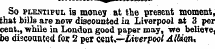
^^ So plentiful is money at the present moment , that bills are bow discounted in Liverpool at 3 per cent ., while in London good paper may , we believe , be discounted , for 2 per cent . —Liverpool Aibimx
Untitled Article
NOMINATIONS TO THE GENERAL COUNCIL . LIVERPOOL—TOXTETII-PARK , Charles Hook , painter . George Rigg , cordwainer . Wm . Jones , painter . Samuel Morri ? , blockmaker . Thomas Hodgson , brass-turner . Richard Parry , stonemason . George Rigg , cordwainer , sub-Treasurer . Charles Gwilliam , bricklayer , sub-Seoretary .
BAHNSLEY . Robert Garbut , weaver , Indle s-fold . James Noble , basket-maker . New-street . Btnjamin Bailey , weaver , Kingston-place . Wm . Hilton , weaver , Old Town . George Haigh , weaver , Burton . ThomasLingard , news-agent , New-street . John Pettett , weaver , Theatre Yard . John Armitage , weaver , Pall Mall , sub-Trea surer . Patrick Bradley , weaver , Wilson Piece , sub Secretary . BEITANNU , UPPER CHAPMAN-STREET , ST . GEOKGES ' S
IN THE EAST . William Jinkins , shoemaker , 51 , Nelson-street . James Jagofc , shoemaker , White-street , Bethnal-Green . George Hall , carpenter , Ely-place , Globe-lane . Nathaniel Cannon , bootmaker , William-street . John Robarts , bootmaker , Star-street , Commercial-road . Richard Thomas , shoemaker , Star-street . William Bain , shoemaker , Flying Horse Court , Moorfields . William Henry Wilkins , shoemaker , Norfolkstreet , sub-Treasurer . James Hammond Knowlea , 6 , Windsor-street , Biohopeate , sub-Secretary .
CHESTERFIELD . Thomas Taylor , bobbin-nett weaver , Beetwell street . Franois Barnes , smith , Lord ' s-mill-street . George Perry , smith , do . do . Samuel Hawley , smith , Boythorpes . John Rycroi ' t , twine-spinner , Silter-gate . Robert Bown , labourer , St . Mary ' s Gate . John Savage , engineer , Giueman Gate . John Briddon , cordwainer , Boetwcll-street . Thomas Throsby ,-warper , Hollis-lane . John Williams , hatter , Brampton , sub-Trea surer . John Wigley , Bobbin-nett weaver , Beetwell street , sub-Secretary .
MILNROW . Mr . James Milnes , weaver . Mr . John Clegg , fuller , Lawfield . Mr . Joseph Lawton , weaver , ditto-Mr . Thomas Lawton , ditto , ditto . Mr . Henry Clough , ditto , ditto . Mr . Thomas Miliigan , ditto , StonepHfield . Mr . Rebert Clegg , ditto , Milnrow . Mr . Robert Milnee , ditto , Moor-Heuse , sub Treasurer . Mr . John Butterworth , ditto , Stonepitfield , sub Secretary .
DERBY . Mr . J . Jonson , silk weaver , Liddel ' s-lane . Mr . Bibbey , cordwainer , Bridge-gate , Mr . Tatem , gardener , Willow-row . Mr . Symons , smith , Walker-lane . Mr . Peet , framework-knitter . Mr . Wheildon . tailor , St . Peter ' s-church-yard Mr . Thomas Alexander , tailor , Brook-street
NOTTINGHAM . Mr . John Braraor , Collect-street , Blond-lane . Mr . Benjamin Humphries , framework-knitter , Lee ' s-yard Narrow-marsh . Mr . James Middleton , smith , Ilkeston-road , New Radford . Mr . Joseph Green , warp-hand , Paradise-row . Mr . John Baum , framework-knitter , Abingeretreet . Mr . William Rayner , bobin and carriage hand , Martin's-yard , Narrow-marsh . Mr . John Day , plumber and glazier , Saint Ann ' sstreet , York-street . Mr . George Clarkestone , lace-hand , Bloomsgrove . Mr . Charles Roberts , tailor , Hockley . Mr . John Morsley , lace-hand , Narrow-marsh , sub-Treasurer . Mr . Isaac Barton , framework-knitter , Cherry * street , sub-Secretary .
NORWICH . Mr . Edward Davis , cordwainer , St . Paul ' s . Mr . Thomas Hewitt , weaver , do . Mr . William Clarke , do ., Clements . Mr . John Stanley , do ., St . Pauls , sub-Secretary . Mr . John Middleton , do ., Maxtin's-plaee , sub-Secretary .
Untitled Article
ANOTHER VICTIM OF CLASS TYRANNY . Ou Friday evening last , Mr . James Cartledee , the Secretary to the South Lancashire Delegates , was arrested by Mr . Inspector Irvine , en a charge of using seditious language at Mottram Green , on Sunday , tho 14 th August Mr . Cartledge ¦ waa conveyed in a coach to the Town Hall , and consigned to the lock-up underneath that ; building . A great number of papers and boeks were seized , consisting of Chartist Circulars , Northern Stars , and portraits given with that paper , together with a quantity of children ' s school books . Air . Cartledge having for seme years back conducted a seminary for the instruction of youth , in -which capacity he is much respected . A box fuil of books , belonging to Mrs . Caitledge ' s brother , trero also- taken to the Town Hal ] , where they W 6 re subjected to a rigid scrutiny .
Mr . Cartledge baying been kept in tho lock-up from Friday until Monday , -was removed to Hyde , accompanied by Irvine and Cross , for the purpose , as the Hyde magistrates informed him , to hear tbe depositions ajaicst , him read over , at the same time telling him there were other charges against him of a serious nature In Lancashire . The depositions were then read and sworn to , and Mr . Cartledge asked if he had ar . y questions to put to the witnesses , the Chairman advising him to be cauiious , as his questions would be ¦ written down and appear against him on bis trial . Cutledge , bo-wever , put a few questions , and elicited from tbe witnesses that they were officers in tho Cheshire constabulary force . Cartledee declined saying anything in defenee , and Captain Clark having eonsuited his brother magistrates , stated that it was a bai : able effance , and ordered Cartledge to find two sureties in three hundred pounds each , and himself £ n six hundred pounds , to apptar at the nest Chester Assizes , and to give forty-eicht hours' notice .
Notwithstanding the exorbitant amount of bail demanded from this poer man . such was tbe conduct of tbe magistrates that they refused to take four sureties at £ 150 each , instead of two at £ 300 . I applied for liberty to see !> 3 r , CartU dge , which waa readily granted , and I was locked up -with him in his cell for some time , and after consulting -with him concerning his bail , he desbed tbat 1 -would make it known to tho public , through the columns of the Star , that he received the btst of treatment ut the hands of the Manchester officers .
3i3attx\Rdpis, Ice.
3 i 3 attX \ rdpis , ice .
Untitled Article
THE NORTH ERN STAR .
-
-
Citation
-
Northern Star (1837-1852), Oct. 1, 1842, page 7, in the Nineteenth-Century Serials Edition (2008; 2018) ncse-os.kdl.kcl.ac.uk/periodicals/ns/issues/vm2-ncseproduct966/page/7/
-