On this page
-
Departments (3)
-
Text (10)
-
Untitled Article
-
Untitled Article
-
Untitled Article
-
Untitled Article
-
Untitled Article
-

©q Meaxtevp awn (£omjspomi*M$.
-

neld THE LATE TRIALS.
-
Untitled Article
-

DEATHS.
-

Untitled Article
Note: This text has been automatically extracted via Optical Character Recognition (OCR) software. The text has not been manually corrected and should not be relied on to be an accurate representation of the item.
-
-
Transcript
-
Note: This text has been automatically extracted via Optical Character Recognition (OCR) software. The text has not been manually corrected and should not be relied on to be an accurate representation of the item.
Additionally, when viewing full transcripts, extracted text may not be in the same order as the original document.
Untitled Article
" 2 fraBdessly , deliberately , certainly , and -with the approval of tlie three political parties , aristocracy is stoat to throw the noose over the neck of a betrayed » nd deserted people . -The ' niwidale of onr modBrnPhsjoah i « on the ere of " going forth—and , after the date of its issue , every masculine mind bom in this kingdom is to be destroyed . " " Tbe snperacription of this measure mightjosfly be jjTjjanny unto tyranny . It is a real scorpion—eomj getely fonneriv although , Mjefc , only Id thB egg . There « re da'ws to it—venom—a sHns , aye » a sHna . "
" Tkereisuie oarbeiand poisoned vxapm _ wtih lohidt j £ ntfs& liberty istoie thrud through . The poor ifciiaren , d oomed to pay ont of the scanty -wages -which legalised moDcpoly leaves to them the possibility of earning , no Jess s sum than threepence a -week to the schoolmaster appointed to cram them triEh maxims of slavish moxajjty , extracted from priestly superstlBan—forced to ^ jbserre fee sairit-daya of the church , and to submit to the ednc 3 tional management of a clergy , saturated wiQj fnTolons traditions of popery—released from the toil of earning wages only to undergo tte toil prescribed by men -who seem to have got np this measure as a plsnsj-Yile pretence for g harrng these earnings -with them . "
" TYiihin one generation , unless , indeed , government is made to rest epos the broadest principles of democracy—civil and religions liberty "will , nnder the operations of this act , be extinct Great Britain -will be ridden over , from end to end , by nobles , ' Bjnires , and priests ; and dnrkuftUB , worse than Egyptian , -will gnperrene . * :. ' ! There , reader I look at that 1 Most not this bill for educating the pooi factory workers be a Eonstroatj ! I Was ever anything half bo hor-¦ rlble since &b day of racks , thumbscrews , fires , and
each ofher devilment ? 1 I 3 it wonderful that piety ferns -np its eyes aghast , and that the children of Dissent gather id their conventicles to oppose tbe progress of this awfol pageant 11 This they are doing , and in right earnest , "too . Even while writing ibis , we hare bees interrupted by the first ^ tep in the pious dance . Tbe convenriclers of Leeds issued this Thursday morning , small circulars , addressed pers-Bonalljto fiie "brethren , " of "which one happening to fall into our hands ire giTeit here : I * eis , Marci 22 nd , 1843 .
«« G 0 TES 5 HSST ? L » 3 <>? EDCCAII 03 . " THE SBTf JACTOB . T BILL . o stE , — Toa are earnestly requested to attend a meeting to be held in the large room of the Commercial ' Bnliaings , Toxobbow , ( Thursday , } at Tyeltb o'Clock precisely , to consider the Government Plan ot BdacsHon , contained in tbe 2 f ew . Factory BUI , as it affects the liberties and interests of the country at large , and of Dissenters of all denominations , and espeieiaBy to its 'bearing on exi * &E £ gnnday Schools and Bay Schools ; and t » adopt snch seasnres as may appear necessary at this important crisis .
" As the Second Beading of the Bill is fixed for Tridav next , there is no time to be lost . ** PoBKual attendance is requested . " We are , Sir , *• Tcurs Respectfully , «• Thomas Scales . - " James Mcsgbatb . - " James Bichasdsos . " Edwxjd Baxnes , Jim . ''
Of these four parties , the first is an Independent Minister ; the second is a Methodist Alderman ; the third is a BapSst Attorney ; and , the foarth is , every body knows , Young Keddy " , of the Mercury . "W e happen to know that some time ago , when the Rev . Thoxas Scales was requested to affiy his signature io a petition on thi 3 same subject—Pactory Legislation , ( the object of the petition being favourable to the ebfl&ren , ) he objected to do so , his objections being purely pion 3 ones . "It was uot for him , a Minister of the Gospel , to interfere with politics I" We ware curious to hear what new light had broken in upon Mr . Scales that he should now be the first of the conveners of a meeting on this sinful
subject . For this and other reasons we laid down our pen and went to the " exhibition " , and truly a pretty exhibition it was . Brother Noncon . had sounded the key note ' , and the choir of holy orators kept admirable time and chord . Indepedency , Baptism , Methodism , Unitarianism , Quakerism , and almost every Other form of Mammonism ehatmied their staves respectively ; and through each octave of the long-drawn pceon , " churchism / ' " priestcraft , " 0 tyranny" and "robbery , " was still theburden of the song 2 The people were all damned now and everlastingly ! There was no hope for factory workers , if fins Bill shonld pass . JSngland would soon , poor country , be
- " Afraid to know itself . " All the enlightenment of modern times—all the blaze of science , and the glare of gospel—all , the benefits of intellectual culture and the march of mind—all tha . ; makes England proudly to be looked to as the laud of learning and of freedom ;—all ; all was to be engolphed ; all trampled m > der foot , by this ** huge , horrid , ill-favoured monster , " the Education of the factory-workers under the provisions of this Bill 2 They pray , therefore , most piously , that it may not pass 1 and they implore , by their resolutions , that congregational petitions may be forthwith got
up by every shepherd © f a Dissenting fold , against iha enaction of these provisions- for the education of factory workers . True , they profess ttemselves to be , in the abstract , favourable to the education of the poor ; but think the . absence of each educat ion to be iifiniiely better , than ite accompaniment to those children , whose parents do not objesl io i / , byreligious instruction from a clergyman ! How very consistent and how very reasonable are these pion 3 gentlemen 1 At thi 3 very meeting It was a
favourite topic of enlargement with the Reverend speakers , that the general ignorance and brutalised habits of the lower classes of society was lamentaklfi , and was disgraceful to the ministers of the Established Church , whose duty it was to instruct and teach them ; and yet , with the same breath they declare determined hostility to this measure , « mp ] y , and for no other reason , than because it protideB fiat those ministers shall instruct and teaeh as many of them as do not object to it !
We have no doubt that these zealots will appeal to the people in furious harrangues , in the hope of damaging , through a mistaken r-eligiona feeling , this reaBy useful measure ;—useful to the poor , and necessary for them , though not , perhaps , the most palatable to the pillars of the churches , " " who occupy green pews in the chapels . "We think it therefore right to lay fairly and simply before them the provisions of this bill in regard to education , that they may be able to estimate fiis honests of the appeals made to their
prejune presume ihat none will controvert the opinion flat fcLckry workers ought to bs > edncaied ; that means for acquiring at least the ordinary branches of elementary edncation ought to be aSbrded them ; and that whatever system or circumstances may leave them destitute ot these is bad , and ought to be amended . Such is our opinion . Suea , we doubt not , is the opinion of all , save those nlo miy be Erectly interested in the slavery of iactory workers , ( to which ignorance and brutality tivajs conduces ) ; and those who , like the Leeds conTenficlers , may be indireetlj interested therein ij h&ng dependant upon their oppressors . Even these
* 5 B not demur Openly ; and wo presume that none but ibase will demur covertly to the doctrine that edncat »* in itself is a good thing , and that every oppor-^ nmj of extending it to those who are destitute of it , ihsmli be embraced and improved . The expei [ eaee and observation of the Inspectors appointed iniderthe present Factory Act , has demonstrated fiat the operative population of factory districts is BKst lamentably destitute of the means of getting eTenfli 6 commonest rodinwsits of education . Mr . Lhwabd HosifiB , in his last reports , drawB the fol-^ "Bg picture of the condition , a 3 to the means of 6 diaa *«> nJ of the extensive factory districts-of « hten-un der-Lyne and Oldham : —
"Thepopulation of the three adjoining towns of Afihtoa , Dukinfield , and Stalybridge , included within an area of a mile and a half ladiuB from the ttost central part of &b district , jb considered to be hot less than 55 , 000 ; and the proportion of the work-* " 0 populaRen , that ia , those below the Tank of ^ keepers , has been estimated at 80 per cent , in Ashton , S 0 in Stalybridge , and 94 in Dukinfield . "om this estimate « is evidesti , that there mnst be B 8 T « ra ! ihouBand children whose parents cannot *^ rd to pay more than a very Email sum for their Wwasien ; and there are probably verj many who WoBld find j t ^ iffi cait to pay any fees , however bmSL Eow liule the moral and religions improve-
Untitled Article
ment Of this large number of the humbler classes has been hitherto an object of solicitude , the following facts will show . w In the boroagh of Ashton , with a population of 25 , 000 , there is no National School , no School of the British aad Foreign School Society , nor any other public day-school for the children of the working classes . The same is the case in Stalybridge and in DoMsfield , with the slight exceptions I shall now state . " I mentioned in my April report that a National School had been recently built at Stalybridge ; but I regret to say that it is not yet in operation . The Rev . W . W . Hoare , the inenmbeni of toe new dinrch of St . Paul , with which the school is connected , and to whose activity the establishment of it is mainly to be ascribed , on the 28 th of September wrote to me as follows : —
^ a * l am very sorry to inform you that we still continue in difficulties , and are not yet opened as a National School . We are still in need of funds to complete tiie school , and require an expenditure of at least £ 150 before we can be fit to commence as we ought . * u I visited the school last weeek , and saw with regret so excellent a building untenanted , with the exception of a small number of children taught by a private master , who has been allowed to occupy the unfinished room for the present , when a moderate sum would make it fit for the reception of 630 scholars . -
u I also mentioned in my report of the 6 th of April last , that a National School had been begun at Dukinfield ; but , at present , it is no more than this ; that by means of a grant from the National Society , about 100 boys are taught iu a hired room : there are no girls in this school ! A school-room is attached to the Roman Catholio Chapels at Stalybridge and Dukinfield : the former is open as a day-school , which is attended by about 100 children ; and as an evening school , at which the average attendance is about 200 : at the latter place , there is only an evening school , attended by
about 100 children . At Ashton , a room is rented for an evening school for the Catholic population , at which the average attendance is about 200 . M With these exceptions , bow inadequate to the wants of the district I need not say , no other publio day school exists ; and thus the education which the children of the working classes receive , ttust be in a great degree confined to the Sunday-schools , and entirely so in all those case 3 where the parents cannot afford to pay thefee 3 of private schools , which are never , I believe , lower than three-pence a-week for the most elementary branch .
"Unless the case of this neglected district be iaken up by the Government , and a large sum be expended in the establishment and support of schools , it must continue to be , what it is at present in this respect , a reproach to the nation The working people themselves cannot supply the means ; it cannot be reasonably expected that they will be raised by voluntary subscriptions among those who are above tbe working classes ; nor could an adequate sum be assessed in the district with any justice , seeing that the proportion of those in easy circumstances is so small . " The foregoing is from the Factory Inspector ' s Report of October last . In the Report for January of tbe present year he returns to the subject , and says : —
u adjoining town of Oldham is quite as destitute of day-schools as the Ashton district was represented to be , in my April and October Reports of last year . This town , including , within a circle of a mile and a-half radius from the centre ( which comprises all the populous portion of the township ) , a population of 45 , 000 , and considered so important as to have had since 1831 , two representatives in Parliament , is at this moment withont one pubiio day-school , for the children of the working classes ; for the Grammar-school and Bluecoatschool cannot be considered practically as available to the labouring population ; tbe former has an endowment of £ 30 a-year , is a building of one Btory , eighteen yards by six , without any play-ground , and
teaching seventy scholars , principally the sons of the shopkeepers "; the latter is an endowed school for boarding , edne&ting , &c , boys from the parishes of Oldham , Manchester , Eccles , Ashton , Middleton , Rochdale and Ssddleworth , and there are at present 100 scholars . There is also an infant school connected with the St . Peter ' s district Church , attended usually by about 100 . But these three are the only publio schools within the township : hitherto there has been neither a National School , dot a school ol the British and Foreign School Society ; but a National School , to which the Education Committee of the Privy Council ha-ro made a grant of £ 700 , and the National Society one of £ 300 , in connexion with the parish church , iB now building ,
" Taking the population of tbe Ashton district , within a circle of a mile and a half radius from the centre of Ashton district , at 55 , 000 , together with the above population of Oldham , and allowing 5000 for tbe population of the space between the two districts , we have an area of about eight miles by four , containing a population of 105 , 000 , of which , according to the most correct estimate I have been able to obtain , at least 90 , 000 earn their subsistence by weekly wages , and in which , at the date of my last Quarterly Report , there did not exist one public day-school for the children of the humbler ranks ; and in which there is not , at this moment , one medical charity , for in this respect Oldham is as
destitute as Afihton . There may be equally deplorable cases in other parts of Great Britain , —I hope there are not ; but in so far as schools are concerned , as education has been so much an object of attention for a long period in Ireland , it is net probable such a one could be found in that country : and I question very much whether , in any part of tbe civilized world , out of Great Britain , a parallel case could be met with to that which I hare now described . I cannot help wishing that while vast sums have been of late years sent out of the country to convert the heathen in distant lands , more consideration had been given to the conversion of the heathen in this portion of our own land .
M It is hopeless to expect that fnuda can be raised in the district itself , 10 establish and maintain an adequate number of efficient schools for this population , among whom the number of persons in easy circumstances ib comparatively so small . Unless extraneous aid be afforded , it will remain in its present state of barbarism . ' To meet this proven and palpable want of the necessary means of Education , the Bill provides that there Bhall be schools in every factory district ; that to these schools shall be efficient masters and
mistresses , property qualified to instruct the children ; that they shall be properly provided with books and other necessary apparatus of learning ; and that to secure this , the schools Bhall be severally managed by a committed of seven persons , to consist of one clergyman , two churchwardens , and four other parties nominated by the Magistrates—two of them being , if practicable , factory masters . In' these schools the children are to learn reading , writing , sewing , knitting , and Such Other branches of elementary instruction as may
be suitable to their age and circumstances They are all to learn to read the Holy Scriptures ; and the school is to be opened and dosed by prayer ; the Lord ' s Prayer being used for that purpose ; that and some select text of Holy Scripture being the only words used . The children are to attend these schools three hours every day ; and out of these three hours the clergyman may , if he ehoose , devote any period not exceeding one hOUT to the religious instruction in the Catechism and Liturgy of the Church , of all those children whose parents do not object to it . But it is expressly
provided" That if the parent of any scholar shall notify to the Master or Trustees that be desires that such scholar on the ground of religious objection , inay not be present at the periods when such Catechism or portions of the Liturgy are taught as aforesaid , it shall not be lawful for any person to compel snch child to be present ; and it shall not be lawful for the Tru 3 tess or Master of the said school , or any other persen , to give or permit to be given in the said school any religions instruction to such scholar , except the reading of the Holy Scriptures as hereinbefore appointed ; and such child shall at such periods be ins rucled in some other branch o / ArnetPledge taught in the school "
It is also provided—* That the Master shall cause the Bcaolaxs of every such school to attend under his care the Divine Service of the Church of England as by law established , at least once on every Sunday , in the Church or Chapel of the Parish , or Ecclesiastical Distriot wherein snch school is situated , except any scholar in respect of whom the Master iB satisfied that he will attend such worship in that or some other Church or Chapel , or that he is prevented from attending by any reasonable impediment , or in respect of tehem hit parent shall notify to the Master thai , on the ground irf religious objection , he desires inch scholar not to attend the worship of the Church of England- "
The 72 nd , 73 rd , and 74 th clauses provide that wherever there may be within two miles of any factory a National School , or a school of the British and Foreign Schosl Society , efficiently conducted ; or wherever & factory-master may choose to have a school of bis own , efficiently conducted , the children may not attend the appointed factory Bohool at all ; a certificate of attendance at one of these schools
Untitled Article
being deemed quite sufficient ; and every Roman Catholic child may attend the Roman Catholic school , —tbe certificate of the Catholio schoolmaster being quite enough . So that the sum of the whole is just this : the Bill provides that there shall be schools which the otoldrea shall attend , and in which they Bhall be properly instructed . That if a factory-master choose to have a school of his own , it shall be a school , and not a mockery ; that he shall not assemble the children in the firebole with the firer-up for the schoolmaster and old scraps of newspapers for books ; and call
that educating tbem ; that as many parents as shall ohooae to have their children instructed in the catechism and liturgy of the Church of England , may have them so instructed ; that those who object to this L * ve nothing to do but Bay so , and it will not then be forced on them : their children will then receive bo religious instruotion save the mere reading of the Bible , and the repeating of the Lord ' s prayer ; and the time whioh others spend in learning the catechism and liturgy will be spent by then ** , in reading or writing , or Borne other useful occupation of the school .
ThoBe parentB who choose for their ohildren to attend Church may hare them taken there ; those who do not may take them to chapel , or where else they please . Now , this is really the whole sum and substance of the education clauses of this bill , about whioh the milllords , and their co-mates , the Dissenting Parsons , are making such a hubbub . ' We leave the people to exercise tbeir own common sansa &s io whether this be the real or ostensible ground of objeotion to the Bill ; we believe the latter . We believe the real grievance with these parties to be , that
the bill provides for the further shortening of the children ' s hours of labour ; that it makes it imperative upon their masters to aee to their being educated ; and that it provides more effectually than tbe present law for the punishment of those who violate or tamper with its provisions ; and we trust to the good sense of the people to keep them from rendering any help to the opposition which we believe to be thoroughly hypocritical . We are the more strengthened in this belief , from the fact , that while the brawlers affect to desire universal education , they raise a clamorous outcry ,
not for the modification , but the absolute with * drawal , of this legal provision for a « ase which they dare not contend not to bare been satisfactorily made out as one of paramount necessity . They do not ask that the influence of the clergy should be withdrawn from these schools , and that they should be placed upon the footing of the Irish National Schools ;—they do not ask that the constitution of the trusteeship may be altered so as to give the ratepayers a control over the schools ;—this might have borne something like sincerity upon the face
of it . But they ask that the whole thing may be withdrawn , and the matter of education remain in the disgraceful state in which it now exists , as shown in Ashton-under-Lyne and Oldbam , and in the newspaper school- books of the Pudsey raillovmers 2 Let it be remembered that the question with these pious gentlemen is not between the Government scheme of education and a better ; but between that and ' none : and that they prefer none at all ! So much for piouB dissenting liberalism !
The Short Time Committees , at the instance of Lord Ashley , are getting up petitions praying for a clause to be introduced into the Bill limiting tbe labour of all factory workers between thirteen and twenty-one years of age , to ten hours per day for five days in tbe week , and eight hours on Saturdays . This is a rational proposal ; a step in the right direction ; and the following paragraphs from the petition furnish for it irrefragable arguments : —
" That yonr petitioners bpg mo 3 t respectfully to remind your honourable House that the most eminent medical practitioners in tbe kingdom have declared , that twelve hours of actual labour per day is more than can be endured , without serious injury to the most healthy and robust adult , and that ten hours of actual labour per day , is as much as can be performed , with impunity , by young persons under twenty-one years of age .
" That your Honourable House must be aware that young females above the age of thirteen years are now subjected to twelve hours of actual labour per day , to which including proper time for meals , and going to and from their work , will engross fifteen hours out of the twentj-four , which mnst deprive them of all opportunity of acquiring that domestic knowledge which is so absolutely necessary for young females to possess , before they become wives , and mothers offamiheB .
"That your Petitioners are further of opinion , ihat no necessity whatever exists for such long hours of labour in factories , and that the continuance thereof ( while they seriously injure those young persons ) will be unattended by any benefit to their employers , or to our commercial interests generally ; but , on the contrary , a limitation of labour to ten hours per day would have the salutary and beneficial effect of equally distributing labour to the artisan , and of adding stability to oar manufacturing interests , " We are amazed , however , that the Short Time Committees , should overlook the really most
objectionable part of tbe whole Bill ; the part so objectionable as even to have elicited the praise of" Neddy . " We mean , of course ,, the proposal to admit children into those moral pest-houses , the factories , at eight years of age . This alone will do much to obriate the good which might result from other portions of the Bill . We do think that some effort shonld be made to prevent this retrograde movement from nine years of age to eight . With this alteration , we Bhoulu be V « y wary of counselling opposition to the Bill . Many of its clauses are very good . The educational provision is not , certainly , all that might have been desired ; but it is at least a step towards it . It is at all events infinitely preferable to none at all—infinitely preferable to the newspaper scraps of the forty
gentlemen at Pudsey . We cannot , therefore , join in the opposition Bet up by the sleek-faoed convftnticlers , and demand the simple negation of these clauses . We doubt not that if the people let them , the clergy of the Establishment will turn this educational provision to tbeir own purposes . But they may be prevented . The Bill itBelf provides sufficient means for the prevention ; and , as it is the people ' s business , we think the people may be safely loft to see to it . Barring this—the « rght years of age clause—without by any means according our entire approbation to this Bill , we do feel inclined to regard it . even in
its present shape , as one of those useful palliatives by which a superficial evil of great magnitude , and most painful character may be , to some extent , alleviated . While we still point the people to the only true remedy— the extinction of class legislation —out of which this foul evil first grew , and by which it is sustained ! It wonld be still more efficient for its purpose if the rate-payers bad the appointment of tbe trustees ; and if the conventiclers are sincere in the line of opposition they have taken , they will turn their attention forthwith to that point , instead of continuing to oppose the measure as a whole .
Untitled Article
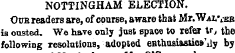
NOTTINGHAM ELECTION . Oxtb . readers are , of course , aware that Mr . WAiVBB is ousted . W © have only just space to refer tr , the following resolutions , adopted eBthusiaaliea ' jy by the men of Nottingham . Mr . O'Conhok . aas gone to Nottingham . — M That we have suffered under the v » rions oppression inflicted upen us by the Wbjjrg and Tories ; who by tbeir system of legislation V&& selfish laws , have deprived the people of their natural resouroes for obtaining the comforts of life ; reduced the country to the verge of ruin j 9 jai called into existence a fearful amount of Ufjiorality , misery , and crime . We are , therefore , ' convinced that the only means Iby whioh this conription and misery can be
destroyed , ia by placing the legislative power with the people , and protecting them in its exercise by the People ' s Charter . " M That we have ne confidence in those who profess sympathy for thfr people , but who withhold from them those 30 ?^ rights by which alone their grievances can be redressed : and being determined to rid ouTselveg from the perfidy of one party and the tyranur , of the other , we rejoice to learn that Feargua O'Connor , Esq ., has come forward as a candidate to represent ; the town of Nottingham m Paali ? . ment , as we are convinced that be will advocate , jthe rights of all ; and we pledge ourselves to use every constitutional means to secure his re turn . "
Untitled Article
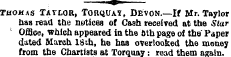
— > Thomas Tavlor , Torquay ., Devon—If Mr . Taylor has read tbe notices of Cash received at the Star ' Office , which appeared iu the 6 th page of the Paper dated March 18 th , he has overlooked the money from the Chartists at Torquay : read them again . Francis Stirras —We do not know anything of the letter . The letter of inquiry has been forwarded to Mr . O Connor . To Agents . —Those Agents who have received their Accounts are requested to send in the balances , or they need not expect to receive their Papers .
Untitled Article
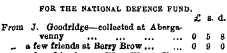
FOR THE NATIONAL DEFENCE FUND . £ a . d . From J . Goodrliige—collected at Abp . rgavenny 0 5 8 „ a few friends at Berry Brow 0 9 0 „ a few friends , per Wm . Wood , Cb . 01-Iey 0 17 „ Ha wick , per J . Hegg . ( Proceeds of a raflU for Star Plates ) 1 10 0 „ a Lovtr of Justice , Chepatow 0 13 „ a few friends at Kilmarnock 0 3 0 „ tbe CU&xtista of Padibam 1 0 0 ,, a few friends at Howarth 0 5 0 „ thtt Chartists at Rippomien 10 0 FOR MRS . ROBERTS . From London , being proceeds of a meeting held at the Fuathera , Warrenstreet 0 14 0 FOR THE VICTIM FOND . From a few friendB at King Cross 0 5 0
Untitled Article
A meeting was , on Wednesday evening , a the Political and Soieatifio Institution , 1 , Turn again-lane , to hear a lecture from Feargus O'Con nor , on the reoent trials at Lancaster . Admittance Twopence . The time announced was eight o ' olock ; but such was the excitement , that long previous to seven o ' clock every avenue to the Hall was densely crowded , and even at that early hour hundreds left tbe spot , convinced of the hopelessness of obtaining admission . About eight o'clock Mr . O'Connor arrived , and with considerable difficulty made his way through the dense crowd whioh surrounded the doors , and on being recognised was greeted with great applause . Mr . Walter Armstrong , having been called to the chair , briefly addressed the meeting , and introduced Mr . O'Connor .
Fearqus O'Connor , Esq ., on rising , was loudly cheered , and commenced by stating that it was a mo 3 t pleasing duty which devolved upon him to show the folly of their opponents , and the wisdom of his own party . Wheo he looked from that platform at the immense mass of working men before him—men who were the most industrious—the most valuable of all human , beings , —he could not avoid reflecting that they were a little after time . If , seven years ago , when he was struggling almost alone for these principles , they had hold meetings like the present , this one would not have been needed . Seven years ago they had a difficulty in getting as many into a small room as would make it warm ; now the difficulty was to make a large room cool . But though
they were la , te , he trusted they weie not too late . ( Hear , hear . ) He trusted that in these days of increased luxury to the upper classses , and increased poverty to the labourers , it was not too late for them to make their rulers learn to act with discretion . Their rulers were opposed to the people being represented , but ho hoped that the Government was , represented ia that meeting by their gentlemen in blue ; if the dogs in office weru not there themselves , he hoped they bad sent their terriers , and they would report every word that he s&id , and tell their employers that he was determined to continue the struggle until their object was achieved . —( Cheers . ) They were not assembled for the mere purpose of a recapitulation of that portion
of the trials which had already been laid before them , though their being there was a proof of the manner in wbioh they were treated by the liberal press . If the trials had been reported as fully as that of the madman M'Nanghten , or any Whig or Tory humbug , they would not have wanted to hear more upon the subject . He should explain to them the reason of the trials , the result of them and the feeling of the country upon the subject . The trials meant that the Tories wanted some of their ancient food they had : been accustomed to live on , persecution ; they wanted some of their old meat ; they were becoming dry and starved up , and so determined , that some , one should suffer . The Chartists they considered to be the weak party , the party they
could most successfully convict with severity ; they asked themselves of what party the jury-class was composed , a ' jd though they admitted that the League was their greatest enemies , yet they were considered too strong to be safely attacked . The YVhig 3 hr . d tried the experiment on . the Chartists with safp . ty , and the Tories tried to follow in their wake . When the manufacturers in August last had driver , labour into a revolt against capital , when they had endured until , as Pilling said , they swore they WO'ild suffer starvation no longer ; when they were turned out , for they did not turn themselves out ; * ' nen the reflecting portion of them saw that it was useless to strike unless they also struck against the House of Commons . The League bad turned them
out to get their darling measure of " Free Trade all over the world" made into a law ; and then they would have forced them into work again for what wageB they were pieased to give . From August to October not a word bad been said about the late trials . Government had sent down an agent to ferret out who were the real offenders ; they sent down to the guilty party to ask- them the cause of the outbreak ; they , of course , said it was not them , it was the revolutionary Chartists ; and being magistratesvthey arrested every man who had been a leading Chartist and sent them to prison , and examined a host of witnesses , sot one of them , except the arch-traitor , had been brought against tbem at tbe trial ; in fact , Gregory , the Government agent , saw he was in the
mud , and not knowing how to get out , plunged deeper into it . The papew represented it throughout the world , that they were a band of conspirators , and that Feargus was guilty of little short of high treason . This was tbe Time * version of the affair , in revenge for bis having attempted to throw Walter at the Nottingham election . The middle classes were disgusted with the Tories on account of the Income Tax ; the landlords liked apt the free trade doctrines of tbe Tariff ; but all united , that they might not weaken the hands of the strong Government in putting down tbe revolutionist Chartists . If Feargus O'Connor was allowed to go about tbe country advocating measures but little short of high treason , all ; would be endangered , and the only means to stop him was to arrest hiuii He was to
Untitled Article
have gone to Manchester with the policeman , but being an old soldier , ha got over them —( cheers ) . Fifty nine men they locked in tbeir dirty cells until it saited their purpose ta bring them before the medern Jeffries , ( Lord Abinger ) , who not only made a new Jaw , bat also a ' new crime ; and the fifth count of the indictment was framed to meet that orinre which the Judge who jtried them said was no crime at all ; the Government not daring to trust thsir case to ] a common Jury , fearing that during the long proceedings some of them might get on the bankrupt list , treated them to a special jury composed ] of magistrates and Leaguers , for whioh the prisoners had to pay . From fortyeight names before them they were allowed to strike off twelve , and this was called fair . It was as
Home Tooke truly said , like picking twelve sound oranges out of a basket of rotten ones . A finer set of men . than tbe defendants who were said to be guilty of little less than high treason , he never saw ; they looked much better than the barristers , and what was more , they spoke better too . Then came the long indictment , of which , though a barrister , he understood not one half ; a greater compilation of nonsense was never put together under the sun . For eight long days they fought them shoulder to shoulder , elbow to elbow ; and it would have been much better for the Government to have left the middle classes in ignorance , to have let the Chartist ? been considered as plotters , than to have set the mountain in labour , and produce only a mouse .
The poor , Attorney-General had been obliged to abandon everything material in the indictment ; and yet for this trivial charge on which they were convicted , had they been so unjustly denounced , and the country so unnecessarily alarmed . The Government might call . lit a triumph , but one more suoh a victory and they would be undone . It was easy for them , having a jury class at their command , having advantage of time and place , and being able to bribe witnesses and purchase traitors , to ensure a conviction . It was hard if tbe strong Government that drew the funds for the prosecution from the nation at the point of the bayonet , could not overwhelm those whose funds were collected from the pence of the poor , though it was eagerly given , and
with sorrow that they conld afford no more . For himself , he had not Bwailowed one farthing of that fund ; he had toiled hard to increase it ; he had not been in bed since Sunday night , and had since then been in Manchester , Leeds , &c . Nothing could equal the surprise exhibited when the Attorney-General said , "Gentlemen , this is the case for the Crown . " A gentleman in court aptly inquired where it was . With all the art that had been used to collect evidence , and to purchase treaohery , it had been a complete failure . Mr . O'Connor then paid a high compliment to Barou Rolfe , who , though impartial as a Judge , as a man was partial to tbe defendants . Pilling , in hia defence , drew tears from an English Judge , and called
the blush of shame into the cheeks of many an English gentleman ; for ; though , as the Judge ob served , it was delivered in a > broad Lancashire dialect , and the language was vulgar and unconnecteds yet it was the language of truth , and many who came to sneer , remained to weep . Mr . O'Connor then recapitulated the language of Pilling , and asserted that from the moment he concluded his defence , he was acquitted . An English Jury could have done no other than acquit him . After eight days trial , the Judge , in summing up , instead of clenching his fist , and calling the defendants rogues and vagabonds , in the style of the modern Jeffries , said , " Gentleman of the Jury , I am sure there is not an Englishman with a spark of pride in his
bosom , or a drop of English blood in his veins , that does not feel delight at'the march of intellect , as evinced in the conduct and speeches of the defendants . " If Abinger had expressed himself in a similar manner , it would have done more to have tranqulized the country than twenty , Special Commissions . The result of jthe trials was a complete triumph to the Chartist j cause ; and , if they had each received three years' imprisonment , it would not have detracted from ; the triumph . They had dispelled all prejudice from the minds of those who crowded the court ; they had created a feeling so strong in i their favour , not only in the town of Lancaster , but throughout all England that the bayonets of the Government could
never put it down now that he had failed . Sir Jas . Graham found that it suited his purpose to say that he never intended to put a stop to public meetings or burke the expression of public opinion . Discussion was the safety-valve of the nation , and if put a stop to , the steam would become of too high a , pressure , and the boiler would burst when least expected . He was accused by the Attorney-General of stating in the Star , that they were justified in turning the strike to Chartist purposes . He then thought he had caught the " red cat" at last . He admitted all this and avowed that if another opportunity occurred he would do it again . If the present strong Government were in the minority , ! would not they turn every circumstance to their advantage 1 Did they not do
so even with their majority of 1151 Wonld not the rotten rump of Whiggery do the same t Look at the League . Was anything too hot or too heary for them to turn to their cause 1 They were even then playing a farce at Drury-lane Theatre , turning buffoons for their own benefit , and admitting the publio at Is . a head . Much more was thought by Government of their twopenny meeting than of the meeting at Drury-lane , where one shilling was paid to see the League make fools of themselves . Peal in his heart and soul was a free trader ; in his tariff he gave the League six times more free trade than they had demanded of the Whigs ; but they wanted it as a means of reinstating their own party . Peel was well aware of the value of jtho support of the
working men . He knew they were the only party who held the League in check , land be wanted that bar to be removed that he might have the appearance of being forced into the measure of Free Trade as he had bflen into Catholic Emancipation , and thereby preserve his character as honest Robert Peel . The Chartists were , therefore , to be put down . The times required a sacrifice , and the disturbed state of the country at the time of the strike would give it the colour of Justice , and when the Chartists were in the stone jog , it was hoped the League would go a-head ; but they had beaten Peel , Russell , and the League combined ; the trials were to have extinguished the Chartist rushlight ; but they had ended in re-illuming it at the lamp of Tory tyranny .
West , after an able defence , had been honourably acquitted . ( Tremendous I cheering . ) There had been no alteration in the law to effect . this ; but it was meetings like the present ; it was tbe determination of the Chartists , and the increasing poverty of the working classes which made them pause in their career . Cooper , for three days , had been battling with them ] at Stafford , holding a Chartist meeting , with the Judge in the chair Before the trials there were hardly any Chartists &t Lancaster or Stafford ; now Chartism was the fashionable doctrine . They should look for their triumph , not in what had been done , but in what they had escaped . If they had been tried by Abinger , in August last , no doubt every one would
have had from three to five years imprisonment , if they had escaped with even that . If such had been the case , he shuddered to think what mighit have been the result ; the j steam would then haw been too highly pressed , j Tne dreadful state of poverty , and the tyranny of the masters , in Noath and South Lancashire , and the distress existing throughout , the country , would have tempted shem to desperate deeds . Sir Robert Peel might calculate that Englishmen were dull , slow to beescited , and not prone to fighting ; but when once determined where was the men to be compared with them , always barring Paddy . ( Laughtrr . ) Paddy was now beginning to show his teeth . You have- allowed the Poor Law Bill , at the point of the bayonet , to
be forced upon you ; you have allowed your homes to be desolated , and your parents and selatives to be inmates of bastiles , and Paddy has seen the result ; and although not so good a politician as John Bull , be has determined never to endure a similar Bystem . Soldiers have been ordered from all parts , and Paddy has met them with his stick in his hand ; and he was told that the stick had a iron spike in the end . This ; , in Ireland , was called moral power , and Paddy was fixedly determined that even if they sent for all the soldiers from China and India , he would never sacrifice his ancient hospitality at the shrine of jthe Poor Laws . Mr . O'Connor then highly eulogized the exertions of Father M&tbew , whom he desoribed as the greatest
moral reformer of the day , and anticipated from his exertions in making Ireland ] a nation of reflective beings , that a cordial union would spring up between the working classes of both countries . The Charter would be obtained ; as soon as they could starve the operatives now on strike—he meant the Whig operative—Palmerstbn , Macauley , &c . ; when they found that the nation felt no interest in the Kirk of Scotland Bill , the Insanity Bill , or the Travelling in Air Bill , and that the Charter was the only means of getting at the ! honey crock , then they would become advocates for the Charter . The only difference between Peel and ] Russell was , that the one was a bit bigger man than the other . The Whiga were no more likely to give the Charter thaa the Tories ; and the League , though professing great liberality » would be as far ] from it as either . If Cobden was prime minister tomorrow , he would be
as anxious to get rid of the agitation for the Charter as ever Sir Robert Peel was , land would not attempt to curtail any of the national expenees . If the landowners would give him the power , of baying iabour at wbat price he thought proper , he keep would up the present system of expence on tbe principle of 11 Scratch me and l'U scratch you . " The League party are the very men who have tbe « w » test interest in withholding representation from the working classes . They live by pressing upon the labour of the working men , in a nrooh larger degree than any other class . A landed proprietor has not a tenth of the men under his oontroul as » manufacturer , and is not so interested in grinding down the price of their labour . The Charter ^ would take the power out of ooth their hands , and give liberty to the whole people . By liberty , he meant liberty tempered with discretion , lioarty for the greatest
Untitled Article
aristocrat , as well as for the working , man ; he had been draggx * d from his home seven times during the hist five yeai'a on various charges . Taree times had he been tried , and four times be had evaded the prosecution . This was hard conduct towards a ge llemen ; but , under these trying circumstances had never given way to his feelings ; he had not endeavoured to obtain- vengeance but justice . Mr . O'Cdnnor then allndei ? to the wretohed description of stuffstyled evidence * which was brought against them , and stated that he told the Attorney-General to take the red box in which it was contained , and send it as a curiosity to the Chinese Exhibition . If SirRobt . Peel , the calm , the patient , thennruffle- * , the indomitable , the vlmid , mild , amiable , Sic
Robert had been treated t « e a few of his dishes , her would perhaps have been aaore exerted , and their would perhaps have fared worse than be bad done . The Legislature by r » fusiijg L&rd Howiek ' s motion- bad shown their detenninatioa not toinquire even into a single branch of the distress ; they knew all about it , but did not wanft to be made acquainted with the details . On Tuesday , they would be pushed to know the causes of the lute outbreak ; and also for inqairy into the conduct of those magistrates who sent me » to prisony and d . » manded such excessive bail for their appearance if released . He thanked God that in the midst of the chaos existing in the Hou ^ e of Commons ever since the Reform Bill , they had one spot of ground on which they eould rest their weary feet , thOOgh owing , his election to a similar franchise as other Membors , —it was an honour , an everlasting h&noar , to Finsbory , that she sent to the House one pilot
to steer the vessel into Jhe harbour . The Irishman , when told that an apple pie was so finely flavoared , because it had a quince in it , remarked how good an apple pie must be , if made of ail quinces ; so if one Duacombe was so good , what would the House of Commons be if tbe ? had in it six hundred and fifty-eight Duncombes . Therewould be no danger tben of indiefcmeflts for conspiracy , no arrests for sedition , but now when bad men coBspire , it was the duty of good men to combine . The object of the Charter was to increase the power of production , and to bring about a better ayjitem of distribution ; the present trammels on labour kept back millions of production , and , consequently , deprived tbe shopkeepers of their profits on this increase of produce . The middle classes bad ever been caught in the trap to put down the Tories ; they did not join the League out of love , but as a > means of putting down the Tories- ^ and they must so ferret them with the Torv lash as to make them
come out for the Charter , as they did for the Reform ? Bill ' , but they must first get rid of such leaders as Macauley and Russell ; they were too ignorant for the age , he doubted whether they onght to be entitled to . a vote under the Charter . —( Laughter . ) As for the League , God forbid that he should ever have sucb a team to drive . He wanted justice for all , and not a mere party measure . As long as he lived ( unless something happened that he was not awareof ) neither Whig , Tory , nor sham-Radical should bar a foot of resting ground . The £ 50 ( 000 of the League was nearly gone , and they had nearly drained him , and yet they dare not accept his challenge . They got their dupes to give Is- at Drury Lane , where they must not say boo to a goose "—where they
had only to open their ears and let in the dulcet strains—to shut theiT eyes , and open their mouths , and see what God would send them . And though they had spent most of their £ 50 jOOO , yet they had actually retrogaded . They had not called one publio meeting—( shouts of " Marylebone , " and cheering . y That was a ticket meeting ; but the free men took the ticket off the donkeys . In this country , the only way to influence the Government , or to alarm their rulers , was to submit a principle to fair discussion , and let it be the adoption of the majority . If the League had treated the public fairly they would have been much stronger than they were ; not allowing discussion , the people suspect that there is error in their way-3 , no truth in their
doctrines . If their intentions were just they would have no cause for alarm . John Bull was an honest hearty fellow , and when be saw that their doctrine was only fit for tbe ticketed ear , he felt convinced there was something not right at tbe bottom of it . They were now going to fill the House of Commons with Corn Law Repealers ; were going to bribe , influence or seduce the electors ; but even if they could obtain a majority be defied them to produce any fo od effect until there was an organic change . Ivery new administration was compelled tofind new officers and sinecures for a fresh brood of hungry expectants , and therefore they never said a word about a reduction of taxation , looking for some little emolument for thsmselves some day .
Mr . O'Connor then showed that the land of the country a century back was divided amongst about 37 , 000 proprietors , and though four generations had sprung from tbeir loins , the landed proprietors were not more numerous now than at that time , all the children being provided for by some sinecure or other . The party who were most likely to assist ia gaining the Charter were the Agriculturists ; not the ones who whistled at Downing-street , but those who whistled at the plough . They were the men who would stop Peel in bis present course ; fur they would soon see that if they did not stop him he would stopthem . Mr . O'Connor illustrated this by reference to Lord Warncliffe , who- was rather a poor nobleman , bis estate being worth about £ 11000
a year . As a cabinet minister he had £ 4000 per annum ; his son had £ 2000 ; his second son was Solicitor General , and as soon a ? a vacancy occurred would be > a Judge with £ 5 , 500 a year , making a total of more value than his estate , besides the prospects of his daughters—one marrying a bishop , another an admiral , &c His political influence was therefore-superior to the interest he had ia the land , and it would be worth his while to abandon his land altogether if he could retain or increase his political power . Mr . O'Connor then drew an affeoting pioture of the miseries inflicted by the manufacturers upon the women and children employed in their factories , and demanded if it WS 8 possible the ; could be- earnest in their profession of
benefiuing tbe poo ? . Was it probable that the men , who , as Magistrates tyrannized over them , and as masters starved them , would , as politicians , be their benefactors-1 When the League had--expended their funds but little-more for a time would be heard of them , and . then , they might dissever the really honest portion of the League from about one hundred and forty of the overgrown manufacturers . Mr . O'Coanor then commented on the conduct of Acland and others of the League ; and ] clearly , demonstrated that the interest of tne shopkeepers was bouad up in that of the Charter , and that oiroumstanees would speedilv make Peel himself a . Chartist , though he could the other night get a vote of eighteen millions of Exchequer Bills- by merely asking for it . But , although Solomon was a wise man , and Sampson ft
string man , yet neither of them could pay money unless they bad got it . He wished , the Income Tax bad . been 19 ; per cent ., and the Property Tax 25 per eent . ; for , when those who put on the taxes were compelled to pay them , they would soon discover that the Assay was not needed—that the police was auselessfojce—thata State Church might with safety be abolished ; and that the Chartists , after all , were a shrewd set of mea . Mr . O'Connor concluded % imploring them not to relax in tbeir exertions for the Charter ; it was worth living and dying for , and they had only to be thoroughly united , and they would then never be in danger of mean !; bending their necks to the yoke of slavery , but would be deserving of the name of Britons , and of the inheritance of the-soil ; and concluded amidst great applause in tbe words of the
poet" Lives there a man with soul so dead , " &c . Mr . Parker briefly moved a vote of thanks to Mr . O'Connor and his brother Chartists for the noble stand they made at Lancaster in defence of the principles of the Charter and the rights of the people at . large . ; Mr . Stallwqox » seconded tbe motion , and trusted they should speedily have an Executive , with Mr . O'Connor for a member , and then there would be no danger of their being enmeshed in the nets of the law . . v The resolution was carried by acclamation .
Mr . O'Comnob , in reply , stated that he scarcely deserved their thanks , for agitation was become so completely his element , that he was unfit for anything else ; and , if he did not meet with an annual prosecution , he should think something was amiss . He was determined to persevere in the same course ^ turning , neither to the right nor to the left , and accepting nothing less , than the Charter . He gave free liberty to every man to investigate and comment upon his conduct , and in return he should claim to denounce any man who turned aside fxOJD . Ma prin ci forif tha first
ples ; , step was tolerated , the after strides became rapid . Mr . G'Conaor then alluded to the History of the Trials he was publishing , and siated that when they had read it , they would acknowledge that their vote of thania was not undeserved : it would be a full and accurate report of all the proceedings ; the reporting alone had cost upwards of £ 30 . Mr . (^ Connor sat down loudly applauded . Mr . Lotett , of Marylebone , moved , and Mir . O C onnos seconded a vote of thanks to the Chairman , and the meeting broke up with ijheera foe O'Connor and the Northern Slar .
l ! b * money taken at the doors was upwards of j £ 9 and hundreds went away , uaable to get admission , the-stairs , committee rooms , &c , being all occupied . Sewn shillings and a penny was paid in by Mr W . Raneall , to the Defence Fond .
Untitled Article
James Young . —Thanks for his letter ; butihe Quaker {? ° \? not worth meddling with . W . H . XiVmm . — We have no double / ram his descHptton $ f the man , that it is Griffin . Carlledge is taller , and has a lame arm . H . D » Griffiths . — We have not room for his letter on the death of poor Shipley in the Pentonville Hell-hole ; but we perfectly agree with him that the verdict ought to have been , " That the deceased , Charles Shipley , died of water on the biain , caused by the mental torture of the separate silent system , the effects of whioh defies all medioal skill . " W . Hamer — West was not tried at Lancaster ;
Cooper was in the indictment , and of course all that relates to him in the trial will appear in the report . W . Daniels . —The notice to which he refers was not intended for him . London Female CHARTiSTS . ~ 5 ' usflnna Inge sends us a long letter to this body in reference to some matters uhich seem to be in dispute among them about the character of some member to whose admission Susanna Inge objected . We cannot , of course , admit their matters of private detail xnto the Northern Star ; but we give the conclusion qj the letter , which seems , indeed , to set forth the object of it ;—
-• It ib a long time since we all met ; and it ia wished that we should meet and come to some conclusion It Is , therefore , agreed that we meet at tbe Political and Scientific Institution , Turnagain-lane , sn Tuesday , the lltb of April , at eight o " clock in the evening ; and I do particularly request that not only thoBe who are members wlU be preaent , but any who may have lef t , the society within thia last three months will come forward and state why they have done bo ; and if I am the obstacle f ean ¦ withdraw ; and if I am not , they will , by so doing ,
remove the Btlgma from me . There ara also some money matters to settle , at which I wish all to be present ; and other business to transact . Let me then entreat you not to be so backward as you have been , but let us begin our new year ia harmony ana Union ; for I have not the slightest ; hesitation in saying tbat all will be settled to our satisfaction wken we have exchanged our thoughts and opinions . With these remarks I take my leave of you , hoping that you will respond to my call . •' And I remain , my Sisters , " To tbe Chartist cause and onr own
" Little Army a true Devotee , " Susanna Inge . " Henry Burnett . —His letter is unavoidably postponed till next week . Error in oua last— In the letter of a coal-miner , the words " turning on another ' s back , " should be " turning one ar . olher back . A Coal-Minkr . — We have not anything in type that would correctly represent the figure he draws . OUR Week ' s Nkws . —The long reports we have given of the Chartist trials at Stafford end Leicester , must this week plead our excuse for the curtailment of some , and the omission of others , of our Correspondents' favours . Such as are not out of date , or as possess publio interest , shall be attended to next week .
©Q Meaxtevp Awn (£Omjspomi*M$.
© q Meaxtevp awn ( £ omjspomi * M $ .
Neld The Late Trials.
neld THE LATE TRIALS .
Untitled Article
un bnnday last , aged 64 , after a lingering illness , Mr . Benjamin Ely , senior , of the firm of MesBra . Benjamin Ely and Son , tiorist and seedsmen , Rothwell Haigh , near Leeds . The deceased was & man universally respected , and his death will be long and deeply regretted . The various floral societies of the neighbourhood have lost in , him one o £ their best and ablest supporters . Lately , at Kidderminster , Ann Taylor , mother of Mr . WilUaia DaaieUa , i ^ w&de . % ' . * j
Deaths.
DEATHS .
Untitled Article
THE NORTHERN STAB : 5
-
-
Citation
-
Northern Star (1837-1852), April 1, 1843, page 5, in the Nineteenth-Century Serials Edition (2008; 2018) ncse-os.kdl.kcl.ac.uk/periodicals/ns/issues/vm2-ncseproduct928/page/5/
-