On this page
-
Departments (5)
-
Text (9)
-

39oetrc
-
Untitled Article
-

t&tbicb>$
-

THE DISCIPLINE OF BEVERLEY
-
Untitled Article
-
Untitled Article
-

4.799,231
-

TO THE EDITOR OF THE NORTHERN STAH
-

Untitled Article
Note: This text has been automatically extracted via Optical Character Recognition (OCR) software. The text has not been manually corrected and should not be relied on to be an accurate representation of the item.
-
-
Transcript
-
Note: This text has been automatically extracted via Optical Character Recognition (OCR) software. The text has not been manually corrected and should not be relied on to be an accurate representation of the item.
Additionally, when viewing full transcripts, extracted text may not be in the same order as the original document.
39oetrc
39 oetrc
BETERLET SIIXSTREL 8 Y . BemarkaMe scoas from ArJaift seal Watching the setting son ' s last ray , On the bars of * be grated window play , Hatsecarea miy living tomb ; jinsiag tipon my straw I Jay , lixriing tiie dose of mother day Of miBery an 4 gloom . Thinking how oft I'd seen that sun , jjise o ' er proud Arthur ' s summit clear , And gild his reverend head ; Opening to view , rampart and wall , Lofty spire and lordly hall , Palace and peasant ' s shed ;
VTtila at his feet the broafi Forth roll'd , A Elver picture framed in ge ' ii , Studded with liring gemi ; On whose white breast the snow-white sailj geem'd a flock of eaglets on the gale , As they her waters stem ; ^ Thiie hill and dale in the bright sun ' s beam , Seem'd creatures of Borne fairy dream , So beautiful they be . Tie Odiils bursting isto day , The beauteous Porth , winding away Majestic to the sea ;
While , eastward , Berwick ' s low appears , His misty crown from his brow he rears , Displaying craig and tree , like some iron-mail'd gisnt knight , Dcfing his helm to lady bright , In gallant courtesy . Rising with opening day , Craig- Millar ' s , turrets , old and gray , Upon the sight appear , Alas ! how changed from that array , When , in thy h *^« , the minstrel ' s lay , Was heard by beauty ' s ear .
0 ! beauteous Smart , thy fat * mi ^ ht teacfl ¦ yrisaom to tou ? s , could it tout reach 7 be precincts of toe throne , ¦ jjsj iiiset head , the teaffuld graced , jiaa ere a courtly prelate placed An English crown upon . See yonder camp ' s entrenched ring , TViere Roman eagles spread thai wing , O ' er cosquea ' s slavery ! There now the mountain ' s daisy springs , &ni Scottish milkmaid gaily tings , On fields of chiTalry .
On yonder hekhts , by Carron ' s flood , Ihe " hardy Scottish warriors stood , Surveying the host below ; One heart-inspiring cry they gave , Iben rush'd , like their own mountain wavej Resisiiess on the fee . In -rain -pro-ad feme h ^ r arts * L ! d try , ysin here , her far-famed chiralry , 'Gainst Scottish liberty . ' In Tsic ber hardy warriors die ; Jhcir dying groans a * sai 5 the sty , For ' Scotland durst be free . ' Witre now the Roman ' s Taunted name f A legend oily telis her fame , But , Scotsnen , where are ye ? Te bear your br ^ ve forefather ' s came ; - — Are -re in spiri : still the same ,
Stern sous of war aad glee ? Is the same spirit in yon nursed , That on the Roman legion bust , Preferring death to skverj ? gsy , were a tyrant ' s flag nnfurl'd . Would freedom ' s Bpeai ' gainst him be hurled , With all your forbears' energy ? Sst , are ye freemEn ? are ye sl 3 Tes , X * tseendanta of th . 6 graat and bra-re , Who bade the invaders £ = e ? Or are ye serfs of the tyrant's soil . Who reap the produce tf your toil , Then throw the husks to ye . '
Say , haTe your gloomy dungeon ' s grown Tocal , with Euffering patri . ts' ibgcji , And must tbey muan for years ? His ita-tare , all exhausted , sinking , Benaith a tyrants UjTixxre , fa nt ? ng , frroacB , muiic for his ean . Is it your public weal and wish The labourer ' s interest and his voice , In all your laws to see . ' Or is us a poer vsssai born , Dcxjm'd iU-requited toil to mourn , A &Uve by ieaves " s aecree ?
&T , -srtst hss made tout country fTeat ? VTa » it jocx worthless lordling ' 8 state , Hi * pride and pedigree ? Or was it those brave hardy men , Wb . 05 e laiour feruKs * ^ ach plain , A vsiVnooi j ^ isantry . ' £ re yaB ~ er £ eld of ripening zn \ n , Aiore whose heia a 2 .- > -very train Oi beauty sheds a shower - But Ten stern tr . nd a lesson shews , He plucks , asd to his duughill throws Each csc ^ f worthless f ower .
They T ^ niy eyes disclose , Their srleadii tints—their varied hues—Pisa-iing tiey 'dora \ hz plvln ¦ Taia all your pleading , he replies , Tour useless glorias I despise , Te osiy spcO my grain . Bat rfop , my wild rebellious muse , Hot care a sIstc write truths liie ihesa Cocpare 3 } ordling to a -wetd . ' TThi'iw you ' re a : btsJ oi -srood a hewer , As-i f- -, r it&iz z " 'A a wuiCT-drawer , Bj G-jd hix-ielf dtcrted ?
For learn , ye snailing slaTe , from the SskLisriw ! ecs :-j ths pou- ^ rs thst be , That iksj are srrai ' sbi fr ^ m God ; For esrt you see , or can ' t you learn , To caib thy loTe of freedom , stern , YcuTe sureiy felt the rod ? Set yon indi ^ tric-ns , tiny nsiisn , laixrarii ;; tteir win d er ' s rrfej-araticn ^ Wirh -sreii ccut « nwe < f hive ; hi -w-: ii-rtcci . 'd Lite , lOTd-lii-.- roc'lning , Etpir . g tie jweets of others tc-iling , Tee aristocntie drone .
G 5 learn froai them , yoa grarabling knaTe , TtaJ wot tins b . es were born to slaTe , And frnctiiy the soil ; lia : pricts are the lord ' s anoicted , And other two leg-cvd drones appK-inted , To reap your arduous toii . Tij B 3 ) I ' 3 fcrLjlit tiircple sc&a , 5 k Diattl in the lion ' s csn , By righteous king ' s decree ; Vio dared , fors o * th , prc-uispruous man . ' — To worship ( xxi on las own pi- ^ n , Agsici-t tie powers tlat be . ' Kobeki Peddle . Itiitae , ISil .
Untitled Article
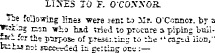
11 XE 3 TO F . 0 COyNOR . Tbe foUowing lines were sent to Mr . O'Connor , by a ^' i- ^ g cs n \ ri . o had tried to procure 3 piping buiifafi . for the p-arpK ) Se of press :. tins to the " " czztd iion , " fcttM not EIlKSrr < icd 15 getting OC-J : — Honsujs -i Sir , —I ' ve tried in T ^ in To hilf dksolTg the tjr ^ T . fs chiiu ; I cansot S-d a tuntfu ! trend , That could to linking mouients lend A n ^ -ic poTr er , and ^ ake them 3 y The patriot Ccli nrl . eodeJ by : "VVeie 1 a finch , J ' . i wirs kt wsy , And car .-1 ail the liTe-k-aj ; d .-. y , Before the m-ssj bari , that tin trcocaor Iirg = rs in hi « cell ; 21 ? ihrua : aii « a . id pom the sweetest strain ; Vi cng—ye tyrani ? , sb-JTe in Tnin , 1 j qucscL a Sosie that bcrns so bncfct ,
And azns thro' grates its raJiant light , D . zusu e hope tiro' Briton ' * JsJe ; Tiit ru . k-js the c-rc- ^ rorn ptisant smile , An-j tilf furgct h : a present w . _ > cs ^ - ' ttp ^ ri the m teaily at a close ; " bea ail shsli baTt ? , n eTery hour , A fair equal : ty of power . Tbas ibuaia lay nous in concert join , Wish tia : Cfurr . se : us heart of thint , otkb . j-aiits f-.-r frteco : n t-o the slzre , And dares with free-: om ' s foes to brare ; iteEiiiding justice for the pour , Despite of bolts atd prisua duor . Fur thois iesj i , unt ind sinew bind , 2 = t a > y ra-are Eua ; iuorfs urc »; nfin'd , Pteaing ic jtg ta ? : e fiigiit , ^ ae coonc it at Jcads . tnjti , ^ jj jjg ^ t , T : " a ' . r : siinpL shail reward thy toil , ¦ and eTrj faco with transport smile !
T&Tbicb≫$
t&tbicb > $
• iERA GE FOR THE PEOPLE , by William roWiJuf" duQ : Strange , Paternosterrau a a VGl k ^ . ^ j neaas £ hc ; iId ^ devised for ** it r ^ i / f ^ . "/ « 5 PtsaKt , ii the bands of the i ** '; j' -5 "• ^ ^ icose places where news-rooms p ^ 2 / *' , ex * i " > i » c 3 r : a ; nh- ii : » a ; to be at ouc « K ' f » 7 T - : abIe 5 o ; ' :: " iU -- ^' -ablisfcJBeats . The 4 ^ mV ° " Pe ° Ple" ^ a ? "ud . doselJ P ^ « d : Uiajyr" T ^ ?" ' of mcre ' •*** SCdpage ? , and con- ; sr-j rTi t' ^ V" p- . ; - ' triuaiioa a ^ to the emolument ? , i C ;> v . _ » l ^" 't ' " - ' ' - ? - ' - ? - —isi ^ ji clisraccr of
Untitled Article
where else within so small a compass , and at so moderate a cost . The work should be found in eTery noble drawing-room ; and if not found so flattering to the pride of the aristocratic " caste" as some other histories of the peerage , it would be of infinitely more UBej as it would dare silently , but sternly , to tell the truth—a thing not always considered of much importance by their serrile writers , who seek to gain the favour of the great by flattering their foibles , and gilding or concealing their vices . The introduction presents us with an abstract of the doings of the Peers in actuality and the Peer 3 in expectancy , from which mo 3 t important conclusions cannot fail to be deduced by all who will give themselves the trouble to think . The public will ,
also , by consulting Mr . Carpenier ' a pages , learn something of the costliness of . the noble idol which so many among them are bat too prone to worship , and of the-icflcence , direct and indirect , which they continne to exercise in wh 3 t certain facetious gentkraen , in their merry moods , please to designate " the Reformed House of Commons . " We are pleased with that spirit of impartiaility and candour which perradfs ihe volumes ; while the incense of flattery is not offered at the Ehrine of nobility , neither has the author dipped his pen in gall , or sought by detraction to injure that estimation in which those of whom he mites maybe fairly held by those amongst whom they live aad mova . Where virtue exists he has not been slow to acknowledge it , and he has ,
while fearlessly exposing acts of public delinquency , carefully abstained from mixing Hp with , when it could be avoided , the matters and things connected with private character . Some of the noble supporters of the inhuman Poor Law might consult these pages with advantage ; we fancy this , while the Duke of Bedford holds estates plundtsred from the Church ( one fourth of which , at least , ought to belong to the poor ) of the value , in oar present money , of £ 48 , 889 13 b . 2 d ., no great surprise can be felt at the anxiety evinced by that noble house to increase the workhouse comforts oi' the " independent labourers . " As a fair specimen of Mr . Carpenter ' s manner , and of the kind of information to be found in the work , we extract the foiiowisg : —
DCTiDiS . BiSOS . Xome . —IawsescE DfSDAS . MotiA . —Essaj ez : — Try . Relations . —Hon . I . Dundas , M . P . ( son )—Hon . J . C . Dundas , M . P . , son }—Earl Fitzwilliam ( cousin )—Lady C . Dundas i sister , and aunt of the Duke of St . Albans )—A . Spiers , Esq . ( brother-in-law )—J . C- Ramsden , M . P . ibrother-in-law . )—[ See further below . ] Places arid Emoluments . —Lord-Lieutenant of Orkney and Shetland . —Amongst his relations are , —B . Lane ison-in-lsw , i Lisutenant-Coionel . —W . Wharton ( brother-in-law , ! in the Church—Hon . Q . H . L . Dundas ( brothsr , ) Rear-Admiral of the Blue , and lately a Lord of the Admiralty—Sir B . L . Donilas ibrother , ) Major-Cknerai in the Atmy—Hon . T . L . Dundas ( brother , > in the Cfcurch—Luiy E . Dundas ( mother ? , ) pension ££ 76 . Church Paironaae . —One living .
" This is said to be a branch of the Memlle family , but we do not know its exact affinity . The founder of the Peerage was a Laurence Dundas , cf Merse , " who was a Commissary-General and contractor to the Army , from 1748 to 1709 , and was created a Baronet in 3 762 . His only son , Sir Thomas , who succeeded hia inlTSi , was elevated t » the Peerage in 1794 , as Bxron Dandas , of Aike , in the county of York . In t 764 , he n-: rjried the Btcord daughter of the third EarlFitzwillisra . by whom he bad ttn children . He died in June , 1820 , and was succeeded by his eldest son , the present Baron .
" Lord DaEfeas was born in April , 17 G 8 , and in 1794 , married Harriet , daughter of General John Hall , by whom he has five children living , three daughters and two sons , both the latter of whom are in Parliament He finished his education aVTricity Culltge , Cambridge , and entered the House of Commons at an early age . He is a Whig in ' poiiiics , and has generaUy maintained a consistent character . In 179 G , he voted with Mr . Fox for a censnre on Ministers , who bad advanced money to the Emperor , without the consent of Parliament In l TS . T , he was one of a miuority of ntuety-three , who voted with Mr . Grey , for a Reform of Parliament ; and subsequently , he supported Mr . Whitbread ' s motion far the imptMkment of uis relative , Lord MelTiile . In the Upper House , be has followed in the same course , although he is not so constant in bis attendance upon Parliamentary duties as the activity of the adverse faction renders it desirable that be should be . "
THE ENGLISH CHARTIST CIRCULAR A £ D TEMPERANCE RECORD FOR"EXGLA . XL AND WALES . Pan I . and II . London Cleave , 1 , 5 hoe-lane , J 84 l . We have looked Through these two parts of the English Chartist Circular with much pleasure , and are g-ad to find that the commendations -we have once or twice bestowed upon single numbers may be ¦ with the strictest justice extended to the whole . The work is real and genuine Chartism , and every Ch 3 rti £ t onght to possess it ; we are sure he car . uot is a , Dj other publication find so much sound political knowledge at so cheap a rate . And htre is food for every fcnd of taste . We have original essays for the studious , tales for the pathetic , biography for the
patriot , measures of Government for the statesman , statistics for : he calculator , and important facts cniJed from the history of the past to serve as examples , or as warnings for the conduct of the future . To the friends ot' Teru rer-nce nlso this interesting Tublic&iion especially commends itself . Mere tr . ey mav Irarn : hs important bearing of the cau = e they advocate upon the vrc ' a-being and the political reireaeratioti cf tills coun ' . ry ; and we trust that ? oun this important yiew of the ractter vrill become so prevalent that it will force it ? eif cpon what is now , through the bigcttcd and factious arraTSKements of Temperance Society Committees , forbidden ground .
rhe lbe ' o \ 3 . ' i plsricna cf every town and riilsge in the empire . We are glid to perceive that some oi : he femes ; friends of democracy are C 0 ntlib'JliB 2 to the ya ^ ca of t he Circular , ai . d we hope thai others ¦ sr ili a : d ; u the same work . Nor must the circulation be forgotten . Nothing but a large sale can keep this publication on its legs ; and we rcould , therefore , urg 6 it upon the serious attention of ail ¦ who vow i 3 . ' Ku it , to use their utmost endeavours each to get a new sub-criber . It is high time tha ; all be ^ jan to work ; we cannot long remain as Tve are ; the snake of corruption is scotched , but it is not dead . Forward , then , and let ua complete the ivurk we have so gloriously be £ raa .
Deplorable Case of Destitvti-:.: * . —On S 3 tnrday aftcnioon an inquest was h » ici before Mr . Baker , a ' t the ThroTVittri' Arms , E-sc ^ -street , Whncchapel , on the boiJy oi' Szt-j . ii Salttr , aged ^ C , whose death was aliened to have been caused by the want of the c . mmon ^ ecsBj-iries of life . Sarah Salter , the decta ~ b < i ' s daughter , said that she lived with her mo ' . fcer , in Greek-court , Essex-street . She had been in a very bad state of health lately , and in Trant of the common necessaries of life . On Wednesday , the vuly iooa tbev bad all that day was a halfpennywonii \> i bread and half a pin : of beer between them . They obtanied ' tLeir living by shirt-mdk ; :- •/ , ' , for 3 jr . Silver , of Cornhill and the Commercial-road , and the
pricethey received for making a shin was 4 d . To liniih two of these shirts , her mother and herself sat up nil one o ' clock on Thursday mornius . Soon ai " t-: r that hoar they retired to bed , her mothtr complajaizg ox a pa ; u in the Lead . She awoke about riven o ' clock , and found her mother iying by her see lif ' . Ie ;? . By the Coroner— " We have been in trie hatit for the last two years of receiving relief in oread irem AVhittchapel fjarJah , ujitil about four mor .: ks back , when tho parochial a'dthorities stopped that reiitf , and refv . si . ci xo i > ass us to our parish ( ulvzVjnj . " The Coroner here requested Hughe-, izt K- licving-ufficer of the parish , wno was present , to tive him aa explanation , as the inquiry had
assumed a diaereat aspect to what he expected . Mr . Heches raid he recollected the case very wel ) . i'or the last two winters they had received between three auu four leaves a week , until four months back , when an inquiry was ordered to be instituted by the aaihoririer , the result of which was , that they came Co ths < It ? ci .- ; o 3 lliZl the deceased was noc in want cf relief , and no application had been made since . The forenjan of the Jury said , that this was a case of inanition produced by the want of the common nouri * Bme ^ ts of life , and he , for one , would not be satisfied to give his verdict until the whole circumstances of the case had been fully entered into . After :-onie remarks from the Coroner and the Jury , the icaairv was adjourned for further evidence .
Fkjghtful Accident at a . t Ice-hocsi :. —A Man BcHii . r > Alive . — On Saturday morning , between eigh : and nine o ' clock , an accident of a frightful nature , and -by which a man , nsned Giles , lost his life , occurred in the ice-well of Messrs . Rhodes , the extensive ice-merchants , of Hackney-road . At the time above stated , the deceased , with other men in the same employ , were down the weil at work digcing ont the ice for the purpose of loading some cart 3 which vrera waiting . The vrell is entered by a doer at the boctom ^ the ice being above it , and the men , when any ice is wanted , are obliged to cut i : from the bottom , working their way farther in as the stock decreases ; by this a great excavation is made into the middle of the ice , and in several parts they are able to proceed a great distance . The deceased and
three men were at work under one of these places when the whole of it fell in . The deceased's companions escaped in the most miraculous manner , but he , being further in ibe place than they were , was bnried D . nder the fallen mass , which weighed several ton ? . The tall was so sudden that another of the men nearly shared the Eame fate . As soon a 3 their frigbt was nxer they set to work in digging the deceased out , but twenty minates elapsed before they came to him . On taking him out he was alive , but in & most dreadful state of suffering , his arms and legs appearing to be crushed . He was removed on a stretcher to the London Hospital ( where he was a : ieBiied to by Sl&ssrs . Page ar . d Butler , the snri ; eoL : ) j ai-d -ditd in an hear afcc- Ms acinis-sion . Tee cci"c _ icd vrus £ r-iiir ' . ed icat , ar . i reticea at No . 5 , Coiiate-piaee , Owa'A ' aii-sLrcet-roid .
Untitled Article
DANIEL O'CONNELL , THE FRIEND OF THE POOR . DANIEL O'CONNELL , THE REVILER OF THE WIVES AND DAUGHTERS OF THE
ENGLISH PEOPLE . £ if any have been the calls upon us to reprint that speech of Mr . Daniel O'Connell ' s , in which he uttered his monstrous calumny against the wives and daughters of the English people , which has so justly called down upon him that virtuous indignation his revilings merited . In responding to that call , we are {{ lad to he able to present it in a form which will make it doubly valuable to the reader . We find that the speech in question exoited the surprise and indignation of that firm and unwavering friend of the labouring poor , Cobbett ; aud that he , at the instant , gave ilr . Calumniating O'Connell such a whackinff as would have annihilated any one but this man , whose hide is of brass , whose feelings are of stone , and whose purpose was to preserve intact the poverty and prostration of the Irish people , so that ho might bring their miseries to the best market , and make merchandise of their wrongs and sufferings .
We give the entire letter from the inimitable and glorious Cobbett to Sir . O'Connell , embodying , as it does , the atrocious speech of the arch-traitor , knowing that it will be read with deep interest by evury working man . In it he will see but too evidently how anxious O'Connell was that Jiis " trade Bhould not be spoiled , " by the enactment ef an honest and truthful system of Poor Laws for Ireland ; in it he will find that the lying cheatery was instantly exposed , and the utterer of the calumnies against the English literally impaled ; and in it also find many reasons to be anxious for the restoration of " Oid Batsy ' s law , " which was shortly afterwards abrogated by the enactment of the Malthusian "Amendment ; " for the pavisg of the way for the introduction of which the infamous tpecch here referred to was made and uttered ] TO MB . O ' CONNELL , ON HIS SPEECH AGAINST THE PROPOSITION FOB . ESTABLISHING POOK LAWS
IS IHBIAKD * At 5 Ir . Johnson ' s , Lime Place , Manchester , 14 th January , 1832 . Sib , —With very great surprise ( to give the mildest term to my feeling on the occasion ) I have read , in the Morning Chronicle ot the 7 tii instant , a publication purporting to be the report of a speech made by you at a meeting ot the National Political Union , held in Dublin , on the 4 th of this same month . The speech is stated to have been made in consequence of e > motion by Mr . John Reynolds , for the appointment of a Committee to deliberate on tha subject of Po' ? r Laws for IreU . n
the raisruie of Ire : aaa , and that it has been the greatest of all the canses of the immeasurable distance between the manners , tbt habits , aud tbe condition of the working classes of the two countries ; having seen that Catholic Emancipation , which was , according to your expectations , so frequently , so eloquently , and so confidently expressed , to restore harmouy and happiness to Ireland , has been far indeed from producing any such effects ; being more fully than ever convinced that there never can be peace in Ireland , and that there never can be any security , or chance of security , against those periodical returns of starvation in Ireland , tbe bare thought of which ought to make an English , and more especially an Irish legislator ashamed to shew his face amongst morals of common humanity ;
remembering that Mr . Grattan , that Ur . Doyle , aud that YOU YOUKSELF , have been the advocates ot this remedy for tbe sufferings of your unhappy country , you , I am sure , will not -wonder that , in reading the report of the speech to which I have alluded , ray feeling was such as to be very inadequately described by the word surprise ; but you would wonder , I trust , and I am sure that my readers -would -wonder , if I weru not to give an answer to Uud speech . This I shall bow do , with ail that respect towards » ou which is due to you on account of yeur laudable and able exertions during the two last sessions of Parliament ; and , in order that the public may have the arguments and facts of both sides of the question fairly before them , I will first insert the above-mentioned , report of your speech : —
" Mr . O'Connell rose amid loud cheers . I rise , he said , to second the motion for a Committee . With maay of the principles laid dovm by Mr . Keynolds I entirely concur . I believe he biS fcXAgg £ rak-d the ¦ wealth of the Established Ciiurch ; but then it is enormously great , and almost dents exaggeration . Tho claim which the poor hare upon that wealth is obvious . On 3-third of it originally belonged to the poor , and they have been niching from tha poor by having kept from them that one-th : rd . ( Hear . ) I concur also with Mr . Reynolds in what he has said of tbo generosity of the English people . ( Hear . ) Their generosity tovrards tins country in money gifts has been most laudable , aad I only wiah that tbey had equally distinguished themselves for their political charity . ( Hear . ' We bave got from them three or four hnndred thousand pounds for our beggars , and they have been three or four centuries making beggars of us .
Jack-tbe-Glant-Killer was aistingmshed for making giants first aad i then slaying them ; it is thus the English have acted j towards tie Irish—they have made besgars of them j first , and then relieved them . ( He . ir , bear . ) Though ¦ I coDcar in the expression of my gratituue to those i -who nave snbscribed to the relief of tho Iridh poor , so ' most 1 also give expression to my abhorrence of these ! who tave made a rich conntry poor , and have placed a j starving population in the midst of abundance . ( Hear , | and cbefcrs ) Though I am must ready to second , the motion for a Committee \ ap » n this subject , I cannot but 1 start back with horror at the proposal of Poor Laws I being introduced in : o Ireland . 1 know that a great case \ is made for them in the misfcry of the people , and I
. was myself even ready to plunge itto the Curtian | gulf , where eventually we might be swallowed up , iu i the hope that wa conld for the time be able to relieve the distresses of the poor . I have thought upon this ; subject by day—I have mused upon it by night—it has I been the last thought tfcat visited my pillow before I ! closed my eyes to sleep—and it has hid the benefit of j my morning meditations ; and tbe result to which I I have come is thi 3 , that it would be impessibie to introi duce the Poor Laws here withsut enslaving and degrading the poor . The poor themselves , I think , would suffer most from a Pool Law . When people talk of an j amelioration ot the English system , 1 ask of them to poict it out , for I never yet met & man wlio was able to discover it ( Hear , bear , and . cheers , } I abhor any
interfcrenca with the rate of ira ^ es , especially in an agricultural iountry , and this is one of those things which frighten me about the introduction ot the Poor Laws litre . What kind of Poor Law is it that is waiitisg ? If it be one for the support of tbe sick and the maimed , I go to the full extent with those -who support such a Poor Law . I say thut the btate ia bound to make provision for tbo 3 e wLo are afflicted with sickness or disease ; but there it is our duty to stop . There is no danger of encmraging sickness to enable a man to get into an infirmary , nor will any man break his leg ia order that he may have a claim upon the cbarity uf his neighbour . Let me be understood—all claims arising from disease , sickness , or casualty , should be provided for by the state , and to that extent I go
¦ with those who are advocates for Poor Laws . One-third of that which is now in the hands of tha clergy , being given to its legal destination , would be fully sufficient to defray all snch demands tpon charity , iHear . > Eveu at present there is Rv . reely a village in Ireland that has nut a dispensary , nor any county town without its hospital , and if these be not sufficient , tbe Legislature is bound to make provision for them . ( Hear . ) Go beyond that , and what do you do ? Are you to take care of the aj-. d ? D » you not , by doing sn , remove from the individual tbe necessity of proviciiDg for old age '—do you not encourage him to go to the drMn-ib . op , and lay out his sixpence upon hia animal gratification , raibtr than of hoarding for the day of wan ' . ? Do you uot take from industry its
incentive , and from providence it 3 beat guard ? ( Hear . ) If I -were , as my enemies represent me to be , one -who ¦ was locking solely to popularity , and not to serve my country , what more fitting theme could I select than that of the Poor Laws ? What more popular topic conld i possibly ariopt ? ( Hear . ) I fee ] , however , that it is the duty of a hamase and a conscientious man to express candidly his opinion upon a topic bo deeply interesting and important to his fellow-countrymen . ( Hear . ) I say , that if you mako a provision for old age , you take away the great stimulant to industry and economy in youth . Yr-u do another thing : what is to become of the a ^ ed father and mother ? they lose the so ' . ace and the afivctionata care of the son , and the tender attentions of the daughter , the moment you say
to them that a legal provision for their support is procured . You turn the father and the mother out to the parish , or you thrust them into the solitary , tho cold , and tbe -wretched poor-hons ^—there , in the naked cell , sufficient to chill the human breast , you leave the expiring victims of your mistaken humanity . ( Hear , hear . ) But think not that you have a compulsory provision for the aged alone ; if you go thus far , you axe bound also to provide for the hardy workman , who cannot procure labour , and who iaust not be left to starre . The man with a good appetite and -willing hands , but who has no work , you most include him also . ( Hear , bear . ) It was not at first intended , I believe , to include this class amongst those to be provided for by the Poor Laws ; but it "was found that they could not be induded , » nd tbe moment that principle is adopted , the
rich parish woald be obliged to provide for all the poor who might claua relief from it , and iu a abort time that parish would b « swamped with the number of claimants upon it You cannot say to tbe City of Dublin that it fchoald have a mendicity one-fwirtti the siza of tbe metropolis—that ^ jety man wh » sought relief there shonld obtaia it , and the citizens be obliged to pay the expence of supporting them . And yet , how are you to discrimlnst * , ecless yon m-ske a law of settlement , one great instrument of oppression against the English poor . On » of tbe -means of settlement in England is by birth ; tbsre is none less likely to be subject to imposition , and yet Bone is made a greater instrument of oppression . Tfce moment that it appears a poor -womiin is in a stste of prtsmaney , she is immediately made aoj otject f ' -TpeiEsca-L-rs , and a notice to quit i .- served by tte iriTi . Viuid &a tae wretched hovel thM the prolitLc
Untitled Article
mother inaabitB . The landlord , in fact , is compelled | by the restry to be guilty of this persecution . Ano * jther means of settlement la a parish is by living there jfior one year ; and the consequence is , that' engagements Are made with labourers for only eleven months , and they are obliged to be one month idle before tiiey can expect j » renewal of work in the same parish . Another bad Consequence t > f that law is , that It prevents the circulation # f &ee labour , and obliges every man to stick-to hia parish . Tae Poor Laws , too , take from a man a di > ect interest in being indnstrious . The motives to labour are present subsistence and future support . Take these two nwajr ^ and you ' - ' deprive " a man of two great stimulants to labour .- ' .- .. ( Hear , heat ) Besides , the Poor Laws compel those dependent upon them for
support to work—bnt in what manner ? Tb « labourers axe let out by the parish / at half wages , anil then these half-workmen come in competition with the regular labourers . The farmer will tell the regular labourer , who' demands three shillings a day , that he will give him but two shillings ; for if he does not choose to take that , he will get those who he is mMy to admit are inferior workmen for one shilling , and thus the good labourer is necessarily made poor . ( Hear , hear . ) Have I not seen In Shrewsbury , for instance , placards on which were inscribed , Vagrants and Irish labourers whipped out of the town ? ' Mr . Sturges Bourne made &n improvement in the law in this respect , for he provided that after th « Irish labourer was whipped , he should be sent home . ( Hear . ) These laws are
necessarily called cruel laws , tor tbey make charity itself the subject ef taxation . They create in a man ' s miud something of the sensation that is felt upon paying the wide-street or grand-jury cess . ( Laughter . ) They make , too , one man abundantly charitable , by putting his hands into the pockets of another—and to do what ? to keep the poor at the lowest rate ef maintenance It is well known that In n / any parishes in England the poor are farmed out to be provided for at the lowest possible expence . The man who takes the cure of them underfeeds them , in order that he may make a profit on them . Not only is the providing of food for them hired out , but apothecaries to supply them with medicine are hired also—men whose interest it is that the sick poor should dia as soon as . possible , in-order that
they may be at the less expenca for medicines for them , i Hear . ) For an obvious reason I do not enter inte the horrors of this demoralising system respecting females ; it is- sufficient for me to say , that the more vicious a female is , the more objects has she to make her selection from , either to pay forty pounds , or to marry her . ( Hear , hear . ) It is sufficient to say of the ( system , that clergymen of the Established Church of England have sworn , that , amongst the poorer classes , out of every twenty women they married , nineteen were in a state of pregnancy . ( Hear , hear . ) What do we see as the consequence of the Poor Laws in England ? The country is in a blaze from north to south ; the agricultural labourers there aro destroying the property of their employers . ( Hear . ) I have now sat in three Parliaments , and I have heard in each of these
Members state that these laws have created a great deal ot misery aad distress . But then it may be said that these laws can bo ameliorated . How wiJl you ameliorate them ? What part of the English Poor Laws will you shut out ? How will Mr . Reynolds improve these laws ? All the ingenuity of Committee afterCommittee that has sat respecting these laws has been exercised in vain , and has been unable to discover any effective amelioration . ( Hear , hear . ) One feature of the Poor Laws is , that it makes slaves of the poorer classes ; it makes them the slaves of fcbe overseen , and destroys completely their character for independence . I prefer the wild merriment of the Irishman to the hnlf-sulky , half-miserable tones of the English slave to Poor Laws . The Irishman certainly hus bis distresses , but then he
has his hopes ; he endures much misery , but then he entertains expectations of redress . ( Hear , hear , an *' cheers . ) Lat the question of Poor Laws stand ever , till we see if justice will bs done to us by England upon the question of Reform . 1 have often saiti that if a just Reform Bill were given to Ireland , I would try the experiment with it ; but if they do not give a just Reform Bill , then I shall want to introduce a Poor Law for Ireland by repealing the Union . ( Hear , and loud cheers . ) Mr . OCcnnell concluded by requesting that their exertions should not be interfered with by the Poor Law question , in looking for a substantial plan of Reform , and if that were refused , in seeking for a resource , and a remuly for a bad Reform Bill . The Hon . Gentleman sat down amid loud cheers . "
Sir , I do not overlook the great cheering which this spetch appears to have called forth from your Dublin audience ; but when I recollect tho still nioro noisy cheering drawn forth in another place by the Dawaons and others , when they bo unjustly , and in a manner so senseless , assailed you , I am by no means disheartened by this vast quantity of cheering ; which I am disposed to ascribe , not to any folly , and still less to any pervsraem-ss , but rather to that " wild merriment" which , towards tbe close of your speech , you are pleased to describe as characteristic of your countrymen , and on which you appear to set so high a value .
Upon a careful parusal of this speech , \ have no hesl « tation in saying , that the far greater putt of your foots , oa they stand here , are founded in error ; and that the whole of your arguments are fallacious ; and these assertions I tbiuk myself bsund to prove ; not by any general statement or reasoning ; but , in the first place , point by point , as your facts and arguments lie before me . I might , if I chose to pursue that course , insist , that with regard to your opinions , they ought to be viewed in con junction with , and estimated according to , tha tried value of many of your former opinions . I might , if I chose that couise , meet the imposing assurance , that you " have thought of thfs butject by day , have mused upon it by night , and bavo given it the benefit of your morning meditations ; " I might , if I choie , and with perfect fairness , meet this formidable preamble by asking you , whether you had not thousl . t by day , mused by night , and raedidated in the
morning , on the measure for disfranchising the fortyshilling freeholders , before you became the very firs man to suggest that measure to tha two Houses of Parliamijct , as being a measure necessary to the fair representation of Ireland ; aod whetbt-r , in less than twetityfonr months from the date of the suggestion , you did not , before the face of these forty-shilling fret « hoMeTs , beg tUeir pardon , and the pardon of Almighty God , fov having entertained a thought of their disfranchiseuieut ? Passing over the " golden chain , " by which you proposed to bind the Catholic priests to the Protestant Government and hierarchy ; passing over thia and many other such errors , and confinicg myself withiu the forty-shilling freeholders' error , might I not , if I choae , express a confident hope ; nay , presume and almost conclude , that you aTe not less in erior now , when you so boldly call Englishmen , in direct terms , and , by inference , the Americana , the slaves of the Poor T-im-s ?
I might , with perfect fairness , do this , and perhaps to the entire satisfaction of the greater part of my readers ; but I will evade nothing ; will consider nothing coming from you as unworthy of serious notice ; and will , therefore , agreeably to my promise , answer your speech point by point . Deferring , till by-and-by , my notice of your charge against the Protestant hierarchy , of having "filched " from the poor of Ireland thu amount of the third of their tithes , I begin with your charge against the "English people" of having " made tho Irish people poor . " We will cast aside your gratitude towards the former , as a fit companion for the mutual good-will between the two countries , which thia charge of yours is so manifestly intended to inspire and keep alive ; we will
cast these aside ; but , since you so positively assert that we , the many-headed Jack-the-Giant-Killer , have made your countrymen poor , we may surely be allowed th-a liberty to ask you to name the time when tbej were rioh When A is accused of having stolen the property o . B , itis incumbent an B to prove that he ever had the property . Yours being , as to this matter , bare allegation without proof of previous possession , we need not remind you , how you , being in such a case counsel for the accused , would scoff tbe accuser out of court . We will not scoff you ont of court ; we will give you further time for " tboaghc , musing , and meditation ; " and will even aid these cool and candid operations of your mind by suggestions of our own . You say that the " English people" have been three or four centuries engaged in the ¦
work of making tbe Irish people beggars . Yon doubtless use the words English people instead of English Government , not only from a love of justice , but from an amiable desire to promote the good-will and harmony between tbe English and the Irislr . But , granted that it is the English people , what have they done to make the Irish people poor ? Three or four centuries ' * An inch is a trifle in a man's noae ; " and with you orators a century , more or less , is not worth stopping about ; it is a mere splitting of straws . Thesa " centuries" could , however , hardly have fairly begun above thirty-two years ago ; for then you had a " domestic Legislature , " and a right good one it was wihout doubt , for you want it back again . ' What , however , even going back to the Conquest , have the English people
done to make the Irish poor ? Conquered the country and parcelled out its lands amongst Englishmen . There ! Take it in its fullest extent ; and what have tbey done to the Irish , to a tenth part of the amount of -what the Normans did to them ? Yet they have survived it ; they have overcome conquest by their indnstry and love ot conntry : they soon made the conquerors proud to be considered part of themselves j and they never sat broodiDg in sloth and filth over the fabulous dignities , and splendour , and possessions , of their forefathers . It is , therefore , notperveiaeness , but sheer nonsense , to talk of wrongs which tbe Irish experienced from that cause . The English imposed the Protestant hierarchy upon the Irish . Very aujuat , but having no tendency to make them poor , any more than the same imposition upon themselves * and it has
been heavier upon themselves ; for they have always had to yield greater tithes than the Irish . They forbade the open profession of their religioa , on pain of exclusion from civil and political power . tJnjust as well aa fooliah ; b » t the same is done to- the Quakers everywhere , and that does not maka them poor and ragged ; * and bow , when ths Irish have civil and political power , they ar « power than ever ! Have the English peeplu ever taxed thti Irish ? We will see about that by-and-by , -when , jou come to talk of the reform that you are se eking . How then have the " English people" made the liiab people poor ? They have ! indeed , suffered them to be made poor , by " not CCB 1 jelling the owners -of the land in Ireland to jay poor rates . " This is t !) eir swat sin towards the Irish pespla ; and now , -wb-i' i they sewn resolved to ¦ a right iu . this respect , and ' to make leparation for the
Untitled Article
wrong , as far as they can , you step in with erroneous facts and fallacious arguments to induce the Irish to believe that that long-withheld good is nn evil I The fact is , however , thai the English people have never had any hand in causing the wrongs and misery endured by tbe Irish people . The wrongs and this misery , as far as they have been caused by misrule , have been inflicted by that" batid of oligarchs , " to -whom you have so often , bo recently , and ao justly ascribed them , and amongst whom your native oligarchs have been tbe very , very Worst The English people have always
commisserated the sufferings of the Irish ; and this feeling has always been most conspicuous , too , amongst the Church of Englandpeople . The people of England have been wronged by the injustice of the oligarchs as much as , or more than , the Irish have ; for they have had to pay for keeping the Irish people in submission to those who refuged to give them Poor Laws , and who thereby reduced them to starvation . If this be not the true state of the matter , you have the means of pro viug the contrary ; and if this be the true state of the matter , let the reader characterise your charge against the English people of having made the Irish people poor . ( To be continued in our next . )
The Discipline Of Beverley
THE DISCIPLINE OF BEVERLEY
" My head is grey , but not with years , Nor grew it white In a single night , As men ' s have grown from sudden fears ; My limbs are bew'd , with barbarous toil , And rusted with a vile repose , For they have been a dungeon's spoil , And mine has been tbe fate of those To whom the goodly earth and air Are bann'd , and barr'd , forbidden fare . " Prisoner of Chillon
TO THE EDITOR OP THE NORTHEBN STAR . Edinburgh , 3 rd July , 1841 . Sir , —Prom the ready and expeditious manner in which yottt adinirablo paper convoys public nevrs from the Thames to the foot of the Grampians , and an the only vehicle which now appears open to me for tho subject , I will feel obliged by your laying tbe following extracts , from a letter just received by Mrs . Peddle from her husband before your readers , amongst whom I am happy to think he has many sympathising friends , who will take an interest in the intelligence . And as tbe pages of Holy Writ are most to be prizsd , when they come to us without note or comment , I shall avoid occupying your time with any indignant reflections . leaving tbe writer ' s own utterance , " in thoughts that breathe , and words that burn , '' to speak for themselves .
W . B . A . " My health ( observes Mr . Paddie ) is certainly improved since I last wrote to you , notwithstanding my food , and alt the other circumstances with which I am surrounded , are so very different from my former habits ; a plain proof , were any required , of the murderous effect of that English Juggernaut , at whose shrine there are more ( and I will shortly furnish the world with reasons strong and good for thinking so ) victims sacrificed every year , than beneath tbe wheels of its brother in Hindostan , bloody as he is siid to be . But I cannot help stating , that the effects that the mill has left upon my constitution , are both painful and alarming , it has to a certainty cut off ten years at least from my period of existence . I am constantly tormented with a pain in my hoail—especially the front—my eyes
are much weakened ; so much so , that I really entertain fears of losing them . My hair is now grey , not like Ephraim ' s , a gvey hair here and there ; but of truth © f t > most respectable pepper and salt colour . My beard , which I see onco a week , when shaved on Saturday , Las become actually white . In addition to which I have lost two morofioiit teeth , so that get me wheu you may , you trill have a respectable old man of 65 at least , in plauo of iO ; but in spirit and heart as young aud fond as ever . Indeed my spirit aenms to be of that kind and cast which no circumstances can control or curb ; which seems to have been formed by its Maker for resisting uninjured every species of persecution , even the moat cruel , hellish , and inhuman one ti > which it has been subjected ; and yet retains all its former elasticity—all its former love of freedom—and neverdying hatred of oppression .
" It is astonishing what an enormous woigfct of suffering the human spirit can support , when it humbles itself before the mighty hand of its' Maker , and is strengthened by a firm reliance upon the protection of its God . Indeed could tyrants but perceive the fact ; could they but see the mind of the patriot strong in the integrity of his purpose , and still made stronger in bis well-grounded hopes of a glorious immortality—despising them even when bis body is sinking un ;! er their hellish , their barbarous torture ; pitying them in the gloom of the dungeon ; pitying them as men , madlylaying up for themselves eternal destruction , fierce wrath , and fiery indignation , to devour against that day wb- > n even they will cease from troubling , and their victims will find a rest to which they will be eternally strangers . For the present state of my mind in its religious feelings , you will find a description in the last chapter of the first epistle of Peter , from tho sixth verse .
" I was trcly pleased with the news of your last , both with tho evidence it contained , that liberty waa not dead , in the 1 , 50 . 0 , 000 persons who had pttitioned Parliament i ' or our release ; but v . ith the reception of that Petition in the House of Commons , evincing tbe fact that we are not entirely forgot by the people . It has a ! so roused my expectation , that if the people continue to bestir themselves , they -will ultimately be the means of restoring ; mo and my fellow-suffbrers to our afflicted families . But not without bestirring themselves . For tbe Whigs ( heaven in due time reward them ) are like curds ia a cheese-press , they will not
give out the «* Ley without severe pressure . Meantime I trust that nvj Iriends in England and Scotland -will not cease to es « rt themselves to obtain my freedom from this galling and truly worse tlian Egyptian bondage ; should they drop thwt exertions , you may rest assured , that I Will , if spared , remain here every hour of tbe three years . As for either mercy or humanity to bo expected from these men , who have refused ine justice , is a thing not to be looked for . The public will obtain nothing either { or me , or for themselves , but through the meaiuui uf constant agitation aud petition , and the adoption of every other entrgatic means justified by the laws of the country .
Yon will see by Mr . Hume ' s note , that Lord Nortnanby has removed me from the English Juggernautthe British Moloch—the life destroying favourite machine of English squirearchy—the English priesthood ' s instrument of punishment . ' * * Now , as the Whigs will most likely take much credit to themselves , and , if possible , ptu-3 uade the people that they are entitled to it , let me put you in possession of the fact—that this remission will make little or no alteration otherwise for the better in my situation . Tbe fact ia , that nine weeks ago , it was found , that a very few days more continuance of the torture , must have ended iu my murder , had not tbe surgeon done his duty iu throwiug the shield of his official protection between me and death . This remission still leaves me in tbe condition of a degraded and miserable slave , subject to very severe labour , for the truth of which statement take one instance :- * -
" For six weeks , in January and February . I was employed in working with my hands all day wet with quick liuie , till alnwat every a ' ng « r was burnt to a cinder—till the veryflesh ctme cut of them as largo as sixpences—leaving holts , in many of which a sixpence could have been buried—tbe marks of the wounds of which I will carry to the grave with me ; and it is well that it is so ; for should I ever be disposed to forget my sufferings , and to forgive their , authors , I bavo only to look at my bands to be awakened to a painful recollection of what I have endured , and raised to those duties that these sufferings have inflicied upon me . There is another circumstance to vrhicn I wish you particularly
to call the attention of the public , that is , that it b ; vs been the never-failing practice of the British Government towards persons convicted of crime , should any thing occur after conviction to throw discredit upon the evidence by which a conviction was obtained , to give the prisoner the full advantage of such a circuit stance . Has thia been so in my case ? It has not For to have done me this justice would be to admit my noble persecutor and his friends , ( the blood-thirsty scoundrels of Bradford ) guilty of a conspiracy—a most wicked conspiracy against my life And freedom . " Robert Pedpie . " Beverley House of Correction , 18 th June , 1841 . "
Untitled Article
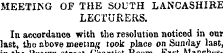
MEETING OF THE SOUTH LANCASHIRE LECTURERS . In accordance with the resolution noticed in our last , tho above meeting took place on Sunday last , in the Brown-3 treet Chartist Room , East Manchester . Though many had come a distauce of twelve or fourteen milea , they were present to commence business by halt-past nine o ' clock . Leetuwrs assembled : —Doyle , Smithhursfc , Low ' s , Baiiey , Hougliton , Bankin , Littler , Leech , Campbell , Bell , L-. nney , Clarke , Booth , Storer , Sheerer , Roberts , and Bmterwoitn . Mr . Whitakcr , a member of Brown-street , was ohoseu Chairman . . , Air . Doy le inquired the object for which they hau boon-callea toRether .
Mr . Cartled £ t > stated that they had been called together iov tho express purpose of coining to au uuderstandtos with each other on various important questions ; lor those who possessed the greatest amount of information to impart is to their fellowlecturers who required it , and to prevent one man giving 0 S 8 answer to a question at one town one day , aud anosber lecturer , at the same place , giving a different answer another day to the same queztiou . It was thou % ht that , by bringing the lecturers co ^ etber , and through the means of . - discusuiun , their opinions m'ght be brought to harmonise with each other , buuh a step would tend to improve the iecjurers , prevent , contradictory statements , being rasdei and promote ' tlie cause they hsd at heart , all ii ^ biU ' . ii io ^ ther iv thu inme cause , hr . vjj ^* > ht-. s :. n : * .: < - \ jti . "t iu view , uaiil tbt . i' s- 'XiTUoud lvyiu-i b . o crowneu with success .
Untitled Article
Several lecturers expressed their opinions ^ and all asreed'in the propriety of the step which WM beea taken not only in the meeting beinK held , bat also in having a ' regular , series of meetings ; one or two , however , were anxious , before proceeding further , that a code of rules for their government should be drawn up . This , after some discussion , was not pressed to a division , and Mr . Leech , at the request of the meeting , delivered a short address on the last of the following questions , with a copy of which each lecturer had been furnished . . 1 st . Ateyouawa © of the amount of wealth produced annually in Great Britain and Ireland ? of the number of producers , and how tho present system of legislation affects its distribution ?
2 nd . If the distribution of wealth is u > justlf interfered with , what remedy would you apply to insure a just distributioa of the produce of labour f 3 rd . Do you consider permanent liberty , and its accompaniment , prosperity , can be secured to the whole ppopL ) under a system of competition ? 4 th . What definition do you give concerning real libftr ty I oih . What aro the effects produced ia society by the law of primogeniture ? 6 th . What effect has the monetary system of thia country on its social and political arrangements ? 7 th . When the Charter becomes the law ' of the laud , do you thinfe that the present arrangements regarding private property ' can-be maintained consistently with the liberty and happiness of the whole peoplo ?
A discussion ensued , and afterwards the remaining questions were alluded to seriatim ; and on the first question the resolution come to was— " That when any of the lecturers are questioned upon that point , they shall quote the statements of Porter , M'Qneen , M'CuHoch , and Bray , leaving the public to judge for themselves . " The following are the calculations given by Porter , M'Queen , and Bray ; those of ftl'CuHochare not furnished to us : — Porter says—There is every year £ 7 , 000 . 000 of wealth produced by 6 , 000 , 600 of -working people ; that every man who -worts , earns £ 116 i 3 s . ia . ajear which is £ 2 2 s . 6 ' ^ d . per week . According to Potter , it took iwelvo millions ; a year to support the clergy of the Established Church . U ] Local taxation £ 100 . , 000 . "
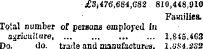
According to M'Queen : — Total capital of agri- Produce , culture £ 3 , 258 , 910 , 810 539 , 036 , 201 Do . do . Manufactures . 217 , 773 , 872 271 , 412 , 709
Untitled Article
£ 3 , 47 $ , 684 , 082 810 , 448 , 910 Families . Total number of persons employed iu agriculture , ... ... 1 , 8 * 5 , 463 Do . do . trade and manufactures , 1 . 0 Si , 232 Bo . nil other families . ... — 1 , 26 » , 536
4.799,231
4 . 799 , 231
Bray states , in his work , that the annual produce is ... ... £ 500 , 000 , 000 And th . it it was calculated , ia 1 S 15 , to be 430 , 000 , 000 Of -which tho working class received 99 , 712 , 547 And the rent , pension , and profil class ... ... 230 , 778 , 825 The total capital , at tbat time , was calculated at ... ... ... 3 , 000 , 000 , 000 The meeting , after a very long and interesting sitting , was adjourned till that day mo&th . ¦
To The Editor Of The Northern Stah
TO THE EDITOR OF THE NORTHERN STAH
Sir , —Since ministers took up tbe Corn Bill , I haTe frequently observed in the Whig Radical journals , an anxiety for a repeal of tbe Corn laws , and cheap bread for the poor . But although they pretend to be so roJieitous for thu poor man , I never bear-them " break breath" ubout giving him . the only power which can enable him to atand boldly in his own defence—the franchise . I say since the Corn . Bill become a ministerial measure , I have often seen a paragraph headed " ueiir bread means low ¦ wages . " Thete ia one in the Leeds Times ot last week , headed " another convincing proof that < Sear bread means low ages . " It go 93 00 to state that master manufacturers about Hu ' . Jdersflel « l have reduced the price of labour between 20 and 30 per cent ., am ! sisks if it ia not a convincer ?
Sir , 1 should never have noticed these , with any intention of commenting on them , had I not known for what purpose they were got up , and being well acquainted -with most of the writers of them , I can assure you , that what I am going to say is fact . Tho articles above alluded to are the original correspondence of the miliocrata themselves f Taey first meet and reduce wages , then go to their office and write tke articles about ?« dear bread and low ¦ wages . " Thus they blow the trumpet that wages lower when bread 13 dear , and say that they could de no more if bread -were cheap ' . They tell their workmen it is in consequtnee of -want of markets , and preach up Whig humbug : until their men . ire . lost in mistiflcation , and thus push forward their own rain .
They have practised tiiis " -lowering system " so long * and so often , that they dare not in a direct way any longer , for fear of exposure ; but they have recourse to an indirect way of lowering wages . They call thet " foreman" of every branch ( who by-the-bye are all of conrso high Whiga ) into the counting house , having previously made them electors . Tfiey say to them , w © are desirous of keeping up tbe respectability of our men , therefore we will let you your work , and then yon wili havo a good opportunity of making more wages ; we wish you to do bo , only push on the work ; the
ii : oro you do the mote you receive . The foremen agree to this , and set to , -well knowiDg tbat the masters aro giving less for the work than tbey did before the jetting . I say they set-to , and pinch the poor men who are under them to excess ; they turn away a portion of them , and make the remainder do twice as v-. iucb , or nfarly so , as they did before . Work goea vapidly on . They do in four d ; iys what ought to be a wevk'd work ; and the consequence 13 , they are short of employment two days per week , and have to go and skulk in tho streets for that time , whilst they have dona mura vrork and received leas wages for it !
And thus we are permitting these mercenary speculative individuals , -who -wish tor more msrkbts to bare more scope of coaipetition to ruin this couatry . They are like the frog in the fable , they want to swell themselves to the station of uld experienced and honest twdt'SMiMi who have been au honour to this country for centuries . The bel ! is ringing , therefore , I must be off , or I would siy something more . on , the subject But perhaps I izay re . iort to it again . Ju the mean time , I susbcribe myself one who would wish to be represent ud , . Yours truly , A Woukikq Man . Huddersfieid , July 14 , 1841 .
Tyranny of the Factory Lords . —The millocraey and profitocracy , when courting popularity to subserve their own purposes , not UDircque&tly tell the workies that the interests of the employer and thOBO of the employed , are identified , and that both must rise or full together J yet we invariably find that the profitmoii ^ er's conduct runs counter to suoh doctrine , an instance of which is .. furnished by a correspondent , who writes as follows-: — " The masters of a certain mill , not twenty miles from Heywood , have of iato acted in the following manner towards their workpeople . A few days after the 12 th of August , 1839 , they called on every one who had been in thehabit of attending Chartist meetings , to sign their names to a paper , pledging themselves not to attend
any more , and if they refused , they would be discharged from their employment . They also made & rule that no more collections should be made amount the weavers towards supporting the siok , or butying the dead . They were requested to grant the weavers leave to make a subscription towards the Stockport turn-out , on every alternate Friday afternoon , that day being the weavers pay day ; this was not granted . A few weeks ago , men were appointed to go round to every spinner , weaver , &c , in order to sea what each would give towards an organ for St . James ' s Church , Hey wood ; and thoagh the poor white slaves had nothing to spare , yet , through fear , seme gave as high as 10 a ., 7 s ., 53 ., 2 s . 6 cL aad some as low as Is ., and others 6 d .
When the anti-Corn Law petition was laying for signatures at various shops ia Heywood , petition sheets were brought to the factory , and the men called upon to sign . At the recent election at Rochdale , the mill stopped on tho day of nomination , and the men were told to go in procession , with banners , bands of music , &c , to Rochdale , in order fo hold up their hands in favour of James Fanton , Esq ., the Tory candidate , Oa Wednesday , the 14 th instant , the Bpiuners were sent for , and informed that their wages would be reduced to an amount which they , the spinners , calculate at 6 s . per week . Some objected to the robbery , while others oringiogiy submitted to the avarice of their employers . " — So much for identity of interests .
The Cbksus . —Amongst the many cunoua entries made on the enumeration schedules which have been returned in the town district of the Kensington division , are the following i-r" W . WUitehota , 57 * tailor , no ; Martha White'horn , 37 , wife , no "; 'John Fred . Whitohorn , 8 , yes { William Henry Whitehorn , 4 , yes ; Arthur O'Connor Frost Wbitehorn , sine months , yes . All earnestly pray for the speedy return of Frostf , Williams , and Jones , the release of all political prisoners , and that tlie Charter may be ~ come the law of the land " A Rival -xo the " New Ik-pbskal Macmsg . "The * ' tfa : s" in our printing-office { Ohio Squabbler ) offer to back Miss Jemima Bloom , their overseer , to do more " blowin . ' v \ p" ia one day than all tha gunpowder iu tho "States . " Tiey will be happy to let Colonel Pa ? i ' .-y have ber for a moderate consideration ; aud if bhe < h-n . h give KoyaJ Gcor ^ o a startler , the Colorcl Eiay depend ouVae-Yproof a ^ in detonatiu * power .
Untitled Article
- ^ THE NORTHERN STAR . 3
-
-
Citation
-
Northern Star (1837-1852), July 24, 1841, page 3, in the Nineteenth-Century Serials Edition (2008; 2018) ncse-os.kdl.kcl.ac.uk/periodicals/ns/issues/vm2-ncseproduct716/page/3/
-