On this page
-
Departments (3)
-
Adverts (7)
-
-
Text (7)
-
Untitled Article
-

Untitled Article
-

TO THE FBIENDS OF RELIGIOUS -AND POLITICAL LIBERTY IN DUNDEE AND
-
Untitled Article
-

LOCAL MARKETS
-

iuiaaiesex j uvuavet ? i Leeds :—Printed for the Proprietor, PEARS^ S O'C O N 5T O B, Esq. of Hammersmito, Co ontJ
-

Untitled Article
Note: This text has been automatically extracted via Optical Character Recognition (OCR) software. The text has not been manually corrected and should not be relied on to be an accurate representation of the item.
-
-
Transcript
-
Note: This text has been automatically extracted via Optical Character Recognition (OCR) software. The text has not been manually corrected and should not be relied on to be an accurate representation of the item.
Additionally, when viewing full transcripts, extracted text may not be in the same order as the original document.
Untitled Ad
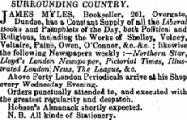
SURROUNDING COUNTRY . TAMES MYLES , Bookseller , 201 , Overgate , « l Dundee , has a Constant Supply of all the Liberal Hooks and Pamphlets of the Day , both Political and Religious , inolnding the Works of Shelley , Volney , Voltaire , Paine , Owen , O'Connor , &c . &c . ; likewise the following Newspapers weekly : —Northern Star , Lloyd ' s London Newspaper , Pictorial Times , Illustrated London \ News , The League , &c . Above Forty London Periodicals arrive at his Shop every Wednesday Evening . Orders punctually attended to , and executed with the greatest regularity and despatch . Hobson ' s Almanack shortly expected . N . B . All kinds of Stationery .
Untitled Ad
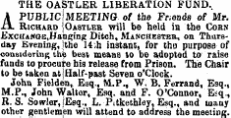
THE OASTLER LIBERATION FUND . . A PUBLIC ] MEETING of the Friends of Mr . Richard ] Oastler will be held ia the Corn Exc ( fAfrQg , Hanging Ditch , Manchesteb , on Thursday Evening , the 14 / h instant , for the purpose of considering th ^ best means lo be adopted to raise funds to procure his release from Prison . The Chair to be taken at j Half-past Seven o'clock . John Fielden , Esq ., M . P ., W . B . Ferrand , Esq ., M . P ., John Walter , Esq . and F . O'Connor , Esq ., R . S . Sowler , | Esq ., L . Pitkethley , Esq ., and many other gentlemen will attend to address the meeting .
Untitled Ad
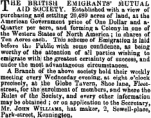
THE BRITISH EMIGRANTS' MUTUAL AID SOCIETY . Established with a view of purchasing and settling 20 , 480 acres of land , at the American Government price of One Dollar and a-Quarter per acre , and forming a Colony in one of the Western States of North America ; in shares of Ten Acres each . This scheme of Emigration 1 * 8 laid before tho Public with some confidence , as being worthy of the attention of all parties wishing to emigrate with ! the greatest certainty of success , and under the most advantageous circumstances . A Branch of the above society hold their weekly meeting every Wednesday evening , at eight o ' clock precisely , at the Globe Tavern , Shoe lane , _ "leetstreet , for tho enrolment of members , and where the Rules of the ; SocJ 6 ty , and every other information may be obtained ; or on application to the Secretary , Mr . Joun Williams , hat maker , 2 , Sewell-place , Park-street , Kennington .
Untitled Ad
I . EEDS BOROUGH SESSIONS . N OTICE IS ; HEREBY GIVEN , that the next GENERAL QUARTER SESSIONS of the Peace , for the Borough of Leeds , in the County of York , will be holden before Thomas Flower " Ellis , the Younger , Esquire , Recorder of the said Borough , at the Court Mouse , in Leeds , on Thursday , the Twenty-Eighth day of Dfcembek instant , at Nine o ' clock in the forenoon , at which time and place , all Jurors , Constables , Police Officers , Prosecutors , Witnesses , Persons bound by recognizance , and others having business at the said Sessions are requested to attend . j AND NOTICE IS HEREBY GIVEN . That all Appeals , Applications and Proceedings , under the Highway Acts , ( not previously disposed of ) will be heard and taken at the sitting of the Court , on Saturday morning , ( the 30 th instant , ) at nine o ' clock , unless any Felonies or Misdemeanors shall then remain undisposed of ; in which case , all such Appeals , Applications , and Proceedings , will be heard and taken as soon after Saturday morning , at nine o ' clock , as the whole of the Felonies and Misdemeanors shall have been disposed of . JAMES RICHARDSON , Clerk of the Peace for the said Borough . Leeda , 3 rd December . 1843 .
Untitled Ad
THE LAND ! THE LAND !! Now Publishin complete in One Vol ., neatly Bound \ m Cloth , Price 2 s . 6 d . A PRACTICAL WORK on the MANAGEMENT OF SMALL FARMS . By Fsabgus O'Connor , Esq ., Barrister and Farmer . The desire of the author has been to furnish a valuable compendium at such price as would enable every workingman to become possessed of it . No . It contains all the practical instructions , together with Plates , describing Farm House , Offices , Tank , Farm Yard , &c . ; with particular information requisite for carrying out all the operations . N . B . —The above Work may still be prooured in Nunabera , price 6 < J . eaoh . " I have , within the last few months visited every part of France , and I declare that I have seen more misery in ono street in Dublin , than in all France ; tho people are { well dad , well fed , and merry ; they are all employed on Small Farms of their own , or on equitable takings !" Vide Lord Chncurry ' s Letter in Morninq Chronicle , Oct . 1 Uh t \ UZ . THE LANCASTER TRIALS . Now ready ia handsome cloth boards , price 5 s . 6 d . A FULL AND COMPLETE REPORT of the TRIALS OFj F . O'CONNOR , Esq ., and Tifty Eight others , at Lancaster , on a charge of Sedition , ConsDiraoy , Tumult , and Riot , with Preface , and Remarks , bt f . o ' connor , esq . And Illustrated with a Splendid Portrait of the 14 Just Judge "—Baron Rolt ' e . The Publisher acquaints those who have purchased the Trials in Numbers , that the cloth oases will be sold to them ! at Sixpence each , or the numbers bound and putiinto the Cases for One Shilling eaoh . Should there be any neglect in supplying the Cases , the Publisher will feel under an obligation if the Parties complaining will make him aware of it , and it shall be remedied . Parties desirous to perfect their sets of this valuable Work , will do well to apply immediately , as there is but a limited quantity , of some of the numbers now on hand . Every CharitiBt ought to be in possession of this Record of the great Chartist ; Triumph over the Tory Government . It was the best and most successful legal fight the Movement party ever bad . The example then afforded may be followed , with advantage , by the Defendants in Ireland . A few Copies of that excellent Work , THE I STATE OF IRELAND , j BY ARTHUR O ' CONNOR , remain on hand , and may be had in two Numbers , at Four pence each . No Man can ; understand the position of Ireland , or the bearing of Irish Questions , who is pot conversant with this perfect picture of Ireland ' s Condition ; the causes of her degradation , and tho Berne * dies for her manifold evils . i Also , just published , A Letter from Feargus O'Connor to the Rev . William Hill , being a Reply to sundry Letters published by the latter gentleman . The Letter consists of thirty-two pages , same siaa as Lancaster Trials . Price Fourpence . ] Also , A Letter from Feargus o'Connor to John Humffrey Parry , in reply to one recently published by Mr . Parry , and addressed to Mr . O ' Connor . Price Threepence , } London : —Cleave , Shoe-lane , Fleet-street ; Parkess , Com p ton-street , Heywood , Manchester ; Hobson , Northern Star Office , Leeds ; Guest , Birmingham ; Paton and Love , Glasgow ; and all Agents of this paper .
Untitled Ad
WANTED , RESPECTABLE EMPLOYMENT in one of the Provincial Towns , by a Gentleman who has a good knowledge of Business , to occupy him Eight or Nine Hours each Day . Ad * dress J . R . J ., 4 , Bath Place , Yarmouth , Norfolk .
Untitled Ad
HOBSON'S POLITICAL ALMANACK . NOW READY , and in the handsof the Pablisueia , PRICE THREEPENCE , , THE POOR MAN'S COMPANION , FOR 1844 . / 'lONTENTS- ^ The Calendar . —The Edipues In 1341 . V 'fable to calculate Wages , jmd other Paymenta—Cos * of Yeomanry Cavalry for every Year from 1816 to 1843 . —A Return , showing the total Number of Mem . bars sent to the House of Commons by the several Counties , Cities , Towns , and Boroughs , in England , Wales , Ireland , and Scotland respectively ; with tha Population of the Counties , Cities , and Boroughs . — An account of the Duties payable on the Importation of Foreign Wheat , when the Price of Wheat has been , in this Country at 5 Q » ., 55 s ., 60 s ., 65 a ., 70 s ., 75 s ., 80 s ., and 85 s * , under the various Acts which have been passed trom the Reign of Charles II . to the present time : or a legislative history of English Com Laws from the year 1666 to 1843 —The POPULATION RETURNS , from tha Parliamentary Papers just published ; setting forth the entire Population of the three Kingdoms ; tha number of Houses , inhabited , uninhabited , and building ; the number of Males and the number of Females , under , and above , twenty years ; of age ; the County of Birth , showing the number barn in England sbd Wales : In Schotland ; in Ireland ; in the BritUa Isles ; in the British Colonies ; and the number of Foreigners and British subjects born in foreign parts . The Number of Persons living in England and Wales , distinguishing males and females , under five years of ago ; five and under ten ; and from ten up to one hundred , rising five at a time . —Number of yearly committals for Workhouse Offences , in eve . ry County in England and Wales , from 1836 to 1842 . —Return of the number of Aeta of Parliament passed from 1834 to 1842 , Ptiblie , Local , and Personal ; setting forth tbe number passed hi each year for England and Wales , Scotland , and Ireland . —Taxes on Land , compared with the Taxes on Dwelling Houses , Mills , and Factories . —Amount of Military and Naval Forces ; ¦ with the number of Ships of all classes Of the Royal Navy , and a Return of the Number of Officers and Men In each class . —Quantity of Foreign Wine and Spirits imported during the year ending January 6 th , 1843 , distinguishing the quantity from each country . Population of Ireland , France , and United States of America . —Return of the Average Prices of Wheat , in the months of Jane and July respectively , as compared with those in the months of August and September , in each year , from 1774 to 1793— Return of the Sums expended for Education in 1842 , out of the Taxes , ia each County of England and Wales . —Statement showing the Total Amount of Taxation reduced or repealed since Jan . 1 st , 1814 .- ~ Number of Private and Joint Stock Binka registered in each' year from 1820 to 1843 . Number of Emigrants who have embarked from the various Ports of England , Ireland , and Scotland , during tbe year 1842 ; showing to what part of tlie world they have Emigrated . —Number of Quarters of Malt made in the respective years of 1840 and 1842 , in tne United Kingdom , distinguishing tne quantity made in each country , and the quantity used by Brewers and Y ictuallers . and Retail Brewers . —The Statistics of Mortality in Eogland . —Number of Depositors in the Savings' Banks , and the amount of deposits , on the 20 th November , 1842 . —Number of Waste Land Incloaure Acts passed during every ten years from 180 Q to 1840 . —Rental of the Metropolis as assessed to the Police Rate . —Number and coat of the Metropolitan Police . —JuBtic « Tindal ' s Judgment on tha question of Church Rates . —Statistics of Chime for 1842 , showing ^^ the increase and decrease in the respective counties ; the number of Capital Sentences in 1840-41-42 , with the specified crimes ; the number of Executions ; the number of sentences of alt sorts , death , transportation , imprisonment , whipping and flnina , for the years 1840-41-42 ; the ages of the Persons committed ; the Degrees of Instruction of tha Persons committed for each year , from 1836 to 1842 ; and a . Comparative Table , showing the Number of Persons Committed for Trial or Bailed in each of the lust four years ; and distinguishing the numbers foe each County . Cost of Republican Qovern-HENT . f in America , both in the several States , and the Federal Union . Emigration during the last seventeen years . —Effects of the New Tariff ; or , FREE TRADE in Practice ; who has if benefitsi ? Nobody , but the Tax-eater ! Returns relative to Foreiga Trade ; ffreat depreciation of prices ; Manufacturers forced to sacrifice one-twelth of the value of the Export Trade ) , the farmer " ruined "; the landlord forced to reduce rents ; the shopkeepers without custom ; and the workers without wages : glorious effects of Free Trade ! The whole compiled from authentic sources Bt Joshua Hobson . Only Three Pence ! Only Three Pence f London : J . Cleave , Sboe-lane ; Manchester , Heywood , Oldham-street ; Birmingham , Guest ; Leeds and I HuddersSeld , J . Hobson ,- Newcastle , Francs and Co . ; , Glasgow , Paton and Love .
Untitled Article
ENTHUSIASTIC MEETING AT LEEDS IN AID OF MB . OASTLER'S LIBERATION . On Honda ; last , one of the most muserom ard tnthufilastic meeting -which have for some time been held in the Leeds Court H erase , tool : place there , in order to enter into arzangemets for carrying oat the sabscripfeion bo auBpicionsly commenced for tie release of the " Paeieiy Kin ? " from-the dungeon in which he has been bo lorn confined . The meeting was called by placard , to be held at serai o ' clock in the evening ; and soon after tb&Vhonr , the building was crowded in every part , by n ^ en of all parties—Chartist , Tory , "Whig , and Radical . It had been announced that "Win . Uasfield Ferrsnd , E * q .-, MJP-, \ ronld be present ; and on that gentleman entering the Hall , be was received / with tumultuous applause , and three rhaf »* for ilm . -ware proposed , and heartily responded to . On the motion of Mr . John Bbckwith , Mr . John Cswood -was / ma&Tumonslv called to the chair .
The Chairmax . in opening the business , said he i had no idea , -when he entered the room , of being called ; upon to take any part in the proceedings ; he came i merely as a spectator , and to hear something of his < old friend , Richard Oastler . But having been thus i called upon , he would endeaTonr , so far as-was in fcis . power , to discharge impartially the dnt&ei of the office ; to which they had elected him . He then read the pi a- ' ¦ card calling the meeting ; and , after some observations ; in praise of Mr . Oaetler and bis late father , resumed his j Beat . ' " ~ I
ML JOSE ? H l . V . rS moved khe first resolution . He i Bid had that doty not have been assigned to him—an ; arrangement of whichlie was unaware -when he enlered the room , —he should have solicited the oppor- ; tonity of making a few remarks in the course of the proceedings—of spe&klng in favour of an . old friend— -, on behalf of one with whom hehad spent the happiest , znomenisrof his Bfe , and who fcsS become incarcerated . lor dol = g good . He had known Mr . Oastler ' s father ; he i kad been acquainted with Mr . Oastler himself for thirty years . He differed widely from him in political , sentiment ; bnt lie believed that he was a true pfeilan- j thropist , and that be would advocate , as he . everhsd ; done , thosemeasnres , and those alone , which his reason . told him would secure to all classes the greatest possible j amount of happiness . He then entered into a detail ] of the circsmsta&ees -which hid led to Mr . Oasflpr ' s in- i
carcerataon , and paid a high compliment to him for the > hospitality -with , which ha had al-waya -upheld bis office , j and the exertions which he had undergone on behalf of j the factory slaves , together with hii opposition to the > New Poor Law . Mr ! Lsea concluded by saying that ] be was only a poor maniimself ; Lot thongh he was so , ; lie was happy to have ii in his power to show that he did not propose the resolution in words only , bat by Way of beginning be fcegired to hand in a sovereign as Ms ; sabscription . sir . Xees sat down loudly cheered . 2 Jr . EDT 7 j . si > Scbutos seconded the resolution , ill TTas as follows ;—
"That this meeting , conscious of the invaluable Berviees renderel by Mr . Oastltr to his country , and aware of the privations he usnst necessarily endure in consequence of his protracted incarceration , deem it a duty as Christians , as friends £ f humanity , and as fellovr covntrjmeji , to aid in procuring hia liberation from prison , and Ju fcecmrng Ids future sefrices in Ifce eBta Dliebnunt of peace and i ? eod will ameng men . " TTar . Bvstielv Tekeukv , Esq . 1 LP . rose at the request of the Chairman to address the meeting . He ¦ was received by three rounds of cheers . Af ttr they bad snbsided , he Baid—That in appearing that evening before a meeting of the inhabitants cf the to ^ n of Xeeds . to address them on » qneEtion -sOaich be -was thoroughly convinced , from the enthusiasm which bad
already , been displayed daring the delivery of the speeches of the gentlemen who nad preceded him , they" deeply regarded , he should not eppear before them in any other light than that of an Englishman advocating the claims of a persecuted and ill-used man —{ hear } . And if there was any one present who differed from him in politics , he l ) elieved , nay , he was sure that that person wonld ' give him credit for coining forth in tie cause of hmnaBity . Though there Bright be many present who differed from him and R : ch * rd Oastler on the great political questions which agitated the country—and he ( Mr . FerrandT coincided in every political sentiment which Richard Osatler had sp » ken or written that he knew of . —yet lie was glad to tell such persons that the cause which he had come amongst
mem to advocate had been supported in all parts of the factory districts by a unanimity of heart and a Warmth of generosity which England alone eonld furnish—{ cheers ) . It was gratifying to see public ehaxacters in this and other towns laying aside political feeling and generously coming forward to aid this good cause ; and so mm merited more approbation on this account than did Mr . Bsines— { hear , bear j . Mr . Oastler and , 34 r . Bsinea bad . long been opposed " to each other in polities ] sentiment ; both honestly believing their own opinions to be true ; both appealed to the intellect of their fe-low countrymen j and both with some degree of success . He was Borry that Mr . Balnea ' s views were so favoured , not tb * t 2 » a TFonld prefect bis arguments frrin bsing
brought . forward , for be heheveS they were brought forward and maintained with honesty ' of intention . If they were true , he trusted They would be triumphant ; bat if the political principles of Mr- " Baines and those "Who acted with him , were found to oe false—and those of 3 £ r . Oastler were proved to be those on which the constilntaon of our native land was built , he hoped Mr . Oaatltr would have the victory . But to give to % oth parties fair play , let them have a fair field and freedom , and Qted would give the victory to the right—{ loud applause ) . In coming before the meeting to advocate the liberation of Mr . Oastler , he would appeal to thsir better feelings , their sentiments , and their judgment ; for he should worn to appeal to their passions . It was bis duty to call their attention to some
of the great questions on -which Mr . Oastler" had ap- peared in a public character . Mr . Oastler firs * raised ! W « humble voice in favour of the freedom of the black J Blare , —that freedom which this country finally achieved j by a grant from Parliament of many Bullions of money . Me Oastler advocated the cause of the poor black slave until that glorious victory over oppression was obtained ; and he had scarcely laid his pen aside , when i hfi beheld slavery afc borne more « rnel , more oppres- j Sire , mote lasting than that against which a Wilber-1 force had so nobly raised his voiee , and for the abo-, lilion j > l which lha eountry had paid so large a sum < of money—therr , beari . Mr . Oastler saw that white ] slavery at home was worse than black slavery abroad ; i and he came forward as the unflinching advocate of !
the emancipation of the white slivesy- of this j country . It was highly creditable to Mr . Baines , j £ k&t be allowed lbs edssu » of the Leeds Her- \ -c » ry to be open to the dennncislioBS t > l \ ¦ white slavery in G-reat Biitaln ^—( great applause ) , j 2 Ir . Oastler supported the great struggle for the eman-1 dpaKon of our factory children from tie slavery in ! ¦ Which they were held , and to a certain degree his j exertions were successful ; "but "before he-bad achieved j the triumph that he expected he should , the New Poar j ' law became the law of tiae eountry . ( Groans . ) He j tMr . Terraad ) would not -weary the attention of the meeting by details , which he could bring forward against that infamous law ; for scarcely a day passed that the public prints did not record the cruelties , the
oppressions , the hardships—nay , the murders committed by that act—( bear ) . Bat that very day , in feis capacity as a magistrate of the West Biding , he had attended a Coroner ' s Inquest , sitting upon the body of a woman Who was only one hi ore victim to that infernal latr . it appeared that fouT months ago , a pooi woman , of the name of Usrtha Robinson , seventy years of ige , along with her daughter , who was the mother-of two children , the youngest of whom was only two months old , waa released from the Union "Workhouse at Bradford , on Condition that they would all live on three shillings a week—( cries of * shame' ) . Theyliad been accustomed to freedom and the eEjoyment of the light of heaven ,
and to mingle amongst friends sod acquaintances , and they cheerfully accepted the boon-offered them , and settled down in an hovel at Harden-Beek , near Blngley . 3 bey belonged to Wfladtn township , and lived beyoDd the boundary but some few yards . They continued to leceive the relief every Monday morning from the relieving efficer , who lived six miles frem the place , and tad to attend to the poor of six different townships , having altogether one thousand one hundred and fifty persons toattend to —( cries of " thame ") . The daughter of this poor woman told the relieving officer soon after th ^ p had gone to this place that they -were very badly off , and that 3 s . a week was fax too little for them to
live upon . After tbia th 6 Board of- Guardians at Bradford , 5 n their mercy , ; granted 6 d . a tceek more ; » that this family of four persons had bat 3 s . € d . a » eek lor them all to exist upon—a sum- scarcely snf-™ ent , after the payment of rent and coals , to keep * raJ and bogy together for two days . The daughter was ^ . f * " S 3 ** . not capable of earning her daily bread : « m applied to the relieving officer for more hsrfufrn'Cfj ££ . * ™ * n « a a deaf -ear to her applicadcn , saying * Twa \ L f *^ " ¦»«» bis masters , and he had no power eMr ™™ ^ * ^ Qnardian of Wilsden passed by with ^ tTb ^ ^ 111318 ' ^ tei motber » dying Stte b ^*^ 8 ° a She « Hed on him to come and i ! rSr JISSSLP * ***? fensaaon ) . On Monday
- SsSSkt HhkkS Herepn&d « at he had bo opportunity to go to the bouse , or to grant even as much as Ra ~ *?• . C _? Sn& * luWthemselves to flSSSSSSi ?' fad . ate replied— "What's the Wrf ^ n Brad " Hjtogwotoerto &b workhouse ? - -obear S ^ v ^ »* ed him for relief ; but he said he could Srfv ? j £ He said ahe wa » to go'to ibe relieving x&oet tffBbiBi ™ * fco Jived about » -wOe from tte place wdjem ISb p « Oi woman wjadya ^ j and ih » t relieving officer had ttsssed biastif that dajijefore him ( Mr . JerBuid ) for » o » goiag to •«• th » poor woaam , by s ^ fiaf tha b * bad nOdeat . * 0 . do is relleviai ^ the poor < f bis own dirtriet bSR ftn ^ tny jtf * way home aftez
duk at night —( crietolr ** ahame , shame" ) . " Thii half-Idiot , having been refused relief at her own township KWBgbt it melen to apply to Bingley . JOB Tuesday Xiondsglast , several of ths udghbemrs vemt Into the borne , » nd found the poor age 4 mother , l * ld nponaome old looms , wrapped op in an old sheet , giving np her « wl to her Maker , and not an atom o ! food or fixe in . boose , and her daughter goisg about to » eek for neighbonr « to do that which her native town refused to doloud cries of shame , ahame * ) . ForamonUiWilsden bad been without a medical man in the town : and the
Untitled Article
last medical man there advertised bia pill-boxes for sale . These Relieving Officers and Poor Law . Beards , only acted according to law , as they were amenable to the regulations of the Poor Law Commissioners in London . The coroner ' s jury had that day against their own consciences , returned a verdict— " That the death of the deceased had resulted from natural causes accelerated by the want of the common necessaries of life "—{ a voice— " it ougbt to have been a Terdict of murder "; . Besidingat some few miles distance - from the poor creature ' s dwelling , he did not know anything of the case till he was asked , as a magistrate , to use his public authority that an inquest might be held on the body . He asked if it were possible « ven for the Christian , religion to be inculcated among our
countrymeo , or toe laws to be enforced , if such cruel oppressions aB those inflioted under the New Poor Law , were to be Bllowed to go on—( hear , bear ) , ? They were Englishmen , living under a Christian dispensation , told by every page in the Holy Bible to feel f er and pity the peor ; and to whom were those poor to apply for succour and comfort ? Richard Oastler , who was now in prison , bad always faithfully opposedjthe New Poor Law , and shown that it -waB contrary to the spirit of the British constitution . He asked them , therefore , to unite cordially and unanimously to obtain the release of Richard Oastler , that he might exert his energies to raise tbe public voice against an act that was a disgrace to a Christian land—( cheers ) . Another great question on which Mr . Oastler appeared before the public was
the factory system—( loud cbeers ) . He ( Mr . Femmdj did set wisb to bring anything relating to his own personal conduct before the meeting , further than be could htlp ; for united as they were in the cause of that good and patriotic man , he would have them rallying round him iMr . Oastler ) also ; but he mighi tell them , without vanity , that tbe first time that he appeared in pnblic , v . s taking part in those great questions which bad agitated the public mind for the last thirty years , Trssat a large meeting called by Richard Oastler , on Wibsey Low JJoor , t » discuss the factory question . Twelve months befere that meeting he ( Mr . Ferrand ) happened to rise between five and six o ' clock in the morning for the purpose of amusing
himself by wild fowl shooting on tbe banks of the river Aire , near the town of Bingley where he lived . It was in the depth of winter , with the snow two feet deep covering the ground , the wind blowing a hurricane , and more snow falling . He proceeded on s lane , and he tbe ^ e traced the foot-marks of three children . He heard the stifled cries of a human being ; and after going a short distance he found the footsteps of only two children . He turned back , and there , on that cold winter's morning , just at the break of day , he dragged out of a snow-drift a female child , who was on her way to work at a factory . HHear , hear . ) He asked himself—Can England not Jvcome a great nation witbont the sacrifice of her children ? He entered from that time into an
investigation of the factory question , and as long as God gave him health and strength—unless a ten hours factory bill become the law of the laud before his life dosed , he would agitate for that just law . { Loud applause . ) After remarking on the present bill , which all admitted had effected some amelioration in the condition of the factory -workers , the Hon . Member said that be was told bj men in his own neigKbonih <* od , whose labours had been suspended through the extension and application of machinery , that they were Jiving upon the wages of their children—in fsct , they were living by the mnrder of their own offspring . ( Hear , hear . ) He spoke advisedly when he used these terms : for the highest medical men in the country had declared that to -work women and children in factories for longer than
tan hours » day Tvas to work them to death . He intended to Vnnir by creditable witnesses a body of evidence before Parliament on the present factory system , and to ask the legislature and the country , and the ministers of the gospel , if Christian "England is to submit any longer to this system?—( great applause ) . There were many other evils connected with the present factory jyitem besides its working the poor children to death ; and whilst he would have an investigation into the whole of that system , be wonld * lsonot overlook the working of the New Poor Law , or at all events the circumstances of the case of the victim of that law which had that day been brought before a Coroner ' s jury ; for although the law cleared the Poor Law officers , be declared emphatically in the face : of that numerous
and highly respectable meeting , that the New Poor Law had been , guilty of the manslaughter of that woman —( hear , hear , and cheers ) . The Hon . member next related a case , which had ceme before him within tbe last few days , and which showed the baneful effects produced on tbe rising generation from the want of paternal care and attention caused by tbe operation of the factory system . At the time that the deputation sought him to bespeak his aid in the enquiry respecting tbe cause of tbe death of Martba Robinson , be was engaged is toting evidence against ' a poor child , only thirteen yean of age , whose case waa illustrative of one of the workings of tbe factry system . The facts of the case were these . A family named Murgatroyd , living about two miles from Wilsden , the father of
which was a labourer employed at out-door work , and the mother tad her two children worked at a factory , leaving their house locked up from six o ' clock in the morning , when they went to work , until eight at night , when they returned , A boy of the name of Hatfleld , about thirteen yean of age , whose mother was a widow and slso worked at a factory , knowing that Murgatroyd " a house was locked np , determined to break into it and rob it- On his way to commit the robbery , be met another boy about seven years of age , whom he persuaded to accompany him , and these lads , one thirteen and tbe other seven yean of age , bt ) ke into the bouse , and robbed it of a sovereign , sume copper , and other articles . Information el the robbery was given to the
unstable of Bingley , and he found the two lada entering a beerhouse . They were brought before him ( Mr , ferrand ) and the younger was made a witness against &e elder . They admitted they had cemmitted the robbery . On the younger being asked if he had ever leard of God or the Saviour , or of heaven or bell , he replied , "No , never . " His mother said that she was wo much benumbed with labour to educate her chil-Iren , and the only comfort ahe had after leaving her work at the factory waa to roll into bed —( "It ' s a shame ") . Here tbe child was left to wander all day where he choose , the mother being compelled to forsake those duties which the revealed will of God declared to be incumbent upon her , and which tbe law recognises , she ought to have the pewer to fulfil , and
which the voice of Nature declared she ought to fulfil , and which society , for its own welfare , ought to demand of her . She left her home , and the poor child was forced to wander about like a vagabond , and never heard the name of God from priest or parent , and be was now an inniita of York Castle , and would have to take bia trial for tbe heinous crime of house-breaking —( hear , bear ) . He appealed , then , to their better feelings , to their humanity , to release Richard Oastler from his cenfinement , that he might have full scope to exert his taleBts to remove the evils of the present Factory System , and put an « id to such cases as that just related—( cheera ) . We often found ministen of state and other public characters pointing to the extent of oar exports as an evidence of the
improved condition of the people ; but it would be -vrell if these parties would look more into the interiot ; if they weuld examine and see really what is the condition of the working classes . This country was now in a very dreadful state ; a great many of tbe labouring population were now disaffected and discontented . He knew sufficient from tbe history of tbe " English people and from Us personal knowledge , that they are loyal at heart and honest in their assertion of their principles . All they asked for was , " A fair day " a wage for a fair day ' s work "—( cheers )—and the government of thiB country was bound by the constitution to provide them with it —( renewed cheering ) . If they would not do so , they were utterly powerless—( cheers ) . He cared not who the man was who held the reins of
government in this country—it mattered not what political sentiments he professed—the line for his guidance was marked out by the constitution : it was , equal protection to all classes of persens and of property —( bear ) . The property of the poor man was as much entitled to protection as was that of the rich man —( hear , hear ) . It was to the property of tbe poor man that we owed the wealth and the grandeur of the land . The building in which he was then addressing that large assembly of the inhabitants of the important town of Leeds waa the result of the labour of the working classes , and their labour was their property . It was to the same source that we owed the origin of all the various edifices erected to the glory and honour of God throughout the land . It
had made England a mighty nation , which she would continue to be if she followed the laws which God had declared to be just and right—( applause ) . He was told of improvement in the state of the country—of increased wealth , and better trade ; but there would be no improvement that could be lasting unless employment was given to the adult male population—unless " the busy bees" were kept at work . At present they were turned adrift ; they were drones against their will—( cries of "We are ") . Machinery had deprived them of doing that duty which God himself declared they should do —( bear , hear ) . They were to earn their bread by tbe sweat of their brow ; but the present state of affairs la this country bad deprived them of tbe opportunity of fulfilling that divine law . Therefore they bad a right to appeal to tee Government ef the eountry , and indst that it should rescue them from that position
in which machinery bad placed them —( loud cheers ) He hoped that in addressing tbe meeting be bad only , so far as in his power , and that but feebly ,, yet henestly , brought before them tbe great principles which Richard Oastler professed . If they W « e true , they would stand the teat of public opinion ; if untrue , «"» the bowjrtj of Bogiisbmea would nerei allow H » m to believe them , or to be tbe slates of tbe poHttal 2 « j \ ° f » y aa » or set of men , when tbey belieVed taat ^ o&bIobm aot to ke tree . To place tbe political «* atiaenta wbieh be believed were essential i * anhSest ^ S ? ^ to be made to pay the debl portof tfcTiSw ^ erex P " « W » M * fo * PJ ^ jS iRSSMiSf ' Membei Bat dMrn Tbe resoltttton -was then put to th « « , ~ m a ^^ - ^ 5 m ? BfiiS
Untitled Article
1 I iar . 0-istler ; but he was aware or the efforts which that gentteman bad made on behalf of the public welfare , and by which beliad injured bis health and made many pecuniary and personalsacriflces—( applause ) Though the meeting was met for the purpose ofRaising money for the payment of a debt , he felt , in bis own conscience that that debt , so far as Mr . Oastler Was concerned , though a legal debt , was not owing in equity —( hear , hear ) . But whetber the debt was really owing or not , if they took into account the indefatigable ; the Almost superhuman efforts which Mr . Oastler bad made on behalf of the public , they would pay that debt and liberate him from prison . The committee had determined to pay the debt , release him from incarceration , and then make some provision for his support and if those for whom &e bad so long laboured would
not raise the amount received , they were utterly devoid of gratitude—( hear , bear , and applause ) . But be knew sufficient of the working classes to lead him to believe that they would raise sufficient to set their old friend at liberty ; and then the contributions of the more affluent might go towards a provision for him for the rest of his days—( hear , hear ) . He should rejoice to see Mr . Oastler liberated , slmpl / because he would be enabled more effectually to promote those principles and accomplish thoBe objects for which he had so long laboured . It was true that he was not idle in prison ; he had cent forth a weekly pamphlet which had well maintained his views ; let him have his liberty again , and the ckan ' ce of standing forward publicly as be used to do , and be would soon give the finishing stroke to what he had so much at heart —( applause ) . Mr . ' Buhner concluded bj proposing tbe following resolution ;—
" That subscriptions be forthwith entered into by all grades of the inhabitants of this , Mr . Oastler ' s native town , for the purpose of procuring his liberation ; and that tbe friends of humanity throughout the Borough be requested to lend their assistance in the accomplishment of that laudable object . '' Mr . Joshua Hobson , who was received with loud cheers , said be bad great pleasure in seconding the resolution . Be did so because he knew Mr . Oastler well ; he sympathised with him in his affliction , and was determined to do his part to get him out of prison . He was rejoiced to hear the sentiments expressed by preceding speakers ; particularly the sentiments which which had been uttered by Mr . Lees , to whose head and heart those sentiments were an honour , and who
had shewn great moral courage in advancing them . Ha was able to bear out most fuliy the statements made by M * . Lees . His ( Mr . Hobson ' s ) family had resided on the Thornhill estate for a long period of time ; his grandfather had occupied a farm on that estate some eighty years ; his father bad also lived on it , and afterwardB his brother . The altered eircums > ances of tbe tenantry ,- however , had eempelled bis brother to give up possession of the farm on which his fore-fathers bad been enabled to live in comfort , and even in some degree of . isfBaeuce ; and with the wreck of his fortune he had been forced to go to America to seek for the means of existence which were denied to him here . He ( Mr . Hobson ) had intimately known Mr . Oastler both as a politician and a steward ; and he could bear testimony
to the fact that his whole study was turned to the endeavour to make the tenantry on bia employer's estate Comfortable and happy , and also subserve the true interests of the employer . When tbe tenantry sought advice of him , they had no fees to pap ; though it was well known that in this way the stewards on other estates contrived to amass from tbe tenantry large fortunes . He kept up tbe hospitality of an old English mansion . The poor were never turned empty away from his gates . Whoever sought him on business had never to regret his conduct towards them ; wherever refreshment was required it was always there to be had . On these grounds he put in the claims of Mr . Oiitler to the sympathy of the working men . It bad been said by some parties that Richard Oistler was
the first' who commenced the recent agitation for limiting Factory Labour . That was not correct Mr . Oastler did not commence the agitation It was commenced by Mr . Hobhouse , M . P ., who introduced a measure into the House of Commons to amend the Factory Act or the late Si * Robert Peel , which was known to be intfficatioua ; so loose and vague , that " coaches and six" were driven through it in all directions ; and the Short-time Committees were formed to render aid and furnish information to Mr . Hobhouse , at the instance and strong recommendation of Mr . Baines of tbe Leeds Mercury A committee of that sort was formed in Leeds , and another in HudderEeld ; and on that Bench stood the man who called the first meeting to form a Short-time Committee , at tbe direct
instigation of Mr . Baines himself . It waa thus that the Factory agitation commenced . It was true that Mr . Oastier ' s attention was soon directed to tbe question ; and that he entered into it with all his soul , bringing to ita advocacy an amount ef energy and bonest determiniUon that soon matJe it ( fie question of the day ; and the meagre measure of Mr . Hobbouse was soon lost in the " Ten Hours' Bill . " As soon as Mr . Oartler was told of tbe actual * lavery existing in the factories , he wrote his celebrated letter « n the factory system which was published in the Leeds Mercury . That letter led to Mr . Oastler ' s connection with tbe factory operatives . The Huddenneld Short-Time Committee , formed as be had before detailed , read the letter of Mr . Oastler with much gratification ; and a deputation
from their body was appointed to wait upon Mr . Oastler to solicit hiB co-operation in aid of Mr . Hobhouse ' s Bill . He ( Mr . Hobson ) accompanied that deputation to Fixby . They were cordially reoelved by Mr . OasUer , who , when he bad enquired as to their object and intention , frankly and warmly pledged himself to work for tbe emancipation of the factory slave . At that meeting the foundation of the " Union ' between Mr . Oastler and the working people to effect practical good was laid . He stated to the deputation frankly and freely what his political tenets were ; be ascertained what tbeira were ; and an understanding was come to that on the Factory Question they would all work together , totally irrespective of political or party considerations . In that spirit they commenced
the work ; in that spirit they bad continued the work ; and in that spirit they would work the matter out The consequences of that meeting at Fixby were not yet known . There , on that day , had a lever been forged which bad already heaved Bngland to her centre ; and which would set her right at last Into the history of the Ten Hours agitation he would not further enter ; except just to say that what Mr . Oastler did on that question , so far from being distasteful to the owner of Fixby , received his positive commendation . The case , however , was different when Mr . Oastler opposed the "Coaner Food Enactment , " the attrocloua New Poor Law . Thrn he was deprived of his stewardship ,
and for political considerations , cast into prison . Reference bad been made to tbe fact , that Mr . Oastler would value th 9 penny of the poor man more than the large contributions of the rich ; be know this waB so ; be , bad Mr . Oastler ' s own authority for it ; and he called on the working men to come forward to the help of one who bad done so much for the amelioration of the condition of the poor . He then alluded to the exertions which were being made in other towns , and hoped that tbe resolution of the meeting would be practically carried out . In allusion to the handsome donation of Mr . Baines , Mr . Hobson read the following extract of a letter which he Had received fronr . Mr .
Oastler on the subject -. — " I cannot tell you what feelings overspread my soul at this sudden ebullition of love , and respect , and sympathy for rue . It almost turns my brain . I can stand opposition with most men - , but sympathy melts and subdues me . Mr . Balnea ' s donation has very much surprised , and considerably excited me . Well , one thing it now certain—the personal contest is ended ; but now for the war of principle . Am I right , er am I wrong ? that is the question . That question must , and with God's permission shall , be solved 1 I am delighted that personalities are ended . When I see Mr . Baines I shall thank him . " After some few other observations , Mr . Hobson seconded tbe resolution , and resumed bis seat amidst lond cheers .
Mr . Charles Walker , of Bradford , supported the resolution in a neat speech . He spoke as a manufacturer who hail bad much experience of the working of tbe factory system , and be was in favour of thelimitation of the hours of daily labour to ten , in which he was backed by the opinions of the most eminent medical men of the day . As an individual he was tired of the present system of factory discipline , by which he was compelled to attend to business the same boors as those whose labours unfortunately were so much more irksome than were his , and with these hours he was really wearied . Mr . Oastler bad nobly combatted on
behalf of tbe factory workers , and he rejoiced that the fiat had gone forth that he should once more be free . The good work was going on in Bradford ; and from tbe enthusiasm which be saw exhibited at that meeting , he was convinced that at Leeds , the native town of Mr . Oastler , his friends would not be behind . ( He looked forward with pleasure to tbe time when Mr . OasUer should be once more at liberty ; when tbey should see him amsngst them , teaching the duties they owed to each oiher , in sonnexion with the welfare of society and the safety of the institutions of the couutry —( cbeers ) .
Mr . Robekton said that he was tbe person who got the meeting together ia Leeds on Mr . Hobhouae ' a Bill ; and both Mr . Oastler and Mr . Baines were in favour of restricting tbe hours which factory children were employed . He waa one of the deputation who waited : upon Mr . Baines last week , and felt highly delighted at the way the deputation were treated , and with the handsome donation of £ i which Mr . Baines gave toward * the liberation of Mr . Oastler . Mr . J . SfHHESs , in allusion to a remark which bad fallen from Mr . C Walker , said that the first step taken in Yorkshire for tbe release of Mr . Oastler was taken at Leeds , namely , the holding of » meeting last year , at which were present Mr , Atkinson , Mr . Perring , and himself , sad at which ¦ committee was appointed to promote the object for which they had assembled . Much did not result from that meeting ; but he was very glad that a new effort bad been made , and that there was every prospect of its being crowned with snoeess—( ap pUuse ) . -
Sam . smith , Esq . came forward to propose the thud resolution . He was received with cbeers . He said that be had been highly gratified at the statement just made , by Mr . Summers , that tbe town of Leeds , was the first to raise subscriptions on behalf of Mr . Oastler . He was proud to call Richard Oastler his friend ; for he bad known him in infancy , boyhood , and manhood , and in the whole course of bis acquaintance with him he
Untitled Article
never knew him do a single dirty action—( applause ) . In boyhood , Richard Oastler was known for bis adherence to the truth , and as a young lad of strict morals and religious principles . He had known Richard Oastler Intimately ever since they went to school together , now forty-seven years ago , and in all that time he had never received an unkind word from him ; and he felt it a privilege to come forward and move the resolution which had just been put into bis hand . He believed that in all he had done , Mr . Oastler had been guided by correct and honest feelings and had done the best he could ; and though the factory question might have been first taken up by others , he very early devoted his great mind and active exertions to that subject , and gave it that success which it would net have bad from
any other individual—( applause ) . Many persons thought that Mr . OasUer exggerated some of the statements which be made in reference to the factory system ; but he ( Mr . Smith ) , knew he did not , for he furnished many of the facts on which Mr . Oastler argued—( hear , bear ) . Mr . Oastler . whose first letter on the Factory Question appeared in tbe Leeds Mercury , went into the subject with great energy and zeal , and spent both a great deal of time and a great deal of money ; and whatever , might be the event in future , he would have the consolation of knowing that he had done a great deal of good . The present Act had done an immensity of good . The condition of the factory children was very much better now than it was eighteen years ago ; and such eventually , he believed , would be the effect of the meaaur ? , that the masters would be
glad to pass a Ten Hours' Bill . Many of tbe masters were in favour of such a Bill now ; and no doubt , in the course of a year or two , a Ten Hours' Bill would be carried—( hear , hear , and applause ) . Whetber tbe subscription commenced should prove sufficient or net for the accomplishing of the object for which it was intended , be knew that a time would come when Mr . Oastler would have great happiness , and enjoy sweet consolation , in the remembrance of the good be bad done for his fellow-men ; and no doubt he would receive his reward hereafter for bis virtuous labours—( applause ) . He felt it hia duty to subscribe to the fund for the liberation of bis old friend , Mr . Oastler ; and he Bhould be very glad to solicit subscriptions in aid of the same noble object —( hear , hear ) . Mr . Smith concluded by proposing tbe following resolution : —
" That a Local Committee , with Treasurer and Secretary , be nuw formed , ( with power to add to their number for the Out Townships ) to carry out the object of this meeting ; the said Local Committee to act in conjunction with the Central Committee already appointed . That the following gentlemen do constitute a committee : —Mr . Cawood , Mr . Alderman Goodman , Mr . Samuel Smith , Mr . Joshua Bower , Mr . Martin Cawood , Mr . Henry Gborley , Mr . Joahna Hobson , Mr , John Jackson , Mr . Gaorge Bulmer , Mr . Edward Baines , Mr . ; W . Atkinson , Mr . Edward Scruton , Mr . Jas . Green , Mr . David Rosa , Mr . John Smithson , Mr . Joseph Leea , Mr . Win . Brook , Kirkgate , Mr . — Clarke , ( solicitor ) Mr . William Heywood , Mr . John Summers , Mr . John Beckwith , Mr . John Hutton , Mr . John O'Rourke , Mr . George Roberton , Mr . William Rider , and the other members of tho Leeds Short Time Committee .
Mr . D . Ross , late of Manchester ! seconded tbe resolution , in an eloquent speech , in the course of which he denounced the iniquitous New Poor Law Bill , and passbd a high eulogy on the labours and character of Mr . Oastler . : James Green , Esq ., in moving the fourth resolution , said that there were many shades of difference between his and Mr . Oastier ' s political sentiments , but he had much pleasure in aiding the release of Mr . Oastler , because of that gentleman's strenuous opposition to the New Poor Law Act —; hear , hear ) . Some persons bad said that Mr . Oastler was mad ; and true enough . An examination of the New Poor Law was enough to turn him mad —( hear , hear ) . Through that Act , he believed , many had been turned mad ; and if it were continued , many more , he feared , would be in the same condition —( hear , hear ) . He begged to give his humble mite of one sovereign , to testify his approbation of Mr . Oastler ' s exertions in reference to that 'Act : and he cordially moved : —
" That booksellers and others be requested to receive subscriptions , and that collections be made in the various workshops and manufactories in aid of the ' Liberty Fund , ' by persons authorised by the Secretary for that purpose . " Mr . Clarke , solicitor , seconded the resolution . He said that our immortal Shakapear had observed " That some muu wete born great , some men achieved greatness , and some men had greatness thrust upon them . '' In the last predicament he appeared before the meeting ; for he had no more thought , when coming there that night , of taking any prominent part in tbe proceedings than he had of being summoned to the empire of Coins . He was but &n humble individual , but he was a friend of his country and his county's friend —( hear , bear , and
applause ) . And if he did appear to take part in a pnblio meeting so soon after he bad become a deniaan of Leeds , be determined that it should not be one for political or polemical discussion , but a meeting like the one b « was addressing , to forward the best interests of humanity by paying a debt of gratitude , and liberating the incarcerated and tbe oppressed—( lond applause ) . He only knew Mr . Oastler from his denu iciationB of tue New Poor Law ; and his blood curdled witb horror at those denunciations and tbe details of the working of that law . He felt that if anything would justify a rebellion that law would be the cause —( hear , bear ) . Since tbe passing of that law , he felt that the air was not so free , that there was not that freshness about it there used to be , and that tbe sky was less blue and the fields less green—( hear , and applause ) . The resolution which he begged to second Was of a practical nature , and as such the meeting would not stultify its other proceedings by refusing
to pass it . Ii bad been said that tbe noblest spectacle on earth , and that which gave the most delight to the gods was to see a good man struggling , and bearing up in his difficulties with an inward consciousness of his ewn integrity : but it had also been observed that anoth « r object of greatness and of delight was to see another man , trying all in his power to relieve the former —( hear , hear ) . If they relieve Mr . Oastler , they would be doing that which was lovely in the sight of man , and acceptable to the sight of God—( loud cheers ) . Mr . Councillor JaCKSON said that he hoped that Mr . Thornhill would be asked for his subscr iption . He could not think that Mr . Thornhill , when he saw the unanimous feeling Which existed in favour of Mr . Oastler , would condescend to receive the debt which it was proposed the public should pay . If Mr . Thornhill would only forgive the debt , the subscriptions would go to purchase an annuity for Mr . Oaetler so as to provide for him during the remainder of his life—( Applause ) . i The motion waB put and carried .
Mr . HOBSON proposed a vote of thanks to the Mayor ? or having granted the Court House for holding the meeting in . Mr . J . Smituson seconded the preposition , which was carried unanimously . Mr . Hobson announced that Mr . Wood , of the firm of Wood and Walker , of Bradford , bad authorised his name to be put down for £ 100 towards the subscription —( loud cheers ) . Martin Cawood , Esq . . said that before the meeting separated , they had a duty to discharge , and which they would gladly pay , and that was to give a vote of thanks to the worthy Member for Knaresborough , for attending on that occasion . Tbey had heard tbe noble sentiments delivered by that gentleman , and had shewn by the cordial way they bad responded to them , that he hkd spoken to the hearts of Englishmen ; and tbey would enthusiastically award to him a vote of thanks , for they were all much indebted to him for coming amongst them and addressing them that night .
Mr . Summers seconded the vote of thanks to Mr Ferrand , and the resolution was canied by acclamation . Mr . Ferrand returned thanks , and assured the meeting that he felt gratified at the reception he had met with in his advocacy of the cause of Mr . Oastler , whom he hoped soon to see in hia own native Yorkshire . Ho concluded by proposing a vote of thanks to the chairman , congratulating the meeting on being presided over by the generous-hearted Briton , Mr . Cawood —( loud cbeers ) . The resolution was carried by acclamation . Mr . Cawood returned tbankB , several subscriptions were received , and tbe meeting separated at half-past ten o ' clock .
Untitled Article
THE VICTIMS' SUPPORT FUND
TO THE CHARTISTS OF ENGLAND . Fellow Patriots , —No cause has ever been successful without great sacrifices . The rich , under every regime of social power , fear and oppose change . Tyranny has , therefore , in all states , not only its military slaves at the instance of command to execute its decrees , but it also relies with equal certainty on the sub-tyranny of wealth to resist the efforts of all reformers , whether political , religious , or moral . Neither wealth no ? popular sympathy at the origin of a cause offers a check to the crimBon arm of persecution ; yet the immolated triumph in the fears and cruelty of their persecutors ; and time while Ita unrecediog waves sweep in unrelenting fury aver tHronea equally with the humblest domiciles of unmerited poverty , still it consecrates tbe immutable basis on which both nature and human nn .
ostentations rest . Tiuth is that basis ; it is the spring of every exalted sentiment and endearing feeling ; it is the foundation of justice , and justice is the foundation of liberty . It inspires the love of freedom ; animates the patriot , as he struggles to free his country , even in the night of her oppression . It confers durability on the human cnaracter- ^ ii in an attribute of the human mind and the passion for liberty . We b » ve now passed the ordeal of a severe persecutiom . The victims of freedom in no age have presented a more atern resistance to tyranny , or a more dlgniHtd resignation to their fate , than tbe leaden and friends of
our movement . They have sustained honourably and nobly the cause for which they now suffer . The priscins of England have been to our oppressors the unholy instruments with which Ihey hoped to atranale Brittah liberty Th ^ have failed : WeThatftSpb Oar hopes are still ardent in the prospect of Buccess Our exertions are still vigorous , because we behold in the necesBiiy and misfortunes of allclaases , the groaning desire for democratic reform , and on the other baud the rising intelligence of out own . Victory is therefore , certain , provided wa are just to ourselves Our enemies know that tail is the strength o ! all hu-
Untitled Article
man associations : they also survey our general movements with as watchful an eye as the most ' ardent and comprehensive minds in our cause . Have we then placed ourselves above their exultation ? Have we been tbe guardians of those families who have lost for a time their natural protector by the injustice of that Government -which eualaves our country ? " The Spartan women boasted when their husbands fell in their country ' s cause . But then the Spartan rulers were their sacred guardians ; and the public tables , eovered witb the bounty of Nature , were free to them and their children ; Da the wives of our exiled or imprisoned fellow patriots boast ef their husbands' sacrifices in tbe cause of freedom ? No ; because tbey have been neglected . Nor wai the patriot long feel proud ,
though conscious of tbe justice of his cause , while surrounded with -the degrading horrors of a prison , when be knows that ; those ou whom bis hopes of future freedom rested , and who faad as loadly execrated tyranny as himself , had failed to shield bis wife and helpless children while' suffering in the common cause . Arouse then every bonest , veritable patriot ! We cannot expect justiee if j not just ourselves . Frem our bumble means let us contribute a share of their general support to the families of our suffering fellow Chartists . Every one can do a little . We have reached a position of public importance , as a party , which subjects our every error to ; the perverted criticism of tyrants and serious
tbeir degraded instruments . It is however a and culpable neglect of duty to abandon tbe victitns . Besides ; the members of last Conference were required , in almost every instance , by their constituents , to take their case into consideration . They did so : and bow has their appeal been responded to ? We have ro desire to boast of what we have done ; yet we can say with gratification to our feelings , that we ever have regarded tbeir caaea as a paramount duty to the character of our cause , and have , therefore , made them a subject of consideration . And . although but few us a locality , yet we have contributed for National purposes since August , 1842 . upwards of £ 21 .
We do not state this from any motive of vanity ; but with a hope that it may stimulate every portion of our body , however humble in point of numbers or condition , to make , ' from time to time , an effort on behalf of the victims . ' In response to the appeal of the Committee , we have forwarded thai sum of £ 2 . Let every locality , therefore , move in this matter ; and let our generous . efforts to support their families light up the prison gloom with the proud and tranquil consolation that they are not only suffering for a most sacred cause , but that their sacrifices are appreciated . On behalf of the Ship Inn locality . i David Potts . I Bajiuel Da vies . John follows . Birmingham , Nov . 29 . 1843 .
To The Fbiends Of Religious -And Political Liberty In Dundee And
TO THE FBIENDS OF RELIGIOUS -AND POLITICAL LIBERTY IN DUNDEE AND
Untitled Article
Leeds Corn Market , Tuesday , Deo . 5 . —Our supplies this week are good . The Wheat trade to-day is slow , and all descriptions , except the finest , must be noted Is . per qr . lower ; really fine qualities of white Wheat being comparatively Bc&roe , firmly maintain last week ' s rates . The proportion of fine malting Barley in this week ' s supply is small , in its value we make no change , but all other sorts are dull pale , and Is . per qr . cheaper . Oats , Beans , and Shelling steady in value , with a moderate demand . THE AVERAGE PRICES OF WHEAT , ¥ OR XHR WEEK ENDING DEC . 5 , 1843 . Wheat . Barley . Oats . Rye . Beans . Peas Qrs . Qib . Qra . < £ rs . Qrs . Qrs . 3298 2701 525 0 689 5
£ 8 . d . £ s . d . £ s . d . £ s . d . £ s . d . £ s . d . 2 12 4 i 1 14 2 £ 0 19 8 £ 0 0 0 1 12 7 * 1 14 6 Leeds Woollen Markets . —The season of the year which is drawing to a close , has an effect on the woollen markets of this district , and there has not been the usual amount of business at the Cloth Halls on the two last market days . This depression is not viewed as at all likely to be permanent , it being known that very extensive orders for goods are yet on hand , which imust come out on the turn of the year .
Liverpool Corn Market Deo . 4 . —With the exception of about 20 , 100 loads of Oatmeal , and 6300 of Flour , from Ireland , we have this week had moderate supplies of each article of the Corn , trade . Within the last two or three days inoreased firmness has appeared amongst the holders of Wheat , and rather higher prices have been asked generally , but have been complied with in only one or two instances , for fine Irish new red , which has brought 7 s . 3 d . to 7 a . 4 d . per 70 lbs . The business has , on the whole ,
been of moderate amount . No change in the value of Flour . Oats have continued to meet a fair demand , and must be quoted id . to Id . per bushel dearer . ; fine mealing , of which few hare offered , have brought 23 . 7 d . per 45 lbs . A considerable quantity of Oatmeal has changed hands at 20 s . 9 d . to 21 s . 3 d . per 240 lbs . for best runs of new . A little flue English Chevalier Barley has been sold at 37 s ., good mealing at Mi . to 36 p . per quarter . Beans and Peas are held at fall prices . A few hundred barrels of United States Flour have been sold at 23 s . in bond .
Malton Corn Market , Dec . 2 . —Wo were well supplied with Wheat and Oats offering to this day ' s market ; of Barley we have a tolerable supply . Wheat without alteration . Barley the turn dearer . Oats same as last week . Wheat , red , new , 503 . to 563 . ; Oldj 56 s . to 623 . ; white , new , 53 s . to 583 . ; old , 583 . to 643 . pr . qr . of 40 stones . Barley , 30 s . to 33 * per qr . of 32 stones . Oats , 9 d . to 9 £ d . per stone . Newcastle Corn Market , Dec . 2 . —Our farmers brought a good supply of Wheat to this day ' s market , but we had trifling arrivals fiom the coast , and a fair
extent of business was transacted , on similar terms to last Saturday . In free foreign samples there was very little passing , but holders would not accept of less money . The arrivals of barley exceeded th * demand , and even the finest qualities scarcely maintained their value . Oats were in good supply , ana the turn cheaper . Rye met a fair sale , at late rates Malt ruled a shade lower . In beans or peas no m ** terial alteration can be quoted . We- had quite * stagnation in the flour trade , and to effect sales to any extent , very low prices most havo been submitted to *
WAKEPIELD CORN MARKET . Friday , December 8 . —The arrival of Wbeii to-day is moderate , all descriptions of which nms be quoted 13 . per quarter lower . Barley in limits request , at a decline of Is . per quarter from w rates of this day se-nnight . In Oats and -Bean * no material alteration . Shelling , free sale , at >» advance of Is . per load .
Local Markets
LOCAL MARKETS
Iuiaaiesex J Uvuavet ? I Leeds :—Printed For The Proprietor, Pears^ S O'C O N 5t O B, Esq. Of Hammersmito, Co Ontj
iuiaaiesex j uvuavet ? i Leeds : —Printed for the Proprietor , PEARS ^ O'C O N 5 T O B , Esq . of Hammersmito , Co ontJ
, Dy ush . ua . , m ju ** " ing Offioea , No # . 12 Mdl 3 , MMket-rtreet , Bri # * te / and Publish *! by tb * aaid Joshua Hobso * ( for the aaid Feargus O'Gonkor , ) at bia *>•»• Ung-bouw , No . 5 , Marketitweti , Brfc gattr * ^ internal Communication exiting between the « W No . 5 , Market-atreet , and the aaid Nos . 18 ¦ # » 13 , Market-street , Briggate , thus conatitaflng 1 ™ whole of the said Printing and Puolisflto * one Premises . m ia AU Communications must be adfireaied , Posfc-pai * v Mr . Hobson , Northern Star Office , Leeds ( Saturday , December 9 , U * &i
Untitled Article
8 ______^ THE NORTHERN STAR . _________
-
-
Citation
-
Northern Star (1837-1852), Dec. 9, 1843, page 8, in the Nineteenth-Century Serials Edition (2008; 2018) ncse-os.kdl.kcl.ac.uk/periodicals/ns/issues/vm2-ncseproduct680/page/8/
-