On this page
-
Departments (1)
-
Text (4)
-
Untitled Article
-
Untitled Article
-

SEmBm'al i^arliamfiit.
-

Untitled Article
Note: This text has been automatically extracted via Optical Character Recognition (OCR) software. The text has not been manually corrected and should not be relied on to be an accurate representation of the item.
-
-
Transcript
-
Note: This text has been automatically extracted via Optical Character Recognition (OCR) software. The text has not been manually corrected and should not be relied on to be an accurate representation of the item.
Additionally, when viewing full transcripts, extracted text may not be in the same order as the original document.
Untitled Article
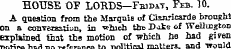
HOUSE OF LORDS—Fbjdat , Feb . 30 . A question from the Marquis of Cisnricarde brought on a conveisatiDn , in -winch the D < ike of Wellington explained that the motion of which be had given Df-tice had no reference to political matters , and would involve no discussiun , except as to the merits and services of the military force employed in the rec « nt events . Every paper should be prch-ucsd , from the breaking out of the insurrection to the latest proceedings of the aimy of . Afghanistan . Moxdat , Fkb , 13 . The Ihike of Wellington , in pressing the papers respecting onr military operaiions in AtfghanistaB , postponed his motion for thanks to the troops employed taere from Tanrsday tutU Monday fiext .
The Noble Dake also , in reply to Lord MosrEAGLK stated , that it was not the intention of Government to imroduee any measure for the alteration of ] he Hank charier , or on the subject of banking , during the presanfc session . A eoatinnition of the act bj which the operation of the usury laws * waa relaxed as $ o bills of three months' 6 a .-. e was , however , contemplated . Lord Cahp 3 eii then , according to notice , moved thai a select cumsuttee he appointed ? o consider the law of defamation aad libel . He explained the extreme deficiency of the present law . its exemption
from amprove-Deni , while boih the commercial and ths criminal code had been rendered more nni-ple and humane , aiid the snamoly it presented as to lie pnnishm-int adjudged to wmt ^ u ia comparison "Birh spoken Ii ;> ci 5 . He proposed tr . e a ppr raiment of a commiitee enh in Gifnd-nee of his own opinions , bni Tva ? cominced iha : private character wonid be best protected , the liberty ol the press secured , and ii 5 lieetnonsn ^ s xe > tra : Bed , by rendering the law mere hnmi ^ e , more ceriiJi , and mure in accordance vriih prevailing oi > ition . Lord BaorsHAM seconded lh 6 motion .
The Lord Chasceu-cb also regretted that the re !< jrni 3 and amendment intended vo hs effeeted had d « i been embodied in 2 . ^ pfciSc m ssure bni neiiher C £ nor Lord Dentia > opposed ths appointment of a committee , and the motion was accordingly a ^ rc-:-d to . The Attomies and S-.-licitors' Bill was then read a second iime ; and the House adjourned .
Untitled Article
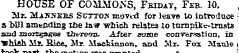
HOUSE OF COMMONS , Fkidat , Feb . 1-0 . Sir . MiJfJfEBS SlTTTOJi moved for leave to introduce a bOl amending the law which relates to turnpike-trusts and morEgaires -tbtrTson . Aider some conversation , in « hieh Mi . Siet , Mi- Mackinnon , and Mi . Fox Ma-ale i look part , themoton w * s granted . * j 3 tlr . Ijjjdsll desired leave to bring in a bill for the ; purpose of preventing personation of votes at elections . : Some msl-prsciie = s , he said , hud been removed bj tfee Reform Bill ; but there wera other evils ¦ w hich that i bill hsd increased ; among TFhiah wsre bribery and the
offence he now sought to prevent . In particular , at the i elections in 1 S 4 J . for the county of Dr ' rby , and for the ! town of Belfast , personation had be-.-n committed to a ! gr « at extent , and hsd b = en proved in due coarse of law . j By the 5 Sth section of the Reform Act , it is sufficient that the person cisiiujnij to voter make answeT to the qafisSons there prescribed , whicii questions if he answer ' " in the affirmative-, his vote must be reHstered . He j proposed , that if a certain Enmba of the bystanders j offer to make 02 th that the rote is not the pe > : son he assumes to be . the rctuming-MBcer shall i lave power—i . ot to refuse the voter but—after ! :
reeoraing , to yrre the vote fortlnrith into the custody of an B * ie 3 dar . t policeman , to be taken before two magistrates , and bcund over to t&ke Ms trial at the next assizes . To protect the oona Jide -voter , the msspstrstes shonid fc 2 Te power of imposing a fine instanigr on any cat fsiEely imputing personation . He wished hs conid s-curs the puuishmant likewise of the tempters procuring thtse personations ; but for this branch of the mischief he eouid not perceive any adequate lemsdy . This was no party propssal , an 3 be should gJadiy xreeiYt su ^ sestaens from any quarter . ilr . Ross , the ilt ? niber for Belfast , vindicated his own committee from any connexion with the alleged personation at the election for that plsce . After a word or t-sro ofspproyzl from Mr * BBOTHKR-10 s , leave was grvtn to introduce the bill ; and the House sojourned .
Moxdat , Febbfart 13 . The Honse w .-nt inro Comcittee on the" snbj ^ ct of the forged Exchequer-bills , and Mr . Gocxbcen rose to announce ths vaeTra of Government je » pectin ^ them . Ee faic , that the objections which he had originally entertained a ^ ajnst compensation had been materially diminished by tbs report- of the GommisaonrTs tppointed last y ? xr to mvesiigaie the case . They had divided the bi ! l-holder 3 into four clashes : ths iirsi comprisiug the great bnlk of the claiiBants , who had become possessors of the : bills in she CDmaoo eour = e of bD .-inRS 5 and withmii '
blam » . _ aie amount claimed by these was £ 187 , 000 ' and thia amonnt it seemed fitting that the public shonM make gooa . Ee second and third classes ' had become holders under cirenmstances ef less ' ] caution , bat Eft cir ^ n := tar-ces undtr which the GoT ^ HiEeBS wend think it right to vrithold the ; compen 3 st 5 on . " With respect to the fonrth class the , ea « e vtas digercu- ; Rr . pa " . o and Solari , nnaided , coald ^ yverliave . S -cted thdrfcads upon this great sca fc . They had placed bills to the amount of manj ¦ huiidrf ds of tfccu > sr > cs of p-ounds in the haods of Morgan , and as much laore in the hands of Mariner . Theam- 'um itsel : -was a circumstance of ? n ? - ;
picien : = iii ! mcr- £ B < piciou 5 was it that they would Dot panni ! thesa ' e of any one of tho = e blls . The ' general resnli would be , that of the £ 377 , 000 found in circulation , tre public might properly be called on , to make good 3 ti _ amount of £ 25 " 2 . 000 . He had , of ct-n 7 ^ e . heen unnTlliag 'o throtv such 2 . bnrden on the coanrry ; but he diu ? eel , though this was not a case "where any strict irgal right exieted , that it wa * one ir : which the circamr-La ^ ces were pecmiar . the person "who committed tl- ~ forgery taxiRg be < -n then high in a Government liSj , and in ^ rasttd by Government itself with the pupr-T , ; he se » l , and all the other materials and facilities which had enabled him to effect the decepticn .
Mr . wxlll&sl ; cor : plained that tne Comnns ? iC 3 rrs had taken the er ^ -euce in an imperfect and unsatisfaeicry way ; t , u-i he thought tha . t want of due cannon was imputaije : omor « oi the parties than the one class WJ 1 .. 31 the Government now proposed to exclnde irom the eiMapeiisatioa . Colcnel SisiHOiiP incugtt the los ^ ought to fall npon Lord Montsaglk and reMnmended an address to the Crown for removing him from his situation . Hi- HtDLE wished u > k ^ ow whether GoTernment had not obtained sense iciormation from Rapallo "whicii had dui b en oommnnissteil , but which pointed at other par ies as having shared with Beaumont Smith , or ciutributtd to ihe loss by their connivance or nfcfcl gri , ce ?
Mr . EoxsrcK inquired "whether great part of the loss ha . d not bten menrred during a s-ix months ' absence of the CovEroli ^ -r ; uad referred 10 tha word 3 of the Act of Par / mmeni regulating his dnties , which auiborises only such abst-nce as is occasions-1 and
necessary . 31 r . Jisns b ? £ L ' sd to kcow if precauiiens had iecn taken to prej .-at j uture losses ? . Mr . GouLBiras di-1 noi ksow at what points of iime the losses had tak « i place , nor what had bten the periods of ihe ContivjlJcr ' s absence . An Act of Parl ^ aaaent had parsed zo ^ sard against such losses in future . Sir J . Dcsb rr . _^ -5 ted , that official persons , like R-auEacBt Smith , ought not to be Permitted by Government to connect themselves wiih city trans- ' actiou 3 at all . " Mr . F . BaBxng visdjrsted Lord iiuEteagle from the impntatioii « f r . r ^ lisent absence . He approved the prudple on w :.-. j % lr . Gonlburn had acted , and the iu : ~ h& had dri-ni between those who were and those Wiio were vx ro receive c « a : pensauon .
Ccicjr ?! SiBTHoi . p msi-icd upon the great amount f of thebiUs siguea G arin ^ the ab 5 ei . ee of Lord Moxteigle . Afitia few wof = fr- m Mr . Tartar , Mr . Escorr expressed M ? rri . T--t ihzi soeh a mte of pabDc money Ebonlo beaskto , v , ' -ile it siiJl was left a matter ot obsrnrjtj wht ^ brr ¦ h * - ab ^ ae * ofa high pobiie officer , Curing which tne losses haa taken place , was a culpable one or not . _ Sir T . "Wiide ? r « aed , that there was no r . ne particular period to -vh . cn ihc m ^ chief was referable ; the forgeries hau luiien place from time to time , wi ^ enever ihs t-x . ^ .-- le * ortbe conspirator .- r ^ q ii red
as-apply He * i ; -x ^ T .. d iiis compensation ; the p ^ b- iic could no : haT * pr ^ vecicd themselv = ^ bv auv H ^ ^ T " e "" " - wa £ w - ^ t t < k \ A& as if » M i " ¥ n t : '! ' ™ w ^ ich ca 5 e a hc : der wonld only hare had 10 show his oir . uiie a fair tC ^ i ^ . ^ CaBC > io of ae Exchequer had drawn : S ^ SST 'T : bat e ' tbe fourth c ^ ss . v , ho were Si ^ ^ f ^ r ^^ —i a ^^ i 2 oS ^ 3 ktn ° ^^ uer-billB U > : ho ^ e MediK , ] L ^ ariiies Bill ^ reati a Be ^ d i
THE DISTRESS OF THE COUNTRY , lord HowicK moved that so much of the speech of her Majesty at tbe optning of the present waionor ParLapent aaief . jredto tire depression of the manu-Sf ^ v ^ ^!? k . ** " conaUy' 8 bonI 4 be read by the elerc at ths table . ' The following pvragraphi were then read : ' " 3 iy Lords and Qenflemen : —Her Majesty regrets ths diminished receipt from aonw or the ordinary sources of wrenue . " Her Majesty fears that it mast be in part attributed to tbe reduced consumption of many articles , caused by that depression of the manufacturing ^ industry of the eoimtry -which has jo long prevailed , * ana which her Msksty has so deeply lamented . "
Lord ^ owiCK again ? oat : Ur . Speaker , I rise for tbe purpose of * calling the attention of the Scase to &&t passage of h « i Majesty ' s speech which bas just been read , said to move that the Henbe do sow
Untitled Article
¦ resolve itself into a committee of the whole bouse to ! take that passage of the Ryyal Speech inVo considers-! tion . My object in making this motion is , to call upon I the honBe to pronounca a decided opinion , whether the I distress under which the country now nnhappily ' labours it not of such a character as to impose upon Parliament theaonty tf some immediate interference upon the snbjecL —( hear , hear ) His " Lordship , after ' stating that he believed he was taking the regular and parliamentary mode of brnging the suVject forward , ; and disclaiming all hostility to the govemnifcTrt . jiroceeded 1 as follows : —I am aware that the more difficult part of j the task 1 have undertaken will be to make out the I Becond part of Hiy case , namely , that the causes of I the distress are not altogether beyond the reach of
' legislative interference . Indeed , as to the first part of ! my esse—the existence of distress—this is so severe aird general , almost beyond all former example , that I may content myself with resting the mattr simply npon its notoriety , and upon the admission of ; the facts which her Majesty was advised to make in : tha * part of the speech which has jnst been r * ad at the table , I shall , therefore , pasB over this part of my subject as bntfly as possible ; and will merely state to you—1 hope at no great length—what is at this moment the actual condition of the country . Xet me , then , remind yon that time is now to be reckoned not by months but by years —( hear , hear )—during which the manufacturing and commercial interests of the conntry ( to use her Majesty ' s own words ! have been in a state
of great depression—' . { hear , hear ) . That distrtBS which , in the first instance , afiVcted oi , ly one great branch of our national industry , has lately—as must always , in my opinion , be the case—ihear , hear )—extended to all the other great interests of tbe * tate . I bel'tve Hon . GrBtlemen opposite will not contest the truth of what 1 am now stating , that the pru * nt c-ndition of the agricultural interest is odb of great depression and distress—{ hear , he 3 x ) . It is sufiWrhig from a depression of prices , arising from a diminished consumption of some of the most important articles of our manfactnring produce . —( Hear , hear , hear . ) The coEsv-quence is , that the farmers are everywhere exposed to great difficulties , and in many parts of the country those difficulties extend from tb < m to the agricultural
labourers , the reduction of whose -wages , in various parts of the conntry , we must all have seen announced in the newspapt-rs . And even where wages have not been rednced , I believe thtre has been almost an universal scarcity of employmrnt , and which nus been too often seriously aggravated by the return to the rural districts of numbers of men , who for many years have obtained ample employment from t * ie great seat 3 of our manufacturing industry—{ hear , bear . ) The mining and shipping interests of the couatrv have more than participated in the general pressure—( hear , hear ; They fe « l more than their share of the general distress ; while the "retail tradesmen and shopkeepers in the metropolis , and the towns throughout the kingdom , are in a similar condition—( hear , hear ) They are al » nce
exposed to the difficulties arising from an increasing wpight of poors * rate , and a diminution of consumption . In the course of last summer , it became a matter of no inconsiderable dimeuUy in many towns to collect the poor-rates , owing to the frightful diminution of business , a diminution which naturally follows from the reduced earnings of the working classes , and also from the reduced incomes of p « isons in the higher and among the more wealthy classes . Because a large proportion of the more wealthy clssses eithtr directly or indirectly derive their incomes from the prosperity of the ziational industry , they , also , are nov beginningand I am afraid they are only beginning—to feel the effect of the present state of thincs . And even those whose incomes have not been at once affected byline
general distress have been exposed , in common with others , to that reduction of their property by i the new and direct demand made upon them ' to meet the exigency of the publio Bervice . Th « consequence of all which has been , that , whether in tbe , lower or the higher ranks there is hardly an individual ! who has not been compelled to retrench some natural 1 expense , and give np some luxury to which he baa been I accustomed . This is neqessarDy felt by the tradesmen , , tbe artisa s , and the shopkeepers by whom the con-. sumption is supplied—( hear . haar ) . Snch , I believe , ¦ to be a most unex ggerated statement of the actual con' dition of tke conntry—( hear , hear ) . I do not wish to I go into details ; 1 shall therefore avoid them &s far as practicable . I will not state any local circumstances .
| « rX 78 pt in & few instances . I think I ouaht so make good the general de * uription I have given 0 / tbe condition of the country , by referring very shortly to what I 1 have asceitaintd to be the present condition of tbe ' important town I have the honour of representing , aod ' ths county * itb which I am closely connected . Since I gave notice of this motion , a great deal of informs-1 tion has been sent to me from various quarters . Accounts of distress from one end cf the kingdom to the other , of the meat appalling character , have been receivud by me ; but 1 think it better to leave it to ' other gtntlemcti to state the local circumitAncts of the towns they represent , and confine myself strictly to the large town I represent , and the county with which 1 am most closely connected . With respect , then , to the state of
the town of Sunderland , I have obtained information wZuch I believe to be perfectly trustworthy . I need not tell Henoorible Members that the town of Sundcrland is siainly dependent upon those two gre& » branches of out national industry—the coal trade and ahipping . The . building and B *» igation o ? ships , and the carriage of co ^ ls have been the chief support of that town . In , the first placejTfith respect to the coal trade , the statement I have received is , that the coal trade is in a deplorable statf . "When the present engagements ( which are for a year ) txpire there must be a reduction both of the number of pitmen employed and of their wages . Tbe pitmen , and all urdergrunnd workmen engaged in raising coals , are generally hired by the year , -which engagements will
terminate on the 5 th of April ; and unless some great cbanjre take place on the 5 th of April , there ¦ will be » considerable reduction bosh in the number of men employed and in the amount of wages paid . BonouraMe gentlemen may not be aware , perhaps , that tbe eosimon agreement at tbe collieries in the north of England is , that eaeh roan shall have a certain number of dsys" employment in a fortDieht . Now , the proprietors have already reduced their men to the minimum number of days which tbe agreement allows . Then , with respect to the workmen employed above ground—vhe carpenters , blacksmiths , and all other persons employed about the collieries , all those were redueed from Saturday , the -4 th of the present month , both in the rate of wages paid , -and tbe cumber of days of employment , they being now
employed ten days in a fortnight , instead of thefull number of days . This , of course , made a serious reduction in the money received by these persons . There was no alternative . The proprietors could not possibly continue to them the same extent of work . They had the option either to turn off the onc-s'Xth of their hands , or to make the reduction I have stated . It was considered mo 3 t to the interest of the persons employed that the reduction should be made . This info-mstion I have derived from one very large establishment ; but my informunt tells me that the same thing has taken place in several other large establishments in the county of Durham , which ship their coals from the Wear , and that hu has reason to believe that it will be very general throughout the coal districts . I now conic to another great branch of
trade carried on at Sucdtrland . 1 am told that in 1840 ship carpenters received from thirty shillings to thirtyth ; ee shillings a-week . Those now employed r eefcive only from eighteen to twenty-one shillings a-week , and fceveral have left the town for royal or other ship-building establishments , Many have gone to sea , at sailors ' wages , whereas three years ago they could with difficulty be procured at twenty shillings a month mrre than a common Eaiior " e pay . Tbe wages of other classes in the toTrti have declined in the same proportion . Two years ago there wtre ninety chain makers in full work , now only thirty-ona are employed , and these only two dayB a-weeK or one-third cf their time . It may fairly be said that one-na f to two-thirds less is paid in wages than two years ago—( bear , hear . ) It iB impossible that
the working classes can Buffer to such an extent vrithom their employers in some degree Buffering also . The statement furnished to mo atiys that , in the year 1839 there were eighty ship-builders in the port of Sunderlaud . of whom thirty six have failed , to the ageregate amount of £ 320 , 000 ; five have declined business , leaving only thirty-nine out of the eighty who now continue that branch of trade—( hear , heaT ) . Twenty merchants and chain and anchor-Emiths have tsiicc te tbe aggregate amount of £ 100 000 . A great number of grocers , publicans , and omers have failed to a laTg ? amount , of which no account can be obtained . There are in the H ; gh-steet alone from forty to fifty Ehops unoccupied , in consequence of the greatest part of the vrevious tenants having become insolvent To this
statement iB added a fact , which is very remarkable , aa shewing the manner in which this distress existing in larg .- towns seriously affects the agricnitura . community . The quantity of meat Fold , as Etattrd by this hutcners , was not more than one-half in 1842 , to what it was in 1841 —( hear , hear ) . . Now , let me confl . m ibia representation by alluding to what is tbe present condition of Sunderlasd with respect to the poorrate ? . This subject was mentioned a few days ago by my Honourable Friend the member fox Noith Durham ; and 1 believe what he then stated was prt-f y nearly accurate . The borough of Sunderland , consists of three parishes ; the parish of Bishop Wearmouib , and tbe parish of Monk Wearmouth . The first parish consists chitrfly o ! the working classes , and the rates during the the lost six months have been eighteen shillings per annum on two-thirds of the rack-rent , averaging for the vrhole year 37 s . 3 ^ 4 . In Bishop Wearmontb the inhabitants of which belong to the wealthy cl&ssts ,
the poor-rate has been only 4 a , id . per annum on twothirds of the rack rent , while in Monk Wearmouth the rate -was 12 s . per annum on two-thirds rack-rent . Thia large amount of rating is in itself a very irightfnl state of things . But I think a more correct view may be obtained of the destitution and misery existing in the to-wn of Sundeiland , by a statement ol the sum actually expended for the relief or the poor in different yean . 1 bare snch a statement before me . I find that the amount given for relief only { exclusive of all other charges ) in 1837 -was £ 7 , 035 ; in 1838 the sum paid -was £ 34205 ; in 1 * 39 , £ 9 . 873 ; in 1840 , £ 10 . 381 ; in 1841 , £ 11 , 721 ; and in 1842 the sum expended in relief alone for tbe towa or Sunderland was £ 14 , 232 , being somewhat more than double the turn wnich only six years previously had beea expended for the poor . Bnt tiiis is not all . Bven this large sum expended for relief has been found inadtqaate to meet tbe pressure of distress in that town , in consequence of which the more
Untitled Article
v :. y inhabitants , although not well able to afford it , ha . tv en compelled to subscribe a sum amounting to £ 2 , 192 , besides giving away frem 800 to 1 . 000 tons of coalB . to relieve the existing distress . Such is the atate of thtDgs in Sunderland ; but I believe that Sanderlaud affords by no means o ; e of the worst examples < f the suffering which bow prevails . Instances of greater suffering and still more severe distress might , I believe , be produced from other parts of the country . Because , although undoubtedly Sunderland has complained of having been very seriously affected by that most impolitic act which imposed a duty upon tbe export of coal , tbe mischievous consequences of which have exceeded all that were anticipated from it , although that measure has been to Sunderland a special aggravation of
the general distress existing there ; yet , on the other hand , it is true that the branch of industry in which the inhabitants are mainly engaged being the coal trade , and coal being almost anccessary of life , the demand fer that article is not certainty affected nearly so soon as the demand for any other commodity , the distress therefore , in the north of England , did npt eommence so early as in some other parts of the country . At this moment the consumption of coals in London has not materially fallen off ; and Sunderland producing the beet of coal , of ceurse that town is to a great extent exempt from the severe pressure which falls npon other places . But 1 think , even in Sunderland , I have made out a case of distress which is well worth tbe most serious consideration of this Houst—( hear , hear ) . Now .
having taken one large ti-vn engaged in and mainly dependent upon our shipping and mining industry , I now wish to refer to the state of a great agricultural county . I have written to a gentleman in the couuty of Northumberland , to ascertain what ths real state of things is in that county ; and I am free to eay that , upon the whole of his statement , things are much less unfavourable there than what I have seen them in country papers stated to be in other parts of England . The statement I have received is , that th «) formers » rt > beginning to be very seriously distiessed ; that the low price of meat affects them very seriously . But I was attempting to give an account of tbe actual state of the county of Northumberland . Hitherto the pressure of distress has not faben much upjn the working classes . Work
is somewhat scarcer now tban it usually is , hut there has not been any v «; y perceptible reduction in wages , except in a few instances . I » a few instances I have heard that it has been tfce case , but it has not been so generally . This may be accounted for from the fact , that large capitals have been V 3 sted in farming in the county of NortbumberlaDri , and the cultivation of the land there has been carried on upon a gr > at scale for several years ; and the farmers being well ( iff , they are better able to bear tha first pressure without suspending employment , and thereby immediately visiting the consequences , of any unfavourable change upon the Working elapses . But symptoms are already apparent that the working classes , among the agriculturists , cannot long escape from their share of the distresses of
the times . Tbe farmers are beginuing to find tl . ffiuulty in bringing forward their spring rents , and it is impossible that the labourers should not suffer . Tbe wholesale houses complain that thay cannot obtain payment as formerly from the small shopkeepers , and the drapers and others in country towns have experienced a very perceptible reduction of their , busineS 3 . I am a ' . ao told that although the labourer h . 18 not yet actually suffered , yet that all the nrtiz ^ ns and handicrafts connected with agriculture have severely felt the depression—blacksmiths , carpenters , wheelwrights , mnsons . plasterers , and others , have found greater scarcity « f employment than hitherta . This painful state of things has been much aggravated in various localities by the number of workmen who have returned to rural
districts , having been no longer able to find occupation in the towns—( hear , heir , hear . ) Thu increase in the number of casual poor seems a remarkable symptom of prevalent distress . I bave described Northumberland as in a better conditior than some other counties , and it ought to follow that we feel the evil of casual poor proportionally less tban elsewhere ; but such does not appear to be the case . At Alnwick there has been a large increase of tbe casual poor who have bein relieved , and I wish especially to call the attention of the House to this startling facttbat in 1841 tbe number of casual poor relieved was 1 , 826 , while in the year just closed the number amounted to no fewer than 3 . , or double what it hud been in 1831—( cheers . } I am sorry to add , that the
evil , instead of diminishing , se * ms at this moment to be on the increase : in the current quarter , tbe number of cases of casual poor relieved , exceeds tbat of any former qnsrter , even of the year which , as I have said , presented double the number of cases of the year 1841—Ihear , hear . ) When only half the quarter has expired , 730 casual poor have been relieved , while the heavies * , quarter of the year 1841 was Only 941 ; if tbe second half ot the quarter be in proportion to the first , the increase , as the Bouse will perceive , will be enormous . Having thug t ken one gri-a' town and one agricultural county , I think I am justified in saying , that tbe distress lamented in tbe speeeh from the Throne , and which we might thence be led to inter was confined to the manufacturing portion of tbe kingdom , is wide
spread and almost universal . I say that I am justified inasjnming this fact , and the more so when 1 look at the falling off in the revenue , to which the Government Las thought it right , in the exercise of what I consider a sound discretion , to direct the attention of Parliament . I do iiot feel equal to engage in any minute examination of the state of the revenue , but I may notice one branch which has always been coTi&itiered an indication of the condition of ihe the working part of the population . Of course 1 a ) lu < ie to the excise ; and I fled tbat in the year enriirg the 5 h ( f January last , as compared with the year ending the 5 th of January , 1842 , there was a-falling iff of not , less , in round nunibera , than £ 1 . 173 , 000 . —( Hear , bear . ) In the last quarter , as compared with tbe com-spondiDg quarter of tbe former year , the deficiency was £ 717 , 600 . I know tbat an attempt has been made to expiai'i this state of things in two ways . It has been said that a considerable effort was made at tbe close of 1841 to diminutu
the balance in the hands of tbe collectors of the excise , .-o > d that tbe revenue of that year was therefore apparently swelled : it was argut rt from hence that it was not fair to make a comparison bttween tbe excise revenue of a year bo artificially augmer . ttd , and tbat of a year wfeen only the ordinary receipt was in contemplation . I am unable to say how far this txplanation may or may not be just ; and the best teat may therefore be obtained by going b * ck to a year farther , and by ascertaining what waa the amount of revenue in the year ending tbe 5 th January , 1841 . The sum then received was £ 4 , 016 , 000 . while the amount in the year enfiing 5 th January , 1 S 43 . was only £ 3 022 000 , show ing a deficiency of near . y a million , or £ 994 000—( cheers ) . The other circumstance adduced to account fer the dtficiency is that which waa mentioned by the ripht honourable baronet { Hit Robert ft . el ) on a former night . Be said that the bailey in 1841 was deficient , particu-Jariy in quality , and tbat it had occasioned a consistable defalcation in the revenue derived from malt . But
make whatever allowance you will on ibis account , still 1 think the house will agree with me in saying , that in two years , in spite of an increasing population , and not including Ireland , which was not affected by the new taxes , and wben the temperance system waa in progress in Great Britain , only in two years there has been a failing off of nearly one quarttr of the whole amount -A revenue depending on tbe consumption , by the great body of the people , ol articles which are to be considered more the necessaries than the comforts of life— < hear , hear ) . Let me ask , then , whether this is not a fearful proof of the extent to which misery and destitution must have prevailed , when we see such forced ecouomy . not in the ) uxuries . but in the merenecessariesof existence—( hear . ht-ar , ? Let me ask tbe House to rtfl ct on the degtec of
suffering which must have been ensured before such an effect was produced ? A forced economy is painful in every rank of society ; even the wealthier classes , us every body must perceive , have retrenched in consequence of the diminution of their means ; it has been some degree of suffering to them to forego wha :. were avowedly luxuries and indulgences to which tbey bad long been accustomed ; but how keenly most the poor man have felt , when they were compelled by circumstances to dispense , not with luxuries—not even with comforts—but with the absolute necessaries of life—( cheers ) ? What the higher orders felt is only ii . coavenience : what the lower orders felt is absolute deprivation and destitution —( bear , hear ) . Tbe working > jjan , who before obtained merely what would scantily maintain himself and
family , saw himself under tbe painful necessity of abridging even that , and by dtgrees be has been compelled to relinquish not only his tobacco and bis beer , bnt his butter , his sugar , his coff-c , and his tea—( cheers ) . These articles no longer form part of his daiiy meal—ev * n bread ia becuBiinn a luxury—( hear , heur ); and it is gradually , but Inevitably , giving way to aoiue coarser and cheaper substitute—( cLeeraj . Ho eaw hiB wife and children reduced from comparative neatness to rags and beegaiy ; he was reduced by toil , dispirited by anxiety—even hope haa forsaken him : week after week his condition is becoming worse ; he is already nearly destitute , and absolute starvation stares him in the face —( bear and cheers ) . Sufferings tuch as these ere felt by . tbousauds of families
¦ who , not long since , were -well-f ^ d well clothed , and whose industry rendered them the comfortaole , though still the working , portion of the community These enjoyed little more than a sufficiency , tvtn in good times ; but in bad their suffWrings must be indiscribably acute . Tha > such a state of things exists we are told by the figures which inform us of th « falling off ia tbe revenue , and it is to this diminution that reference is : made in the speech from the Throne . I may , perhaps , be told , great as the distress is admitted to be on both sides of the House , that we may now hope that we have passed the worst ; that some symptoms of improvement are beginning to manifest themselves : that more cheerful prospects present themselves .
and that we now behold the fiawn or more prosperous days . If I am not mistaken , since the commencement o ! the session the Right Honourable Baronet has expressed some opinion of the kind , and I most earnestly hope tbat that opinion will be borne out by the result No wish is nearer my heart than tbat bis happy anticipation should be realised ; bnt it is quite impossible for me to forget that towards the close of last session , when the subject of the distress of tbe country was , as I think , most properly brought btjfore the House by my Hon . Friend the Member f * r G ; een « ck ( Mr . Wallace ) the Right Hon . Baronet used precisely the same language—( much cheering . ) I cannot forget the words he employed , founding his anticipations of improvement upon signs , I fear , no more certain ot satisfactory than
Untitled Article
those which he may now agj . in tell us he discovers . I cannot forg « t that , since the R gut Hon . Baronet used that language , in spite of the almost unexampled mildness of the season , which , in the present situation of tbe country , must be looked npon as a mercy for which we cannot be too thankful—( cheers ) , —sinco , had the winter keen severe , tbe misery must have been incalculably aggravated —( hear , hear )—in spite , I say , of that bent-flcent mildness of the season , the anticipation of the Right Hon . Baronet has not been realised—his hopes have been disappointed , and the improvement has certainly not extended to the working classes —( cheers ) . Tbe information I bave given from Sunderland , be it remarked , is only ten days old , aud an additional reduction of the wages of tbe working
classes may be almost hourly expected . The distr ss , therefore , continues with unabated severity amo g the labouring classes , and I cannot avoid expressing my conviction tbat we have no right to expect that there will be any permanent improvement In their condition , unless Patliaruent will , at length , consent to interfere and endeavour to remove some of the causes of distress . If there be not something amiss in the social organisatien—something tbat jars and is out of order in the working of the political machine , why is such distress experienced ? Do we not possess all the advantages necessary to make us a happy and prosperous country—( cheers )? Has our soil lost its fertility ? We have hnti a season almost unexampled—a harvest which , at all events , her Majesty ' s Government coositlms one of
more than ordinary abundance- ( hoar , h an . Have we sacrificed tbe immense accumulation of fixed capital by which this country has been long so remarkably aud enviably distinguished ? Has our energy abated , or cur enterprise boe-n destroyed—( hear , hoar ) ? Why , then , with all « he elements of wealth—with everything tl ' . at should make a country prosperous—is every branch of industry labouring under difficulties , and suffering severely from distress—^ cheers ) ? I ' answer , tbat there must be some nason for the unhealthy state of affairs , and that it ought nut to be beyond our reach to ascertain what that reason is—( hear , bear ) . Lord Ho wick then went at great length to expound the causes whichj bad been ausicued for the perverted condition of affairs which be had depicted .
An inconvertible paper currency he said had been proposed as a remedy ; but Sit Robert Peel had ceuiolished that notion in a late remarkable correspondence Reductioa of taxation had been also proposed ; but . in proportion to its means , this ^ country was as lithtly tnxedas any country in Europe . OveT-specilation has been asaigntd as a cause of our distress ; but the Government , he was sure , were in possession of information which would keep them from giving : iny countenance to that idea . How could a nation suffer from an over-supply of every thing which its population required J The English Poor Law , too , hail Njen affirmed to he a cause of the suffering of the' working classes ; hut Scotland shared in the dia ^ reaa as weli as England . Tne real cnuse was the remarkable coincidence of a very
iow rate of profit and a low rate of wages , produced by intense competition , which again was produced by the want , of an adequate field for the employment of capital and labour . To extend this field ought to be tbe great object of all our exertions ; the natural field for our Industry was confined by barriers and restrictions ; there were laws on our ststuta-book which bad been passed for the express purpose of restricting our foreign trade , especially in tbe important article of the food of the people . That the removal of these restrictions wou d immediately contribute to extend the demand for employment , bad been proved by the Vice-President of tbe Board of Trade ( Mr . Gladstone ) , when defending the new tariff , with relation to the importation of cattle . Our export
was measured by our import trade . Happily / our internal trade had been practically but little hampered with restrictions , and the const quenee was a degree of prosperity unknown in those countries where internal restrictions impeded intercourse , and this was a practical confutation of those who said that the removal of commercial restrictions was a theoretical id «? a . But this very policy of restriction rested on a theory now universally exploded ; aud he called upon them to abandon a policy whose fruits were a distressed people and an impoverished exchequer . Tbw principles he had advocated had been adopted and expounded by S r
Robett Peel , when he said that we should " sell in the dearest and buy in tbe cheapest market ; " and if the Government were not prepared to ca > ry out their principles , why bad they unsettled everything ? Toey should not , in tbe present condition of th country , halt between two opinions . The Noble Lord concluded by moving , ' That this House do resolve into a committee of the whole House , to consider so much of ht > r Majesty ' s speech , as , refvrs to that depression of the manufacturing interest of the country which has so long prevailed , and which her Majesty has so deeply lamented ; " and resumed his seat amidst loud aud general cheering .
Mr , Gladstone admitted the fairness and temper which pervaded Lord Howick's speech . The Incometax had been aocused of adding to tbe existing digress : hut it bad this great merit , that it reached those enormous accumulations of capital which could not otLcrwise be compelled to contribute to the expenses of the btate It wns the melancholy feature of the condition of this country , that , coiocidently with a diminution of the power of consumption amongst the working classes , there was an augmentation of the means of enjoyment , and an nccnniul . ition of capital amongst tbe upper classes . Lord Howick repudiated the idea of over-production and ovur-speculatioh : but the shipping irt-trtst itself affwnlbd a most rtinnrkalle fx » m )<; e of overtrading ; hitd it gone on as it had been doing , the
shipping of this country might have been doubled in ei ^ ht years ; and a great portion of this over trading was couru . 'cted with tbe bo ough of Sundevland . The state of the Excise was not satisfactory ; but in adiiucii g it as showing the privations of the people , Lord Howuk had selected a quarter in which the riefloivney of the returns was greatly increased by a particular circumstance . What was tbe ( bj-ct of tbe motion ? That the House should resolve itself into a committee , to go into an inquiry which was to aqit . tte every iuterest , and once more disturb the entire commercial comniuiiity . The tariff , during the last session , was a known measure , yet it bad disturbed , during its progress , all commercial transactions ; and this motion , litwinu no known and definite object , would r > peat aud
agHra-vate similar evils . Lord Howick should have c- me forward with a definite proposition . He , inoeed , askeii for an extension of the field f <> r tho employment of cipitaland labour , and he ( Mr . Gladttflnt ) agreed with him . But the Noble Lord had not ventured to say to what extent he would go in the removal of restrictions ; he tnuuted Svr Robert Peel with halting bttweeu two opinions , and was himself doing tbe same th'ng . What Agreement was there between Lord John Russeil and his friends , who advocated a fixed duty , aiid Mr . Villiers and the advocates of a total repeal of the Coru Laws ! The whole question waa not aa to tho abstract . impolicy ot restrictions , fi .-r the commercial legislation of this country , during the last twenty-five years , bad recognised the necessity of
their removal . Bnt the question was simply , what pre judicious reluxations ? The principle of the Go vtrnmeut , in , their measures of last yeur , was to effect cha :. g .-s with the least shock to existing interests , ami the hnialltst displacement of labour ; and both tbu new tariff and the new corn bill , while extending tbe means of employment for capital and labour , had not materially affectid established intercuts . What was tbu proposed substitute for the Corn Law ? A moderate fixed duty for pi otection or for revenue ? It was askt d why w « applied to corn a different principle of legislation from that which was applied to other articlts ? The answer was , that corn had bsen differently dealt with for ageB ; und . under a &yBtem oUong-continued protection , enormous investments of capital had taken
place , which it would be ruinous suddenly to disturb-It was tme that corn and cattle should be similarly dealt with ; and in the revolution ot ag « s and if circum 8 tar : Cts the time might come when tfeey might be S ) treated . No commercial law can be permanent ; but tint of protection to home agriculture was bo ( uud he was not prepared to abandon it , so long as protection was applied to any interest . Ho agreed that an i xti'nsion of the field of employment for capita ! and labour v » B 3 the gte&t thing rtquirtd by this country ; but Burke had said that ; the statesman who legislated without reference to circumstances was " sturk inad , metaphysically mad . " He did not argue that an additit nal importation of foreign corn would displace British agricultural labour . Bnt he was not prepared to saenfico a certain tmp . oyment of our labouring population to a speculative notion that an increase of our foreign trade wuuld necessarily follow the abandonment of our
cornlaw . He disclaimed the idea that host . le foreign tariffs could ultimately oppress the trade and commerce of this country . But the inraiediata fctf-. ct of these anti-coBiuiercial measures waa detrimental ; and werq we to go on without reference to the ccursr of other countries , in the vague hope that we will teach them , when , instead of making our new tariff , they were t ikiug an opposite coarst >? The United States , tor iustaccs , were lurgaly interested in the reductions and alterations wiiich we bad effected ; yet , at the very time we had been opening our ports te their productions , they were raising to an enormous height their duties on our manufactures . The removal of restrictions iu our conimtiei&l code was a question of time and degree , aivi had been so considered by every G'jverntneut in this country for the last frwenty-flve years . But he resided the motion as one fraught with disaster to every established interest , aud which would dieturo instead of
benefit cemmerce . Mr . Labouchere admitted Mr . Gladstone ' s ability , which in the speech he bad : just spoken had been evinced by the dexterity with which he argued both sidea of the question . Had the measures of the late government been allowed to pass intolaw , the country would have baennow in a very different condition . It was of importance that whatever Corn Law this , conntry adopted should be permanent ; and the great objection to the Cam Law of last session was its instability . It was clear that Mr . Gladstone ' s candid and intelligent mind was nude up
on the impolicy of the sliding scale ; and when he spoke of the probability of its alteration in " the revolution of ages , " he must have meant in the course of a few sesaionB of Parliament . That the distress of the coantry arese mainly from diminished power of consumption was evident ; and the session ought not to be allowed to pass away without devising measures of relief . But when it waa said that the question waa , in what degree the coantry could bear the application of commercial principles of legislation , the truu meaning was in what degree the country gentlemea Would bear them . He
Untitled Article
called on them to support Lord Howick ' s motion , and go into and inquiry as to the meacs to be adopted to save this great country from ruin Mr . Ferrand rose , and moved that ; the debate be adjourned , but was Wt with loud cries of " Go on , go on . " He bad moved the adjournment of the debate , because , in discharging the duty which he owed , not only to himself , but to those who bad sent him there , he would find it necessary to trouble them at some considerable length ] After the speeches of the Noble Member for Sunderland ( Lord Howick ) and the Right Hon . Gentleman ttie V ice President of the Board ol Trade , be was sure | the country would be firmly convinced tbat it was high time that the principles of free trade were laid aside , and that they should return
to the good old principles of their forefathers . Neither ot them had attempted to grapple with the gt « at question of wbat conduced to the prosperity of the agricultural , the commercial , and the labouring classes of the country . They had j been given to understand that the measures of last session were intended fer the welfare of the working classes ! ; but it was now admitted on all hands , that in no degree had they added to or in any way revived the commercial prosperity ; it was high time for them to consider whether the time had Hot arrived when tbey should decide , not only on not going on further in the sirae course , but whether it would not be better for them to recede . The conclusion oi the spaech of the Right Honourable Gentleman proved tbat they were in a jwrong course . He said that all the
attempts to induce other countries to adopt the doctrines of free trade had been failures ;—nay , more , he told the House that Amtrica , instead or relaxing her laws , had imposed additional restrictions upon our trade . During the recess he had thought it his duty to inquire how far the measures of Government passed during the last session had tended to increase the distress amongst tbe people , and from calculations which he had ma < le at bicennial periods ! from 1800 he found , that whereas wheat in that year was at £ b 133 . per quarter , the wages of a woolcomber were £ 1 per week , and that then the average of ¦] prisoners in Wakefield prison was 607 . In 1810 the price of wheat per quarter was £ o 6 s . 2 d ., and the twageB of a weaver 16 s . to 17 s , and those of the woolcomber 19 s per week—the average of
prisoners at that period was 492 In 1820 tho price of wheat barl fallen to ! £ 3 7 a . XI ** . ; but to show tfcat tbis had no effect on wages he was prepared to prove tbat they were at that period higher thin before : the woolcomber was then receiving 19 s . ; but in 1830 , wben the Whigs first so ' zed the reins of government , when they came in on tke false principles of peace , retrenchment , and reform , land then involved the country in most unjust and disaraceful wars , and had extended a system of the utmost extravagance throughout the land . —at the time they entered office , when the country waa in k atate of prosperity—( cries of " QU , oh ! " )—he repeated it , they found the country prosperous , contented , andrbappy—( laughter )—they found an overflowing treasury , with a safe and steady revenue .
and they left both bankrupt—( eheers)—they thrust themselves upon the country , and by their misrule , when tbey wore turned out of office , the wages of the weaver were reduced from 16 j . to 8 s ., and the wojIcomber suffered equally from their incapacity . Was the country prepared to < take their measures after thej were themselves driven rrpm office by an indignant constituency ? What was the conduct of the Right Hon . Baronet previous te that ( period ? How was he spoken of by those connected with all the ruost valuable interests , in the country ? Why , at that time all of them joyfully hailed him as their leader . The present Premier bad been lauded and toasted through England as the conservator of all its best interests , ' and during tbat period the Right Hon . Baronet had made a speech which had
been published , corrected by himself , and in which he said , " The principle of total repeal of the corn laws I fully understand . U is a magniticient scheme for introducing into our intercourse with foreign nations the principle which ousjht to regulate the commerce of' a great country certainly within its own boundaries , but which I doubt the possibility of applying beneficially to its external commerce , in a statw of society so coropli-: en ted , involving interests so enormous , and which have I Rtown up '' ( the Right Hon . Baronet went on to say ) i " under a system of protection . I cannot' ( he added ) j " relicquish that principle , which however theoreti-; cully defective has in practice allowed such an establish-I ment of our power . ? ' After this came the gbneral elec-1 tion : and tbe great contest between the two parties bad
j been between the rival principles of free trade aud of 1 restriction . This had been the question expressly ! brought before the electors of Yorkshire by Lird Morpetb : the handwriting was said to be on the wall , and it was for the electors [ of England to read it for or against I protection . Thus it wa 3 that Sir Robert Peel ob'niaed i office—pledged to protect the best interests of the j country—( cheers from the Opposition benches ); but what had the Right Honourable Baronet done ?—I (• ' Hear , hear , ' frorn the same side . ) He had attacked 1 those interests by undermining them through the ¦ principles of free ; trade . iCheers from the Op ' position benches . ) Tbe measures or the Right Hon . Baronet hnd given a ureat sh'ick to the great interests 1 of tho country ; and it was the Juty of those
' who bad pledged ! themselves in tbe most solemn ¦ manner to their constituents to stand firm to their promises ^( hear , hear , from tbe Opposition benches ) . ¦ For himself he hadjavownd his resolution to regard no i interests but those of his country , no motive but the : general weal ; and be would not—to support any party ! or any Government—a'lbtre to those wh »> did not stand by the priuciples which had placed them in power —( loud cheers from the Opposition benches . ) j Yet they had beenitold receutly by the Premier , that ¦ " no one had made such extensive changes in the com-! mercial policy of the country as be bad done , and that ! he was convinced of the soundness of the principles on i which he had acted . " If that were so , how was it ! that the Vice President of the B > ard of Trade had
admitted that , so far as the measures cf the Ministry had hitherto worked , at all events , their effect bad been Unfavourable to the various interests involved ? Now , be wished just t « ' advert to some opinions of Mp . Hutkisson , which bad been discovered by that states ,-man to be founded on errors of a similar nature to those which misled the present Government . The chairman of Lloyd ' s , Mr . Robinson , had lately published a pamphlet , in which was a passage to the effect that , if foreign countries saw us relieving public burdens , and exhibiting a prosperous Exchequ r , they might become sincere in their assertion an * practice of free trade principles ; the fict , however , being , that we bad instead of an overflowing Exchequer an Income Tux in time of peace . What , too ,
was tbe state of foreign countries at tbis moment , ? In a , pro-m nent paper , one of the ablest organs of free trade , appeared lately an account of not lefes than six hostile tariffs in ten months Again , from the report of a most important committee on this subject appeared statements of a very momentous character as to the progress made by foreign countries in manufactures . Tii « Hod . Member proce . ded to read extracts , to the effect thnt European manufacturers wt re successfully underselling ours in the markets of the wurltt . Having establish A to the Hense by satis * factory evidence tbat foreign countries are :: Ot only manufacturing more goods than ourselveB , but underselling us , it was his duty to cali up- ; n the Government to make a s ' and : ibut if the slightest movement be
made it oukjht to fee made a >? ain to those principled which hod placed this eountry on so bigh a pinnacle of greatness as to justify the designation it once received of being called the workshop of tbu whole world . It was not his intention , as he had previously stated , to " enter then upon tbe consideration <; f the question of free trade ; but there existed a party in tbia country which had a right to call upon this House to take up tbe question . Thu party he referred to was the classesthat class which did not possess the power of seiulins ; Members of that House . That class was now in a staivirg condition ^ and it became the duty of that Hou ^ e to take the ir prestnt condition into its sertons consideration . The working classes had been in a gradual state or decline for the last few yea ; a . The
Anti-Corn Law Leagua had mainly rtducud the working classes to their ^ r esent condition . He would call tho attention of tho House to the pamphlet of Mr . R . Greg , entitled "An Inquiry into the State of the Manufacturing Population . " When speaking of the power-loom fworker he observes , " He has no time to be | wise , no leiauru to be eood ; he is sunken , debilitated , depressed , emasculated , uuuerved for effort ^ incapable of virtue , u fit for everything hut the regular , hopeless , desponding , degrading variety of laborious vegetation , or sham bless intemperance . " Again , when alluding to the band-loom weavr-ra and combers , he ( Mr . Greg ! sajs , " from constitution and from principle , averse frniii feeling or acting &s alarmists , wh . ire certain , in as far as reasoning from the past can
make us certain of ihe future vtaat unless some cordial , faithful , vigorous , and uniibd tffort is m » rte on the part of tho influential o ' . asses to stem that torrent of suffering and corruption which is fast sweeping away the comfort and morals of so large a portion of onr poorer countrymen , and which , if not checked , -will soen send them forth upon tbe world denpe . rate , reckless , ruined menruined both in their feelings and their fortunes , —unless some such effort ia iniade , and 'hat speedily , thera are silent but mighty instruments at work , likw an evil tbat walktth in darkness , which e'er long will undermine the system of boc ; i 1 union , aud burst asunder tho silken (•» nds of amity which unite men to their kind . " In 1834 a select committee , fappeinted '' to examine the-petitions presented to the house from the hand-loom weavers , and to report their observations thereon , '' sat for the first time on the 16 th ofjJune . July 15 , Mr . Thomas Myerscough , manufacturer , oi Buiton , was examined . Ha said , " I adtnit generally , there is a good deal of distress
in the country , and that the weaving body do look for some measure which will better tueir condition , by raising their wages , or at least prevent their being still more depressed than they are now , which depression is said tobetosuch a point that these men are in tbe greatest state of poverty , unhappiness aad discontent" July 16 , Mr . John Makin manufacturer of Bolton , examined . Hu declared "that the condition o ? the bandloom weavers baa deteriorated so much , that ft is in great danger of either extinguishing the trade altogether or of producing s rupture in aoeuty . i July 17 . —He declared , thsir food is chiefly oatmeal porridge , and potatoes , 'with occasionally a small quantity of butcher's meat , which tiiey oblaiu once a week . " I have made a calculation , by vjhich I estimate that if a man has to support hiniaerf , his wife , and five children , with th& assistance of two children and his wife labouring with him , they will not be able to earn for food and oiothing , morn tha . n 2 f 4 , per day , \ cannot recollect iw iusutueo , bat one ,
Untitled Article
where any weaver or mlnebas bought a new jacket ft ™ mauy years . " Then they aw literall y dotted- in rai -I am only sorry I did not bring one or two Jackets " to let the Committee see the average state in which they are clothed . "' " I have seen many houses with onlw two or three legged stools , and some I hate seen with out a stool or chair , with only a tea chest to ke-p thei * clothes in , and to sit upon . " Jane 9 th , 1834—mT Edmund Asbworth , brother and partner of Mr Henrr Ashwortb , who occupied the chair at the meetuw rf the League in Manchester , on the 1 st of this month thus addressed Mr . Chadwick . his letter being dated from Turton , near Bolton : — «• Full employment fa every department was never more easily to be found than now , consequently wages have advanced in most operative employments , particularly so in the least skil
nil . Handloorn weavers have been much wanted , and their wages advanced on an average 10 percent . This bespeaks a scarcity of labourers here ; at the same ti m * great complaints are made of the surplus population of the agricultural counties . I am most anxious that every facility be given to the removal of labourers ( by the Now Poor Law Bill ) from one county to another according to the demand for labour ; this would have a tendency to equalize wages , as well as prevent in a degree some of the turn-onta whi « h have been of late so prevalent . " Sept 17 th , 1834 . —R . H . Greg said , " It roust be looked upon as a happy coincidence , that at tho period of depriving or curtailing perhaps the faci . Uties of gaining a livelihood to the people or one-half of England , aud causing & fall in their present low wages
and a scramble amongst them for employment , there should exist a difficulty in obtaining labourers at extravagant wages in these northern counties . This for . ' tunate occurrence should be taken advantage of . Ns ^ year will , unless some unforeseen accident occurs , ba naturally a year of increase in «< ur manufacturers , build , ings , &c , aud , should thia prove the case , any furthei demand for labour would still further increase the unions , drunkenness , and high wages . '' June 27 th 1834 — H . T . E . Ash worth said " Nearly 20 000 persons would be required in the neighbourhood er one or our seats or manufactures alone , that of Staleybridge . " g had drawn a melancholy picture of their condition . Hij opinion was , that unless some measures were s-psedily adopted by the influential classes some mighty evil
would result . Be alB » found that the manufacturers had , to s great extent , introduced the system of apprenticeship . At the Wilmslow Mills , in the city of Lancaster , the property of Mr . Gregg and partners , in 1 S 37 , tbat sjstem was carried on with all its barbarities . The children were fetched from all parts of the country , and compelled to live in a house built for their acommodation ; they were delivered up to the tender mercies of a governor and a matron , whose hearts ¦ were 8 teeietl against them , and they worked them as long and aa severely as nature could endure , and paid then no wasjea . Those children were collected from all the roundling hospitals' in the country ; they knew nothing of their parentage , and had no protection from tbe ty . ranuy practised on them . Two of them , both girls of
thirteen and fourteen years o' age , heard ot their parents ; they applied for leave of absence to Roamdgee their long lost earthly protectors ; their request was refused . Their application waa renewed at every paj . time , such as the holyd&ys of Christmas , &c , but every time rejected for upwards of two years , uutil at length they determined to run away , which they did at tha Wilmslow ' wakes , ' on which occasion it was the custom to stop tbe mills for two days : they found their parents , the one in Liverpool and the other in Manchester . They were poor , but still loved their children , and kept them a day longer than the wakes . On their return they were thrown into a cell by the orders of Mr . Gregg and kept in golf , tary confinement for six days upon short allowance of food without a bed to lie on . During the time of their couflnement the matron of tbe apprentice house died very suddenly and was laid out in the nest room to these two children , who were almost driven frantic
with fright" Ha was prepared to prove all he asserted They denied what he asserted last session , but he called for a committee of the House , —obtained it , and proved every word he had said—( cries of " No , no . ") He caU < sd upon \ he Hon . Member for Manchester , who threw out a hint the other evening that he ( Mr . Fer « rand ) bad stated to the House what he could not prore , to Bay what that was—( cries of " Order , order "); ind he would again assert that he was prepared to substantiate not by one witness only , bat by many , what he had now stated- He would also produce evidence to show that tbe hours of labour in some of the cotton-mills were excessive ; and he now held in his hand the names or Tour persons who within the last three weeks had been compelled to work 32 hours with only 13 j hours ' Test . The excuse of the mill-owner was , that be had got an order which he was obliged to send out to China , and ir he had not worked his labourers to that extent he would have lost
several thousands or pounds . The Hon . Gentleman then complained of the evils or machinery , and read certain returns to show that since its introduction wage 3 bad diminished and the poor rates bad increased . Those who were employed in tke power-looms wera chit fly women and children . The fathers were living in idl « ne& 8 , unable to obtain employment—living , be might say , on the murder of their offsprings , for it had been decided by tbe highest medical authorities that those young women and children couid Dot continue to work at those power-looms without the sacrifice of their lives . Women frequently worked at them up to the very time of their being delivered , and after having been away for a short time only , were compelled by theirhusbands who had become hardened by drunkenness , to return to tneii work for tha purpose of earning them bread . The consequence was that most of them came to a premature denth , aud were sacrificed to this baneful system . He _ would ask the Heuse and the country to
decide whether tho time had not now arrived when this awful evil should be grappled with ? He hsd tbe authority of several of those who called themselvej free traders , for saying that it should . There was the Hon . and Learned Member for Bolton ( Dr . Bowring ) , and by tbe way that Hon . and Learned Member had lately turned poet . —( "Oh , oh , " and laughter . ) He asswed the House that it was true . He had written some lines for circulation or sale at the Anti-Corn Law Baziar as it was called , though he ( Mr . Farrand ) feared their more immediate . bject was to excite the working clasws into rebellion—( Oh , oh . ) He would not take up the time of the House by reading the lines in question —{ Cries of " Read , read , " and laughter . ) Read ! oh , certainly , if the House wished it The lines were headed— " Died of Starvation . —Coroner ' s Inquest . ' And certainly they were not inappropriate to the subject he had brought under notice . The Hon . Member then read as follows :
" I met Famine on my way " Prowling for her human prey , " Clog ^ 'd with flith and clad in rags , " U ^ litst of all filthy hags . " Lo ; a Bceptre wreath'd of Bnakes " In her withered hands she shakes , " And I heard the hag proclaim , " ' Bread Tax is my sceptre ' s name . * [ Bread Tax I said the hon . member , I would say—Power-loom is my sceptre ' s name ] ( Laughter . ) " Oa remorseless mission bent , "Maiming , murd-.-ring as she went , " Spreading death from street to street , " Oh ! 1 hear the hag repeat , " iSduddering while I beard and sxw ) " Mine is right and might and LAW ! " Then to solitude 1 flaw , " Gracious Heav ' n ! can this be true 1
" On rny trembling knees I fell , " God 1 thou Gi > d of mercy ! tell , — " Can the very fiends of hell " In thy name their pandects draw , 'Miid declare their license law ? ' Dug they , in Thy Holy sight , " T . ) ojoclaim their robb ' ry right ? " R-. nse Thee , raise Thine awful rod , " Lord , —how long ? How long , —O God ?" These were the Hon . Member for Baton ' s rersieles , and let hint ask was he wrong in saying tbat the ? were ruo . * t applicable to the con-iition of tbe people as caused by the power-loom—tbat instrament with regara to which the writer of tlie lines Iwd himself declared that •• the power-lot / m must cause tbe people to dieoi
hunger . " He thought he had now stated enougo w justify inquiry . If tbe Right Hon . Baronet was not p « - pared to inquire into tho effect of machinery upon tne working classes , had he . iny remedy to propose for tne ovila they suffered from it ? He would put the question to the vote , and so t « st the sincerity of those P' 0 " 118 ™ that were made by Members ou both sides of the House at tbe hustings , wben they asstired the working C ' * ™ that although they were denied a voica in tne election of representatives Parliament would care for their i - threats . The late outbreaks hid , he was prepared v > affirm , originated with the Anti-Corn Law League . « an inquiry were t ? ons into , he ( Mr . Ferrand ) W ° ** P ' prepared with evidence to prove that those outbreaKs origina . ed with the Le ;> gua The League taemselV' * ought te- court an inquiry , and tbe Government , in ) & >¦]< £ to all classes , should institute it . If such an UJ " q ^«?
wete ordered , and the working c asses came before rarliament in all th « ir misery and wretchedness he nop < , a , the House wvuld be-able to afford them redress . * fi » Hon . Member concluded by moving as an amenQHJen . — " That this House do resolve itself into a commin *? of the wboe House , to consider so much of' c Majesty ' s speech as rtfors to 'that depression ^! w manufacturing industry of the counfary which IWJ jw long prevailed , and which her Majesty has so deeply JameBted ; ' aad also to inquire into the effects ol >*¦ chinery upon the moral and physical condition of tne industrious , classes : And also , to iaquire into the orJgw of the late outbreaks , which are thus alluded to in her Majesty's Speech : Her Majesty regrets tbat to tne course of last year the publia peace in . some of tne manufacturing districts was seriously disturbed ana the lives wrf property of her Majesty ' sjmbjecta wtf * endangered by tumultuous assemblages and acrfi or o ^ b
violence . '" The amendment having been seconded , Mr . Ewart moved the adjournment of the deWW . Mr . BaorHERTON seconded the motion , and The debate waa adjourned . «« j «« i On the motion ot Mr . French a return was oraarea specking the number , nam ., and taal « l"J «» « e £ ch Union workhouse in Ireland which has M » JJ « ia itself any Eupply , or an insufficient supply , «^" ] water ; and also " specifying tboae from MrbicJx there is uone , or an Insufficient sewerage . Th 3 Hattys a ' . 'joarned at ona odocKi
Sembm'al I^Arliamfiit.
SEmBm ' al i ^ arliamfiit .
Untitled Article
g THE NORTHERN STAR .
-
-
Citation
-
Northern Star (1837-1852), Feb. 18, 1843, page 6, in the Nineteenth-Century Serials Edition (2008; 2018) ncse-os.kdl.kcl.ac.uk/periodicals/ns/issues/vm2-ncseproduct638/page/6/
-