On this page
-
Departments (1)
-
Text (7)
-
Untitled Article
-
Untitled Article
-
Untitled Article
-
Untitled Article
-
THE NORTHERN STAR. SATURDAY, FEBRUARY 18, 1843.
-
Untitled Article
-

Untitled Article
Note: This text has been automatically extracted via Optical Character Recognition (OCR) software. The text has not been manually corrected and should not be relied on to be an accurate representation of the item.
-
-
Transcript
-
Note: This text has been automatically extracted via Optical Character Recognition (OCR) software. The text has not been manually corrected and should not be relied on to be an accurate representation of the item.
Additionally, when viewing full transcripts, extracted text may not be in the same order as the original document.
Untitled Article
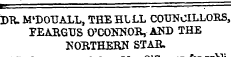
DR . M'DOUALL , THE HLLL COUNCILLORS , FEASGUS O'COmOR , & 3 XD THE NORTHERN STAB . "We iave received fituo Idx . O'Connor for pnblication the following letter ; a copy of which had been previously recerred here , addressed " To the ditor of the Northern Star . '
TO F £ ASGCS O'COSVOR , ESQ , Six , —I mb directed to inform you that at a council meeting held firijevenir 5 , » member of to « B « d snd TAonu a member of the late council , »*» d « ed the letter of tin late « nnwniors to yon in reference to 5 ^ 55 and the ExeenBTfc wben tto following resolution "was adopted : — " That we lashly ^ pprove the letter of our brethren thelate ^ cfflois to P . O'Connor , Esq ., now readthat Tre think the said letter < mgi& } o »»« J » * $ * A-orr tmi Star , and that a copy of it * «™«* J therein to the Editor and Proprietor , mth a rapiest ioritsiaseriion ; aadthatil it cumotappear < m other terms , -we pay for it as an advertisement . I am , Sir , Tery respectfully yours , J . Ax&ax , Secretary .
TO PEAKSTJS < TC 0 NNOB , ESQ . 35 ju ^ Sis , —In jenr lett-r "To the "Worting -Classes" published in the NorihernSiar of Ssfcarday last , Tre hare seen -with ? reat surprise & statement , purporting to T » an extract from a letter to yonrseK , as Editor of the Evamg Star , by McDoaail ; the tendency of -which is xo place us before the people in tbs most unfair and dishonest light , of denouncing , public and through the press , that in -which ire had privately expressed onr acquiescence . The statement to -which -we refer is contained in ibe following words ;—
•¦ He says , inspecting of the 10 s . a week , -what was my duty , if the SOs . -was objected to ? To resign it . "Weil z an objection came from Hull A correspondence between Campbell and the Hall Councillors ; the end of ¦ which was , as far as I was concerned , the transmission by -Srasby , the Secretary , of a written resolu tion , purporting to be the de iberata vote of the Hull CobbcSIots , in ^ hich they declare their perfect satisfaction-with-the 10 s . additional any -week to me . " U ovr , Sir , yon mast , at once , see that , -when taken in connection -with the position -we have all along held in reference to the acts of the Executive iand particularly this act of theirs ) , and the resolutions -we have recently pabHahed npon tb © subject , this s-atemeut places in
our character for consistency -and honesty , a light of contemplation that must make it odious to every goed mind , and -which , therefore , not merely gives rathe right , but absolutely compels us to demand , to be heard in contradiction , We beg to inform yoH , Sir , that we -were in office as councillors at the time -when this resolution , * ' purporting to be the deliberate Tote of the HnH-eenn . allors , " is alleged to have been transmitted by Mr . ¦ Grasby , the Secretary . No such resolution was ever adopted by the HuH eonpefllors . Xo snch resolution -was erer discussed by the ' Hull CoundllBrs . 2 f e Ench resolution -was ever proposed to the Hull councillors ; nor , so far is we know , hinted at , nor even contemplated by any ef them . Mr . Grasby could not , therefore , have had their authority . for any such resolution , purporting to be their deliberate Tote . The Hull Councillors , Sir , iaTe held always one opinion sroon the EUtgect to -which
this resolution is affirmed to haye h » d reference . They hold that opinion EtiH -which they held then , and ¦ which they expressed in . their letters , both to the Executive generally , through their secretary , and to H'DouaU personally , in strong terms . That opinion ¦ was unanimously concurred in ; there was net among them a dissenting voice ; and bo it 1 * " sustained the opinion of his fellow Councillors more strongly and ¦ war mly fh im 24 r . Grasby . For this reason , as well as from our long knowledge of him , we do apt believe that Sir . Grasby -would , xa that he ever did , transmit to M'Donall any such resolution . Mr . Grasby is not now in Hull , and , therefore , "we have Dot the opportunity of »« viTig " him directly -whether he did , or did not , transmit to M'ltouall this impndent fabrication j but "we do not believe him capable of doing bo , nor -will ire believe that he has done so , until we have » een itproved . . *
Tour geod sense -will shew yon , sir , that by publishing-in the Tiorihern Star this statement , thus infamously aspersing us , while , at the same time , you close its columns against ai » y "word of reply or explanation , yon have iione na , "whether -wittingly or not , a great injustice . "We have no quarrel " with your affection for JIvDouall , nor-with yonraEXiety to relieve iim from the odium under -which he labours— -we think deservedlybut yre do think that you ought not thus to doit at the expense of -wanvon injury to men -who certainly have not deserved it from you , and whose character for consistency and honesty has never been impeached .
"We itquest , therefore , that as an set of bare justice , you will , in yonr nextletter to the people , throngh the columns of the northern Star , place our unqualified -contradiction ts this statement as prominently and as forcibly before the public as the statement which made itnecenaiy . We are , Bear air , Xovers of fairplay , atift your TTT ' ^ T W * t i T ' g brother democrats ,
Geoxge Pi ? y ! < xBQB . GB BiKSKTT . RO&EB , PntDER . "WH- CH 2 ESJU . 3 . JlATIHET ? MBPD . BOBT . JiCKSOS . ' Samuex Pcucxrd , J . J-lCKSeN . ¥ h . Bij ~ l . HuH , Sab . 8 th , 1343 . Tke fdgnaiure " Wm . Hill" has been appended here i Mr . Hill not having been present when the letter -was adopted , but cordially concurring in every word of its contents .
Untitled Article
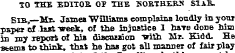
TO TKE EOTTOB . OP THE KORTHE&X S 1 XR . Sm , —Mr- James Williams complains loudly in your paper of last -week , of the injustice I have done him in my report of his discussion -with Mr . Kiod . He stems to t hVnfr , thai he has got all manner of fair play in the Leaffzte prints of the locality ; in this respect he and I are- « t one ; ha has not only got fair play , but a great deal more . The Sunderland Herald and Gales-% ead Obxrver , report Mb speeches almost at full length , ¦ while they do not give Kidd more than two or three IT this be Mr . Williams ' B tiew of fairplay , 1 can sssniB him it is not mine . My report is not on& ; sided ; 3 have alway » repudiated such a mode of supporting Chartism , believing as J do , that its intrinsic merits are -such as not to stand in need of false colouring .
He denies the statement in my introductory remarks , that tbe ChartiBt deputation -which he calls tiro lad ) offered to pay the half of the expenses , if he -would allow the public free admission . Now , Sir , the lads to whom he allndes , and -who by-the-bje , have each as much hair on them , and beards as strong as Mr . Williams , and are quite old « nongh to be'fathers , did certainly offer to pay half the expenses . There had been two Bets of bills posted , the first by Mr . Williams , in -which b . B endeavoured to arouse the nspecUMes against Mr . O'Connor , and -which -were copied into these local papers he now seems so much enamoured of ; the second by the -whole hog Chartists , calling on the working men to attend and defend O'Cennor from sutha base attack . Each party paid for their own
bills , and the offer on the part of the Chartists to pay half the rent of the hall -was quite just and fair . Mr . Williams pleads poverty as an excuse for his penny charge of admission , and this evidently with a view to gull the country into the belief that he was doing all ¦ without the aid of the middle class gentry . Por this , and his assertion that there were none of hia respectable friends at the meeting , ire have only his own word , which I am ambitious enough to look upon as nothing better than mine ; and , besides , I have the opinions of huncrefls tqrially as respectable as Hi . Williams and his brother shopkeepers , although perhaps not to -wealthy , that they never before had seen such a muster of the broad cloths . 1 am quite con-Tinced that I saw scores -who were not -working men ,
some of "whom "wore mustacheos , an ornament Mr . Williams "will surely « dmit is not in eommen use among the hog Chartists . He Ends fault -frith the heading oi the report Itis « asy to do so ; denial is said to be the best point of law . No t » vh in the land brawls more londly for freedom of opinion . Does he wish to 'have it all on his owe side ? or will he have the kindness to allow me the same privilege of thought and expression ? Hso , I give it as my nnqualified opinion , that ¦ we , that evening , had to contend with all the robber fadioia of Sunderiand . It is a -well known fact throughout the country , that -when O'Connor ' s character is attacked , supposing it were by " anld Clooty '" ^ tT ^ ^ ? ° k a dandified tailor-made Leaguer , ?* y * % - or Tory , from John 0 Groat's
^^^ _ to tbelanfti End but are on the girf ri « . M * . Wil-^^ J ? ^ ^ ° ^ ° - and it being full even ^ J&b penny , it could hold no more supposing it ^ erefree . What a grand dUeovery—reaSTex ^ aeaih of me . Why tie most ignorant . palpeen in the kingdom -would not for & tingle momenique ^« m the truth of this statement , but he forgot to tell us the manner in which the hall was filled ; he foreot to tell Bs-tbere were two tfoara by which the people -were adaoitted , one in reserve for his new friena * . the leaguers , and the other for Mb former patrons , the mobocrat abble ; by the grand door , or front entrance the gentxy-were admitted and posted as a body guard andaround the
on . platform , where they ' continued hiBsing and bellowing at Eidd the greater part of the evening , and one them , a Mi . Taylor , actually -went on so far as to attempt physical violence when he found there-was lack of argument It -was by this front door I tried to gain admittance , but was repulsed and ordered to the rear . The reader will donbBess ask -what -wm meant by this distinction ; 3 ihall endeavonr to answer him . A zoauipf people were assembled round the back entrance , chltfly wozkies , and seeing this , it was not considered safe to place all dependence on that door / henoe the separation of the fops from the unwashed , lest their gingerbread sidei might suffer isjury is the henuadoM crab to get in , -
Untitled Article
I am accused by Me Williams with having strengt ! ened Kidd ' s positi an , by the insertion , of matter that was never spoken is the discussion , and strange to say , Mr . Kidd also ar jcaaee me with not having done him fnll justice . Here , Sir , j / ou ¦ will observe , I am crucified between tbe two talented disputants , and without any desire on my T jart to act dishonourably to eithtr . He says from the / flfth to the twentieth line in Kidd ' s third speech was ^ aever spoken . Now , this I flatly deny ; not that I ^ would by any means accuse Mr . Williams of misrep * / esentation , bat taking into account the agitated sta ' , » of bis mind , especially towards the close of the dis- jussion , it was morally impossible he could judge i / npartially as to "what was really spoken and what t ras not ; he most , therefore , have written "under a false , impression , or on the authority of some of his
men is , whose prejudices everruled their better judgmesi , I am quite willing to admit that the exact wo / da spoken are not those in many places given in the report ; and Mr . Williams himself must also admit that it is utterly impossible to condense the report of a disuussion , which occupied two hours and a half , in as many columns of a newspaper using none other than the words spoken . Besides , had I given a longer report , which 2 could Tery easily have done , from my notes covering thirteeen pages of post paper , it could not possibly be inserted in a journal like the Star , having such a press if matter from all parts of the United Kingdom . 1 dare say Mr . Williams would like very well that I had drawn it out to such a length as to preclude its insertion . He gets credit for being a very wily gentleman ia this matter , but , to use a Cockney phrase , 1 may tell him he has Yorkey to deal with when he falls in with me .
He next denies that Kidd ' s amendment was carried , ana to bear him out , again appeals ts the League newspapers ; the saying , that drowning men catch at strawB . -was never more truly verified than in this case . Go to a League paper , forsooth , to find a true statement of facts connected with Chartism ! You might as easily cet wool off a goat ' s back , or holy water in an Orange Lodge . In the face of above 300 men , he denies what appeared to each of them as clear as rock water , and cailB to his aid the Muncbanstn scribbler of tbe veracious Sunderlajid Herald , Mr . Williams must know , from his former experience , when a Chartist , that what the faction ' s press give for truth as regards our movement , may safely be taken , in almost every instance , for falsehood , and vice xxrsn . But let us take another glance at this part of the subject . Mr . Williams will not surely deny the fact of the Chartists carrying tbeir
friend Mr . Chalk to the chair , and that , too , by an overwhelming majority ; he will not surely deny that he himself admitted Kidd ' s amendment carried on the first division , and was giving np the contest when his peaceable friends raised the nproar , and the meeting became one tumultuous mass . He will not deny that when I challenged him to a Becond diseussioa on other hard matters connected with the agitation in Snnderland , he first accepted , and then slunk from it , on the ground that if | he again appeared before a public meeting his life was in danger . This he told me in tbe house of one of hia friends , and abo in the presence of six individuals ; and yet he maintains , on the authority of an Anti-Corn Law paper , a party to whom he has now allied himself , and to whom he is employed to print their lying tracts , that he still holds the confidence of the working people of that town . '
Now , Sir , in conclusion , as one of the tellers of the meeting , I am prepared to give oath , to the best of my judgment , and keeping within the mark , ( for it was impossible to count them , owing to the confusion that prevailed , ) that there were at the very least from eighty to one hundred of a majority for Kidd ' s amendment Permit me also to state , that had it not been at the request of the brave men of Sunderland , who are justly entitled to the thanks of their brethren throughout the country , and that he trhose character was attempted to be slandered , was none ether than our brave and purely disinterested Ghampion of Democracy , I would noi have thought it worth my notice ( with all tbe ignorance for which I get credit ) to use one pen full of ink in recording the whole discussion in the columns of the People ' s paper .
I remain , Sir , Your sincere friend , Con MUB » T Glasgow , Feb . 13 th , 1843 . *'" f We have also received upen this subject a long letter from Mr . Qeorge Esplin , fully corroborating all Mr . Murray ' s statements , and affirming the truth of the report . We have also a like letter from Mr . Kidd . These parties will aee that the publication of Mr . Murray ' s letter renders theirs unnecessary . We give , however , from Mr . Kidd ' s letter the following challenge , with which it concludes ;—" I challenge James Williams of Sunderland , to meet me publicly , on equal terms , to discuss the following propositions , in Sunderland or any other town in England or Scotland , containing 10 , 000 inhabitants , or npwarda—he to take the negative , I the affirmative
—1 st—That every word written by Feargus 0 Connor , Esq ., on the conduct of Mr . Williams at the late Birmingham Conference , as printed in the Evening Star of the 3 rd of January , is strictly in accordance with troth . 2 nd . —That the Complete Suffrage movement is either dishonest or impolitic 3 rd . —That the darter , as amended by the Conference , Is superior to the " Bill of Bights . 4 th . —That a repeal of the Com laws , without accompanying measures , will not benefit the working olaasta of this country .
It is but justice to remark that Mr . William * hai publicly expressed bis willingness to meet apy man In England to prove the negative of these propositions , and should he sot accept this challenge I shall conclude he has changed , his opinions on these subjects , and if so , I call on him to publioly announce such a change ; If not I asser t he i * a moral coward . I am , Samuel Kids . Newcastle , No . 7 , Villa-place , Feb . 13 , 1843-1
Untitled Article
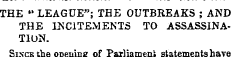
THE " LEAGUE "; THE OUTBREAKS ; AND THE INCITEMENTS TO ASSASSINATION . Since the opening of Parliament statements have been made within its walls , that tend to show the true nature of this confederated band of Freebooters ; and some little light thrown on the means employed by them to accomplish the complete subjugation of the labonrers .
By a reference to onr Report of the Parliamentary Proceedings , it will be seen that Lord Howicr ' s motion , ** That this House do resolve into a Committee of the whole Bonse , to consider bo much of b . eT Majesty ' s speech , as refers to that depression of tbe manufacturing interest of tbe country which has so long prevailed , and which her Majesty has so deeply lamented , " was met , by Mr . Febiukv , with an amendment , which , while it includes Lord Howick ' s morion , CHALLENGES INQUIRY
INTO THE ORIGIN OF THE OUTBREAKS in Angnst last ; the Hon . Member averring that " he was prepared with evidence to pbove that they originated with the Anti-Corn Law . League" In stating this part of his case Mr . Fkbrakd plainly told the League , that if they were not fearful of inquiry they would themselves court it : and it is a little enrious that daring tbe entire debate on the second evening , sot a single allusion was made to this demand for inquiry into the origin of tbe ouxbbeak by any of the speakers , although ho less than three free traders took part in it ; G . H . Wabo , of the WeeMy Chronicles ( the man who played the SWING dodge , which we exposed in August last , ) among the - number ! This demand they each and all shirked' not one of them dare face it ! Mr . F . erka . nd avers , in open Parliament , that he is prepared with evidence to prot > e that the late outbreaks ORIGINATED WITH THE LEAGUE . Dare Parliament , in the teeth of such avowal by one of its own body , refuse the demanded inquiry i Dare Parliament , in the face of the British people ,
refuse to obtain the " evidence" thus offered it , which is to prove who were the authors of an " Insurrectionary Movement" ! Dare the Leagaers in tbe House of Commons vote against the " inquiry ? when they are openly accused before all the people of being the attthoes of that" insurrection , " which cost many lives , and sent some scores into banishment , some dozens to the Penal Settlements and the HulkBj and some hundreds to prison !
These are grave questions , which will shortly be answered by the tote of the House on Mr . Feeuattd ' s amendment . At the time we write ( Wednesday ) that vote has not been come to : but we mark the ominous silence in " the House" on both sides , respecting the demanded inqnirj , as very indicative of the manner in which the question is "to be got rid of . " Mr . Febbaxd says he is prepared with evidence . to prove that the League objgikated the Outbreaks .
Untitled Article
If ho is not , Ihe booh may be . It ib now known where the whole thing was concocted ! It is now known where the first meeting took place with the League Manufacturer , who proposed the Sthike " as a means of compelling the Government to do something . '" It is now known at whose house that meeting took place ; and also who who were present at it . It is now known who drew up the Address to the Working People , whtch preceded and paved
the way fob the stbike ; and it is also known where that address was printed , and who paid for its printing . It is now known that the League , in the latter end of Jane or the beginning of July » arranged that a reduction of wages of some 25 per cent , should take place between July and Christmas ; and that . eajoh master was to take his own time and manner of 3 oing it , to avoid a charge of conspiracy and disarm suspicion ; yet the reductions were to be made within the period above named . It is also now known that attempted reductions of wages were made the pretext to " bring the hands out " : and it is
also known who the parties were that were employed to organize " the strike" ; and also who paid them for their services . ' It is now known that a portion of the instructions given to these hired tools was , that they should give the " Insurrectionary Movement" a Churtist tinge ; and thus bait a trap for the Chartists to fall into . All these things are now known , am > ca > be proved , and will be proved , if the House of Commons institute the demanded inquiry ! If Mr . Fehrand ia not aware of all the facts , he soon can bo ; and he will be , if he is not already , in a position to bring the charge home to the League , of having originated the "insurrection" !
Dare the Parliament st'Jie the requisite inquiry ? Dare it vote that no inquiry is needed ? The League press have a very convenient method of attempting to blunt the force of Mr . Feeuasd ' s blows by affecting to consider him " a madman" ; as " reckless of statement " , and " shameless of detection in falsehood " . This plan , howeve ^ desperate and self-condemnatory as it is , will not avail them in the case of Lord Brougham , who has " opened-out" upon them in the" Upper House" every whit as terrifically as Mr . Feeband has done in the " Lower" one . Nay , even more so : for while Mr . Fkhrand offers to provelhat the League originated " the strike , " Lord Brougham accuses them of
inciting to assassination ! Now , Brougham is no " madman" ! The League have cried him up as a paragon of perfection . Ho is a free-trader . He is one of themselves ; and yet , so horrible have been the means adopted by the Repealers to force their sal fish project from the hands of the Government , that tbe " learned Lord" has felt it to be his duty to wash his hands of the League , and hold the League up to the scorn and reprobation of all the country During the debate on Lord Stanhope ' s motion , on Thursday night last , he took occasion to denounce the Leaguers in round set terms ! He denounced them for exciting to breaches of the peace ; for counselling " breakings-out "; for inciting to assassination ! His words were : —
" I cannot suffer the mention of the anti-Cjrn Law League and its proceedings for the first time sine * the last summer ; that I have had the opportunity of haying a word upon it , to be made in this House without expressing my entire and hearty concurrence with the disapprobation expressed at many of the proceedings of that body by my Noble Friend not now in his place , who waB lately at the head of her Majesty ' s Government , and who from his temporary illness is not here to state it . I am on that account more anxious to state my entire concurrence in his reprobation of Boine of the means used by that body . J differ from my Noble
Friend in his opinion ef its object , for I go much further in desiring to see the repeal of tbe Corn Laws than my Noble Friend ; but I desire to express my most pointed disapprobation of Iht means taken by many of the persons connected with that association ; and , my Lords , I am the more anxious to state this because I consider that those means are moat prejudicial to a good cause .. If anything could retard the progress of their doctrines—if an } thing could raise obstacles to the course of improvement in the laws respecting provisions and the general laws which they most justly oppose , it would be tbe txaggtraled statements and
violence of some of those connected with tbeir bodytbe means adopted by them at some of tbeir meetings to « rct 7 e—happily they have not much succeeded—to ejKiie discontent and breakings out into violent measures in different paits of tbe country ; and , above all , 1 cannot discbarge my duty to your Lordships , and to my own conscience , if I do not express my otter abhorrence and disgust with which I have noted some men—men clothed with sacred functions —( bear , hear , ) —who have actually , in this very metropolis of a British
and a Christian community , and in . the middle of the 19 th century ef the Gospel of grace and peace , net scrupled to utter words to which I will net at present , for obvious reasons , more particularly allude—( hear , hear );—bat which I abhor , detest , and scorn , as being calculated to produce effacta—jj will not say they have produced them—but calculated to produce the taking away of innocent HJe—{ hear , hear ) . My Lords , your Lordships are aware that I refer to a trial which is pending , and they who have used these expressions WILL . I HOPE AND TRUST , BE CALLED
ON FOB AN EXPLANATION IN THE COURSE OF ITS PROCEEDINGS—( bear , hear );—and it is only because it is a pending trial that I abstain from more specially referring to those Reverend Gentlemen ' s observations . " Now , how will the L ? agne meet this 1 Will they say that Lord Brougham is " mad" ! Will they say that he disregards the truth ! Will they say that he seeks to cover the injustice of the Corn Laws
in a ourarel about the personal transactions of Repeal advocates ! How will they attempt to wriggle out from under the heavy load of censure here heaped upon them ! They cannot treat Lord Bboucham as they have affected to treat Mr . Fer-BAjiD . Lord Brougham is on < - of their own squad I He is their main man ! He knows them well ; and has told wiat he knows ! and that telling , will have a telling effect 1
There is more about this denunciation of Lord Bbocgham ' s than meets the eye . It is but tbe prelude to other and different denunciations ! The concluding words of the above extract from the Noble Lord's speech have meaning in them . He hopes that those who " uttered words" which he " abhors , detests , and scorne , " because " they were calculated to produce the taking-away of innocent life" will " be CALLEDON FOR AN SXPLANAT 1 ON . " Lord BROUGHAM is not in the habit of uttering such " wishes'' as these for nothing . He has many a time paved the way for " ulterior proceedings" ; and if we do not much mistake the character of the cards he plays on this occasion , he is paving the way again !
The " words" which the Noble Lord has thus holden upito scorn , abhorence , and detestation , were uttered by a Reverend ruffian , before the assembled Conferenc-a of Anti-Corn Law deputies , in London , during last session of Parliament , about the time that Taukton of Coventry , talked in the same assembly of " risings and riots . " They were in the form of a story about a man who was ready to draw lots amongst his fellows , as to who should shoot Sir Robert Peel ; and it was told and hearkened to without one single word or sign of reprobation eith er from the speaker or assembly !
Verily the League will have work enough on its hands in a Bhort time . The charges of Mr . Ferband MUST BE MET . The inquiry must be had ; or the people must speak out ! The originators of the late outbreak ought to be punished , if they can be discovered ; or the hundreds who have been torn irom tbeir homes ought to be instantly restored ; and all the compensation that can possibly be made afforded to the widowed aad fatherless survivors of the slain ! Before all the peoplo are the Leaguers denounced as the Originators of the move , ment , which led to these deplorable results , by a man who avers that he is in possession of evidence to bring the charge home . The people mast see to it , that a proper opportunity for a thorough and searching investigation is afforded .
The charges of Lord Brougham will , most likely , have to be met before a differently constituted tribunal than a Committee of the House of Commons ; and the League will mayhap find it rather difficult to answer them . At all events they are of a serious character . Incitements to assassination are no common crime ! The £ 50 , 000 will bo needed before the League have done with these things . It will behove them to husband it well : for it is the Jast they will be able to get !
Untitled Article
^> Thursday evening , just before going to press , we received the London morning papers , oontaining the continuation of the ' * Debate" on Lord Howick ' s Motion . Still no notice of Mr . Ferrand ' s charge of being able to prove that the League originated the Ia 3 t outbreak ! Dr . Bowring opened the adjourned debate ; and though he all u ded to the attack of Mr . Ferband on himselj , he shirked the serious charge against the League . Mr . Wallacb , and Mr . C . Wood also spoke ; but no allusion to the outbreak , or the League ' s connection with it ! Sir James Graham spoke for
three close columns of the Times ; but not a word about Mr . Feriund ' s amendment ! It might never have been made ; , for all the information that is afforded to the world in the speeches of the several Members who have spoken since Mr . Ferrand . THEY DARE NOT TACKLE THE QUESTION he has rawed ! T / ie League daw not deny his charge , for they know it to be true ; and the Government are evidently disinclined to trust Parliament with the facts they are in possession of ! We wait anxiously to see Mr . Don combe's speech on the occasion .
Untitled Article
THE HORRIBLE REVELATIONS RESPECTING THE NEW POOR LAW . , DEATHS FROM STARVATION ! In another part of this sheet will be found the particulars of two casea of death , arising from sheer starvation . We have taken them from tfeo York Herald , a "Whig paper : therefore , not likely to colour the statement for the purpose of throwing odium upon the Whig Poor Law , or its administrators . To that statement we invite the serious attention of every reader . A woman and her child have been served to death ! She applied for relief to the fund which the law authorises to bo
raised to prevent Buch occurrences ; and that relief was doled out so scantily , and the poor suffering woman so unfeelingly kicked about from pillar to post , that at last , from sheer exhaustion , she became incapable of attending to her own proper wants , and died a sacrifice to the inhumanity with which she had been treated ! Let our readers note the fact , that when she was admitted to the Workhouse , she was put to bed WITHOUT MEAT OR DRINK , OR ANY MEDICAL ATTENDANCE , although accompanied to that pest-house by Hodgson , the relieving officer , who had seen her in the cell at the Station-house , in the condition described by Mr . Briggs ; totally incapable of personal attention : sitting on the floor without cap or shawl ; and in the dirt and wet , just as nature had relieved herself !
In relation to this horrible case the York Herald has the following remarks : — "In our fourth page will be seen the particulars relative to tbe deaths of a poor woman and her infant child , in this city , through starvation , or in other words , through the want of propur attention , and tbe common necessaries of life . " The very idea of such a circumstance , in a Christian country , is horrible in the extreme ; and the natural iDquiry will be , how it could possibly happen , and who were tbe parties to blame .
" That the woman and the child did die of want and shameful neglect , there cannot be any doubt ; but as to the fact of who are the guilty parties , it is not our province to make assertion , nor our duty to investigate . We however would refer our readers to the , inquiry before the Poor Law Guardians , on Thursday j and we do so with the most painful feelings , as the statement of Air . Briggs , ( a respectable citizan . ) brings tbe fact at once home to the cruel and criminal party . We rnuat also allude further to the subject , because it is one closely connected with an odious law , and deeply involving the most i
nteresting associations of tbe cause of Humanity and of Christian benevolence . In the solemn silence of tbe tomb , tbe poor woman and her innocent child now rest ; and , therefore , to them our remarks can be of no avail ; but , though they are gone , the same law exists , and the wide-spread poverty which prevails , and is still tx tend ing , may brii . g many others into the same melancholy sitnation of distress and wretchedness . We would , therefore , embrace this opportunity to urge upon tbe Guardians of the Poor , and upon all tbe minor officials under the existing Law , the duty of exercising the legal power in Vha tendur spirit of Christian kindness and forbearance .
"That cases of imposition may arise , we readily grant ; but , it is bard , indeed , when tbe hapless unfortunate aro punished with cruel neglect , for the crimes of the wicked and the worthless . A wise discrimination Is always requisite ; but , we envy not that man's feelings who , under any consideration whatever , can treat the wretched with contumely or studied neglect and Insult , or who can add to the misery of a broken spirit by withholding relief wheo due , or contributing the paltry pittance of public charity in the angraciotJi demeanour of a proud and haughty agent of a law , which sanctions the tearing of the dearest ties asunder , and which may be exercised by unfeeling police officers , and other cruel parties , as an instrument of torture to tbe most miserable victims of wretched poverty , and unmerited miafortuna . '
We cannot pass by the blasphemous Verdict of the Coroner's Jury in the case of the starved-to-doath woman , without heaping upon it all possible reprobation ! " Died by the visitation of God . " How horrible . to contemplate ! God visiting the creature of hia hands with starvation J God visiting the earth , to starve a poor woman and her ohild to death ! God hardening the heart of the * Guardians " oi the poor , and the relieving-officers , and the policemen and workhouse-keepers , to induce them to deny the pining woman and her infant son the relief her condition required , in order to visit them with death by means of starvation ! How awfully
blasphemous ! " Visitatioa of God , " forsooth ! Has God withheld the fructifying shower , or the genial warmth of the sun ? Has God refused to bless the earth with plenty , wherever man has taken the trouble to till ? Have we been " visited " withi famine 1 Were there not the means of relief to these poor victims to man ' s injustice immediately at hand ! Was there not food and raiment in the landi Did it not abound on every side ! Was it not in the midst of l plenty that they were suffered to starve to death ! And who has blessed us with the plenty so abundantly abounding ? Who has
" visited" us with it ! And shall we dare to ascribe to that beneficent power the murdering of these two martyrs to claag-mado laws ! Shall we blasphemously and impiously ascribe to him that which we have ourselves caused ! Shall we dare to assign to his " visitation" the result of our own inhumanity ! Of all tha stupid cant and impious nonsense pompously put forth , these same Verdicts of " died by the visitation of God , " are , in nine cases out of ten , the most stupid and most impious ! And of all the cases of that nature that ever fell beneath our attention , this York one is the most horribly atrocious !
Leaving , for the present , this case of murder committed by the oppressors of the poor under the New Poor Law , we will just glance at the horrible revealment made by Mr . Walter , the Member for Nottingham , in the House of Commons , of the intentions and purposes of the concocters and framers of that law . Those revealments show but too conclusively , that the York officials , in permitting the starving to death of Maby Cleog and her infant son , have only been faithfully executing their " mission" !
On the bringing up of the Address voted by the Commons in answer to the Queen ' s Speech , at the commencement of tbe Session , Mr . Walter took occasion to speak on several topios of immediate interest . He avowed himself an advocate of a fixed duty on the importation of Corn , in preference either to total Repeal , or a variable dutv . This led him to speak of the " . teapwe ; " and while he denounced their professions of sympathy
for tbe labouring people as hollow and insincere , he administered a no less measure of castigation to their twin-brothers of evil , the agricultural advocates of the infernal New Poor Law system : and speaking of " League , '' led him on to the uncovering of a Governmental " League" of a most cold-blooded and atrocious character ; having for its end and aim , the starvation of the labourers of England . Here are Mr . Walter's
words : — <• With respect to all that had been incessantly beaten into their ears on the one side , of tbe hardship of throw-Ing the poor agricultural labourer out of employment by throwing poor lands out of cultivation ; and on the other
Untitled Article
of the sufferings of the star ring artisans by the continuance of the present system * f class legislation , he thought there was a great deal of' Qollownesa in the professions of both parties , and that , each would be greatly perplexed by depriving it of this argument , or pretence , of sympathy for the unhap- py sufferers on either side . He should therefore leave t' ae rural advocates of the present workhouse system ' and prison dietaries , and the Dissenting ministers with b' ieeding hearts forming the Manchester Conference , w ho alike agreed in tbe detestable principles of theirj N ew Poor Law , to settle their Corn Law d ffarenceB ) b etween themselves —( hear , hear ) - But reference had been made to a certain association , called the Anti-Cora Law League . Now , he had a great
abhorrence of all associations ; they always professed some beneficial object ; but the intention of the chief actors in them bebelievetf to be as universally seiflsh . anti-social and mischievous . But he did not decry the present Anti-Corn Law League on account of its principle in the abstract but rea'ly on accoun of the parties who were the bustlers in it , and who he believed were quite as much disposed to grind th 6 poor , whose sufferings they professed to make the objects of their stir , as any other class in Her Majesty ' s dominions . But whi ! e we decried this League , let us not forget that to had had agricultural leagues also . He believed such associations deserved the epithets he had jti 9 t bestowed on them ; but he alluded particularly to one £ > rand agricultural association which
afforded a mischievous precedent to others , and assembled some years ago within 100 yards of that House . The present noble President of the Board of Trade denounced it as a Parliament sitting in the face of the regular Parliament , and dispersing its . proclamations all over the kingdom . These , however , had all been open societies . But might there not be Leaguers of . a much more da gerous character , of whose intentions ami acts the public might have bnt slight information ? The atrocious Poor Law itself really emanated from the proceedings of such a League . He alluded to the original commission , now ialtuost forgotten , and not to the body commonly called- the Triumvirate . Gentlemen who
knew a great many of the secrets of tbat commission had told us of the extreme suff ^ rinns ef the poor , and of tbe discontent that would ba felt by tbe masses if nothing were done for them . They had been told also of the wonders that were to be effected by education even in workhouses ; bnt was it an essential preparative to such education that the objects of it should be subjected to something little short of starvation bafore they commenced their studies ? He would read to tbe house two of the secret recommendations of this mind-improving , body-starving commission from which our New Poor Law has emanated . Tbe first of these recommendations was , that the Commissioners shall have power to reduce allowances , but not to enlarge them . After some further suggestions , they proceeded
thus , —and to this passage he called especial attention : — ' After this has been accomplished , orders may be sent forth , directing that after such a date all out-door relief should be given partly in kind ; after another period , it should be wholly in kind ; after such another period it should be gradually diminished in quantity , until' that mode of relief was exhausted . From the ftrat the relief should be altered in quality , coarae brown bread being substituted for floe white ; and currsntly with these measures as to the outdoor poor , a gradual reduction should be ma'ie in the diet of the indoor poor , and strict regulations enforced . He should not comment on language like this new . Indeed , it was already practically commented upon by the e eve re sufferings and deep-rooted discontent of the labouring population . "
What a revealment ! What a measure of wickedness is here uncovered ! And the fact respecting these SECRET RECOMMENDATIONS ; cannot be denied ! Mr . Walter has brought the matter home ! lie has forced Sir James Graham to admit before the people of England , that his allegations respecting this starvation enforcing League are correct ! Oa Tuesday night ,
Feb . 7 th : — " Mr . Walter begged te ask the Right Hon . Baronet the Searetary for the Home Department whether he had any objection to lay before the House a document , printed about the end of 1833 or beginuing of 1834 , entitled ' Measures submitted by the Poor Law Comnktastoners to His Majesty ' s Ministers V It was further entitled , ' Notes of beads of a bill altered and amended , ' and contained the : recommendation of a couise of treatment and of a dietary , gradually diminishing in quantity and deteriorating in quality .
" Sir J . Graham said be hardly knew the particular document to which the Hon . Member referred . The Hon . Member had given him notice of bis intention to put this question , and in answer he would say , that no such document was to be found in the department over which he presided : He bad a faint recollection that a document such as that referred to by the Hon . Member bad been sent ! as a confidential communication to Earl Grey ' s Government , and as tuoh he was not prepared to consent . to its production . But if the Hon . Member was desirous to have it produced , he had better give notice to that i ffect .
" Mr . Walter said he would not trouble the house by any motion on the ' subject . He did not require the document for his own use , as he was in possession of a copy—( bear , bear , and a laughi ; but fur the general use of the house . He was \ perfectly satisfied with the Right Hon Baronet ' s answer . " The fact , then , is established ! The SECRET RECOMMENDATIONS to starve the poor were given . They were given in " a confidential communication to Earl Gket's Government ; " and the fact has been dragged out . The document is in existence . Sir James Graham dare not deny the fact > for there Mr . Walter stood with the book in his hand \
O ! bow much ink has been wasted , and how much paper spoiled , in attempts to show that the authors of the New Poor Law were the benefactors of the poor ! Tnat their only object , in taking the steps they did , was to raise the physical and moral condition of the labourer ! That they wished to encourage his independence ! The revealments thus made by Mr . Walter show what were the nature of the SECRET RECOMMENDATIONS of the Poor Law Commission , upon whose Report the New Poor Law was founded and passed . Those SECRET RECOMMENDATIONS were given , confidentially , to the Government of the day . Thfy amounted to just this ; that the New Poor Law should be so constructed a * to ensure the starving of the poor . We are now going to show that THE
GOVERNMENT ACTED ON THOSE SECRET RECOMMENDATIONS ! When the Report of the Poor Law Commission was laid before ihe public , and the plot entered into fully ripe , the Government caused a Bill to be drawn up , to be submitted to Parliament , to compass the ends sought to be accomplished . The Barrister who drew up the Bill had , as is usual , a list of instructions given him for hi 3 guidance . In those instructions ; were one that stated distinctly , tbat one of the ends sought to be accomplished by
the Bill was " the bringing of the People of England to live upon a coarser sort of food !' This fact , too , was proved in the House of . Commons ! Mr . Cobbktt broadly stated it in tbe House , during the passing of the Bill ; and bis statement of it was not denied . In his inestimable work , the Legacy to Labourers , he put the fact on record , that he ¦ had seen the horrible " instructions' * respecting the starving of the veople , mtii his own eyes ! And , ; mind , this instruction was from the Cabinet of England ! Mr . Cobbett's stating of the facts of the case is as follows : —
" To the Searpher of hearts only can men ' s motives be known , except by confession , or by collateral or circumstantial evidence . I will , therefore , not attempt to assert what were j the motives of the projectors and pu 8 here-on of this bill ; or the motives from which it was supported by the Duke of Wellington , by Lord Radnor , by you . [ Peel ] and other great landlords . I should not think it just to impute motives which I cannot substantiate by proof . I will say , therefore , nothing about the motives to the prejecting and pushing on . this measure ; but I will say plenty about the natural and inevitable tendency of the measure ; first , however , stating a circumstance to the truth of which there is a whole House of Commons full of witnesses , and which is as follows : — " 1 . That , during my opposition to the bill , I posi
tively asserted , that printed instructions were given to the barrister [ who drew the bill ; that the * instructions told him that it was intended to erect about two hundred workhouses for the whole of England a n * Wales ; tbat they also told him , that one thing desirable to be accomplished was , to bring the people of England to live upon a coarser sort of diet . " 2 . That 1 moved for the laying of these instructions upon the table of tbe House ; and that the minister and his majority rejected the motion . " 3 . That neither Lord Althorp , nor any other man in the House , said one single word in contradiction to my statement . \ " A change of circumstances now enables me [ to e&y that I had SEEN the instructions . "
The Government , then , acted oa the SECRET RECOMMENDATIONS of the League to starve the Poor ! They embodied those Recommendations in a Bill . They passed that Bill . They have , ever since , done their uttermOBt to enforce its infamous and infernal provisions ]; and the death of Mabt Clegg and her infant eon at York , fromjsheer starvation , is one of tts < consequences
Untitled Article
Mr . Walter seems determined to follow up jjmatter . He is not disposed to rest himself contented with the exposure he has so happily made h pily for the cause of the poor : for this exposure OP HIS SEALS THE DOOM OF THE NEW P oor r , i Should the Government agaiu dare to introduce it for re-enactment , the House of Commons , after th * proof of its nature , object , and tendency DARP NOT PASS IT ! If they do , the people will be justified in turning them into the Thames '
The exposure is most opportune T At the verv beginning of the Session , before Government had had time to announce their intentions with regard to th New Poor Law Act . Mr . Walter has seized time or the forelock . He is not allowing the advantage i has gained to be frittered away . He is preparing to follow it up welh Look at the following notice of motion which he has placed on the books : — On Friday last Mr . Walter gave notice that he wonM on Thursday , the 23 d of February , propose tbe follow ing resolutions : — " 1 . That in a document entitled , Measures submitted by the Poor Law Commissioners to His Majesty *! Ministers , appear the following passages :
" ' Tbat at any time after tbe passing of this , act the Board of Control shall have p ^ wer , by an order , wjfh sn « h exception as shall be thought necessary , to dfc ! allow the continance of relief to the indigent , the a ? td and the impotent , in any other mode than in a Wort * house , regulated in such manner as the aforesaid BoaM of Control shall be determined . "The power of the commissioners would , be to m . duce allowances , but not to enlarge them .
" ' After this had been accomplished , orders ma ? be sent forth directing that after such a day , all a ^ L door relief should be given partly in tiud ; after ano . ther period it should be wholly in kind s that after such another period it should be gradaali" diminished in quantity , until that mode of relief was extingnishei From tbe first the relief Bhould be altered in quality coarse brown bread being substituted for fine war / l and , concurrently with these measures as to the out > door poor , a g radual redaction should be made in the diet of the indoor poor , and strict regulations enforced . '
2 . That these recommendations , applicable alike to every class of the poor , and enjoining an indiscriminat e reduction of their physical comforts to the lewest endurable point , are shown , by the subsequent orders aid practises of Poor Law Commissioners , to form the real though unavowed basis , of the present system of Poor Law relief . " 3 . That the suffering already caussd by their par . tial enforcement , and the amount of out-door relief in spite of them still administered , show their pnriaioas to have been at once cruel and impracticable .
" 4 . That the attempted substitution of punishment for oharity has more and more tended to irritate and d'Shearten the poor , to check industry , to inweasa crime , and to encourage various kinds of tyranny , with , out even the proposed compensation of reducing the txpenses of the ratepayers . " 5 . That this house thinks it , therefore , expedient to demand such a reconstruction of the existing system as lhall make it conformable to Christianity , sound policy and the ancient constitution of this realm . " ' A vsry judicious and well-arranged step ! How will " tha House" treat his resolutions ? We con » fess we are a little anxious to see ; and shall wait the debate with some impatience .
The Northern Star. Saturday, February 18, 1843.
THE NORTHERN STAR . SATURDAY , FEBRUARY 18 , 1843 .
Untitled Article
THE HIRED SCRIBE . It is not oftea that we condescend to notice tha yelpings of the little snarling curs that dangle at our heels , in our steady march towards the point we aim at , the goal of freedom to the white bIits of Britain : did we do so , we should have litUa time to devote to the weightier objects of " oar mission " . Forbearance , however , may be abused . Impunity adds to impudence , until endurance 13 no longer possible ; and the mastiff is sometimes obliged to turn upon the snarliog whelp and lay him sprawling in the mud .
So with us . We can allow the taking of many liberties ; we can afford a good long tether ; we can endure much , without complaint or even notice ; and yet there are times and occasions wheo we feel compelled to lay hold of the would-be-tormentor and " turn him up" ! The way to 6 ilence a hissing gaping goose is to twist its neck ; and the way to rid yourself of the incessant annoyings of a wide * mouthed fool is to bonnet his eyes , turn him to the right about , and soundly kick his .
In this good town of Leeds we hare a thing that answers to this description , whose hide we have often spared when deserving of ^ a good whacking His attempts to sting and wound have been many ; and the return he has met with at our hands has only caused him to presume more upon good nature ; until at last patience rebels . In the Leeds Snarl of Saturday last , appeared the following : — " * Whole Hog' Policy . —The Evening Star , after having the benefit of Mr . Feargus O'Connor ' s puffing for three months , at length appears in its traa colours , advocating , as Mr . O'Connor , in the
Northern Star of last week informs us , ' High Tory principles . ' Any one who has lately read the pa )« r , might have seen at a glance that its real object , from the commencement , was , not the spread of Chartism , but the maintenance of the Bread Tax . It seemB that Dr . Sleigh , the Duke of Buckingham ' s tool , has been the editor , while Feargus O'Connor has done the puffing department . How this joint-stock concern bas flourished , may be inferred from the tact , aa announced by Mr . O'Connor last week , that the paper has lost since the commencement , £ 3 , 500
Mr . O'Connor does not state that he has lost this sum ; and if he had , no doubt he would have hastened to communicate it the ' unshorn chins , ' as an evidence of the * tremendous sacrifices' he is ready to make in the cause of' the Imperials . ' No , no . The real losers are the real proprietors of the papernamely , those who are now advocating in its columns ' High Tory' principles . We shall begin to believe that the Chartists are certainly the ' Whole Hoga ' that Feargua styles them , if they continue to be duped by such barefaced coalition and compromise with Toryism as is here indicated . "
This snarl is a tissue of falsehoods from beginning to end ! The only facts contained in it are the two notorious ones that the paper has passed out of the hands of its former proprietors , and out of the hands of Mr . O'Connor as unpaid Editor , into the hands of its present proprietors ; and that the former proprietary loat upon it the sum of £ 3 , 500 . All the rest are as far from the truth as statements can be ; and right well the writer knows it . We notice this matter , because the statement hew put forth is one destined to " go the round" unless the foot is put upon it : Tae only means the enemy haa of doing damage to the cause with which O'Connoa and we are bound up , are misrepresentations and brazened-out falsehoods . Here is a conglomeration of both , concocted to serve the purpose of the Freebooter's . We will disappoint them , and " spoil the
sport . " First , then , for a full statement of facts concerning the Evening Star , and its connection with the cause of Chartism . The Evening Slar was established by a young American gentleman named Prat , who had been connected with the Democratic press of America , haviflg had the conducting of one of the most iofluenti *! Democratic papers of the States . When it bad been some thirteen numbers in existence , a copy of it fell into the hands of Mr . O'Connor , who at once saw that , though it exhibited talent , it betrayed a wm * of knowledge of English politics , ajid the tone of feeling pervading English society . He saw , tooi , that in the then peculiar state of " home affairs /' ( the " League insurrection" having enabled the
Tories to stifle public opinion ) , the possession oft such an organ by the Chartists would b ? » 9 invaluable aid . After waiting upon , and consnltug with , Mr . Cleave , respecting the step he felt jfc ^ clined to take , he called at the office of the EveniW Star , and there saw the proprietor , Mr . Pbat . A * lengthened conversation ensued , as to the stale an * prospects of the uew and hazardous undertaking ? for the establishment of a daily paper « an hai-urdou * undertaking ; and it ended in Mr . O'Connob offering his services , as Editor , without pay or reward itt any shape or form , on condition that tha controoJ of its columns should be placed in hia hands . The answer to his offer , on the part of the Proprietor , was , that he would see his friends and advise with them ; and if Mr . O'Connob would call upon him the next day , he should learn the
determination come to . Mr . O'Connor did call ; and Mr . Prat told hin that he was happy to accept bis offer . Immediately and on the spot , did Mr . O'Connor' dictate btf
Untitled Article
4 THE NORTHERN STAR . ;
-
-
Citation
-
Northern Star (1837-1852), Feb. 18, 1843, page 4, in the Nineteenth-Century Serials Edition (2008; 2018) ncse-os.kdl.kcl.ac.uk/periodicals/ns/issues/vm2-ncseproduct638/page/4/
-