On this page
-
Departments (3)
-
Text (14)
-
Untitled Article
-

Untitled Article
-
Untitled Article
-
THE NORTHERN STAR SATURDAY, DECEMBER 14, lUi. _ _ _ _ .^. ,a._ ^ - — ^— - — ¦ — — — ¦ — - — — ¦ ¦ ¦ I. ¦ n ft J^ l~l
-
Untitled Article
-

Untitled Article
-
Untitled Article
-
Untitled Article
-

Untitled Article
-

Untitled Article
-

to fcieaUH s m% Cci iTSutmticnte
-

&critrem$(, <P£fcnc?0, ^mjtutftg, &c
-

Untitled Article
-

Untitled Article
Note: This text has been automatically extracted via Optical Character Recognition (OCR) software. The text has not been manually corrected and should not be relied on to be an accurate representation of the item.
-
-
Transcript
-
Note: This text has been automatically extracted via Optical Character Recognition (OCR) software. The text has not been manually corrected and should not be relied on to be an accurate representation of the item.
Additionally, when viewing full transcripts, extracted text may not be in the same order as the original document.
Untitled Article
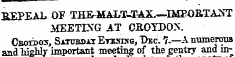
fiEPEAL OF TBE ^ MAI / MIAX . —BG ? ORTA 2 iT MEETING AT C&OXDOX . Csofpos , Satubdai Ersspfs , Dec . 7- —A numerous and Mghbr important meeting of the gentry and m-SneainaJ firmers and agriculturists of the county of Sum ? , took place this afternoon ^ pursuant to a numerous !? signed requisition in the Towr * HaD , ^ Croydcn , for the purpose of considering the propriety of ta fcfng steps romrging on her Majesty ' s GoTernment a repeal of the Malt-tax . Mr . Bleados was , atone o'clock , nnanrmously called to the cfiair , and baring read tie requiition , calling
the meeting , he said lie felt great pleasure in being © ailed on to preside orer so numerous and so respectable a Bieeting , assembled , aste considered , for a most laudable purpose . He felt tnat an article of general if not of universal consumption , liad been raised to such 2 . pr ice by the Government duty , as to be beyond ibe reach of tlie labouring classes , irMch demanded , in Ms opinion , an immediate amelioration ; lie ( the chairman ) , thought that if the Malt-taX was abolished the Minister could do-without it , and that the labourers , ¦ who were entitled to consideration , would be benefited . ( Hear , hear . )
Me . » EAii proposed the first resolution . He said this was a subject not only of importance "to the farmers , but to the labouring men of England , and no greater benefit could accrue to the farmers or the la-Dourers of the country at large than a repeal of the Malt-tax . ( Hear . ) " The effect of a repeal of the Malt-tax would be to call into operation the use of second-rate lQarley , "Vfliich , because it was not grown on the genial lands of this country , was precluded by the Government taxation from becoming amalting barley . All therefore that could be done with sueh
bariev was . to the disadvantage of farmers ,-who conld only " sell it at the rate of 10 s . per quarter for the feedinjT of pigs and poultry . It -was not the price o land that tended to increase the price of malt , but the Government taxation . The average price of land was sixteen shiilin - per acre , at the outside twenty shilling ? , and that land it was presumed would grow five quarters per acre . The Government tax was twenTy-Twoshillings per quarter ; thus , whilst the acre of lanu at twenty shilllnss srew forty bushels of barley , iive 3 > ounds ten shillings per acre was levied by the Government . Sonis time since the Government took oft the tax upon beer ; and , ii was said that it was a boon to the farmers of the country . Now , as one of-that body , he ( Mr . TVeafl ) denied that it was a boon either to " the farmers or the labourers ; for it had created those sinks of iniquity anil infamy—the beer shops—which had not only injured the farmers ,
but ruined labourers and their families . Many schemes had been proposi-d for the benefit of the agricultural labourer : some ^ aid the allotment system , others the system of emigration would be best ; but he thftnirhi that the effiplcynieiit of labour was the Only remedy for existing evils — ( cheers ) — but what with the existing Cora Laws , the late Tariff , and the infamous Canada Bill , the farmers were unable to-jive employment to labour . ( Hear , hear . j Ait . r expressing his conviction tliat there was not mor ¦ labourers than were actually wanted in England , 2 dr . YWsil ] t-onrfniled bj moving a resolution—** Tnat in iho « ,-. > : jiWia of tLe meeting the Malt Tax was unjust In its - rhiciple an-1 oppressive in its operation , inasun-c ' a as it imposed tntirely upon the Labouring ffia . . -j of this country , vrho are thereby taxed to sucL : ic extent as almost to prohibit the use of the beversst- best adapted to their Tracts . "
Mr . lU ) LA 3 ii > seconded the resolution ,- vhit-li , on bel-c i « ui from the chair , was carried uuaniniuush , aai- ^ 1 l > . mi acclrjuations . Mr . I ^ oiiAs Ellmas moved i ' is second resolution , '" Tiiit the ^ lalt-tax having Ixxn submitted to during a I .- ; : jjtruxi , while hopes w ^ rv Ui-id out that when th . i- Bar * -eased thnx tns should be removed ; and tii 2 » me . 'iL ^ iZ ha \ i . T ^ witnessed il-si -Ixtrt-n : nilL on » of ti-xaik »; : hza I- eii removed whilst the Mail-tax n-maiiis , a « d thai a iiioletv on the durr of wines ha > sho been
removed , is i > f opinion that the time has liovr wlicii tliis severe impost on the comfort and ut-Lt- * - sitie > i » i" tlie people should at once tvase . " linows . wiis at once agreed to . and a eoniniitteo was appointed consisting of the gentlemen who had signed the requisition convening the meeting , to carry out its oKcfta . Thanks were subsequently voted to the chairman , and tie meeting separated .
Untitled Article
SHLPPIXG INTELLIGENCE Lxon > * s , Fsisllt Night . — The brig . JThomas , of SuaJerlsnd , was wrecked at Skerries on Sunday Bight . All the crew were saved . On the same night a wrevk l ^ ppened off Bilsby-out-end , on the lincoln-Ehire coast . The vessel proved to be a schooner , called tlie iEthers , of Dunbar , laden with oats from Konigsby , bottud for London . There wa ? a heavy sea at the Tr » - ? e ; so niuc-h * o that no sooner iras the boat got overLi » ard for the crew tosave themselves than the waves dashed hertoatoms . The wreck being shortly seen from the adjacent town , the life-boat was immediately got ready , and the poor creatures saved .
— . A distressing shipwreck took plaee on Tuesday ¦ week , © 5 the Northern part of Scotland , of the schooner Bates , of Maryport , which was lost on some rocks situate about ten miles from the shore , between the villages of Haris and Skye . The crew were saved , bat the vessel has become a total wreck . The other Teasels are the Jane , for London , lost in the Swiii , at the mouth of the Thames ; the Victoria , Emack . of Liverpool , wrecked off the Skerries ; the LeopoH , of Peterhead , lost 65 Lessoe ; tlie Albion Seho-Jiier , stranded on Prince Edward Island ; and the schooner l rince Oscar , lost on the coast of
Germany . Thkee Vessels E . rs Bows . —On Monday evening about six o ' clock , a collision occurred near Beachy Bead , by a vessel named the Plow , belongins to Tanaoiith , being run down by another , which proved to be the Hebe , of London . The crew escaped in t ' ue boat . Another collision happened on Tuesday morning , off Holyhead , which yeas attended by the total li > ss of the schooner , Portmadoe Packet , Mr . W . Jones , master . She was from Liverpool , for Carnarvon , with a general cargo , when , during a deiise fa ' . ] of sleet , some onlmo-B-n vessel , apparently a brig , ibout 300 tons burthen , run into , and stove the bulwark . " is to such an extent , that the vessel sunk in the r : > m > e of a few minutes into deep water . The erew saved themselves by their own boats . Another Tes . -s . 'l is reported to have been run flown between Lai ::: nard-fort and Aldborough , oh tLe ; i > a ?> t of J ^ uffolk , In one of the Scotch steamers , but the fate of the crew we are vet unable to learn .
Untitled Article
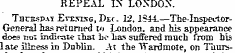
REPEAL IN" LONDON . Thuespat EvEnsG , Dec 12 , 1 * 44 . —The-Inspeetor-General has returned to London , and his appearance does not indicate that be Las suffered much from his late illness in Dublin . At the TTardmote , on Thurs day last , "he announced his intention of visiting all the wards m sui-eevi'jn—a plan which , if carried out , will remove inudi uL-satisfaction which has been hitherto occasioned "h y some wards not having been " visited ai alL An extraordinary placard was put into Tirrulation at tho close of last week , calling upon the
Inipeeior-VTeneralby name to meet Messrs . Hyde and Bussev at the Westminster "Ward , relative to certain alleged attacks made upon them . Some " misunderstandiEj : ha ? also arisen id Liverpool amongst the Repealers . These dissensions are neeply to be deplored . The project for establishing : reading rooms in Ireland 3 s warmly recommended by tie London Repealers , and they are beginning to " , whv should there not be si-rmW reading rooms established in England i If ihey were established , great good would follow , and person ? would spend in profitable reading the time which is now worse than lost in augry discussions and bickerings .
G 2 att . ax "Wabi > , " Whitx Lio ^ ItentT-LiXE . —On Sunday evening last the larire room was resj > ectably atteuded . Mr . J . Eugene Cavanagh , son vf the celebrated translator of Moore ' s Melodies into Irish , was in the chair , and addressed the meeting in a speech which elicited the warmest applause . The Rev . 3 Ir . J . Furlong followed , depicting the various modes of persecution resorted to by the English f to-Yernnient against the Irish priesthood , and said a
new era was dawning upon Ireland , and the time was not iar distant when liberty would l > e proclaimed throughout the length and _ breadth of the land , and Ireland would then be anation . Fifteen were enrolled . InBEaiTOB ' s ViKB , Ij ove-Laxe , Shadtveix . —In this ward the wardens have established readme rooms , which are well attended every evening . They are under ihe superintendence of those inestimable een-¦ fle men , the Rev . Messrs . Moore and Folev , and alreadv are the beneficial results beginning to be felt .
Gray ' s Isrf Wakd , Albert , Geit ' s-ixs-lase . —On Sunday ereniag last Mr . Burke presided , and the meeting was addressed by Mr . Collins . Several were enroBed . Rotbebhtthe 2 vzw WjkBD . —At the meeting of thL « -ward on Sunday evening , at the Rose and Rummer , Paradise-street Eotherithe , ilr . J . Roach in the chair , Mr . Casserly read the proceedings of the last meeting at the Conciliation HalL Several able speeches were delivered , and twenty persons enrolled themselves under the banner of Repeal . LrsFBCTOB-GxxEBii ' s Wabd , Pkiscb ' s Heap ,
Stoxxt ' b-Gaie , " Wesmetsxeh- — On Snnday evening , December the 1 st , a meeting , which was well attended , was held , Master J . Riordan , in the chair . Mr . T . Daly , R . W . and V . ( Dr . Gray's Ward ) ,- addressed ihe meeting at great length , and highly complimented the parents of their youthful chairman for instilling patriotic principles into his young breast . He theu aweh upon the present prospects of Repeal , and emphatically caHea upon those present not to relax in their efforts for fatherland . Twenty-one persons were enrolled .
Db . Gbit * b WiBD , Bruish Qceex , Whizecboss-BTBkbt . — At the last meeting of tins ward , Mr . 'Ustdej , if , presided . Mr . T . Daly , R , W . and V ., addressed the meeting . Several -srere enrolled . Ths ilHBFXCTOB-GrETEBiL visited the following Trards this week : —fhe Aldersgate on Sunday ; the St . Patrick ' s wuMondav ; and the O'Connell on Tuesday .
Untitled Article
Bbightox . —Cokciuatioh WiBD . — A meeting of this ' ward ' wasTield [ on tiielst'inst ^ , "Mr . BaTamantan Engliahinan ) presiding on the occasion , who , in an eloquent speech , declared Ms sympathy for Ireland . Messrs . Butler and M'Gornick addressed the meeting at great length upon the question of Repeal . Extracts from several journals were read , ana the meeting adjourned .
The Northern Star Saturday, December 14, Lui. _ _ _ _ .^. ,A._ ^ - — ^— - — ¦ — — — ¦ — - — — ¦ ¦ ¦ I. ¦ N Ft J^ L~L
THE NORTHERN STAR SATURDAY , DECEMBER 14 , lUi . _ _ _ _ . ^ . , a . _ ^ - — ^— - — ¦ — — — ¦ — - — — ¦ ¦ ¦ I . ¦ n ft J ^ l ~ l
Untitled Article
0 T-0 XX 0 B A 2 TD CHAMBERS . "H " e last week assigned a sufficient reason -for not having sooner noticed the tract , entitled the " Employer and the Employed , " recently published by the Messrs . Ghahbxxs , of Edmburga ; anu we trust that the first part of Mr . O'Coxkox ' s reply to that document , which vrtil he found in our sixth page , win amply compensate for the delay . "We received scores of letters from all parts of the country , directing our attention to the tract ; and , having perused it carefully , we cannot come to other conclusion than that the Messrs . Chambers have been made
the instruments of the Free Trade party , the manufac turing class , and the Poor Law Commissioners , to devote that power which their long services had procured them , to the destruction of anj little self-pride and esteem that their former advocacy of Labour had raised in the minds of the working classes . The masterly , familiar , and convincing manner in which Mr . O'Coxsob has handled the first branch of the subject leads us to anticipate , when the replv is conduded , one of the most able and Taluable defences of the cause of the working classes that has ye been submitted to their consideration .
3 r . O'Coxkoe ' s minute calculations , as well as the close manner in which he keeps Mr . Smith to the points urged by his antagonist , ar « .- set forth clearly—and though in a familiar , yet in a " slashing ' style . Comsgsbt , the hero of Mr . JVlsaAru ' s last novel , i ? made to attach all importani-t- to a good " rrj " and a " slashing article . " So doubt thi- ca ^ e made out by the unopposed Mr . Smith would hate furnished a valuable " cry" for the Free Trade school , and would hate afforded ample justification to tJi .-ir representati-rcs for purifying tlie labouring classes of those manv " excesses , " and that great -iraproiidence , " of
rrhii-n the Messrs . Cbambebs complain , as the necessary preliminary to the enactment of such measures as would be satisfactory to the ' master" classes . When the people " rioz" and demand redress , their advocate * contend for tlie ¦ r . ecrssitj of nrst disarming : and then legislation can be temperately deliberated upon . After the same fashion the Meters . Chambe&s point out the -several obstacles which stand in the wav of popular redress , —the greatest Wius Labour combinations ; and thus hint to a class , — uho . a ^ Mr . Chjlhbebs very candidly info rm s us , ] ia > e no . thing iv do with ' feeling , " but consider all as matter of " business , "—the necessity of destroying combinations
bt-f ^ re redrew .- can be administered . > uch is tlie *• cry " * rt-lii-d upon to carry the '" sympathizers " th : un ]> luiutly through the forthcoming . session of Parlian > . ut ; while we hate hope enough yet left to bebvve tliat die " slashin ? article , " intended as an answer to . the '• cry , " Mill stide tliat mocV sentimentality about to be off .-red as a substitute fc-r substanti-al relief . We are led !„ thr l > e ! iei , that , " haterer the iatvntions or prospects iiiiglst Law betn which iuduc-.-tl th-. M-j . -.-rs . Chambees to fulminate their dreadful anathemas against tlie Iabourii : c cla = £ t-s , the masterly , convincinjr , and triumphant Tf-l-h . rvh ' u-h it is our jiride this week to publisli , will
cau ?« - hem to abstain , iu futurt . from striking a blow st -Liat hand by Trlrieh thi- ^ have been raisea nvm jM >\> . r » j !¦> aiSuent-e . As long as the Messrs . Chambers remained ra ^ rt compilers of interesting works , —as guagers sucking the brains of others , —they stood high in the world of literarr compilation . They were free from criticism ; while their happy selections gave them a character for taste which insnred them a certain amount of well-merited popularity . They have now plunged into the troubled waters of authorship ; and , according to the raging fashion , would assume originality a ? their introduction . In this new character ,
however , they have signally , totally , and disastrously felled . There was a time when the hard blows of " buffer" Smith might have told upon the unresisting - mummy " Jackbos ; and if the previous teaching of tlie Messrs . Chambers has led to that nice criticism , which has tausrhi the working classes to distinguish between matters of " feeling" and matters of " business , " we trust that its proper exercise upon their recent tract will convince them that the labour bestowed upou the enlightenment of the working classes has not been lost , and that the vupils are worthy of the masters .
Untitled Article
O'CO >"> "ELL AND THE " WHITE BOYS . " Te have read somewhere an account of a practised pickpocket , -who , having relieved a gentleman of his purse in a crowd , and being pressed , took a knife out of his pocket and cut his fingers across , and then holding them up streaming with blood , screamed out murder , and succeeded in diverting the attention of the mob from the cry of " Stop thief . to that of "Murder , murder ! " Thus he escaped , taking with him the sympathy of the bystanders , as well as the purse of his victim . At the last
meeting of the loyal Repealers at the Conciliation Ha . ll , Mr . Gbattas . M . P ., was at great pains to justify the agrarian outrages uow becoming prevalent in Ireland . He adduced very good authority to establish the fact , that as the Government broke the laws by day , the people were Justified in breaking them by night ; in fact , the general admissiou that the administration of all law in Ireland is a farce , should at least insure some kind of consideration , if not toleration , for those who , in the wildness of despair , are compelled to execute for themselves that justice w hii-ii rbe laTrs of their conntrv withhold .
« e have laboured industriously and incessantly , and we flatter ourselves not ineffectually , to prove that every act of agrarian outrage committed in Ireland is a consequence of oppression and misrule , and not a characteristic of the Irish people . At the same meeting Mr . O'Connell issued a commission to Mr . Sir . n . T ., the head pacificator of Ireland , to hold special commissions under the loya ] royal seal of the Kational Conciliators , for the trial of the White Boys of the counties of Leitrim and Cavan . We have always deplored those occurrences of a pnedial nature , because thev must inevitablv injure the people ' s
movement . We think , however , that upon examining the speeches of Mr . { yCoxjfELi ., the most censorious trill discover some justification for those acts of atrocity so universally complained of ; vthile we assert without fear of contradiction that the " hope deferred" by Mr . O'Cossell himself ; the many juggles by which for a time he succeeded in allaying that thirst for vengeance for personal wrong which the law refused to redress , has now caused the long pent-up passions of the Irish people to bur ^ t forth , and has induced them to put a literal interpretation upon Mr . O'CoxyxLL ' s
motto—*¦ Hereditary bondsmen , know je not . Who ivvuld be free , themsrlres must strike the blow . " The Irish people , long accustomed to look upon Mr . O'Cossill as the embodiment of their every hope and every wish , supposed the word " themseh es" to mean Mr . O'CosstEi-L . who w-as to strike the blow for them . Disappointed at last , however , they have now *¦ taken their affairs into their own hands . " The " repeal year" of 1843 has
passed and gone , while the Saxon sway is as powerful as ever ; the " clenching year" of 1 S 44 is drawing rapidly to its close , to be succeeded by 1845 ; and the Irish people are now told , " WHO ISOBS BUT THE EEPEAI . MAT COJtE AT LAST . " Hotvevex . Mr . T . Stxilx is to add the hononrable office of " Government Spy" to that of " Head Pacificator . " The consequent cold-blooded sacrifice of innocent Wood , which Mr . CCosxzll assures us will be shed upon the scaffold , is horrifying to contemplate .
Admitting the act of an oppressed people taking the law into their own hands , under the name of White Boys , to be wrong , because likely to be unsuccessful , yet we ask Mr . O'GosjfEU ., and his commissioner . Mr , Steelb , whether the odious duty of bringing the thoughtless , the confiding , and the injured to justice , might not be safely confided to the jpjardianship of the " strong Government" aud the police arrangements of their local minions ? Mr . O"CosirELL cannot set up morality as his creed—because he rejoiced
in the Rebecca outrages , as a means of compelling the Government to do justice . Mr . O'Connxll boasts of having been mainly instrumental in carrying the Emancipation Bill : but we tell him that had not popular discontent , marshalled under the name of White Boyism in 1823 , couipeUed Mr . GorLBtis ro saddle the Protestant landedproprietors with their share of the tithe , and thereby weakened that link which bound them to the outward and visible sign of Protestantism . . Emancipation would not vfct have been achieved .
As we are told that all Catholic Ireland is associated as one man of one mind in the determination to accomplish a Repeal of the Union , it is no great stretch of fancy to conclude that the body of Cavan and Leitrim Whitebovs consists of a number of Repealers ; aye , and of Repealers too . who have largely and deeply contributed their share to swell the immense revenue of their Liberator .
Untitled Article
And should they be called upon to expiate « n the scaffold ¦ with theiriives thecrime of " striking QiebloYr ' tiusmiSliiea , " which they paid Mr . 0 "Cokhei , l liberally to " strike " for them , we trust that tis " Hxacskan , " Mr . Thohas Steile will render a faithfml account of , the Several amounts paid by the several victims to their own confidence . In the speeck to which we refer , Mr . O'Connell invokes the aid of 900 , 000 men of fighting age : and , merciful Providence ! what inferences are the poor deluded Irish to draw from such bombast and gasconade . Let him talk as he will—let him preach as he may—and declare his adherence to the principle of Repeal as best he can ; yet we tell him that his riding-off on the Catholic Bequest Bill , and crying out " blood and the scaffold , " while he has picked the pockets of the sufferers , will not satisfy the Irish people .
Ilis denunciation and threatened destruction of the poor White Boys , is in perfect keeping with his desertion of the Dorchester Labourers and Glasgow Cotton Spin ners—with his crusade against the Dublin Trades , his de- " nunciations of the Rechabites , and his exultations at a handful of Irish beardless recruits having slaughtered the people in the streets of Newport . Labock is getting too strong forMr . O'Comkell : and as he was never the friend of Labour , he dreads its vengeance when the day of retribution shall come . He mouthed his lamentations and
heaved his sobs over the Gatholic blood slied at Rathcormac , which , in his several associations , he has oftjenitmes declared yet cries to Heaven for vengeance ; but while the straw in the widow ' s haggard was yet crimsoned with the innocent blood of the widow ' s son , and while the event was fresh and feverish , and before the just excitement had passed away , when Mr . O'Connob gave notice of motion upon the subject in the House of Commons , Mr . O'Conkelx requested him not to " embarrass" the Government with the question !
Is it wonderful , then , that the poor Irish , deserted by all whom they have paid and in whom they have faithfully confided , should look to other than hired advocacy for the correction of their grievances ? Again , we say , that while tve lament this recurrence to outrage and the necessity which leads to it , tve look with loathing and detestation upon the man who oifcrs his services to ferret out victims for the Saxon law . Nor will it satisfy the Irish people that the act is superinduced by the necessity of preserving perfect tranquillity as a means of
accomplishing a Repeal of the union . W hat we say is , that if it is necessary , Mr . O'Conneli , is the last man living who should enter upon the task ; while , perhaps , Mr . Steele will bo ' found the most efficient to discharge the painful duties imposed upon him by hits new office . So doubt , the Irish Catholics will yet continue to furnish " blood money" for the persecution of their own tie&h a . vid blooA . If so , b * it so . We only hope that tin ' time is hot far distant when the disciples of a Matiibw will see the juggles lit which the coufidinj Irish have been so king amus « d .
Untitled Article
ROBINSON CRUSOE , AND HIS MAN FRIDAY , AGAIN . ' Me . J 03 EPB Stctbge lias some general notions of rnili tary tactics , but is deficient in the art of bringing his troops into the field . Just about this period of each year , Mr . Stxrge starts on the recruiting service , aud his battle-field being very extensive , he reviews the outposts , commencing " far north . " We learn from the Scotch newspapers , as well as from our Glasgow correspondents , that 3 Ir . STfBGE has been recently engaged in the fruitless endeavour to take the Chartist garrison of Glasgow by storm . Mr . Stcbge , with characteristic obstinacy , ap . pears to be resolved on a renewal of last sessional folly and again his ' man Friday , who has so signallv failed as
Untitled Article
leader of ^ the IrhJi ^ c ^ eraUBtSj ^ tp lead ori it . he , '' . fqrlora hope" against the " strong cheat . " To aid in this project , our present harmony is to be disturbed ; and all the competitors for popular support having failed to get a " bid" for working men ' s support by " wink or nod , " Mr . St ? ubqe and his staff see the necessity of being less reserved with the Chartist body . Hence we find Mr Malcolm , one of the keys to the Stdbge bugle , sounding the new conditions on which the units of " CompletUm" will condescend to fraternize with the hundreds of Chartism .
We have silenced the " physical force " key-note ; and Mr . Malcolm tells us , that we must also give up the note of " obstruction , " as far , at all events , as regards opposit ion to jjho Free Trade party . This young jackanapes has been " all things to all men , " and no doubt his teeth are watering for a snap at the Free-Trade cherry . Mr . Stukoe , however , should bear in mind the several lessons that the Chartists have already taught him ; and by this time he should understand , that if the ocean and the streams are to unite , the streams must run into the ocean , and not the ocean into the streams .
However , if in these days of novelty and invention , the universal waters of Chartism are to be turned up the hill into the narrow streams of Sectionalism , Mr . Crawfoud is not exactly the engineer to direct the new course , or to apply the several "locks" to the establishment of the new level . Mr . Moib , Colqchocn , and others , notwithstanding the results anticipated from the apparent apathy of the Glasgow Chartists , appear to have been watchful sentinels , wide awake on their post , and therefore not so easily reconciled either to become passive instruments in the hands of the League , or to be dragooned into a preference of Whiggery to Toryism , Our preceptors tell us , that on two conditions only can we be admitted into fellowship with the wanderini ; minstrels
of ' Conipletism— the one , that we are to prefer the League to every other thing in this world ; and the other , that we are . upon all occasions , to give the preference to the Whigs in contests between the two rival parties . It is strange that the position of Mr . Stiege at Birminghim , and his frequent denunciations of the League , did not serve as a curb to tho flippant tongues of his obsequious followers . HiKvever , for ourselves , when tve daily discover such discrepancies between the theory of the soldiers and the practice of the Generals , we are irresistibly led to the conclusion , that with such : in army we can enter into neither contract nor i ^ iion , until they arc first tmiW amowiat tkemsebvs . ' Ak to tlie part that poor Mr . Crawford is designed to play in the revi \ i . 'd firce of " Stopping the Supplies , " he is old enough to know that an ? advantage that coulct ho derived from
its revtvil , has lost its electrifying nowlty by the total failure of last year ' s expi-rinient : and to adtertize it " for representation this year , " tviiJ be but to confirm the public in a belief of his uivtHness for that jj > st of leadership tv ' iich Mr . Storge is so anxious to confer on him , n * th < preni ht ») ijii ) ir ^ Jsstlnrd to ob / mrc the FiNSurar Licnr : In nothing hiivc- either Mr . STinot or his party !> uvn ;? hene < l the hands of Mr . Uencombi : ; but , on the coiitnry , there lias existed a perceptible desire on their \ y . \ rt 1 > weaken Iriv itiUuew-o arnl to substitute their own leader in his stend . It in murvellyus that u < nu-n grow older they do no * , grow wiser : fnr if those , two poutlemcn possessed one p . irticlc of renertm' power , they might have d . seovered by this time , that the Uh < nir of ilislurbh' 5 Di'scombe from the affections of tlie -working classes , was a ta . sK wholly beyon I their piirmy power .
we ' .-itimoi , in a'lditivn t « thii oariiiiiir »« 1 t <> Messrs , St-l'boe unil (' BAtvioRD , conclude without noticing the I'laini . - of MoRsrs . Mom , ColquiioI'n , ami the £ ' " ant Cliartiits of Glasgow , to the gratitude of tlie working olasso in general . Tlu-y ire ever ready at their posts , when danger threatens , or when treachery assails their principles . Wo piv < uuie that the failure of the attack on the " oatpostK" will save tlie " citidel"Crom sueli another assault ub was made upon it lust year by dissenting parsons , trafficking " pedlars , '" and masked LoaaruerR , under the guis-J of Labour ' s friends . However , should the attenift be repeated , we shall be at our post , t » add another victory to the many that the united Chartists have achtei-ed over their disunited opponents .
Untitled Article
Specially to Agents .- —The agents , whose accounts have been sent in , will please to remit the amount before next Saturday . . Notices of Forthcoming Meetisus . — All notices of forthcoming meetings , to secure insertion , must be in the office by Wednesday mornings , excepting such as are arranged for after that day . Several came to hand last Friday , which were necessarily excluded . Reports of Scnday Meetings . —All reports of Sunday meetings in England . must be iu the hands of the editor by Wednesday morning , or they will be excluded . Our Scotch friends must write su a * to reach on Thursday mornings . The bad Postal arrangements makes it necessary to give them a day ' s grace . In all other places t 2 ie time named , Wednesday , is late enough : as late as the other duties to the paper will allow us to iri * e .
Mb . T . Clask would oblige by writing sooner . A . (' . A ,, Islington . —Refer to the *> 'far of August 31 , 1844 , and you will there find your subscription acknowleged . " Politics and Pauties in Switzerland . "—We were requested last week to notify to our readers thnf the edition of the Journal de Genera has for the presi . > . discontinued the articles " on the state of Parties in Switzerland , " owing , to circumstances of a local character . H . Lunn , IIampstead . —Get a copy of the last Tariff , from the Parliamentry Publisher , Hansard , of Parliament-street , uud Great Turnstile . Holborn .
T . FATHILL . —Tho last National Petition , signed by 3 , 500 * 000 tax-payers , and presented by Mr . Duncotnbe , had in it a clause pleading for , and praying for , a repeal of the Irish Legislative Union , j
Untitled Article
Mb . Patrick O'Higgihs , akd Chabtisk ix Ireland . — A good ' deal of ' anxieij * nas been " manifested by bur English friends to learn the present position of Chartism in Ireland , j They missed the reports of the meetings of the Irish TTniveral Suffrage Association from the Star ; and numberless have been the applications to us , to learn the reason why . This Uformatioa we were not at the time in a position to impart ; but we are now glad to ; have in our power to set inquiry at rest , by publishing the following letter from Mr . O'Higgins himself , a copy of which has been kindly forwarded to us ; . There are several other matters included in the letter , to which we invite attention : —
"Dublin , December 3 d , 1844 . —Dear Sir , —A good wafer is better and safer than a bad seal . It is right to mention this , as your letter of the 2 d instant came to hand open ; the seal having been broken apparently by the carriage , orj perhaps , tossing from bag to bag . Doyle called here on Monday , but I did not see him . I understand that he has gone to some part of the country . There has not been a meeting of the Dublin Chartists since August . They will meet early in January . The weekly subscriptions here did r > ot cover a twentieth of the expenses . I carried on for four years at
an expense out of my own pocket , of from £ 60 to i-83 ayear . This was j too much to fall on one individual ; besides being maide a target of by the O'Connell party , without auy means of defence except througji the columns of the liorthem Star , which was of no use to me here . The ] Chartists either in England or Ireland do not support their own principles . My opinion is , that he who smokes tobacco , or drinks intoxicating liquors , while funds are wanted to carrying out Chartist principles is more a Tory agent than a Chartist . Half the money spent in filthy , stinking , tobacco-would , if subscribed honestly and manfully to Chartist purposes , place it upon a footing that could not be resisted for any length of time . What right have the working classes to make victims of those , who for pure love
of justice and right , step out of their ranks , cut all connexion with their former friends , with a view to promote the happiness and comfort of the oppressed millions who make ; ivo sacrifice to promote their own welfare ? It is melancholy to see how in every age political knaves ; who flatter and cajole the people succeed , while hottest men are allowed to perish by the vury men for whose interests they sacrificed everything . Look at the history of the O'Connor family ; see how they have always taken part with the people of Ireland—alwaysjadvocates for extending the Suffrage to the working classes—even from the earliest period to tlie present time ; using their most streuuous efforts for Universal Suffrage . See how they have been persecuted , their property confiscated , their houses burned , a price
set upon theu- heads , and for what ? For their devotion to the interests of their poor , persecuted , and oppressed countrymen . Well , see , on the other hand , how the bitten si t ' ue , tlnj moit malignant enemy ever the working classes had ] drains , by flattery and cajolery , some thibty thousand poi : nds a VEAB for his own use and benefit , from his miserable dupes : and upwards of £ 50 , 000 a year , { in addition , from the same creatures , for the sole purpose of restoring to potter their insidious foes , the " l ) hse , bloo'Iy , and brutal Whig ; ,. " Many a truly lunust liian is deterred from taking that part in the Chartist movement which lie would wish , in consequence of tho apathy of the Chartists themselves . They iln not support their oimi cause—they do not support their utt u leaders , or rather , political teachers . I
for unv , will never tiesceuu to flatter men for the sake of popularity . ] And I t » -ll you hom-stly and candidly , that it . ii >;> . ui-s to me Loth l-idleulous and dis ^ uwting ro see a iiian dci'laimiug upiiinst a Government with a pipe , in his jau . Ic is just s :. \ ing to l . is enemy , *' Here good sir , I knott you are my oppressor , and that you could n > it opprcS .- > me uiiKss iik' and my class furnished tou with the means . Mv ivitV is sicl ., and my children are lnmirn ; jiL-rll will laj uu : il . is thiiteuii pence , tvhieb i * all I li . u ., ia iuliacco , because 1 am well aware thac , b > doing s >> , , wu , my oppressor , \ wll get twelve pence out of it , as diCty or o \ i : ise , tWiile I get not one halfpenny worth , u-. i [ atiotln-r grinder of the poor must have
hi . s profit out of'the pe : iuy . " I a ^' i \ ou , Uow , is not this tne true sfatc t 4 ' ; In case { Bear in mind , tliat the trst uf devoti'iii to a cause is tu be found in the wav it is sustained jby tin : > kit _ -wo of war , and these alone . Hear also ia mind that ivi ' ry j ») Uiid you save from tlje excise and Kub .-Cribe to thu charter , deals double blows on tin- heads of your enemies . —I am , faithfully yours , Patrick Cllir . ti . Ns . —Mr . Thomas Webb , Stockport . An Old Srnsaunp , Stockport , cannot compel the Board of Guardians to do any thing , iu the way of relieving the poor . They are elected , and selected , to starie the poor ; and if they only allow Is . 6 d . per w « ek for an old woman , seventy-two years of age , whv
" 'Tis their vocation , Hal . " They could refuse oven that starvation allowance , and also admittance into their " house of horrors , " and who is there to call ] them to account ? The protection of the poor has been taken away : we are trying to have it restorer ! . \ Charles Gwilliam , Liverpool , need not be under no alarm about the splenetic effusions of the wincing " Lietor . " Fie : is powerless , either for good or evil . Like the venomous scorpion , he has been made to bite himself ; and his own destruction has followed by his own virus . A . C , AuBRoATHi We really cannot answer his query- * - for tve cannot understand it .
Cautio . v againsj isrposiTiotf . —We have been requested to caution the public against an attempt which is being made in certain parts of Ireland , by a set of unprincipled men who are going about with petitions , craving charity for thetnankeen weavers of Wigan , without the consent or knowledge of that body ; and beg to state that they discountenance such proceedings , as being calculated ro rnisiead the charitable and humane part of the community . They deem it prudent to lay this statement before the public generally , in order that the individuals goling about under false pretences , may be dealt with according to their merits .
W . VlHOS AND THE ifANCHESTER " GCAKDIAN . " In Wednesday's Giut-rdian-thvre is a report of a miners meeting at the Old Mess-hbuse , Oldham , at which Mr . Dixon is represented as speaking . The fact is , Mr . Dixon was never out of Manchester on that day . This is an old "dodge" of the Guardian , as it respects Mr . Dixon . During the Plug war , it represented that gentleman as a speaker at a meeting in Titikers ' -gardetis , putting into his mouth a must naming speech . Mr . Dixon , in that case as in the present , was never near the . meeting at all . He wrote to the Guardian to contradict the misrepresentation , ( error it could not be called , because so oft repeated ) —and no notice was taken of his letter . What can be the reason for such conduct ' . Is it paltry spite , because Mr . Dixon is a reporter for the SUir t If so the Guardian is a mean dog . John Roberts . j Shrewsbituy , oterlooker in the Flax mill of the Messrs . Marshall , of that place , writes to
correct what he calls a " gross misrepresentation and libel" in a paragraph inserted in our last , stating that , " . sixteen hands had struck work on account of severe fines ; " but injwhat either tho misrepresentation or the libel consists Sve confess ourselves unable to discover ; for Mr . Roberts distinctly says , " that such a strike did take place , I admit . " Hed ^ fends the act of " arbitrary fining" on the grounds , first , that those he inflicted wen- snviU in jntnount " — only two-pences and threepL-ncos ; and often times onl y one penny ; and second , that it is necessary to p rotect the character of the manufacture of the Messrs . Marshall from the effects of " unjustifiable indolence and carelessness . "' lie also vouchsafes the information that he "fears God and honours the Kintr , " both of which he may do as Jong as he likes ; but ho should not " rob the " labourer" either for the benefit nf thi 1 'Messrs Marsluill or anv body else .
ifn .. Robekts ' . s i Addhess . —TVo often lvceive Jotters for Mr . Roberts , with a request that tve will forward them , the parties writing not knowing where to addross . To save ourselves trouble , aud to impart information to many who may need it , we here give the several addresses to which commuuicatidiis for the " Attorney-General" may be sent : 11 , Royal-arcade , Newcastle-on-Tyiio : M Princes-street , Manchester ; 2 , Robert-street , Adelphi , Lotylou . At each of the above offices Mr . Roberts , in hi . s absence , is represented by an efficient clerk . | " - To the Chartists of the West Ridi'mu of Yorkshire . —The Chartists of Wakefield , deploring the total want of organisation in the West Riding , and ansioua tocooperate with their brethren in raising a sufficient
fund to secure the services of an efficient lecturer to agitate the Riding , and make known the glad tidings of ( L'hartist principles , appeal to their brother Democrats of the Riding to lend their assistance to the good work of revival . Tht'V particularly appeal to the Chartists of Dewsbury , Heckmondwiek . Little-town , Cleckheaton , Birstal , liatley , Horbury , Osset , Earlsheaton , Dawgreen , and Gatvthovjie , to take this appeal into their serious consideration . The Waketield Chartists suggest the calling of a delegate meeting as speedily as possible , to ± > e held at Itewsbury . aS the most central place . In the meantime they request ) communications from the places named , to be addressed to Thomas Batty , Wildes' Yard . Kirkgate , Wakefield .
J . B . L . —We are again compelled by press of . matter to withhold UiS j first communication . That received this week will be ] found in another column
Untitled Article
j FRIGHTFUL ACCIDENT ON THK DOVER j RAILWAY . ¦ Wednesday morning , about one o'clock , a iuo * t frightful and fatal accident occurred on the Dover Railway , near the Bricklayers' Arms station , GM Kent-road , by which oneinan , named Robert Buckley , an enginedriver , was killed on the spot , and Aaron Wilkinson , the stoker , received such extensive injuries that his recovery is utterly impossible . Several other
persons were also seyorelv injured and conveyerf to Guy ' s Hospital , where they received even- attention from the r ^ ident house-surgeon . It appears that about twenty minutes after midnight the goods train destined for Dover , left the station at the Bricklayers ' Arms . The- engine ( a new one , manufactured by Beny , Curtis , and Kennedy , of Liverpool , and . named the " Forester ") was attached to the trains , consisting of several tracks heavily laden . When the train was ready for starting , the engineer , Robert Buckley a
Untitled Article
fine young man , and Aaron Wilkinson ;; 'the' stoker , beingtold " ^ all tra ^ right , " proceeded onwards with it along the line , and it was obserred by the men on duty that " she ran beautifully . " Unfortunately , however , before the train had reached more than halfway to the junction of the wooden with the earth-raised line , and just as it had passed the timbev-built viaduct near the Blue Anchor-road , the engine exploded with a report which was heard for some miles distant , the police stationed as far off as Woolwich marshes having heard it , and the reflection at the moment caused by the fire and steam was so strong , that Deptforddockyard and the station at the Bricklayer / Arms were ( juite illuminated . There were three guards at the time with the train , and upon recoverine from
the stupor into which they were thrown by the occurrence , they discovered that the engine had leaped completely over the side of the railway , and that the tender had broken through the latticed work fimning the left side of the line , on to the ground , a depth of nearly eighteen feet . By the aid of their lamps thev immediately began to search for the engineer and stoker . The latter they found about twenty feet from the train , bleeding most profusely from an extensive wound in the head . lie was also so much scalded by the sudden escape of the steam that his flesh peeled off upon their attempting to touch him . The most judicious measures were used , and Mr . Harvey , the deputy superintendent * of the luggage department , having now come up with assistance from the station , tlie poor fellow was without delay
conveyed to the Bricklayers' Arms station , and thence to Guy ' s Hospital in a cab . Search meanwhile was made for Buckley , and he was first perceived by the wluteness of his trousers , the knee of which lay exposed from beneath one of the luggage trucks remaining upon the line . By great exertion the load was lifted from the body of the unfortunate man , but he was dead , being literally crushed to a mummy . The scene immediately after the accident baffles description . One of the trucks , piled full of bales of merchandise , < fec , having by the violence of the shock been shattered to pieces , the various articles were forced from their enclosures , and strewed all over the line . The engine lay in the field , several yards from the snot on the line where the accident occurred , the wheels deeply embedded in the earth , and the body , boilere , and the machinery literally splintered to pieces . The side of the railwav , which consists of a
latticed work of wood all along the inclined plane , from the Greyhound-bridge to the junction with the New Cross line , over which the engine and tender fell , is torn away for about eighteen feet . Upon instituting further inquiries , we found that that intended journey of the t orester engine was only the fourth it would have made . It was considered a very good one up to tlie time of the disaster . What caused the . explosion has not yet been ascertained . The poor fellow Wilkinson was said to be so seriously injured that his recovery was considered hopeless . No information as tu the probable cause of the accident could be gleaned from him . It is most providential that at the time of the accident no passengers were with the train . The authorities of the railway unite in declaring that the unfortunate deceased was a most sober and steady man , and respected by bis employers as well'as by afl who knew him . Both he and the stoker were
unmarried . Fuhtuer Particulars . —As soon as possible the line was cleared of all obstructions , so that the regular traffic might not be impeded ; and at an early hour the directors who had assembled on the spot , with Mr . Cubitt , the 'lomocotive engineer , and Mr . Gregory , of the Croydon line , considered it necessary to forward immediate intelligence of what had happened to Colonel I ' asley , the inspector-general of railroads , and who arrived soon after nine o ' clock , wb . p . 1 a strict examination was gone into , the result of which is as follows : —The bursting of the locomotive being the supposed cause of the accident , their first object was to examine the engine as it lay imbedded in the earth . After getting off the
viaduct , it had pitched head foremost into the earth a depth oi' tour 'feet , then turned over . They found the fire-lwx was blown out as well aa the whole of the fill' hiiiv , and the inner casing , between which and the outer easing the steam generated , was also torn away . The next point was to examine what effect the explosion had had upon the viaduct , and the probable cause of her getting off the same . They found , uDon inquiry , that there had been two explosions , the hrst apparently took place about eighty feet from the spot where the engine was lying . The fire-bars at the bottom of the fire-box had
been blown completel y through the viaduct into arch No , 134 , making a hole three or four feet square . The second explosion not only blew the fire-box through the arch No . 133 , but such was the force of the steam , that the engine "jumped , " and descended partly on the rails and partly off , a distance of eight or ten . yards , crushing the immense pieces of tHnber that supported the viaduct . The front door of the smoke-l ) ox was discovered about 100 yards distant . Although General Pasley ' s opinion was not publicly made known , we understand that he attributes the cause to a flaw in the copper , or a defect in rivetting the easing .
T-UE LATE DREADFrL EXPLOSION ON THE DOVKR Railway . —Additional Particulars . —This unfortunate occurrence , which is unparalleled , it is said , in railway accidents , has attracted the most serious attention of the offieei-s and directors belonging to the line , as well as of the other metropolitan railway officers , several of whom have inspected the spot for the purpose of collecting information ; for it hasi not previously been known for the boiler of a locomotive , while running , to explode and cause such havoc as on the present occasion . It has been stated , that Colonel Pasley examined the shattered engine a few hours after the accident , and he has since sent his report to the Board of Trade . We have subsequently learned that other circumstances have since transpired which
will throw , it is said , additional light on the cause of the explosion . In the examination of the engine by Colonel Pasley and the engineers , on Wednesday last , part of the inner casting round the fire-box was found to have been blown away , aud the same piece to have been forced through the viaduct into the arch beneath , a considerable distance _ from where the engine lay . The current opinion then was that the explosion had been caused either by some flaw in the copper casing , or else from some defect in rivetting it . Yesterday , however , upon further search being made by Mr . Cubitt , the engineer of the line , Mr . George , and other gentlemen , it was discovered that the safetyvalve was " hard down , " from which it was inferred
that the explosion arose solely from the circumstance of the engine-driver having neglected to open it . The steam then having no means of escape , had caused the casing to collapse and the explosion that followed . Upon further consideration , this might have resulted from the engine capsizing and making a double turn over , as she must have done previous to going off the viaduct ; the drum of the engine it is quite certain , struck one of the iron rails , for the indentation is still clearly perceptible , and this might have driven the valve into the position described . The most unaccountable circumstance is , that the engine was found with the steam shut off , by which some of the railway officers conclude that the driver had suspected rfmnething was wrong , and had shut off the steam . The body of the engine-driver , which lies at the Bricklayers' Arms station , is that of a finevoung man , upwards of six feet in height , and from the appearance it is probable that death was instantaneous .
ihe neck was broken , and also the left arm where the wairsron wheel passed over . A very remarkable circumstance is , that he was not in the least degree scalded , whilst his unfortunate companion was severely so . During the time that the men were employed in removing the waggons off the line another accident occurred , which nearly cost an excavator his life . He , with several other men , was clearing the line , when a waggon fell from the top of another one , and to save himself he ran forward and fell through one of the holes to the bottom of the viaduct . When picked up he was found to be perfectly insensible . Without loss of time he was conveyed to Guy ' s Hospital , where he received surgical assistance , and he was enabled in tho course of the morning to walk to his own lodgings . Upon inquiry on Thursday night as to the state of the stoker Wilkinson , we were told chat a change had taken place for the better , and that the surgeons entertained sanguine hopes of his ultimate recovery .
Death or Aarox Wilkinson ' , tue Stoker . —The young man , Aaron Wilkinson , the stoker of the enpine w-hose explosion on the line of the Dover road , on Wednesday morning , has led to such lamentable results , expired at a late hour on Thursday night in Guy ' s Hospital , The unfortunate voung man , who was only 20 years of age , ever since his admission lav in a hopeless state , from the fearful manner in which he was scalded all over liis body , besides having his skull fi-aetui-ed . He received the most unremitting attention from the principal medical gentlemen ot the establishment . He was in a state of stupor from the time of his admission until his death .
The Inquest on Robert Bucklet , the E * } ' ; xeer . —On Friday afternoon an inquest was held before Mr . Carter , coroner for Surrey , at the Brietlayers' Anus station , upon the body of Robert BucKley , who met with his death by the explosion of the boiler of the engine of the luggage train last Tuesday night , the particulars of which will be found m another column . The evidence's mostly a repetition of the details which will be found in our account ot the accident . We give the following from the evidence of Mr . Edward Berry , of the firm of Berry , Curtis , and Kennedy , engineers , Liverpool , where tire engine was built : — " I am an engineer , living at Woiverton , and having heard of the accident I
proceeded up the line and examined the engine and tender , endeavouring to find out the cause of the explosion . I found the engine on the ground very muca damaged . One end of the fire-box was driven out , a piece of plate about three feet and a half by three teet and a half , extending from the fire door to the point where it is fixed to the tube plate . The cnimney was broken , and the smoke-box end was blown out ; tne upper part of the dome and the safety valve were much injured , the former having an miuression . « tho rail upon it . The front axle was broken and ope wheel off . The tender and engine were lying aW » six yards apart from each other .. The connection between the two consists of a screw and two stro » : »
Untitled Article
T . S . UrXCOMBE , M . . ¦ VVnii . E the -. wtivc gvtitus th-. it ri ^ irestn vs mom s is -trained towards every point of the compass in quest ol " safr investment" ' or " profituW ^ speculation , " while the snrplus of Labour '» produce ha » madf money a- well 3 s other indigestible tiling , a drug in tho market , its vnJue becoming dail y diminished by n-aevH of iis wrongful distribution ; while landlord is ready to devour landlord—Church to vat Church—rival manufacturers devising the sur » -st moans of making themselves " safe" without rufert-nce tu anv sinritf -vonxidvralion save that of
sflfprotection ; und while the liovi-rnmtuvt , which should udjust all these differences , looks tamely on at this ganiu of " Dog eat Poo , "it is some consolation to find the sharpened intellect of Lahouh directing its energy , not to the correction of any one of these abuses , which would but confer advantage , on one section of a class to the prejudice of another section , but to the remodelling of the present 3 j / sU > n . in that shape and form from which all would be reciprocally benefitted . The present state of the combinations of the labouring classes is somewhat analogous to tlijat of a stagnant "pool , which tlie several competitors for Labour's support are afraid to disturb ; each being fearful lust the slightest pebble should cause an unlooked-for commotion .
Hence , we find bishops and parsons , landlords and farmers , manufacturers and free-traders , constantly treail Lng on the brink , but fearful of too near an approach . Lord 1 ' LrNKETT , in commenting on loose pleadings , once observed , " that counsel sometimes went about the thing , and about the thing , but not a bit nearer the thing . " And so , in truth , we may say , ' all classes of sympathizers , renovators , regenerators , and agitators are going about the question of Laboub , but have not come a bit nearer to it . " Each , in its own peculiar way , would take that burden off LiBotB ' i shoulders which would be least injurious to the patrons ; but none will allow Labour , thai feels * M jnnch , to rescue itself .
The movements of the money-party are active , aud consequently produce their effect upon Government . Those of Labour are sullen , and scarcely conspicuous . However , as a party , though ever so strong , must be represented in one shape or other , that its strength may be developed , to its opponents ; and lest our present quiescence might lead to the false notion that the people have embraced Sir Robert Pfel ' s " no politics " policy , it is indispensable that Laboce should have its demonstration in some manner which will exhibit its strength , without the violation ef its principles , or of even a pledge of its leaders ; or without violating the deliberate injunction of its representative in Parliament . Seeing the manner in which the . petition of 3 , 500 , 000 working men was treated by
the Committee of Capitalists in the House of Commons , arranged on both sides of the house , Mr . Duncombe very properly told the people that " they might petition THAT PARLIAMENT again if they pleased , but he would not be made-the instrument of then- folly ; " and , notwithstanding all that has been said and written about the "dangers of Leadership , " we have considered that the people were bound by this injunction of their " Leader ;" aye , their great and triumphant Leader . At the same time , we have racked our brain to devise means , by which the people could obey the commands of their g-eneral ; and at-the same time convince then * opponents that the determination not to be again wantonly insulted was not to be taken as the triumph of the enemy .
From this dilemma we have been relieved by the proposition of Mr . O'CoSNoa , made at the tea-party on Tuesday nigbt . To meet the difficulty , he proposed that on the day of opening Parliament , while the Capitalists were accompanying their Queen in triumph to open the session , in which their interests would be discussed and protected , the sons of LasoCS should meet in Finsbury , and accompany TUEJB . champion to the arena . It would be imiJOssiblc to convey the faintest notion of the enthusiastic manner in nhich this , proposition was received by every individual present . All rose simultaneously , as if electrified by the thought , and cheered and cheered again : and when it is borne in mind that the tea-partv to welcome the Star to
London was the most numerous and by far the most respectable that has ever taken place on any occasion in the metropolis ; and when it is understood , as observed by Mr . O'Connob , that every district of London and its ¦ vicinity , was fairly represented in the vast assembly , the manner of receiving the proposition gives us strong hope Yor the success of the plan . There is just time enough to carry it into effect ; and if , without at all interfering with the route of the gingerbread coach and the armed outriders , Laboub shall on that occasion do its duty to itsel £ the demonstration will be worth five millions a ( signatures . To work , then , let us go ! Let each district appoint its committee , and as Dcncombe is in the hands of the Trades , let them take the initiative .
tv e iiope in our next to be able to report that a general committee has been appointed to make the necessary arrangements : and that the several localities will vie in supplying the small wheels to work the machinery . After the procession , let us have a Tea-party at the Crown and Anchor , and invite to it all those members of Parliament who will pledge themselves to resist further encroachment on the rights of the working-classes , and to confer on them the power of self-defence . This may be made & powerful auxiUiary to aid our chief , who will be strong within in the exact proportion in which he is supported without . Let the " Man ' 3-men" then at it , in right good earnest .
To Fcieauh S M% Cci Itsutmticnte
to fcieaUH s m % Cci iTSutmticnte
&Critrem$(, ≪P£Fcnc?0, ^Mjtutftg, &C
&critrem $ ( , < P £ fcnc ? 0 , ^ mjtutftg , &c
Untitled Article
4 . THE NORTHERN STAR ) - " December 14 , 1844 .
Untitled Article
FRO * T . WILLIAMS , JONES . AKD ELLIS . The following correspondence from and with " Secretary Sir James Graham * shows that the " pressure from without" is not yet . sufficiently strong to cause the " unbendiug Minister " to yield to public demand what he has so often denied to justice . The people , therefore , must make the " call" a little louder , and more earnejtful . Let them tr \ what petitioning Parliament will do . It will give Mr . Dunoohbt . an opportunity , at all events , of seeking in " the House" for more " reasons" from tho Home Secretary , for his determination , than he vouchsafes in bis formal , cold , official , refusals . Tamfcock . Devon , Nov . 9 , 1844 .
. Sir—At a numerous public meeting , convened October 30 , Itk-t , in the Guildhall in the town of Tavistuck , in the couuty of Devou , for the purpose of taking into consideration the propriety of memorializing her Majesty for th « restoration of John Frost , Zephaniah Williams , and William Jones . The accompanying memorial waa unanimously adopted . IU > iiing you will Accede v > thereijuest of the mooting , aud feel it consistent with j uur jiublic duty to lay the said memorial'before her Majesty : I am , sir , your obedient servant , William Welch , Jun . The Right Hon . Sir James Graham , Uart .. Tavistuck , Devon , Nov . 9 , \ Mi . Whitehall , lUth Nov ., 18 « .
Sis—Secretary Sir Janies Graham having carefully considered your upplicationiti behalf of John Prost , William Jones , and Zephauiah Williams , I a in directed to express to you his regvot that there is no sufficient ground to justify him , consistently with his public duty , in advising her Majesty to comply with the prayer thereof . : I am sir , your most obedient humble servant , J . M . I ' iiillips . Mr . William Welch , junior . Tavistock , Devon , Nov . 21 . 1844 . Sib—I beg to acknowledge the receipt of a letter from yopr secretary , J . -M . l'ldilipps , stating that there is no ' sufficient ground to justify you consistently , with your public duty , to advise her Majesty to grant the prayer of rny application on behalf of John Frost , William Jones , and Zephaniah Williams .
' Sir—1 beg to state that my letter did not request you to advise , but to lay the memorial before her Majesty . It appears evident to'ine , from the tenor of your letter , that the memorial sent by me has not been presented to her Majgsty ; considering you , sir , as the public servant of the State , I beg , with due respect , to state that it is your duty to lay all appeals from the people before her Majesty wheu requested to do so , ¦ Waiting your answer , before the atli . ption of a petition ti > the House of Commons , and believing that the same will be adopted throughout the country , I am , Sir , you humble sen ant . William Welch , Jin . The Hight H >> u . Sir James Graham , Dart . Wliitehall . Nov . 2-Jrd , 1 * 44 .
Sir , —1 , un directed l > y Secretary Sir James ( . tmliain to acknowledge thf receipt of your letter of the Itith inst ., transmitting petitions from liilston , Kirniiugham , Holton , Carlisle , Congleton , Dumfries , Livevsedge , Newport ( Isle of Wight ) , Nottingham , Oldham . I ' en / . ance , itnd Queenshead , on behalf of John Frost , William Jones , and Zephaniah Williams : ami to acquaint you that Sir James Graham cannot advise Her Majesty to mitigate the sentence of these Convicts . I am , Sir , your most obedient humble servant , T . S . Duncombe , Ks . | ., M . I ' . J . M . Phillips . Whitehall , 2 ord Nov ., 1844 .
Sib , —Secretary Sir Jaines Uraham having carefully considered your application iu behalf of William Ellis , I am directed to ctpress to you his regret that there is no sufficient ground Cu justify him , consistently with Iuk public duty , in advising Her Majesty to comply with the prayer thereof . 1 am sir , your most obedient humble servant , ( . i . M . 1 ' hillips . ¦ Thos . Duncombe , Esq ., M . I \ , Ac .
-
-
Citation
-
Northern Star (1837-1852), Dec. 14, 1844, page 4, in the Nineteenth-Century Serials Edition (2008; 2018) ncse-os.kdl.kcl.ac.uk/periodicals/ns/issues/vm2-ncseproduct517/page/4/
-