On this page
-
Text (1)
-

Untitled Article
Note: This text has been automatically extracted via Optical Character Recognition (OCR) software. The text has not been manually corrected and should not be relied on to be an accurate representation of the item.
-
-
Transcript
-
Note: This text has been automatically extracted via Optical Character Recognition (OCR) software. The text has not been manually corrected and should not be relied on to be an accurate representation of the item.
Additionally, when viewing full transcripts, extracted text may not be in the same order as the original document.
Untitled Article
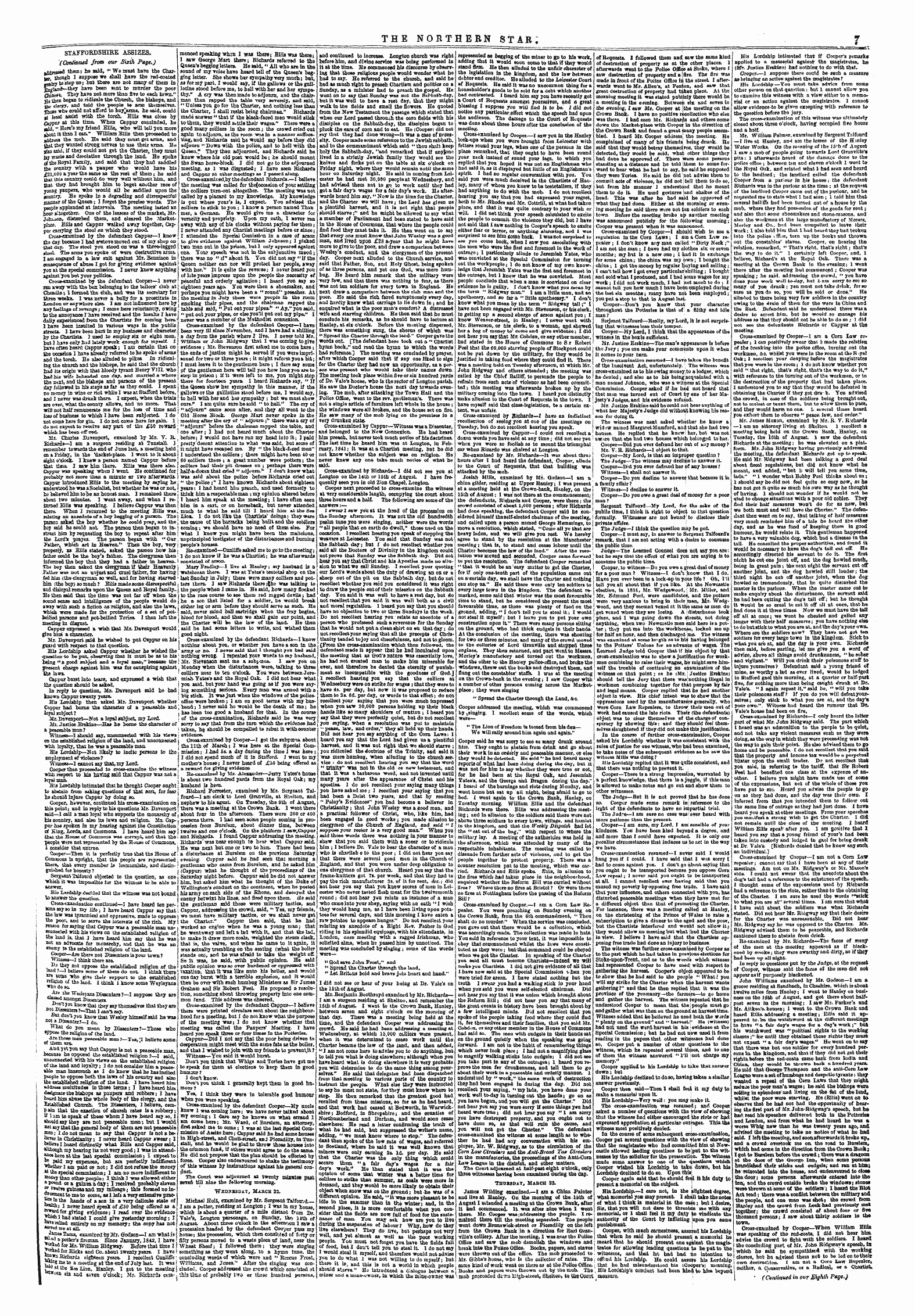
STATFOBDSHERE ASSIZES . { Hontimied from our Sixih Page . ) pressed them ; he said , " We must have the Charter thonjfl I suppose we shall have the Ted-coated -entry to stop tu ; bat there are not many of them in jBe&nd—ibey have been * a » t to mnrder the poor Chines * . They hare not more than five to each town . " a then began to ridicule the Church , the bishops , and jlie ciergj , and told the people to ana themselves . jhose vh « could cot afford to buy ^ arms , he said , could ^ least assist with the torch . Ellis was closa by C&ppcr at this time . When Cappnr concluded , he ^ y , » Here's my friend Ellis , who win tell you more jjjonS it than 1 can . " William Ellis then proceeded to -a&ress the mob . He said Jiey must get stms , and
gjat they wanted strong nerves to nsa their arma . Be gso sad , if they could not get the Charter , they mnst ] sj waste and desolation through the land . He spoke 0 . the Boyal Family , and said that they had saddled g ) B country witti a pauper -who would have his / Sl ^ fiOOayearthesameas the rest of them ; he said gat this country could do -very -well -without "Mm , and gat they had brought him to beget another race of young panpers , who would all be saddled upon the joantry . He spoke in a degrading and disrespectful minntr of the ( Jneen ; 1 forget tie precise -words . The people applauded at intervals . The meeting lasted as hour altogether . One of the lessees of the market , Mr . Johx ^ on , disturbed them , and cleared the Market * phce . Ellis and Cappnr walked away together , Cappar carrying the stool on "which they stood .
Cross-examined by the defendant Cappnr—I know file day because 3 had a « stoYe moved out of my shop on that day . The stool yon stood on was a three-legged siooL The arms you spoke of were < ie . stru . cti . Te anas . I &m engaged in a law suit against Mr . Bennison in consequence of abuse I got for giving evidence against 70 s ai the special commission . 2 sever knew anything sgsinsf you but jour politics . Cross-examined by the defendant Cooper—I never ran away with the box belonging to the tailors * elnb at Cheaaie ; 1 formed the club , and was its secretary for three weeks . I was never a bully for a prostitute in Xandon © t anywhere else . 1 am not influenced here bj any faelin ^ s of revenge ; I came here reluctantly , owing to the annoyance I have received and the inrolta I have daily experienced from the Chartists for coming here . I have been insulted in various ways in the public streets . 2 have been hurt in my business and character
toy the Chartists , 1 used to empioj six or eight men , but 2 h » ve only had Ulaly work enonsh tar myself . J have often heard Cappur speak ; 1 am certain that on the occados I have already referred to he spoke of arms and the torch . He also alluded to pikes . In ridiculing the church and the bishops , he said that the church had its origin with that bloody tyrant Henry Y 1 IL who haShis wife beheaded one day , and married a -whore the next , and the bisheps and parsons of the present day followed in his steps as far as they could . I spent 00 money in wine or riot while I was at Stafford before , and I never was drunk there . I expect , whea the trials are over , what the county Allows , and no more . Tint will not half remunerate me for the loss of time and loss of business to which I have been subjected . I do not come here for gin . I do not cone here lor . gain . 3 do not especi to receive any part of the £ 50 reward ¦ which hs » bees -offered .
3 Ir . Charles Davenport , examined by Mr . Y . R . BJcbsr&s—1 am a surgeon reading at Tnnstall . 1 remember towards the end of June last , a meeting held on a Friday , in the Market-place . 1 went to it about eight o'clock . I knew a person named Cappur before that tine- I saw firm there . "RHi » was there also . Cappur was apeaking when I went . He continued for probably not more titan a minute er two afterwards Cappur introduced Ellis to the meeting by saying he understood he was aSocialist , but whether he was or not , he believed him to "be an honest man . I remained ttiere about two minutes . I went away , and when I retamed Ellis was speaking . I believe Cappur was then there . When I returned to the meeting Ellis to relating an anecdote of a boy begging of a paxaon . The parson asked the boy whether he eonld pay , and the boy said he could not . The parson then began to
instruct him by requesting the boy to repeat after him the Lord * prayer . The panon began with " Oar T * ther which art in Heaven . " Then the boy , very properly , as Ellis stated , asked the parson how his father could be the boy ' s father . The clergyman then Informed the boy that they had a father in heaves . Tie boy then asked the clergyman 2 ttfflir Heavenly lather vsa cot so mjBst ud cxubI father , f 01 having fed him < ths clergyman so well , and for having starved tim ( the boy ) so much ? Ellismade some disrespectful and didoyal remarks upon the Queen and Boyal family-Ee then said that the time was not far off when the sound sense and intelligence of the people would do away with sueh a fiction as religion , and also the laws , which were made for the protection of a set of potbellied parsons and pot-bellied Tories . I then left the meeting in disgust .
Cappur expressed a wish tkat Sir . Davenport would give him a character . Mr . Davenport said he wished to put Csppur on his guard with respect to that question . His Lordship asked Cappur whether he wished the ¦ question to be put , obserring tost it must be as to his being " i good * oij ^ ct and a loyal man , ** because the present charge against him was for conspiring against Ike laws . Cappur burst into tears , and expressed a wish that the question should be asked . In reply to question , Mr , Davenport said he bad known Cappur twenty years . His Lordship then asked Mr . Davenport whether Csppur had borne the character of a peaceable and loyal subject J air . Davenport—2 iot a loyal subject , my lord , ilr . Jnsliee EraVrne— - Has he borne the character of
& peaceable man ? ¦ Witness—I Whrmifl gay , -unconnected with Ms views cm the established religion of the land , and unconnected with loyalty , that he was a peaceable man . Bii Lordship—Net likely to incite persons to the employment af violence ? Witness—I cannot say that , my Lord . Cooper tT » gT » proceeded to rnynr r » T " * " the -witness Trim respect to Ms having said that Cappur was not a 1177 a ! man . His Lordship intimated that he thought Cooper ought to abstain from asking questions of that sort , for fear he should injure Cappur by doing so .
Cooper , hswever , continued his cross-examination on $ his point ; and in reply to his questions Mr . Davenport said—I call a man loyal who supports the monarchy of his country , and also its laws and religion . Mr . Cappur has spoken in my hearing against the Constitution of King , Lords , and Commons . I have heard him say that the Home of Commons ires corrupt , and that the people were not represented by the House of Commons . I consider that untrue . Cooper—Then it is perfectly true that the House of Commons is upright , that the people are represented there , that every member is immaculate , and distinguished tor honesty ? Sergsanv Talfourd objected to the question , as one which it was impossible for the witness to be able to answer . His lardsblp deeded that the witness was not bound to answer ihe Question .
CTosa-f-TnTnip ation cod tinned—I have heard ten per-Bonjsaysoin my life ; I haveheard Cappur say that the law was tyrannical and oppressive , made to oppress the pooi , and to serve the interests of the rich . My reason for saying that Cappnr was a peaceable man uneonnecied with hia views on the established religion of the lsnd is , that I have heard Mm say that he was not an advocate for monarchy , and that he was an « nemy t » the established religion of Up land . Cooper—Are there not Dissenters is your town ? "Witness—I think there are . lb they nut oppose the established religion of the »» d ^ —1 bdievB some of them do not . 1 Shink tfaere * w KSftfi who gm tfc * b support to ihe established Ttosion tJ the land , i think 1 know some Weyleyans " » ho do » a Are the WeEle 5 ansDUBenter 8?—I suppose they are ekaed amongst Dissenters .
Ifcmi yoa tnow that they say themselves that they are no : Deters ? -Thai I cant say . iint doa-j yon fa , 01 r q ^ We 8 ] ey MmBelfaaid he was not a Dissenter ?—! do . "R ^ hat -do you mean by Dissenters ?— Those who eppose the religion of the land . -Are those men peaceable siea ?—Tes , 1 believe some of them sis . ' And yet you say thai Cappur is not a peaceable man because he opposed &e established religion 7—1 « & . id , unconnected with Ms views on the established religion of ibe land and loyalty ; I do not consider him a peaceable -man inasmuch as I do know that he has incited people to oppose both the laws of his country and also the established religion of the land . I have heard him address multitudes in those terms ; I have heard hha 6 * ngmtethebiahopa as paupers and robbers ; I have besrd him abuse the whole body of the clergy , and the Sitabllsbed Church . The Dissenters , I believe , eem >
Pain that the exaction of church rates is a robbery-, if 1 am to speak of these whom I have heard say so , I should say they are sot peaceable men-, but I ¦ would &et E 3 y that the general body of them are not peaceable Eea ,- Ido not mesa to ssy that Csppur is not ft behever in Christianity ; I never heard Cappur swear ; 1 bsliere I heard distinctly what Ellis and Capper said , although my hearing iis not very good ; I was in attend-* & <* here &tthe last special commission ; 1 expeetto i * paid my expences , but am perfectly indifferent whether 1 am paid or not 3 I did not refuse the aoney
« the special conunissios j 1 am no more indifferent to EUHtey than otherpeoplej 3 thinkl waa allowed either * ponna cr & guinea a fifty ; I lecdfefl pM * ahly eleven <* twelve guineas anil my mileage ; this formed no injwoemeat to me to come , as Ileft a very extensive "poo-*•* m the hands of a son in a very delicate state of teal & ; J never beard speak of £ 50 helng offered as a Si ?* ** ' String evidence ; 3 read over £ be evidence "hwhl ^ aa stated I could give yesterday morning ; I nstertiied entirely on my memory ; the -copy has not * arfcd me at an .
JimetaSsaut , examinedhyHr . GPodBon—I amwhatis ™ -fel a potter ' s firenian . Since January , 2842 , 1 have ¦ ttied for Hi . William Bidgway . - Before that time I »» ktd for Hida and Co . about twenty years . I have * t ° * 2 Bicharvis eighteen years . I recollect CunMe r ™ 8 ae to a meeting at Q 16 end of July last . It was x *~* tthe SaLion , Hanley . I got U > the meeting " ^ rta sa 2 ^ 3 8 £ Ten rf ^ A . 3 jr . Bichardi cem-
Untitled Article
mencedspeaking whsn I was there ; Elliawaa there ; I saw George Mart there ; Bichards rererred to the Queen ' s begging letters . He said , All who are in the sound of my voice have heard tell of toe Queen ' s hogging letter . She shows her sympathy very much ; but , as for my part , I would say , if the gallows or the guillotine stood before me , to hell with her and her sympathy . " A cry was then made to adjourn , and the chairman then rapped the table -very severely , and said , " Unless you go for the Charter , and nothing less fo « m the Charter , I shall resist being chairman . " Richards
made answer " that if the black-faced men wonld stick to them , they would settle their wages . " There were a good many colliers in the room ; the crowd cried out again to adjourn , as the room was in a manner snifocating , snd Richards B&id he would say before they did adjourn -Down with the police , and to hell with the Queen . " They then adjourned , and Bicbards said he knew where his old post would be ; he should mount the Swan horse-block . I did not go to the adjourned meeting , as 1 was disgusted ; 2 have seen Richards and Cappui at other meetings as I passed along .
Croas-examiEed . by the defendant Richards . —I believe the meeting was called for thefoccasion of your settling the colliers turn-out altogether . The meeting was not called by a placard to my knowledge . My knowledge is -put where yonr ' s is , I expect . You advised the colliers to stick to you ; 1 know a person named Than mer , a German . He would give me a character for veracity and propriety . "Upon my oath , I » ever ran away with any of Mb clocks without paying fer them ; 1 sever attended any Chartist meetings before or since ; I attended the Special Comissiroi in a case of arson to give evidence against -William Johnson ; I picked two men out in the prison , bnt I only appeared against
one . Your speech was not in the subjunctive mw > d ; there was no " if" about it You did not say * ' if the Queen neither can nor wOl protect her people , sway with her . ** It is quite the reverse ; I never beard you of late yean impress upon the people the necessity tf peaceful and orderly agitation ; I heard you say so eighteen years ago . You were then a shoemaker , and perhaps you might have been a " round" preacher . At the meeting in July there -were people in the room smoking their pipes , and the chairman zapped the table and said , " Pat ontyour pipes . * " Ay , yon said , put out your pipes , or else you'll put out my pipe . " I never was a member of the Methodist connexion .
Cross-examined by the defendant Ceoper—I have been very ill since Nsrember , and I have had a shilling a day from the parish where I live . I never told Mr . ¦ WHliam or Joan Bidgway that I vrasconUBg to give evidence ,- Mr . Stevenson first asked me to come here ; the ends of justice might be served if you weie imprisoned for two or three years ; it might rsfonn youa bit ; I most leave it to the gentlemen here ; I dare say some of th # gentlemen here will tell you how long you are to stop in prison ; if it were left to me , you might stop there for fourteen years . J heard Richards say , " If the Queen show her sympathy in this manner , if the gallows or the guillotine stood before me , 1 would say , to hell with her and best sympathy ; but we must show ours . " I am quite sure he said " to helL "' Thfrcry of
" adjourn" came soon after , and they all went to the Old Horse Slock . George Mart never spoke in the meeting after the cry of " adjourn j " there was a cry of " adjourn" before the chairman rapped the table , and one after ; I had not heard much about the Charter before ; I would not have run my head into it ; I paid pretty " decent attention to what was said , but seme of it might have escaped ma By " the black-teed men " I understood the colliers ; there might have been 40 or 60 colliers there ; a great number wete potters ; the collier * had their pit dresses on ; perhaps there were half-a-dozsn that « ried " adjourn . * ' I dont know what
was said about the police before Richards cried out " the police ; " I have known Richards about eighteen years : I had heard him preach , and used formerly to think him a respectable man ; my opinion altered before T heard him speak at the meeting ; I have often aeen him in a cart , or on horseback , but never attended much to what he said till 1 heard him at the Sea loom . I do not like the Chartists' doings ; they ware the cause of the barracks being built and the soldiers coming -, we should have no need of them else . For what 2 know you might have been the malicious , unprincipled instigator of the disturbances and burning people ' s houses .
Be-examined—CunliSe asked me to go to the meeting ; 2 do not know if he was a Chartist ; he was afterwards convicted of arson . Mary F-iadley—1 live at Hanley ; By husband , is a Watchman there . I was at Yates ' s teetotal shop on the last Sund&y in July ; there were many colliers and potters there . I saw Richards there ^ he was talking to the people when I came in . He said , how many flocked to the race course to see them red ragged devils ; had he a son that listed for a soldier , be would break either leg or arm before they should serve as such . He said , never mind ball cartridge whtn the fray begins , b < ood for blood , and then we shall gain our point , and the Charter wQl be the law of the land . He then said he had some letters to write , and wished them good night
Cross-examined by the defendant Richards—I know notions about you , or whether you have a son in the army or no . I sever said that 1 thought yoa had said nothing wrong . I repeated your words to my husband . Mi . Stevenson tent me a subpeeoa . 1 saw you on Monday when the disturbances were , talking to three colliers near to ten o ' clock . You were between Jeremiah- Yates ' s and the Boyal Oak . 2 did not bear what you said , bnt your hand was going as if yon were saying something serious . Every man was armed with a big stick . It was just when the windows of the policeoffice were broken ; I am on good terms with my husband ; 1 never said he would be the death of me ; he has been too good a husband for that . In the course of the cross-examination , Bicbards said he was very sottj to say that from the turn which the evidence had taken , he should be compelled te rebut it with counter eTidence .
Cross-examined by Cooper—1 got the subFoe-ia about the 11 th of March ; I was here at the Special Commission ; I had 5 s . a day daring the time I was here ; 2 did not spend mnch of it in Stafford . I went to my mother ' s bouse ; 2 never heard of £ 50 being offered as a re-ward for grrag eTidesce-Be-exanilBe < 3 by Mr . Alexander—Jerry Yates ' s house is about two hundred yards from the Royal Oak ; ay husband Is here . Bicbard Forrester , examined by Mr . Sergeant Talfourd—2 am cleik to Lord Granville , at Shelton , and nephew to hia agent On Tuesday , ihe 9 th of August , there was a meeting at the Crown Bank . I went there about four in the afternoon . There were 300 or 400 persons there . I had seen some people coming in
procession from Burslem , about dinner time , between twelve and one o ' clock . On lie platform I -Baw . -Cappui 1 and Richards . I found Cappur addressing the meeting . Richards ' was near enonsh to hear what Cappur said . He was next bnt one or two to him . There had been a disturbance at Burslem on the previous Saturday evening . Cappur s * id be bad seen that morning a gentleman who came from Borslem , and he asked him ( Csppur ) what he thought of the proceedings of the Saturday night before . Cappur said he did not answer him , bnt asked him what he thought of the Duke of Wellington's conduct on the continent , when he posted his army on each side of the Rhone , and decoyed the enemy betwixt his lines , and fired upon them . Re said the gentleman said those were military tactics , and Cappur , addressing the crowd , said , Yes , my friends ,
we must have military tactics , or we shall never get the Charter . " Cappur then said , that be had worked an engine when he was a young man ; that he wentsway and left a lad with it , and that the lad , to make it draw more coals , weighted the steam clack , that is , the valve , and when he came to it again , it vras actually trembling on the seating ( what the boiler stands on ) , and he was afraid to take the weight oft So it was , he said , with public opinion . He said public opinion Was so over hardened or oppressed with taxation , fiat it was . like unto his boiler , ana would one day burst with a terrible explosion , and it would then be over with such humbug Ministers as Sir James Graham and Sir Robert Peel . He proposed a resolution , something about throwing property into one common fund . This address was cheered .
Cross-examined by the defendant Cappnr—I beheve there were printed circular * sent about the neighbourhood for a meeting , but I do not know what the purpose of the meeting was ; I do not know whether that meeting was called the Paupers' Meeting . 2 have heard yon speak three orfonr times in the Potteries . Cappur—Did I sot say that the poor being driven to desperation might meet with the same fate as the boiler , and that I wished to join with my friends to prevent . it ? Witness—You said it would burst Dont you think that Whigs and Tories have got me to speak for them at elections to keep them in good humzai ? 1 dont know . "Dont you think I generally kept them in good humour ? Yea , I think they were in tolerable good humour when yon were speakinH .
Cross-examined by the defendant Cooper—My uncle knew 2 waa coming here ; we have never talked about my coming ; I dare say he knows on what errand 2 am come here ; Mi . Ward , of Buralem , an attorney , first asked me tocome ; I was at the last Special Commission of Abbs 9 here ; Cappur said be had some houses in High-street , and Chell-street , ani Piccadilly , in Tunatall , and he would be glad to throw those houses into the common fuai , if others would agree to do the same He did not propose that the plan should bo effected by force . Cooper also endeavoured to shake the testimony of this witness by insinuations against his general conduct The Court was adjourned at twenty mixvtes past Beven till nine the following moraing .
TySDJTSSDAY , MXBCH 22 . Michael Holt , examined by Mr . Sergeant Talfonvd . — 2 am a potter , residing at LongUm ; I was in my house , which is about a quarter of a mile distant from Drl Tale ' s , Ixmgton parsonage , on Sunday , tho 14 th of Angus * . About three o ' clock in the aftemooa I saw a procession headed by the defendant Cooper pass my house ; the procession , which then consirjted of forty or fifty persons moved to & waste piece trf land , near the "Wheat Sheaf ; I followed them ; they were singing something as they went along , to a hymn tune , the concluding words of which were and " Rescue Frost , Williams , and Jones . " After the singing was concluded , Copper addressed the crowd which contested at this Uaie of probably ti ? o or three hundred persons ,
Untitled Article
and continued to increase . Longton church was right before him , and divine service was bei » g performed in it at the time . Be commenced his discourse by observing that those religions people would wonder what be had to say . He referred to : the church , and said he had as much right to preach Chartism and politics on a Sunday , as a minister had to preach the gospel . He went on to say that Sunday was not the Sabbath-day , but it wa& well to have & rest day , that they might walk in toe fields and smell the flowers . He quoted from the New Testament tbe ' pawage which stated that when our Lord passed through ( be corn fields with his disciples on the Sabbath-day , the disciples began to pluck the ears of corn and to eat He ( Cooper ) did sot say that they , had done wrong—it was a case of
BfCeseity . Cooper made some reference to the Jewish sabbath , and to the commandment wbieh said " thou ehalt keep holy the Sabbath-day , " and remarked that if anyjone lived in a striatly Jewish family they would see the knives and forks put on the table at six o ' clock on Friday night , where they would remain notiJ the same hour on Saturday night . He said in coming from Leicester he had met 30 , 060 people at Wednesbury , and had advised them not to go to work until they had got a fair day ' s wages for a fair day ' s work . He afterwards heard him say , «» Now is the time for the Charter , and the Charter we will have ; the L « rd has giren as a plentiful harvest , and it Is not right that people should starve ; " and he night be allowed to say what a member of Parliament had bean stated to have said
in the House of Commons , that where the people could find food they must take it He then went on to sa > that every one must know that John Wesley vras a good man , and lived upon £ 28 a-year that be might hare more to give to the poor , and drew a comparison between Wesley ' b conduct , and the clergymen of the present day . Cooper next alluded to the Church service , and said that Father , Son , and Holy Ghost , being spoken of as three persons , and yet one God , was mere bumbug . He heard him remark that the military were very few , and that there was nothing to fear , as there was not ten soldiers for every town in England . He next drew a comparison between the rich man and the poor . He said the rich fared sumptuously every day , and hardly knew what carriage to lie down in ; and be enquired what is the poor man's comfort ? A distressed wife and starving children . He then said that he must conclude his remarks , as he should have to lecture at
Hanley , at six o ' clock . Before the meeting dispersed , there was something sung , the chorus of which was " Spread the Charter throngh the land- " Cooper gave the words out . [ The defendant here took out a " Chartist hymn book , " and read the hymn to which the words had reference . ] The meeting was concluded by prayer , after which Cooper said that if any one liked to sign for the Charter they had now an opportunity , as a parson was present who would take their names down . ThB meeting took place within five or six hundred yards of Dr . Yale ' s house , who is the rector of LoDgton parish . He saw the Doctor ' s house the next day towards evening . The mob , after attacking the Town Hall and the Police Office , went to the rev . gentleman ' s . There was not a single artiele of furniture left whole in the bouse ; the windows were all broken , and the house set on fire . He saw many of the mob lying on the premises in a very drunken state .
CrosB-reamined by Cappur—Witness was & Dissenter , and belonged to the New Connexion . He bad heard him preach , but never took much notice of his dactrinea . The last time he beard him was at Longton , in February , 1841 ; it was at a Chartist meeting , but be did not know whether the subject was on religion . He never knew any one take much notice of what be said . Cross-examined by Richards—2 did not see you at LoBgton on the 14 th or 15 th of August . 2 have frequently « een yon in old Zion Chapel , Longton . Cooper next proceeded to cross-examine the witness at very considerable length , occupying the court about three hours and a halt . The following are some of the answers : —
l swear I saw you at the bsad of the procession on the Sunday afternoon , It WSS not the old hundredth psalm tune you were singing , neither were the words " all people that on earth do dwell , " those used on the occasion . 1 recollect bearing you speak of stopping the weavers at Leicester . You said that Sunday was not the Sabbath day ; but 2 do not recollect whether you said all the Doctors of Divinity in the kingdom could not prove that Sunday was the Sabbath day . Sid not bear JOT ! Say that Christ and bis Apostles made no allusioa to what we call Sunday . 1 recollect your quoting our Lord ' s words about the duty of drawing an ox or a sheep out of the pit on the Sabbalh day , but do not recollect whether yon said yoa considered it was right to draw the people out of their miseries on the Sabbath
day . You said it was well to have a rest day , but do not recollect that yon said it was well both as a civil and moral regulation . I beard you say that you Bhould have no objection to two or three Sundays in the week . Do not recollect hearing Ton ¦ relate an anecdote of a person who professed such a reverence for the Sunday that he would not put a clean shirt on « n that day ; do not recollect your saying that all the precepts of Chris * tiantty tended to joy and cheerfulness , and not to gloom . ( From the cross-examination which then followed , the defendant made it appear that be bad inculcated upon the meeting that as God ' s nature was essentially love , he had not created man to make him miserable for ever , and therefore he denied th « eternity of punishment as incompatible with the goodness of God . J
1 recollect hearing you saj that the colliers at Wednesbury were on strike for wages ; that they were to have 4 s . per day , but sow it was proposed to redace them to 2 s . 6 d . per day , or words to that effect ; do not recollect your saying that yon were much impressed when you taw 30 , 000 persons holding up their black hands like so many shoulders of mutton ; 1 heard yon say that they were perfectly quiet , but do not recollect yon saying , when a resolution was put to maintain * ' peace , law , and order , " they all held up their hands . Did not hear you say anything of the Com Laws : 1 heard you Eay that the 2 iord had given us a plentiful harvest , and it was not right that we should starve ; you ridiculed the doctrine of the Trinity , and said it was mere humbug , when alluding to the church service : do not recollect hearing yon say that the word " trinity" 'Was not in the old or new testament , and that it was a barbarous -word , and not invented until many yean after the appearance of Christ and his
apostles . 2 do not recollect your saying many things you have asked me ; 2 recollect your saying that you bad been a Deist two years , and that by reading " Paley ' s Evidences" you had become a believer in Christianity ; that John Wesley was a sood man , and a practical follower of Christ , who , like him , had been engaged in good works j you made allusion to clergymen ol the Church ol England , and said " I suppose your rector is a yeij good man . '' When you said those words there was nothing in your manner to shew that you said them with a sneer or to ridicule him ; 1 believe Dz . Yale to bear the character of a man who is charitab e to the poor ; 1 did not hear you Bay that there were several good men in the Church of England , and that you were under deep obligation to ona clergyman of thst church . Heard you say that the frame-knitters got 7 s . per week , and that they had te pay the rich monufactutar 33 . of it for rent , &e . ; did not hear you say that you knew scores of men in Leicester who never tasted Sash meat for the twelvemonth
round ; did not hear ywu relate an instance of a man who came into your sb » p , saying with an oath " 1 wish they would bang me , as 2 have been living upon potatoes fer several days , and this morning 1 have eaten a raw poVatoe to appease hunger . " Do not recollect your relating as anecdote of a Bight Rev . Father in God riding in his splendid equipage , with his attendants , in London , once meeting with a ragged Irishman , who solicited alms , when he passed him by unnoticed . The meeting was concluded by singing ; some of the words were—* ' God save John Frost , " and " Spread the Charter throngh the land , " Let Britons bold and brave join heart and band . " 1 did not see or hear of your being at Dr . Vale ' s on the loth of August
Mr . Benjamin Boothroyd examined by Mr . Richards—2 am a surgeon residing at Shelton , and remember the 15 th of August . I went to the Crown Bank , Hanley , between seven and eight o ' clock on the morcing of that day . There was a meeting being held at the time , and the defendant Cooper was addressing the crowd . He said he had been addressing a meeting at Wednesbury , at which 15 , 000 colliera wure present , when it was determined to cease work until the Charter became the law of the land , and then added , 112 am not come here to advise you to do anything , bat to tell you what is doing elsewhere ; although when you have heard what is doing elsewhere it is very probable you will determine to do the same thing among yourselves . " He said that delegates bad been dispatched
from that meeting to various parts of the country to Instruct the people . What else they were instructed to say he must not state , for they must know where to stop . He then remarked that the greatest good bad resulted from these missions , so far as he had heard , and that work bad ceased at Bedworth , In Warwickshire ; Bedford , in Shropshire ; and the counties of Northumberland and Durham , and would soon cease elsewhere : He read a letter confirming the truth of what he bad said , but suppressed the writer ' s name , adding , " we must know where to stop . " The defendant then spoke of the low rate of wages , and referred to Scotland , where he said it was well known that miners were only earning 2 s . Id . per day . He said that the Charter was the only thing which could Becure them «• a fair day ' s wages for a fair days work . " He then stated that it was the opinion of aome tbat winter tu a hatter time for
colliers to strike than summer , as coals were more in demand , and tbey would be more likely to obtain their object when snow was on the ground ; but he was cf a different opinion . He aaid , "iVvr&s more pleasant te be idle in the summer than in the winter j and , in . the second place , it is more comfortable when you consider that the fields are now full of food for the sustenance of man . Ton may ask bow are JOU to live during the suspension of labour ? why , how do they live elsewhere ? They do live , but perhaps not very well , and yet almoBfe as well as the poor working people . You must not forget you have the fields full of food , but 2 doa'fc tell you to steal it . 2 do not Bay I would steal ife myself , and therefore would not advise yen to do what 1 was not willing to do myself ; but there it is , and this is not a world in which people should starve . " He introduced a dialogue between a miner and a mine-o-wner , in which the Diiae-off Her was
Untitled Article
represented as begging of the miner to go to his work , adding that it would soon come to that il they wonld stand firm . He then alluded to the nnfair character of the legislation in the kingdom , and the law between debtor and creditor . He alluded to the Leicester Court ef Bequests . He Said it was no uncommon thing for a householder ' s goods to be aold for a debt which another had contracted . I heard bjm Bay you have recently got ft Court of Requests amongst yourselves , and a great blessing 2 suppose yon will find it to be . I did not notice any p »» ticular ; effect wiiiob the speech had upon the audience . The damage to the Court of Requests was done about three hours after the conclusion of the meeting .
Cross-examined by Cooper . —I saw you in the Hanley lock-ups when you were brought from Leicester with fetters round your legs , when one of the persona in the place remarked , that ; they ought to have been round your neck instead of round your lega , to which you replied that yon hoped it was not an Englishman who had said it , as it displayed but little of an Eagliahman ' a spirit 2 had no regular conversation wtta you . You suid you were much deceived in the Chartists of Hanley , many of whom you kuew to be teetotallers , if they had anything to do with the mob . 2 do not reoollect hearing you say that you had expressed your regret , both to Mr . Rhodes and Mr . Cotttill , at what had taken place , and that it was quite contrary to your wish or wilL I did net think yoar speech calculated to excite
the people to commit the violence tbey did ; but 2 have not said that I saw nothing in Cooper's speech to exoite either fear or terror , or anything alarming , and I was surprised to see aim some back . 1 was not surprised to see you come back , when I saw you associating with the men who were the first and foremost in the work of outrage ; 1 particularly allude to Jeremiah Yates , who was convicted at the Special Commission for turning out the workpeople ; 1 do not know of my own knowledge that Jeremiah Yates was the first and foremost in the outrage , bnt I know that he was convicted . Most people conclude that when a man is convicted on cleat evidence be is guilty . I don't know what you mean by the t « rm " Ridgway man . " I am a little man , and an apothecary , and so far a " little apothecary . " I don ' t know what yon mean by the term " Ridgway tall ; " I have not been engaged with Mr . Stevenson , or his clerk , in getting up a second charge of arson against you ; I know Weaver-street , in Hanley : I never went with
Mr . Stevenson , or his clerk , to a woman , ajad showed her a bog of money to come and give evidence ; I did not bear you eay that Mr . Cobden , or any other member , bad stated in the House of Commons to S r Robert Peel that the 60 , 000 starving people of Stoekport could not be put down by the military , for tbey would be justified in taking food where they oonld find It There was a meeting held on Tuesday afternoon , at which Mr . John Ridgway and others attended ; the meeting was called by the Chief Bailiff , to persuade the people to refrain from such acts of violence as bad been committed ; this meeting was afterwards broken up by the military coming into the town . 2 heard you distinctly make allusion to the Court of Requests in the town . 2 have myself said that class-legislation , te a certain extent , WaB unfair . Cross-examined by Richards—I have an indistinct recollection of seeing you at one of the meetings on Tuesday , but do not recollect bearing you speak .
Cross-examined by Cappur—I could not recollect a docen words you have said at any time ; did not see you when you were so foolish as to mount the triumphal car when Ricardo was chaired at Longton . Be-examined by Mr . Richards—It was about threa hours after 1 bad heard the defendant , Cooper , allnde to the Court of Requests , that that building w&a attacked by the mob . Joslab Mills , examined hy Mr . Godson—I am a china gilder , residing at Upper Hanley ; I was present at a meeting held at the Crown-bank , Hanley , on the 15 th of August ; 2 was not there at the commencement ; the defendants , Richards and Cooper , were there ; the crowd consisted of about 1 , 000 persons ; after Richards bad done speaking , the defendant Cooper Bald he
considered himself the self-elected chairman of the raeeti « g , and called upon a person named George Hemmings , to move a resolution , which stated , "Come all ye that are heavy laden , and we will give you rest We hereby agree to stand by the resolution at the Manchester meeting ; that is , to stand and cease labour until the Charter becomes the law of the land . " After the resolution was moved and seconded , Cooper came forward to put the resolution . The defendant Cooper remarked " that it would be an -easy matter to get the Charter , for if only one-tenth part of the population came out on ascertain day , we shall have the Charter and nothing can stop us . " He said there were only ten soldiers to every large town in the kingdom . The defendant remarked , some said that winter was the most favourable time to stand , but he considered the present the most
favourable time , as there was plenty of food on the ground , adding , " I don't tell you to steal it ; I would not steal it myself ; but I leave you to put your own construction npon it" There were many persons sitting on the ground , who bad thick cudgels in their bands . At the conclusion of the meeting , there was shouting for two or three minutes , and many of the crowd moved to the coiieries of Lord Granville and stopped three engines . They then returned , and part went to Messrs . Morley ' a manufactory and turned out the workmen , and the other to the Hanley police-office , and broke the windows , threw out the books and destroyed them , and flung out the constables' Btaffs . I was at the meeting on the Crown-bank in the evening ; I euw Cooper with a number of other persons coming across the Marketplace ; tbey were singing
" Spread the Charter through the Land , &c . Cooper addressed the meeting , which was commenced by ( . singing . 2 recollect some of the words , which were" The Lion of Freedom is loosed from hia den—We will rally around him again and again . " Cooper said he was sorry to see so many drunk around him . They ought to abstain from drink and go about their work in an orderly and peaceable manner , or else they would be detected . He said ' * he had beard many reports of what had been doing dating the day , but it was not for him to say whether they were true or not , for be bad b « en at the Royal Oak , and Jeremiah Yates ' s , and the George and Dragon during the day . " 1 beard of the burnings and riots during Monday , and went home but sat np all night , being afraid to go to bed . I went again to the Crown Bank , Hanley , on
Tuesday morning . William Ellis and the defendant Richards were there . Ellis was addressing the meeting ; and in allusion to the soldiers said there were not above three soldiers to every town , village , and hamlet in the kingdom , and that the Weekly Dispatch bad let the " cat out of the bag , " with respect to where the military lay . A meeting of the authorities was held in the afternoon , which was attended by many of the respectable inhabitants . The meeting was called to dissuade from further acts of violence , and to get the people together to protect property . There was a counter resolution put to the meeting , which was carried . Richards and Ellis spoke . Ellis , in allusion to the fires which had taken place in the neighbourhood , enquired whether the Reform Bill was carried without fires ? Where there no firea at Bristol 7 Or were there no fires at Nottingham before the passing of the Reform
Bill ? Cross-examined by Cooper . —I am a Corn Law Repealer . You were preaching on Sunday evening on the Crown Bank , from the 6 th comm&Bdment , " Thou shalt do no murder . " When the service was concluded , you gave out that there would be a collection , which was accordingly made . The collection was made in hats . You said in reference to your text , it was impossible to obey that commandment whilst the laws were constituted as tbey wero ; but that command could be obeyed when we got the Charter , in speaking of the Charter yoa said all must become Chartists—indeed we Will make yon Chartists . I did not give evidence of all that I have now said at the Special Commission vhen you were tried for arson . 2 have stated nothing but the
truth 2 swear you bad a walking stick in yoar band when yon said you were self-elected chairman . Did not hear you say that it was union which brought about the Reform Bill ; did not bear you say that many of the great events in history bave been brought about by a tew intelligent minds . Did not recollect tLat you spoke of the people taking food where they could find it , fer themselves and their families , that you said Ms . Cobden , or any other member in the House of Commons bad said so . The men with cudgela in their hands sat on the ground quietly when the speaking was going forward . 2 am not in tbe habit of remembering things which never took place ; I had not a magnifying glass to magnify walking sticks into cudgels ; 1 did not see you take part in any ef the outrages ; 1 beard you reprove the men far drunkenness , and tell them to go bout their work in and
a a peaceable orderly manner , i understand by " work , " the same work of destruction tbey had been engaged in during the day . Did not recollect your sayiug , *> my lads , yon bave done your work well to-day in turning out tbe bands ; go on as yoa have begun , and you will get the Charter . " Did not bear you say yon were sorry if some things yen had heard were true ; did not bear you eay " 1 am sorry you have destroyed property , and you ought not to have done so , as that will ruin tbe cause , and yon will not get the Charter . " Tbe defendant cross-examined the witness at some length aa to whether he bad had any conversation with his employer , Mr . W . Ridgway , as to the circulation of the Corn law Ciradmrs and the Anti-Bread Tar Circulars in the manufactories , the proceedings ef the Anti-Corn Law League in tbe district , and other matters .
The Court adjourned at half-past eight O ' clock , Only three witnesses having been examined daring the day .
Thtjisday , Mabch 23 . James Wilding examined . —I am a China Painter and live at Hanley . On the morning vt tbe 15 th of August I attended a meeting at the Crown Bank , after it had commenced . It was after nine when I went there . Mr . Cooper was { addressing the people . I remained there till tha meeting Beparated . The people went down Brunswick-street or Piccadilly on the left from the Crown Bank in a direction for Earl Granville ' s colliery . After the meeting , I was near the Police Office and saw the mob demolish the windows and break into the Police Office . Booka , papers , and staves were thrown out of the office . Tbe mob proceeded to Mr . Qibbs ' s house , who is the collector of rates . The same kind of work went on there as at the Police Office . Books and papers were thrown out by the mob . The mob proceeded devra llish-stteet , Shelton > to UtQCQU . it
Untitled Article
of Requests . I followed them and saw tbe same kind of destruction of property as at the other places . 1 afterwards went to the Police Offlee at Stoke , where I saw destruction of property and a { fire . The fire was made in front of the Police OfB . ee in the street 2 afterwards went to Mr . Allen ' s , at Fenton , and saw that great destruction of property had tdkeU place . At the morning meeting it was stated publicly there would be a meeting in the evening . Between six aad seven in the evening , I saw Mr . Cooper at { the meeting on the Crown Bank . I have no positive recollection who else was there . I bad seen Mr . Richards and others come down the Market-place with Cooper in tbe direction of the Crown Bank and found a great many people assembled . I heard Mr . Coop « r address ! the meeting . He
complained of many of his friends being drunk . He said that they would betray themselves , they would be detected , they would be sold , what other things they had done be approved of . There were some persons standing at a distance and be told them to come forward to hear what he had to say , he said be supposed they were Tories . He said be did not advise them to commit acts of violence , he did not ! tell them to do so , but from his manner I understood that he meant them to do it He used gestures land shakes of tbe head . This was after he had said he approved of what they had done . Either at the morning or evening meeting he said there were not ten soldiers to each town . Before the meeting broke up another meeting was announced publicly for the following morning ; Cooper was present when it was announced .
Cross-examined by Cooper—I should wish to see a regulation in the Corn Laws ; I am a Corn L-iw repealer ; I don't know any man called " Dirty Neck ;" I am not the man ; I bave bad my clothes six or seven months ; my hat is a new one ; 1 had it in exchange for some china ; the china was my own ; I bought tbe china ; 1 got tbe money by regular buying and selling ; I can't tell how I got every particular shilling ; I bought and sold what I produced , and I had some wages for my work ; I did not work much , I had not much to do ; I cannot tell you how much I bave bean employed during the last six months ; many bave not been employed ; you put a stop to that In August last Cooper—Don't you know that your character throughout the Potteries is that of a filthy and idle man ? Serjeant Talfourd—Really , my Lord , it is not surprising that -witnesses lose their temper . ,
Cooper—My L&id , I think that the appearance of the witness in the boxis sufficient Mr . Justice Erskine—The man ' s appearance is before the Jury ; you can make your comments npon it when it eomes to your turn . Cross-examination resumed—I have takea tbe benefit o ! the insolvent Act , unfortunately , j The witness wa » cross-examined as to his owing money to a lodger , which he denied ; and also as to his being acquainted with a man named Johnson , whe was a witness at the Special Commission . Cooper asked if he had not beard that that m ; m was turned cut of Court by ene of her Majesty ' s Judges , and his evidence refused . Mr . Justice Erakine said he could not hear anything of what her Majesty ' s Judge did without knowing his reason for doing it .
The witness was next asked whether he knew a wid' > w named MargaretMumford , and that she had two housija . He replied that he knew ! her , but was not awira that she had two houses which belonged to hor . Cooper—Did you ever defraud her out of any money ? Mr . V . R . Richards—I object to that Copper—My Lord , is that an improper question ? The Judge—The witness may decline to answer it Cooper—Did you ever defraud her of any bouses T Witnesa—I shall not answer it Cooper—Do you decline to answer that because it ia a family affair ? ' Witnc / ss—I decline to answer it Cooper—Do you owe a great deal ot money for a poor man ?
Sergeant Talfourd—My Lord , for the sake of tbe public time , 1 think it right to object to that question formally . Witnesses are not bound to disclose their private affairs . : The Judge—I think tbe question may be put . Cooper—I must say , in answer to Sergeant Talfourd's remark , that I am not acting with a desire to consume the public time . Judge—The Learned Counsel does not say you are : bnt be says that tbe effect of frhati you are saying is to consume the publio time . \
Coopsr , to witness—Do you owe a great deal of money for a poor man ? Wituess—I don ' t know that 2 do . Have you ever been in a lock-up in your life 1 Oh , I'll tell you all about that if you like . At the Newcastle election , ia 1831 , Mr . Wedgewood , \ Mr . Miller , and Mr . Edmund Peel , were candidates , and the potters were very anxious to bring in their man , Mr . Wedgwood , ana they seemed vexed at it the same as men do get vexed when they ate losing . A j disturbance took place , and I was going down the streets , not doing anything , when two Newcastle men said here ia a potter ; they put me into the workhouse , locked me up for half an hour , and then discharged me . The witness was examined at some length as to his having belonged to the Potters' Unions for an advance of wages . The Learned Judge told Cooper that if bis object by that cross-examination was to shew a justification for
workmen combining to raise their wages , he might save himself the trouble of continuing an examination of the witness on that point ; ns he i Mr . Justice ErBkine ) should tell the Jury that there was nothing illegal in workmen combining together for that purpose by fair and legal means . Cooper replied that he had another object in view . His chief intent was to shew that the oppressions used by the manufacturers generally , who were Corn Law Repealers , to throw ] their men out of work had caused tbe late riots . Their ( the defendants ) object was to clear themselves of the charge of conspiracy by shewing this : and they should feel themselves slaughtered if they did not make this justification . In the course of further cross-examination , Cooper asked his Lordship whether it was conaWtent wltk the rules of justice for one witness , who had been examined , to take notes of the subsequent evidence as he saw the witness Mills was doing ?
Hia honUhip replied that it was quite consistent , and that there was nothing to prevent it . Cooper—There is a strong impression , warranted by a ptrfect knowledge , that there is a juggle , if this man is allowed to make notes and go out and show them to other witnesses . The Judge—But it is not proved that he has done bo . Cooper made Borne remark in ] reference to the irgbt of the defendants to have an impartial trial . The Judre—I am sure no case was ever heard with more patience than the present > Cooper—I am sure , my Lord , 2 am sensible of your kindness . You have been kind beyond a degree , and and more than I could have expected . It is only our peculiar circumstances that induces us to act in the way we have .
Cross'examination resumed—1 never said I would hang you if I could . I have said that I was Borry I had to come against you . I don't go about saying that you ought to be transported because you oppose Corn Law repeal ; I never said you ought te be transported at all . I cannot recollect ever having said that you caused my poverty by opposing free trade . 1 have said that your influence , and others connected with you , has disturbed peaceable meetings when they have met for a different object than that of promoting the Charter . For instance , there was a meeting called at Hanley , on the christening of the Prince of Wales to raise a subscription to give a dinner to the aged and tbe poor , but the ChartiBts interfered and would not allow it ; they would allow no meeting but what had the Charier in view . 2 believe 2 bave said that the Chartists opposing free trade had done an injury to business .
The witness was further cross-examined by Cooper as to the part which he had taken in previous elections for Stoke-upon-Trent , and as to tha words which witness had represented Cooper to have used with respect to gathering the harvest Cooper ' s object appeared to be to show that be had said to the people " Whatf you will say strike for tbe Charter when the harvest wants gathering 1 " and that he than replied that it was the provinoe of the yeomanry—the farmers—to go home and gather the harvest The witness repeated that he
understood Cooper to mean that the people must go and gather what was then on the ground at harvest time . Witness added that he believed he used both the wards plenty on the ground' " ¦ and " harvest ^ ' He i witness ) had not used tha wsrd harvest in his evidence at the Special Commission ; bat he bad not now . uaed it from reading in the papets that other witnesses bad done so . Cooper pat a namber of other questions to the witness , which he repeated several times , and to one of them the witness answered " I'll not charge my memory . " \
Cooper applied to his Lordship to take that answer down ; but His Lordship declined to do so , having taken a similar answer previously . Cooper thea Bald—Then 1 shall feel it my duty to make a memorial upon it Hia Lordship—Tery well : you may make it The cress-examination was resumed ; and Cooper asked a number of questions with the view of shewing that the witnesa had either encouraged the riots or had expressed approbation- at particular outrages . Thiathfl witness most positively denied . j
In the course of aome subsequent crosa-examiaaiton , Cooper put several questions with the view of shewing that the magistrates who had committed him sA Newcastle allowed leading questions to be put to tha witnesses by the solicitor for tbe prosecution , lbs 'witness made some answer to one of the questions , which Cooper wished hia Lordship to take' dawn , but his Lordship declined to da so . Upon this ; Cooper again said that be should feel it his duty to present a memorial on the subject | His Lordship . —I care not , in the slightest degree , what memorial yoa may present 1 shall take the notes of what I think , is material in the ease ; bnt 1 desire , Sir . that you will nut dare to threaten ne with any memorial , or I shall feel it my duty to vindicate ihe authority of the Court by inflicting upon you same punishment j
Cooper , with much earnestness , assured hia Lordship that when he said he should present a memorial he meant that he should present one against the magistrates for allowing leading questions te be put to the witnesses , and that hfj had had no intention to offend his Lordship . He could assure his Lordship that he had misunderstood his ( Cooper ' s ) meaning . His LorcBiip ' 8 conduct had been kind to him beyond , measure , ' ,
Untitled Article
His Lordship intimated that If Cooper ' s remark * applied to a memorial against- the magistrates , he ( Mr . Justice Ersfcine ) had nothing to do with that . Cooper . —1 snppose there cocld be such a measure as bringing an action against the magistrates ? Bis Lordship —You must tafce advice from some other person on that question : bat 1 cannot allow yoa to examine this witness with a view either to a memorial or an action agsinst the magistrates . 1 cannot allow evidence-to be giv *< n excepting with reference to the Question before the jury .
The cross-examination of this ¦ witness was niMm&teiy closed about three o ' clocfe , having occupied fira hours and a half . Mr . William Palmer , examined by Sergeant Talfourd —I live at Hanley , an 4 am the lessee of the H intey Water Works . On the morning of tbe 15 ^ of August 1 saw a mob of people going towards Lord Granville ' s pits : I afterwards heard of the damage done to the police office ; between ten and eleven o ' clock 1 went to the Royal Oak , and related what 1 had seen and heard to the landlord ; the landlord called the defendant Cooper from a parlour in his house ; the defendant Richards was in the parlour at tha time ; at tbe request of the landlord Cooper came out of the parlour , and he requested me to state what 1 bod seen ; 1 told him thafc several bailiffs had been turned out of a house by the mob . where they had poas « ssion of the goods for rent ; and also that some shoemakers and stone-masons , and also the workmen at the large manufactory of Messrs .
Morley and Co ., bad bsea compelled to leave their work ' 1 also told bim that 1 had heard they had broken into the poliee ifSoe , torn up the books and thrown out the constables' staves . Cooper , on bearing the relation , remarked , That ' s right , that ' s risht ; that's the way to do it" 1 certainly left Cooper , and , 1 believe , Richard ' a at the Royal Oak . There was a meeting at the Crown Bank in the evening ; 1 went there after the meeting had commenced ; Cooper was speaking ; he said , addressing the crowd , " you have done your work wall to-day , but 1 > Eta sorry to see SO many of you drank ; yeu must not take drink , for so sure as yon do so , you will be sold or done . " Ha alluded to there being very few soldiers in the country owing to the drain of them for the wars in China and the Bast Defendant said he understood there was a desire to arrest him , bat he w-ouid so manage his address as that they should not be able to do so ; 1 did not see the defendants Richarda or Cappur at tbO meeting .
Cross-examined by Cooper—1 am a Corn Law repealer ; 1 can positively swear that I made the relation of the breaking into the police office , turning out the workmen , &a whilst you were in the room at the R > yal Oak ; I recollect your denying before the magistrates that yoa were in the room ; 1 do not know whether yoa said " that right , that's right , that's the way to do it , " with reference to tbe turning out of the workmen , or to the destruction of the property that bad taken place . 1 understood you to say that they would be defeated in obtaining the Charter if they got dra- k . You advised the crowd , in case of the soldiers being brought out , not to molest or taunt them , bat to allow them to pasa , and they would harm no one . L several times heard you exhorfr them to observe " peace , law , and order . "
Mr . James Moxon , examined by Mr . R . V . Richards —1 am an attorney living at Skelton . 1 recollect a Baeet ! ng being held on the Crown Bank , Hanley , on Tuesday , the 16 th of August . 1 saw the defendant Richards at the meeting ; he was elevated on a platform . Mr . John Ridgway having previously addressed the meeting , the defendant Richards got up to speak . He said Mr . Ridgway had been talking a good deal aVout fiscal regulations , but did not know what he meant , and added , " but 1 ) will tell you some time , lads . " " i wonder what Bobby Peel thinks about us ; 1 shoald say be did not feel quite bo easy now , as ha has not got it quite *» much his own way as he thought of having . 1 should not wonder if he would not be Slad to change situations with a poor old CObler . They
find their half measures wont do for ns now , bat we both must and will have the Charter . " The defendant then went on to say , that , talking of half measures very much reminded him of a tale he heard tbe other day , and as he was food of keeping them in good humour , be would relate it . This gentleman happened to have a very valuable dog , whtch had a disease in tha tail . He consulted the proper authorities , and found it would be necessary to have the dog ' s tail eat off . He accordingly directed hia servant to do it . The first nkht he cut one joint off , and the dog howled much , being in great pain ; fehe next night the servant cut off another joint , and the dog howled still louder ; tha third night he cub off another joint , when the dog howled so tremendously , that he quits disturbed the master in tbe parlour . When the master came out to make enquiry about the disturbance , the servant said he had been cutting the dog ' s tail off ; but he thought it would be so cruel to cut it off all at once , thathe
bad done it at three times . Now we must have tbe tail off all at once ; we wont be cheated and gulled any longer with their half measures ; yon have nothing elsa to do but stick to what you ate at , and the day's your own . Where are the soldiers now ? They have not got ten soldiers for every large town in the kingdom . Stick to what yon are at , and the day is yoar own . Richards then said , before parting , let me give you a word of advice , above all things avoid drunkenness , " be sober and vigilant . " Will you drink their poisonous stuff to injure yourselves r Defendant said a young friend of mine , as worthy a lad as ever lived , would be lodged in Stafibrd gaol this morning , at a quarter or half-past five , for nothing more than being caught drunk at Dr . Vale's . " I again repeat it , " said he , " will you take their poisonous stuff ? If you do you will defeat yourselves ; only stick to what you are at , and the day ' s your own . " . Witness had heard the rumour that Dr . Vale's house had been on fire .
Cross-examined by Richards—I only beard the latter part ot what Mr . John Ridgway said . The part which I beard was an admonition to the people to be quiet , and not take any violent measures such as they wen doing , as the way in which they were proceeding was not the way to gain their point . He also advised them to go home and be peaceable . I do not recoJiect that yoo said that the property and income tax would be a perpetual blister upon the small trader . Do not recollect that you said , in referring t » tbe tariff , that Shr Robert Peel had benefited one class at the txpence of another . I believe you might have made use of som «
of the expressions , bnt not of the whole of those yoa have put to me . Heard yoa advise the people to go on as they , had done , and the day was their own . I inferred from that you intended them to follow out the same line of ontrage a 3 they had just done . I bavs heard you speak at other meetings . From your speeches you manifest a strong wish to get the Charter . I did not remain until the close of the meeting . I beard William Ellis spealr after you . 1 am positive that I heard you say that a young friend of your ' a had been taken into custody and lodged in gaol for being drunk at Dr . Vale's . [ Richards denied that he knew any such , an individual . ! 1
Cross-examined by Coopar—I am not a Cora Law repealer ; cannot say that I have been at any of their meetings . Am not on Mr . Ridgw&y ' a or Mt . Mason ' s side . I could not swear that the anecdote about tha dog ' s tail had a reference to the substance of the speech . I thought some of the expressions used by Richards had a reference to the riots , rather than to the obtaining of the Charter . I am sure he used the words '" stick to what you are at" several times . I am snre that what I have said about tbe soldiers was what Richards stated . Did not hear Mr . RiogWay say that their desire for the Charter was- unreasonable . Did not bear Mr . Ridgway say he was opposed to the Charter . Mr . Ridgway advised them to be peaceable , and Richards cautioned them to abstain from drink . Re-examined by Mr . Richards—The faces of many of the men at tha- meeting appeared aB if blackened by smoke ; tbey were swarthy and dirty , as if they " had been up all night .
In reply to questions put by the Judge , at the request of Cooper , witness said tbe faces o 2 tbe men did not appear as if purposely blackened . John Williams examined by M » . Godson—I am a grocer residing at Sandbach , in Cheshire , which is about twelve miles fcom Hanley ; I went to Hanley on business on the 16 th of August , and got there about halfpast seven ia the morning ; I saw Mr . Parker ' s and Mr . Aitken ' s . houses ; I went to . the Crown Bank and heard Ellis , addressing a meetiag ; Ellis said it appeared to , ae the watchword at the different meetings to have " -a fair day ' s wages for a day ' s work ;** but his watchword was " political rights to the working classes ; " for nntil they obtained those richtsthey must not expect a fair day's wages . " He went on to say that there was bat ene soldier for every hundred personB ia > tbe kingdom , and that if they did not set their
righta . before the red-coata came back from India and Cbica . they would be thrown back a hundred years . He said that G » orge Thompson and the anti-Corn Law League were a set of humbugs and despotic tyrants : they wanted a repeal of tbe Cam Laws that the ; might reduce the poor man ' s , wages ; he said the bishops wera soiling in splendour aad living on the fat of tbe land , whilst the poor we » starving , He ( Ellis ) went on to observe that he had not had the opportunity of bearins the first P °£ Mr John-Ridgwas ' s speech , but h © hart read bis speaches delivered both in the Potteries and London , and from what he had heard he was a worse Whig nsw than he was twenty years ago , and advised the meeting to take no notice of what he had said . I lefttbsmeeting , and soonafter wards it broke up , and a crowd overtook me on the road to Bnralem , which had come in the direction from tbe Crown Bank :
I got to Baralem . before the crowd ; there Was a dragoon at the 4 oor of the George * Inn , when some persona brandished their sticks aad cudgels ; and ran at him ; he retreated into tbe houa » , and endeavoured to doM the door ; some persons , afterwards entered into tha inn , and the crowd outside broke the windows ; stones were thrown at some of the soldiers '; I heard the Blot Act read ; there waaa conflict between the military and the people , and one man was shot } the crowd from Hanley and the wowd from Leek had previously met together ; the crowd consisted of about ion * or fit * thousand persona ; I saw about thirty soldiers in tha town .
Cross-examined by Coopar—When William ElUa was speaking of the red-coats , I did not hear him adviee the crowd to fight with the soldiers . I heard the concluding part of Mr . John Ridgwav ' s speech , ia which he said be sympathised with the working classes , but ha advised them not to be led on to their own destrucyon . I am not a Corn Law Repealer , neither , a . Conservative , or a RadUal , ee a Chartist ' ( Continued in our Eighth Page . )
Untitled Article
__ THE NORTHERN STAR ; J
-
-
Citation
-
Northern Star (1837-1852), April 1, 1843, page 7, in the Nineteenth-Century Serials Edition (2008; 2018) ncse-os.kdl.kcl.ac.uk/periodicals/ns/issues/vm2-ncseproduct475/page/7/
-