On this page
-
Departments (1)
-
Text (5)
-
Untitled Article
-

THE iS.OB-THEKJN. STAJB.. SATURDAY. FEBRUARY 5. 1842.
-
Untitled Article
-
Untitled Article
-

Untitled Article
Note: This text has been automatically extracted via Optical Character Recognition (OCR) software. The text has not been manually corrected and should not be relied on to be an accurate representation of the item.
-
-
Transcript
-
Note: This text has been automatically extracted via Optical Character Recognition (OCR) software. The text has not been manually corrected and should not be relied on to be an accurate representation of the item.
Additionally, when viewing full transcripts, extracted text may not be in the same order as the original document.
Untitled Article
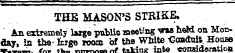
THE MASON'S STRIKE . At \ extremely large pablle sieetfng was held on Monday , in the- Ibge worn of ti » WMte ¦ Goadnft Houfie Tavern , for the purpoaeof taking into eomdderatit * tfee present positin of the ma * ns , and also for febe purpose of cons-dsrinj the best Kerns fc > be adopted ia supporting tkm in tier present struggle . - Sir . Wakley was one of ti » first woo ascended tfee alatform . _ 3 dt DromxG , a bookbinder , -was caned to tfce Ckair . He said tkat in taking to © chair that sight he felt the greatest pleasure . The strike had then « odtinned twenty -weeks . In the strike there had -keen 375 persons , of -whom only fire had proved false to . tfce eaose . The circamstaBees peculiar to tie trade -which tkea solicited their support , rendered that support at that moment the more essential , as the " masons , at that
time of the year , "were generally ont of employment from ene end of the kingdom to the ether ., Therefore , it became those of the other txadea to come forward « nd assist them ( the masons ) , 'which ¦ would enable them to get otbt the present peaod ; and -when that period -was got otbt , there was no fear as to the result of the struggle , because the New Royal Exchange , the Museum , aud -various ' other public buildings , would be eommenoed , and -when that took place , they might depend upon the victory . ( Cheers . ) He need not go into the resy > of the masons since their strike . They had taken a high mcral stand—a stand the result of « ducation . He hoped they would still adhere to the « anse , and soon bring it "to a successful termination . He ironld conclude by calling on Mr . Gotten to more *!« . fisst »« ol « t « ai .
Mt . Goi-Tox , painter , Kd&he rose with much . pleasure to propose the follavring resolution' — "That it is the opinion of this meeting that | -fee steady , upright , and nmily conduct of the masons OEring such a long and arduous straggle pre-eminently deserves the c'most praise , aud our additional support . ( Cheer *) He wosld endeavour t-o lay before them sach facts as nrould , he -wsa sure , cause them to carry out this resolution , and "which -would not only prove to them that the masons deserved their applause , but all the scpport they could possibly bring to them . It had been stated to them that 37 * men -were on the strike , and of that number not one had broken the laws cf his country . They had neYer seen any police reports inserted in any of the papers respecting them . Their straggle -was founded on Christian and humane principles , to resist the oppression of a being who was not worthy the name
of an Englishman , who had been raised to his office for the sole purpose of pursuing a system at slave-driTing . He < Mr . Golton ) -would endeavour to show that the iiasona' interest -was the interest of the mastery . He then -went into the various details relative to the strike , and which finally led to the men leaving their employment , ail of "which details have appeared in ' our reports of the various speeches delivered at the earlier jaeetings of the masons . He concluded a very long speech by calling oh them to use their utmost exertions in supporting the masons , and then they would •» ot have to return to theii -work eomfortibly -with Allen , as ilr . GrisseU had last Wednesday isaid they wouli He had said that " in the course ^> f three ¦ weeks they will all be eomfoitibly back again . " "But , " he also added , "I must confess these men of principle were the best men I ever had in my life . "
Mr . " Waklet briefly secondad the resolui ' on , which ¦ was pot and carried unanimously . Mr . CLARK . B . & paintar , said he felt great pleasure in Wfllng their station to a subject of the highest impoit-vnce t > thtm as mea—a subject they bad met that evening t j ' advance—that of obtaining for the working man that moral , that social , and political standing , which the sons of labour , the creators of all wealth ,-were so fully , fairly , and juit ' . y ent'tled to . They had been opposed "by the combination of capitsiiits , but owing to the united efforts of the trades , they had been able to ttand against them—( hear , hear )—and if they still held together , they must , and would be successful . ^ Many perhaps st this moment ironld ask , " -what have ve ta do wita that strike , we are not masons—we have nothing to do -with stone ; " but he would endeavour to show that they had to do with it , that they were attacking the strong hold of corruption , and what -was foe masons' situation then might be theirs tomorrow . let them come forward and break the chain of tyranny
asunder . Jjtrt us nnifce -with hearts sincere in truth , Our mental might to this ^ ennobling work , The mind's regeneration , and become Messiahs in the cause of liberty , Nor cease unto from out the book of life W « blot the name cf tyrant and of slave . —sChee » 4 The resolution he had to propose was" That it ia the opinion of this meeting , that the bold and decisive conduct adopted by the quarry-men , in nobly refusing to prepare . stone for the supply of Messrs . Qrissell and Peto , until justice has been conceded to the injured massns , thereby sacrificing their employments deserves our cordial thanks , and creates in us a greater stimulant to action . " Mr . Thoxas briefiy seconded the resolution , which , on being put to the meeting , w&s carried amidst loud applause .
Mr . Feasgus O'Connor than entered the room , and -was received with a treraendous burst of chaering , vehieh lasted a considerable time . ¦ Mr . Bctler Eaid he ' could assure them that he had always anticipated success with respect to tfce question at issue , and he was now still further confident of the result from that meeting . The resolution be had to propose bore something of a political character : — " That it i * the opinion of this meeting , that the partial eon&ust at the Commissioners of Woods and Forests , asd the Board of Admiralty , in assisting Messrs . GrisseU and Peto against the masons now onstrike , cleariy proves that the Government is determined to oppress the crocking classes ; and therefore it is absolutely necsssary that extensively organised tmiooa should exist for the purpose of protecting ourselves against the combined efforts of those who live upon the fruits of our industry . " { Load cheers . )
He did not think he need be under any apprehension in that resolution being received by them . Theykno-w perfectly "well that Lord Lincoln , and other great men in the Government , had done al ! in their power to starve the men into submission , but be trusted the good men of the trades of the metropolis -would never allow them to become the easy tools of such a base faction . ( Cheers . ) Mr . Bakes seconded the resolution -without comment . Mr . A . Walton rose to speak to tbe resolution . The resolntJon jast submitted to them , condemnatory of the Commissioners ef "Woods and Forests and the Board of Admiralty , he trusted , -would meet with their entire concurrence . He rejoiced at their arain
assembling on that occasion . It "was a proof that they felt the deepest interest in that straggle—that they ¦ were fully sensible of the fact that tbe Commissioners of WixkIs and Forests and the Hoard of Admiralty had rendered their services to Srissell an « Petoj for the purpose of oppressing the masons . They ( the masons ) wrote to the Commissioners of Woods and Fc-refta , and they sent an answer- to tht letter , stating that they could not interfere , while they ¦ were actually holding a . secret correspondence * with GrisseU and Peto ; and when a depntation of the masons waited on tits Earl of Lincoln , for the purpose of explaining the strike , he said they were decided ! y opposed to trades' unions or combinations . Grissc . i and Peto were left to do what they thoucbi proper ,-and
they were protected . The qoarrymen beard of the condnct of Allen , and immediately refused to product any more stone until he was dismissed . The Cumaufaionexs of Woods and Foresa wrote a letter by their agents . Messrs . Bargesi and Walker , stating to Messrs . 6-rissfiU and Peto , that they might get stone from any part of tbe country they chose . Ha ( Mr . Walton ) exiled their attention to the systematic nnion amongst those parties , whilst the Earl of Lincoln was condemning unioa amongst tii » working classes . Tbe Times had said tbat if they could not get stone from any pan cf England they could get from SouUi America- He ( MrT W . ) thought iz wuuM it zather an unprofitable speculation . ( Laughter . )—Tee Times hid recommended tbe Government to ri
enact the combination laws , bet if ever ihey attain- t « f u to crush trades' unions , that would raise such a temptst xonnd tlielr heads as would with some difficulty be quelled . iCheers-i The Government onght no : to have interfered ; and , if they did so , they ahould have made Inquiries into the merits ef the case . Tie morons hu . < l at all times been ready , and were bo still , to submit tfce ease to arbitration ; and if the reporter <; £ the Times ¦ wsa in that room , he trusted h * -would take that declaration , and let them kDow the fact Bui they would sever get justice frem the present Govrrnment , nor would they ever get justice from their representatives , until they were made responsible to the people for their actions . ( Loud cheers . ) They might as weii expect to ind tfee sun in darkness—they might as well expect to
find the great universe acting in opposition to the established lawj of nature , as expect the Government to hsre any thing like sympathy for the people -while that Government vu based upon a system of class legislation . Ha would endeavour to show them tho exfeat of onion which existed amongst them , as they wild * appreciate the value of nnion as well a the Government . Ha would endeavour to show them ihe abwhiis necessity of uniting far their ova - protection . All classes of society , except the worklag men , were protected by law . He would take for instance the solicitftr , the physician , the surgeon , all these were under tbe protection rf the law , and no oaa co * H practice is either unlaaa ha had taken his
^ agrees . But where wa « the protection for the honest asd industrious working ra » a ? He would tell them what their protection must be . It must be unioni&Son which would tend to their own welfare and be the mean * ef bettering their condition , and which ^ onld be the instrument of their own regeneration . For tMi nnion . it was indispensably necessary that dele-£ &t « coaaiitiees sfcculd exist in London and through the ^ rovinoes . In every town in England they should be foamed , and ike whole at these aniom , directed by intelligence , woald ihow to tha worid that they were Jwt that bloody A&u sanguine mob t ? iey were repre-Bented to be , bus £ -u upright and generous people determined to be free . ( Loud sts * ra . >
The resolution was put and carried "wfth loud cheers . Mr « 97 5 B . iB proposed { & » Rwlotioa ;—
Untitled Article
¦ " That this meeting do , individually and collectively , -declare their determination to assist the masons while ihe , strike lasts . " This reselntion wascecelved with loud dieera . Mr . Tkibe seconded the resolution . Mi . Anderson having spoken to the resolution , it was carried unanimously , and with vehement cheering . • The Chaibsan then stated that a meeting would be held every Monday evening at the Craven Head , Drurylane ; and every Tuesday evening at the Prince ' s Head , Prince ' s-Btreet , Westminster .
Mr . Waxton said It was tbe intention of the Comraittee to have bad a ball on Wednesday week , bnt , u that was Asb Wednesday , the landlord bad been threatened with the loss of his license , and iherefore the ball was postponed till tbe Monday following . Perhaps it would be thought strange 4 ha * they came so far from ihe centre of the town , bnt the proprietor of the room had given it gratuitously . — ( Loud cheers . ) Mr . Wakley then presented himself , and was received wit ^ i cheering , which continued for some minutss . As soon as silence was restored , he said he could assure them toat he had attended there fcbai night for the purpose of witnessing their proceedings , with ^ reat satisfaction . Nothing could be more grataful ta his
feelings than that of discovering thai a large portion of his countrymen were struggling for their rights w : th a determination of being victorious . In the speeches they had heard , which had been delivered for their information , -were the details of grievances which the men employed on the Houses of Parliament had endured ; and he -would ask them , aua he was bold to make the appeal not only to them but to the whole of England , whether it was possible for one man to possess an honest English heart who did not sympathise with the hardships these men had endured ? It was an easy thing for those -who had capital , which h&d been accumulated by the labour t > f the people , to say that unions were mischievous , and that the working men were acting tyrannically . Th- y had heard ef physio being
protected by the law ; they might go further , and say the Church also : in fact , the aristocracy of England were united as one man against the interests of the working man . If they wanted a clergyman for their pariah , could they have him ? No ; h *> was set down as a black . tLaughter . ) The church Baid they would not have your black , but would have a black of tbeir own . ( Cheers and laughter . ) Take the law , of which Mr . F . O'Connar was a member , and they knew how he ha » l taken up the cause of the people , and so the Jaw sert him to Coventry , iCheers . ) Suppose they wanted him { Mr . Wakley ) to plead their cause in any court of law , could they have him ? No . It would be a very had thing for him if they did . But that -vras not to th © point . Could they exercise their own will and
judgment ? No : because the benchers vrould denounce him ( Mr . W . ) as a black in law ; they would- not have his coif and gown , as it would sot be according to their liking . ( Loud laughter and cheers . ) Take the practice of physic , and look to 4 he Apothecaries Company . They were a voluntary company at first , but they had a charter granted to them by James , and then came the 53 rd ef George III ., by which Act any man who dared to prescribe a dose of rhubarb or jalap , unless he was a member of the Baid society , must forfeit £ 20 for tbat very grave offence . Yet the parties who created these unions denounced the working men of L » ndon as tyrannical because they had the sagacity to stand up for their own protection . Who did not feel the spirited conduct of the men at the two Houses of
Parliament ? they had taught even hospitality Vj Grissell and Poto , for they fe&d had a dimner party , and one thousand seven hundred of tbeir workmen had dined at tit Horns Tavern , at Kennincron ; aiid th « se Rien oHlined a good dinner by means of the masons' tt . ike . ( Lund cheera ) He never could believe tbat nearly 300 men would throw themselves out of employment , st a season of privation and distress , without feeling that they were rigfct in doing bo . Tbe Hon . Gentleman then went on at considerable length , urging upon them each to subscribe a weekly sum , so tbat the masons migbt have a permanent income that would list as long as tbe strike lasted . H « was willing , as long as be had a shilling in Bis pocket , to contribute his share . The political unions in the House
of Commons were such , that he had seen , in close divisions , the leaders of adverse factions bring in idiots and lunatics to give their votes . He pledged his word and honour that be had seen idiots and lunatics voting in To » Ving laws for this empire . These were the men who kad denounced their union * , and were prepared to denounce them still , and who would , if they allowed them , pass laws for the abolition of all Trades' Societies . The Hon . Gentleman then went into very lengthy details respecting the Dorchester labourers , and his exertions in their behalf . The Hon . Gentleman concluded an extremely long speeck by calling upon them to assist heart and hand in the masons' cause , and then to form associations for the purpose of obtaining Universal Suffrage , and never to rest till they had obtained it
Mr . Feaegl-s O'Connor then rose and said , if the concluding advice of Mr . Wakley had been takon and acted upon some few years ago , the masons would not have been in the painful position of beisg obliged to look to that meeting for support He rejoiced in making one of them there that night . He rejoiced tbe more in consecfoence cf the lait sentence he had heard from Mr . Bailer , when he ( O'Connor ) entered tbe room . He told them that the motion bore something of a pol . t' . cal complexion , and this it was thfit gave him ( O'Connor ) so much satisfactioa .. A > Mr . Wakley had said , it was Hot so much Hie aristocracy who pressed upon the working classes as the middle classes of society , who trampled on the people . No truth could be plainer than the rights of these four hundred
men who had given up the sources of their own maintenance rather thaniDJure their trade , or allow these tyrarts to have the victory ° * hem . He had told Lord Grey , Lord Brougham , lord Stanley , and the rest , st ibs time the poor Dorchester labourers c&m was brought before the Heuse of Commons , that they ought to be in tbe convict ' s dress , and going on board the huiks . They were new in a positiento assert their rights , and to go at once to the root of class legislation . Mr . Wakley would be going down to the House of Commons , and he Hoped he would stand there the leader of those who were the master-arm of the nation . TJniBn -was necessary in order to effect triumph . The King of Prussia was going dow * to the opening of Parliament , and would sit by the aide of the Queen in
ihas House of Jncnrables . What would be think if he was told ty Mr . W » kley , that in the other House iditts and Iunatic 3 voted in making the laws » He would think that one was an Hospital of Incurables , and the other an Hospital for Lunatic ? . He ( Mr . O'C-J bad been in the Queen's Bench , and he never found a man thtre that was in debt ! he had been in York Cast ' e amongst thieves and vagabonds and he never found a thief or a vagabond there yet ; and so in the House of Commons and tbe House of Lords , they w >> uld never find an enemy to the poor . Tbe present t ' -me put him in mind of that when Charles James Fjx accented effice . They toen cor tended for
all the feix poirt' which he ( Mr . O'C . ) did , but when t '^ ey got « n the other side of Downing-ttrett , all they did was to remove a few contractors from Parliament , : vnd deprive revenue officers of their vctes . It was like rthe old lady when she got her fett on the fender , she did not thick tbe poor people conJJ be cold . So when C . J . Fox and bis party were in effice they thonght tbe stats of tbe nation was net half so bad as when thej were out . He concluded an extremely long speech , of * hich we u « only able to give the heads , by expressing a hope that those men who had takes Vie plact of those in ttrike , vrould gtt the new Houses of Parliament built by tbe time . the Reformed Parliament was ready to take possession of them . ( Loud cheerg . ) A vett of thanks was then passed to the Chairman , and the meeting separated .
The Is.Ob-Thekjn. Stajb.. Saturday. February 5. 1842.
THE iS . OB-THEKJN . STAJB .. SATURDAY . FEBRUARY 5 . 1842 .
Untitled Article
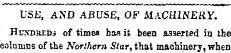
USE , AND ABUSE , OF MACHINERY . HLTfDKTDs of times has it been asserted in the columns of the Northern Star , that machinery , when rightfully applied , is one of tbe greatest of blessings to man , both individually and socially . Hun dreds of times have we shewn how it might be made into " Man ' s Holiday , " instead of being , as it is at present , mau ' e greatest enemy and curse . Hundreds of times hare wq explained the difference ia result upon the happiness and -well-beisg of tbe operative
community , arising from the use or abuse of machinery . Oficn and again ha ^ ve we declared ourselves to be va favour of as much and as perfect machinery as can by possibility be introduced , provided it be rightfully und : and ofien and again have we shewn that the wrongs and miseries entailed upon the working people by the present extensive use of it arises from the fact that it it not right full y applied ; that it is most foolishly , most insanely abused .
By a proper use or rightful application of machinery , we mean such an use er application of its powers as will xkbusb to the working petple their fair share of all and every benefit arising from its introduction and eBaplojmei . t . By the abuse of machinery , we mean Each an application of its powers as enabled Johh Marshall of Leeds , in less than forty years , to accumulate to himstlf upwards of iwo millions of money 1 while it consigned those who worked the machinery , which waa called his , to penury and want ; to long boure , short wages , and , by conftquence , dear food !
It is so plainly apparent that whatever can be introduced that has tne tff <_ ct of lesserAng man ' s toil and increasing kis means of producing wealth mQ 3 t , of itself , be a guod , that we imagine it would not be possible to find iha face of the earth a Buiele iram&u beiag who wo Id attempt an objection
Untitled Article
to machinery . in the abstract ' , and it is also as plainly apparent , that if maohinerr were rightfully applied , —applied bo as to be of Immediate and certain itrufit to all , -w orkman and employer , ptoduow and consumer , that it would beas difBcnlt to find an honest objector to its use . It is equally apparent that , if the new powers , or aids to human labour , supplied by machinery , be so used and applied as to confer the whole benefit upon a very few , and to inflict misery destitution and death upon the producing many , no justifioation for that application can be offered .
It is also equally as apparent , that our machinery has always hitherto been so applied ; to the raising and gathering together of large heaps of wealth for the great" owners of it , and to the driving from the workshop the man who had to " earn his bread by the sweat of his brow , " and dragging into his place ( where a sentient being was still needed ) the woman and the child , inflicting upon them lonoer hoch * of toil than the man had to endure before his supercession ; and involving all in a race of commercial strife , which continually takes from the wages of the work-woman and work-child , and inflicts suffering and poverty upon all who have to live by daily toil .
Tell us not that these things must continue ! Tell us not that it is impossible otherwise to apply machinery ! Tell us not that it is impossible ' . to secure the working man his fair share of the benefit accruing from every improvement ! Tell us not that this cannot be done ! We tell you , not only that it can but that it must ! And if those in power cannot find out the way to do this effectually and
un-injuriously to all , they must give way to those who can . A better and more just distribution of the " fruits" of toil must be made ; and if our legislators and governors be unequal or indisposed to this task , out they must come . That -which is of itself one of the greatest of blessings , must not continue to be made into the greatest of scourges and curses It m » st » e regulated ' It must be used within due
limits ; and its benefits must be diffused amongst and secured to all concerned . These are our views , then , upon the general question of machinery ; views reiterated again and again . We allude to them here , and set them forth in this plain and connected form , because it is necessary that we meet and destroy a dastardly attempt of the enemy to inculcate a notion amongst the factory masters that we are weekly endeavouring to decry the use of machinery altogether . The Whig " Establishment , " utterly unable to rebut the facts
we have adduced , showing , conclusively , that our present application of machinery is a wrong one ; utterly unable to refute the reasoning we have employed , and the data we have given ; utterly unable to upset the positions we have thus made good : the Whig press , unable to defend the system whioh at present obtains , and conscious that the assaults that have been made upon it , if not counteracted by some means or other , will end in its downfall and the establishment of another and a better ; the Whig organs , seeing and
dreading this , because ef the sensitiveness of class interest , meets us only by wilful and infamous misrepresentation . ' We denounce those workings of our present system whibh have reduced the labouring people to that state pi poverty and want , that their Masters find them " wishing the Almighty would put an end to their sufferings before morning ; " and we show that this poverty and want have been brought on by the
dreadful and suicidal misapplication of the immense powers of production we have at our command ; and forsooth we are represented as denouncing the existence of the powers themselves ! We plainly and clearly expose the enormous abuses connected with the present working of machinery ; we strongly and forcibly " shew up" the insanity of tho -arrangements which engender and continue these abuses ; and we are immediately represented as objecting to the use of machinery itself !
Nothing on earth was ever more palpably false or more palpably gross . It is to the abuse alone that we object : none but fools would object to its
use . We hold that it is as impossible to return to the rude and unskilful processes of former times , as it will be to prevent the invention and discovery of other machinery and processes to supersede those now in use ; and we hold that none but a besotted ninny would attempt to do either . At the same time we hold that every addition to our means of producing wealth ought to be beneficial to the -whole , and ought not to inflict injury upon any . If this be not thejease , the blessing is averted aud withheld .
These are the principles that have actuated us in our labours for the poor upon thiB question . We have asserted their right to a fair share of all the benefits resulting from new and improved means of national wealth , and we have strongly denounced all who denied them this right , or interfered to prevent the establishment and enjoyment of it . It waa not likely that parties acting as we have
acted would be allowed to pursue such a course unmolestedly . Every man whose means of living without labour depended npon the existence of the abuses we exposed was sure to be up in arms ; every toad-eater and bribed advocate in the land was sure to espouse the cause of their patrons and employers ; and every means that malice and fear could invent or prompt were sure to be put in requisition .
They have been bo ! From one end of the kingdom to the other the press has had its jibe , its sneer , or its stab at poor Pil-gablick . And yet "Pil " survives ! aye , and even yet bids defianco to them all !! Envy , too j rancerous , dirty-souled , mole-spirited ekvt , has been at work ! Where it has . not been prudent to openly denounce , whisper has been employed . If a division in the consolidated ranks of the poor , whose cause we have espoused , and whose efforts we are guiding to the establishment of the above defined rights could be made , the enemy might still continue to triumph , and wallow in his wrongly-gotten gains . Pretended friends have ,
therefore , been employed . These have been instructed to join the associated bodies ; to worm themselves into favour and good grace ; to get into offices of power and trust ; and to judiciously use the icfluenoa they by these means acquire to the destruction of the character of each and every leader of the people who is too honest to be bought , and too independent to be unworthily used . All these means have failed , though ! and will fail spite of all that can be done to prevent their failure ! Tho people have at last gotten the truth bo well grounded in them , that it is no longer possible to deceive . The traitors and spies ar « , one and ail , bundled out of the camp the moment they show the cloven foot .
And thus will it continue to be , until the cause of the people overcomes all opposition . The principles which are now openly espoused and convincingly advocated by the entire workiag people , are those alone which can sava thiB country from utter and irretrievable rain . And the establishment of those principles u certain , —guaranteed by the fact , that they are so espoused and advocated b / the working people ! Once get the workiH right , and all is done ! They alone move society '!
To this end have we laboured ; and in thii have we been successful . When did England ever before see the working people standing aloof from the other clauses ; resisting and despising all efforts at seduction from the cause they have set their hearts npon ; aad resolutely bent npon the proseoution of their own work , for themselves , and of themselves 1 When was ever such a sight ! exhibited 'to ' -the Politician ' s eye in this land before !! Never !! and it is because of this ; it is because the working people have banded themselves together , and undertaken their own work ; it is because of their resolute determination , evidenced i a thousand instances , to
Untitled Article
resist all attempts to swerve tbsm from the path of duty . ; it is because of these things , that we * in their name , bid ' -. ' / defiMo * ' - ^ open , or coyert--bull-d 6 g like , or wormiagly ^ insidious I v . ¦ . ' . ' . ¦ " ¦ ¦ ; : ¦; ¦ ¦ - ; . ; , ' \ ¦ '' /; - ; '"¦ } : ¦ -. ' ' ' . ¦ ¦ V . ; : ; Spite of every obstacle , ol ' every difficulty , of every opposition , the principles we have ... laid down respect jag maohinery and its nse , will be triumphantly established . Its benefits will be seeured to all ; its present erroneous evils will be rectified , and not allowed to press upon any .
Untitled Article
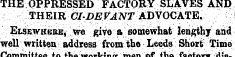
THE OPPRESSED FACTORY SLAVES AND THEIR CI-DEVANT ADVOCATE . Elsewhere , we give a somewhat lengthy and well written address from the Leeds Short ; Time Committee to the working men of the factory districts , in reference to the brutal exhibitionsrof falsehood and violence lately made by an unprincipled public writer , the conductor of a paper which in former times has done good service to the cause of justice , but which has lately lent alt its little power to the njillocrats and Corn Law repealers .
Our readers will find in that document a , sufficient reply to the calumnious afctaok of the Whig spiutterer oh the S ^ hort Time Deputies , about not pressing on the attention of Ministers the People ' s Charter or the repeal of the Coin Laws . As the f # rmer of these objections has been also urged by some very honest but short-sighted and unreflecting persons among the working classes , we recommend the answer of the Committee to their reading . To us at least that answer is sufficient and satisfactory . They werfl not sent to do it ; it formed no part of
their duty . It would have ^^ been malapropos , and would have dofeatod their own purpose , without effecting any other purpose for good . They had neither power , nor right , to force upon the attention of Ministers any other subjects than those whzoh formed tho immediate subject of their mission . They were deputies from known and established public bodies ; bodies composed of men holding various opinions about the People ' s Charter ; but one and the same opinion upon the necessity of a pore efficient legislative protection for the factory filayos . ¦
No one knows better the constitution and charaoter of the Short Time Committees of the factory districts than does Sir Robert Peel , and if these gentlemen , waiting upon him in the character of delegates from those committees , ( 6 . solicit ihe attention of his Government to the evils of the factory system , had begun to press upon his notice and attention the "People ' s Charter , " he would no doubt , and we will add pT 0 perly % have considered and treated the deputation as that which this impudent scribe has thonght fit to denominate it for not doing so , —a
" fraud and a hoax . " He would have said "Gentlemen , I expected a deputation of factory workers , or their advocates ; I find a deputation of Chartists . If the Chartists have not sufficient confidence in themselves or their principles to trust their cause to its own merits , but must have recourse to the disgraceful trick of bringing it here Under the borrowed cloak of the Short Time Committees , that cause is certainly not good nor important enough to merit the serious attention of a great and strong Government . " The deputation would have been bowed out ; the Chartists would
have been laughed at by the Tories , for their abortive effort to hoax the Minister ; while they would have been vilified and abused b y the Whigs and Corn Law repealers for having thus destroyed all trust and confidence in the character of public deputations , and all chance of another deputation being decently received or attended to ; nor would any hound of the pack have been more loud in its yelpings against the disgraceful trickery and fatuitous blundering '¦ ¦ ¦ of the Chartists ^^ than the "thing " against whose present ravings this remonstrance of the committee is addressed .
Let but honest and right-thinking Chartists reflect a , little , and they will perceivie this to be a right statement of the Case . Many memorials from various quarters have been adopted by the Chartists of th © three kingdoms , having for their object the liberation and return of Frost , Williams , and Jones . They have been committed to Mr . O ' Connor for presentation to the Queen . And yet who expects Mr . O'Connor upon that occasion to expatiate to her Majesty upon the merits of the People ' s Charter ? which would be a course just as reasonable , and just as right to be adopted ^ as that which the dishonest : AntKCdrn-Law scribblers
seek now to persuade the unthinking of the Chartists ought to have been adopted acd pursued by this deputation . We are quite sure , however , that this reasoning is as clear to the Chartist body , as a whole , as to ourselves . They have no difficulty in estimating the character of this new card in the hands of an old gambler . The most dextrous playing of it cannot blind the lookers-on ; the " pass" is too palpable ; and the biifflod cheat , no doubt , enjoys mightily the indignant rejoinder of the Committee in their reply : — ' - . - ¦ - ' - -, ' ¦ - ' . ¦ ..-. ' •¦• ¦ ' , ¦ - . '¦ ¦ ¦ ¦
" Well , but then , we are told , that the deputation did hot press upon the Ministers the adoption of the People ' s Chaner , And who complains of this i The Leeds Times man , who has done his little best to swamp the Charter agitation ! The man who has omitted no opportunity of doing his uttermost to row division in the Chartist camp I who has maligned tho motives , aspersed the oharactersj and lyingly misrepresented the conduct of the Chartist leaders I the man who put words into the mouth of Mr . G . J . Harney , at the last election , for the purpose of hounding on the Whig physicals to trounce his
bones—put words into his muuth winch were never uttered , and represented him as uttering them in Lceda , when he never saw Leedeou the day named S a man who has systematically traduced the charaoter of J . B . O Brien , and of Mr . F . O'Connor ! a man who has culled from every source all that ho possibly could lay his hauds on , which would at all serve his purpose of exciting jealousy and disunion amongst the Charti&t ranks ! a man who is secretary to the Fox and Goose Club- ^ a Bociety formed for the express and avowed purpose . of- , . swamping . , the Charter agitation . This is the man to complain
that the deputation did hot do that which they were not sent to do ! This is the man to send his toolstwo geese ; two members of the Fox and Goose Society , to move at the Leeds Music Hall meeting , that the deputation be censured for . ' ¦ ' not pressing upon Ministers tha People ' s Charter ! This is the man to act thus , when fc and his tools have schemed iu every possible way to overreach and put down the Charter agitation ! The men who moved the amendment at tho Music Hall , are both members of the Fox and Goose club : and
the " amendment" so artlessly dictated by the modest mover on the platform , was concocted and arranged , by the Foxes , before the mover of it came near , the meeting at all . And these , forsooth , are the men to complain that the deputation omitted that which formed no portion of their duty \ . ¦ : .. ;; ' .. ¦ ¦ ¦ •¦' . ¦ ¦ - . - ¦ : : . ' : ' , - ... : r :, ¦ ' ; : ¦ : ' ¦ :.- . . "Ah ! working men , you will need ho spectacles to enable you to see through all this . ' You will need no aid to enable you to divine : the cause of this newborn zeal for the Charter , and love of the Chartist agitation ! " ^ /
Truly , and so we think . Whatever may or may not have been the faults or merits of the deputar tion , the splutter of this base hireling , about their having omitted to mention the People ' s Charter , is too rich to be read by any man without laughter , spite even of the melancholy evidence which it affords of the depravity of human nature when aoted apon by the full influences of the system , to the sapport of which this creature has sold his miserable intellect and wretohed soul . The Committee have certainly made this apparent , and have exhibited it very strongly both in the paragraph which we hava quoted , and in the following one : — " _ ... ; . . V
"Not long ago , the party of which the Leeds Times is now the paid tool , themselves sent a deputation to the Tory Ministers . Of course DrJ' Smiles and his co- workers took care to instruct- their deputation to name the People ' s Charter to the Ministers , as a tnea&ure . of relief ; o / course they took care that the Ministers had / A < j / subjeot biought under their notice . Not they , indeed ! They sent their deputation to press for Corn Law : Repeal alone ! and the deputation never mentioned the Charter j Of course Dr . Smites censured ' them ^ for this omission . Not a word of it J It would not . have served hi purpose . "
Untitled Article
^ As no man could at first avoid seeing that to presi the People ' s Charter , under colour of a : factory deputation , would have been dishonest and impolitic , so no man who has read the reply of the Committee can fail to iwo the passed > card whichi they have dragged from under the ^ eheaffl" ileeve i and thus exhibited . v ' vr'V : ¦' . ^ ;; - . . ' ; - ^' ¦¦¦ . . - ¦ : ' ' -, One word upon the notion which an insidious attempt has bega made to engender in th « minds of simple , earnest , but unreflecting Chartists { and in a large mass of people there iare always mora or fewer of this chartoter ^ It has been etated that the
recommendation of the People ' s Charter was the more confidently to be looke ( 5 * for from thia deputation , because several of its members were avowed Chartists , and especially because one of them was Mr . Joshua ^^ Hobson , the publisher of the Northern Star . From him , of course , nothing but the Charter could emanate . His meat , drink , and evacuations must be" the Charter , the whole Charter , and nothing but the Charter ^ ' This ia , of necessity , either- a very knavish or a tery silly modo of talking ; and it i 3 because knaves sometimes act upon Bimple minda and make fools of them , that we
bestow a passing glance upon , it ^ The objection goes on the assumption that a Chartist should be nothing but a Chartist ; that he should have no concern in any other matter than the Charter ; that he Bhould lend himself to the accomplishment of no other purpose , however good or desirable ; Carry out this principle , and it would put au instant stop to all the operations of society [ , ; churches , benefit societies , literary institutions , transactions of trade and commerce , all Ihe ordinary and necessary occupations of life , must be abandoned by every man who is a Chartist : for he who is a Chartist must
be a Chartist always , entirely and exclusively . He must aiind nothing , seek nothing , and accept nothing but the Charter . We don't stop to say that in this argument the witling of the " Repeal " press has a little oyor-stepped himself ; that it would necessarily preclude all hope of that which he affects to be very anxiou 3 to obtain—co-operation of the Chartists in the Corn Law Repeal movement ; we don ' t stop to show this shallow-pated mole that it offers the best possible justification for the polioy of upsetting "Repeal" meetings , about which he has bo often and so coarsely abused the Chartists ;
we give to his impudent but transparent" fraud " , of a " new-born zeal for the Charter , " this flimsy covering very willingly ; but we remind our Chartist friends upon whom the "hoax" is attempted to be played , that it would also have the effect of neutralizing , or putting a stop to , all their exertions in behalf of Frost , - Williams , and Jones , all their virtuous detestation and righteous resistance of the " amended " Poor Law , and all their efforts for the abrogation of the ills of poor Ireland consequent upon the Act of Union , as well as every effort at redress for individual grievances however great and galling .
No Chartist was ever thus Charter-mad . No man ever thought that the promotion of all such religious or social , or special and individual , benefits as might be attained without interposing any let or hindrance to the Chartist agitation was not a thing to be desired . NO Chartist ever thought that it was not necessary and advisable to keep actively in play all such means as might combine with and strengthen and uphold the Chartist agitation . And amongst all these , where is the single one that has engaged the amount of public sympathy and public interest which appertains to this question of the protection
of factory workers against the ravages of Capita ! , and the assertion of the rights of Labour in its struggle with the giant power : of machinery 1 This is a great and wide question ; ' tis one in which the . interests of the poor , both manufacturing and . agricultural , are essentially bound up ; 'tis one in which the feelings , affections , and sympathies of human nature are all merged and from which they are inseparable ; ' tis one which , Charter or no Charter , eooner or later , and at no distant period , must : be made the subject of deep asd searching investigation , in order
that the hand of legislation , to what arm soever it may be attached , may be enabled so to adjuxt and regulate the framework of society as to prevent its violent disruption . Things cannot go on as they are now doing . Wealth cannot continue to be brought into existence exclusively for those who are already wealthy . The few . cannot be permitted to continue this clutching of all the good things of an all-bounteous Providence , while the , many look mournfully , but vainly , for the bare means of eking out a miserable life . The great question of the adjustment , and control , and
guidance of our productive powers , is the question of the Short Time Committees—not simply the Teu Hours' Bill , which , as the deputation rightly informed the ministry , has lost by delay much , if not all , its efficiency as a specifio measure . This question will , or ought to be , the very first to occupy the attention of Parliament so soon as Parliameht shall be made to represent the people . Nothing can therefore be more necessary or important than that it should be well canvassed and well understood ; that those who are now in power should be made to feel and comprehend the
importance of it ; and that , at all events , whether they can be induced to anticipate to some degree , ( however small , ) the rule- of right or not , the discussion of it should be kept , before the public ; that the people : may understand it ; that they may see all its bearings ; all the principles by which they operate ; all the effects flowing from those principles , both sanatory aud pernicious , for the public weal : that so , being well-studied in the matters most vitally affecting their own interests , they may , when the Charter shall have been established , find no difficulty in
testing , knowing , and instructing those whom they shall send to legislate upon the subject . And hence , as O'Connor in his speeches and writings keeps constantly in view the question dp the Land—the BmaU-farm and rural population—the connection a nd blending together of manufactures and agri culture , aa a result desirable to be effected by the Charter , and therefore to be understood now ; as Mr . O'Bbien , from precisely the Bame motive and principle , we
doubt not , keeps constantly before the people his notions upon Land and Currenct , and other matters ; so the Short Time Committees , most of them excellent Chartists , all of them we have reason to believe benevolently-minded men , think it not less necessary that the publis mind should be instructed upon this the greatest of all questions , and which in reality , includes all themothers—the relative fights and powers of Capital , Machinery , and Manual Labour .
We wonder not that the Leeds organ of th « Millenaries should be ; frantic at the revival of this question of a legislative interference with the hours Of Jabo ' sr : ';¦ ' beoause they know that it is necessarily inductive to the opening-up of the whole merits of the whole question . They know too the power that this Short Tiine question has upon the minds of the " workies . " They know that a ifaithful adherence to its prosecution has enshrined Oasxleb , though falling himself "» Tory , " in their very heart of hearts ; while its desertion by O'Conneix , like the touch of magic , blasted , in a moment , all his power and popularity , and made him the deserved object of their deepest hate . We wonder not , then , that
the mad-dogs should foam and howl at its resuscitation . They thought they had succeeded nearly nine years since in getting rid of it . They thought they had choked the complaining throats of the factory-workers with AtTHORP ' s "impracticable" Act , and that the working people would be happy to have done with factory legislation . A leap instigated by infernal principle brought them fsremost in the "race of huniariity . " Their eight-hour-twelve-hbur monster was produced and supported avowedly because they " knew it to be impraoticible . " The Short Time Committees were hot , bowever , to be . *| . . dpn ' 6 . ' * They laid ^^ down their oars , but quitted not theirpost . They protested against the monstrous
Untitled Article
substitution , and sat down to watoh its workiBga until itt authors should be sickened by it . This has been dohd . The " Maatera' remedy * ' for the evils of the factory system has been tried , until they themselves acknowledge that-it ha » failed , and that they are Biokof its operation ; and now , therefore , the Short Time Committees again promptly and properly take up' the question which , is the ^ represenCatives of those who feel most keenly ail the operations of the system , they best know and anderBtand . To have tak « n this step with a Whig Ministry in office , the creatures of the miUocrats , and ¦
iMilHondiresthings who had before testified their subservience to " capital and commerce , " would have beea futile ; and these watchful guardiani" of tht interests of the working many evinced not less their wisdom than their faithfulness , in sebringrupon tha earliest opportunity , after the accession of a new Ministry , to assert the claims of LA * oua ere the bias might bp given to its purposes by the ; insidious applications of the enemy . They were right to havt the first run . Asd they but just had it . The Masters have had their deputatiohv since then , waiting npon Ministers to urge Corn Law Repeal
arid Extension of Commerce , " which mean th « further and more complete prostration of labodb before capital and machinebt . The event ' will prove whether Sir Robert Peel and his ministry have been more accessible to the voice of labour and the demand for justice , or to that of wealth and the cry for tho upholding and " extension" of its fell domination . The Millionaire deputies said nothing to the Minister about the Charter ; evea the " amended Charter , " though its author was one of the deputation , formed no part of their recommendations . Yet they are not censured for thig
omission by the our whose snarlings are directed by tbeir bidding . Nor do we censure them . They acted rightly and consistently in adhering to tha purpose of thoir visit » but they should not then hound on their curs upon the people ' s deputies , be » cause they , too , acted rightly and consistently . Any thing , however , to Becure the quarry . Tke whole produce ofthe workman ' s labour , the removal of every bar to the "free" ravages of capital , is the game hunted ; and the whole pack , big dogs and small , will bark to any tune , so that it may be had . Tie diversity and contrariety of note amid their
yelpings bring to mind the wretched soldier writhing beneath the lash ; ? ' Strike high or low ; there ' s no pleasing them" any way . The Chartists adhera at all proper times , and m all public meetings , where they have the righf ^ to do so , to the practice of bringing forwardj urging , and insisting on the Charter ; the" Extension" and Repeal gentry denounce them as insolent brawlers ; Cot Thompson deblares them " to be impracticable , " and says that he cannot work with them , because they will talk about nothing but the Charter ; Mr , Knowles , the Chartist of Keighley , goes to Skipton to a meeting of Dr . Smiles , and other foxes , for "Extension" and Repeal of the Corn Laws I he there
talks about the Charter , and is blackguarded , bruised , beaten ,: kicked off the platform , and pitched headlong down stairs ;; and , anon , this same Dr . Smiles is shocked and scandalised at the shameful omission of duty on : the part of a depu « tation , some of whose members were Chartists , bat who neglected to pitch the Charter into Sir Rqbe&i Peel , instead of the business they were sent about . How very shocking I and what naughty biys thJa deputation were , not to afford the Tory minister at all events the chance , with a much better grace and reason , of calling in his servants to serve them as the " Extension" and Corn Law Repeal foxes served poor Knowles at Dr . SiiiLES ' s meeting !
'We have deemed it necessary to say something upon this subject , because in some portions of the country there may be honest Chartists , who know little either by experience or observation , of th * horrors of the factory system ; who have ; bad few opportunities of studying or making themselves acquainted with the principles involved in the great question of the struggle of Manual Labour against Machinery ; and who might , therefore , laoking better information j be induced by the villanous arcfuhiesa with which the Charter has been " played" on
this occasion by the ci-devant advocate ( now bitter enemy ) of the factory workers , to suppose that there may have been some forgetfulness of th « unswerving allegiance which is due to : their ow cause , either by the Chartists of Leeuis , Huddersfieldj and Bradford generally , or by the many active and excellent Chartists belonging to the Short Time Commiftees of those places individuailyj in this matter . We have devoted many years to the study of this question ; expended much time , muoh labour , and some pecuniary means , in the prosecution of such actual observance as should afford us a
sufficiency of facts and data for conclusions on the wholematter . Wehavelivedamongst itour whole time . We have watched the rising , we have seen the development , we have noted the operation , of that system of production by inaniniate machinery , which under the management and regulations that have hitherto guided it , has become the : blight of the poor man ' s hopes—the devastator of bis homestead —the demoraliser of hia family—the assaasiu of hia connubial and parental happiness—the destroys * of everything dear to him , save physical existence ; aud which threatens , if not gridei
in its movements otherwise than it has yet been , to rob him ere long of that too : ! EntertAining deep and cohscieutioua feelings oa the BQbjeot ,-we have ever held it to be our stern duty to the people to give the factory labourer our inobt hearty and Uncompromising supports It may not have been all that we could have wished it . It may have lacked power , or energy , or talent , or influence ; but has not lacked sincerity , consistency nor disinterestedness . It has been a support voluntarily accorded . No '' soores of pounds " of the hard earnings of tho factory workers have
been paid to purchase U 3 . Without pay ; wiihout having been constituted their advertising medium ; we have asserted and supported th » rights of the enslaved factory workers , on all occasions which might bring them under notice , throughout our entire career . Wo have done eo from principle , because we believe iheir cause to be identical with that of the whole people ; to be ia '( a ' ei ' ths cause- ^ th& cause of laboub against v / ealth—of Oppressed against Oppressor , for the adjustinent of
which the enaction of the Chaner is reqiired . Often and again have we declared that vrc would not give a straw for the Chatter otherwise than as a means to > an end , and that end the upholding ol the RightBof Labour . It is a pretty thiD >< , then , that we , who have always upheld the tactory workers , should be accused of "fraud , " of "hQaxing , ' * of "dishonesty , " because we np « held thfli factory workers still , by . int thing Who blustered for the Ten Hours ' ---- Bill
when its advocates were his best paying customers and patrons , and who foams and froths about it as an : " impudent hoax , " '' an excessively absurd attempt , " "a gross and palpable fraud , " now that he is Btated to have been bound , for some twentj months baok , to do the bidding of its enemies ifl return for the u chink" with which hia services were purchased ! Astupid eftort is made to identify ua with the Short Time Committee , because , forsooth j the addres 8 Bpon which we have written these observation ^ was printed by Mr . Hokom , who also prints the Northern Star . Having read the document , we have
no hesitation in averting that t «> the printipks contained ia it we Bubscribe in full ; and that we hold the-reasoning to be conclusive and unanswerable It is for these ^ reasons ^ ^^ and beoause we think it , along with many other laudable exertions of the body whence it emauates , calculated to serve thd real interests of the working men , that we have given insertion to it . We have omitted from the address some expressions personal to Dr . Smiles We have neither wish nor need to rest our cause upon personalities . It may have been deemed necessary , and perhaps it was neoesaary , for thai Committee , in rebutting his slanderous attacks npoa
Untitled Article
4 ^ " ^ ; ... ' - ' " ¦ THE N () RTHIR ^ : ; , . ' . : '¦ . . /¦; ¦ . . ; , ; ' . f ;\ /¦;^^ y ^^ T : ^ :- >^^^ . ^ -- ^ .
-
-
Citation
-
Northern Star (1837-1852), Feb. 5, 1842, page 4, in the Nineteenth-Century Serials Edition (2008; 2018) ncse-os.kdl.kcl.ac.uk/periodicals/ns/issues/vm2-ncseproduct416/page/4/
-