On this page
-
Departments (3)
-
Adverts (8)
-
-
Text (8)
-

Untitled Article
-

THE HOETHEEH 8Til SATURDAY, FEBIIUAUY 23, 1851.
-
Untitled Article
-

ENLARDEffiEHT OF THE NATIONAL I8STRUGT0R. '
-

Co coimuouBeiufi,
-

Untitled Article
-

Untitled Article
-

Untitled Article
Note: This text has been automatically extracted via Optical Character Recognition (OCR) software. The text has not been manually corrected and should not be relied on to be an accurate representation of the item.
-
-
Transcript
-
Note: This text has been automatically extracted via Optical Character Recognition (OCR) software. The text has not been manually corrected and should not be relied on to be an accurate representation of the item.
Additionally, when viewing full transcripts, extracted text may not be in the same order as the original document.
Untitled Ad
So . V 1 IL of tbe Sew Serie 3 < OF " THE NATIONAL INSTRUCTOR " 13 now ready . ' SIXTEEN LABGE B 0 YAI / OCTAVO PAGES , Price One Penny . i IT B THE ADVOCATE OF PCL 1 T 1 DAI , SOCIAL . ADD INDUSTRIAL PROGRESS II COSIA 1 SS A WEEKLY LAiSOUK USCCOISO . ( The Autobiography of Feargus O'Connor , Esq ., M . V :, ' Original Articles on Social and Political Questions . ] Tales : Beviews : Poetry : Gleanings , &c . j Contents of > o . VIII . 1 Wbat should a People ' s Parliament do ? 2 The Student of St . Petersburg . { Continued . ) j 3 . The State Clock . ¦ L Austrian State Prisoners . ( Concluded . ) s 5 . Adventures of Fc-argus O * Connor , Esq ., M . P . ( C . F ^ ustin ; Emperor of Hayti . ( 7 . J 5 ew Books—llaiubies beyund Railways ; or Notes in C ornwall taken afoot . S . Labour and Co-operative Record . Xow Ready , A Title , t ' ontcu £ s Index , and Prefa cc to the I'irst Volume . ; TheXnnibers and Parts of the First Series of the National Instructor that were out of print , have now teen reprinted , aud may bs had on application . Subscribers arc requested to complete imperfect copies forthwith . The " National Instructor " is supplied by all the London Agents for similar publications : or by A . Hey wood , Manchester ; W . Love , and G . AdauiB , Glasgow ; llulrinson and Co ., Edinburgh ; J . Sweet , Nottingham ; J . Guest , Birmingham .
Untitled Ad
LEEDS MSTIUCT . A PELEGA . TE MEETING of this dis-¦ Q- trict was held oa Sunday , i ' ebruanr 9 th , in tlie Bazaar , Leeds , when it was unanimousl y resolved : — "That a delate be sect to the Conference in London , on the Srd of Marcii . " It was likewise resolved : — " Tlmt the Hiettins should be adjourned to the 23 rd of February , when all delegates were to be prepared with their iiroiiortioH of the expenses . " Tlis meeting will therefore be held in the Bazaar , on Sunday , Feliniary 23 rd . at ten o ' clock in the morning . "Birstall , Dewsb ' ury , Wata-fiidd , L ' udsey , and Ifcitley , are requested to seud delegates .
Untitled Ad
Terfect freedom from Coughs in Ten Minutes after-use , ; andinslant relief , and a rapid Cure ofAst ftma , Consumption , Coughs , Colds , and- all disorders of the Breath and Lungs , are insured by ] DK . LOCOCK'S PULMONIC WAFERS . ; A few facts relating to the extraordinary surcess of Dr . Loeock ' s Pulni'Miic Wafers , in iLe cure of Asthma ' and Consumption , Coughs , Colds , and It flaenzi , Difficult 3 reailnn £ , Fains in the Chest , Shortness of Breath , Spittingoflilood , lloar ~ cneis , &c , cannot fail to be interesting to all , when it 5 s borne in mind how many thousands fall victims annually to disease of the clitst . JMroKTAJfT TESHMOSIAIS . Mr . W . J . Cooper , Surgeon , Medical Hall , Canterbury . . Gentlemen , —Having heard your Wafers very highly Epoten of by sureral persons who had taken them with decided btnlfit , I have recommended them iu sevtral cases of confirmed : is ; lnna , and their good eflects have been truly astonishing . I now recommend them iu all obstinate cases . ( Signed ) W . J . Coopes , FurgMn . Another Care of viol&it Couph , Sore Throut , Ac . Sib , —Hating an ulcerated sore throat and violent couch for several icuutUs , accumvavnwl with cscessive expectoration , aud obtaining no reiief from my medical attendant , and being recommended by my neighbour , Mrs . M : iddis : m ( who bad experienced great tx-nclit from -r . LocosU's " Wafers ) , to try them , I v . as induced to do so . and fee !' great pleasure in bearing my testimony to a sjieedy cure experienced by me from oue box > mly ( Signed ) Charlotte Bead . — " Witness—ilr . John Xoblc , bookseller , Boston . — Kirton , Boston . Cure of Twenty-nine Years' AstJunatie Cough . Sib , —I am now forty-four years of age , and I have bten afslicted tvhh an asthmatic cough since 1 was a boy of fifteen years of age ; during that time I have resorted to every means in my ]> oivi ; r to remove ir , but in vain , until last Sunday , when 1 sent for a small bo £ of lir . Locock ' s "Wafers . 1 have talicn two boxes siucf , and from the efiVcts they have had upun me I feel no doubt of a speedy Tecovery . —U . Stringed . —Witness , M . Lynch , Chemist Uarket street—Micdleton , near Manchester . Improvement of Vte Voice . Estract of a letter from tile ltev . Morgan James , Rhymney Iwm . WovkS , Ofcur Abey ^ aveuny . Sir , —I have tried one lies of Dr . U * ock' s 1 ' ulmonie "Wafers for my voice , and received great benefit from them , &c—M . Jaues . S ' ap&t Minister . They have a pleasant ta < te , and may be taken by infants as well as adults . l'riee Is . lid ,. 2 s . 9 J ., and 11 s . per bos . To Singers and Public Speakers Dr . Locock's Pulmonie "Wafers are invalurUe , as by their uctiou on the throat and lungs , they remove all iioarteuess in a few hours , and wonderfully increase the pouvr and flexibility ot the voice . Full directions are given with every box in the English , German , and French lan ^ ua ^ es . Prepared enly by the Proprietor's Agents , Da Siiva aud Co ., 1 Bri'le-lnne , Fleet street , London . Sola l > y all respectable Medicine Vendurs . Also , inav be bad DR . LOCOCK'S FAMILY APERIENT AX !) ASTlMLiqUS WAFERS . A mild and gentle Aperient Stomachic Medicine , having a most agreeable taste , aud of great efficacy for resulutinV the Secretions , and correcting tlie action of the btosjacii and liver . Sold at Is . lid ., 2 s . 9 i ., and 11 s . per l < ox . A 1 S 0 DR . LOCOCK'S FEJ 1 ALE WAFERS , The best medicine for ladies . Have a ]>! eji : uit . aste . Full directions are given with eveiy box . I ' .-ice Is . lii , 2 E . 9 d ., am ! 11 s . per box . All 1 'ILLS under JimUar nai-ies are COUXIEUFEITS . IMPORTANT CADT 1 OX . Many medidus vendors vrhen asked for Dr . Locock ' s Medicines attempt to sell * Pills . ' Wafers , ' and other preparations , under nearly similar names instead—beeiusc they obtain a larger profit by the Side of such counterfeits than can be obtained by vending tbe genuine medicine . The pilule is turn-fore cautioned , that tine only geumue has the words , Dr . LOUOGK'S WAFERS' in wh-te letters on a red ground , printed on the Government Stamp outside each box
Untitled Ad
Matrimony marfc easy ; or how to tw ' a- L » ver . MIS S ELLEN DAWSOX coutiuues to stud free to any address , on receipt of tliirtcen postage stacips and a directed envelope , plain directions to enable ladi s or gentlemen to win the anei * t ous of as many of die opposite ' sex as their hearts may dcire . Tfie proposal is siuiiile , but so captivating and enthralling that all may be lUlirriml . lrresi > ective of ajjc , appearance or jk > - ation , youns and « ld , p .-er and peeress , as well as the peasant , are subject to its influence , and last , it can be arranged with such ease and delicacy that detection is impossible . S . B . —Beware of ignorant pretenders . Just Published , Third Edition ,
Untitled Ad
; ' Liberty—Equality—Fraternity . ' IN FEBRUARY WILL BE PUBLISHED The First Xutnbw of 'THE PEOPLE . ' We'll struggh on till all be won tbe good God hasdesigned . The Empire of the People—the Monarchy of Mind . ' A NEWSPAPER established by private -ii individuals is manifestly inadequate to the attainment of any great National object * It is , ' says a distin . guished Irish writer , -in many particulars defective , in many others injurious , and in some dangerous , unsafe , and untrustworthy ; it may be bought or bartered ; it may be traded with and trafficked on ; it may be corrupted , conquered , or intimidated , and ofitrs no guarantee for firmness , independence , or honesty . ' '—Influenced by these considerations , a number of Iriihmen—deeply interested in the welfare of their Native Land—have resolved on the establishment of a National Weekly Journal , which , founded by the People , will be alone responsible to them , and will have for its immediate aim and object the unc mpromising advocacy of their rights—their interestsand thtir libertv .
Untitled Ad
NATIONAL CHARTER ASSOOlATlOiN . Office , U , Southampton-street , Strand . THE EXECUTIVE COMMITTEE i hereby announce the following meetings : — On Sunday afternoon at three o ' clock the Metropolitan TV-legates will meet at the City Hall , 26 , Golden-lane , Barbican . At tbe s ? me time the Lambeth locality will meet at the South London Hall , and Mr . Pattiuson . the sub-secretary , will be in attendance to enrol members . On Sunday evening next at the Rock Tavern , Lissongrove—Princess Uoyal , Circus-street , Maryleuone—lirick-1-ijers Arms . Tonbridge-street , Xew-road—Crown and
Untitled Ad
TO TAILORS AXD OTHERS . ExniwnoN , issi . % Approbation of Her Majtttu Queen Victoria , and Jl . ll . II . Prince Albert . THE LONDON aud PARIS SPRING i- and SUMMER FASHIONS for 1 S 51 , bv Mes-rs . I > HXJAM 1 K READ & Co ., 12 . Hart-street . Bloomsburv-Miuarc , London : and bj GEORGE lilillGER , JlolywcU . str .-st , ^ traml , will be ready early in March . The View f ll > 2 Grand Building in H-, de park for the ensuing ExhibitiDU . is esveuted with extraordinary skill , and will be snw-iior to anything of the kind ever published , producing an txeijlcnt m . d beauiifuUy coloured PRINT , represent ! » ng v : uioiis Costumes of diftrent nations , without anv additional charge . This splendid PRINT will be accompanied » vith the usual numberof fail-sized Patterns , Dress Riding : « ul Frock Coats ; Youth ' s new Fashionable Polka Jac-ktt AHo , the Novel and Fashionable Registered Exhibition Riding Coat , with illustration of all particulars , and every iafurination for Cutting aud Makinij-up the . « hide . Thi- elegant new ALBERT Ruling Coat , registered bv Read ¦ k to . W h of January , 1851 , f » r the benefit of Subscriber * « : irf y ; all others are liable . Price , with all tiie Patterns and information as usual , 10 s . ; price for the PRINT alone ( S ., pos-t free , on a roller . Sold br Head & Co ., 12 , Harts : rett , lilnunisbury-square , London : G . JJe : ; geu , Uolywellstieet . Strand , ami all Vuuks-diers in the ljuiud lii ! i"iiom .
Untitled Ad
T > cei . li . \ g ix Fka : ; ce , —! t will lie remembered i 5 is : t il . Alexander Dumas ar-d ! ! ¦ Merry were some utiw ago fii , eu by the Tribunal of Correctional 1 « .. nce UOO francs for having acted as the seconds to il . Charles Hugo in a duel , aud M . Delapisrrc and M . Onnialdi were fined 100 francs for having been the seconds of M . Viennot , M . Charles Hugo ' s adversary . All the four parties appealed on Satur-% J !^ & ? X ^^* w *
Untitled Article
r . W ., Tutbury—Sent : Mr . Kicuoiu , Morl « y . —The aum you sent for Windlng-up Fund wa « 3 s . 6 d ., but , by a misprint , was announced as only 2 s . Gd . . . . BtkcKsTONE Edge . —We are requested to state that all the localities represented at the late Blackstone-edije delegate meeting are requested to forward their quota of expense * to tho treasurer , Mr . Bake , Church lane , Rochdale , with > ut delay . ¦ :.. . Mr . Melville , Ma . kinch .-The Gd . from J . Donaldson should have been for the Honesty Ftwd , not for Windintrup the Company . Alex . M tchell ' s address was stated to bs Ferryiiort-on . Crai ( T | ingtead oi Mavkincli . ' Nottingham . —J . Sweet acknowledges the receipt of the following sums ( sent herewith ) , viz .: —For Honestt Fosd : —Mr . Brown ; Gd j Mrs . Burbnge , Gd Fon
Winbiss-up l'OSD : —Mr . Brown , Gd j Mr . C . Barker Gd Mr . T . Marriott , Is ; Mr . J . Tiukler , 6 d : Miss Tuns ' tall 6 d ; Mrs . Hajes . 6 d . Mr . B . RnsHTOs , Halifax . —The 5 s Gd from W . Maud , and the Ss from IV . Fletcher , should have been under the head Honeaty Fund , but by mistake was placed to that for the Windiug-upof the Land Company . Mr . M . Newbold , Loughbro ' . —The sum sent last week for the Winding-up Fund was is Gd . It appeared ouly as 4 s in the Star . Ho tgabian i-. ZFOGEES .-T . Antill begs to acknowledge the receipt of I 5 s from Mr . Harney . 6 . B . —We cannot answer your question . R . IIodson . -Your intelligence is of too old a date . We should be glad to receive earlier reports from this quarter .
The Hoetheeh 8til Saturday, Febiiuauy 23, 1851.
THE HOETHEEH 8 Til SATURDAY , FEBIIUAUY 23 , 1851 .
Untitled Article
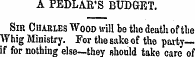
A PEDLAR'S BUDGET . Sir Charles Wood will be the death of the Whig Ministry . For the sake of the partyif for nothing else—they should take care of him , and instead of allowing him to he at large , should send him to some quiet " Retreat , " where his hallucinations would ho harmless . Last year , with a considerable surplus , he contrived to do as little good , and to produce as
much dissatisfation , as previous to the exploit , one could have imagined was in his power . This year , however , he has shown ; that his capacities in that way are not to be easil y guagcd . With a larger surplus , and , consequently , a better opportunity of affording palpable and substantial relief to the over-burdened tax payers , he has contrived to create universal disappointment and a , howl of indignation and conte mpt from one end of the country to the other .
Previous to the meeting of Parliament deputations from the interests that thought themselves most entitled to consideration in the framing of the Budget for the year , pressed their claims on tho attention of the Financial Minister . Sir Charles received them " courteously' '—in many cases familiarl ylaughed and joked with them in high good humour and—declined to say anything till he revealed , once for all , his scheme as a whole . The only thing real about these deputations appears to have been Sir Charles ' s
merriment . He could not help laughing at anybody being so "jolly green" as to come and ask Aim to take off any of their burdens ! What matter , though he had a surplus ? He could not , with the two or three millions at his disposal , satisfy them all , and , therefore—Oh , Wight idea '—he -would go to work in such a way as should satisfy none of them ? In his endeavours to he original and striking in his Budget , he has exhibited a perverse ingenuity , and ac elaborate infelicitousness , in discovering modes of making his surplus do the least possible good , which is positively astounding , It reaches the very sublime of financial
maladministration . For a third tims he proposes the renewal of the income tax , with all its inequalities and monstrous injustice to those who have to earn their bread by the sweat of their hands and their brains . The lordl y owner of broad acresthe wealthy possessor of streets , warehouses , and factories—the snug recipient of dividends on stocks and shares , —all those whose incomes arederivedfromrealproperty . independentaliko of their health or sickness , and which at their death will descend to their heirs without diminution in value , are to continue to pay
sevenpence in the pound . The poor clerk , who out of £ 150 a year , has to maintain himself and family , keep a respectable appearance , pay house rent and taxes , and insure his life , to leave a few pounds to his widow or children in theeventof of his death—is to pay exactly the same ! Professional men—hardworked authors—journalists , and reporters , whoso brains are incessantly on the rack , to the shortening of life , and tho deprivation of enjoyment Avhile living , are assessed at the same rate as the proprietor of Chatsworth or
Woburn Abbey . How often do these poor slaves of the lamp look wishfully at the £ 5 noto , hardly earned , which ou ght to pay for the schooling of their children , but of which they are plundered in this infamous manner by the Chancellor of the Exchequer , and , as a consequence , theiroffspring deprived of tho education which is the only fortune their parents have to bequeath to them . But what cares Sir Charles Wood for all that ? There are "difficulties" to an equitable adjustment , and , therefore , he proposes it shall remain as it is .
That its continuance in its present shape , will not ouly perpetrate a gross injustice and downright robbery on the classes we have mentioned , but at the same time perpetuate a wholesale demoralisation of public opinion , fri ghtful to contemplate , iscvident from thoreturus of tho number of persons who pay the tax . Out of the 30 , 000 , 000 of inhabitants of this country only about 500 , 000 pay this impost . Of these a large proportion are individuals whose incomes just come vrithin its range . But the large traders , brokers , manufacturers , and successful professionals all
contrive to escape almost scot free . . There must be more individuals , with incomes ranging from one to two thousand a year , in tho single parish of Marylebonc or Ptuldington , than are returned for the whole of Great Britain . The tax is opposed to tho innate common sense and justice of the community , and they enter into a wholesale conspiracy to evade it . The big fish escapes because the Government dare not institute a strict inquisitorial investigation ; they catch the small ones who have no iuiluence , and wlit > nuv , therefore , be robbed with impunity .
Basing his scheme on this fundamental injustice , Sir Chaules Wood proceeded to construct another scarcely less flagrant and intolerable . Apparently repealing the windowtax , he proposes to substitute a house tax nominally one-third less in amount , but which iu many cases , will amount to as much or more than the tax it replaces . The house tax will , to a great extent , fall peculiarl y heavy on the same classes who , are so unjustly treated by the income tax ; aud thus a second robbery will he committed upon them . The return of houses and persons assessed to the window duty , show that , like the income tax
it is paid by a very small portion of the commuuity ; and though the substitution of a house tax has the recommendation that it will not necessarily shut out li ght and air , yet it is invidious and unequal in tho selection of tho houses to which it applies , an-l the manner in which they are to be assessed . Thus au old house , rented at i'lOO a year , which has formerly paid £ 15 15 s . for window duty will m future pay two-thirds or £ 10 lOi . ; while a . new house , rented at £ 100 , will only have to pay £ 5 house duty . We should like to knew on what conceivable scale this gradation has been framed .
We have said that the Budget exhibits elaborate and perverse iugeuuity in dovisiug modes by which ;» . s little good as " possiblecould be done . Let our readers judgo cf the fact . Out of nearly two millions of a surplus , we are to save £ 700 , 000 a year by tho substitution of the house for the window duty , in the manner we have indicated . The rest is frittered away in several unmeaning , if not ridiculous , small boons , or
Untitled Article
apparent boons to the landlords , the colonial interest , and the farmers . To the landlord he gives £ 150 , 000 , by placing the charge of couuty lunatic asylums to that extent on the consolidated fund ; to the farmers he gives £ 30 , 000 a year , in the shape of a reduction of duty on foreign seeds ; the colonial interest he proposes to propitiate , by equalising the duty on coffee and making it an uuifbrm rate of 3 d . in the pound ; and to the shipbuilder and farmer he offers a reduction on sawn and hewn timber of 10 s . and 7 s . 6 d . a load . That is the Bud get . Neither more nor loss ! We
forgeta few hundred thousand pounds are reserved to buy down the National Debt , in which laudable process Sir Charles tells us , he had been engaged already to the extent of about two millions sterling . A very gratifying statement on the face of it . But our gratification is rather modified , when we learn that our " wooden" Chancellor has been buying in the debt at £ 96 per £ 100 , which he contracted himself lately at £ 80 per £ 100 , and has thereby sacrificed about a quarter of a million sterling . That is paying too dearl y for such a whistle as Sir Charles Wood !
We can scarcely imagine that a financial plan , so utterly devoid of any pretensions to common sense , or common honesty , which fails to relieve , in any perceptible degree , the burdens of any one class or interest of the community , which , with a large surplus in hand , squanders it so ridiculously , will be permitted to pass in its present shape . It has been hailed by an universal outburst of execration and condemnation by journals of all complexions , and representing all parties , and it
will have to encounter a most determined opposition in Parliament . There is only one fear , and that is , for want of some well-digested and workable plan on tho part of the opposition , Sir Charles may carry the day with his wretched abortion . If the opponents of the Budget mean to succeed in their opposition , they must be prepared with another . If they are not , it will bo a deliberate denial of their responsibilities as members of the Legislature , and an abdication of the most important of their functions .
We have often complained of tho enormous loss entailed upon the country , by keeping such a mere pedlar in office as the present imbecile and incompetent Finance Minister . Here is another and more forcible illustration of his incapacity . When will the patience of John Bull give way ? Had Sir Robert Peel been alive , and entrusted with such a surplus , how different would have been Ids plans , and our prospective payments !
Enlardeffieht Of The National I8strugt0r. '
ENLARDEffiEHT OF THE NATIONAL I 8 STRUGT 0 R . '
Co Coimuoubeiufi,
Co coimuouBeiufi ,
Untitled Article
AGRICULTURAL DISTRESS . Affairs in this country appear to proceed on the see-saw principle—one up , the other down . When the manufacturing districts are said to bo enjoying " prosperity , " tho agricultural are plunged into the deepest " distress , " and vice versa , Their seems to be no possibility of both being prosperous together , under our present
arrangements . Why that is the case , ov how it might be remedied , are , however , not the questions to which we now propose to direct attention . The immediate result is , that the duration of the Whig Ministry is threatened by it—that , last week , it was only by desperate exertions they saved themselves by a narrow majority of fourteen , in a House of upwards of five hundred and fifty members . Those who only read the Free Trade papers
—which are in the habit of ridiculing Protection and Protectionists , and of studiousl y concealing from their readers tho facts on which they base their agitation for the rcconsideration of our late commercial policy must have been considerably surprised at the closeness of that -division . A party which can muster so strongl y is neither to be d espised , nor cau it be supposed altogether without some fouudation in fact for its complaints , and its demands for redress ; and while the balance is so nearly equal , the question cannot , by any means , he said to be settled .
Much of the success which attended Mr . Disraeli ' s motion has , however , been ascribed to the defectionof someof the Irish members , who usuall y vote with Ministers , because they disapprove of the Papal Aggression Bill . Perhaps this had some influence ; but we believe that such has been the injury inflicted upon Irish owners and occupiers of land by Free Trade , that , under any circumstances , they were certain to have voted with tho " Couutrv Party . "
^ The weakness of that party appears to consist in the want of a definite and a practical policy . Tho elaborate and varied speech of Mr . Disraeli , did not supply that want . It was , no doubt , a very clever essay , and indicated a range of reading , thought , and reflection , which hitherto have not been expected from so purely rhetorical a speaker . But it wanted simplicity and directness . The very length of its exordium was a fatal blunder in its
construction . There was no necessit y for spending an hour and ten minutes in " preliminary remarks , " for tho purpose of proving that the most eminent men on both sides of the hous 3 had been mistaken in their calculations as to the probable effects of free trade on the prices of corn ; aud therefore that all parties ought to enter upon the consideration of the subject unbiassed by anything that had formerly occurred . Tiie unwield y introduction was appropriately closed by as extensive and ponderous a collection of remedies , or rather hints as to remedies , which , couched in Mr .
Disraeli ' s language , must be vevy bewildering to the farmers . We wonder , for instance , if Mr . Ciiowleu , the valiant hero , whose bold defiance to mortal combat at the Crown aud Anchor none of our readers can have forgotteu , comprehends his leader ' s programme in the House c-f Commons . A string of measures , which it takes an hour to recite , will never make a good " cry" at a General Election . Mr . Disraeli may be vevy good at constructing a three volume novel , ' or a political essay suited for the atmosphere of the House of Commons , but ho has yet to learn how toconstruct a working partv .
Among tho long list of measures alluded to by him , however , there were many pregnant indications of a ripening of public , opinion on important questions . Foremost among these is tUe necessity for . a complete revision of our whole Financial System , with the view of redistributing and equitably adjusting its burflews . Another , not less valuable , indication was tho allusion to the improvement of our laws of partnership , aud tho consequent improved cultivation and value of the land , which would arise , by a number of persons with small capital being enabled to embark in agricultural Sir
pursuits . James Graham , who made the " crack" speech on the Free Trade side of tho question , expressed his surprise that , after Mr . O'Connor ' s experienco in Joint Stock Cultivation , Mr , Disraeli should have dreamt of such a-thing . We are surprised at the audacity of Sir James ' s remark . No man knows better that it was precisely because of tho want of a proper law of partnership ; because the Land Society was deliberately excludoil from the protection of law , that the hoi ) , member for Nottingham has been obliged to bring in a Bill for wiudiug-un the affairs of that Society .
Wo observe , with much pleasure , that Mr . Slaney has followed up his Committee of last Session , by another Select Committee , the leading object of which is the . introduction of something like common sense and common justice into our laws relating to partnerships . In connexion with tho measure of the Attorney General , for registering deeds uud facilitating the transfer of estates , it will greatly tend to the diffusion of landed property among the people , and thereby to tho breaking down of the huge system of exclusion and monopoly , which shuts out the masses from all
direct interest in , or connexion witfi , the soil . The unwholesome ( stagnation , the artificial Bterility , and under-cultivation , which results from locking up the land from the bulk of th"e population can only be effectually remedied by measures that will permit industry , enterprise , and capital , to be applied freely to it , and that , not for the benefit of landlords or usurers , out the actual cultivators .
' It cannot be denied , however , that at the present moment the agricultural districts are suffering severely , and it is questionable whether even the formal abolition of rent would be equal to the losses the farmers are sustaining under present prices . From 50 s . to 56 s . was estimated even by Sir Robert Peel , as the lowest prices at which wheat could be permanently and remuneratively grown in this country ; and it was estimated that upon an
average of years , taking into account tho cost of freight , and other expenses incurred in importing foreign grain , that would be the ruling price . We find now , however , it is down to 37 s . with every prospect , ia future , of the average not ruling higher that 40 s . in the best of cases , To the large and wealthy markets of England all countries are certain to seud supplies . Low prices must continue to be the rule in that market as an inevitable
consequence ; and however , pleasant that may be to those who live on fixed incomes , or who derive incomes from usury and profitmongering , it will be no joke to tho 3 o who have to bear the burdens , and produce the provisions sold at these low prices . If such is to be the . permanent condition of the " owners and occupiers of laud , '' a revolution—not the less real and extensive because it has been quietly made by act of Parliament , instead of barricades and cannon—is certain to follow . In the course of that
revolution we expect to see many singular conjunctions , as it is proverbially the office of misfortune to make strange bedfellows . I 3 it beyond the scope of possibility , that landlords and farmers should join the labouring classes against the domination of the money power , which grows mightier every day at the expense of both landlord and labourer ? We have no doubt , whatever , that if tho suffrage were commensurate with the adult males of this country , that a very different system to that of unregulated and uncontrolled " competition , would be instituted in this country . In
America , under the most Democratic constitution tho world has yet seen—and with the cheapest Government also—a carefully-constructed protective system exists , by the will of the masses . Tho Political Economists have not yet persuaded the industrial classes to surrender their interests to the keeping of those whose business it is to sell dear , and buy cheap ; and , in all cases , to take caro that whoever loses they will win . It is very doubtful whether the example of this country will ever he of so fascinating a kind as to induce them to do se .
Meantime wo conclude by expressing our belief , that " agricultural distress " will not be cured by speeches from Mr . Disraeli , nor even by the formation of a Protectionist ministry . Tho first step towards that object , will be for those who are really engaged in the cultivation of the soil to make . common cause with tho producers of wealth in every other department ; they tiro all preyed upon by the non-producing , rent , profit , uud
taxeating classes . If they mean to be "first partakers" of tho fruits of their own labours , they must have a thorough searching Reform of Parliament , which will give them the command of the purse strings ; they will then ho able to " cut the coat according to the cloth ; " and if they must still continue to compete with foreign nations , they will take good caro that it shall bo on something like more equitable terms , as far as national and local burdens are concerned .
South Nottinghamshire has shown that the tide flows that way . The candidate of the " Dukery" has been beaten , and an active business man , comparatively poor , and acreless , sent to Parliament to vote for diminished taxation . Revolt number one . Who'll follow ?
Untitled Article
THE FACTORY ACT OFI 80 O . The reports of tho Inspectors of Factories may be briefly described as a collection of official contradictions to the assumptions and theories of the Political Economists and Free Traders , with reference to tho legislative regulation of labour . Ever since 1 G 1 G , when it was first proposed to place the factory workers under the protecting care of Parliament , the v > l >] cction luis been incessantly repeated that such
an interference was utterly opposed to all sound principle , and could not fail to be pernicious and mischievous in practice , by either driving our manufacturers from thi s countr y to others where such meddling was not permitted ; or by artificially raising the price of manufactured goods to such a height as would render our manufacturers unable to compete with those of other countries .
Successive enactments constantly increasing in stringency have had the invariable result of falsif ying all these predictions . Thomaiiufactures of this country have not decreased , but the contrary . Capital has not departed to ^ seek out investments in forei gn lands . Prices have not risen and prevented us from fiuding customers . On the other hand , all the anticipations of the advocates of regulated labour have been fully realised ; we find that the physical , domestic , and social improvement of the condition of the operative classes has been exactly concurrent with the extent of our legislation in this direction . Whenever the one has stopped the other has stopped also .
Last year , notwithstanding the accumulation oi tacts all demonstrative of this general conclusion , the freebooters iu and out of Parliament stoutly resisted any further interference ; when , in consequence of the clumsy manner iu which a clause in Mr , Fielden ' s Act was drawn — the cunning with which it had been evaded , and the sympathy of millmaster magistrates with the offenders—or all these causes combined , rendered fresh legislation necessary , There was no doubt whatever that it was the iutention of the legislature to give the factory workers a bona fide Ten Hours Bill , by the act of 1847 ; aud finding themselves cheated out of this boon , they na-. turally and justly applied to the Government .
to enforce the act . Tho question was tried in a superior court , and the evasion having been pronounced to bo no infraction of the letter of the law , no alternative remained but to appea to Parliament again , to explain its own meaning in such a way as to prevent any misconception , or chance of evading the provisions of the act with impunity . The Whi g Cabinet however , was not prepared to take that honest audstra . ghtiorward step . They arc too dependent on the votes of the " MancWiT School" to risk offending its membm ' J hence Sir George Grey nronnanri „ „ ' I ™ ..-.. « . „ . » Y * AMtv * ii urisy proposed a
comnr-n mi * , by which ten hours was replaced Kn hours ami a halt ; as the working day for , men and young persons during five davS of he week-work to cease at two o ' clock on Satuigs instead- of , four , as enacted b j the 1 AM . llus regulation was accompanied bv another important provision , nS tint Sr *? " ? P *«»»^ M onlyit ! hou 3 n ? - - 1 h ° Ursandilllalf bet ™» the hT 1 ^ ** •" ? mornin e aud six iu th ° even" f thus fwng them time for domestic occupatioiw , or for healthful lelaxation . So far this
w as an improvement on formeracts , being equivalent to a restriction on the moving powcr j u the case of tho class to which the provision v ,, , HadUteencan ' ied ° utconsistently it would have effectually prevented all poBsibUity of evading the law , and dispensed with tho necessity for an expensive , cumbrous , and we fear , in too many instances , ineffective
machinery of supervision and penahw s giving to any person the power of 1 , !• % information at common law , against 1 g ? n owner who ran his machinery before n" 11 ' the prescribed hours , and giving the i ° f after a moiety of the penalty for the iufpir , m ° of . the law , the practice would havefcp ° lneil (; tualty put down . But this was too > 2 f * expect from a trimming Minister Vi , to George Gbey . Instead of doing tr Sir proposed an arrangement which anup ., 1 ' 8 ' lle it had been deliberately framed f $ , V * 9 it press purpose of furnishing the mill e ** with fresh loopholes . He proposed to Ucr 8 " children" from the clause which l ^ the hours within which " women and persona" were to be employed Ti , youn S ployers had thus the power of u- " them to work before six in the vSti aud of keeping them at work after v ?' the evening , on condition that they did " employ any one set of children more th-in •' hours and . a half iu any ono dav .
^ of time for meals . The effect , of this 7 T vious . As the legislation did not annlvT adult males , the millowners had it h t ] . power to work two sets of children with u ^ spinnors—and , in fact , to make "thedmr > J ° the latter fifteen hours , instead of twe lve eluding the time for meals . ' " We have now the Reports of the T T ^™^™* ?™^™ for % 5 ending 31 st October 1850
year , , and why have just been presented to Pariiammf They fulfil , to tho letter , the auS " tions we expressed in the Star atthotil the bill was under consideration . Mr . Hors £ p says , that the pernicious arid unjust system of ^ working young persons and women U shifts has been put a stop to ; and , conj quontljytho last three months of the ha \ j year during which the new act has ken fa
operation , have been a period of comparative quiet and contentment . He admits there are to be found some who still contend for the " Ten Hours Act in all its integrity ; but he adds—and we think the explanation is very obvious—the reason very natural , "They ai < j not be found among ' the young persons and women' whose labour is restricted by the Act but among the adult males only . " Those who have obtained what is equivalent to a ' * ' Teu Hours Act , " taking Saturday into ths account , are contented . Those " who have not are discontented . What more natural ? '
As far as young persons and women are concerned , we cheerfully concur in the stalemeut of Mr . Horner , that the act of last session is a great improvement on any previous act . They have now at their disposal , at least something like a reasonable tim 6 for the purposes of rest , domestic duties , mental improvement , and recreation by the cessation of their work at an early ho ' urin the evening . The greatest , boonhowever
, conferred by the act , has been the cessation of work at two o ' clock on the Saturday afternoon . All classes of factory -workers seem to pnzo it highly . In cases where attempts have been made to induce adult males to work after that hour they havo refused to comply , prefering the leisure to the additional pay ! Mr . HoRNEit adds , "I have heard many emphatic expressions by the workmen , of the satisfaction which the enactment has
given ; and the generality of masters full y admit the advantages of it to the men they employ . " Another result mentioned by Mi " . Hoisssr as coincident with diminished hours of labour is , that the amount of produce keeps up to very nearly to that of twelve hours under tlve old system . This was the strong point of opponents of factory legislation . We remember Sir Jamek Gbauam in 18-17 , backed by Mr . Bright and the factory interest , * most energetically denouncing Mr . Fieldes ' s bill as certain to bring ruin upon the mauufacturers of this country . A reduction of
onesixth of the working hours was declared by them "to be equivalent to a reduction of one-sixth of production and if so , the suu of England ' s prosperity was set for ever . In that , as in many other cases , " Political Economy" led its disci ples astray . Dealing with human beings always as if they woro mere machines , they fall into lamentable mistakes on very _ important matters . Ex . perince has confirmed the statements of the advocates of regulated labour . The manager of one of the largest aud best managed cottoumills in Mr . Hoiurait ' s district , made the following voluntary statement on this sut . icct -.
—" Wo aro now turning off tho same amount ot work as we did when we worked twelve hours . When 1 came to this mill nine yean ago , the quantity turned off in the spinning department was the same as we turn oft " , and there hus been no change in the machinery , no increase in the speed . I set down the keeping up of the quantity entirely to the greater oHention and activity of the hands . thuy are aisle ' i'O WOliK . BETTER BY THE SHORTER TIME THEY ARE AT IT . ' '
Ihe "Economists ' who mystify themselves and mislead society by niouutaius of statistics and fallacious averages , should carefully consider all that is involved in the sentence we have emphasized in this extract , ihoy might have puzzled their brains over their dogmas and abstractions to all eternity , without even hitting on such an important truth , or such a natural deduction . The manager of another mill equally large , made a similar statement , except that there had been a small increase in tho speed of tho machinery .
V > Q can only repeat , that wherever an approximation has been made to the principles of the advocates of regulated labour , the results have proved the soundness of these principles , the correctness of tho anticipation founded on them , and their beneficial character when carried into practical operation . . The same experience has equally demonstrated the injurious nature of the ' arrangements framed in opposition to these principle Jhe exclusion of children from the clause ap
plying to young persons and women , has led not onl y to great dissatisfaction , but is a source of constant controversy , annoyance , fraud , and inconvenience to all parties . I " Scotland the opposition of tho employers seems to be peculiarly bitter . Captain JviXcaird , the Inspector of the Scottish District , states the abandonment of the relay system "hnsled the millowners to have rccourso to modes of working more inconvenient , and troublesome , both to themselves ami the porous id their employment . "
One plains to run the machinery , with the aid of men , J omoii 1 and young persons , dunnj , ' the wdhmrv wurliiKS « oura . trom sixtun . to six p . m . Tliewbnuii and . vwn'S iemn « then leave , and their places are tnlwn by cliildn'n under thirteen , who , nlunifwith the same men . " c . htv or . lie work till lmlf-past ^ , un MiUiy cfliic ,, . uarc tuns kept at work thirteen hours a dav . Other niill-mvners , l \ y employu ^ " wales «« ' > ' ' , eigutt'i-n , run their machinery ailnitf hr—aniude i-t ' worKiiir iil'vnysobjVoiioiiaWe ; for while it imposes on ill" nil 1 ' " OAvncr vxtru cxpeuce in wages , live insurance , lis litii ' pi *(; ., it is h-iraiding and rtemoialisinL ' to the person * employed , inducing to habits ot intemperance , with all its » ' tendant evils .
Another objection to the act of last Session , which is strongly urged by all the Inspectors , is its interference with the employment 01 children on alternate clays . By tliu former 8 ) stem , tho children went to school , both fore noon and afternoon , on the days they did "ot work , and by changing his working days every week , the manufacturer gave the child live entire days of schooling every fortnight , ty
tic wording of section 31 ofyhe act ot ll » * i this is now rendered impracticable in conjunction with the provisions of the law of 1050 , the serious injury of the children , who , when they work half time each day under the present act , are obliged to go to school " « J their working dresses—very often bo smeared with d ye and grease , that they aro not only placed in disadvantageous contrast with the other children , but are refused admiftfiou . to
Untitled Article
4 THE NORTHERN STAR . ' ^ ; rrni n n , ii ' | ... [ February 22 , l 86 i :
-
-
Citation
-
Northern Star (1837-1852), Feb. 22, 1851, page 4, in the Nineteenth-Century Serials Edition (2008; 2018) ncse-os.kdl.kcl.ac.uk/periodicals/ns/issues/vm2-ncseproduct1614/page/4/
-