On this page
-
Departments (4)
-
Text (16)
-
Untitled Article
-

Untitled Article
-

Untitled Article
-

Untitled Article
-

Untitled Article
-

Untitled Article
-

Untitled Article
-
Untitled Article
-

Untitled Article
-

^orttg..ifflrttg.
-

—^^B >- linuews.
-

^p 33uIHir &mu0em*ut0.
-

'vintim. —— .
-

Untitled Article
-
Untitled Article
-

Untitled Article
Note: This text has been automatically extracted via Optical Character Recognition (OCR) software. The text has not been manually corrected and should not be relied on to be an accurate representation of the item.
-
-
Transcript
-
Note: This text has been automatically extracted via Optical Character Recognition (OCR) software. The text has not been manually corrected and should not be relied on to be an accurate representation of the item.
Additionally, when viewing full transcripts, extracted text may not be in the same order as the original document.
Untitled Article
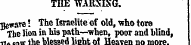
THE TVARSIXG . ¦ nensxe ! The Israelite of old , who tore T he lion in his path—when , poor and blind , jje gaw the Messed light ol Heaven no more , Shorn of bis noble strength , and forced to grind In prison , and at last led forth to be ^ pander to Philistine revelry—U pon the p illars of the temple laid Ili 3 desperate hands , and in its overthrow Destroyed himself , and with him those who made A cruel mockery of his sightless woe ; The poor , blind Slave , the scoff and jest of all , Expired , nnd thousands perished in the fall ! IJwre is a poor , blind Sampson in this land , Shorn of nfc strength , and bound in bonds of steel , ffho may , in some grim revel , raise his hand , And shake the pillars of this Commonweal , Till the vast temple of our liberties A shapeless mass of wreck and rubbish Be 3 .
Untitled Article
Robert Owen ' s Journal . Part 4 . Clayton and Son , Strand . The pretent part is unusually interesting , as containing a portion of the autobiography of the Patriarch of English Socialism , in the shape of two letters to the Bean of York . It appears that the Dean is publishing in Colbum's A eu 7 Monthly Magazine a memoir o the late Sir Robert Peel ; and , l > y way of proving the piety of the deceased baronet , relates an incident which , if true , would only
prove the ignorance and ill-manners both of himself and his father , the first Sir Robert . The stery , as given by the Dean , is briefly this : —While he was resident at Drayton , with the first Sir Robert , they " received many visits from the somewhat notorious Mr . Owen , of Lanark , " of whose present existence the dean now condescends to state his ignorance . The late Sir Robert , then a young man , was in Ireland , and , hearing of the circumstance , wrote to his father , saying , "that Mr . Owen ' s religious opinions made him an
ineligible companion for Sir Robert ' s children . " The consequence -was , that on Mr . Owen again making his appearance , about the dinner hour , in his carriage , at Drayton , old Sir Robert " desired the servant to keep Mr . Owen s carriage at the door , met his visitor in the drawing-room , and expressing sorrow that Drayton House was full of company —[ a " white lie" ]—declined the honour of receiving Mr . Owen : the renovator of human happiness was obliged to depart impransus [ dinnerless ] , —and little pleased . We saw no more of him . ' '
This tale—which bears the special stamp of priestly malevolence and sectarian animosity , and which , if true , would reflect far more discredit on both the Peels than it could upon Mr . Owen—is shown to he a pure fabrication by that gentleman , who , while exposing the ignorance and mendadly of the Dean in a qniet ehrle of cutting irony and ridicule , remarkable at his years and frem his pen , —seizes at the same time an opportunity of giving a few chapters of his valuable and eventful history , foil of the deepest interest and instruction . "VVc wish that other Deans would tell equally ally or malicious stories of other parts of his varied career , in order to draw from the "
man eloquent" other portions of his autohiogruphy . They would form invaluable contributions to the history of social progress during the last half centnry ; and , indeed , without seeing how the influence of the " somewhat notorious Mr . Owen , of Lanark , " has per-1 faded and silently influenced the currents of I public opinion , literature and action , few can form any correct estimate of their origin and t
tenancy . The price at which " the Journal" is pub-\ ushed , places it within the reaeh of all our I readers ; and we , therefore , the less regret that p we cannot transfer to our columns the whole I of these two exceedingly interesting and ad-I mirally written letters ; hut as we have given I the gist of the Dean ' s story , we must give the I Pith of Mr . Owen ' s re ply .
I In 1810 , Mr . Owen drew up the first bill for I the regulation of labour in factories ; and , at 1 £ e £ nggestion of Lord Lascelles , got the firet I Sir Piobert Peelto father it in the House of I Commons . He had afterwards cause to regret I this selection , for Sir Robert allowed the . bill to he grossl y mutilated and altered , to such an ex-1 tent at completely to neutralise the benefits it I was intended to confer upon the factory opera I taw . It was , however , this bill which led to I the first personal interview between old Sir § Awbert andMr . Owen—both of them , at that I tune , eminent and successful cotton sninners . result
^ fne was , that a close intimacy and friendship grew up between them , and that , enrjog Mr . Owen ' s intercourse with Sir lu-Lert , " which was almost daily for several ^ ars , he was confidential with" Mr . Owen <* most subjects / ' But Mr . Owen ' s visits Vfre always made in Upper Grosvenor-street , I ard never at Drayton , except on one occasion . I va that occasion , instead of being " obliged I J « W itnpraasus , " he was-althongh in-I 2 ^ 8 to leave again immediatel y , in order IS t :: to America the next morning from II ^ VQ ? o ° l—compelled by his host to stay all )| «> . jjght , for the pnrpose of showing the late * - " ¦ Hobert the plans and working drawings he flf ^ ry ing with him , for the inspection of . ^ Wernment of the United States . Here
8 . Ott-en ' a account of that visit : — at ^ ^^ ng at Drayton Hall , I found Sir Robert 1 inSu ^ !* gaT ^ a most cordial welcome . a ; av , hln > the object of my visit ; and we imme-* ent I P inenced the examination of thepians , and in . an " " - ly m f * examination * f the 200 workse ^^ gs , which interested him extremely ; but , tltT *! ,.. ext ent , and the important object which ajj T « s intended to effect by forming a scientific Qjr . arlI ? ent forthe whole of soeieiy . —he saiJ : Mr . % " staTv " - consent to remain wiih me to-night . Jne ajj " £ *« i n here , and is out with two of his iavfi ^ j . J iiev * il' return to dinner ; and after we !* € < % . " ^ will see if we cannot mak e some im-• ttW » . btrt t 0 induce nim to attend to the
v ° i ? i' a aC Ul « 'cno ne nas oecn very mncnoptaTea ^ Py jonr staying over the night we shall 1 cJn ^ M , td do Justice t 0 these drawings . " ! 0 : a 6 iam ! r- toreniain - for the cuaD <« of making net miEM a upon the son » ? no was now a caoi " ^ thefMi' ^ o that I might have more time Mr . i » j T er consider the drawings in detail . j * -r » ard
Untitled Article
a 1- ^" exammation the principles and practices which Mr . Owen advocates . But I have long considered both , and am deeply interested in promoting hem . From my experience lam prepared to state nat , great as Mr . Oweo ' 8 expectations are of the ( enefite they will produce to the world , my convictions are lhaUhey will much exceed any statement yet made by Mr . Owen ; and I wish I could induce the government to attend to and adopt the plans which he proposes . " The conversation continued , bnt-with no better admission on the part of Mr . Peel and his friends ; although it has seemed to me that that conversation was long aftmrards remembered by the late Sir tlobert , who in his latter years became a different and a very superior character from the mere young and nesperif need ambitious politician . Jll ^ n !? l ° ! > . . ^ P " * ntfPJ ^ a"d practices
We have confined our summary entirely to the main incidents ; but , collaterally , the letters are , as we have already said , full of interest on a variety of topics . We observe , in the "Notices to correspondents , " it is stated that , at the request of several friends , Mr . Owen proposes , from time to time , to Continue his reminiscences . The other contents of the part are pregnant with matter , for consideration by all Societarian Reformers .
Untitled Article
Tfte Girlhood of Shakespeare ' s Heroines . Tale II . Helena ; the Physician ' s Orphan . By Mary Cowdejt . Clarke . London : Smith and Son , Strand . We have alread y noticed , at some length , the preceding tales of this series , and regret that the pressure of intelligence , incident to the Parliamentary Session , prevents us from according more space to this , the moat beautifully and artistically designed and conducted of those already published . The plot is very simple , but all sufficient for the story , for a true artist knows how to make a slender thread bear the weight of a long train of thought and circumstances .
Gerard , the son of a rich merchant , who is being educated to become a physician , falls in love at a rustic fete with Gabrielle , the daughter of a fanner , but whose acquaintance with the old cure of the village—a second fathergifts her with knowledge and habits beyond her station . The father of Gerard—a coarse , sel fish , man—disinherits him , for disappointing the hope that the son would elevate the family above the trading class . Gerard , whoso love has suddenly transformed him from a yielding boy into a resolute man , adheres to his choice and marries Gabrielle , who loves him too fondly to suffer his poverty to influence her
affection . They might have lived in quiet happiness at the farm , but Gerard resolves to win fame and wealth for himself , and applies to his godfather , a taciturn physician at Narbonne , and obtains his aid to perfect his studies . Gabr ielle , a rare combination of wisdom , gentleness , affection , and simplicity , such as , perhaps , none but a woman can adequately paint , though grieved to quit her happy rustic home , will not balk her husband ' s desire . They go to Jfarbonne . Gerard becomes skilled ,
but remains poor . A daughter is born to them — " Helena ; the physician's daughter . " Gerard , by his skilful treatment of the Count Rousillon , enters the avenue of wealth and distinction . He is just about to gratify his wife's ardent wish and retire to the old house , from which he took her , when a long increasing weakness , arising from change of air and habit , unobserved by the husband and concealed by the wife , so that she might not draw aim too soon from the sphere of his activity , ripens into disease and she dies .
Her death throws a chill upon the heart of Gerard , from which he never recovers . He devotes his whole energies and fortune to the poor . The cbild is almost forgotten , and totall y neglected , till the father is awakened to a Bense of the wrong he is doing the girl , and then , conscious of his own nnfitness to tend her , procures for her the protection of the Countess Rousillon , at whose chateau she thenceforth resides , with Bertram , the young
Count , a fiery haughty boy , selfish and exacting , not so much from a defective nature as from early indulgence , and want of thought . There she lives growing in beanty and goodness , till the old Count Rousillon and her father die , and her heart begins to warm with concealed affection to the young Count ; and then Monsieur Parolles makes his appearance in the scene , and Mrs . Clarke stops reverentl y at the threshold of the Drama of her great master—Shakespeare .
We may remark , as a peculiarity—we hardly know whether it is a defect , a beauty , or a necessity—that in the three tales which have appeared , the early death of the mothers of the heroines forms a part of the story . But apart from that , we must express our admiration of the skill with which each incident is used , to develope the character of Helena . Hereditaril y she has her mother ' s gentleness , and her fattier ' s firmness—her mother ' s
simplicity , Eprinkled with her father ' s ambitionand Gabrielle ' s quick perceptions , mingled with Gerard ' s power of reflection . Her mother ' s affection is made to lay the basis of a cheerful temper . Her father ' s neglect habituates her to endurance ; and the young Count ' s domination , and her affection for him , trains her to bear with thoughtlessness and harshness ; and thus she is skilfully brought up to the point at which she becomes the Helena of the Drama .
We conclude with a few extracts , to enable onr readers to judge for themselves , and , perchance , to tempt them to the book itself . The first is the introduction of little Helena to the eccentric old doctor , her father ' s benefactor . It happened to be the doctor's birthday , or saint's day ; and in observance of a national custom , Gerard stopped m the market-place , and bought a bouquet of flowers , which he might take with him to present to his godfather , when he wished him joy . He gave the nosegay to Helena , while he carried her up the six flights of steep stairs which led to the doctor s attic dwelling . He set her on her feet , when they reached the door of the raansarde , and opening it , bade her take in the flowers , and soubaiter le Ion jour a JFondeur .
The child obeyed ; running across the room , looking up in the old man ' s face , and presenting the birthday offering , with pretty smiling looks , and tolerably articulate words ; for Helena was not at all shy with strangers . 1 What d ' ye want here , child ? Who are you ?" " She is my little daughter ; " said Gerard . " I thought you ' d like to see her , sir , now she ' s no longer a baby . Helena , sir ; my cbild . " "Child ! What ' s the use of a child ? Go away , child ; " said Doctor Dubrusc . Helena did not move , but stood there , staring at the old man , as he did at her . " Do yon hear me , child ? Go away J" repeated the doctor ; but in a less gruff tone than before . Still Helena did not move . She gave a short little nod ; then another . " Ess ; I hear you ; " she said .
"What are you nodding at > child ? " said the doctor . "At you ! " she replied . "What d ' ye stand nodding at me for ? Go !" said the old man . *• Ess , I ' m going ; " said Helena with a succession of rapid little nod ? , as she turned towards the door ; then suddenly coming back , she went close to the old doctor , leaned against his knee , held up her mouth towards him , and said : — «• Ess Nenna 'fore she eoes , "
"Kiss ye , child ! Get along with you 2 " But though the old mnn said this with much surprise , there was no harshness in his voice , nor did he draw back from her as lie uttered the words . The little girf jud gin g , as most children do , rather from manner than words , and findin g no very formidable repulse in the former , proceeded to clamber on to his knee , repeating : — "Kiss Nenna 'fore she goes ! Well then , kiss Xenna 'fore she goes !" The old doctor gave a little stealthy bashful g lance at Gerard , and seeing him apparently absorbed in the contemplation of a map that huns
sgamst one of the dnsty walls , he ventured to let his face stoop towards that of the child ; who , hugffin ? him round the neck , and giving him a hearty kiss on his wrinkled cheek , slid down from his knee , saving : — "Not ansry with Xenna ; sl ; e go now " She went to her father , put her hand in h s , and led him towards the door , looking back at the old man with a repetition of her series of short nods , as she said :- " Good bye , good b ye !• An 4 then she and her father , who repe ated hersalutation . quitted the mansarde , leaving Doctor Dubrusc ftaring silently after them . And the little Helena , drawn by some
Untitled Article
strange sympathy to the old doctor , goes again and again with flowers . Here is a description of the next visit . Not very long after this transaction , as Doctor Dubrusc was sitting as usual ' in his solitary mansarde , poring over his book , he heard a stamp , — creak , —stamp ; stamp , —creak , —stamp ; coming up his crazy stairs , as if « ome foot approached , that was only satisfied when its fellow foot was planted safely on each stair , as it was gained , at a time . He listened ; then he heard a pattering to and fro on the landing-place outside his room door , as if a pair of little feet were trotting about in some uncertainty . A pause ; then came a dubious pt , as of A small open . hand ; then the spread fingers were closed , and a more assured thump , as of a littlo clenched fist , made itself heard . " Come in ! " said Doctor Dubrusc . strange sympathy to the old doctor , goes again
Sobody came in , and nobody answered ; but ft dull , though somewhat heavier thump than before , was to be distinguished on oue of the lower pimels , as if some short individual had applied the most ponderous portion it could find about its person in a still more vigorous appeal against the door . 11 Come in , I tell you J" repeated Dr . Dnbrusc . "I can ' t ! " said a childish voice ; "I can t reach the lock ! Come and open it for me !" In astonishment more than in hesitation , the old doctor remained seated where he was , while ho heard the dull thumps renewed ; lumping and bumping between every word , as if the short individual were determined to push its way in , and take no denial .
"Come—an < I open—the door ! Come ( thump ) , and open ( lump ) , the door ( bump ! " ) Then followed a series of sullen , silent , resolute thump-lump-bumps , tnat threatened to effect a breach in the worm-eaten door that guarded the entrance to Doctor Dubrusc ' s den , in spite of the diminutive size of the battering-ram that was now applied so unrelentingly , against the crazy portal . "I do believe it ' s that persevering toad of a child ! " exclaimed the old doctor , beguiled by wonder into a longer speech than he had uttered for years .
But though Doctor Dubrusc said this amidst a torrent of pishes and pshaws , it was remarkablo that his face glowed with a look that it had not worn for many a day ; and his furrowed cheeks , lean and sallow with hours of solitary study and brooding disappointment , were lit up with an expression that made them look almost smooth and comely . He aro ? e from his chair , with this look beaming in his eyes , while on his lips lingered : — " Hark , how she keens on ! She'll have the door down ! She'll burst it in ! And then the brat'U fall through , and hurt herself !"
It was curious that , this idea did not appear to afford the old doctor so much pleasure , as , to judgo by his mode of speaking of her , it might have done ; on the contrary , he hastened his step towards the door , though he continued to murmur , " ¦ I never met with so persevering an animal as this child is , m the whole course of my life 1 " Considering that Doctor Dubrusc had met with few children in the course of his life , and even among those few , had been slow to form any acquaintance with their dispositious and habits , it was not wonderful that he had never happened to encounter one so persevering as his godson ' s little daughter .
_ But ui truth , Helena was singularly giren to persist in any point that she bad once resolved upon ; and without being either obstinate or wilful , she was remarkable for perseverance , and unswerving pursuit of that upon which she had once set her heart . And so , day after day , did this little creature come trotting out to bring the old man ( to whom she seemed to have taken a strange fancy ) a nosegay from the market ; day after day she would come tramping up the old creaking stairs ; day after day she bumped at the door until Doctor Dubrusc came grumbling to open it for her , when she would toddle in , give him the flowers , hold up her mouth , saying : — " Kiss Uenna 'fore she goes , " and then toddle out again , nodding and bidding good bye . The first interview between little Helena and the future Count Rousillon opens up a mine of child-like character .
"I want room to build a castle , " replied the boy , giving another clearing nudge . Gubrielle removed the . basket to the other side of her , and put the knitting ball into her apron pocket , without speaking , that she mi ght observe the children . "What pretty hair you ' ve got ! " said Helena next ; after having looked with admiration at the boy ' s curls , which hung down , glossy , dark , and thick , upon his shoulders . " How bright , and how long , and how soft it is ! " added the little girl , touching it , and smoothing it down with her fingers . Don't ! you ' ll tangle it ; " said the boy , drawin " away his head . " Fie . master Bertram ! " exclaimed his Bonne ; " let the little pirl admire your beautiful hair !" " I shan't ! Let it alone ! " replied master Bertram .
After a pause , during ¦ which Helena had shrunk to a little distance , when she tried to peer at what he vas doing , she said : — "Are you buildinc a castle 1 " " Yes ; don ' t you see I am ?" " I can't well see so far off ; may I come nearer 1 " asked she . " Take care you don't jog , then ; " said the boy . Helena conies a little closer ; gets a better view of hia operations ; becomes greatly interested in the tottering fortalice , which with much careful piling together of pebble-stones is gradually rearing its walls beneath the boy ' s hands . She leans forward , watching breathlessly ; when , being a little too near for master Bertram ' s convenience , his sturd y little elbow is suddenly stuck in her chest , to remind her to keep farther back .
She obeys the warning for an instant , but forgetting caution in her eagerness to watch the progress of the castle ,-she leans too forward , and again receives a hint in her chest that she is in master Bertram ' s way . The blow this time is directed with such unmistakeable earnestness of reproof , that the little girl reels back , falls , and bruises her arm . The Bonne exclaims ; Helena ' s mother picks her up , and asks her if she ' s hurt . "So , he didn ' t mean it ; did you , little boy ? Here , kiss it , and make it well ! " said she , holding out her arm , where the skin , soiled and grazed by the gravel , bore sufficient evidence of her hurt . " It ' s bloody and dirty ; indeed I shan't kiss it , " said the boy , turning away to finish building his castle .
Again the Bonne said : — " Fie , master Bertram !" And again she was satisfied with saying it , and with the sli ght effect it produced upon master Bertram himself . For presently Bertram w as as busily engaged as ever in the erection of the pebble stronghold , nnd Helena was again leaning over him , forgetful of the late consequences of her vicinity to the sturdy little elbow . It made one or two lunges at her , irom which she had the presence of mind to withdraw in time ; but as she always bad tbe hardihood to return to her post of observation , the boy at length said : —" Don ' t worry , little girl . Don ' t you see the wall of my castle is nearly built up to the top . Don ' t jog so . Go and pick up some more stones for me . I shan ' t have half enough for the high tower I mean to build here . "
And accordingly , for some time after that , Ilelena patiently trotted to and fro collecting stones in the skirt of her frock , and bringing them in heaps to Bertram , who went on with his edifice now , in peace , and much faster ; and he signified his approval of this state of things hy graciously accepting her contributions , bidding her deposit them on the bench ready to his hand , and then to go for more . We take one more extract for the contrast of style which it presents . Helena ' s father has been to the farm house , where first he met his lost wife , and his grief , subdued by hia devo « tion to his profession , revived by old memories , bursts forth again with such violence as to threaten his reason . Helena walks out into the park to meet him on his return .
She had reached the extremity of the park , and was hesitating whether she mi ght not miss him , by passing through the gate , and proceeding farther , when she perceived approaching at a distance a figure that ehe at once recognised to be his . She hastened towards him uttering his name . He did not answer ; his face was rigid and deathly white ; for an instant he looked wildly in her face , then suddenly he caught her in his arms , and burst isto a passion of tears . To behold the weeping of a man is always terrible ; to behold that of a father , to feel his frame torn and shaken by the strength of an irresistible emotion , to find herself clasped to his bosom convulsed and swollen with the fierce strife between anguish and the desire to control its expression , — how overwhelming to a daughter , a being like Helena !
She strove to compose him , to control her own agitation that she might the better soothe his . At length he found voice to say : — " Be not alarmed , my Helena ! Forgive me , my child ! It was beyond my power , or you should not have ¦ witnessed this ! But it has saved your father , nelena ; it has relieved his bursting heart , which else must have broken ; and you will pardon your own pain , that it has assuaged his . " As they returned together , she gathered from his
broken words that he had been drawn by an invincible desire , to visit once more the old p avilion ( the farm itself had long since passed into other hands , on the death of Gabrielle ' s father , ) before he quitted , probably for ever , the vicinity of a spot so hallowed to ; his remembrance . The scene itself , however , had iiwakened . so many tender memories , so many bitter regrets , had re-opened such cruel wounds , that . Gerard had been thrown into a kind of swoon , "from which tie had only recovered to stagger forth in renewed misery from a place that
Untitled Article
Heh ? dSi « v S ° m ? ch anguish of recollection . JJiS » h W . back somehow , scarcely i-eschHd ? nTf at { ' 5 S >^ : * hen , the sight of his » ush of L hr ° 'Ja < I mercifully brought forth the & , wW hl 0 h ha , a 11 Fobabifity preserved mm fro m delirium or death niS AHr ^^ < fcalfc ,-the sentence had ter Had . ai ° W- tlraely adVont of his dauShhadinJeaR ? ^ . mediate . result , yet Gerard pavilKambT hlS mOrtal Str ° ' m that Old What w e have quoted , however , will failto convey . adequate idea of tho work , for Shakespearian in its aim and purpose , it is true to Us character in execution , and is made up ot small touches , forming altogether , a beautifuL tale ,, but incapable of being aeparated without the eftect being marred . was fraught with « n m ., ^ i ., ^ -,. - JZIZ ^ rr
Untitled Article
The English Republic . No . II . February . London : Watson . u ^ t ? l 5 » « "Hthring memoir of Joseph Mazzini , the Triumvir of the Roman liepubhc ' occupies a considerable portion of ( his number of Mr . Linton's periodical . Tli n- 7 V J documents as yet issued by the tentral . European Democratic Committee are also collected and published in regular order , for reference . Following this , we have an el * - 7 < °£ r' If . fc sim P aQd ¦ easily worked P lan of Kftpubhcan Organisation , addressed to all
JHingnshmen who call themselves Republicans . " The Editor is evidentl y in earnest himself , and that is the first requisite for making others in earnest . . The immediate object of the associations recommended in this artiele would be propagandism , carried on in such a manner as to be most effective' within the sphere of each separate association , and yet under such regulations to break none of the lawB which , though seldom invoked , are yet on tho statute
book , ready to boused whenever , those in power choose to have recourse to them for putting down obnoxious opinions . , The number closes with an excellent and carefully written" Historic Summary of the First Republican Campaign , " during tbe last three years .
Untitled Article
The National Instructor . Part I . and II . New series . Pavey , Holy well-street . The principal feature of these two parts of this improved and enlarged periodical , is a series of articles by the Editor , under the head "What should a People ' s Parliament do ? " The ignorance of some classes , and the deliberate misrepresentations of others , as to the objects of those who urge democratic changes in our representative system , has produced an amount of unreasoning hostility to their proposals , which it is most desirable to
remove . It is equally desirable that the people at large should have definite ideas aa to the use to be made of political power when it is attained ; of the nature of the reforms demanded by the exigencies of the age , and of the order in which these should be taken . The Editor of the National Instructor has endeavoured , in this series of papers , to combine both these objects , and to supply , in a brief and cheap form , a political handbook for the people . Besides these purely political papers , the parts contain an immense amount of varied and interesting matter . The account of the " Great Mississippi Bubble and the career of John Law , " throws into the shade the
railway mania and George Hudson . "Austrian Sfcato Prisoners , " is a deeply affecting narrative of the treatment to which Count Confalonieri , Silvio Pellico . Maroncelli , Andryane , and others were subjected in the fortress of Speiiburg , under the immediate directions of the Emperor of Austria , for political offences . The facts simply , stated are calculated to do more to produce hatred and detestation of despotism , than the most impassioned and vehement denunciation of the crimes of tyranny . The department headed "New Books" is a great addition to the attractions of the Instructor , and affords glimpses to its readers of the current and
popular literature of the day , which , otherwise , they would , in the majority of cases , be unable to obtainv The "Autobiograph y of Mr . O'Connor" is continued with its usual variety of topic and interest ; and the " Labour and Co-operative Record , " chronicles briefly the current movements of the industrial classes in relation to the protection of their labour , or towards new modes of securing to themselves a greater share of its products . The National Instructor maybe safely commended to the support of all who take an interest in political and social reforms , and also as an agreeable , varied , and instructive companion for the family fireside of the workin » man .
Untitled Article
OLYMPIC THEATRE . A long drama , of a kind not usual in this country , but familiar to the frequenters of the Parisian Theatre Historique , was produced on Monday night , with that sort of success which is peculiar to a new sensation . The celebrated Pope Sixtus V . R ives the name to the piece , which is nominall y founded on tbe well-known artifice by which that formidable Pontiff obtained bia dignity , But the real hero is a young kinsman of Hie Pope , named Adrian Peretti , whose zeal and complicated difficulties in securing for a wife a lady of the noble house of Colonna make up the lubatance of the work . Scarcely an obstacle can be named which is not presented to Adrian , and gallantly surmounted . In the first place the
lady is intended b y her father for a member of the hoass of Orsini , that the two great families of Rome may be cemented together . To escape a hated match Bianca ( so is she named ) flies to her lover , and is married to him by a mysterious monk . The father and brother pursue her , and , the latter being killed hy a trusty soldier , named Hugo , a friend of Adrian' , ? the father removes his . disobedient child to a convent . The year of her noviciate elapses , and sbe is actually taking the veil , when her husband appears , attended by bis friend , and drags her frora the altar . The convent party , proving the strongest she ia confined in a crypt , and a body of soldiers is appointed to guard tbe edificp ; ' Still Adrian does not lose heart ; he contrives to enter the convent diseuiaed
Untitled Article
as a vendor of wine , and upsets the senses of the ! guard with drugged liquor ,. having with the assistance of a party , of Zingari , made a subterranean passage for Bianea ' s , escape . Again is his plan defeated , and ; Bianca is just on the point of being burnt b y the Inquisition , when the elevation of Cardinal . Montalto to the Papal chair , under the name of Sixtus V ., brings all to a happy conclusion , for the Pontiff is able to benefit his kinsman and demulish his enemies . He has , in fact , watched over Adrian s destinies throughout , and was tbe very monk who united him to Bianca . This nulling of the plot will by . no means convey a notion of tlie effect produced by the piece . It is not inappropri-. . , . -
ately , termed a ¦ romance , " and it is written with the evident object of presenting as manv pictures to the eye as possible . In the dialogue there is no aim at poetry , but it is perfectly free from tvaddlo ami well adapted to . the situations . The characters are rather figures in a series of tiblemix , than pe . rsona « es requiring any g , Ml exerciSeof the actor ' s art Mr W . Farren is the aged cardinal ; Mr . Leigh Murray Li gall 8 n S devoted Il ) V ^ i Miw How . nl i , the lovely cause of ( he . complicated tumult ; and Mrs . j * igb Murray „ her mother , tbe Countess Colonna , 2 ? - t 0 set a » Bin fire to We he
, ^ . - , on dZJL ^ ° nly individlIal "ho comes out with gelded prominence as a character is Adrian ' * blub * comrade , a reckless soldier , constantl y lasting of IB played b y Mr . Henry Farren with a great deal o rough jov . al . ty Th « decorations ol the piece « e of Je most complicated kind . After a tumult of ap . BouJfi ? Vm raiSed f 0 r the a ^ or . andMr . ¦ of ESS i" Damtd by Mr - Norlon - Thetitle of the Branch p . ece from which Sixtus V . is taken , is , if we mistake not , L'Abhaye de Castro .
Untitled Article
PlRAMlDAL Cemetert . —The Leicester Mercury describes a largo model of an immense Pyramidal Cemetery , deaigned by Mr . Thomas Wilson , architect of that town , and to be sent up to the Great Exhibition . Mr . Wilson thinks that the present suburban cemeteries in the neighbourhood of London will , in the course of a few years , become very much crowded , and that it will be found difficult to obtain additional traots of land of sufficient size to prevent the necessity of a recurrence to tho evils of intramur . il interment . He proposes the construction of aftational Metropolitan Cemetery on Woking tommon , Surrey , of from 100 to 200 acres in extent . In the centre of this he proposes to erect bis
great pyramid mausoleum , occupying an area from eighteen to twenty acres , and rising in s uccessive stages of catacombs ( ten feet high and arched ) to the height , of 900 feet-each stage , of course , gradually diminishing—until the apex is reached and on the top of that the plan furt her embraces the elevation of an astronomical observatory in the ? SRHSL ?? ° } em - Thia PywnUi would hold above 5 , 000 , 000 bodies , and "large as the cost would be that need not be an insuperable objection , Bince tbe erection of the vast edifice would proceed stage upon stage , as one became filled—and the money paid for catacombs would probably defray the cost of each stage . '
The Lord Chancelmr ahd the WelsiiLanguage . —Some short time ago the Lord Chancellor presented the Rev . David Jeffrey , curate of Neath , in South 'Wales , to the rectory of Tir Newydd , in Anglesey , vacant by the death of the Rev . Rhys Hughes . Mr . Jeffrey is a Welshman , and well acquainted with his mother tongue ; and in reference to this subject , it is asserted that the Lord Chancellor has expressed his intention of not-bestowing any of his Welsh patronage on ministers who are not thoroughl y proficient in and masters of tho Welsh language . This was the first Welsh living which , had fallen to the Chancellor for disposal , and the fact that it was given to a Welshman whose superior qualifications in bis native language wero well-known is considered evidence of the Lord Chancellor a intention that clergymen shall understand the language spoken b y tbe great majority of their
Mr . Macready and TnE Oxosuss . — The authorities of the University of Oxford threw open their academical theatre to Mr . Lumley , for a concert , of which Jenny Lind was the star . They have refused their theatre to our greatest dramatic artist , in the accomplishment of a noble and notional purposea Shakespeare reading , of which the entire receipts were to be devoted to the completion of tbe fund for the purchase of Shakespeare ' s house for the nation , and the whole expenses generously incurred by Mr . Macready himself . The dignitaries are startled from their propriety into devotion almost Anacreontic by tbe foreign opera singer , but are impenetrable to the fascinations of Shakespeare , even under circumstances tho most honourable . — Literary Gazette .
An Extraordinary Case of Bitions Attack , Indigestion , and Flatulency cubed nr Hoilowai's Pills . — Khniratee Khan , a natiye merchant of Patua , in the East Indies , suffered for jtarsftom bile , indigestion , nna flatulency ; and although he consulted the most eminent surgeons of . the province , yet he derived no benefit from their treatment , but gradually became more debilitated Havim ? : one daya severer attack than usual , he determined tot- T ¦ HoUowaj ' s •• Pills , and this line medicine , which' hasobtancdsuchh . g . repute throughout the World W l ^ n reinstated him in perfect health , and in naiitude fcr ft * benefit he desires this wonderful eure ma ? W ? deSaHrl
Untitled Article
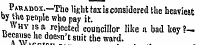
Paradox . —The li « bt tax is considered the heaviest by the people who pay it . W hy is a rejected councillor like a bad key ?—Becav . sc he does n ' t suit the ward . a waggish candidate coming , in the course of b canvass , to a tailor ' s shop- " What we look for t ™ ' iT d he are ^ sures , not men . " it I said ° i \ L Y ? ? S *»»< " >« of the day £ ™ f L j ? . « is on foot ror the recovery of SSriSf ° Se * e' «» theh-dlaf Bau .-An assembl y ; for the ostensible purpose of dancing , where the old ladies shuffle and cut against one another for money , and the youn g ones do tho same for husbands . Goob Comparative . —A minister having preached a very long sermon , as was his custom , somo hours after asked a genUcmau his opinion of it ; he replied , that" 'twas good , but that it had spoiled a goose worth two of it . "
Brazil Tea . —Several samples of tea grown in Brazil have been received in New York , and are described by the Journal of Commerce as being much superior to tbe worse qualities of Chinese tea , though , inferior to the best . Mns . PAimNGTosf . —Oa hearing a clergyman remark , i hat "the wi : rld was full of change , " Mrs . Partin ^ ton ob served , that she could hardly bring her mind to believe it , so little found its . wav into her pocket . The secret of rendering animal substances hard as sume , is said to depend on their immersion , for soroe time in water , holding in solution bichloride of mercury and hydrochloratc of mercury . > A 1 alkativk Member of Parliament was reproaching one of fan colleagues for not having opened his mouth during the whole session .- " Son we mistaken , " he replied , " lor I yawned through all your speeches .
Anticipation of Storms . —Dr . Merry weather , of Wlutby , intends , on the occasion of the Great Exhibition , to promulgate for the first time , and " for the benefit of all nations , bis discovery of the means of anticipating storms . " A Wuktch .-H ^ Why , dear me , William , how time ilie 3 ! 1 declare we have been married ten years to-day!—IIretch : Have we , love ? I nra sure I thought it had been a great deal longer . —Punch . Burns . —A gentleman a few evenings since waB expatiating eloquently to a young lady on tbe merits of a poetically inclined acquaintance , " who , he said , hud Burns at his tongue ' s end . "O la ! " said she , " I ' ve bad burns at my tongue ' s end many a time . "
' The Dim on coffee , " says an American paper , "by the new British tariff for the Colonies , is , on green coffee , twopence per Ib . ; ground coffee fourpence . Tbe Yankees take it over roas ' . cd , and so , duty free—it being neither green nor giound . " Sir Joshua Rkynoi . ds , in his Discourses on Art , saya— " The more extensive your acquaintance is with the works of those who have excelled , the more extensive will be j our powers of invention ; and what may appear still more like a paradox , the more original will be your conceptions . ' To Gardeners . —In collecting scions for grafting , remember that the principle is to cut them before the sap begins to circulate . They should be kept in a Cellar , or a cool damp place out of doors , until the sap in tbe stocks , for which they are destined , is in motion .
Making a Conquest . — " Tom , " said an impudent wag , to a conceited fop . "I know a beautiful creature who wishes to make your acquaintance . "" Glad to hear it—fine girl—struck with my appearance , I suppose , eh ?"— " Yes , very much so . She thinks you'd make a capital playmate for her poodle dog . Out of the Bible . —a reverend gentleman , while visiting a parishioner , had occasion , in the course of conversation , to refer to the Bible ; and on asking for the article , tbe master of the bouse ran to bring it , and came back with two leaves of the book in his hand . " I declare , " said he , " this is all we ve sot in the bouse ; I'd no idea we were so near out 1 "
Standing On ,. —An oil dealer sold some winter oil that was warranted to stand the severest cold , but it froze stiff . The purchaser went to the vender with , loud complaints . "I told you it would stand the coldest weather , " said he ; ' " ' I didn ' t tell you it would run . You see that it stands perfectly still , and you can't make it budge . " The Man op the House . — " I recollect , " says Mr . Croker , in his Researches in the South of Ireland , " orce trying to convince a peasant that he might , with very little trouble , improve tbe state of his cabin by building a shed for bis pig , and banishing him from tbe chimney corner ; but be coolly answered , ' Sure , then , and who has a better right to be in it ? Isn't he the man of the house ; and isn ' t it be that will uav tbe rim V "
What Half a Uenu'ry has Done . —During the last half century the population of England and Wales is estimated to have increased from 8 , 870 , 000 , in 1801 , to 18 , 000 , 000 ; Scotland , from 1 , 500 , 000 to 2 , 870 , 000 , and Ireland , from 5 , 000 , 080 to 8 , 130 , 000 . The total _ increase is just 100 per cent . During the same period our imports have increased more than threefold , our exports more than eightfold , and our productions above tenfold . —The Reporter . A Clerical Weathercock . — A gentleman inquiring his way to the chapel of a celebrated minister in the vicinity of the metropolis , received the following direction : — " Go straight forward till you come to the hospital , then take the left-band road ,
and you will presently arrive at a large building like a church , and on the top of it you will see a figure exactly resembling the reverend gentleman himself . " On nvnving before the building , he found it surmounted with a weathercock . Deceit . —When once a concealment or deceit has been pr&ctisetl in matters where all should be fair and open as tbe day , confidence can never be restored , any more than you can restore the white bloom to tbe grape or plum that you have once pressed in your hand . How true this " is , and what a neglacted truth by a great portion of mankind ! Falsehood is not only one of the most humiliating vices , but , sooner or later , it is most certain to lead to the most serious crimes .
Co-nct . it at a Discount . —An Irish clergyman ' s servant , having a strong desire to try hi * hand at pulpit oratory , managed , during the indisposition of his master , to get possession of the pulpit . The congregation was very large ; so large , indeed , that Pat , who was " unaccustomed to public speaking , " stood in the pulpit , with his head hung down , and looking as sheepish as possible . Desperation at last inspired him with courage , and lie bawled out— " If any of ye has got any consate about praiohtng , yo bad better come up here . ' '
A portable gas apparatus has been invented by an ingenious mechanic , which is admirably calculated for lighting dwelling-houses , factories , churches , &c . It is constructed on a very small scale , consisting of a furnace , retort , and a vessel for purifying—tbe whole occupying a space of not more than nine square feet . The material used for making the gas is the mere refuse of the kitchen , such as greese or fat of any description , and it produces a brilliant white light . At the cost of 33 d . the apparatus will supply gas for one burner for twenty-four hourB . It may be seen in operation at 103 , Newgate-street . Not Reauing far Enough—A member of the
Society of Friends happening ono day to meet two Oxford Scholars , one of them remarked to bis companion that they would have some sport with " Broadbrim , " and immediately gave him a ship on the cheek , sajing , " Thou Quaker , it is written , ' If one smite thee on the ri ght cheek , turn to him the other also . '"— " Thou hast not read far enough , " said oar friend ; " turn thou over the other leaf , and there thou will find that' with whatsoever measure thou metest , it shall be measured to vhe © again , '" at the same time giving the Oxonian a " whack" that sent him reeling to the other side of the road .
Thr Pump Supersbdbd by the Syphos . —A most important application of the sypbon "was lately made to the draining of the large granite qtnrry of Ballyholland , about a mile from Newry , in Ireland . The pumps , although worked day and night , Laving proved ineffectual in draining the accumulated water , sypbon pipes , of three inch bore , were laid on ; and the air having been drawn out by an airpump , the water commenced running , and continued to run until tbe bottom of the quarry was completely drained . This novel application of the syphon may prove of the greatest importance in all nncing ope *
rationB . Sud-soii . Plough . —Jjord James Hay has lately brought into use a new sub soil plouph , which caa be purchased for about four guineas ( the old plough costing about £ 15 ) . and can be held by the ploughman with much more ease . It consists of a simplo beam and a pair of handles of malleable iron and the shank or coulter is bo placed as to have the whole of the beam in front , and the handles risinc directly behind it . Each side of the proiectinl point of the coulter is furnished with a slight implement to stir the loosened sub-soil ; and the shank is so contrived that it can be moved higher tn or lower downi m ito position , so as to take either a deep or shallow hold of the subsoil . New Food for Horses . -The Independence of Brussels says , that a M . Korean has inventrd a Oread tor hones , which is very nutritive ami economic ; n is made as follows :-Four-tenths d' oaten tli-ur , ground like rye , and roughly bolted ; threetenths of flour and wheat straw ; one-tenlh of flour ot barley , or maize , ground in the usual w ; . y ; onetenth of rye flour , if the bread is to be pn served freal ^ and one-tenth of flow of borse beans . Tbe flour is kneaded in the usual way with a certain nrqr , __ ., » portion of yeast and salt . The dough is baS 8 USSi » « i « W » oven , and placed in iron moulds , square in forinJJifg ) V . R . slightly conical ; tbe crust must ; not be i ^ '' ^ TTS ^ i l'fx \ too much baked , and neither cinder , no ^ , bW «|[ J ^ fgx coal , must att ach to it , as they ( iisninty ' jj )? " . ''!' . ^?' . . ^^> v ^ Th&straw , before being ground into flouyffi T ° K ^ . ' " ^^ v ^* w upveryfine . PfW ^ XSEP ^ sadV . iS'ft ' - *^
Untitled Article
TIME'S mTCH -ffOHD . BT C . CHACSCET BURR . " On , on for ever ! " hear it roll The cry of man ' s insatiate soul—The brave old battle-word sublime , StiU roaring in the ear of time , " On , on for ever !" TJp -with the fire-thoughts that blaze like suns along life ' s ancient ways , It comes—aa some great world at prayer-Like God ' s old thunder in the air , " On , on for ever 1 " Man bnilds him shrines for endless wear ; But through the lofty windows there , Eternal destinies look ont , Over tbe crumbling walls and shout , " On , on for ever !" The red man through these forests strayed , In these old brooks his children played , And all things seemed as natnre iast . Bat he has heard the cry at last , " On , on for ever I " Delirious white men proudly stand , And shout , ' tis onrs , the Indian land I " Their revels too -will soon be past , They'll hear it like a thunder blast , " On , on for ever !" Nations shall fall to rise no more ! Tet sounding on old ocean ' s shore , Atni 4 tlic dark infinitude , Is God ' s eternal interlude" On , on for ever !"
^Orttg..Ifflrttg.
^ orttg . . ifflrttg .
—^^B ≫- Linuews.
—^^ B > - linuews .
^P 33uihir &Mu0em*Ut0.
^ p 33 uIHir &mu 0 em * ut 0 .
'Vintim. —— .
'vintim . —— .
Untitled Article
of J FfflHrom 22 , 1851 . ^^ NORTHERN STAR , _ ¦ — 3
Untitled Article
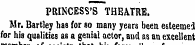
PRINCESS'S THEATRE . Mr . Bartley has for so many years been esteemed for his qualities as a genial actor , and as an excellent member of society , that his farewell performance on Monday night may be regarded as an important vneaVrical event . At the end of Henry IV ., in which he had played Falstaff , he was led on by Mr . Kean , and enthusiastically cheered as he crossed tbe stage
QUEEN'S THEATRE . A grand historical drama , from the pen of T . Mildenhall , Esq ., entitled Black Ferrand of Flanders , or the Battle of Bovines , was produced on Monday night . De Courey ( Mr . E . Green ) a young soldier who has spent his fortune in the service oi the King is enamoured of Clemantbe , the Princess of Navarre , ( Mrs . C . Boyce ) , but owing to bis broken fortunes , he conceals his love from the fair one : she , however , is sfiitten with the gallant youth , and re » solves to follow him as a page , her attendants imitating her example . The evil genius of the lovers is a rejected suitor of the Princess , named De la Roche ,
who , at the battle of Bovines , joins the enemy : the victory , however , is won by De Courey , De la Rocbe is taken prisoner , tried and condemned , but on his way to execution is rescued by Black Ferrand . De Courey is rewarded by the King with lands and titles , Clemanthe reveals her love , and a grand entertainment is held to celebrate the event . De la Roche , Black Ferrasd , and their followers appear as maskers , and attempt to assassinate De Courey , but are prevented by the pages of mystery , who vanquish the traitors , and the curtain falls on a magnificent tableau . The under plot famishes the comic
portion of the piece , which was well supported b y Messrs . Bigwood and Willis , and tbe ever lively Miss F . Hamilton . Mr . E . Green and Mrs , C . Boyce acquitted themselves in their usual clever style . We must not omit to mention tbe acting of Miss C . Gibson , who , as the forsaken one , was much applauded . This piece , like every other novelty , is well put upon the stage , the tableaux are effectively ar . ranged , and a martial dance , and a combat of sixteen performers at the same time received the hearty cheers of the audience . The splendid pantomime still continues to be a source of great attraction .
Untitled Article
the world , and at length obtains his Jather ' s reluctant »? L t 0 depart wiUl the caravan for tha citv ol Memphis . In the second act we find Azael in Memphis , a victim to tbe temptntions of a licentious city , and immersed in luxury and dissipation . Here we have feasting and dancing , and a scene of the secret orgies of the priests and priestesses of Apis , within the temple of the idol . The prodigal being discovered in the temple , a profane spectator of its mysteries , and partly because the liver is in want of a human V ' v i he iS Seized and doome ( 1 1 » be tbroffn into the Nile , a sentence which is executed , but not till he has succeeded in saving the life of Ma betrothed who having , with his fatherfollowed him to
DRURY-LANE THEATRE . ' . Scribe and Auber ' s new opera , " L ' Enfant Prodigue , now running its triumphant coarse at the brand O pera , lias furnished the materials fora n n T g fM operalio 8 P « ctBcle , " called •' Azael the Prodi . i , produced at Dmry-lane on Wednesday night , and so far as beautiful scenery , rich decorations and dresses , brilliant dancing , and imposing tableaux , ; were concerned , we have scarcely ever seen anything so gorgeous and magnificent in an angluh theBtre . The first act is laid in the tent of Reuben , the chief of the Hebrew tribe . Azael , bis son , though loving and l « ved by his cousin , Jepihele has a burning desire to leave the secluded vallev of his birth , and mingle in the scenes and pleasures of
, Memphis , has fallen into the hands of the priests and is also about to be sacrificed . In the third uct / feaefhas been fished out of the Nile by a camel driver , who has made him his slave , and treats him cruelly . Miserable and repentant , he resolves to seek bis native valley , and the denouement is the prodigals return . The dialogue is respectabl y written , and the principal characters were well acted ; Azael by Mr . Anderson , his father by Mr . Vandenboff , and Jepthele by Miss Fanny Yining . Some of the scenes were very eifective , particularly the return of the wanderer , which was really im . theuc . But the attraction of the piece lies in iia
spectacular qualities . Reuten , as represented b y Vandenhoff , has the grandeur of the old painters the worn ™ have the true Eastern look , the atiendauts are costumed with so much accuracy and taste as to fill up the wild sublimity of the picture ths repast is served with antiquarian accuracy , yet with the finest pictorial effect . The splendid dresses ot the Memphian travellers shed an artistic brilliance on the picture , and the introduction of camelstransports the imagination at once to tbe torrid regions . The scene of tbe desert is well painted and has a harsh and arid look that , under the setting fiun , suggests a wild and grand idea of loneliness tn
tne imagination . The tent itself is trul y eastern in us appearance . The portion of the piece in which the action takes place at Memphis is the moBt imposing . Probably there has never been seen on the English stage sueh . an effect as that of the grand debauch in ihe Temple of Isis . A flight of steps , occupying tbe whole breadth of the stage , and rising nearly to the top , is completely occupied with carousing personages in every variety of position , and when these from the effect of their potations suddenl y fall asleep , a new variety is produced . Only a large stage could give its full brilliancy to a scene like this , and Mr . Anderson has well understood and emploved his advantage . The grand pas de poignards drew down thunders of applause . Another scene , less novel and gorgeous , but scarcely less pleacinar , is the
concluding representation of the prodigal ' s homea view of rural life most elaborately " set . " And let it be observed , ihat even in the minutest details there is not the slightest appearance of slovenliness or neglect . The excellence of the dancing contributed greatly to the success of the spectaele . Mile . Victorine Leprain created a tempest of applause ; Madame Louise , the mistress of the ballet , was well received , and Mile . Palser ( her . pupil ) was enthnsiastically encored . Altogether the whole work is a maguificent specimen of perfect stage production . U is rotmy \ eats since so grand a spectacle on so large a scale has been presented to a London audience . On the fall of the curtain , the house , which was crowded , called loudl y fo r Mr . Anderson , who gratefully returned his acknowled gments .
-
-
Citation
-
Northern Star (1837-1852), Feb. 22, 1851, page 3, in the Nineteenth-Century Serials Edition (2008; 2018) ncse-os.kdl.kcl.ac.uk/periodicals/ns/issues/vm2-ncseproduct1614/page/3/
-