On this page
-
Text (1)
-

Untitled Article
Note: This text has been automatically extracted via Optical Character Recognition (OCR) software. The text has not been manually corrected and should not be relied on to be an accurate representation of the item.
-
-
Transcript
-
Note: This text has been automatically extracted via Optical Character Recognition (OCR) software. The text has not been manually corrected and should not be relied on to be an accurate representation of the item.
Additionally, when viewing full transcripts, extracted text may not be in the same order as the original document.
Untitled Article
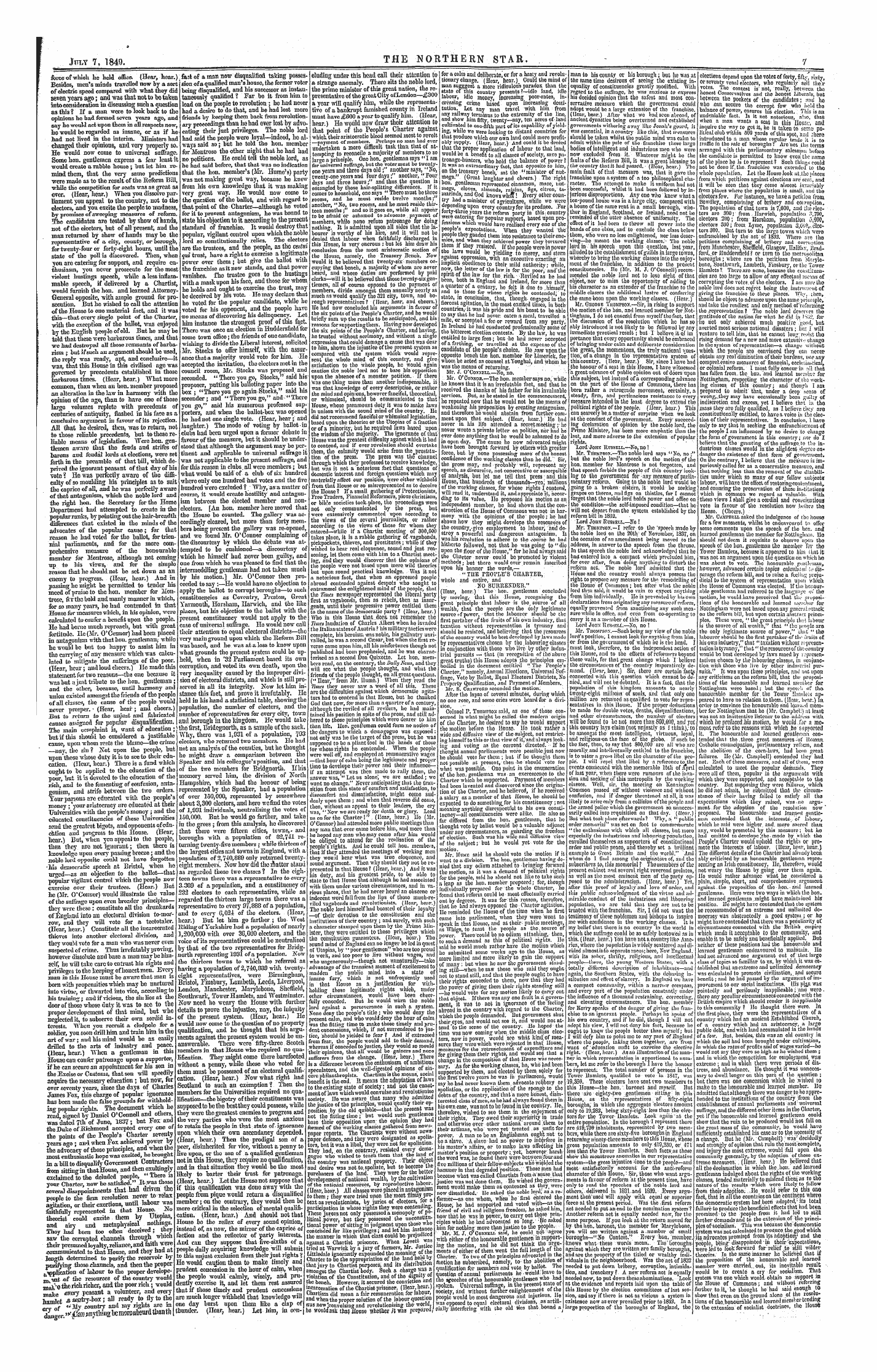
force of which he held office . ( Hear , tear . ) Besides , men's minds travelled now by a son of electric speed compared "with "what they did seven years ago ; and was that not to be taken into consideration in discussing such a question as this ? If a man were to look back to the opinions he had formed seven years ago , and gay he -would act upon item in all respects now , he would be regarded aa insane , or as if he lad not lived in the interim . Ministers had changed their opinions , and very properly so . He would now come to universal suffrage Some hon . gentlemen express a fear least it would create a rabble house ; but let him remind them , that the very same predictions were made as to the result of the Reform Bill ,
while the competition for seats was as great as ever . ( Hear , hear , ) When you dissolve parliament yon appeal to the country , not to the electors / and you excite the people to madness , by promises of sweeping measures of reform . The candidates are tested by show of handg , not of the electors , but of all present , and the man returned by show of hands maybe the representative of a city , county , or borough ,
for twenty-four or forty-eight hours , until the state of the poll is discovered . Then , when yon are catering for support , and require enthusiasm , you never prosecute for the most violent hustings speech , while a less inflammable speech , if delivered by a Chartist , would furnish the hon . and learned Attorney General opposite , with ample ground for prosecution . But he wished to call the attention
of the House to one material iact , and it was ^ juS—that every' single point of the Charter , -with the exception of the ballot , was enjoyed by the English people of old . But he may be told that these were barbarous times , and that we had destroyed all those remnants of barbarism ; but if such an argument should be used , the reply was ready , apt , and conclusive—it was , that this Honse in this civilised age was governed by precedents established in those barbarous tunes . ( Hear , hear . ) What more common , than when an hon . member proposed an alteration in the law in harmony with the
opinion of the age , than to liave one of those large volumes replete with precedents of centuries of antiquity , flashed in his face as a conclusive argument in favour of its rejection . Ml that lie desired , then , was to return , not to those reliable precedents , but to those reliable means of legislation . Were hon . gentlemen aware that the feuds and strifes of barons and feudal lords at elections , were set forth in the preamble of that bill , which
deprived the ignorant peasant of that day of his Tote ? He was perfectly aware of the difficulty of so moulding his * principles as to suit the caprice of all , and he was perfectly aware of that antagonism , which the noble lord and the rig ht hon . the Secretary for the Home Department had attempted to create in the popnlarranks , by pointing outthe hair-breadth differences that existed in the minds of the advocates of the popular cause ; for that reason he had voted for the ballot , for
triennial parliaments , and for the more comprehensive measure of the honourable member for Montrose , alfliough not coming up to Ins views , and for the simple reason thai he should not be set down as an enemy to progress . ( Hear , hear . ) And in passing he might be permitted to tender bis meed of praise to the hon . member for-SEontrose , fcr the bold and manly manner in which , for so many years , he bad " contended in that House for measures which , in his opinion , were calculated to confer a benefit upon the people . He had home much reproach , but with great
fortitude . He ( Mr . O'Connor ) had been placeu in antagonism Avith that hon . gentleman ,- while he would be but too happy to assist him in the carry ing of any measure which was calculated to Jiiiligate the sufibrings of the poor . { Hear , hear ; and loud cheers . ) He made this statement for two reasons—tho one because it wasbut a j ust tribute to the lion , gentleman ; and the oilier , because , until harmony and union existed amongst the friends of the people of all classes , the cause of the people would never prosper . - ( Hear , hear ; and cheers . ) J 3 ut to return to the unjust and fabricated
causes assyjasu for popular disqualification . The main complaint is , want of education ; but if this should be considered a justifiable cause , upon whom rests the fclamc—the crime jja v , the sin ? 2 * oi upon the people , but upon those whose duty it is to see to their education . ( Hear , hear . ) There is a fund which ought to be applied to the education of the poor , but it is devoted to the education of the rich , and to the fomenting of confusion , antagonism , and strife between the two orders . Tom-parsons are educated with the people ] s money ; ' your aristocracy are educated at their Universities with the people's money ; and the educated constituencies of these Universities send the greatest bigots , and opponents of
education and progress to this House . ( Hear , licar . ) But , when you appeal to the people , then they are not ignorant ; then there is knowledge upon every passing breeze ; and the noble lord opposite could not have forgotten lis democratic' speech at Bristol , when be nrged—as an objection to the ballot—that popular vigilant control which the people now exercise over their tvustees . ( Hear . ) But he CMr . O'Connor ) would illustrate the value of the suil' rage upon even broader principlesthey were these : constitute all the drunkards of England into an electoral division to-morrow , and they will vote for a teetotaler . ( Hear , hear . ) Constitute all the incarcerated thieves into another electoral division ,
they wonld vote for a man who was never even suspected of crime . Thus irrefutably proving , iowever dissolute and base a man may be himself , he will take care to entrust his rig hts and privileges to the keeping of honest men . Every man in iLis House must be aware that man is bom with propensities which may be nurtured into virtue , or thwarted into vice , according to lis training ; and if vicious , the shi lies at the door of those whose duty it was to see to the proper developement of that mind , but ayTic neglected it , to subserve their own sordid interests . When vou recruit a clodpole for a
soldier , you soon drill him and train him in the art of war ; aud Ms mind would be as easily drilled to the arts of industry and peace . ( Hear , bear . ) When a gentleman in this Honse can confer patronage npon a supporter , if he can secure an appointment for his son in the Excise or Customs , that son will speedily acquire the necessary education ; but now , for over seventy years , since the days of Charles James Fox * this charge of popular ignorance has been made the false grounds for withholding popular rj"his . The document which be readsigned bDaniel O'Connell and others .
, y was dated 7 th of June , 1837 ; but Fox and the Duke of Richmond accepted every one of the points of the People ' s Charter seventy years a ^ o ; and when Fox achieved power by the advocacy of those principles , and when the most enthusiastic hope was excited , he brought in a hill to disqualify Government Contractors from sittingin tbatHouse , and then exultmgly exclaimed to the deluded people , " There is your Charter , now be satisfied . " Jkwas those several disappointments that had amen the to relax
people to the firm resolution never agitation , or their exertions , until labour was faithfully represented in that House . JNo theorist could excite them by Utopias , and airy and metaphysical nothings . They had been too often deceived j they saw the corrupted channels through which their presumed loyalty , reliance , and faith were communicated to that House , and tbey had at length determined to purify the reservoir by ponfying those channels , and then the proper
- wjjeation of labour to the proper deveiopem -of the resources of the country wonld jnaj / 0 dierichricher , aud the poor rich ; would make & * &" $ peasant a volunteer , and every Wet a seatry-hox ; all ready to fly to the crv o £ «» ' 3 Iy country and my rights arc m ^ ger . ' ^ B ^ ythiug beiBorettl'fiurdtlsant ]
Untitled Article
fad ; of a man now disqualified taking possession of a qualified man ' s bouse , the former voter being disqualified , and his successor as instantaneously qualified ? Far be it from him to lead on the people to revolution ; he had never had a desire to do that , and he had lost more friends by keeping them back froni revolutionary p roceedings than he had ever lost by advocating then- just privileges . The noble lord had said the people were loyal—indeed , lie always said so ; but he told the hon . member for Montroso the other night that he had had no petitions . He could tell the noble lord , as he had said before , that that was no indication
that the hon . members ( Mr . Hume ' s ) party was not making great way , because he knew from his own knowledge that it was making very great way . He would now come to the question of the ballot , and with regard to that point of the Charter— -although he voted for it to prevent antagonism , ho was bound to state Ins objection to it according to the present standard of franchise . It would destroy that popular , vigilant control upon which the noble lord so constitutionally relies . The electors are the trustees , and the people , as the cestvi qui trust , have a right to exercise a legitimate ballot with
power over them ; but give the the franchise as it now stands , and that power vanishes . The trustee goes to the hustings with a mask upon his face , and those for -whom he holds and ought to exercise the trust , may be deceived by his vote . He may declare that he voted for the popular candidate , while he voted for his opponent , and the people have no means of discovering his delinquency . Let him instance the strongest proof of tins fact . There was once an election in Huddersfield for some town office ; the friends of one candidate , wishing to divide the Liberal interest , solicited Mr . Stocks to offer himself , with the assurance that a majority would vote for him . He accepted the invitation , the electors met in the
council room , Mi " . Stocks was proposed and seconded . " There you go , Stocks , " said his proposer , putting his balloting paper into the box ; " There you go again-Stocks , " said Ms seconder ; and " There you go , " and " There you go , " said his numerous professed supporters , and when the ballot-box was opened he had not one single vote . ( Hear , hear ; and laughter . ) The mode of voting by ballot in clubs bad been urged upon a former debate in favour of the measure , but it should be understood that although the argument may be pertinent and applicable to universal suffrage it was not applicable to the present suffrage , and for this reason in clubs , all were members ; but what would be said of a club of six hundred
where only one hundred had votes and the five hundred were excluded ? "Wh y , as-a matter of coarse , it would create hostility and antagonism between tho elected member and nonelectors . [ An hon . member here moved that the House be counted . The gallery was accordingly cleared , but more than forty members being present the gallery was re-opened , and we found Mr . 0 ' Conner complaining of the discourtesy by which tbe debate was attempted to be cushioned—a discourtesy of which he himself had never been guilty , and one from which he was pleased to find that tbe
intermeddling gentleman had not taken much by his motion . ] Mr . O'Connor then proceeded to say : —He would haveno objection to apply the ballot to corrupt boroughs—to such constituencies as Coventry , Preston , Groat Yarmouth " , Horsham , Harwich , and the like places , but his objection to the ballot with the present constituency would not apply to the case of universal suffrage . He would now call their attention to equal electoral districts—the very main ground upon which tho Reform Bill was based , and he was at a loss to know upon what grounds the present system could be
upheld , when in ' 32 Parliament based its own corruption , and voted its own death , upon the very inequality caused by the improper division of electoral districts , and which is still preserved in all its integrity . Now let him instance this fact , and prove it irrefutably . He held in his hand a statistical table , showing the population , the number of electors , and the number of representatives for every city , town and . borough in the kingdom , He would take the first , Eridegnorth , as a sample of the sack . Why , there was 1 , 931 of a population , 793 electors , who returned two members . He bad
not an analysis of the counties , but he thought he might draw a comparison between the Speaker and his colleague ' s position , and that of the two members for Bvidgnovth . If his memory served him , the division of North Hampshire , which bad tbe honour of being represented by the Speaker , had a population of over 1-50 , 000 , represented by somewhere about 3 , 300 electors , and here wefindthe votes of 1 , 931 individuals , neutralising the votes of 1-50 , 000 . But he would go farther , and take in the gross ; from this analysis , he discovered that there were fifteen cities , towns , , and boroughs with a population of 82 , 741 returning twenty-five members ; while thirteen of the largest cities aud towns in England , . with a
population of 2 , 710 , 889 only returned twentyeight members . Now how did the matter stand as regarded those two classes ? In the eighteen towns tliere was a representative to every 3 . 309 ef a population , and a constituency of 232 electors to each representative , while as regarded the thirteen large towns there was a representative to every 97 , 888 of a population , and to every 6 , 024 of the electors . ( Hear , bear . ) But let him go farther ; the West Hiding of Yorkshire bad a population of nearly 1 , 200 , 000 with ovor 36 , 000 electors , and tho voice of its representatives could be neutralised by that of the two representatives for Bridgnorth representing 1931 of a population . 2 ? ow the thirteen towns to which h ( J referred as
having a population of 2 , 740 , 839 Avith twenty eight representatives , were Birmingham , Bristol , Piushury , Lambeth , Leeds , Liverpool , London , Manchester , Maryleboue , Sheffield , Southwark , TowerHainlets , and Westminster . Ifow need he weary the House with further details to prove the injustice , nay , tbe iniquity of tbe present system . ( Hear , bear . ) He would now come to the question of no property qualification , and he thought that his arguments against the present system would be unanswerable . There were fifty-three ; Scotch members in that House who required no
qualification . They might come there barefooted without a penny , while those who voted for them must be possessed of an electoral qualification . ( Hear , hear . ) Now what right had Scotland to such an exemption ? Then the members for the Universities required no qualification—the bigotry of their constituents was supposedtohethe bestthey could possess , while they were the greatest enemies to progress and the very parties who were the most anxious to retain the people in that state of - ignorance upon which their own ascendancy depended . ( Hear , hear . ) Then the prodigal son of a
peer , disinherited for vice , without a penny to live upon , or the son of a qualified gentleman not in this House , they require no qualification , and in that situation they would be tbe most likely to-barter their trust for patronage . ( Hear , hear . ) Let the House not suppose that if this qualification Avas done away with the people from pique would return a disqualified member ; on the contrary , they would then be more critical in the selection of mental qualificat ion . ( Hear , hear . ) And should not that House be the reflex of every sound opinion ,
instead of , as now , tbe mirror of the caprice of faction and the reflector of party interests . And can they suppose that five-sixths of a people daily acquiring knowledge will submit to thi 3 unjust exclusion from their just rights ? He would caution them to make timely and prudent concession in the hour of calm , when the people would calmly , wisely , and prudently exercise it , and let them rest assured that if those timely and prudent concessions arc much longer withheld that knowledge will one day burst upon them like a clap of thunder , ( near , hear . ) Let Wm , in con-
Untitled Article
cluding under this head call their attention to a strange anomaly . There sits the noble lord , the prime minister of this great nation , the representative of the great City of London— £ 300 a year will qualify him , while the representative- of a bankrupt famished county in Ireland must have £ 600 a year to qualify him . ( Hear , hoar ) He would now draw their attention to that point of the People ' s Charter against which , their aristocratic blood seemed most to revolt payment of members . Perhaps no man had ever undertaken a more difficult task than that of attempting to reconcile a majority of members to so lave a principle . One hon . gentleman says " I am for iniversnl suffrage , but the voter must be
twentyone years and three days oJd ; anotner says , jno , twenty-one years and four days ; " another , " Four jays and three hours ; " and thus . the question is entangled by those hair-splitting differences . If it comes to household , one says _ " There must be three rooms , and lie must reside twelve months ;" another , "A o , two rooms , and be must reside thirteen months ; " and so it goes on , while all appear to be afraid or ashamed to advocate . payment of members , while none refuse patronage for doing nothing . It is admitted upon all sides that the labourer is worthy of his hire , and it will not bo denied that labour when faithfully discharged in this House , is very onerous : but let him draw his conclusion from the most aristocratic section of
the House , namely , tho Treasury Bench . . Now would it be believed that twenty-six members occupying that bench , a majority of whom arc never heard , and whose duties are performed by paid clerks— -will it be believed that those twenty-six gentlemen , all of course opposed to the payment of members , divide amongst them annually nearly as much as would qualify the 321 city , town , and borough representatives ? ( Hear , hear , and cheers . ) He had now concluded his arguments in favour of the six points of the People ' s Charter , and he would briefly sum up the results to be anticipated , and his reasons for supporting them . Having now developed the six points of the People ' s Charter , and haying , he trusted without acrimony , and without a single expression that could damage a cause that was dear
to him , shown the injustice of the present system as compared with the system which would represent the whole mind of this country , and give satisfaction to the whole people , he would again caution tte noble lord not to base his opposition upon the absence of a monster petition . If there was one thing more than another indispensable , it was that knowledge of every description , or rather the mind and opinions , however fanciful , theoretical , or whimsical , should be communicated to that House , whose paramount duty it was to make laws in unison with the sound mind of the country . He did not recommend fanciful or whimsical legislation , based upon the theories or the Utopias of a fraction or of a minority , but he required laws based upon the wisdom of the majority . The ignorance of that
House was the greatest difficulty aganst which it had to contend , and if ever revolution should overtake them , the calamity would arise from the jirostitution of the press . The press was the channel through which they professed to receive knowledge , but was it not a notorious fact that questions of domestic interest and foreign questions which may materially affect our position , were either withheld from that House or so misrepresented as to deceive the House ? If a small gathering of Protectionists , Free Traders , Financial Beformers , pious Christians , or bible societies took-place , the proceedings were not only communicated by the press , but were extensively commented upon according to the views of the several journalists , or rather nnn twAinre + /\ -flin riowa nf +. lirtfBO ¦ f / M * ¦ rclinm fhni
catered—while if a Chartist meeting of 300 , 000 takes place , it is a rabble gathering of vagabonds , pickpockets , thieves , and prostitutes ; while if they wished to bear real eloquence , sound and just reasoning , let them come with him to a Chartist meetinn :, and they would discover that the opinions of the people were not based upon mere wild theories but upon sound practical knowledge . Was it not . a notorious fact , that when an oppressed people abroad contended against despots who sought to entrammel the enlightened mind of the people , that the Times newspaper represented the liberal party first as vagabonds , then as rebels , then as insurgents , until their progressive power entitled them to the name of the democratic party ? ( Hear , hear . )
Who in this House that . docs not remember . the Times laudation of Charles Albert when he invaded the Italian states of Austria ? his military tactics were complete , his heroism was noble , his gallantry uurivalled , he was a second Cicsar , but when the first reverse came upon him , all his misfortunes though not published had been prophesied , and he was characterised as a second Don Quixbtte . Let hon . members read , on the contrary , the Daily News , and they will sec what the people thought , and what the friends of the people thought , on all great questions , ( "near , " from Mr . nume . ) When " they rend the Times they never saw a word of all this . Those are the difficulties against which democratic agitators had to contend in that House , but he thanked God that now , for more than a quarter of a centurv ,
although the reviled of all revilers , he had maintained ~ his position in spite of the press , and still adhered to those principles which were dearer to him than life . Hon . gentlemen could form no notion of the dangers to-which a demagogue was exposed : not only was he the target of the press , but he was supposed to be a pliant tool in the hands of those for whose rights he contended . When the people were well off , and employed at remunerative wages —that hour of culm being the legitimate and proper time to ucvelope their power and their influenceif an attempt was then made to rally them , the answer was , " Let us alone " , we are satisfied ; we want no change . " Never anticipating that the transition from this state of comfort and satisfaction , to discomfort aud dissatisfaction , might come
suddenly upon them ; and when that reverse did come , then , without an appeal to their leaders , the cry was , " Now we arc ready for death or glory . Lead us on for the Charter !" . ( Hoar , hoar . ) He ( ill O'Connor ) had attended more public meetings than any mau that ever came before him , and more than he hoped any man who may come after him would be obliged to attend for the realisation of the people ' s rights . And he could tell lion , members , that if they attended the meetings of working men they woufd hear what was true eloquence , and sound argument . Then why should they not be represented in that House ? ( Hear , hear . ) And it was lis duty , and his greatest pride , to be able to State to that House that although he had associated with them under various eireunistanees , and in
various places , that lie had never hoard an obscene or indecent word fall from the lips of those much-reviled vagabonds and revolutionists . ( Hear , hear . ) The noble lord himself had boasted of their loyalty —of their devotion to the constitution and the institutions of their country ; and surely , with such a character stamped upon them by tho Primo Ministei , they were entitled to those privileges which the constitution guarantees . ( Hear , hear . ) The sound mind of England can no longer be led in quest of Utopias , by " poor gentlemen" who are too proud to work , and ' too poor to live without wages , and who ungenerously—though not unnaturally—take advantage of the ' transient moment of excitement to madden the public mind into a state of insane fury ) which is not ' . infrequently used
in that House as a justification for withholding those legitimate rights which , under other circumstances , would have been cheerfully conceded . But he would warn the noble lord against a perseverance in such a system . 2 fone deny the people ' s title ; who would deny the present calm , and who would deny the hour of calm was the fitting time tt » make those timely and prudent concessions , which , if not surrendered to justice , should be yielded to fear ? And if extracted from fear , the people would add to their demand , whereas if conceded to justice , they would so mould their opinions , that all would be gainers and none sufferers from the change . ( Hear , hear . ) There is a difference between the enthusiasm of ambitious speculators , and the well-digested opinions of sinsocial
cere philanthropists . Chartism is the means , benefit is f ho end . It means the adaptation of laws to the existing state of society ; and not the enactment of laws which would convulse and revolutionise societv . He was aware that many who admitted the justice of the principles , would qualify their opposition by the old quibble—that the present was not the fitting time ; but would such gentlemen base their opposition upon the opinion . they had formed of the working classes gathered from newspaper reports . The Chartists were without newspaper defence , and they were designated as spoliators , but it was a libel , they were not for spoliation . They had , on the contrary , resisted every demagogue who wished to teach them that the land ot tliA wmiiti'ir wiis national nroDGi'tv . : Their object
aud desire was not to . spoliate , but to become the purchasers of the land . They Avcrc for the better developement of national wealth , by the cultivation of the national resources , by reproductive labour . ( Hear , hear . ) All classes wei' 6 placed in antagonism to them ; they were tried upon the most flimsy pretext as revolutionists , by juries of electors , for a participation in whose lights they were contending . These jurors not only possessed a monopoly of political power , but they possessed the unconstitutional power of sitting in judgment upon those who contended for like privileges ; and let him instance the manner in which that class could be prejudiced
against a Chartist prisoner . When Lovett was tried at Warwick by a jury of farmers , Mr . Justice Littledale ignorantly expounded the meaning of tne Charter to be the appropriation of the land lieiu oy that jury to Chartist purposes , and its distribution amongst the Chartist body . Such a charge was a violation of the Constitution , and of the dignity ol the bench . However , it secured the conviction and incarceration of the Chartist prisoner . ( Hear , hear . ) Chartism did mean a fair remuneration for labour , and when the proper solution of the labour question was now Convulsing and revolutionising the-world , ho would ask that House whether it was prepared ,
Untitled Article
for a calm and deliberate , or for a hasty and revolutionary change . ( Hear , hear . ) Could tho mind of man sugggest a more ridiculous paradox than the state of this country presents ?•—idle land , idle labour , idle money , increasing poor-rates , increasing crime based upon increasing destitution . Let any man travel with him from any railway terminus to the extremity of the line , and show him fifty , twenty—nay , ten acres of' land cultivated to one-fifth part of its capability of yielding , while we were looking to distant countries for that produce which our own land could more profitably supply . ( Uear , hear . ) And could it be denied that the proper application of labour to that land , would be a benefit to all classes of society , save patronage-hunte rs , who hold the balance of power ?
It was an extraordinary fact , that opposite to him , on the treasury bench , sat the ¦ " minister of nutmegs . " ( Groat laughter and cheers . ) The right hon . gentleman represented cinnamon , mace , nutmegs , cloves , almonds , raisins , figs , citron , tamarinds , and God knows whiff ! Every other country had a minister of agriculture , while we were depending upon every country for its produce . ; For torty-three years the reform party in this : country were catering for popular support , based upon professions which would have realised every one of the peoples expectations . When they wanted the people they goaded them into resistance to their enemies , and when they achieved power they tortured them if they resisted . If tho people were in power the laws would be yielding to mercy , and stern against oppression , with an executive exacting an implicit obedience to their mild authority ; while , tho letter of
now , the law is for the poor ; and ' the spirit of the law for the rich . Reviled as he had been , both in England and Ireland , for more than a quarter of a century , ho felt it due to . himself , and to those for whose rights he contended ; to state ,-in conclusion , that , though- engaged in the fiercest agitation , in the most excited times , in both countries ,- it was his pride and his boast to be able to say that he had never eaten a meal , travelled a mile , or accepted a fee or reward from nny party . In Ireland ho had conducted professionally some of the bitterest election contests . By . the law , he was entitled to large fees ; but he hail never accepted of a farthing , or travelled at the expense of the candidate of tlio people ' s choice . Ho . saw upon tho opposite bench the hon . momber for Limerick , for whom he acted as counsel at Youghal , and whom he was the means of returning . Mr . J . O'Connell . —No . no .
Mr . O ' Connor . —The hon . membersays no , while he knows that it is an irrefutable fact , and that he received the thanks of his father for his invaluable services . But , as he stated in the commencement , he repeated now that he would not be the means of weakening his proposition by creating antagonism , and therefore he would abstain from further comment upon that subject . ( Hear , hear . ) ' He had never in his life attended a secret meeting ; he novel wrote a private letter- on politics , nor had he ever done anything that he would be ashamed to do in open day . The cause he now advocated might have been brought forward by others with greater force , but b y none possessing more of the honest confidence of the working classes than he did . ' . ' Sir , the press may , anil probably will , represent my speech , as discursive , not consecutive or susceptible
ot analysis , but let mo tell that press and this House , that hundreds of thousands—yea , millions of the working classes , for whose rights-I contend , will read it , understand it , and appreciate it , according to its value , He proposed his motion as an independent momber , he had shown that the construction of the House of Commons was not in harmony with the opinions of the' people ; he had shown how they might dcvelope the resources of the country ,-give employment to labour ! and destroy a powerful and dangerous antagonism . It was his resolution to adhere to the course he had hitherto followed , not that he was going to "die upon the floor of the House , " for lie had always said the Charter never could be promoted by violent methods ; but there would ever remain inscribed upon hj s banner the words , —
"THE PEOPLE'S CHARTER , whole and entire , and ISO SURRENDER . " ( Hear , hear . ) The hon . gentleman concluded by moving ,- that this House , recognising tho great principle that labour is the , source ¦ of all wealth , that the people are the drily legitimate source cf power , that the labourer should be the first partaker of the fruits of his ' own industry , that taxation without representation is tyranny and should be resisted , and believing that the resources of the country would be best developed by laws made by representatives chosen by the . labouring classes in conjunction with . thoso who live by other industrial pursuits — that ( in recognition of the above great truths ) this House adopts tho principles embodied in the document entitled " , Tho People's Charter , " namely , Annual Elections , Universal Suffrage , Vote by Ballot , Equal Electoral Districts , No Property Qualification , and Payment of Members . . Mr . S . Crawford seconded the motion .
After the lapsoof several minutes , during which no one rose , and some cries were heard for a division , . '¦ -. ' ¦ Colonel P . Thompson said , as one of those concerned in what might be called the modern origin of tho Charter-, he ilosiral to say ho would support tho motion before the House . He took rather a wide and diffusive view of the subject , not restricting himself to this or that view of it , ' and always looking and voting as the current directed . ¦¦ If he thought annual parliaments were possiblejust now he should vote for them ; but if he thought them not possible at present , tlien he should vote ior what was possible . One point in tho enumeration
ef tho hon ; gentleman was-an excrescence to the Charter which he supported . Payment of members had been invented and discovered since the origination of the Charter , and he believed , if he received a salary as a member of that House , he should be expected to do something , for his constituency ; not meaning anything disrespectful to his own constituency—all constituencies were alike . He also so far differed from the hon . gentleman , that he thought vote by ballot would be a valuable adjunct under any circumstances , as guarding the freedom of election . Such was his wide and diffusive view of the subject ; but he would yet vote for- the motion .
Mr . Hume said he should vote the motion if it went to a division . The hon . gentlemen having denied that any odium attached to bringing forward the motion , as it was a demand of political rights for the people , said ho should not like to take such a leap as the lion , member proposed ; for , -though individually prepared for the whole Charter , lie found that reform could be most effectually carried out by degrees . It was for this reason , therefore , that he had always opposed the Charter agitation . Ho reminded the llouso of tho time when he first came into parliament , when they were Svont to speak in that House , and at their- public meetings , as Whigs , to toast the people as the . source of power . There ' could be no odium attaching ' , then , to such a demand as this of political rights . He said he would much rather have the motion which
he submitted some weeks ago to tho House , as more limited and more likely to gain the , support of many : but when he s . w the government standing still—when he saw those who said they ought not to stand still , and that the people ought to have their rights conceded to them , now , that they had the power of giving them their ri g hts-standing still —lie would vote for any motion likely to carry out that object . If there was any one fault in a government , it was to act in ignorance of the feeling abroad in the country with regard to the Charter , which the people demanded . But government shut their eyes , and would not see it , and would not attend ' to the sense of the country . He hoj > ed the time was now coming when the middle class electorsnow in power , would seo what kind ; of
mea-, sures they were which were rejected in that House , measures for the retrenchment of expenditure and for giving them their rights , and would see that a change in the composition of that House was necessary . As for the working classes , he , who had been supported by them , and elected , by them solely for the first'twelve years ho waa in parliament , would say he had never known them , advocate l'olibci'y or spoliation , or tho application of thc'spongis to the debts . of the country , and that a more honest , disinterested class of men , as he had always found them in his own case , was not to he found in the country . He , therefore , wished to see them in the enjoyment of their rights . They owed their superiority in trade and otherwise over other nations , ' around them to their artisanswho were yet treated as -unfit for
, power . A man to be an Englishman ought not to be a slave . A slave had no power to interfere in his master ' s affairs , or to make laws affecting his master ' s position or property ; yet , however ; harsh the word was ; he found there were bc . tweenjfourand five millions of their fellow-subjects who wielded the hammer in that degraded position .: Those men had become what was called Chartists from-asqnse that justice was not done them . ¦ He wished thq government would make-them as contented as they ^ ere now dissatisfied , lie asked the noble lord , ' as a reformer—as one whom , when he Ui'sfc entered the House , he had supported and voted with—as the friend of civil and religious freedom , he asked him , now that ho was in power , to carry out those
principles which he had advocated so long . ' - « c asKea him for nothing more than justice to the people . Mr . M . J . O'CosnelIi said , he could not agree with either of the honourable gentlemen in supporting the motion , and he did not think tho arguments of either of them went the full length ol the Charter . To two of the principles advocated in the motion he subscribed , namely , to the abolition ot qualification for members and vote by ballot- ^ no question of annual parliaments he-would leave to the speeches of the honourable gentlemen who had spoken . Universal suffrage , in the present state of society , and without further enlig htenment of the people would be most dangerous and injurious . He was opposed to equal electoral divisions , as artificially interfering with the old ties that bound a
Untitled Article
man to his county or his borough ; but ho was at the same time desirous of seeing the existing inequality of constituencies greatly modified . With regard to the suffrage , he was anxious to express his decided opinion that the safest and most conservative measuro which the government could adopt would be a large extension of the franchise . ( Hear ; hear . ) After what we bad seen abroad , of ancient dynasties being overturned and established governments withering away like Jonah ' s gourd , it was essential , in a country like this , that iix-aswes should be taken whilst the public mind was calm to admit within the pale of tbo franchise tliosc large bodies of intelligent and industrious men who were now excluded from it . Whatever might be the faults ' of the Reform Bill , it was a ' sn-ent , l . lossinrr tn
the country that it had passed . ( Dear , hear . ) The main fault of that measure was , that it gave the franchise upon a system of < a too philosophical character . Tho attempt to make it uniform had not been successful , whilst it had been followed bv injuriqus disproportions , Any one who knew what a ten-pound house was in a large city , compared with a house of the same rent in a small bsrough , whether in England , Scotland , or Ireland , need not be reminded of the utter absence of uniformity . The effect of it had been to throw all power into tho hands of one class , and to exclude the class below them , who were no less enlightened , nor less deserving—he meant the working classes / ' The noble lord in his speccli upon this question , last year , alluded to the establishment of guilds in larare towns .
whereby to bring the working classes into the enjoyment of the franchise , in addition to the present constituencies . He ( . Mr . M . J . O'Connell ) recommended tho noble lord not to lose sight of that object , -nor to miss the opportunity of" adding to his character as an extender of tlio franchise to the middle classes the additional lustre of conferring the same boon upon the working classes . ( Hear . f Mr . Gkorge Thompson . —Sir , In rising to support the motion of tho hon . and learned member for Nottingham , I do not conceal from myself the fact , that the discussion of tho resolution which lie has so ably introduced is not likely to be followed by any immediate practical result ; but I believo it o . f im portance that every opportunity should be embraced of bringing tinder calm and deliberate consideration
the great , the momentous , the truly national \ iius . tion , of a chango in tho -representative system of this country . ( Hear , hear . ) Sir , since I have had the honour of a seat in this House , I have witnessed a great advance of public opinion out of doors upon this . ' subject , ' but instead of a corresponding advance on the part of the House of Commons , there has been rather a retrograde movement , certainly , a steady , firm , and pertinacious resistance to every measure intended in the least degree ' to extend the political rights of the people . - ¦ ( Hear , hear . ) This can scarcely be . a matter of surprise when we look at the conduct of the government . Every' succeeding declaration of opinion by the noble lord , the Prime-Minister , has been move - emphatic' than the last , and more adverse to the extension of popular rights . ' ¦ Lord - Johk Russell . —Ko . no ! - '¦
Mr . Thompson . —The noble lord says " TSo , no ;" but the noble lord ' s speech on the ' motion of tho hon . member for Mont-rose is not forgotten ^ and that speech forbids the people of this country looking to tho government for any measure of parliamentary reform . Going to the noble Iovd would be going to a broken cistern , it would be seeking grapes on thorns ,-andfigs on thistles , for I cannot forget that the noble lord holds power and office on the condition—the self-imposed condition—that he will not depart from the system established by the reform bill in-1832 . - Lord John Russell . —No !
Mr ; Thompson . —I refer to the ' speech made by the noble lord on the 20 th' of November , 1837 , on the occasion of an amendment being moved to the address , in answer to tho speech from the throne . In that speech the noble lord acknowledged that he hail entered into a compact which precluded him , for ever after , from doing anything to disturb the reform act . The noble lord admitted that the House and the country would always possess the right to propose any measure for tho remodelling of the House' of Commons ; but after what tho noble lord th . 311 said-, it would bo vain to expect ' anything from him 'individually . He is prevented by ' his own declarations from originating any measureof roforai , equally prevented from sanctioning- any such measure while in office , and even from co-operating to carry it as a uicmbci ' of this House . Lord Johx Russell . —No . no !
Mr . Thompson . —Such being my view of the noble lord ' s position , 1 cannot look tor anything from him , or from the government of which ho is tlio head . I must look , therefore , to the independent action ol this House , and to the efforts of reformers beyond these walls , for that great change -which I believe the eircunifitaix / es of the country imperatively demand . ( IJpai ' . liear . ) Sir , thoro are certain facte connected with this question which cniiHot be denied , and will not bo debated . It is a fact , that tlio population of this kingdom amounts to nearly twenty-eight millions or souls , and that only one million arc returned as dunlincd to vote for representatives in- this llouso . If the proper deductions be made for double votes , deaths , disqualifications , and other circumstances , the number of electors
will ho found to ho not more than SOO . Of / 0 , and yet this country lays claim ( not unjustly as I tliink ) , * to be amongst tlio most intelligent , virtuous , loyal , aiid religious-on the face of the globe . If such be the fact , then , to say that 800 , 000 ' are all who are morally , and intellectually entitled to the franchise , is to utter a gross libel on the character of the people . I will repel that libel by a reference to the events connected with tho memorable ' 16 tli of ifpnl of last year . wh /> ri tliere were rumours of the invasiou and sacking of this metropolis by the working classes . Well , sir , the meeting on Kensington Common passed off without violence and witiiout confusion , and if danger ' threatened at 'all , it was likely to arise only from a collision of the people and the armed police which the government so
unnecessarily called into requisition on that day . ( Hear . ) But what took place afterwards ? Why , a " public order memorial" was set on foot to commemorate " the enthusiasm with which all classes , but more especially tho industrious and"labouring population , enrolled themselves as supporters of constitutional order and public poacq , aud thereby sot a brilliant example to Great Britain and the world . " And whom do I find among . tho originators of , and the subscribers to , this memorial ? Theinernbers of the present cabinet and several right reverend prelates , as well as tho most eminent men of the party opposed to tlio administration . ( Hear , hear . ) Yet , after this proof of loyally and love of order , and this public acknowledgment of the virtue and admirable conduct of the industrious and labouring
population , wo arc told that they are not to be trusted with the franchise . Sir , I did not want the testimony of . these noblemen and bishops to inspire me with confidence in the working classes . It is my belief that there is no country "" in the world in which the suffrage could he so safoly bestowed us in this . ( Hear , hear ) You have not a country like America , where the . population is widely scattered and divided almostinto separate races ; here , Now England , with its sotiLT , thrifty , religious , and intellectual people ^—there , the young Western States , with a totally different description of inhabitants—and again , the Southern States , with the debasing institution and effect of slavery . In England we have a compact community , within a narrow compass , and every part of the population constnntlv under
the influence of a thousand restrain in < r . correcting , and elevating circumstances . The lion , member for Kerry speaks of the danger of giving tho franchise to an ignorant people . Perhaps lib spoke of his own country , and if ho did , though I will not adopt his view , I will not deny his fact , because lie ought to knojw the people better than myself ; but I will defy him to point me to any part of England where the people , taking them together , are from want of education unfit to exercise the elective right . ( Hear , hear . ) As ' aii illustration of the manner- in . which representation is apportioned to numbers , let mcreier ' to . the borough I have the honour to represent . The total numb ' er of persons in the Tbwev Hamlets , qualified to vote in 1 S-17 , was 19 , 350 . These electors have sent vwo members to this House—t-ho-hoh . " .. baronet and myself . But
there arc eighty-two gentlemen sitting in this House , , as the-. - ¦' representatives of fifty-eight boroughs , in which the aggregate electors amount only to 19 , 282 , being sixty-eight less than the electors for the Tower Hamlets . Look again afc the entire population ' . In the borough I represent there are ' 119 , 789 inhabitants , represented by two members , whilo there are sixty-five boroughs in England returning ninety-three members to this House , whoso gross population amounts to only 419 , 250 , or . 471 less than the Tower Hamlets . Such facts ; as these show the monstrous anomalies in our representative system—the gross injustice ' -lone to . the people—and most satisfactorily account for the anti-reform character of this House . : Sir , those who want arguments in-favour of reform ' at the present time , have only to ' read tbo speeches ; of the noble lord and others , delivered in 1881 and 1832 . . Every argument tlieri ^ used will apply with equal or superior
force at the present period . Was the . first reform act needed to put an end-to the nomination system ? ¦ Another reform act is equally needed now " for the same purpose . If . you look at the return-moved for . by the Uon . bavonet , the momber for Marylebone , you-will see written against a . number of small boroughs— "No Contest . " Every- hon , ^ member knows what these words mean .. Tho' boroughs against which they are written are family boroughs , and are the property of the titled or wealthy individuals in the neighbourhood . Was the act of 1832 needed to gut down bribery , corruption , intimidation , and treachery ? A new reform act is equall y needed now , to put down these abominations . Look at the evidence and reports laid upon the table of this House by the election committees of last session , and say if there is not as vicious a system in existence no \ y as ever prevailed prior to 1832 . In a large proportion of the boroughs of England , the
Untitled Article
elections depend upon the votes of forty , fifty , sixty , or seventy venal electors , who regularly' sell their votes . The contest is ' not , really , between tho honest Conservatives and the honest Liberals , but between the pockets of the candidates ; and he who . can secure the corrupt few who hold the balance of power , ensures his election . This is an undeniable fact . Is it not notorious , a ! : ; o , thai : when a man wants a scat in this UouSf , and inquire the way to get it , ho is taken to somo political club withm 500 yards of this spot , aiiii . here introduced to a man whose regular trade it is to traffic in the sale of boroughs ? Arc not the terms arranged with this parliamentary salesman before the ' candidate is permitted to know evcii the name of the place he is to represent ? Such thinss could
not be done if , the . franchise was ' extended" to the whole population . let the House look at . the places from which petitions against elections are senS > and it will "be seen that they come almost invariably from . places where the population is small , and the electors few . For instance ,. wo have a petition from Bewdley , complaining ^ of bribery and comijttfon . Tho population of that town is 7 , 000 , and tho electors are 300 ; from . Harwich , population " . 700 , electors . 290 ; from Horshfim , population 5 , 000 , electors 350 ; from Lyme , population 3 , 00 * 5 ,. dicetors 300 . But turn to tho largo towns which wcro enfranchised by the act of 1832 . Where arc tho petitions complaining of bribery and corns i . 'tion . from Manchester , Sheffield , Glasgow , Halifax , Bradford , . or Huddersfield ? or turn to the metrouolitan
boroughs ; where are tho petitions from Miirylobone , Southwark , Lambeth , Finsbury , or the- Towei Hamlets ? , There are none , because tho constituencies are too large to allow of any effectual moans of corrupting the votes , of tho electors . I am sure the noble lord does not regret being the-instrument of giving the franchise to these places . Wljy , then , should ho object to advance upon the same . pi-iiiMple , and take the readiest and only method . of reforming the . representation ? The noble lord deserves tho gratitude of the nation for what he did i : i 7 > : > : ? , for he not only achieved much positive " ) ioofi , hut averted most serious national disasters ; but I will venture to tell him , that he cannot lony : resist tho rising demand for a new and more extensive change in the system of representation—a changv without
which tho people live convinced they can iiovoi ? obtain any veal diminution of their burdens , iku any comprehensive measures of financial , ecclesiastical , or colonial reform . I most fully concur in nil that has fallen from , the hon . and learned mr : >< bt ? for Nottingham , respecting the character of . the working classes of this country ; and ' thou . sr !) lam prepared to admit' that , under a deep ' "" sense of wrong-, sthey may have 'occasionally been guilty of indiscretion and excess , yet I believo thct in tho mass they are fully qualified , as I believe they are constitutionally entitled , to have a voico in the election of their representatives . In conclusion , 1 have only to say that in seeking the enfranchisement of the people I am influenced by no desire to change the form of government in this country ; jioi- do I
believe that the granting of the suffrage to the industrious classes would in the slightest tfe / rreo endanger the existence of that form of gove ' / wiient . On the contrary , I believe that the measure is imperiously called for as a conservative measure , and that nothing less than the removal of the disabilities under which so many of our fellow sui-. jecte labour , will have the effect , of restoring contentment , and ensuring the preservation of those institutions which in common we regard as valuable . With . these views I shall give a cordial and conscientious vote in favour of tho resolution now before tha . House . ( Cheers . ) ; . Mr . Campbell asked the indulgence of the house for a few moments , whilst he endeavoured to oiFer some comments upon the speech of the lion , and
learned gentleman the member forKottinghajn . He should not deem it requisite to observe "" upon tho speech of the hon . gentleman the member " for the Tower Hamlets , because it appeared to . him ihat it was not an argument upon the question on which he was about to vote . The honourable gi .-ntk'man , however , advanced certain topics oaJcijJiiiw ; to disparage the reform bill , and to raise a fueling prejudicial to the system of representation u ]> o : i which tho House of Commons wa 3 elected . If ths honourable gentleman had referred to the lauguiifc at the motion , he would . have perceived that t ' so » i uposilions of tho honourable and learned meisfbBi 1 for Nottingham were not based npon any gen ' cr .-U attack on the reform bill , but upon certain abstract pt-inciples . These were , " the groat principle that labour
is the source of all wealth , ? ' that " the ' p ' . 'oclo aro the only legitimate--source of power , " ihitt * " the labourer should be the first partaker of the- fruits of his own industry , " that " . taxation without 1-0 presentation istyramiy , " that" the resources of the-country would be best'developed by Jaws maed by representatives chosen by the labouring classes , in conjunction , with those who live by other industrial pursuits . " It was upon these principles , ami not upon , any criticisms on the reform bill , that the propositions of the honourable and learned member for Nottingham were based ; but the spce ; U of tha honoukblo member for .. the Tower ILimlo ; .: ! appeared to have no relation to . thom . ( Hoar , hear . ) In order to convince the honourable and learned member for-Xottuiffham that he ( Mr . Campbell at least
was not an inattentive listener to . the- address with ffhielzliepref . iced . liismotion , he would . for a mo « nicut refbr to the reasons with -which he supported it . The honourable and learned gentleman contended that the . three great measures -of Roman Catholic emancipation , parliamentary rei'oun , and tho abolition of the corn-laws , had boon great failures . He ( Mr . Campbell ) contended they ' had not . Each of these measures , and all of them , were calculated to meet tho popular demands . They were all of them , popular in the " arguments with which they were supported , and acceptable to the country . But supposing they wore failures , which he did not admit , he submitted that tho
circumstance of their having failed to satisfy all the expectations which they raised , was no argument-, for the adoption of the resolution now proposed . The honourable and learned gentleman contended that the . interests ' - of labour , which he said were higher , and . more snored thau any , would be promoted by this measure ; but ho had omitted to developo ' . the - mode by which tho People ' s Charter would uphold tlio rights or promote tho 'interests of labour . ( Ilc . vr , hpw , hear . ) Tho different details of the Charter had already been ably criticised by an honourable gentleman representing- an Irish constituency , He , therefore , would not weary the House by going . over them again . Ifo would rathftr advance what he considered a
plain , simple , short , and comprehensive argument against , the proposition of the -hon . am ! learned gentleman . Here were two ways in which the hon . and learned gentleman . might have maintained his position . Ho might have contended that the system he recommended of an extreme and unlimited democracy was abstractedly a good system ; or ho might have contended that there was a peculiarity of circumstances connected with the British empire which made it acceptable to the ' community , and enable it to be safely and beneficially applied . But neither of thcae positions had the honourable and learned gentleman endeavoured to maintain . IIo had not advanced one argument out of that largo class of topics so familial' to us , by whieh . it was established that an extreme and unlimited . democracy
was calculated to promote civilisation , and secure benefit ; and ho had passed by the argument of improvement to our social institutions . His pljyi was pointedly and perilously inapplicable ; and wcro there any peculiar circumstances connected with tho British empire vrhich should render it inapplicable to this community ? He thought there were . In the first place , they were the representatives of a country which had an ancient Established Church , of a country which had an aristocracy , a largo public debt , and with land accumulated in the hands of a few . But , besides , thi 3 was an old country in . which the soil had been brought under cultivation , in which the rates of profits and of wages varied—ho would not say they were s _ o high . as ho wished them ; and in which tho comootition for employment wag
extreme ; and in which there wove periods of distress , and abundance . He thought it waa unnecessary to dwell longer on this part of the question ; but thoro was one concession which he . wished to make to . tho honourable and learned nicmbcr . Ho admitted that although there was danger to be apprehended to the institutions of the country from tho establishment of annual parliaments and universal suffrage , and the different other items in the Charter , yet if the honourable and learned gentleman couldi show that the ruin to . be produced would hot fall on the great mass of the community , ho would have sufficiently established his case ay to tho necessity ot a change . But he ( Mr . Campbell ) was' decidedly and stronirly of opinion that ruin the most complete , and injury the most extreme , would fall upon tho
community generally ,. by the adoption of theso extreme measures .. ( Hear , hoar . ) Ho believed that all the declamation in which tho . hpii . arid lenrned gentleman indulged about the rights of the working classes , tendcd . materinlly to mislead them as to tno nature of the results -which were likely to iollow from their adoption : ' .. IIo would refer , to this ona fact , that in all the countries on the continent where the democratic system liad . beeri adopted / its total failure to produce the beneficial effects that had been promised-to the people from it had led to still farther demands and to the extension . ot the principles of socialism . This was because the democratic to the which
system was not calculated produce , good its advocates promise d from its adoptiorjj , ' and the people , being disappoin ted in their ' expectations , were led to look forward for ' relief . to still wilder theories . In the same manner lie believed that if tho proposition of the honourable and learned member were carried ., out , its inevitable result would be to create a cry for socialism . That system was one which would , obtain no support JB the House of Commons ; and without referring farther to . it , he thought he had said enough to show that even on the ground alone of the rosolutions of the honourable and learned member tending to the extension of socialist doctrines , the llousa
Untitled Article
July 7 ,-1849 . THE NORTHERN STAR , _ Y
-
-
Citation
-
Northern Star (1837-1852), July 7, 1849, page 7, in the Nineteenth-Century Serials Edition (2008; 2018) ncse-os.kdl.kcl.ac.uk/periodicals/ns/issues/vm2-ncseproduct1529/page/7/
-