On this page
-
Departments (3)
-
Text (18)
-
Untitled Article
-
Untitled Article
-
Untitled Article
-
Untitled Article
-
Untitled Article
-
Untitled Article
-
Untitled Article
-
Untitled Article
-
Untitled Article
-
Untitled Article
-
Untitled Article
-
Untitled Article
-

Soetrp*
-

ftfmetos
-

Untitled Article
-

tfar tsi aim j^nr
-
Untitled Article
-

Untitled Article
Note: This text has been automatically extracted via Optical Character Recognition (OCR) software. The text has not been manually corrected and should not be relied on to be an accurate representation of the item.
-
-
Transcript
-
Note: This text has been automatically extracted via Optical Character Recognition (OCR) software. The text has not been manually corrected and should not be relied on to be an accurate representation of the item.
Additionally, when viewing full transcripts, extracted text may not be in the same order as the original document.
Untitled Article
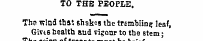
TO THE PEOPLE . The wind that shakos the trembiin ? leaf , Givts health and vigour to the stem ; The reign of tyrants mast hi brief , Ana right tho' crushed , shall come again . The thunder cloud , with darkened look , Hay hang suspended for a time ; The lightning ' s flith , who would not brook , And after meet the bright sunshine . So freedom ' s onward course may seem To wear the low ' riug aspect dim , Bnt be prepar ' d tobelp the stresm , And on the tide So sink or swira .
The glorioas day ghsll soon appear , "WTien liberty with magic spell , Shall shake tfee earth-mad ^ lords with fear , And strike the bloody tyrants' knell . ^? s toiling myriads , know your pow ' r ! Arise from 'neatb the oppressors' heel ; Assert your birthright firoai this hsur , Asd labour for the common weal . The spirit of the time 3 with might , Calls oa unceasing for each slave , To strike with energy for right , And win the laurels of the bra ^ e . K .. W . M .
Untitled Article
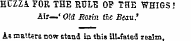
HUZZA FOR THE RULE OP THE WHIGS ! Air— 'Old Rotin the Beau . ' As matters now stand in this ill-fated realm , When old comrades will give us the slip , We ars strangely compelled to pnt men at the helm . To prevent them from 6 cnttling the ship . Only think , for s moment , if Basse ! were oat , Eovr wild fce'd be ranniog his rigs ! About popular ri ghts he would make inch a rOUW ' Tis lucfey we ' re ruled by the WhigB . Tfce Chmch — can jou doubt wh » t her danger would fee
" ^ ere the Tories at present in power ! Lord John , or bis frieBds , we shonld certaidy see Attacking her posts every hour . Bat as . ' ong as the Bishops may help oat his lease , He woa ' t injure » hair of their wigs , Say , hi even propoees their list to Increases' kazia for tha rnle of the Whi ge ! If Grey wero st Urge , how he'd lay down the law Oa the cnre 3 he lor Ireland bad found ; And swear that ha never would rest till he saw Her Establishment rsz'd to the ground . But Grey , while in office , rits mafSsd and xsutn , Like a small bird asleep in the twigs ; And Ward , in the Comaens , is rqtully damb So huzza , for the rule of the Whigs If 8 ny of as had mads war on Repeal
With the weapons that Clarendon tries , What shrieks of indignant invective from ' shiel At the wrongs of Old Erin won ! d riss . By millions of noigy ililesiant back'd , From the peer to « &e pg 3 fant that digs How would Monaghaa murmur that juries were packMSo huzzi far the rule of the Whi gs 1 On AH as and Chartisti to hear them declaim , You'd think Castleroagh come from the dead , Tfconsh the mixture of metaphors isn ' t the eame , Ani the courage and coolness are fled . But the Wnigsare becoming respectable men As any that ever kept gigs , They are practising now all tkey preached against
then—So huzza far the rale sf the Whi gs ! Go on , my good lafls—never think of retreat , Though anney'd by a f quib or a squirt ; You ' re fa . 'fiJling tbe fate such impostors should me 6 t , Aad eating your bushel of dirt . Then swallow it fast , for your hoar may sot last , We shall soon , If it pleases the pige , Gire your places to men of & different Cist , And get rid of the rule of the Whigs ! — BlacliBjOd ' t Mogzzint .
Untitled Article
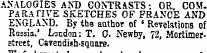
ANALOGIES AND CONTRASTS ; OR COM . PARAriVE SKETCHES OF FRANCE AND ENGLAND . By the author of ' Revelations of Russia . ' London : T . C . Newby , 72 , Mortimerstreet , Cavendish-square . We feel great pleasure in welcoming a ne * work from the author of the ' Revelations of Russia . ' His sound principles , cosmopolitan sympathies , and , above all , his earnest regard for truth , make him a safe guide , a trusty adviser , and ' beat possible instructor . '
This book , which a ^ est In every page predicts the Revolution of February last , was , as we lenovu , in course of preparation many months before that catastrophe . It is trae it needed ' bo ghost come { ram the grave , ' or other extraordinary power , supernatural or Datura ^ , to predict that Louis Philippe ' s system of corruption , craft , and lies , must , soise day or other , perish of its own rottennes ? . Still had this work been published , ss it was in the pres ? , before the revolution sf Febrnary , ifc would hare been considered 3 rem&Tkible production , and mu&t hive excited & degree of interest scarcely inferior to that excited by the author ' s Revelations of Russia . ' As itis . this work possesses no slight value , showing as it doe 3 , what was the damnable system of government established by Louis Philippe , and what w the condition of the great maES of the French people .
As the title betokers , a considerable portion of this work 13 appropriated to showing the ressm . hlances or contrasts of England and France , in their political institutions , social condition , material and intellectual power , and national characteristics- The points of contrast are pretty generally understood : bnt it will astonish many of the English readers of this work to learn how very much their French neighbours resemble themselves , notwithstanding * ps of contention and national Isome have asserted , natural , ] enmity . Another portion is devoted to personal sketches of Locis Psojpps , and the celebrities of France , both' dynastio' and revolutionary . The foreign policy of Franca ( under Louia Philippe ) occupies same chapters , snd includes certain
striking revelations of the Spanish marriages . One object of the author , predominant throughout this work , is the proeotlon of fraternal relations between Franca acd England , is the great pledge for the advancement of all nations ; an object which must command the good wiEhes of all true friends to progress . A theory gomewhatnovel , bnt to onr thinking perfectly sannd , i 3 broached by our author , to the effect that the social comfort and happiness of the people depends everywhere upon their political freedem ; tii&t men cansume mote varied and better food , live longer , and enjoy in a higher degree the advantages of civilisation , in proportion to tkeir command over the government . It has been gaid , that the vices or virtues of a state are ths effaeti of its legislation ; to the same cause qnr author traces the miserable er comfortable condition of tha mas 3 of the people , in the ssver&l states of EuroDe and America . We po * t-
? one the authors' Iatradnction , ' written since the ReTolnticn of February ; we shall revert to it when we have done with tfee bulk of ths work . He i » well acquainted with the French people , having , both as 6 n equestrian and pedestrian , travelled through and leenthe greater part of France . He made one jonrney , tbe length of five hundred miles , on foot , lie ha ? been a traveller by the diligence and other modes of conveyance , and has mads not less than twenty distinct visits to that country . He has kept company with the aristocrat , the banrgeoig , the arti-Ein , tae peasant , tne soldier , the irauggler , and ths chamois hunter . He hts been favoured with the friendship or acquaintance cf the Orleanist . the Legitimist , the Republican , the bigot , the infidel , the speculator , and the Communist . He has b . 3 en present at marriages , christenings , and burials ; he has seen all classes liTe # and maDy Frenchmen die .
Two na ion 3 , sajs oar author , play in our own times * greater part in tfae old world than the Greeks or Romans in the world of antiquity . Page upon page follows in proof of this assertion . We quote the followiEg : —
KODEER rKOGBEGS . Tram censtitationsl forms of government , from the code Kapokoa , free trade , and anti-slavery agitation" &oa tie eiteasiea of tbe preE « , the establishment of - 'baakfWrom thelnTention of tbe rail , tbe iteam-boat , ( the cotton . m'l ^ tnd ihs electric telegraph down to the V" 4 agnerro : yp » , aad the painless operation—nineteen' twentseAs of tteie discoTerttB au 4 insttatious Tfhloh ' cjnsti'uta the sum of aetu&l civilisation , are due to the j Anglo-Saxons or the Preach . ¦ = France resembles Great Britain in the extent and : concentration of its population , and shares with Great Britain ( in a lesser degree ) the advantage of having -er frontier guarded by natnral ' defences . In the old world , France is only second to Great Britain in tbe extent of its commercial navy , of its foreign cammerce , of it& manufactures , in the quality of food casinmed by its population , &s ., &c . Oar author adds : —
The French is the only extenilve race beBides the AagbBaron , which has ecbitvei reiponsible gsrern . EJent . The oa ^ rnsl mind ef ? rtuce , n evince ! in Iti liters .. tare— ' . hat neceisary reBalt either of its aptitude or of its cultivation , or of both—can alone compete with that Of Great Britain . Taken as a whole—sciealific , imaginative , acd learned—what literature ( setiieg aside the Ens ' uii ^ csn ba plactd before it , rrance , then fore , either in intellect or education , and In the antbor ' s belief In both , mustb 9 ranked with Great Britais , at the bead of all otter aations .
EDCCATTOK . Though tbere really may exist a greater amount of otter i gnorance in France than is to bs found in certain lbsolnte BtatL 3 , the is still , in the aggregate possessioa of i hi gher erder of knowledge , far in tho sdrance of those Joaat riei , which in tfce general difineion of itg medi-• wity . may claim oTer her tee samt Eaperlorfty which
Untitled Article
the Chinese might reasonably arrogate above themselvei , France is furthermore distinguished from all other continental states b y the Impartial administrates of the law , which—openly Marketable in tbe eaBt of Earope ( a notoriously liabla to influence in its etntral states , not excepting PniBsia , and despite the s « lf . lacdatory dictum of its eorereiga , In his speech at the opening of tbe Diet , PrancB , therefore , taken , as a state , and tfe » French people as acommnnltj , can only be likened to t * e » mpire and pesple of Great Britain , in the superiority of their position ( relative to the remainder of Europe ) in psint of wealth , power , and intelligence . raAKCE AMD ESOLA . VB C 3 MPJE 1 D . FraBce exceed * in . ms&t things aVl the great Eutopsan powers combineiJ ; but whsn tre cantrast France with flreat Britain , we find her as f jr behind Great Britain as she is in advance of other Contlneatal state ! .
Thus France exceeds the thres powera In tbe extent o ( her trade . Great Britain iB her commerce doubles France . France doubles the three powers in the extent of her nary . Great Britain more than trebles France . In the extent of its middle class , Franca exceeds the Costiaent : Franee ha < 1 , 164 , 000 subjects etjoying an income ab « re £ -1 . Great Britain has more than two million ! and a qaaiter enjoying npwards of £ 40 . annually . la the quantity of food consumed by its pspulation , France averages double tbe quantity of wheat and double the quantity of rajar cotuamedbs tnei > 6 pul&iloa Of the absolutely governed states : in France 351 pounds of wheat , and 6 to 4 poundt of sugar are consumed per head . In the United Kingdom 335 pounds ( and taking oaly Great BritaiB , 446 pounds ptr head of wheat ) and 19 pounds of sugar , are consumed .
During 1847 , £ 58000 . 000 have been raised in France . The revenue of Russia , Prussia and Austria , whose sub . jecta are still more severely taxed in proportion to their ability to pay , is coUectively £ 1 S . OOO , 0 ; 10 . The United K : Dgdoin levies only fifty millions of taree ; but p . s its income is computed at 550 millions , and that ct France at 320 railioas of poasds eterlitjg , it iB obvious that Great Britain could without greater pressure raise double the present revenue of France . [ It should hevo been stated , however , tbat many subjects of local or apecial taxation in England are ia France discharged by the Government : were everything brought to a compa . ratire aceount . it would be found , we think , thatEagland pays the nsest . *]
It is also worthy remark , that in Russia more than a third ef the whole revenue is derived from the brand ; farms ; ivfcicb , when the low price at which it is sold , the profits of the brandy farmers , and ths produce of illicit distillation are tsk n into account , suppose the consumption of a prodigieus quantity of ardent epiritt . If we turn next to Prussia , attempted to be Imposed on us as a specimen of model admleistratioo , we find twenty-four pints of distilled Ifquoc the share of each individual ; whilst in Ireland , the land of whiskey , the
average —nine before Father Mattbew ' e reign—is since only about seTea ; and in the United Kingdom , including london with itg gin palaces , something under six and a h » lf . If we draw a lino through Europe , separatee the Western and cenititutioaalfrom the absolutely governed states of the C .-ntreand of the Bast , we snail find that our British exports to Holland , Belgium , Spain , Portugal , and France , notwithstanding the Illiberal tariff * of France and Spain , average threo shillings for each Indirldual , whilst for Central and Eastern Europe only one shilling and eightpeace .
To the Russian empire oar exports are eightpence and . a fraction for each inhabitant . Tha diacinctionB of individual character between the Englishman and the Frenchman though considerable , are yet less than divide the English from all other continentals .
TBS TBERCH AKB EK 6 LISE PEOPLE . Fire and water—light and darkness—black and white —have so leng been held at lesi antithetical ttaa French and English character , that we are apt to allow these profound analogies to escape U 3 , whilst tempted to assign an usdue weight to trivial contradictions . Kany foreigner * , it is true , are less unlike us in externals , but on matare investigation nose will be fennd mare to re . sembla u § in essentials than the French , The Dutchman ' g phlegm , the German ' s meditativeness , the Spaniard ' s gravity , the Turk ' s Bedatene 68 , appears at first sight more consonant with British earnestness than the vivacitus levity of the Frenchmen .
Yet i » this frivolity of form exponent of more- real frivolity ! Far from it . In the terious energy of his pursuits , and in their practical aaa expreEBlve character , the Frenchman alone bears any likeness to the Briton . The German ' s tendency to barren speculation , the Spaniard ' s stolid conceit , the Turk ' s barbaric pride , tbe Duchman ' * contractive egati § m , are more fitted to denote a want of maturity in the national mind , aHd indicative of Ies 3 real gravity than the clamorouB vivacity exhibits with which the ? ren » h purBUe important objects . The Spaniard and tbe iloslemln solemnly trifle away existence over the cigarette- or chibonqp
The German muses away its most Intellectual portion ia gr&tifslng asensatton by the cultivation of harmony , or in weaving an entangled web of words in a pedantic at . tempt to generalise and classify . The more practical Hollander—covetous of his riches and jealouB of hh liberties , bat regarding wealtb as an end and only comprehending freedom in its personal application—restrict * his activity within the most selfish limits . But can it be said—if we judge by remits , the truest of all teststhat the grave demeanour of any of these nations eBsentiallyas much assimilates to the energetic seriousness of thepopalation of these Islands , even ai the volatile enthusiasm and noisy earnestness of the French t
The f rsnch aai English people , though In nothing more distinct thaa ia their religions , are still both alike , inacceiiible to plsaiibllity in religion . All tbe graces of a Erudener , and all the genius of a Mttrfelavitcb , would not in this direction be more effective than ths vulgar energy of an illiterate , or the vehemence of an insane impostor ; because the national lucidity of intellect discerns at osce that co efiart of reason can ever rolve , or render through any conceivable hypothesis less asteundieg , —the airfu ! myetery of first causes . Hence the resolute rejection of that which never can be proven from intermixture trlih facts cf which the demonstration l ies within haman compass , by both people , and the coincident liability of the few amongst the Anglo-Saxon race to accept religious theories the most extravagant .
Our author maintains that the chiralroHS spirit more extensively pervades the French and English than other people , excepting , perhaps , the Swedish and Norwegiana ; this spirit—one of the most powerfal lsvers which ever moved humanity—ia inherited in Franca and England , no less by the lowly than by the exalted .
CBlYmY OP IHK PSEHCBH 1 K . Howtver rude , vicious and feru tal ' ised that' proletalre ' may seem , wkoie vindictive envy of all above him is stamped in the habitual expression of kis countenance , he is itill capable , If you appeal to his honour , of tha utmost magnanimity . In tfee very midst of riot and < xciteaaent , whsn compensating himself—armed , triumphant snd ia rag * , — by a day of anarchy for veare of undoubted , misery and 6 uppoBed oppres . lion , not one bat a hundted instances are on record of his generosity to a fallen foa and his abstinence from tempting appropriation . That soldier whose tempersment tfce strife heats into blood . thlritlne « s , in whom tbe traditions of French armies inspire the thirst for plunder , an * whose natural Impetuosity nnSts him for prolonged
endurance or exertion , is yet seen mereifal in tbe battle and on tha breach , strictly honest in his charge , and pstient when suffering privation and fatigue . But with both the soldier and the artisan these qualities are elicited by an appeal to his chivalric or patriotic feeliog . Three times out of five your life and property is safe if you have the pmesce of mind to place it under tbe safeguard of his feon ^ ur . When meditating violence or spoliation address him in hit charscter of Frenchman and the chacctB are that he will forego his purpose to act as ha concelves a Frenchman ought to act . Amidst the weariness and hunger of the march , in the winter ' s snow or the dmitf a Baaa , the invocation of henour , ef p&ttlotitm and glory , arreits his nmrmur * snd supplies tbe place of
uarmth , shade , water , bread and sinew . Tke very expression of the drunken operative or soldier , -when reeling in the kenael he strikes hl » breast and hiccups out ' Jc tub F T . rr . rancaii ? is but the grotctque expression of a characteristic which universally pervades and ele . vates bii people . Even in the prison and the bagnio , amongst those whose hand is egaiast eeclety , and whom society has stricken , crime and its consequent dlsgrace have rarely wholly smothered the feeling which redeems this degradation . The convict boasts of his nationality , he shows a roagb good faith to fcls eoairade * . and thoug h he is insensible to the mark of tbe hot-iron which brands him with bis thame , he fetis and resents as an indignity the accusation of being a ' moucbard ' or epy upon bis fellowf .
A VENBEAN STOBT . ' It was three days after the destruction of tbe Chateau de la Peniisiire , ' said the informant of the writer , ' that after being eighteen hours on foot , I crept into tbe oven of a metsirie ( farm house ) in which tbe farmer ' s wife concealed me , as a picket of gendarmerie and » detachment of the line were in the e rfjioent village . Whilst I was atleep two soldiers came down to the farm house , and it so happened that the farmer ' ^ sister seeking a dry faggot from the oven , and not feeing aware that I was in it , screamed to loud oa perceiving me as to attract their attention . Before I knew where I was I felt myself dragged out by the legs , disarmed and bound . There were but two women and a boy upon the farm , find my case seemed hopeless bs the soldiers drove me before them with fired feajonets towards the village . '
' Brigand ! ' eaid one a corporal— not so fast ; if you sttempt to swerve right or left , I'll lend a charge of lead thtongh you . ' ' Blane lee , ( greenhorn )'! replied , ' I am no more a brigani tbaB yourself . I was a soldier and I saw blood drawn before yon ever handled a musket . You would not botb tesethtr have mastered me now , If it had not b » EB . for that woman ' s treachery , —far bo at that momtnt I believed . ' , Too are a braggart , ' replied the corporal , and I ht ve a great miHd if you rspeat jour words to put a sword into your hand , and take you over ngatu or run you through the body . 'Try ' said I . 'No sooner said than done . Taking his companion ' s sword , he warned him to shoot mo
Untitled Article
throu gh the head if I attempted to e » oape , and tben handing it te me he drew his own and loosed the well rope with which he had bound my arms . You know , sir , that < n the royal gu » rd I had learned tho use of the steel . We did not fight long I promise jou , " Once , twice , thrice , and I ran him through the arm . The other levelled his musket , bat the wounded man called shame upon him—that It wa 8 aQ affair of honour . Then he shall fight me now . ' Pooh ! ' Buid the corperal , ' he would spit you like a quail , let him give back yeur sword and be off with him . One half hoar he shall have , and then we'll hunt him to the death . ' 'Son voyage , my frieBdB , ' said T ' and ten minutes after I was safe in the tall broom . ' Our author gives some amusin ? illustrations of English chivalry , as illustrated by the deeds of cab men and other similar oharaefew , for which we must refer the render to the work itself .
Commenting on the abominations of the passport system , our author tells a story of a traveller sent sixteen miles , on foot , in tha custody of a corporal ' s guard , because his eyebrows were not . as described in the passport-blue . Passing over the particulars of this story we select another equally good .
PiSSt-OBTS . A spinster lady , applying for her pasport , and disposed to Da facetious , remarks alond to her companion that tbe functionary before them reminded her of the apothecary in Romeo and Juliet . This observation , if apt , is in this respect inopportune that it Is perfectly undemtood by the employe who not only has studied the English language , but being a zealous partizan of tbe romantic ( as distinguished from tbeclBPSlc ) drama , U deeply read in Shakespeare , and ftels in no wise flattered by the comparisen the fair stranger has instituted , But tho means of retribution are in Ms hands , in the shape of a pen and a printed form , which , after polite inquiries as to tbe lady's name , age , destination , &c , he proceeds to fi'l up unil he comes to the signalement or personnl description , often consideratel y left jn blank In s female ' s passport . Here , in characters aa dark as Ouyot ' s tncre de la pelifc verftt could mtke them , he inscribes his revenge .
To tbe horror of the lad y who bad been 60 satirical on the outraged employe , ahe found when the document was banded to her , that he had thus depicted her . Hair , false ; forehead , low ; eyebrows , dyed ; eye » , small , greenish ; nose , flat Inez epate ) and complexion tanned ( ttint basane ) . Her age , which had been set down as sho had given it , at thirty-five years , was accompanied by the remark ' looks fifty-three . ' And weree thaa all , this libel which the victim was bound herself to exhibit throughout France—like all libels ( at least according to the view taken by the British law ef these matters ) w » s heightened ia malignity by the fact that ita truth was undeniable ,
Oar author maintains , that though modern Ganl scarcely deserves the title of' Belle . France' it iB still the fineat eountry of the European cOBtinent . In the conaitieu of its people a striking inequality exists betwon its town and rural population . The real French people—the people which thinks , feels , and acts , is confined to the oities . In the fol owing extract we are made tocomprehend why universal suffrage has resulted in the election of tie present rascally Assembly . It must be borne in mind that the following passages were written some months before the late revolution . Mr Smythe , in his historic sketches , gives a characteristic dialogue between an ultra-liberal deputy and an Eng . lisa Radical , in which the former Ib utterly astounded to hear hiB English host advocating nniveraal suffrage , vote by ballot , aad liberty of instruction , which in France , the most thorough . going partisans of the old Bourbon monarchy wonld ao eagerly accept .
Ib point of fact , the legitimists , who Sn the columns of the Gazette de Fkance and the Qbotidienne ( before tbe fusion of tbe royalist organs ) called with apparent inconsistency for measures seemingly so Hb-raJ—and the liberals of all shades of opinion repudiating them acted on an identical conviction , that of the ignorance and onfitneas of tbe majority to preierve even the liberties it bad acquired . Universal suffrage , it is believed by the intelligent ot all parties , would even now in France rapidly conduce to tha restoration of absolutism and of church-domination . The poor and ignorant cultivator furnished with a vo ! e waald resign tt through bigotry or indiflt rence directly ,
or by the intermedium of his wife , iBto the hands of the curate , government functionary , mayor , or of the wealthiest man in his village . For one vote gained to tho liberal cause in the town ? , three might be lost in the country ; aad when it is considered tbat the two succes . five eOHOtlluUonal gavernmtnts which Prance ban had , have found means { by the application to its forms of that sjctem of centralisation bequeathed to them by the Empire , ) not only to arrest in a great measure the progress of ivfOMn , bufc olken to encroach upon its conquests ; it may be judged in how far the national Hberties would be at the mercy of the crown when armed with such an accession of its strength .
According to our author , the natives of Britanny are renowned for their stupidity . A sergeant of the French Army thus desoribes them . — 1 Wb . es these Bretons arrive as conscripts the fif « t thing done is tnhi » . » *» .- « - -Whes , cut close their hair , fln < i « o « iv them for whole hours in 6 ^^ juu water , - ¦ :. ¦; some weeks we succeed in teaching them to distinguish the right leg from the left , and by dint of care , we develope their intelligence at lesgth to the level of that of an average trooper ' s horse , yet with time , sir , those very men make the best , steadiest , and 6 tanoheat men in tbe whole army , excepting the inhabitants of the Ardeche , ' This review will be continued in the Siar of Saturday next .
Untitled Article
Sketches qf Her Majesty ' s Household . London : W . Strange , 21 , Paternoster-row . This elegant li'tle book contain full particulars of the offices which constitute the royal establishment , the salaries attached to the various appointments , the amount of pensions upon retirement , nr superannuation , &c , &a . Professedly this book forms , and . indeed , is— ' A Guide to Situations in the Sovereign's Domestic Establishment ; ' but is also something more—a guide to the people in theireeareh after the truth respecting the fripperies and follies of monarchy , and the coat of those trappings to the community . Monarchy is no doubt a very wise and excellent institution . If any one doubts tha ' wisdom' or the ' excellence , ' history will dispel those
dnubta- From the time of Nimrod to Sagi > ( appointed King of the Jews under rather peculiar circumstaneea , —vide I Samoel . chaps , viii-, ix ., x ., ) from the time ef Satjl to Herod , from tha time of Tiberius to the bastard Noeman William , and from his time to that of the baBtard-begetter , ' Fum the Fourth , ' all history proclaims the wisdom and tbe virtue of kings . The humanity , chastity , sagacity , and moderation of kings all men acknowledge j and the happiness of the cations over wbich they have ruled , never knowing want , war or Blavery , sufficiently testifies to the ' wisdom' of those remote ' ancestors ' who first abdicated their own sovereignty to make way for the majesty of kings ! Still , with all our admirstion for royalty , and our special veneration for
the Queen of these realms , it strikes us that monarchy would lose nothing of veritable majesty , and our veneration wonld not be at all weakened , if instead of neBrly . £ 400 , 000 being yearly expended upon the sovereign ; a decent allowance—say something like the Amerioan President ' s salary—were voted annually by the Parliament , and what is now lavished upon the drones of the court employed ib raising the people from Equalid misery , to comfortable , well-re quited labour . We cannot see that ' Bedchamber Women . '' Lords in Waiting , ' ' Gentlemen of the Privy Chamber , ' 'Gentlemen Ushers of the Privy Chamber . ' ' GroomB of the Privy Chamber , ' King ' s
of Arms and Heralds . ' ' Pages of the Back Stairs , ' The Gentlemen of the Wine Cellar , ' ' The Hereditary Grand Falconer , ' and some scores of similar officiate arenecesBaTy for the comfort or dignity otthe monarch , or at all calculated to strengthen that &ttachment to the monarchy which , un Joubtedly—we have the declaration of noble lords and M . P . ' s for it —throbs in the breast of every' free-born Briton V The coart jester has been long banished from the ? resenee of royalty , why should the Poet Laureate remain ? Or if Wordsworth is a necessary appendage , why should g # *»*****» be defrauded of his due ? A shocking bad Patlmnentary buffooD , might make a very respectable court
fool I In this book , Jobs Butt may leaf n how the money goes . Take a few items : —The BaroDess Lebzen , £ 400 a year . Lady Wilde £ 1 , 000 « year . This lady is the wife of the merciful and impartial Lord Ch ^ ef Justice Wilde , who enjoys a salary of £ 8 0 U 0 yearly , and who is also enjoying the prayers of the wives and chiMren of certain victims of Wbiggery , at present located in Westminster Bridewell and elsewhere . Earl Sfbkceb , Lord Chamberlain , £ 2 , 000 yearly . Lord Edwabd George Fiizallan Howard , Vice Chamberlain . £ 924 yearly . We pass by the Mistress of the Robes , the Ladies of tbe Bedchamber , the Maids of Honour , the bed chamber Women , &c , < fcc . Eight Lores ia Waiting [ including a Lord Byron . ' ] £ 702 per annum each . Eight Grooms in Waitinp , consisting ol ¦ Baronets' and HonourableV (!) £ 33512 .. 6 d . per annum each . The Master of the Ceremonies j fiSOO perannom . Four Geatlemea tubers of the Privy boat of
Chamber , each £ 200 yearly . Pausing over a Gentlemen Ushers . Daily Waiters , Groom of the Privy Chamber , Quarterly Waiters in Ordinary , and Grooms of the Great Chamber , we notice Eight SefEe&nte-&t-Arsis , vhose duties . at the time of their in titution by Richard I ., were to capture any tai ; to-a about the Court , and other great offenders , and to bold watch outside the King ' s tent , dressed in complete armour , and armed with a bow and arrows , a sword , and tte mace ef office We have no room to notice the Pages of the Back Stairs , the Pages ot the Pretence , the State Pages , Page of the Chambers , the Poet Laureate , &o . We may state that the Examiner of Piays , that ib , the Censor of the Stage who holds hh appointment m the gift . of the Lord Chamberlain , enjeys a salary of £ 400 per annum . The situation is , at present , held by Mr John Mit chbu . Kemblb . However poorly her Majesty ' a subieots may be attended to by the medical officers of Poor Lsw Unions , it will be gonwsatuifaetion to such
Untitled Article
parties to learn that , in that respect , her Majesty ia pretty well attended to . The Rojal Medical Eata bliahment confliata of Two Physicians in Ordinary , n » e fajsiciana Extraordinary , two Physician-accoucheure , a Physioian ta the Household , two Sergeant burgeons , a Surgeon-accoucheur , a Surgeon to the Household , four Surgeona Extraordinary , two Apotfaecaries to the Peraon , three Apothecaries to the Household , two Apothecaries Extraordinary , two Surgeon Dentists , a Dentist to the Household , an Aunst , an Oculist , and vSurpeon-Chiropodiat ; besides two
Apothecaries to her Majesty in the Isle of Wight ! We shall leave th ? Master of th « Tennia Court , the Keeper of the Swans , and her Majesty ' e Bands of Music , and come at once to the Lord Steward's Department . The present Lord Steward , Earl Fortescub , receives £ 2 , 000 per annum . Lore Arthur Marcus Hill . Treasurer of tho Household , £ 904 uer annum . The Comptroller of the Houaehud , £ 904 yearly . Colonel Bowles , Master of the Household , £ 1 . 158 per annum . There are a host of Clerks of the Kitchen ; the present Clerk Comptrol er , who was formerly a fojtman to Lord
Uxdbidgb , receives £ 700 a-year . The number of cooks , and , as Jack would call them , ' cook ' a mates , ' almost defy enumeration . The Chief Cook receives £ ? 00 a-year . The Gentleman of the Wine and Beer Cellars ( saying nothing about Y . omen (!) and Groom (!) receives £ o 00 a-year . Leaving unnoticed a host oi subordinates , we come to the Master of the Horse Tae present 'Master' is the Duke of Nokfolk , who enjoys a salnry of £ 2 , 500 a-year . < The privilege oi having the use of a Coaohman , four Footmen , and half a-d ( zsn Grooms , belonging to the Sovereign , and paid for out of the Civil List , has always been enjoyed , and never waived by a Master of the Horse . ii
TYen meuuKeof Montagu held the appointment , be rather exceeded the prescribed numbir . He had tour iootmen , whose salaries were £ 53 per annum each ; one Coachman at £ 65 ; one Stable-helper at A JO ; and eix Grooms , at £ 60 a year each - , 11 ms saving , Hi ^ SBS tO his servants , no less than bctivem £ 600 and ± 700 a-year . ' 'I he salary of Cliief Jbquerry afid Clerk-Marshal , is £ 1 , 000 a-year . The four Equerries in Ordinary receive £ 750 a-year each . Karl Ghakvillk , the Master of the Bupk Hounda , receives £ 1 700 a-year . The office of Hereditary Grand Falooner is filled by the Duke of St Aldan '* at a salary of £ 1 200 a-year ; ' but , as her Majesty possesses not a single hawk , the Duke ' a knowledge of falconry ha > never yet been called into requisition . We may , therefore , term the appointment a perfect sioecure . ' We must refer the reader to the work itself for
information respecting the GentJemen-at-Arips , the Yeomen of the Queen ' s Guard , ifec . Prince Albert ia Governor and Constable of Windsor Castle . ' TneTe are no duties to be performed , am the office iB , consequently , » sinecure , withasalary of £ 1 , 120 a-year . ' Prince Aldbrt ia also BaDger of the Home Park at Windsor , with a salary of £ 600 a-year , and the privilege of turning out tograzsin the Park , a certain number of sheep and cattle , which is a source of eonmderable profit . His Royal Highness is also Ranger of the Great Park , with extensive and profitable privileges . It is generally known that tbe enra allowed to nor fe& A" 'T « 8 e (' P « Y ? Pune' ) is
, £ 60 , 000 a year . The Keeper of Her Majesty ' s Privy Puree ( whose duties comprise little more than signing a few checks , oeoasionally , upon Messrs Coutta , her Majesty's bankers , ) is Mr Gbohob Ed . ward Anson , formerly private secretary to Prince Albebt ; he has a salary of £ 2 000 a year , with lodgings in Windsor Oaat ' e ; acd holds , in addition the situation of Treasurer to his Royal Highness Prince Albert ; Treasurer and Cofferer to the Prince of Wales ; and is also one of the youthful Prince ' s Council of the Duchy ef Cornwall . The Hoa . Mm ABson is one of the Bedchamber Women , a sinecure * office , with a salary of £ 300 a year . '
_ It is only fair to state , that tho extravagant gala , nea we have ennserated , attached to offices which , in many instances , are perfect sinecures , strikingly contrast with the Bhabby salaries paid to the footmen , coachmen , and inferior serrantB' ef the Royal Household , who , einoa the present sovereign ascended the throne , bave been subjected to a system of cheese-paring , candle-scraping , pinch-guteconomy , which if not inspired by browBbread Joseph , musttaking into account tbe ' tottle of the whole '—have afforded great aatisfaction to that warm-hearted philanthropist , and gigantic reformer 1 Our readers will now nave an idea of the contents of this hook , but the book itself must be read fey all who wish to know how the money goes ; how it ia that the English people- pay * 385 , 000 yearly for the support of their Chief Magistrate , whilst the Americans only pay £ 6 , 000 a year for theirs ! "
The monarchy is no doubt the most valuable of onr institutions , and her present Majesty tho begt possible aovereign ; still there are few who reading this work will hesicate to come to tho conclusion with Bubke , that' We have expensive formalitiQS— -solemn plausibilities—which tend rather *?> the disgrace than the ornament of the Sfuto c ,- < : ike Court . '
Untitled Article
¦ m thf . leHj ^ -M of . " . , ' v , - / , ¦ r . kti Able-bodied Poor . By G . Pou' < 5 ! . ' . fturopt- - * ' 5 " if R s ' ;> " <>< " > T D :. ' .. Mr $ ¦ : *>•'!• : professes to be sn advocate of the ' Ri ^ hu f 0 ! iudustry , ' but of 'hv . ie rights he has but - . _ . ¦ . ;••>>['• : ur-J \\ K ^ vicc : notions . His ' beat form of l-ii ' .-f i .- !; . ' . ; -1 ;( iiiieringof the preBect system , and Cijp . iemplates no method of abolishing pauperism . It is true he advocates the cultivation of waste lands , but only as a means of obtaining some return for the outlay in the shape of relief . He seems to have no idea oftranaforming wretched paupsrBinto independent yeomen ; yet , with the command of the poor
rates , lOe would undertake that transformation . We agree with Mr Scrope aB to the folly of putting uneaployed nrn into uniforms , or setting them to work at the unproductive labour of which we have recently seen examples ia France , Prussia , and Ireland ; and we also agree with him , that it will be time eneugb to think of colonisation after wo have fully developed the resources of the national territory , but not before . But we respectfully submit to Mr Sorofb tbat he has not solved the problem of how to reconcile the rightB of industry with the claims of capital , the stability of government , and the order of society . Mr Sckopb must try again .
Untitled Article
Signs of the Times , or the Signal Itoclcel ; dedicated to ' Lord John Russell By a Poor Shoemaker . Hammersmith : W . Tuck , Dorville ' a row . A Christian address , which we are afraid Lord Jons Rossell is not Christian enough to profit by ,
Untitled Article
The English Patriot and Irish Repealer . No . I . Mancheater : J . Leach , 73 , Raohdale-road . This ia tho first number of a new weekly penny political paper , edited . as we understand , by ourold and staunch democratic friends , Gbo White , John West , and Jambs Leach , assisted by the well known Irish Repeale * i GkOi Archdeacon . Any publication edited by working men , and devoted to the interests of their order , always has our best wishes . It , however , too often happens that the conductors of such publications fall into one of two errors ; they either mistake coareeness and violence for strength , or fall into the still worae delusion of attempting by maudlin wordmongerinp to imitate the ' refinement' of the ' higher
orders . ' We are happy to say that both these faults have been avoided in the publication before us , in ftbich strength of argument is combined with eloquence of language—not wanting a spice of witwhilst certainly there is no approach to that maudlin balderdash in which certain would-be ' respectable ' politicians are apt to indulge . The ' Opening Addrea 9 , ' and the articles on tbe 'Rights ol Labour , ' ' The Reign of Terror , ' ' The Myeteries of Government , ' ' Organisation , ' &o ., &o ., are worthy of the editors , and promise well for the future of this periodical- We wish ' The English Patriot and Irish Repealer every success . It ought to sell fifty thousand copies in Lancashire akne . More power to ye , boys !
Untitled Article
WHIGS IN OFFICE AND OUT OF OFFICE . TO JOHN BULL . Sir , —It is I believe the general opinion of Conservatives , that in the present state of Ireland , it is fortunate the Whigs are in power ; because , had they been in opposition , they would most probably have acted as they did ia 1844 , when the trial of the late Daniel O'Connell was the subject of their violent declamation against Ministers . I happened yesterday to meet with the Times of 20 th Feb ., 1844 , in which there is a full report of the speech of Mr Macaulay on the state of Ireland , and a more mischievous one was never uttered in Parliament . It well deserves perusal , as it shows in what manner WhigB will sacrifice everything to p arty spirit ; and it is curious , in so far as many of his strongest censures are directed against measures which are imitated by a Whig Government .
I shall conclude with a single quotation of a passage applied to O'Conuell ' s trial . Mr M . asks— ' Was it possible on this trial between religions ; wa 3 it possible in this trial between races , to have a fair trial by a Jury which it is admitted was exclusively Protestant ?' I am , Sir , your most obedient Bervant , C .
Untitled Article
Royal Arsenal Woolwich . — Daily complaints are made by visitors , who wend their way from the great metropolis to Woolwich to visit the Royal Arsenah but which , owing to the order of the authorities of the Royal Artillery , is kept clO 3 ed against them . The Royal arsenal was closed during the late Chartist riots ostensibly to prevent any coup de main on the part of those agitators , and since tbat time has been kept closed . Hundreds of persons are daily refused admittance— -Sunday Paper in Lubin , Poland , 150 villages nave had all their growing crops destroyed by a recent huiricana . A great number of cattle and horses were also destroyed .
Untitled Article
THE UNOPPOSED INCAPABLES . ( From the John Bull . ) nfa . 1011 ' ^ ^ becn dr ° Pped to the House f S 2 S M- ° ? MoniIl K laat ' informed that English MiniBtera oonUt not Eot on for want of a vigorous opposition , the gentleman in black would , in all probability , haveaaked if all the grumbling and complaints which he heard on all sides were bo manyevidenoesof approval and atippert . The moment Lord John Russell , on the day referred to acquainted hon . gentlemen with his , intentions for the short remainder of the session , ho certainly received
opposition enough to make a government for life , if oppssition be ind ? ed essential to ministerial stability and atrength . The plain 1 ruth is , that your incompetent and slothful boy gets on neither with Hoggin " nor by gentle pattings on the head . Force haa no more effect upon him than upon the donkey ; pereuation not half so muoh . The sight of a carrot has beenknownto work wonders upon the bruta . No p rospect of provender , however extensive and tempting , has ever been known to pufc elasticity into the heels , or practical ability into the head , of a thoroughgoing Whig .
There is a vague but a very amusing belief afloat , that it is imposnblo to do without the present government , because , if you upset it , there ara no set of men able to take tho vacant places . Before such & _ conviction takes permanent hold of the public mind , we should like to know if any dozen average clerks have been tried ; if the man who pulls the wires of the faatoccini has been applied to ; if the best patients of any lunatic asylum have had a fair chance of competition ? We undertake that the aon . member for Macolesfield shall furnish ne , at an hour ' s notice , with a Chancellor of the Exehequer , able , at least , to propose an increase of the Incometax to
meet n fearful deficiency , and to withdraw hi 8 proposition immediately afterwards , upon the ground that no deficiency ex ; stB at all . We are oureelves prepared to make puppets which shall answer the string as enrctually as Lord Morpetb . replied to the demands made upon him from all quarters in the matter of the Sanitary Bill ; and we will back , at any odds , the sojoumerat Han well against the Minister , who . only a day or two ago , authorises the Custom House , without knowing it , to admit Dutch refined sugar at 24 a . 8 d . per owt . instead of at C 3 j ., and British West Indian Muscovado at 133 . per cwt ., inBteadofat 153 . 9 d . Will anybody take the bet ? Will her gracious Majesty suffer the experiment to
be tried ? One thing ia very evident—at least to us , and it cannot fail in time to become clear enough to the public at large . If the affairs of the country can be satisfactorily managed by the present administration , then Mr Cobden and Mr Hume are not bo wrong after all when they complain of the heavy salaries of our nsraerous officials . Take the Chancellor of the Exchequer from Dawning street ; deposit him in Cornhill , and see if you can get a guinea a-week for him at aay respectable retail houae , supposing that he finds himself . ' Ia Lord Morpeth so knowing in his sanitary doings that any nightman would be disposed
to take him on even at a gift ? It is rather hard to make the eountry pay so dearly for its luxuries . Men of great families and of high descent become frightfully expensive commodities , if we are to pay thorn six or seven thousand a-year only te laugh at them . There is not a man , be he of what party he may , in tbe House of Commons , who is not , at this moment , chuckling or sighing at the incapacity of our rulers . If incapacity in these piping times is all we need for carrying on the government , then , in tho name of free trade , get it at the lowest figure , buj it , as you do your corn and Bugar , ia the very cheapest market .
That we shall do any better next session than we have done this , it is ridiculous to suppose . Ministers are not going to echoed in the interim , Sir Caarles Wood does not meditate a coupse of lessons on the rule of three direct ; Lord Grey and Mr HaweB have no intention of devoting themselves to moral philosophy and the science ot ethics , Lord Palmef 8 ton iB proverbially incorrigible , and the Preraier » of course , thinks he has nothing to learn . But what study apd what improvement could alter the cruel necessities of the case ? What instruction can avail a Bet of men playing at legislation , and proving afc every turn tbat they are not in earnest ? Had Lord . John Russell meant at the commencement of the sessfcfi to bring the Navigation Laws to the test , he had ample opportunity for his purpose . He withdraws
tho consideration of this question at the last hour , not because there has been no time for diacuesion , but because be has a paiafu ! consciousness tbat & settlement of the business would in some sort be a settlement of the Ministry , including himself . To do anything that may weaken the divisions of the Conservative party—that may possibly tafre former friends and present foes back from antagonism to close alliance is to risk place and power , loved and ( Wished by the spirit of Wtljgeiy beyond all qualities , human or divine . The rule applies to ejej ; y ministerial movement . The question is not whSf will serve the country , not what is it right between mftnjHjdraan to do , bat what uSLVfiSmfiaf government and its miserable necessities to attempt to carry out .
If the people of England arc satisfied with these most inefficient gentlemen , we have no right to complain , but , being taxpayers as well as our neighbours , it is undoubtedly competent for us to protest against a wanton waste of public money . If noodles answer the country ' s purpose , let us pay noodle price . It is monstrous to be told in the same breath that men are fit to govern tbe empire who are not qualified to keep a chandler's shop ; and that men not qualified to keep a chandler's shop , are to bo remunerated most munificently for their flagrant inability .
Untitled Article
THE IRISH PEOPLE versus THE ENGLISH PRESS-GANG . In an article in the Atlas of Sunday last , on Ireland , there is quoted , from a publication entitled ' The Irish Movements ; or Hints to Patriots and Pikemen , ' the following extract , with the additional comment . Whether extract or comment exhibits the greatest atrooity we leave our readers to determine : — Does England imagine that an Integrity of the king , dom ia Decennary ! She can tffeot It , she should effect It , and she must offset it . H&b she the means to main , tain the union and suppress sedition ? Ay ; and abuadflnt ones , if eho only please to employ them . A ton or two of gunpowder and a coll of tope will do the Job . All required is to take tbe ball by the horn , No more
temporising ; and whether tbe delinquent append to bis patronymlos an S . P ., wear a surplice , or nwBgger ; n a barrister ' s gown—whether be be a euckiBg traitor , or a matured remnant of ' 98—deal with him and them with etera impartiality . If a olerlcal example mast be made , halt not between the ' tho Hon of the fold of JudaV or tho holy man of StrokeBtowu , who complimented poor Major Mabon from ttao altar . If a briefless member of the bar , like Mr Doheney , one whote forensic existence wa 3 unknown to Justice Lefroy—should he still continue troublesome , send him to join Mr Mitchel in Bermuda . I < is marvellous how pleasant it is for old acquaintances to meet in a new country . If a patriotic rifle olebwlsh
to try their hand ? , let them , in heaven s name , bave a ahy with a company of the line , or a troop of cavalry , Praotloal instruction ie worth a thousand theorist , Sboot half-a-hundred of the fools who stand , and bang balf-a-dozen ot tbe knaves—the leader * , of course—who will rnn away . Confidenoe will return ; landowners will come back ; elderly gentlemen and ladies slumber without the apparition of Meagher of the sword standing at tnelr bed-aides , with Old Bell-tbe > Cai ' a two-hanclea weapon , and giving a short aotlce for eternity to these unfortunate unionists ; trade in Ireland ( almost now a forlorn hspo ) may rovive a little , homicide Will decrease , and cursing Irom tbe altar ranot decline .
There 13 , in faot , nothing else for ua . We have the army and the law—we have the musket and the rope . We bave tried long enough the Boothing system . It won't do . We may appeal to Irish reason . There is no such thing . We may appeal to Irish gratitude . There is no fluoh thing . There is nothing intelligible and there is nothing respectable to ba found in Irish . ' patriotism . ' It taeana a&tbAug but violence ; it feels nothing but fury . It baa no brain to reason with ; it haa no heart to touch . We may talkoi good sense and good feeling ; but if they ever existed in Ireland they are new utterly extinct , like 1 Erin ' s honour and Erin ' s pride , ' which have a poetioal leputation , but which , in reality , have long since been buried : unless it be honour to shoot men in the dark , and pride to receive all passible obligations from another and then forthwith to blackguard him without stint and without remorse .
( From the Examiner , ) The Times well describes the present posture of Young Ireland as' rebellion well in hand , ' rebellion on its haunches , rebellion gathered up and ready for a spring . Hamstring it . Disable it in its sinews . Cripple it for ever . The leaders are few—leave them leBs . Their purposes are avowed—the alternative ia the fiel d or the gaol ; and committed as they are , they must bo driven to the one unless the government mercifully hands them to the other .
Untitled Article
1 We ci , tithe choicest . ' De potism . —The world is now old , an by tae lesaoas ot ' experienc ; . She has < clared , that despotism is the grand sour misfortune , the Pandora ' s box , out of ouraa has i « sued , and scarcely left hope b potiafii , in its extreme , is fata ! to humar and , in all its modifications , injurious , it ou ? ht therefore to b 8 suppressed on Blightesfc appearance . It should be the 1 every good man , aB far as his abilities to extirpate all arbitrary government fro It should bo swept from the earth , ov trai foot from China to Peru . But no powe of orushing the Hydra , less than the he ; of a whole people . —Knox .
, Wealth of a State . —Tha true weal ! n in a numerous , free , hardy , high-mic and virtuous people , in eaay circumstaec an extreme inequality of property ; a pec means and leisure for mixing with , labot able reoreatioa ; and with private industi celebrates , exciting all the qualities t and adorn humanity , and that elevate th of a nation , Obigisauty — If we study great men w they were net so much distinguished by as by range or extent of thought . If we them tbat absolute originality which weaving , like the spider , their web from bowels , we shall not succeed ia obtain great man was original . Least of all does consist in un ' . ikeness to other men . A g
a centre of things—seeing the wants of and sharing their drsires— adds also strei to come at their point . The greatest g « most ind e bted Mail—the greatest poet i unison with his time and country . The does not wake ap and a » y , I will square I ransack botany ami discover another food I have a new architecture in my mindsee a new organic power . No ! He is ft the genius of his contemporaries . He st all tho eyes of man look , and their hands the direction in which he should go . H materials ready to his hand—they hav hills and bridged the rivers for his road . women , have ail woiked for him , and he ' . into their lab-urs , Great genera ] power almost say , consists in not beieg original to the greatest extent receptive . —Emersc
A SUMMER'S EVENING SHOW 1 bt j , c , pbince ; It was a summer ' s eventide . Soft , sweet , and silent , ( Tares and b And all the glorious landscape wide , The lowly thorn , the tree of pride , The grass blades marshall'd side b y si Wore , thicks than the fields of nigh Innumerable drops of light , Slied from a passing cloud and dun , That j iurtioy'd towards the sinking On the upper wind ' s impatient win And bluoh ' d as it drew near the prtE king . Tbat brilliant baptism and brief , Flung from the font of Bummer skli Came with a fresh and fill ! relief
lo M the countitBs BbapeB ana dyi That eprasg from earth ' s prolific vt And drank tbe rich congenial rains For all the languid leaves and flow In Jangled brakes and culuired bon In level fieUs and hollow dells , By wood-side walks and mossy wells The fair and manj . folded roflo Reclising Id a prond repose , The limber bine and smbbern brier , Tho wallflower ' s mass of cloudy fire The clover fill'd * i : h honey dow—Things of familiar farm end hue-Sent such , a goat of Incenso up From bell and boss , from erown am A 9 seom'd to burden all ths air With nature ' a breath of client prayei Aad eent tbat joyous draught of rail In sublimated sweets back to the side
A Word to ihb Rulbrb of Irbl / whole art of preventing a revolution , consii in rendering the people happy . A happy ] nev ^ r rebel , even if millions of authors en < excite them . I challenge any person to s Bjngle example in history , of a happy pet ling . —Kotzebue ' s ' Travels in Italy . ' Union , our oklt Resource . —Let the opj come as united and intelligent as their 1 are , and they will receive their redemptio erime or bloodshed ; but if they will be as to imagine that kings or individual rule ; cause of their Blavery , there is no salvation The real tyrants of all countries are those : live without work , and ° 2 fjo only r " emed onem ia to substitute for the present in others of a just and beneficent charact plaia that suctt institutions must emanate whole people .
ViBIETIES CF COMPLEXION IN THE HDMAN Southern Africa presents us with many stri tration 3 of the fallacy of the theory of olimatt content oursolves with citing two of the mo able , viz . —thoae presented by the physical p of the Hottentot * and Bofjesmans . Theee have been considered aa one , but only by thos lieve in the great modifying power of circt They aro evidently distinct , Tfce Bosjeeman mies ; the Hottentots , where pure , tall and la sons rf intermediate stature are , of course , because two races so much alike in most rci Biding near eaoh other , mast necessarily have rled ia tho course of ages ; hut there is no ci reason why , except as diatiaot races , the one
active , restless , coraparaiively brsro , and of seliom exceeding feur feet nine inches , wbila is tall , large , timid , and excessively sluggish , other respteto their organisation is similar , differ from all other portions of mankind in ths the hair , and in two remarkable peculiarities male structure . They ara in tho midst of rai differing from them : Negroes on the ono hand fres on the other—bo , h black , while the Hotte Bofjesmans are simply of a light yellowis How can these facts be accounted for except ences of race ! In central Africa , we find a f markable illustration , in tho caio of ths pij called Doko , lately made known to Europe by \ of Major Harris . This tfibe is living to the (
of Abyssinia , about three degrees north of thi Tnoy do not esc « ed fenr feet in height , their c is a dark olive , their hair is not woelly , aad males reaches to the shonlders . They have thii ( lips , diminutive eyes , and flit noses ; the mei Beards , ond they go perfectly nnked . Their a pared , grow on their bands ana feet like eagli and are employed in digging for aats . The ; kings , no laws , no arts , nor RrmB ; possess neii nor herds , ore not hunters , do not cultivate th subsist entirely upon fruits , roots , mice , serpi tiles . antB , nnd houcy . ' All these things they for they are Igaorant of tho use of fire . Now these people so different from all other ractB Why are they not aa black as iho NegroeB ?
they not woolly hair ? Why are they pigmies the * &eefl wound them are tall and strong ? not a mero collection of outcasts , reduced tb the sca le of humanity by disease or other acoi a numerous people of ono distinct type , perfect ! and 09 complete and consistent in the !* ran other race whatever . If they were onco othen circumstances can have reduced them thus low climate has no conceivable disadvantsge wh « W « a by & thousand other climates , yet tt alone ond distinct from all other races of men now return to tho continent of Asia . In Indli a very mixed population , and eolour varies gre from an European fairness to the jet black of t for this region has repeatedly been the theatre 0 invasions . There are the strongest reasoBS foi that most , at least , of its aboriginal races run black but of Caucasian forms , and indivldua
tlnguished may still be met wUh , especla southern provinces . The fact tbat the nati BOUtti are generally the darkest , has betn a an evidence of tfco ( n \ cts of tomperatuio ; Do at tbe map will show tha t tbe northern provi have been infinitely moie exposed to the \ w the fair races than tho southern extremity population is , of couroe , for more mixed , alr « ady alluded to the Roblllas , an Afghan tri during tho long period of COO years ia one of t raglonsof India , and which , nevertheless , BtU their anoient peculiarities of fair hair and pletlon , simply because they take a prtee In within their own raoo . If this be matter of vain to talk of the effects of the climate . And what is 688 years when compared to the per , which the Moors have maintained their fair c In xftlaeu—fitftnotoateaWbunw ! ,
Libbbtt i » Russia—It is not unusual fo neror to atop and address a person in the e theluokless individual has littlo to boasi flatterin g a distinction ; in a moment He is by one of the ubiquitous agents of the pi oharged with the offence of having addt Emperor . He is authoritatively required the substance of what he had Baid , and a co : of some days inevitably follows : wnich . thi tration of a bribe , or the extortion of some influenoe can alone terminate . This occ \ celebrated French actor who , having be <
unable to perform some time in oonaequ accosted by the Emperor , who inquired health , and urged him . to resume his theat : tions as aopa as possible . The unfortu : was immediately arrested , and hid some getting liberated . The circumstance re ears of the Emperor , who , wishing to 1 some reparation , deBired to kpow in wm he could oblige him . ' In nothing , Sire , 1 comedian , but that your Majesty will ne ' scend to speak to me ia tho street ogam Rivsiicn , by E , P . Thompson ,
Soetrp*
Soetrp *
Ftfmetos
ftfmetos
Untitled Article
? We have adopted this remark from a review in the C * ECT 4 I 0 B .
Tfar Tsi Aim J^Nr
tfar tsi aim j ^ nr
Untitled Article
« It is marvellous , ' remarks the Medical Timbs , ' to what extent the maniao will remain in awaking state without any apparent injury . A man never B \ ept , and ^ et he enjoy ed good health , living till m& 73 rd year . Ha had a kind of dizing for abot » t a quarter of an hour once a day , which was all the slumber he was ever known to take . ' The Leigh Peeragb Case . —Barnett . the priE « flipal witness in the late charge of murder against Lord Leigb , at Warwick , died about fifteen miles from Manchester , on Sunday . The cause of death was inflammation , produced by drinking intoxicating An elderly woman has lost her life at Bradfield Sfc George , i » Suffolk , from the sting of a bee in her thumb . The medical witnesses at tho inquest were of opinion that the sting had caused death by producing such a shook on tie nervous system as to stop the action of the heart .
Untitled Article
July 29 , 1848 . THE NORTHERN STAR .
-
-
Citation
-
Northern Star (1837-1852), July 29, 1848, page unpag, in the Nineteenth-Century Serials Edition (2008; 2018) ncse-os.kdl.kcl.ac.uk/periodicals/ns/issues/vm2-ncseproduct1481/page/3/
-