On this page
-
Departments (2)
-
Text (5)
-
Untitled Article
-

Untitled Article
-

$mpmai fatuantfttS, '
-

Untitled Article
-

siruei Printed by DOUOAL M'GOYTAN , of 16, Groat Winding-
Note: This text has been automatically extracted via Optical Character Recognition (OCR) software. The text has not been manually corrected and should not be relied on to be an accurate representation of the item.
-
-
Transcript
-
Note: This text has been automatically extracted via Optical Character Recognition (OCR) software. The text has not been manually corrected and should not be relied on to be an accurate representation of the item.
Additionally, when viewing full transcripts, extracted text may not be in the same order as the original document.
Untitled Article
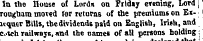
In the House of Lords on Friday evening , Lord j rougham moved for returns of the premiums on Ex- ; lequer Bills , the dividends paid on English , Irish , and < vtcn railways , and the names of all persons holding : tares in Irish railwajs , and in so doing , declared that he measure introduced in the other house by Lord 6 . ; ientinck had for its object the raising of thg price of . ¦ ailway shares to enable the holders to sell them « t i loublc their original price . j This w «« contradicted by Lord Stanley , who praised ! Jie measure as being of a great and comprehensive na- i ture , brought in by his Noble Friend in the other Hous *! fortherpurpose of giving employment to the people of i Ireland , facilita ting internal communication , and at . trading capital to that country without taking one I shilling from the pockets of tlw BngHsh , or adding to ' their burden of taxation . The Duke of Richmond , Earl Fitzwilliam , and the E . rlof Winchelsea , expressed their approbation of Lord George Bentinck ' s measure .
The Marquts of Lassdowke deprecated discussion of the subject at the present motneut . Lord Brougham ' s motion haviog been agreed to , the conversation dropped . HATIOKAL EDUCATION . —Th » Marquis of Lahs-DowtfS laid on the table the minutes respecting education lately adopted by the Education Committee of the Privy Council . The noble marquis said he had not tha satisfaction to announce that the government were prepared with any plan of education such as would pat the people of this country on a par with other countries in Europe in which education wasalmost universal . After the fullest csnsiderationit appeared to them impracticable to frame any system cf education on a large scaie . be . cause they found that it could be mad « comprehensive
only by placing children of different denominations and religions in the same school—a plan to which there would be numerous objections and prejudices . But the Government thought it practicable to give to the system of education already established sa impetus toeyond that which it had hitherto received . The parliamentary grants from the year 1883 to 1846 amounted altogether to £ 490 , 000 , and there were now aomiuaUy 700 , 000 , and actually 500 , 000 persons provided fur by the schools in operation , irrespective of the normal schools . The proposal of the Government was to provide for the more frequent inspection , because they thought every school ougtt to be inspected at least once a year ; this they would be able to accomplish by the addition of three or four
inspectors . A deficiency of schoolmasters and their assistants was generall y complained of , and to remedy this it was proposed that in all schools , reported as good schools , a power should be granted to the master to re ceive apprentices , and that thes « apprentices should be allotted to be trained with the view of btcoming schsoimasters . From the apprentices so trained it was proposed that a certain uumW should be selected to have exhibitions in the normal schools , by which they would be advanced to the station of schoeJmaster ; and that amusements should be made by which those who would not become schoolmasters should be entitled to employments the revenue department . Thusthemott numerous would be qualified to act at schoolmasters , while the others
would not lose the advantages of the education . It was proposed that a small provision for old ace should be mads for schoolmasters and mistresses after at least fifteen years conduct of schools of a certain size . Btftides these retiring pensions it was proposed tbat a cer . tain cumber of gratuities should from time to time be given to raastrrs not retired . Tha government ateo proposed to increase the ratio of grants to such schools as should have appended to them came system of industry , agricultural or mechanical . The government likewise intended to propose that schools should be established in the poor workhouses , to be placed under the authority and inspection ef the committee of the Privy Council ; and a ' . so that sets of cheap books should be provided for such schools as might demand them .
Lord Bkocgham complaiaed that the system proposed was not comprehensive enough . The Bishop ofLondtn , the Bishop of St . Asaph , and the Archbishop of Canterbury , expressed their general approval of the Ministerial measure t . Their Lordships then adjourned . In the Dome of Commons , on Friday evening , on the motion that the House at its rising , adjourn to Monday , Mr . t . doncoube moved , as an amendment , tbat a copy of the report made by Mr . B . Escott to HerMajejtV relative to the llillbaok Prison , be laid on the table . Sir G . Gaer said he had no report relative to the Milllwnk Prison , except what was aiready before the Boko , Atter a oonversatien the amendment was withdrawn and the motion agreed to .
DESTITUTE PERSONS ( IRELAND ) BILL . —On the motion to go into committee on this bill , Mr . Hctt expressed nis opinion tbat a large system of colonirarion would best preserve the people of Ireland from present starvation and lay the foundation for their permanent security . Mr . Staffo * d 0 "BsiEscalleitheattentionof thehouse to the propriety of establishing a smaller territorial dinrion in Ireland for the purpose of poor relief rating , such a division as would enable them to act on the principleof distinguishing in Ireland between the good landlord and the bad , the improvident one and the careful . Mr . Labouchek objected to the principle recommended by Mr . Stafford O'Brien as inapplicable to a free country , as an entirely feudal principle , which could only exist in a stats of serfdom . After a few remarks from Lord John Manners , the house went into committee on the Bill . On third clansa
Mr . S . O'Brien moved an amendment to the eff . et that a clergyman of each denomination , and president justice * in the particular districts , be appointed ex-Officio to serve on the relief eommittees . On this amendment the committee divided—For the amendment 32 Against it 128 Majority against the amendment ... —86 The clans * was agreed to , as also the clauses to 11 inclusive . On the 12 th clause , Mr . Roebuck moved . that the chairman report progress . The motion was agreed to , and the chairman obtained leave to sit on Monday naxt . The other Bills on the paper were postponed , and the Chancellor of the Exchequer gave notice that the Destitute Persons committee would be the first business on Monday , then the Sugar Brewing'Bill , and theu the Sugar Distilling Bill .
The House adjourned at a Quarter-past Twelve . Mosoi ? , 6 th , Feb . —The bouse sat for a short time . The Chelsea Pensioners Bill was read a second time , and the Buck Wheat Bill passed through committee . Earl FitzWiuux moved for a return of the moneys advanced , since the Union , by the Imperial Treasury for public works in Ireland . After three speeches from Lord Bkoochau respecting the emigration of Irish paupers into Liverpool , and misrepresentations of former speeches made by him , and a conversation between the Marquis of Lansdowne , the Earl Fitzwilliam , the Marquis of Westmeatfa , and Lord llonteagle , the return was ordered . Th « Earl of Mocmtcashsl , withdrew hi * motion for a return of registered judgments , &c ., in Ireland , on the as-Mirance tbat it could not be procured . In the HoCSEopComkojcs a large number of petitions were presented by various members praying for a Ten Hours' Bill .
RUMDALB SYSTEM . —In answer t » a question by Lord Clements , whether he intended to put an end to the Kundale System , or joint tenaacy in Ireland , under which no less than 1 , 902 , 547 aores were held , Lord J . Rsssell said the government intended to iutroduce a bill with respect to the relations of landlord and tenant in Ireland , but he eould not state that it would contain any positive prohibition against the holding oflandinflundale ; FINANCIAL STATEMENT . The noble lord gave notice tbat on next Monday week , tfae 22 ud inst , he would make the general financial statement of the year , in committee of ways and means DESTITUTE PERSONS ( IRELA 5 D ) BILL . On the motion in going into committee on this bill
Mr . Danim . O'Conku said few words in support « f the acts and measures of the government . The labour Bate Bill , he-thought , had been too generally condemned , for thaugh it might have failed of ita intent in some parts , it had worked efficiently in others . He was ready to give up every objection which he entertained against outdoor relief , iu order not to impede the government in carrying measures to sa * e the people from starving . He feared the house was not sufficiently aware of the horrible situation of the Irish population ; but he could assure them that 25 per cent , of the whole Irish populatioa — 2 , 000 , 000 of human beings—would perish by famine and disease , unless the Parliament and the people of Great Britain contributed at once , generously , magnificently , aid he would add enormousl y . Itmigfaibi said , " Wfcr don't the Irish relieve them V
They he £ not the means . It was shown by the reports on ' the table that there were four milliant of human beings in a desiiiute state , * 4 ud « a the verge < rf starvation . In the 47 th jear of the uutan . the Irish people were being annihilated through the dwlr . netion of tfae potato crop ; they were parisbing in sh'eU ; they were perishing in hundred * , in thousands , is millions . They might say that the Irhb landlords ought to do their duty . Wh y Eiauy of them had done their duty ; some of them had act , and b ? had bo wish to shield those who had been guilty of neglect . He would give the gevernment unlimited and dictatorial power to apply what cams and what mode of relief tfaey deemed necessary , being responsible , of c mrse , to that house , but still not being fettered by strictly legal regulations , and having all Recessary powers to prevent starvation . ( Hear , bear . ) He wished to see the house confiding to the government—and be did
pot care from which fiidejtbe government was taken—the means of rescuing the people from destruction . Now , he had not said one word indicating irritation or anger—he bid not utteredone syllable of reproach—ke had oat told them that the present condition of the people was an unhappy consequence of the act of union—he simply implored them not to all'iw thousands of the ptople to perish . In the name of Heaven , by all that was tacred , be called upon tbe house for assistance . The dead rushed on hi « sight ; » he people were fJling day after day in iucreadng numbers ; and tfcera was no remedy bnt to get food wbemw it eould be got , wi at whaUrw expeaw .
Untitled Article
They knew that the Iri « h poor could do nothing foe themielTM , that thet « ouMdo nothing without the aid of the lindlords . Ltt them rtcollect how many estates were in Chancery , how many were in the hands of persons who were not the owners ; let them vemember that Ireland had no legislative power of her own ; she was in their hands bound
Sir B . Ham , wished to make a few remarks in allusion to what had fallen from the hon . and learned gentleman . He had obtained returns from the boards of guardians of two of tha largest metropolitan parishes , which showed the amount of destitution to be very great in the metropolis . In one of them , the population being 139 , 455 the number of out-door recipients of parochial relief at present on the list was 6 , 847 , in-door 2 , 070 , making a total of 8 , 917 . or one-sixteenth of the whole population . In the parish of St . Pancras , the population being \ 180 , 000 , the total number of persons receiving relief was j 10 , 434 , or twelve and a half per cent , of the whole population . The bumber of deaths was also exceedingly higlj as compared with former periods . Now tbe hon . and learned gentleman said that England was responsible for
what was taking place in Ireland . He differed from him en that subject . ( Hear . ) Knowing as they did that the potato crop had failed , th » Irish landlords were responsible for the present misery , if it could be shown that they had not made proper prorision fur feeding tbe people , ( Hear , hear . ) Suppoie that in the principality of Wales the poor were allowed to be in the same state , because he and others refused to pay their rates , or suppose thatwhea a gentleman in Wales went out b y his park gates he saw cottagers living in hovels which were not fit to be the dwelling of a dog , would not the finger of scorn be held up against them , and would they not be objects of execration with everybody in this country 1 ( Hear , hear . ) Whilst there were resources in Ireland the landlords were bound to apply them for tbe relitf of
distress , and if those resources were not sufficient the English people would be ready to afford aid . What , however , wer » tha facts ? The workhouse of Ballina was capable ef holding 1200 persons : on tbe 4 th of January oalj S 09 were located there . Ballimrotte afforded a similar instance . There no rates had been struck since 1843 or 1844 , with the exception of one in 1846 , amouuting to £ 3 , 000 , of which only £ 1 , 100 had been collected;— the collection was not , in fact , proceeded with , though it wag admitted that thvre were perians capable of paying the rates , but who refused to do so . ( Hear , hear . ) Look again at the union of Castlebar . There were perf ons of large property and great influence in tbat district who refused to pay . He thought such persons ought to be held up to the execration of the country . It had been stated that even Lord Lucan was one of those who had not paid bis rates . The property in the neighbourhood of Skibbereen was estimated at £ 50 , 000 a year . Sir Randolph Routh gave the names of the owners . Lord
Curbery had £ 13 , 000 a year ; Sir William Beecher had a large estate ; yet tbe rates were not paid , and Sir Randolph put a question which be should like to hear answered by Irish members— " With such property as this , with such resources as these , ought such destitution to exist ? " It was of no use , with such facts before their eyes , to come to that house and tell them that the landlords of Ireland were not reprehensible . At a meeting held at Old Palace-yatd , where Lord Monteaglepresided , tbat noble lord moved a resolution condemning the clause in the Irish Destitute Relief Bill which gave a discretionary power to afford temporary relief at the expense of the union . He should like to know at whose expense relief should be given ? They should pass a law compelting the Irish landlords to do their duty . The landlords did not appear , in many respects , to approve of a permanent Poor-law Bill That was what the house w * hed them to approve of , and what it must make them accept .
Hr . Moscktoh Milnes defended the Irish landlords Even if they had not all done their duty , this was not tbe time for such speeches . It might be that there were unions in Ireland in which the rates were not paid ; 1 ut the hor , member should haverather contrasted these exceptional rases with the cases in which the rates had been paid , than have cited them as the prevailing rule . ( Hear . ) It was not fair to make that house and the country believe that in this extremity of Ireland ' s misery the exception was the rule . And this feeling it was which made him take strong ofcjections to the speeches
delivered in tke house during the present session by his bon . friend the member for Bath . Those speechesmight contain trusmi ; bathe ( Mr . Milnes ) could not but ex . press Mb opinion tbat it was not deccut— ( Hear , hear ) —that it was not decent at that moment to objurgate the landlords of Ireland as his hon . friend had objurgated , them . ( Much cheering from Iriih members . ) Great misery and destitution always find sympathy in the hearts of honourable men —( Hear , hear)—and he ( Mr . MUues ) was sure that in stating what he had done he was onl y expressing the feelings of the benevolent and honourable psople of this country . ( Cheering . )
Mr . Podlett Scbope and Lord Duscan supported the views of Sir B . Hall . His Lordshi p said he had been requested by the first magistrate of Bath to corroborate the statements of his hon . colleague . His constituents were in great distress , were beodiag uuder the wei ght of local and general taxatiou , and were quite opposed to the motion of undertaking burdens that should rest exclusively on the shoulders of Irish proprietors . Major Macnamiba , who laboured under evident ex . citement , rose and said : —I take the first opportunity I can to state that every sentence- in Captain Wynn ' s letter is a malicious falsehood . The honourable and gallant member ' s brief and pithy speech caused louda laughter .
Mr . B / Osbobne said that he regretted none of the Irish landlords in that house had risen to reply to the charges of the hon . number for Marjlebone . When that hon . member lectured them in that peculiar strain , only made use of in the columng of certain daily papers when he made use of the sort of objurgations which were the stock in trade of orators on Irish matters as the member for the Keigbley union—( a laugh ) —he meant for Knaresborough- ( renewed laughter)—when he talked articles learnt by heart from the columns of Tto Times of that day three weeks—and came down there with mangled documents and mutilated information , he ( Mr . Otborne ) must say , that it did surprise him to find that no Irish landlord was to be seen to rise from
bis seat to answer | his wild calumnies , and ^ tate what was doing for the poor by those who were mo > t interested in their welfhre . ( Cheering . ) He was far from defending the conduct of all the Irish landlords ; but this h « must saj , that neglect was the exception , and not tbe rule , and that if their conduct was blameable , it wae conduct which the Britieh legislation bad to answer for , for they had legislated for Ireland as they would legislate for an English colony—( hear , hear )—and if they had legislated in a different spirit , they would not have had the state of things in Ireland which existed now . He saw the hon . member for Paisley ( Mr . Hastie ) laugh . The hon . member was always attacking the Irish landlords in private , but be hoped he would soon see reason to change his views .
Mr . Hastis hoped he should never say in private what he was afraid to say in public , nor had he stated any thing in private or in public which was not made univer . sally well known by the official statements laid before that house . Tbe Irish landlords had grossly neglected their dHty . ( Hear , hear . ) That was a fact fully . confinned by the evidence before them ; he bad stated it in private , end no doubt in tha hearing of the hon . member who referred to his remark , and he thanked the bon . member for giving him an opportunity of repeating his opinion before that house and the country . ( Cheers . ) When the Irish landlords taw tbe famine coming , what did they do ? Nothing but sit down and howl for English money . ( Loud laughter and cheering . ) What ought they to have done * It was their duty to have ascertained
the quantity of grain in every parish—to have made returns to the government and to that house , and to have taken every means in their power to supply the deficiency . ( Hear . ) Tbat was the difference between what they bad done , and what they ought to have done , and certainly be ( Mr . Hartie ) would rot acquit them of blamn , Mr . Hastie's plain spoken speech brought up Sir D . Norreyg and Sir H . W . Barron in defence . The latter said , There was a systematic attempt going on to put down tbe Irish landlords , an attempt which he was dispeied to regard as a low , cunning manoeuvre of tb « London capitalists , in order to reduce the market value of Irish land , and thus secure it at a cheap rate , ( laugh . ) The attempt was aided by certain portions of the press here , representing , what was eslled the money interest
Lord J . RnesELL came to the rescue of the raonitd capitalists : —The hon . baronet had thought proper to make a most unfounded attack upon members of a consti . tuency very dear to him , tbe constituency of the City of Loudou . The hon . baronet charged them with a low and cunning conspiracy to get hold of Irish estates at a cheap rate . He begged to remind the honourable baronet of a circumstance : —About a month ago , eereral gentlemen , intimately connected with tbe money interests of London , but having no connexion with Ireland , having no property there , and , in all probability desiring to have none—( a laugh)—met for the purpose of raising a subscription for Ireland ; at which meeting several of those gentlemen contributed £ 1 , 000 each towards the object . ( Hear , hear . ) Not content with doing this , and occupied
as they were all the morning till four o ' clock , they formed a committee and met every day at four o ' clock for the purpose of further forwarding their generous purpose , by receiving subscriptions , conducting correspondence , and taking measures to transmit the funds raised in the manner calculated to be most useful to the Irish peeple . ( Hear , bear . ) As to the Imperial Exchequer , be would beg to remind tbe bon . baronet that within the last week not less than a million sterling bad been lent over to relieve the immediate distresses of Ireland . He believed , in a word , he might say that if , unhappily , on the one hand , the calamity under which Ireland was suffering was unprecedented , the sympathy , the cordial and practical sympathy extended to her by England was equally unprecedented . ( Ilear , hear . )
Mr . S . CfiAWFoBD would not for an instant think of askiog aid from England , if he did not believe that Irelaad could and would repay the advances made to her For his own part he should be ready to have his property taxed to the last farthing for this purpose , and he considered that the property of every landlord in Ireland ought to be strictly taxed for the same object , and rigourous measures adopted , where necessary , for euforrfng the prompt payment of tbe amount assessed upon each landlord , ( Hear , hear . ) After swse further disoouioo , tie house at last got into ommittM . \
Untitled Article
Twiout MawiamenvJ were proposed h j the Irish mem * b « rs , ano negatived . On clause 16 , which provides for the payment ef loans , another exciting discussion as to the conduct of the Irish landlords took place . Mr . Roebuck demanded of tlie Chancellor of tbe Exchequer to state explicitly what would be the gross amount of the > ume necessary to carry into effect the Ministerial measures ; and whether the requisite amount would be obtained by an increased income-tax er by a loan t He would not wait for the budget to hear that which ought to have been told long ago . He had been astonished—he might gay astounded at the patience of the hon . member for Montrose . ( Laughter . ) That hon , member had put this question in so mild a form that the Chancellor of the Exchequer had raid that he would tell
him some day or other . He ( Mr . Roebuck ) wished that he would shuw some of the vigour of his earli « r days , and force the Chancellor of the Exchequer to tell that which he was bound as a member of thegoveroment to do . He ( Mr . Roebuck ) wished that the right hon . gentleman should not merely enjoy the honour of being Chancellor of the Exchequer , but that he shauld bo bound by some of the obligations of the office . Let him meet the question and the difficulty fairly , and as was hi * duty—let him suy these are the difficulties and these tbe means by which it is proposed to meet them and to raise the money . It was for the house then , if they did not agree with him , to say so ; but it was not fair to go on with tbe petty details of this bill till that great question was settled . No one had been able to get at what the expense of this measure would be to England . 1 I « demanded an answer to thin question .
The Chancellor of the Exchequer objected to the offentiy ? tone and manner in which Mr . Roebuck questioned him , and refused to anticipate the general financial statement , promised for Monday week , the 22 nd Inst . However , he bad no objection in saying that up to the end of January £ 2 , 000 , 000 sterling had been expended . But under the Bill before tha houBe , the Government would be restricted to £ 300 , 000 ; and , for any future sums they would require , they would come to the home and ask for it ia committee of supply . Mr . Evelyn Denigon wished to be distinctly informed if tbe government meant positively to support substantially their own Poor Law ( Ireland ) Bill 1 Sir 6 . Gbet thought the question a most extraordinary one . The Bill was brought in by the Premier , the Irish Secretary , and himself , and he had not before heard even a surmise that they did not intend effectually to carry their own Bill .
Lord John Mannebs entreated the Irish rcpreeentatives to mark well that the Emgiish members on his side of the house did not acquiesce in the sentiments expressed by Mr . Roebuck and his friends . To mortgage the property of Ireland wauld be , in hiB Lord John Man . ners , judgment , of little use to the poor people of Ire . land . The English Members would not allow the people of Ireland to starve , because the Irish landlords might have neglected their duties . They would feed the famishing people first , and then devise means of malting the landlords pay for the support of their poor . The Bill ultimately passed through committee .
BREWING FROM SUGAR BILL . —On tha motion for going into committee on the bill , Mr . W . Miles expressed his rsgret that the Government had not acceded to Lord G . Bentinck ' s suggestion , and made this and the Distilling from Sugar Bill temporary measares . The honourable member pointed out to the house , from the result of experiments , what would be the bearing of these measures on the home agriculture and the colonial sugars . They were proceeding quite in the dark . Mr . M . Milnes , amidst much laughter , asked ( lie Government to allow fresh liquorice juice to be usid in breweries and distilleries . He hoped no financial objections would be nrged against the proposal . The Chancellor of the Excbeqdeb . considered that liquorice tasted so well in Pontefract cakes and liquorice stick , that it would be a pity to divert liquorice from it « purposes . He did not think the financial objections to the proposal would be very strong .
After remarks from Mr . James , Mr . Fisch , and Mr . Newdegate , the house went into committee on the Bill , and all the clauses were agreed to . Tfae Distilling from Sugar Bill also pass « d through committee , The Poor Relief ( Ireland ) Bill was postponed . The Customs' Duties Bill was read a second time , and the house adjourned at half past 12 o ' clock . HOUSE OP LORDS—Toesdat , Feb . 9 . COLLEGIATE CHURCH AT MANCHESTER—Lord Stanlet presented a petition from the churchwardens of Manchester , complaining that whereas the rectorial
revenue amounted to above £ 5000 , which was received by the Dean and Fellows of the Collegiate Church at Manchester , that body claimed to be exempt , on pajment of a trifling fine , from residence and from the cure of souls . Thus , practically , this parish , w : th a population of 400 , 000 , was left destitute of spiritual assistance . In strict construction of the ancient charters , the claim was perhaps su « tainable , but it was astonishing that the Dean and Chapter ceuld reconcile it to thoir consciences to receive from the rectorial funda of MaucUe&tw twnly £ 6000 a year , and leave so large a population without spiritual advice and instruction .
Lord Beodoham thought the only remedy that could remove this abuse would be a legislative enactment . The Marquis of Lahsdowne read a letter from the Dean , stating that the representations made in the petition from the churchwardens were inaccurate , and bore testimony to the zeal and assiduity of the Deau of Manchester in the cause of education . The Lord Chancellor said no one could entertain a doubt but that the funds of the parish should be applied to the spiritual wants of the people , but it was extremely difficult to know how to deal with property which belonged to a corporation for mor « than four hundred
years . This , however , was quite clear from the grant of incorporation , namely , that the Dean and Chapter were subject to certain pecuniary payments , which , when paid , relieved them from the obligation of perpetual residence . If the Dean and Chapter of Manchester conformed to the terms of the charter , respecting which he would expreus no opinion , they were as much entitled to the tithes as any one of their Lordships was to his estates . If the petiting appealed to the wants of the parish of Manchester , that was another question , and it might be proper that an act of Parliament should be obtained to remedy the grievance complained of .
After a few remarks from from Lord Cahpbet l , Lord Stahlei denied that the letter of the De « n had controverted any meterial statement in the petition . He thought the matter called for the special interference of the Legislature . After some farther discussion the matter dropped . No other business of public importance occurred , and their lordship * adjourned at a few minutes before seven o ' clock . HOUSE OF COMMONS— Toesdat , Feb . 9 . Previous to the commencement of public business , a long discussion took place on the railway canal proposed to run through the Regent ' * Park , In the course of the debate ,
Mr . W . W 1 LLUH 8 observed , the Regent ' s Park was one of the principal lungs of the metropolis ; kutif they made a railway on the bank 6 of the canal , the most favourite parts would be deserted . That part of the park was now frequented by carriages , and ladies ana gentlemen on horseback , but thej could not then frequent it , owing to the danger to which their Jives would be exposed iu consequence of the horses taking fright at the noise of the engines . SirC . NAPiiasaid : Supposing that this line of rail , way communication should be made , it would materiall y injure forty villas , and when an engine went by with a team of carriages , snorting , and snoring , and whizzing , what a pretty accompaniment it would be to a lady playing on apianofortein one of those houses . ( Laughter . ) Ultimately the bill was postponed in order to enable Lord Morpeth to ascertain certain facts connected with it .
RATE PAYING CLAUSES OF THE REFORU ACT . —Mr . T . DuncoHBEgave notice tbat he should postpone , from the 18 th to that day fortnight , bis motion as to the rate paying clauses of the Reform Act IMPORTATION OF SALT INTO INDIA .-Sir John Hoshohsb , in reply to a question , stated that a despatch had been forwarded on Monday last to the Governor Generalof India , ordering the resolutions in force in India respecting the importation of salt to be cancelled . NAVIGATION LAWS . —Mr . Ricabdo moved for a select committee to inquire into the operation of the Navigation Laws . The honourable member said that a committee had been appointed in 1844 by the Consemtive party ; that committee not having made their report , nlthough thty printed evidence , w * s re-appointtd in 1845 . They did not finish their inquiry in that jear , but asked to be re-appointed in 184 C . They were never re-apnoint . d since , and consequentl y no report had ever been ma . ' . e . As , therefore , the Conservative party hnd admitted that
th « e was adonbt of the efficacy of these Navigation Laws , LI 7 Kf ^• C 0 UWrefU ' e his motion . which was intended to bring the inquiry to a conclusion . The honourable member proceeded to argue that these laws were injurious to the manufacture , the commercial , and the co onul interest , of this country . They up . e the natural law of trade and they acted a * a direct encouragement to fore , gn manufactures over our own . They were only des , g ,, edas a protection to British shi power * but they werenoprotecfonataU unless the , raised the price of freights , and if the , raised the freights 10 .. a ton , they would tax the country to the amount of £ 4 , 273 000 This , however , he did not believe . He denied thai the Navi-^« rt r v thB ""»• . *«*„ were a real pro cuon to the sh . pownm , or toBritM , seamen , or to British carpenters . The Americans made better and cheaper . h , p 3 and he thought it was a fair question to lk . f "Ottiewuer to buy American ships in . stead of buildine them . '
Mr . M . Gibson , on the part of the Government , recommended the house to agree to the motion . The resolution only asked for an inquiry , * Ould ,, ( , t commit a » y member to the opinion entertained liy Mr . Ricardo The hous « would be continuing a train of useful inquiry ' commenced iu 1844 , and pursued in 1815 , by appointing this committee . Mr . Liddem , could not agree to the proposed committee , because he did not believe that it was intended to follow up the inquiry of the commUtee of 1844 . 5 . The object thatcommitteehadinview was the improvement of the Navigation Laws , the evident desi gn of the proposed committee was to abolish them . He hoped the houstf had not as yet o .. me to the point of considering the Briiis . M shipowners , British commerce , and the British marine at undeserving of protection . How fat were the house p ^ e pared to jo in exposing the industry of this eountry to foreign competition ! He w ould oppote tbe motion .
Untitled Article
Mr . Hckb , to the queition , " Whire were they to stop in their Free Trade courso , " would answer , nowhere . He would not disguise his opinion , which was , that the Navigation Laws should be abolished . He seconded the motion . A lengthened debate , which occupied nearly the whole of the sitting , ensued . Lord Sundon thought it quite unjustifiable on the part of the government to throw on an honourable member Rotrepresentitif ; any great commercial constituency an inquiry such as this , without guidance , control , or responsibility . It was the business of the government to make a distinct statement on so important a question , and to conduct the inquiry if they thought it desirable to institute one .
Mr . Liboucuebe hoped he should never see the time when the government of this country would take upon itself to say to'lie motion of any independent member , "this is not a subject fit to be conducted by any independent member of Parliament . " Subjects of tbe greatest interest hnd been investigated at the instance ot individual members . Neither the government nor any hon . member would be committed to any opinion upon the genernl question of the Navigation L * wa , by consenting to th « select committee asked for : all they would be committed to was , that in consequence of late commercial changes it was not possible to deny that this question ought to undergo the test of inquiry .
Lord G . Bentinck maintained that it was not per . mitted to a government to allow a question of buch magnitude to be sent up to a select committee , particularly after the declarations from the proposer and the seconder of the motion that the shipping interests and the commercial navy of England ought to be compared to pedlars and pack-horses , and the trade and shipping ol England to be as free as free trade in shoes . When that was the spirit of the proposers of this eomu . iitee , it was clear that it was not at all similar in its interest to the committee of 1844 . In fact , it was designed to drive down the wages of the British shi pwright ! to half the present amount , and he would resist the inquiry .
Tbe motion wa » supported by Mesirs . Bright , Mitchell Hutt , Sir Walter Jumos . and other members , and opposed by Aldermon Thompson , Mr . Hudson , Captain Harris , and Mr . Disraeli , who said the Protectionist party were not goiug to vote either in favour of or against the Navigation Laws , but simply ngainstenquiry . ( Laughter . ) Sib Robebt Peel avowed his intention of supporting the proposition . Ho s » w no reason why an opportunity should not be given for ascertaining whether the Nnvigation Laws were for the benefit of British shipping and necesserj for securing our maritime . Lord JonK Kussell said that if the Government had proposed an alteration in this most Important law , they would have been met by the objection that they had proposed it without inquiry . On behalf of the shipping interest , as well as of those who wished for an alteration of the Navigation Laws , he was glad the proposition was made , and he gave it his cordial support . The House
divided—For the motion 155 Against it „ 61 Majority for the motion ... Considerable cheering ensued upon the announcement of the division . Mr . Watson moved for and obtained leave to bring in a bill for tbe further repeal of enactment * imposing pains and penalties upon Hor Majesty ' s Roman Catholic subjects on account of their religion . Mr . Puses then moved for and obtained leave to bring in a bill for the impiovement of agricultural tenant right , Mr . Hume thon m Oved for a return of the corporal and other punishments which had taken place in the navy from the 1 st of January , 1844 , to the 31 st of December . 1846 .
A somewhat animated discussion ensued , during which Lord John Russell intimated the readiness of the Government to give the same returns in reference to the navy as were given of corporal punishment in the army . He thought this the more proper coirse for the Admiralty to take , as mystery and concealment frequently led the public to beliwe that things were much worse in this respwt in connection with the service than they really were . He could not , however , grant the motion of the honourable member in the terms iu which it wa » framed . Mr . Hdme then withdrew his motion in order to to frame it as to procure such returns as were assented to by the Government . The order of the day for bringing up the report upon the Destitute Persons ( Ireland ) Bill was then read , and the report was brought up and received .
The report upon the Brewing from Sugar Bill , as also that upon the Distilling from Sugar Bill , were then brought up and received . The other orfleTB of the day were disposed of and the House adjourned at half-past 12 o ' clock . InthelloosE or Commons Wednesday , the Speaker took the Chair at 1 !! o ' clock . After a vast number of petitions in favor of a Ten Hours Bill had been presented , Mr . Fielden moved the second reading of that measure .
Mr . Hdme , after complaining of the abience of Lord John Russell , who had promised to state his opinions on this measure on the present occasion , declared that he could not meddle with the industry of the country in the way now proposed ; for it was a sound principle that masters and men should be left to wake the best arrangements as to work and wages for themselves . The house professed to consult the welfare of the labouring community , but in bis opinion the werking classes were well able to take care of themselves . He objected to submitting human industry to a Procrustean process and to making all labourers conform to one standard without regard to their relative powers of skill and exertion . Those who asked for not more than eight or ten hours ' labour would , if they obtained the boon they sought , find it work to their own discomfiture . If the mills stopped after 10 hours'labour there would be no profit whatever on account of capital , and a surplus of labour of one hour and a half , or perhaps two , beyond that time , was
barely sufficient to obtain a remunerative return for it . If honourable gentlemen wtre anxious to maintain the superiority of England in manufactures , they must give fair play to her industry and capital by not interfering with either . If they do anything to drive capital from its proper employment , and to prevent the exportation of articles of cheap manufacture , they would biing the labouring population to ruin by their injudicious interference . He suspected that the « atcry ia favour of tliis bill was got up by a set of individuals who were more in . fluenced by a desire for thtir own enjoyment . and by a dislike to labour , than by any feeling for the rest ot the eommunity . He cautioned the house to beware how it sanctioned rash experiments of this kiud now , and referred to the state of Ireland as a proof of the misery which resulted from the want of employment and the absence of capital . He sincerely hoped that the house would adopt his amendment , and read this bill a second time that day six months . Colonel L . Hat seconded the amendment .
Sir G . Grey was willing to state at once the course which he as an individual member was prepared to pursue . He used the words "Individual member , " because it was known to those who had marked the different views « ntertained on this question by the several members of the Government , and trho had heard the answer given last year by the Noble Lord at tbe head of the Administration , that the Government did not feel them . 6 elves bound to an united oours * upon this measure . It had been the full intention of Lord John Russell to be in his place at the opening of the debate , but he was unavoidably detained by public business ; however , the hou *« might r « &t assured that the Noble Lord would not shrink from an explicit avowal of his opinions on this important subject . The question was one not of prin . i her
cple . but ra » of degree , and he admitted that it might De legitimate matter for discussion whether the , bad a « yet arrived at the utmost limit to which they eould safely proceed . But when the hon . member ^ talked of consis . tency , he would take leave to ask him whether it would be eonsistent to repeal the Factory Laws already passed ? That was the real issue of his argument , and he put it to the hon . member whether he was pr « pared to submit that issue plainly and decidedly to the house . It could not be denied that th ere was an earnest desire on tbe port of the majority of those who were employed in f * c torieB to see this matter settled by legislative enactment . On the other hand , he feared that there was a formil dable and general feeling of opposition on the part of employers to any such interference . The chief argument
against further legislation coniisted in predictions as to the certain ruin to follow from adopting , even in a modified degree , the provisions of the bill introduced b y the lion , member for Oldhnni . ( Hear , hear . ) Similar predictions wiire uttered when it was proposed to prevent the employment of children under eigbt years of age , and ta restrict that of children between eight and twelve ! und he now asked the house to contrast tlie antici pations with the rosults . ( Cheers . ) In the more recent dubntes on that subject , the most strenuous advocates of non-interference had not asserted that tbe regulations ami restrictions already existing had produced a prejudicial result , or stated that they were prepared to recommend their repeal , ( near . ) The right hon . bfironet , themt-nber . for Dorchester , ( Sir James Graham ) had
distinctly admitted the benefits of past legislation . Nobody could doubt those benefits as regarded children , whose moral and intellectual welfare had certainly been promoted . Simultaneously with increased comfort to the workpeople , and an extension of education , there had been a great increase in the amount of production , and the reports of the inspectors showed that manufacturing wealth had greatly accumulated . Experience , therefore , was in favour of the principle of the present bill . ( Hear , he « r . ) The real question wae , whether parliament , having taken upon itself to fix the hours during which females , young persons , and children , should be employed in futtory labour , had now adequately discharged it « dutv , With
regard to children , he thought he hud < ion « so . Ho thought that the legislature , however , bad not fulfilled its duty with regard to persons between the ages of twelveandeighteen . When he saw a child at the 8 "C of twelve , after working only six hours a day up to that period , suddenly transferred to a class in which the cmployment extended over the same period as that of adults he could not but feel that there was a defect in the sv »! tern . He would suggest that there should be an exV > n * sion of the period at childhood , using that word in the sense in which it was employed in the act , and that the period of enjoying the beneilts of education should be further protracted . With regard to adults , though th « re was no direct interference in the bill propwd , he fully admitted that if tbe measure pawed , tbe hours of labour
Untitled Article
would pr » cticaU y be equally restricted for all classes , ( lUar , hear . ) He repeated that he did not believe ruin to the manufacturers was at all likely to ensue . He thought one resalt would be a more equal distribution of labour throughout the year ; and taking into account tho energies , both of the masters and of the operatives , he felt that they had no cause to fear foreign competition . ( Hew , / hear . ) He did not however agree with Mr . Fielden , in thinking tbat factories occasioned an exces . sive mortality . Last year his hon . friend had declared that he claimed for the members of hi » government freedom of thought , expression , andaction on matters of
detail . ( A lnugh . ) This he ( Sir G . Grey ) held to be a matter of detail , and not oneef principle . ( Hear , hear . ) He did not doubt that the course of the discussion would show a difference of opinion amongst the members of the government . Por his own part , he should vote for the first clause of the bill , restricting the hour * of labour to eleven Instead of twelve ; and when the home went into committee , he should oppose the clause which prospectively—that is , at the end of a year—limited the hours of labour to ten . ( Hear , hear . ) He could not consistelllly , with proper caution , go the full length proposed by the hon . gentleman .
Mr . Blnkes , In supporting the bill , said he believed he was authorised in saying that those who sought for a Ten Hours' Bill bad entered into no compromise . He called upon the hon . member for Durham ( Mr . Bright ) , for the sake of his own consistency , to support this bill . On the 23 rd of May last year , that lion , member said in the House of Commons tbat '' the proper mode of proceeding would be for the operatives to seek by private arrangements to obtain the ten hours , which he admitted they ought to have by some means or other "—( hear , hearV—and in reply to a question put to him at Manchester in December last , the hon . member said , "I am quite certain that a man who norki ten hours a day is much more likely to be educated than one who works twelve hours ; I don ' t differ as to that point at all , I differ as to whether the reduction of time should be carried out
by legislative enactment , or whether it should be carried out by a regulation between the operatives and the masters themselves . " New had the experiment suggested been tried since May last year , or since December last ! and if it had not been , what chance was there that it ever would be ? ( Hear , hear . ) He trusted that the circumstance of the hon . member for Durham being now a candidate for Manchester would not lose his vote to tbe good cause . ( Hear , and a laugh , ) He trusted that thut hon . member would not draw back from the opinion he bad given last session . There might be persons in Manchester whose opinions were more important than those of the humble operatives , whose petition had been laid upon the table ; but that circumstance , be was sare , would in no way influence the views of the hon . member for Durham . He was surely too honest a man to withdraw fromthapledgofae bad given , and from the opiuiou he bad so decidedly expressed that the only practical mode of carrying through this measure , was by making
It an h « ol the imperial legislature . ( Hear , hear . ) The millowners suid that usage and habit had accomoiiated themselves to the long hours of labemr . The name plea had been offered in defence of slavery , but had not been allowed as a sufficient reason for the continuance of tbat ystem . Having shown that since the commemcement of our legislation for the purpose of restricting tbe hours of labour the consumption of cotton had increased 400 per cent , above what it was in 1824 , he called upon tbe house not to be deluded by the predictions oftnischiet which tome ill prophtits were now making . The government had just introduced a measure for extending education turoughoutthe country ; but that measure would be a nullity , and even an insult , as far as the factory labourers wer » concerned , if time wera not given to them to avail themselves of the benefit of it . He , therefore , implored tbe hens * to read this bill a second time if it wished to avoid the distortion of mind as well as of body which excessive work and deficient instruction were certain to produce .
Lord J . Mannebs trusted that the hon . gentleman , who had vindicated himself from any possible charge of being personally interested in the vote he should give , would permit him to say tbat there ffas no hon . gentle , man in that house standing in less naed of such a vindication , ( Hear , hear . ) Unnecessary , however , as he ( Lord J . Manners ) considered that protest to be , perhaps the hon . gentleman would allow thoie who advocated this measure to make use of the same vindication . Until , indeed , he had heard the hon . member for Mon . trose say that the bill wa « supported on party grounds , be had little expected to have it declared in that house that there was the necessity , aither In advocacy or in opposition , of such a tuperfious attestation of integrity ot motive , He should have thought that any one , looking
back to the past hiitory of the question would come to the conclusion , however hon . gentlemen might have differed in their vlewa , that in this at least all were agreed , that never was a great question , affecting largely the policy of a country , debated more exclusively on pure , on high , and on disinterested grounds . ( Hear , hear . ) And when he thought of the hundreds of thousands who in this hulf-century bad gone down to their graves , their hopes deferred , to their children , deputing to advocate the cause they had advocated , —when he thought of those children , whe had been left to die of over-toil , and how , over and over again , they had petitioned and protested , it must undoubtedly be conceded that their conduct of this great cause had been worthy of this country , and worthy of the great interests involved in
Us satisfactory settlement . ( Hear , hear . ) . It was not alone the soldiers who had perished in this thirty years ' pacific war ; the generals who hod led the armies had one by one departed . Sir R . Peel might die and bequeath the contest to Sir J , Hobhouec ; Sir J , Hubhouse might advance to a certain point , and there rest contented with his labours . Mr . Sadler might succeed to Sir J , Hobbouse , and fight with no apparent success ; and , afterwards , the head of the veteran Mr . Oastler might become gray with years of disappointment . Lord Ashley then carried on the war to the eve of victory ; he , too , was overcome by extraneous circumstances , and so yielded tbe leadership—at least in that house—to the hon . member for Oldliam . But still , never for a moment did the working men despond or despair ; still and
always they had manifested tbe same resolute will am ) indomitable perseverance ; and now , at the end of this Parliament , in tbe year 1847 , they had the question definitely brought before them bj the hon . member for Oldfcam . He ( Lord J . Manners ) had listened with patience and attention to the speeches ot hon . gentlemen against the bill ; and more and more had he become convinced that Lord Ashley , when deprecating , in the noblest language , the unparalleled act of the Government in 1844 , most truly ascribed to tti real cause that influence which the noble lord was allowed to possess . "It is possible , " hesaid , " nay , more , it is probable ( for their efforts have been great ) , that Her Majestj ' s Ministers will be successful—that they will carry the day ; but for how long ! If they would render their victorv a
lasting one , they must extinguish all the sentiments that gave rise to mine . " ( Hear , hear . ) In that sent , nee lay the secret of the indomitable will discovered , during so runny year * , by ' the working men and operatives of the north . As long aj women had eyes to weep and souls to pray , as long as men had hearts tofeel , voices to utter , and hands to raise , so long weuld this struggle ba continued , so long would those ill . gained victories be fruitless . ( Cheers . ) And now , when the question was tally before them , let them consider were the arguments which they had heard that day against the passing of the bill . The right hon . gentleman , the Secretary of State for the Home department had aptly described them as the old arguments ; but then a certain amount of novelty was to be observed in their application . There wan this material difference , —that vetvr after vear , as
the same arguments were advanced , so was their efficiency impaired . ( Cheers . ) That which was a good reason in 1844 lost all its logical Bpell iu 1845 ; that which carried with It conviction , or at any rate voles , in 1845 had no weight whatever in 1847 . ( Hear , hear . ) Did they recollect how Mr , Sadler had been met upon this question by the arguments drawufrom the existence of u corn law ! Lord Aehley , seeing the effect of those arguments , had contributed at much as aa individual could contribute , to effect the repeal of that law hr resigning his place in the legislature , and adding the weigh t of his high character and name to the anti-corn law cause . That argument , however , had been reproduced . The right honourable baronet the member for Dercester , however , persevered in adhering to it , when all other had failed him , and like , the hero in the song ,
" Who when his legs were stricken off , He fought upon his stumps , " reproduced it even after the corn law was repealed . Did it require an argument to show that that fallacy was now exploded ? The various trade circulars reported that in all directions stock was accumulating in the warehouses ; yet tbe spinners and producers exhibited no relaxation in their operations , the consequence of which , at no distant day , would be a fearful reaction . Under the restrictions which had been already imposed in this respect , our manufactory industry had prospered so much that , according to Mr . Maculloch ' s tables , the commerce of our exportsof cotton goods , f <> r instance—had increased from seventeen millions in 1832 to twenty millions in 1342 . If the premises of the Manchester school of political economy as
to the reduction in the price of food uud the extension of foreign trade were correct , then the operatives of tie manufacturing districts were entitled more especiall y to the justice which they had so long demanded , The opinion of the established clergy , of the dissenting ministry , of tbe medical men throughout tha manufacturing districts—nil of them most competent and impartial witnesses—was distinctly that u diminution of the hours of labour was essential to the spiritual and physical health of the operatives in those districts . They thus had ( he question placed before them in every possible form . They had s « tn the mortality amongst children in the factory districts . They hud heard that the homes in those places were left desolate and unguarded during the hours of labour . They had seen Saxon matrons , like the Pilgrim mother of old ,
wailing for their children , and refusing to be comforted because they are not . ( Cheers . ) They had seen the cradle rifled of its darling pleasures—tbe funeral decked with white , showing that the little departed being had been caved from prolonged and heavy toil , and hud gone to joU the army of innocents—( chceris )—and he nsked whether a case not been made full y « ut to the house for the passing of tbe bill 1 It had been said that thuy should rely upon an arrangement being made between the masters and the men ; bnt he repeated what had been said upon a recent occasion in Manchester , that it was vain to make and to lay out parks for the recreation of the working classes , and to establish Athenssums with lectures for their amusement and information , if they did aot also provide for them hours of leisure during which they oould eajoy them . But iu fact they were all agreed
Untitled Article
^ - ^^^*~ ^ " bout the end to be d « ired , they onl y diff cred T ^ the means for its attainment . It wai onlv th ' which he advocated that was objected to . fA a 1 * hi . ipart , if he could only hear of any other vtHvIl . ! "" * could only see any other mode of reducing the i ~ *' ' l : ibour-if he could only hear of it , say , a ttunuani ' terB in Lancashire si gning a bond to require 0 ! ' "' hours of lateour in the day , and a quarter of a mil- *** money being subscribed to the agreement h " guarantee to ensure its success ( hear , hear ) , he mil * J of lleve that the foundation had in fact been laid f *** such satisfactory arrangement . He had heard 7 !" of large funds being raised by those gsntUmen ' biV * * to carry such a measure to a successful issue ' v n " to gratify the pride , and probabl y the laudable n " i bu | uluaiers ui iliubh wuimiien
we . t > Ut he WOUlrt ™ vise the men to relax their exertions upon the ch " ° ' ^ any sucfc arrangement , unlesi they had amnu' * * ** that it would be oarried out . No . no . Ac re Uril * tion , auch as the one before the house , uffectint ^ ^ '' the quality of the country—affecting as it did th' " * " * and mental culture of the people of tho country k " * not be left to the remote possibility of such nne * private arrangements . The house did not waft " " I' ' ^ rival companies who navigated tbe Thames had "" '" " amongst themselves to regulate tho speed f ' 8 ' ^ steamerB in the Pool , to i . dopt measures com I !' ' ' them to do so , supposing the step to be newj . a r » * ther did thej wait until the master builders hi H % to some arrangement for the improvement in th C 0 IB * of their dwellings . Kor did they wait until th ?^ chimney sweeps had agreed to abstain from the """"* ment in their business of climbing boys The ! r *' wait until the proprietors of collieries and rn ' in i " agreed no mere to use half naked women , harness ^ r ^ beasts of burden to drag co-l-waggon . into the ^
nor am mey wan unm tne siave-ownerj in the W 1 dies could have made some arrangement with , vT slaves for their emancipation . ( Cheers . ) Nor dirt ? i in ten thousand other instances wait for the Darti 5 cerntd to arrange between themsolvei- but th ! , " stepped in , and used the imperial majmty of theK-T which all should bow . As had been . aid by U 00 W ' , h highest was not exempt fiom her power . The n >»! . of the law was still the mightie . t , and . he vindS her right to watch over the properties , the lives andI h happiness of all the subjects of her empire , it wa , J f no use to say , as sent * honourable members said tw they objected upon principle to the measure . HowVould they do so after all that h » d been done—after all th » measures in which th » y w « re even now interfering and those in which they would still continue to interfere ! Could the honourable member for Montrose , or the school of philosophy to which he belonged , persuade pn . verty to rely upon wealth ? Could hepettuade Weaknet *
to place itself at the mercy of power ? Could he per . suade men that kings and governments and legi slator ^ had been established in order to do nothing ? Wh y , a w governments , in all period * of the world ' s history , had intetfered to watch over and protect the humblest and the weakest of their subjects . All past legislation i . this direciior had been productive of good effect : Jet no time be lost in completing the great work . He rejoi ced infinitely that Edinburgh and its eloquent member aad its blue and buff IUvkw , that powerful orgsm of 1 learned philosophy , were wholl y with tho advocates t ( the limitation of hours of labour . But , whatever the fate of this measure , it would be his gratifying reflection that he and the Tory gentlemen of England had con stantly maintained their historic ! , ! position —( a laughl-l had fought the good fight of the poor against the richof the weak against the strong j and , to the best of their ability , had wielded the power vested in them to pro . tect and defend the working classes of this country " ( Hear . ) "
The Chascewob of the Exchequw was of opinion that the house could not inflict a greater injury on the working man than by acceding to the motion of Mr Fielden . He looked upon this bill as nothing else but a measure for limiting the time of labour for adults to ten hours a day . He was as ready as any man to ro nolo the Intellectual and moral improvement of the poor ¦ but it would be an injury to them to do it at the expense of one-sixth of their incomes , and that would be the effect of the present measure . His conviction was , that the working men , if they chose , had the power to shorten the time of their own labour . An offer had been made to them by some large millowners at Halifax to work short time ; provided that none of them would desire ta work long time ; and the result was that in nine different mills the wo-kmen came to a resolution that the long hours were preferable .
Mr . Montz rose amidst loud calls fora division and said , that it was well known that ever since be had bad the honour of holding a seat in Parliament he had invariably given his support to this bill , and he rose on this occasion to say , that having heard many strange state , ments respecting masters and workmen , when this bill was last before the house , he had taken an opportunity a few weeks ago of going to Manchester , and seeing with hiB own eyes , and hearing with his own ears , —having a greater respect and confidence in them than for those of anybody else—( a laugh)—what was the real state oi things in the cotton factories there ; and he was bouud to saj that all the change * which he found to have taken place in Manchester in the production of goods since he had last visited a factory , twenty years agose ' imed to
, him to operate to the disadvantage of the operatives . One alteratioa was , that the speed of the machinery was doubled , und in many instances trebled . Thtn the mm . ber of spindles which eaeh girl had to mind was double , and in many instancee treble , what it used to be , —and the quantity of work dons was three times moro than previously , although the labour ol the parties mi sht be something less on the whole . But , as a practical man , he could say , that the more spindes these females had given them to mind , and the quicker they revolved tie more trouble was given them . The house must remftc . btrtiiatitwaswitk women and chUdrcn that thi » bill was to deal ; it was their case the house was consider , ing ; and . he \* anttd to know how far such labour was tit for such persons . It was said that it was not hard
labour . Granted that it was not hard . Still , was thire an hon . gentleman in the house who , If h « had to travd ov « r the slippery floor of a room , the atmosphere of which was heated to the extent of from 70 deg . to JO d « g ,, for 12 hours , would not think it very tiresome ! Whoever looked at these poor girls and marked their pnle " unhealthy , emaciated appearance , could not help feeling that it was a disgrace to their employers and to the place they lived m , that they should be reduced by their daily abour to such a state , and he ( Mr . Muutz ) said tho Legislature was bound to see th « t those young personB had an amount of woik given them and an atmosphere to do n in suitable to their age and condition . U hon . members were shut up all day long in a room with an atmosphere at 80 deg . or 90 d « g . they would soon become
emaciated , even without any work to do . This ociupation and the modetrt it wer « the reason why you nsver saw the face of a health y lookiug operative girl in Man-Chester —( hear , hear , )—and that it was the fact he could state , for he had observed it himself only a t « w weeks a Ko . ( "Hear , hear , " from Mr . Bright . ) Why , did the hon . member think that nobody but a cotton manufacturer could tell when a woman looked healthy ! ( Loud laughter , ) How was it that the hon . member ( Mr . Bright ) hadbeen the advocate of a Ten Hours' Bill , and in the year 1833 bad even got up and paid the ci . pensesof a petition in favour of the measure ? ( Hear , hear . ) Wh y should the hon . member then be an advocate tor ten hours , and now insist that if the house made this change they would destroy the interests of the cotton trade , und net only that , but the interests of theso
poor peoylti ? But the hon . member let the wit out of the bag , for he Baid that the manufacturers would only want more capital to be able to do the samu quftntitj of work in the diminished time . h « ( Mr . Mumz ) would ask how many hours iu a series of ten years were worked on an avi > rag « per day throaghout that time ? ( Hear , hear . ) He believed thatuouiabter manufacturer in the country had worked ten hours » day , on the average ofthe last ten years . ( Hear , hear . ) It was true there were manufacturers who sometimes worked twelve or thirteen hours a day for a "bile , anil then were forced to consi gn tho goods so produced to China , or some forei gn county , at a great loss , there being no demand in this country for tbe overplus tbus produced . In fact , he had always thought that the worst opponents ot the manufacturer * wtre themschM .
htill it was said that if this reduction of the time ot labour took place , there would be a reduction of wages i » proportion . Had that taken place in other cases in which the Legislature had interfered ? Did not the Legisture intertere and introduce limitations and restrictiuns cf various kinds into other occupations ? Did they not limit tbe number of people wh » rode inan omnibus ? M they not limit the price of the charge for a cab 1 Laughter . ) In hundreds of other things they interfered in the same or some limilar way , and no reduction in ftuT T T th 6 re WWe t 0 be no interference i » ! lil ' " Wwd that they would not interfere with labour , why , they must allow everv man to grow his own tobacco . ( A laugh . ) The w « ges had gone on increasing , although the Legislature had to some extent interfered , and though the time worked was di . ni . iisl . ea . He believed , and he a 8 ked 8 Dyhon . m « nb « connected With the cotton manufacture to contradict him it he » tre
wrong , that the alterations which had been made in the modeiof production was so great that the quantity produced had increased , to five timos what it was then . Now , that being the case , he must say that it seemed very strange that tbe vnlu « of the goods produced should have diminished by one-thlrd ; it was quite contrary to the doctrines of the " feelosophers , " ( A laug h . ) There was a curious fact which he had been told witf > respect to operative cotton spinners . Some one observed to him in Manchester , thut a cotton spinner never died ; tor that by the time he arrived ut 40 of 45 years I'Jcb an effect was produced en his eyes bv the small V « " clvsot cotton , that u * soon became disabled from woikmgany longer ; an ., he was sure , therefore , to he £ ot nd of tor some reason or other . That liud been roprc sauted to him ; and it was a most important . natter tor the house to consider . ( Hear , hear . ) Wlitm lie ( Mr . Muntz ) was at Manchester , on walking tlirouy h one of the cotton milk , ha found the atmosphere very f CoiKinucii to the 1 st Paqe . )
Untitled Article
, uaymaviwt , » n tu « City of Westminster , ttt "' » Offieu , in the same Street and Parish , for tin l r 0 ; prietor , rfcAUGUs O'CONNOB , Esq ., and publi *"' ' by >\ 1 UIAM Hewitt , of No . 18 , Churk-s-strect , l « r : ' » - uon-strtet , WahvorUi , iu the parish- of St . Mary , Xi' " ' ; ingtuu . inthe County of Surrey , at tku Oiliou , >'«• , Groat Yi ludmUl-a UoeaUiiyniBrktft , in the Citj vi tt lS nniisU * . ' aturday , February iSth , IS 4 T ,
$Mpmai Fatuantftts, '
$ mpmai fatuantfttS , '
Untitled Article
8 THE NORTHERN STAR , ^ February 13 , 1847
Siruei Printed By Douoal M'Goytan , Of 16, Groat Winding-
siruei Printed by DOUOAL M'GOYTAN , of 16 , Groat Winding-
-
-
Citation
-
Northern Star (1837-1852), Feb. 13, 1847, page 8, in the Nineteenth-Century Serials Edition (2008; 2018) ncse-os.kdl.kcl.ac.uk/periodicals/ns/issues/vm2-ncseproduct1405/page/8/
-