
On this page
-
Departments (1)
-
Text (12)
-

Untitled Article
-

Untitled Article
-

Untitled Article
-

Untitled Article
-

Untitled Article
-

Untitled Article
-
Untitled Article
-

Untitled Article
-

Sanfcwpte, &c*
-

Untitled Article
-

Untitled Article
-

Untitled Article
Note: This text has been automatically extracted via Optical Character Recognition (OCR) software. The text has not been manually corrected and should not be relied on to be an accurate representation of the item.
-
-
Transcript
-
Note: This text has been automatically extracted via Optical Character Recognition (OCR) software. The text has not been manually corrected and should not be relied on to be an accurate representation of the item.
Additionally, when viewing full transcripts, extracted text may not be in the same order as the original document.
Untitled Article
AMERICAN AFFAIRS . PEACE AND WAR . " [ From the New l ork Journal of Commerce , } "If there ever was a reason in time of peace for maintaining a military force it appears to as that bow is the time , especially if , as our Washington correspondent intimates , we are about to terminate the joint occupancy of Oregon and extend our territory tri latitude 54 ° 40 ' . If such be our intention , we ought to increase both our army and our navy on a scale commensurate with the dangers we ineur . At tbe same time we ought , much more than England , to be fortifying our coasts and girding on our armour . The idea thatwe can take possession of Oregon , as a substitutcfor the joint eccupancv , without bringing
on a tear , is not founded upon any argument drawn from the nature of manor from the lessons of experience . The millennium has not yet come , and will not until nations learn not to provoke war as well as to abstain from war . To stand here and talk about the spirit of the age while we practise the spirit of past ages is absurd . If we take separate possession of Oregon England will do so too . If we fortify and garrison important points she wi'I / _ the same , If we send armed ships there , she will send more . How long can such , a state of semi-hostile competition east -without producing actual hostilities ? It matters little whether the war begin in Oregon or on the Atlantic , whether with or without a declaration . Begin where or how it may , the
flame will spread swiftly over land and sea till two great nations , bound together by the ties of nature , religion , language , laws , commerce , &c , have become enveloped in the direful conflagration . And how or when will it end ? Who will first cry 'Peceavi f" WLo will first make overtures for peace ? Neither , until exhausted by loss of-blood and treasure , until restored to right reason and a proper regard to the claims of others , until made to appreciate the blessings of peace be tbeirloss , and the horrors of war by their dread reality . But suppose actual war should not ensue , —suppose only a state of uncertainty , distrust , and preparation should exist , until the expiration of the year ' s notice , and until some fortunate plan of adjustment should
be hit upon , which might just as well be adopted now , —who will restore to us the millions upon millions wasted upon such precautionary measures , and the millions upon millioBS more lost through the derangements of business , the uncertainty of commercial calculations , and the innumerable train of evils connected with the serious apprehension of war with guch a power as England ? When Mexico growls and snarls at us , we look on calmly , or perhaps with a smile , knowing that she cannot seriously harm us ; but before we encounter the power of England , especially -with a bad cause , and having refused friendlT overtures , it becomes us to sit down and count the cost . The plea that she has more to lose by war than wo have , even if it were true , is of no
importance . Men are not always governed by considerations of dollars and cents . A madman is Trilling to perish , if he can destroy his foe . This is precisely the spirit of war ; it is also the spirit of belL It fires the vilest passions , converts men into fiends , and then sends them to destruction . Admit , for the occasion , that England would lose most by a war ; should we gain what she lost ? Suppose we could blot England from the page of nations , or even from the earth , how much should we gain by it ? "Would not her destruction rebound with terrible effect upon ourselves , and in a mnltitune of ways ?
But we need not borrow trouble on that head . ^ England can take care of herself . She is unquestionably at this day the most powerful nation on the globe . At the same time , she appreciates the strength and resources of the United States . This is evident from her efforts for the peaceable adjustment of the dispute ; and also from her formidable preparations of defence as well as offence when the prospect of a friendly issue recedes . If these views are " anti-American , " as the Hartford Times is pleased to term them , we cannot help it . If to be an American it is necessary to play the bully and the fool , we will leave the honour to others .
Untitled Article
SPEECH ON TEE OREGON QUESTION Wi DANIEL WEBSTER .
[ Mr . "Webster has made a long speech , on this subject at Boston , which may be regarded as expressing the sentiments of his party ; but it must be remembered that his party are the Whigs—the " outs "—who have no power , save the power of public opinion , and that , or at least the opinion of the msjorify , was declared against his parly when Clay was rejected and Polk elected . We are no admirers of Daniel . Webster nor his party ; but as we wish to give our readers all the information we can on this " momentous question , " and as , with that view , we gave last week the views and declarations of the Polk men , it is not only fair , but is also necessary , that Englishmen should hear the other party ] .
I suppose it is the sentiment of every sensible and jost man that the preservation of the peace of the country on honourable terms , and under circumstances favourable to tlie great interests of the country , is an object in Itself highly desirable . I suppose I may . take it for granted that , in the judgment of this " assembly , the public peace of two great commercial countries , which hold together a daily intercourse exceeding that between any other two countries in the world , shall not be" lightly disturbed ; and upon the foundation of these general ideas to say a word or two upon a subject which seems within a few days to Lave excited considerable alarm . The only question now remaining out of all those which have excited attention between the countries , is the question of
the Oregon territory . What is the question ? How does it stand ! The Oregon territory embraces that part of the continent which lies west of the Stony Mountains , and between the Stony Mountains and the Pacific It is not necessary to go into the history of the discovery of the territory , or of the rights which one or other party find to it . It is enough to say it is in dispute between England and the United States , aHd has been in dispute for forty years . This controversy seems now to be approaching a sort of crisis ; aud there are , from time t « time , symptoms ef alarm on one side of the Atlantic of the other , as to the consequence of the course of policy which either Government may pursue . Let us look fairly and calmly to see how it stands . The territory , as I
have said , has been the subject of claim , in whole or in part , by both Governments for a great many years . It has constantly been the subject of negotiation , and yet the Government has not been able to agree . As far back as ISIS , not being able to come to termsof agreement , they stipulated by aconvention , ¦ whichisinforceat this present moment , thatthewhole territory should be thrown open to both countries until the boundary was finally settled . That was the provision of convention , which was confined at first to limit of ten years ; afterwards continued by agreement indefinitely—or until one of the two nations expressed jt , disposition to terminate It . Tiiat signification of a disposition to end it as never been given bv either party , and the whole country of
Oregon at this moment is open to the hunting , the settlements , the commerce , and the ships of both nations , under treaty stipulations . Now , Gentlemen , I desire to speak with the utmost care , and I hope that I may not be in the slightest degree misunderstood , while I proceed to make a few remarks on tnissubject . And , in the first place , I say to yon , aud through you to the country , what all know , that in the whole scope of this question it appears that this is a subject for negotiation , for discussion , for amicable settlement ; and so it has been regarded by both Governments for the whole length of time . It was because thetwo Governments couldnotagrce as to the properdivision ef the territory , or upon any other arrangementthat in ISIS they determined on joint
oc-, cupation until they could come tosome understanding about it . And , with the same spirit , this Government , at three different times , In 1818 , in 1834 , in 1 S 26 , has proposed to the British Government a straight line of division , the parallel of 49 deg . f all north of which should be assigned to England , and all south belong to America . Wnile ^ lBe English Government did not accede to iVi 3 proposition of our Government , it did not insist upon any right to the whole of Oregon . Therefore the position of the * question , by the admission of both Governments ,- through this long series of years , is that of a question forf discussion and negotiation , and compromise , and amicable settlement . ( Prolonged applause . ) Now , Gentlemen , I read , with interest of course , the discussion upon
thissubjeefrin tEffBonse of Commons three months ago , resulting in an expression of-opinion by the British Premier , which received the sanction of that house ; and I am billing to avail myself of the language of that Minuter upon this subject , and apply it to one aide of the question ^ as he did to his . I luvenothing to compkin oi as to the temper of that language ; I am free to say that it was a temper becoming a largeminded , liberal } and just statesman . But what the British Minister said in . the House of Commonsin its sum and sahetance—was , that England had lights in regard to this question that must be and would be respected .. I adopt the same language on our side , and say that we also liave rights that ought to be , must be , and will be , respeeted . ( Cheers . ) Now , Gentlemen , I do not propose to express to you an opinion upon this subject . I have no better opinion than any one of vou as to the manner in which
ibis adjustment ought to be made , but I have full confidence , the utmost confidence , that it can be made ; that it can be made , by wise and moderate measures in a manner perfectly consistent with the honour and with all the rights of ali parfie 3 . ( Cheers . ) I am the more confident of this when I look a little forward and see the state of things which is not far in advance . Where is Oregon ? On the shares of the Pacific , 3 , 000 mile 3 from us , and twice as far from England . Who is to settle ii ? Americans mainly ; some settlers undoubtedly from England ; but all Anglo-Saxons ; all men educated 111 motions of independent government , and all sell-dependent .. And now let me ask if there be aay sensible man in the whole _ Umted States who W ~ X + [ or : a ., moincnt taat when fifty or a fcTftL c " i n 8 and ^ rao ? 3 of this description shall ¦ -jf fesaa ^
Untitled Article
and they ought to do it . I loek ftrffard to W when they will do this as ho $ so far distant , but tha many now present , and thosenot among the younges of us , will see a great Pacific Republican , nation . . believe that it is in the course of Froyidence and of human destiny that a great state is to ariBe , of English and American descent , whose jower will .. be established over the country on the shores oi tne Pacific ; and that all those rights of natural . and political liberty , all those great principles that both nations have inherited from their fathers , will be transmitted through us to them , so that there will exist at the mouth of the Columbia , or more probably further south , a great Pacific Republic , a nation where our children may go for a residence , separating aim
themselves nomttus uovernmens , loiwiug ou integral part of a nevr government , half way between England and China , in the most healthful , fertile , and desirable pertion of the globe , and quite too far remote'ifrem Europe and from -this side of the American continent to be under the governmental influence of either country . This state of things is by no ' means so far off as we may imagine , by no means so remote from the present tune as may be supposed ; and , looking to this stateof things , this question becomes one upon which intelligent ; and well-disposed , men might very readilycome to an agreement . But , Gentlemen , in this point of view , is this a subject upon which it is proper" by popular appeiil , or . by loud representations of patriotism , or bv a sort of stormy defiance of the power of a
great natien on pur side—is it proper , " on the other side , by . cries about the maritime ascendancy of England , the " great wealth , thedigni ^ the pbwe )* , the martial prowess of England— -it isfa question on which , by outcries of this sort on . either " side of the ocean , these two great communities are to be embroiled and plagued in all their commercial and friendly relations , or to be compelled to run into the horrors of war ? No , Gentlemen ; the spirit of the age is against it . I have said I will not undertake to express an opinion as to the manner in which the quesmaybe settled . I will say , however , what appears to be natural . It is well known that the forty-ninth degree of latitude is the boundary line between the westernpart of this country and the British provinces ,
as far as the foot of the Stony Mountains . It seems to be natural enough , if the two * Governments contemplate a change , tkat they , Buauld agree to an extention of this same line westward ; that the two should beep on abreast , side by side , with the same line of division till they reach the pacific Ocean . It is well known that , about where the Columbia river crosses on the forty-ninth parallel , it makes a turn ; and flows nearly southward . Very well ; Suppose it made as sudden'a ' sweep to the northward : England , would then naturally Bay , this river , which has been making westward , sweeps to the northward ; instead ' of making with it a great bend to the north , we will leave it and go on straight to the Pacific Ocean on this parallel of 49 degrees .
* ov the same reason , it is not unnatural for the United States to say , since it proves that the river makes a circuit to the south , instead of following that circuit , we will go straight upon the 49 th parallel till we meet the shore of the Pacific Ocean . This very proposition has been made , to the British Government three successive times . ' It was made in 1818 , in 1824 , and in 1826 , again and again , to' follow up the 49 th parallel westward from the Lake of the Woods , not only to the foot of the Rocky Mountains , but over the mountains and onward to the ocean . I am not about to say . whether this is a proper division of the territory or ndt . l . But I do say , that it has been so often repeated , m this manner twenty-five , and twenty , and eigliteeh '" TOars ago , it is an
admission that there is 3 sbmething to negotiate about and treat about for . either side—that it is riot a question free from difficulty on either side . ( Applause . ) Now , Gentlemen , who is the man at the head of either Government who will take upon himself . the responsibility ; of bringing on a war between two nations like Great Britain and America , -upon a question of this kind , until he is prepared to show that anything and everything that he could do lias been done to avoid such a terrible ultimate result ? ( Mr . Webster was interrupted here by renewed cheers . ) If a British Minister , under whose administration a war should ensue on the question , cannot stand up in Parliament and show that it is " not his faults—cannot show that he has
done everything which an'honest and sensible man could do to avert the conflict , I undertake to say that no power or popularity can uphold his shaking position for an hour ( cheers ) . And in the same sense and spirit , I say , that if , in this country , any party shall , before we are aware of it , plunge us into a war upon this question , it must expect to meet a very severe interrogatory from the American people—must expect to prepare itself to show that it has done all it could , without any bias from the pride of successor the love of war—al ! that it could do to keep the nation safe from so great a calamity , with the preservation of its rights and its honour . —Gentlemen , it appears to me that any man , " Prime Minister of England , or President of the United States ; who should unncessarily light up the flames of War upon such a subject —flames , let me . add , that will burn over the whole globe—may well consider the genius of his country addressing . to him the . words which
the orator of Rome supposed the genius of his country would , address to him , if he did not quell the Cataline conspiracy : "An cum bello Vestabitur 'Italia vexabuntur urbes , tecta ardebunt ; turn te non existimas Invidise incendio . conflagraturum . " { Applause . ) No , Gentlemen ; the . man who shall , incautiously , or led on by false ambition or party'pride , kindle those fires of war over the globe on this question must look but for it—must expect to be himself consumed in a burning conflagration of general reproach . ( Prolonged cheers . ) There will be a public indignation before which no popularity , public or private , can stand—it will melt down every monument of the dead , it will destroy all respect for the living , it will burn up every , vestige of respect for individual worth , if unnecessarily , it recklessly , ii ambitiously , it has plunged the subjects and citizens of two civilized Christian states of the world into wara war which shall cause the loss of millions of wealthshall turn cities to smoke—shall cost thousands and
hundreds of thousands of lives ; and those smoking cities , and that destruction of property , and that sacrifice of life , shall be found over the whole globe , in every latitude and longitude , surrounding the ball onwhichwelive . Now , Gentlemen , I do not propose that on this subject we take any alarm . I propose thai we keep ourselves cool and calm . In some of the Southern cities there is now some agitation for fear of war . I regret this much . I hardly say I regret the feeling ; that is natural . But I regret the cause . It is a common mistake of men riot in the most elevated position , that they think they can play the small patriot safely in a small style . ( Laughter . ) These are those who think that they can talk of a war with England and any other nation ; and get credit for their patriotism and lofty love of country , but keep the game in their own' hands . That may not happen . " 'At any rate , " that is not the way northe course which just , and lofty , " and respectable men feel
on the great question of peace brwar . Thisconstant speculation , this supposition that war may come , is half as bad as war itself . ' It interferes in all the business and arrangements of life . - It confounds and confuses men in regard to their own business plans . What we want is settled peace , and the conviction that peace will remain until there is some just and sensible cause for war . On this subject I hare only further to say , that while it is our duty not to take or to spread alarm , to believe and trust that the government , that the country will act soberly and wisely and justly , it is a less difficult thing than some peeple imagine to begin a dispute whose result no man in the end can control . Let the government only be sure that it is right ; in the words of one of the late Presidents of the United States , let us claim all that is right , and ask for nothing ' that is wrong , freelyand magnanimously and without any particular array of patriotic declaration .
Untitled Article
^^• THlPBIOBDBI ^ A ^ HEIl ^ TOfci ;^ ; lKQrasT .-Saturday > i ^ h 31 ial&past three , being the time appointed by > Mr . William Carter the coroner for the eastern division of Sumy , for holding the inquest on the , body , " of the murdered man , Daniel Fitzgerald , at the Peacock Tavern , on the Newineton-road , to which the unfortunate man had been carried , was long before that hour thronged by . persons of the neighbourhood , who continued congregated outside of the house throughout the day , notwithstanding the unfavourable state of the weather . to the
The jury having been sworn , they proceeded club-room on the first floor to inspect the body . Havin ° - returned to the inquest-room , the evidence of tlie witnesses was immediately gone into without the accused being present at the inquiry . Owen . M'Carfchy was thefirsfc witnesssworn . H& repeated the evidence he gave on Friday at . the Lambeth Police-court , at the examination ot Samuel Quennell , the individual accused of the murder . After Samuel QuenneU ' was taken ,. he went to'acquaint his brother of what he had done . It was quite light enough for him to see who the person was who met them . He had not the slightest doubt that S . QuenneJi was the cause o £ the deceased ' s death ;
• Mr . W . Henry Cutting , of No . 8 , Frederick-place , Vauxhall , was the third witness called . He merely repeated the evidence he ; gave at the police court as to stopping Samuel Quennell , and taking him to the station house . , . , , By the Coroner : At the station-house a pistol and some pieces of- lead ; or chips of lead rolled up , were taken from tlie person of the individual witness stopped . They were taken from his trousers pocket . J Inspector Carter was tnen sworn , and deposed : I belong to the L division . On the evening of Thurslast I was on duty at the station-house in Kennington-lane when Samuel Quennell was brought there by the witness , Mr . Cutting , and Mr . Allani , arid other persons . Mr . Cutting said the man they had brought had shot another man . I questioned the prisoner as to his name , when he replied , " Samuel QuenneH . " I then asked him if he had a pistol or any thing else
hi his pockets , to which he replied in the negative . ; I desired him to be taken into a back room , and told a policeman to search him . Just as Lockyer was going to do so , Quennell placed his own hand in his right-hand trousers pocket , and said , "Here , ? and I immediately seized hold of his arms and pulled out the pistol produced , and some pieces of lead rolled up , each of . which was upwards of an ounce in weight . On Quenriell was also found a piece of twisted worsted rope , upwards of 4 no yards long . I examined the pistol , and found-on it a portion of a percussion cap ; it had evidently been recently discharged , and smelt strong of gunpowder . It was not then charged . The charge was then-entered on the police sheet , but not in the presence of the accused , but it was afterwards read over to him . He said nothing on its being read .
By the jury : The hammer , at the lock was down upon the nipple when J examined the pistol . I afterwards examined the prisoner ' s lodgings in Frederickplace , Newington-road , and found eleven bullets and eleven percussion caps of a small size , a small quantity of gunpowder , and a small quantity of shot . Each oi the latter was screwed up in pieces of paper on the mantel-shelf . :- ¦ . ;¦• The witness here produced the bullets and caps , and also the pistol . The latter was a small pocket
one . . Examination continued : The bullets and caps fit the pistol . Found nothing else at the lodging relating to the subject of this inquiry . t i ¦ Mrs . Anne Westwood repeated the evidence she gave at the examination of Quennell . , : Thomas Slater , a policeman , deposed that , abeut five o ' clock on Thursday evening he was on duty in the Newington-road , when he heard that a man had been shot . He came to this house and saw- a man , who proved to be the deceased , up stairs . He appeared to be in a dying state . BJood was coming from his body . A surgeon was then present . He saw the wound probed , and afterwards found the bullet produced on the floor of the passage . There was a hole through deceased ' s pocket-waistcoat and shirt in' front . His clothes were not perforated
behind . ' ¦ ¦;¦ Mr . John Marnes , gunmaker , 31 , Walworth-road , deposed to a person having come to his shop , and having purchased a bullet-mould , but he could not swear to the man , as it was rather dark at the time . Mr . William Popham , apothecary , of High-street , Newington , was taken to see tlie deceased by a policeman . He opened his clothes , and found a wound on the left of the middle of the chest , which hadappatently been made by a gun or pistol shot . The unfortunate man was sinking fast , and he died in a few minutes . He probed the wound , and found it extended the whole length of the probe . The wound in the back resembled a wound made by the exit ot a bullet . The witness then went on to describe the appearance of the body upon a . post mortem examination , and said the wound was such a one as would cause instant death . - - '
The Coroner then asked if there were any witnesses to prove the animus of the party who shot the deceased . He was informed that there were not . The Coroner : Well , it is most extraordinary . It is riot my duty to search out the . evidence , but to receive that which you have searched out . I am aware that there are many reports in circulation on the subject , as to the causes that led to so fatal a result , and I have received private information that , if the inquiry is adjourned for a day . or two , a witness will be in attendance , who will speak to what the feeling of a" particular individual was towards tlie de-CG 356 Q ' * . - ' . ' ' Inspector Carter : I have heard that the brother of the accused can give evidence as to that point . The Coroner : And have you not summoned him here to-day ? - Inspector Carter : No , I have not . . !
The Coroner then made some remarks as to the impropriety of keeping back evidence for thepolice court which was not produced at the inquest , and considerable discussion took place between the Coroner , Inspector Carter , and the jury . No more witnesses were , however , called in , and at twenty minutes to seven o ' clock the inquiry was adjourned until Wednesday . ¦ , ]
RE-EXAMINATION AND COMMITTAL OF SAMUEL QUENNELL . On Monday Samuel Quennell was brought up before Mr . Henry , for re-examiuation , charged with the wilful murder of Daniel Fitzgerald . . Win . Quennell , Kennington-lane , is half-brother to the prisoner by the same father . Prisoner is about 22 ; witness is 39 years of age . Prisoner was in his employment as a labouring man . Knew Daniel Fitzgerald , the deceased , who was also in his employment up to his death on Thursday last . Witness heard of his death about five minutes after witness had paid him half-a-crown ; then the other labourer came back and said he was shot . Witness went to ¦ Peacock-street and found deceased had been earned into the public-house . Witness had not discharged
the prisoner . He worked oh witness's premises last Wednesday week . Witness fold him last Saturday week , at night , on paying him his wages , that he had better look out for work somewhere else , as they should be slack . This he told prisoner on Wednesday previously . On Saturday lie added as a reason what Fitzgerald told him . Witness ' s wife first began , " Samuel , " said she , " how came you to say . what you did say against William , after he had been so kind to you ? " Prisoner said , " I don't know that [ have been saying anything wrong . " " What you have been saying to Dan , that yeu had a good mind to go and give your' brother a b good hiding ; and if you got money youineant to set up in business against him , and go round to his customers . " Prisoner said he had said some things , but Dan had told more than what he had said , and
that it was through Fitzgerald that he had « vid what he did say . That Fitzgerald had tried to get him to say things against-witness . It was alhFitzgerald ' s fault . A person came in at this point of the conversation to pay witness an account , and stopped its progress , when prisoner went out . Prisoner gave no reason for Fitzgerald ' s doing this . His manner of saying this was his usual manner , sullen and indistinct . Witness never heard him speak against Fitzgerald . To the best of witness ' s knowledge , prisoner and Fitzgerald were always on the best of terms . Before the Saturday , witness heard of these words from Fitzgerald , but had said nothing of it , lest it should excite jealousy between them . Witness ' s wite , seeing some difference between witness and prisoner , asked
Fitzgerald what the reason was , and thus came to ¦ know and to speak of it . After Wednesday week p risoner did not work for witness . The conversation happened on the Saturday following . Witness saw pr isoner , on Sunday morning near the Ship publichouse , but had no conversation with him since the conversation in question till the death of Fitzgerald . Witness is not aware whether prisoner ever after came to his yard . Prisoner lives in Frederick-street , which is near Peacock-street . One might go from Keunington-lane to Frederickstreet through Peacock-street . Five o ' clock is the
proper hour for leaving off since last Saturday week . Witness believes prisoner knew this . Twelve o ' clock is the diniter hour . Had not seen the prisoner on Thursday . Fitzgerald had been in witness ' s . employment seven or eight years , and the prisoner for five months . Had observed prisoner and Fitzgerald , and thought them too familiar . Had not seen his brother lurking about the premises . By " sullen" witness means a disagreeable manner of answering . , . By Magistrate : Witness , expected prisoner to apply for work again on Monday , but he did not . The conversation took place in the front kitchen , where they are in the habit of paying the men .
Mrs . Quennell ( wife of the last witness ) : Recollects Saturday week , and the prisoner coming in to be paid by her husband , about 7 p . m ., and asked him how he could be so unkind as to speak so to Fitzgerald about his master ? In the morning Fitzgerald told her , that at the 'building were prisoner was at work , prisoner came and stuck , the shovel into the mortar , and said he had a good mind to go and knock his brother on the head , and if he had money he would go and set up against him . Witness _ told prisoner all this , and prisoner replied it was » u tita-
Untitled Article
S 3 ' sYau 9 ;' ne had ^ rle ^ onto Fitzgeral d 2 ^ - -fw ^ JW ^ yon' ( prU » nor ) :. o *^ t -to : lBive . comeand . told us what Fitzgerald had been saying . ?' . Witness thought she saw tears i » prisoner wra that evening ; he appeared much hurt . Thinks Sltzeerald and prisoner were on good terms ; both were wrestling together about a fortnight before , when de-Su ed hurthimself so as to be off work about a ortnUrht . Witriessdid not see" prisoner-after that . Mrs Quennell expected , him up on Monday , bhe hadI seen Fitzgerald afterwards . ' On Tuesday she asked whether Fitzgerald had seen prisoner ? He aid 'fNo V . - . . . ' ' ¦' ' ' '
s .. ; , ; . ; ,, _ . _ , _ By , Mr . Games : She knows prisoner knew where M » Quenneli was re-called : She certainly did not 1-now of any quarrel , or intimation of intention to ouarr el ; by either party . ¦ Witness has been at prisoner ' s lodgings . Never knew prisoner had a pistol , but has never been into prisoner ' s room . Owen M'Carthy : Does not know whether prisoner and deceased had seen each other last week , before the occurrence . Witness as hewent . to dinner saw prisoner opposite the Horse and Groom . Does not know when Fitzgerald was there . Witness was nob near prisoner . Prisoner was in the . road before the Horse and Groom with his face towards
Kennington-Inn 6 " _ .. . , _ By Mr . Games : Witness saw a person coming towards him before the flash , but had . not timetospeak before . Immediately on deceased saying , " "I ' m a dead man , " witness saw prisoner quite clearly , and followed him up . Prisoner began to run . when near KenningtonJane . Witness lost sight of liini at the comer . ' , ¦• , - : ¦•¦ :- - :. .,, . . . James Parker , plane maker , has seen the . prisoner before . Never but once before , * nd . that was Saturday night week , ' . neariy- about eight olclockj ' at Mrs . Tiibto ' s , in'the New-cut ; , IIer shop is a . gene ' ral sale shop . Prisoner came up to the shop front ' and handled a pistol , which was . hanging ai . tho shop door . Witiiess-was then . dn . the . shop ... ' . Prisoneu
turned it round and ; examined it ; he'then pulled the trigger and broke the hammer . Tins called witness ' s attention to the prisoner , for he thought it a bad thing for his family , it being Saturday night . Witness heard the shopman say it was a bad job , but he must pay for it . Something passed between prisoner and the shopman after that , but it was not heard . Witness recognised the shopman in court . After some words between the shopman and prisoner , prisoner went a little way from the shop door , ' but returned , and both came into the shop . He bought the pistol , and paid 2 s . for the accident , and 5 s . for the pistol , adding , " I did intend buying one , but not
tonight . " After this , having put the pistol into his pocket , prisoner took up au accordion . The pistol bought was oue of a kind the same as that in court . He turned the accordion , and smiled when asked to buy it , and laid it down and went out . Witness never saw him after . Had kept his , eyes closely upon prisoner all the time , and is certain he is the same person . Is quite sure .- Prisoner wore a cap at the time , but does not know what land of cap . : By Mr . Games : Witness did see 5 s . " paid ; 'if was paid outside the shop . Is quite sure it was 5 s . By the Magistrate : Knows the whole amount was 7 s . ' ¦'¦ ' ' ¦ ' r ¦ ¦¦ -. ¦ ¦ ¦ . - . .
W . Welling , oilman , Walworth-road : He had seen prisoner before more than once . Is acquainted with him as a customer . He may have come to make purchases for the last four or five months . Prisoner was last at his shop last Thursday afternoon , about four or a . quarter-past four o'clock . He bought « pennyworth of gunpowder . He said , " Let me have a pennyworth of nunpowder , and let it be the best . " He had the best . He said nothing more , and witness said nothing about it . There might be about half an ounce , certainly not an ounce . It was not weighed . He left the shop without any observation . Witness observed nothing unusual in his manner , lie might be in the shop about a minute altogether . ! It was his usual manner—his usual mode of addressing witness , lie seemed quite sober . There was nothing to excite suspicion . Witness asked no question of him . ¦
Harriet Denyer , a girl about 12 years of age , No , 8 , Peacock-street : Has lived with her | ather there better than five months . He is a labourer . Knows the prisoner . Saw him first on Thursday evening at the top of Peacock-street , near the Peacock , about a quarter past five o ' clock . She was close by when the pistol went off . Before that she saw two men , aud said to her companions ( little girls ) she would not go that way ; _ she saw something white , that was the men in white clothes . Witness had scarcely said so when the pistol was fired . Witness saw prisoner leaning with his back against Mrs . Brent ' s door , and saw a man , whom she knows now was -Fitzgerald ; he wasstandingin Peacook-street . The pistol was fired immediately after . Prisoner came up Peacoek-street , and passed witness , and knocked
against her , nearly knocking her down . Prisoner was walking then up Peacock-street . Witness then saw Fitzgerald near Mro . Brent ' s , and saw Mrs . Brent lift the dead man up . Witness is nofcsnre that it was the" prisoner who leaned against Mrs . Brent's door . She is sure it was prisoner who passed her ; she looked up into his face . Prisoner began to mn when he got up to the pump near the Peacock . Witness is certain of the prisoner . Has , no doubt he is the same who passed her . On this evidence the magistrate committed the prisoner to take his trial at the sess ions . Mr .. ' Games thought it proper at present to refrain from malting any observations .
Untitled Article
DESTRUCTIVE FIRE AT POILE , NEAR COLNBROOK .
Slotoh , ' Sunday . —Last night , at a quarter-past eight o ' clockj-a destructive lire broke out in the farmyard of Mi \ ' John Cane , an extensive farmer at Poylc near Colnbrook , about three miles and a-half from the Slough station on the Great Western Railway . For the time of its duration it raged with inconceivable fury . A considerable time elapsed before any engines were on the spot ; at last the Colnbrook engine arrived , followed by those from Windsor , Staines , and Uxbridge , accompanied by a number of labourers , and a party of the T division of the metropolitan police . At this time the . flames had reached three stacks of corn , two barns , the granary , stables , and other outbuildings . By the great exertions of Mr . Buley , of Colnbrook , and the constables
of the adjacent villages , assisted by a strong party of labourers , the lire stock , with the exception of the poultry , was rescued from the flames . The inhabitants of the neighbourhood , notwithstanding the inclemency of the weather ( the rain descending in torrents during the time ) made strenuous exertions to Scive the thrashed . com and other property . The engines were at length got into full play , and there being an excellent supply of water from the neighbouring mills , the fire was subdued . The property destroyed consisted of a rick of wheat , one ot barley , aiid one of beans , two barns in which a large quantity of oats and wheat had been housed for thrashing , the eranary . stored with wheat , only a
small portion of . which had ; been saved ; part of a rick of hay , a large stack ofatra-iv , the fanning utensils , and a ll the outbuildings . , . The property totally . consumed consisted of two barns , containing about fourteen loads of wheat ready for market , a large quantity of old beana and wheat , two bags of barley , and three bags of oats in the straw , three stables , cow-house , pig-sties , fowl-house , and about thirty fowls , a shed containing fifteen loads of wheat straw ; and five loads of oat straw , a waggon , two carts , eight harrows , all the barn implements , all the harness of eight horses , two ricks of beans , a rick of oats , one large rick of barley ,-and part of a rick of hay .
The remaining stacks , of which two are of wheat and four of hay , are more or less dainagedby water , &c . Mr . Cane is understood to be insured in the Sun Fire-office for £ 1 , 500 , but the amount of his' loss is stated to be nearly £ 2 . 500 .
APPREHENSION OF A MAN OS SUSPICION . During the progress of the conflagration , policesergeant Regalesford ascertained that in the early part of the evening a young man had applied at Mr . Cane ' s farm for permission to sleep in the barn , which had been refused , and Mr , Cane and other persons having expressed their conviction that the homestead had been wilfully fired , that officer lost no time in endeavouring to trace that person , which he succeeded in doing , and about midnight he was . appre hended at the Waggon and Horses beer-shon , at Colnbrook , and on searching him there was found on him a number of lucifer matches , and a small bottle containing oil of aniseed . He was immediately conveyed to the police station at Staines , for the purpose
of being examined before the local magistrates on Monday . On Monday he was removed from Staines to the lied Lion Inn at Felsham , where at twelve o ' clock he underwent an examination before Captain Carpenter , ofSunbury , and Mr . G . Patterson , of Poyle , the sitting magistrates . None of the evidence went further than to prove the fact that the prisoner was iii the neighbourhood at the time of the fire , whilst one of the witnesses went far to establish an alibi .. The bench asked him how he came to have lucifior matches in his possession , and for what purpose he carried about essential oil ?—The prisoner said the lucifers were to light his pipe , and the bottle of oil of aniseed he carried incase he could get a job at rat catching . Sergeant Moore said the
prisoner , when he first questioned him about the bottle , said he had picked it up at Epsom . The prisoner admitted that he had said so , but he hardly knew what he said at the time . The bench , after some further Questions , said they did not think themselves justified , after the evidence that had been given , that the prisoner was the perpetrator of the vile deed , in detaining him longer in custody . The origin of the fire was quite a mystery ; , but Mr . Cane having always had the reputation of being a very kind master to all his servants and labourers , some of whom had been with him upwards o . ' twenty years , they had no reason to suspect that any individual connected with the neighbourhood would have caused it . The prisoner was then discharged .
Untitled Article
UVBD ' ESS IN IRELAND . mooKmamnBmO ^ mM ^^^ * The > J 9 uWm Evening A / ' «* contains the following * : ^ l EnniskiuW Notbm ^ r 29 .-A very shocking mu ^ teppily ¦ ¦ howem ^ . ™« >™ f ^; ¦ ^*; agrarian s ^ tem-liasjusiica W to lightm the vicmity ^ -O ^ Wednesday was a wea . V « Miss Irvine , sister »^ jsssL ^ as& = head one of her arms was : broken , find the hand ot
it very much damaged . _ ™ i , « + V , r . « al , "It was supposed that Miss " Irvine , who , though an elderlv lady , was of very active habits , had , upon this occasion , gone to'fetch some apples fri ? m the litft above the stable , where ; they had been stored , ami that in her descent , either the step-ladder fmcl slipped , or that she had fallen from it uuder the horse ' s feet , and had thus been kicked and trampled to death . This would have " "been the more extraordinary , as the animal was known to be very gentle , and , moreover , very familiar with , and attached to , his mistress , who frequently used to feed him . Jlie death , however , was considered accidental ,-and the body way buried . without au inquest . until late
• ' ' Things remained in this state yesterday ( Friday ) evening , when a lad about sixteen or seventeen years of age , who had recently been taken into Miss Irvin ' s service , came forward under the direction ofhis father , and gave such information as induced the magistrates to arrest the woman servant who lived With-Miss Irvjii ' at the time of" her death . This woman h ad been reared by her Mistress from herchildhood , and no suspicion whatever had previously attached itself to her : nor , indeed , to , anybody else . ' ¦ .- ¦ - ¦ "The body was this day ( Saturday ) exhumed , and an'inquest was-held , but at so late an hour that the sitting . was obliged to be adjourned to Monday morning . Two bpysicians , Doctors Ovenden and Nixon , deposed , Iunderstand , that the injuries of which the lady died were not such as could have been produced by the hoofs of ' a horse , and that some at least of them were inflicted by a sharp instrument , such as a
hatchet or cleaver , ( of the latter there had been one in the house which cannot be found ) . The boy deposed that a , few evenings previous to the murder , her fellow servant had said to him , ' Now , if . some stranger should come and murder the mistress , what would , become of us V . He also stated that , on the day of the murder , this w < jinan had sent him out of the way , on the pretext of fetching her an apron , and other articles of . clothing , from some distant place , and that on his return slui would not admit him by the shortest and most usual entrance , but sent him a long round . On her' opening tke doar tor him , lie observed blood upon her hands , but supposing shehad been killing a turkey , he took no further notice of it at the time . The woman said nothing about the murder , and he went about his business , until having occasion-to go into the stable , he saw blood , upon which water , had been thrown , flowing from under the stable door , and on entering it found his mistress dead as described . " ' ' ' '
.. „ " This is the material part of the evidence , as far as I have heard it ; and 1 have reason to . think it is essentially correct . The woman and the lad are , of course , both held in custody until the result of the inquest shall be known . " The motive to this horrid deed is not yet ascertained . Some impute it f o the desire of robbery , as tlie old lady was rich ; and the woman has been observed to have more money than usual about her . Others think it arose from resentment and revenge for the mistress having recently discharged a manservant , on the grounds of too great a familiarity lavina existed between him and the woman . "
Untitled Article
IIobbibie Murder . — It appears that a woman named Bridget Barrett cohabited with a man of the name of Mannion , by whom she had a child . It having lately come to her knowledge that he was about being married to another woman , she being aware of his mode of living and some secrets connected therewith , threatened to expose and prosecute him if he did not marry her . In order to quiet her he held out sonic promise of marriage , and induced her to sell a cow she had . to pay the marriage-expenses . He enjoined on her the moat strict secrecy , stating that he had no money , and that his friends would be enraged at him if they heard it . It was arranged that on a given night . they would be married , and that they should go to the mainland on that evening from
the island they lived on , Krrislannen , a distance of little more than half a riii !;? , to lloundstone , where the priest lived . Bridget , Barrett , however , before going to the mainland , told her sister the particulars , enjoining on her to keep tlie matter secret . The sister did not do so , but told a male acquaintance ofhers all she heard , and he being curious to see them off , hid himself behind a rock on the shore , and plainly saw Mannion , with his brother-in-law , Thomas Cosgrove , anil Bridget Barrett , enter a boat together , and push off towards the mainland . lie remained there a considerable time , awaiting their return , but thero were then only two men in the boat . At this very time , on the opposite shore , there were a number of persons playing at cards ;
the door of the house they vrsre in being open , one of them remarked that he surely had heard the scream of a woman , crying out , " Oh , my back is broken . " However , Bridget Barrett was nowhere to be heard of . Suspicion haying fallen on those parties , one of them , Mannion , was sent to our country gaol a few days ago . After a good deal of search anil inquiry had been made , the body of a woman was washed ashore where the accused and Bridget Barrett had previously got into the twifc . The body was at once recognised as that of Bridget Barrett , although much disfigured , the hands and legs having been literally tonf off ; it is thought ( they were tied together , and then tied to .-iiiiinchorj -which is missing from one of the neighbouring boats . The place about
it was dragged , and it is supposed that the drag came in contact with ths body , ; ind lore it away from the anchor . ' ' . Much praise is due to Mr . Jones , R . M ., for the diligent exertions he made to discover the perpetrators of this murder . On the body being found , he sent for . Mr . Andrew Hosty , coroner , Tiiam , who held an inquest on the body , on tlie days oi' the 24 th , 25 th , 2 Gih , and 27 th ult . The following is the verdict : — "We find . that the said Bridget Barrett was allured into a boat in the harbour of Rosnenule , in the county of Galwa-y , by James Mannion and Thomas Cusgrove ( Dominick ) , both of whom wilfully murdered the said Bridget Barrettjon the high seas , in the bay of ltoundstone , on the night of the 10 th day of September lasW—' salway Vindicator .
AiVOTHEn TirPERAitv Mijrdeh . — "Since the first meeting of magistrates , oji the 10 th ult , consequent upon the murderof the late Mr . Patrick Clarke , two extensive robberies of arms took place . Mr . Lloyd , of Longford-house , was iiml at ; a poor man named (• hiilmartin , at Latcragh , was also tired at through the window of his dwelling , and severely wounded in the head ; and another , act of atrocity has just been perpetrated . A poor man named Molowney , in the parish of Drom , ncarTcmplemorc , took some land , which had been evicted , or in dispute , fifteen years ago , and had bean in possession of it ever since .
The provincial executive , however , being under the impression that the " existing l ; iws" had no power to cheek their course of legislation , sent some fellows about six months ago to » ive Molowney warning to quit . They then attacked him , and drove him off his own land . This warning not producing the desired effect , on last Sundaj , the day generally selected for deeds of blood , four men , Mvo o ? whom were armed , entered his house after dusk , and beat the unfortunate man to such an extent , that his death ensued in about twenty-four hours after . He was a cripple , and could make no resisl mice . "
Arrest of a MuKn >; ni : i ; . —On the night of the 20 th , Constable Holmes , of . the Glomanto station , withaparty of the constabulary , after the most unwearied exertions , in a . remote part of the county of of Tipperary , succeeded in arresting James Dillon , a native of the Queen ' s County , charged with having brutally murdered hisuiu-le , John Dillon , at Lavally , during the noonday , in the month of December last . The prisoner has been i .-ornmitted for trial to the county gaol , by Mr . J . S . L : » ne , justieeol " thepeaee .
Untitled Article
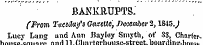
BANKRUPTS . ( From Tuesday ' s Gazette , necenxber 2 , 1 S-15 . J Lucy Lang and Ann Bayley Smyth , of 33 , Charterhouse-square , and ll , 01 iarterliouse-street , uoiir < linj , ' -lioH 5 t . keepers—John Cliirk , of the Crescent ; Miuories , City , mer chant—Edward Kedwood , jun ., now of 1 C , Windmill , street , Lambeth , and late of SI , Upper King-street , Bloomsbury , china dealer—John Maj-lard , of 120 , letter , lane , City , grocer—Benjamin JJnlUwin , of Livci-poul ami Manchester , and of Old Jewry , City , warehouseman-John Bromiley , of-Bolton-le-Moors , Lancashire , maun , facturer—Samuel Phillips , of Khigston-upon-llull , hatter and ship broker—William Guy Taylor and . Elizabeth Guy , of Live ) pool , hosiers . DECLARATIONS OS INSOLVENCY . Thomas Megur , of Holbornhill , and Coventry-street , Haymarkut , poulterer , November 2 U . Michael Jo ' nee , ot' 48 and 49 , . Theobaltl ' s-road , Iloiboni , grocer , December ' - ' .
BASKliDPTCtES ANNULLED . Joshua Swallow , of Manchester , sluirehroker . Samuel May and Pryue Mottram , of Shrewsbury , dm . pers . DIVIDENDS » ECLABTO , George Elwell Jackson , of Uii'iningluim , dealer in iron , second and final dividend ef 5 Jd in ihe pound , payable at 7 , Waterloo-street , Uii'minsliam , any IMday . Thomas Smulhvood , of Birmingham , grocer , tliii'd and final dividend of Is Sid , payable at 7 , Wateiluo-staet , Birmingham , any IVidiiy . William Meiizies , of Gloucester , draper , first dividend of 5 s . in the pound , payable at 19 , St . Augustiu ' s-plaoe , iirii . tol , any Monday .
DIV 1 D £ S » S TO BB DECLARED . At ( la Court of Bankruptcy , London . Jonathan Thomas Maund , of Birmingham , laceman , December US , at eleven—Edward Mansfield Marks , of 21 , Mortimer-street , Cavendish-square , and 10 , Staiilioiipstreet , Itegent ' s-park , upholsterer , December 23 , at haltpast two—Thomas Wells Wright , of Devonshire-street , JL'ortlund-plaoe , merchant , December 23 , at three .
In the Country . Alexander Bower , of Busford , Staffordshire , and Manchester , banker , December 2 i , sit twelve , at the Couiiftl ' Bankruptcy , Manchester—James Schofield , now or hitis of GreeuacVe ' s Moor , near Olilhain , grocer , December I'S , at twelve , at the Court of Bankruptcy , Manchester—Joak Sujjdeii , of Springfield and ITuddersfield , Yorkshire , fancy Cloth manufacturer , December 23 , at eleven , at tha Court of Bankruptcy , I « eeds—Thomas Boddy , of Leeds , m .-iliogany merchant , December 23 , at eleven , at the Court of Bankruptcy , Leeds—llenrj Warburton , of llarpurbey , Lancashire , joiner , December 23 , at twelve , at the Court of Bankruptcy , Manchester—John ltailton and Company , of Manchester and London , merchants , December-3 , at twelve , at the Court of Bankruptcy , Manchester . Cbbxificates to be granted , unless cause bu shown to tlw contrary on the day ol ' . meeting . Benjamin Hornby , of Hoylukc , Cheshire , innkeeper , December ' 23 .
Certificates to be granted ty t ^ Court Review , unless Cause btfsliuivn to tlie contrary , on or before I ) ecembisr 2 S . John Giles , of Headless Brass , Worcestershire , publican —Kobert ' Buckler , offortsea , Hampsiiire , Grocer—James Colquuoun Kcmltle , of Liverpool , merchant —Matthew Munihv , of Shrewsbury , Shropshire , lmberdushei ' i
PAUTXEBSUIPS DI 98 OLVEB .- • John Cfilvert and Jamas Procter , of Bradford , Torksliii . " , smiths—Charles llusbaud and John Henry Arnold Itcinulil , of Kiugstou-upuu-Uull , ship brokers—Peter Nuens ami Lopez JL ' oiiseca , o ? 3 'i , Uvyad-slrefct , City , llGl'fumOMGeorge Ilaines , Joseph Ward , and William Ward , of West Uroimvieh , Staftbrdsliire , general agents ( so far as regard * George Haiues ) — Owen Thomas Priclmrd and livau I ' richard of Ox ten and ltock Ferry , Cheshire , joiners—Benjamin Baker and i ' rancis llavtiu , of 73 , Alderniaiiliiny , City , commission agents — James Morris and William Gray , of . Manchester , sharebrokers—Joseph linllen ami John Jlignett , of Liverpool , tobacco manufacturers-Sir Stephen Uicbavd Clyuue , Lord Lyltletou , William Etfari Gladstone , James Uoydell , and Charles : Townsciul , Oak I ' arm Iron and Coal " Company , Staftbrdsliire—Tlnmras
Haigh and Charles Edward Smith , of Sheffield , m " " casters—Hobert Vates and Robert Cromjiton , of Crwt JJolton , Lancashire , grocers—Thomas Kngland and John Beaumont llellawell , of Uuddersh ' eld , Yorkshire , attorneys—James KieliL-s and Henry Napoleon Ducrinx , ot Wi Carey-street , Lincolir . s-iim . lii . 0 ds , law stationers—UhurlM Cowman and Jolin i ' aine , of Tulliugton , Liiicoln . 'liirti millers-J . lSloor and Kobcrt Arelier Uackctt , of Tiitlrarv , Staffordshire , tanners—Thomas Griffin and William Hudson Griffin , of JUG , Jlolywcll-street , Shorctlitch , wine merchants—Jonathan " Kubinsou Ashwovth and George Cafiwright , of Miinuiiiistur , manufacturers—William Ml * William Wright , Alfred Larjje , mid William Lottiintr , e : New York and Nottingham—James Slack , SnmueUViHifor , and William Slack , of Manchester , liltering maelii' - manufacturers— JtiJin Peiry and John l ' oivis , of Haul * Stuffoi'tUuiro . ironmongers .
Untitled Article
Atkocious CnuKLTr . —A case of horrid erne !? came before the mayor and magistrates at the ( . iuiHhall , Rochester , on Saturday , in -which Mary Ant Vigo , a girl , aged 13 , Avas charged with forcing Sana Geuld , an infant bo t ween three and four years ol '» # ! into a quantity oi' hot tea , by which she was SO tta >' fully scalded thut the skin fell from tho soles olw feet , and the eflect uf which cruelty will Iks , sW the sufferer survive , that the feet willbe controciw and she will become a cripple . The evidence « ' - " Baker , the master of the - union , of Mrs . & ' ' ™!? ; the schoolmistress , and other witnesses AettiM ibl following revolting particulars : —One witn « ss , * thai ; in . 1 . nnnvfirsiitinn wifli the nvisoner o » oluW- '
23 rd nit ., she distinctly told her that she haM ' £ child and would do her some harm . 0 " !' j ' nesday she watched the opportunity when tlicseiiocj mistress -was gone to her tea , and stoic liito ^ room , where she procured the key uf t'ie « * j leading to the kitchen , which she ° i ' . .. i , j went out ; she shortly afterwards returned wiw pail which she hail partly filled from a copper 01 «* ing tea , aud placed it on a stool ; she then ^ AA of the children and attempted to place it in t « J . ^ ling liquid , but it got away from her ' , «"_ ,., seized her innocent victim ; and , nulling on I 1 " } . '„ and stockings , placed it in the pail , and in o'' * . ^ st . iflft its wii > 4 < h ( . V . wnml : i lon'liov li ; lll illtU H » JF 4 4 VlhVM 4 --
* # v »** w KU V ** V »< f */ 44 W JV * WW % * > k ^ w **** — - tOTrliT it the same time pressing its knees so as to F ^ the withdrawing of the feet from the horri !" - - , ; , it was enduring .- Air . Jacob , the surgeon o ( £ W ; 'Lj : described the injuries the poor child had jf ' ^ he said he found both her feet sev erely scaW ^';{ skin of the sole of the right foot had come « " ¦ p piece , and that on the left was very " "' Lji thought there would be a contraction a » o f \ g . of the feet , and , on account of the constitution' ^ turbance and depression arising from tlie scv ..,, the scalding , he did not consider her out <> " $ The prisoner , who is illegitimate , was f on » ' . - ^ old workhouse at Snood , and when the U" ^ j . formed she was removed to that estabhslini" ^ 184 . 3 she was taken out by parties suppose ? u > j parents , but in August last she was again w » ' $
gate of the union workhouse , where sue *»» u . j ^ been left by a woman named Phillips , her m < i > " ^ ing run away . She admitted the offence , an " ^ , improbable story of having assisted her '' . . ^ skinning Celts aricr they had been % vovvi ^« ^ ^ and put in hot water , and said that her w , ^ mother had thveatmud to kill her if she ll ! l ' ,, all * the child . She was committed to ^ "fe ^ S , trial at the next quarter sesssions ior Kot ^ , Darlastox MixKRS .-Thc following sun » » ; , sf have been collected from the uiidei-im "" " ^^ $ account of the Victim Fund : —Mr- x , f , W 2 s . 8 d . ; Mr . ttrccnaway ' s pit , 3 * . W- ^ $ \ fi pit 4 s . Gd . ; Mr . Walfortfs pit& . W-I ( - ' ° —m * m ^^
. , _ ^ r w ^ ¦ ^^ ^^ f J ^ —^ — . - - - ^ . r ^ ^^ r ^ n 0 ltl > IS . ' . t fP vDlft . Naiiosai , Assow av . os of u * ° cc tiiiS ? ! w the Employment or .. Labour . — At a »' . i > )» < , board of director ? , ; 'f . - J )» I » COI ? > Mr . K chair ) , 30 , Hy \ JwGt , iiloon ^ b » r | . , gecrC | Hams was un- , lini 0 USly appomtcd tu y ^ m place ot Mr ., Stovey who I ' *^ been < t oihee , pro te > . Several shares ha \ \ - ^ 0 b since our p , fCvious report , and tu ^ - « rally bear ^ Terr promising ' ^ '
Sanfcwpte, &C*
Sanfcwpte , &c *
Untitled Article
Worcester . —Dreadful attack on A Mas by a Wild Boab . —On Saturday last , as John Hardman , one of the shareholders of the Chartist Cooperative Land Society , in the employ of Mr ^ Birch , of St . John's , after cleaning out the piggery , went te the field to driye to the stye the boar , when-the animal made a most ferocious attack on Hardman , lacerating his thigh dreadfully . Hardman tried to escape , but the ferocious beast again seized Mm , and tore the calf of one of his legs . Hardman again tried to escape , and , jumping over a hedge , got clear away . His cries for help brought severalmen to his aid , who removed him immediately to the infirmary , where he received all necessary attention ; and is now in a fair way of recovery . The boar was secured and taken back to hhden . . ¦• • ¦ -.
Child Murder and Attempted Suicide . —A melancholy case of murder and attempted suicide has occurred at PittiDgton , near Durham . It appears , fromthe particulars that have reached us , that a young woman , who had lived servant in Durham , had a child by the son of her master , which was put to nurse with a woman residing in this town , tlie expenses being borne by the reputed ^ father , where it remained tfil Monday , a period of about ten months . The father , aome time ago , discontinued his payments , and the mother of the child wa 3 obliged to take it home on Monday . She lived at Pittin ^ ton with her father and step-mother , the latter of whom treated her very harshly ; and that , added to a course of ill-treatment by the man who betrayed her , drove
her to desperation . She went out with the . child on Monday evening and returned without it . When asked by her father where it was , " she replied it is safe now , and would be no more expense to them . She betrayed great uneasiness of mind during the whole of that nisht , and on the following morning her father bid her go and bring the child back . She went out , proceeded to the river there , and threw herself in , and would have perished , but her conduct was observed by a man , and he plunged in and secured her . Observing what he thought wasashawl , he went in for it , and on taking hold of it the , body of a child dropped from it . The woman acknowledged the child ' was hers , and that she had thrown it into the river the preceding night . She was subsequently taken into custody .
Untitled Article
COLLISION ON THK GREAT WESTERN RAILWAY . In the course of Saturday night , and up to a late hour on Sunday evening , no less than ten express down trains left Paddington , and three up express trains arrived at that station , conveying parties connected with projected lines of railway , charged with the necessary plans to be deposited at the office of the toard ot Irade , Whitehall . One of these express trains , consisting of only the engine , tender , and a first-class carriage ( in tlie latter were two or three gentlemen proceeding to Kxeter with railway plans , &c , to be deposited with the clerk of the peace for the county of Devon ) loft 1 ' addington on Sunday aiternoon at twenty minutes past five o ' clock . As it > assed by Slough , Mr . Ho well , the superintendent at that station , observed the burning coke falling out , apparently through the bars of the t ' urnaoe , in consi * derable quantities , leading him to suppose that some ot _ the bars had become displaced . Within ten
minutes after this train had passed , another express train consisting , in addition to the engine and tender , oi one first and onesecond classcarriage , was observed approaching Slough from hiddington . ' Mr . Howcll immediately made the usual signals for this train to stop , fearing , from what he had witnessed of the tamer one , that it would not be enabled to proceed tar before it came to a dead . stop for the want of fuel . In this team were three of four gentlemen engaged upon a similar errand to those on the former one . Mr . llowell having informed the engine-driver arid guard or the circumstances he had observed connected with the first train , and giving them strict instructions to exercise the greatest care , suffered them to proceed , after delaying the train for nearly a quarter ot an hour . The first train / having a disabled engine [ y > having been found that several of the bars of the iuvnace had dropped out ) , Wii 3 wily enabled to proceed
Untitled Article
about a mile beyond Maidenhead station vT ^ distance over the bridge which crosses the f hi At this time it was quite dark . Tlie guard wi «*' sent bade towards Slough " , for tie purpose of \\ ^ Using any train , which might be proceeding down ?! ' * line to stop . Observing tho train , wind ? had I detained a short time at Slough , 'by Mr ilown " proceeding towards iiini , and being miprovidedw a light , an unaccountable omission , he pulled M * 1 jacket , in the hope that his white shirt < = " ,. might attract the attention of the driver . ? mado tlie usual signal , by holding both | m L !" up above his head for tlie train to stop . The dist'i between the two trains at this time was n ? ? amile . The engine-driver , however , passed the in . unheeded , and in less than two minutes aficrwuvi , most fearful collision took place . The last train ... "
1 ii r ^^ 4 * ti f \ s % t ^ r % « tr Ii ¦ a I * *¦• *^ ft Ar * t t a «* a «* b * * . ~_ - J-1 . till into the one which was stationary with a droa it ' crash , shivering the only first-class carria » e wh ; i was attached to it literally into a thousand »; el | scattering the fragments over the line . Fortuity ' the engine-driver , stoker , and guard , and the ' tw or three passengeiy had left tlie train , and were stand ing by the side of the bank when the crash occurred Had the latter remained in tlie carriage ,. their j | Ve-T could not have been saved . As it was , however- ih ^ provideniiasiJy ' escaped , as well as those who ' were with the oilier train , with tlie exception of some slight bruises of but little importance . The ei )« j nt > which ran into the carriage sustained no injury * ™
cept to one ot the buiters . Hie wliole ot the parties who were travelling by both the special trains then proceeded with the sound engine ( which , after some delay , was shifted by the moveablc rails on to the otlier line , as soon as It was cleared of the wreck ) to their places of destination . It is stated thafc t || D engine attached to tiie first train was without a sinnfe light , and that it was the intention of those entrug&d . with it to provide themselves with lamps upon the " j r arrival at the Heading station . It was not until nearly midnight that the down line was cleared of all obstruction , and opei > for traffic . Several of the trains , both up and down , were con- ' siderablv delayed inconsequence * of the accident .
The Oxford train , which started from l ' addingfott at seven o'clock , did not reach that city until nearly an hour beyond its usual , time * ; and the last up-train , instead of ; reaching Paddington at half past ten o ' clock ; did not arrive till nearly midnight . The accident is solely attributed ( independently of the neglected state of the bars of the furnace ) t ' o the guard proceeding up the line to endeavour to cause the down train to stop , without being provided , on a dark night , with a lamp of any kind , whatever .
Untitled Article
THK NORTHERN STAR . — Pecembeb *> ^
-
-
Citation
-
Northern Star (1837-1852), Dec. 6, 1845, page 6, in the Nineteenth-Century Serials Edition (2008; 2018) ncse-os.kdl.kcl.ac.uk/periodicals/ns/issues/vm2-ncseproduct1344/page/6/
-