On this page
-
Departments (1)
-
Text (5)
-
Untitled Article
-
Untitled Article
-

$kni&*ttte, dBffim^ss, ^unufsttg, &c
-
Untitled Article
-

Untitled Article
Note: This text has been automatically extracted via Optical Character Recognition (OCR) software. The text has not been manually corrected and should not be relied on to be an accurate representation of the item.
-
-
Transcript
-
Note: This text has been automatically extracted via Optical Character Recognition (OCR) software. The text has not been manually corrected and should not be relied on to be an accurate representation of the item.
Additionally, when viewing full transcripts, extracted text may not be in the same order as the original document.
Untitled Article
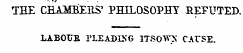
THE CHAMBERS' PHILOSOPHY REFUTED . LABOI 7 B PLEADDJG ITSOTO" CATSE . TEE EMPLOYEE . A 2 iD EMPLOYED . A Timnn DliiOGCX . Speakers—Mr . Jama Smith , a factory miU-ouftPr , and -Mr . Jtich' jrd Jackson , a cottonspinmT . Smith . —I am glad to see you , Mr . Jackson ; step in tq my house , and let us have a little conversation ob tLc present unhappy differences on the subject of
wages . Perhaps I may show you that the ideas entertained respecting employers are not , by any means , just . At all events , let us hear -what each has got to say—you on the y . sii of the operative class generally , and I on the-pan « f the mill-owners and others , who are in lie habk of giving employment . Jackson . —Thank you , sir ; I am a ' plain-spoken man , and have no objections to say -what I and others think about our condition as-workmen ; so I very -willindy accept your invitation .
¦ Smith- — -JNow , Mr . Jaekson , sit down : and if yon please , bpidn by telling me exactly what the workmen vrani . Jsi-l ^ n . —Why , sir , the great matter" is this—our eondkiop is much less comfortable than we think , in justice , it should be . "We are poor , and not getting any richer . Few among us can get more than 22 s . a -week for our labonr . The average wage is abont 14 s . or los . ; and we do -think it a hard case that a man , -voth a -wife and family , should have to live On any sum of that kind , when we see the masters so weil off , and they , as one may say , living by our hard and continued labour . What we want is , " " a fair daVs ¦ wage for a fair day ' s work . " ' Smith . —The statement apparently is—that the employers g ive lower -waires generally than they ought to give . Is not that the substance of vour charcre !
Jackson . —Tes ; -we think you should jrive at least 25 per eent . more . If a man iow gets 20 s " he should get 2-3 s ., and so on . Smith . —Very well . Xow , be so good as tell me on -what ground you rest this demand . Jackson . —Because yon are -rnaVing lares profits , and can afford to pay more than you do . The profits should be more equallv divided . Smith . — Kow , I believe , we understand each other . 1 like your candour ; and I think 1 shall answer yon . Top claim more wages on the score of your contributing to the production of profits . Let us take xay own establishment as an example , and let « s suppose yon are a workman in k . I wish to know how much you put into the concern . Jack * on . —Me I - why , 1 give you my labour from Monday morning tDl Saturday night .
boniUi . —This labour , then , is your contribution of means . Yon receave 20 s . for the" week ' s labour ; and therefore it Is just the same thing as if yon were to give me £ 0 s . every week , so that I might lay it out in hiring somebody to do your work . Jackson . —1 think much the same thinjr . Smith . —It is then allowed that you contribute to ¦ the extent of 2 Os . -weekly to my concern . May 1 novr ask if yon lhink ev&ry one should be paid act-ordinsto the extent of his in-put and risk ? Jack > on . —That certaiiilv would be fair .
Smiih . —1 shall then explain to you what I have put in , and how 1 have been enabled * lo do so . The cost of the buildings , the ground , the machinery , and other things required to begin the majrafactory , was £ 80 , l » y »>; and the money necessary for buving raw material , and giving credit tul sales could be * effected , and also fur paying wages , came to £ 10 , < XM > more . Tou understand I did not start till 1 had £ 90 , D { X > ready to be laid out an < J risked on the undertaking . If I haa begun with less , the concern would have been tmsneeessmL It conJd not have gone oh . To raise tkis large snn of ~ 9 Q , fnxi was a ~ very serious matter . IMv lather was a working-man , like yourself . His ¦ sraees were never above 18 s . a week . On this sum he
bronchi up his family , for my mother was very econo mical . 1 got a little schooling ; was taught to read , "write , and cipher . At fourteen years oi a < re I was sem Irtv a cotton-factory , where for several years 1 had no higher wage than 5 s . a week . 1 afterwards , by dint ol '^> nie degree ofskfll and perseverance , rose to be a spinner , and received 25 s . a week ; but off this . 1 had to pay a boy-assistant 5 s .: and therefore my real wage was only 20 s . a week . . I was at thiV employment four years and a half , during which time I saved £ 3 u , which I deposited in a bank ibr security . One day , when I was at work , a parry of foreigners visited the factory : they were in want of a few steadv and skilful hands
to go to St . Petersburg , to work in a factory there . I volunteered for one , and being chosen , 1 " went to that dis-arn crnr , which vou know is in Russia , and there 1 received for a time about double-my former wages . In thn-e years the overseer died : 1 was promoted to his situation , and now received as much as £ 25 > _ > yearly . I still n . adf a joint ofeeonomisini : my gains ; and on ret-koning up , found , that when f was twenty-eight years of age 1 had saved £ 700 . At the reeonrrcfendation of a fiiend 1 laid < . > at this monev on a mercpnile speculation—in short , 1 risked its entire loss . 1 was successful , and made my £ 700 as much as £ 1 , »> J ' . » . Again 1 risked this sum ! for it seemed a
sure tra > ie ; and so on 1 went for several years , increasing my capita ] both by profits and savings . When 1 maiiie-1 , which was not till thirry-iive years of age , I had realised one way and another £ 20 * 000 . 1 now returned to England , was for several years a partner in a concern where I again risked my earnings , and at the end of aiteen years retired " with £ i } U , i ) W With tliis large sum 1 built my present factorv , and entered ii » u > the hazardous business in which I am host eiunyrrti- I a ~ k any mm if I < Jici noi earn mv money by hard industry , by self-denial , by serious risks . i > y a long course of pains and anxieties * For , having < ione all this . I consider 1 am entitled veariv
—? w . * t . to an interest on my money equal to what 1 could Lr . vp obtained by lending it ; tceim-l , to a profit that ¦« ill ' .-over a . ay losses which I may- incur by bad debts ; ii'W , a per-centage to pay the tear and " we : ir of maf-nii- 'try and deterioration of propertv ; and , j mirth , to a salary for my personal trouble—^ -in other word * , lay wages ; and all this over and above the ordinary exj > e ; i > es of the concern . Let me assure you that Lothiug is more certain than that , takins the working classes in the entire mass , they get a fabshare of the proceeds of the national indnstrv . We may take a few faets . To begin with iny own mill . I spent , as I have said , £ 80 , 000 on the building and the apparatus . IXow nearlv the whole , of this was
dispersed in wages to working people . See what a number of men must have been employed in fashioning the raw materials into the house and its machineryhrickmakers , limebnrners , eoal-miners , vrajroners , ¦ srood-cuttcrs , sailors , carpenters , builders , slaters , "plasterers , glass - makers , glaziers , iron-smelters , -engineers ; and not only these , bui the _ persons who supplied them with food and clothing . In short , if ¦ sre were to go into a minute calculation , we should probably discover , that out of my . £ 80 , 000 , as much as £ 75 , 000 went to the working-classes , the remaining £ 5 . 000 going Xo the proprietors of the raw materials , zed to intermediate dealers . If people would reflect a little on sueh matters , they would perceive what an enormous share of the cost " of almost pvp . rv
articju goes to operatives . It is ascertained , by careful calculations , that out of £ 100 worth of fine scissors , the workmen have ££ 6 as wages ; of £ . 100 worth of razors , they have £ 90 ; of £ 100 worth of tableknives and forks , they have £ i > 5 ; of £ 100 worth of fine woollen cloth , they . have £ 60 ; of £ 100 worth of linen yarn , they have £ 4 S ; of £ 100 worth of ordinary earthenware , they have £ 40 ; and so on with most articles of mannfacture . In the making of needles , pins , trinkets , ¦ watches , and other delicate articles in metal , the proportion of -wages rises to within a trifle of the price of the article . In the working of collieries tie expenses arc almost entirelv resolvable into
labonr ; there being few cases in which the coalminers receive less than £ & >() out- of every ilOO of the current expenditure . I trust it is not necessary to dwell longer on the notion , that working-men do Dot get their fair share of the proceeds of the labour on which they are engaged . And , as you niicht imagine that , there is some kind of mysterynnder the term capital , 1 will explain the meaning of " it in every few "words . Capital is anything which is of value . It may consist of labour , " of houses and lands so far as they are productive , of machinery , manufactured goods , or money . Everything is capital which possesses an exchangeable value , and can be made direetlv available either to the support of human
existence , or to the facilitating of production . Capital or property is a sheer result of labour , if Dot labour itself : and that it is the accumulated savings of years v say , in some cases , of centuries . He who possesses capital in the form of a large sum of money , for instance , can give employment to others . You know quite -well that , before 1 planted my factory here , there was little workin lie town . Sow , see how many warkmen and their families are supported . 1 was not , TmjV you , obliged to come here audset up a factory , i could have gone somewhere else . Then look at the sum "which I distribute weekly in -wages . I give employment to 100 men , 146 women and girls , and seventy boys—altogether , 31 « individuals ; and the entire -sum paid on an average weeilr for wages amounts to £ 290 . 3 say Ipay £ 290 tomyVork-people weekly in exchange foriheir labour ; surelv you must nowsee that
capital is a rood thing ; good for the working-classes , It is eapitoi = wMeh hires and employs them ; it is capital -which pays their wages ; it is capital which ieeps them busy when often the market is glutted - ¦ with goods ; it gives them work till better times . . And yet there are -workmen so shortr-sighted as to ¦ wage war on ^ the very thing which snpports them . They attack capital as an . enemy . It as their best Mend . Now 1 put it to you , Richard Jackson , as a . straightforward man , and answer me , if I , by these risks and obligations , and personal attentions , ~ be not jusfly entitled t *> take a vast deal more otrfc of the business than you , who put in only uos . in the shape of weekly labour I [ So far -we " have given the ' points of the dialogue as set forth in the tract of the Messrs . Chambers , and as this portion of the dialogue may be taken as the terms upon -which the parties join issue , the plea
Untitled Article
and declaration will be somewhat varied from the manner in which they are set out in the original pleadings . ]
Untitled Article
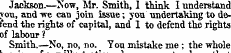
Jackson . —Now , Mr . Smith , 1 lhink I understand you , and-we can join issue ; you undertaking to defend the rights of capital , and I to defend the rights of labour ? Smith . —No , no , no . You mistake me ; the whole bearing of my illustrations have gone to show that capital is the best defender of the rights of labour , while you would place them in antagonism . Jackson . —If such be your office , you have strangely discharged vour duty to your clients , for upon re-consideration , I think you must come to the conclusion that the tendencv of vour observations would go to
p rove , firstly , that the employed was a mere passive instrument in the hands of the employer ; that the capitalist with a family , or without a family at all , underwent all the risks , suffered all the inenta ! torture , and deserved great sympathy for the risks , the endurance , and the mental agonies that he underwent during the process of money making . Smith . —Well , but Jivck ^ on , you seem to forget that I have been endeavouring to refute the absurdities of those grievance-mongers who would throw all the odium of the hardships that your class complain of , upon the shoulders of the masters .
Jackson . —Well , 1 understand you to occupy that position , and I am going to establish the fact . Smith . —Yes , yes ; goinsj to do a thing , and doing a thing , are two very different things . 1 tell you , yon can ' t establish the fact , unless you doubt tho narrative that you have just heard of my life , and unless you l ) elieve " that there is something magical about me which has conferred peculiar advantages upon one individual above another . Jackson . —Come , come , one swallow doesn ' t make a summer- I am talking of a system , and not of a charmed man ; and you do more represent that system , than Newton , because he was a great luminary , represented the sun . moon , and stars .
Smith . —Mr . Jackson , Mr . Jackson , 1 invited you to this discussion because 1 looked upon you as a straightforward , blunt , honest man , that would discuss the question of labour and capital familiarly with me : drawing your conclusions as to my rights to what I possess from the risks , the hardships , and the mental agonies I endured ; while you would mystify the Tfhole subject by plunuing into the gnlph " of •' system . " There , ther e " , Mr . Jackson , in that consists the great error of your class ; instead of receiving instruction and admonition from your best , indeed your only friends , you allow your mind to be contaminated , anil your better judgment to be -warped , by the interested misrepresentations of hired , restless , and designing demagogues .
Jackson . —Upon that subject we will have a word by-and-bye ; and now , as you wish to make youi-self the representative of a system , I will sec if I cannot illustrate its viciousness from your own lips and from your own position . Smith ( wrureling ) . —Pooh , pooh , Mr . Jaekson , it's impossible I tell you . It is this flying in the face of the masters with " your political economy , rights of labour , and trades' combinations to defend them , that has more than any other cuvumstancr ] ed to that ranklinc : feeling in the minds of the masters of which your class complains . Jackson . —If I mistake correct me ; but as 1 didn't interrupt you , sive me leave to state my own case . Smith . —Well , well , go on , but be brief , for really these mysterious calculations about demand and supplv , and new doctrines about the risrhts of labour , and all that stuff , are so complicated that they puzzle me . Jaekson , —The puzzle has been of your own makinsr : to solve it is my intention . Smith . —Well , well , do f ; o on .
• lackson . —Well then , I take you from your departure for Russia , up to which period you had saved the sum of £ 30 . Your division of time from the period trhen yon had attained your fourteenth year till you had arrived at the agp of twonty-ei « ht , is so very abstruse and enigmatical , bcin ^ divided into periods of " several years" working for os . a week ; the 41 number of years" that you were earning 20 s . a week : the " three years" that you worked for " double wages" in Russia before the overseer died and yoa cot his place , and from that event till your twenty-eighth year , when you took stock and found yourself to be worth £ 7 < K ); thesp several periods , I say , are so jumbled together that I can establish no . scale of your saving up to that time . Smith . —What have you to do with that ? that ' s my business . 1 had £ 700—land 1 saved it by my earnings , a- ™ " I suDPOse I had a risrht to do so 1
Jackson . —A perfect right , > Ir . Smith ; and I am xerv glad , fur your sake , that the Rwssian spinner could afford , in a comparatively untaxed country , to give you £ 2 a week , double the wage that you can give me , and out of which I have to pay very heavy taxes . Smith . —Pooh , pooh , non ^ eo * : haven ' t I to pay the income-tax ' . —taxes for my house , for my carriage and horses , and servants : taxes for gas , paving , t-lcansins , tithes , poor-rates , church-rates ; taxes for
my wine , my tea , and my sugar—in short , for every thing 1 eat and every thing I ilrink ' . Jackson . —No , sir ; you make a pi-ofit upon them . I pay them , or help to pay them , anil I'll show you how , presently . However , to resume : when you were 3-5 veare of age you had amassed the sum of £ 20 , 000 , which , you tell us , you had put together oneway or another ; and as it was all made in Russia , I don't stop to inquire , but shall come to the consideration as to how you augmented it in fifteen years to £ 90 , ' > 0 'i , during whieh time you trafficked in English labour .
Smith . — " Trafiic I" what do you call "traffic ? " I exchanged it for labour . Traffic is a sordid word : a term ever in the mouth of those who would degrade the higb-minded employer to the rank of the grovellinc low-minded huckster . Jackson . —Well , Mr . Smith , we won ' t quarrel about terms . You bartered it for English labour . Smith . —Say exchanged it , Mr . Jackson ; it's a much less offensive term . Jackson . —Well , you exchanged it , Mr . Smith . Smith . — Now , come , we are gettine into good humour asain . Go on with vour narrative .
Jackson . —Well , you embarked your £ 20 , » 00 in manufacturing , and in fifteen years , during which time you supported your family and lived , you realised the sum of £ 90 , 000 ; and now , Mr . Smith , if you please , a word about a very important branch of political economy—distkibition . i Smith . —What do you mean ? Your " eqvai . wstribvtios , " I suppose . Do you want to distribute j my property for me ? Jackson . —No , sir ; it is not " equal distribution ;" nor do 1 want to distribute your property . It is equitable distribution ; and 1 want the laws of my country —which should be " EqcAinr" protective of the rights of all—equitably to distribute the property of all . Smith . —Equal , equitable , equally , equitably — what ' s the difference ? You want to rob me ?
Jackson . —1 do not , sir ; but 1 desire that you should not rob me . 1 apply the term equal to the laws , and equitable to the distribution of property . Equal , to the laws ; protection of your equitable share which j you claim under the head , interest for your money , guarantee against bad debts , wear and tear of ma- chinery , and wages for your labour ; and also to my equitable share of whatever the surplus may be , after j gtiaranteeingthose several amounts to you . i Smith . —Well , but what have you to do with it more than receiving your pound a week ' . What do i you know of the surplus—wasn ' t it mv own f j
Jaekson . —As Sir Robert Peel said in discussing the appropriation clause , let us have the surplus before we talk of its application . And now I shall pro- ceed to shew you where I find that surplus , and what I find it to be . You invested £ 20 , 000 at the age of thirty-five years , and when you were fifty , you had increased it to ^ £ 90 , 000 . You tell us that the invest- I ment of £ 90 , 000 led to the ^ mploymeut of 316 hands . , If , then , the employment of £ 90 , 000 capital led to the , employment of 316 hands , the employment of the ' £ 20 , 000 would lead to the employment of seventy j hands ; that is , if there was another partner with you } who invested an eqnal amount of capital , you wonld J employ 140 hands ; if three partners , with equal j shares , about 210 hands ; if four partners , with equal i
shares , about 280 bands—leaving the surplus of thirtysix pair of hands unemployed against the £ 10 , 000 , the amount by which your accumulated capital exceeded the £ 80 , 000 employed by you , and three other partners who invested £ 2 <» , 00 o " each . Upon your £ 20 , 000 you realised £ 70 , 0 ( K > in fifteen years—and had then JL 9 i > , tH >\) ; and you very fairly demand your profit upon the £ 20 , 000 in the shape of interest , compensation for bad debts , wear and tear , and wages for labour . Now this is fair : iiideed I may call it equitable distribution , and I will proceed to my cal-, culation . I allow four per ceni . for the interest of capital ; two per cent , for bad debt * ; two per cent , for wear and tear ; two per cent , for wages : that is , m the lump , ten per cent ., or £ 2 , 000 per annum . As
you and your family lived out of £ 20 , 000 during the fifteen years , I will place it against the compound interest that you might have realised ; and as you say you lived savingly , I will allow you two per ceat . in Ken of the compound interest ' , taking your total profits upon your £ 20 , 000 at twelve per cent . ; to which add the support and education of your whole family—and for fifteen years , at twelve per cent , upon your £ 20 , 000 , you would have realised the sum of £ 36 , 000 , which , added to your original capital of £ 20 , 000 -would inake £ 56 , 000 , leaving a surplus of £ 34 , 000 , or within a fraction of £ 500 each for the seventy hands employed in working yotr £ 20 , 000 of capital . Now , sir , to the sub-divison of the £ 34 , 000 surplus ; after allowing you twelve per ceut . upon
your capital , and all the expense of education and the support of your family , I apply the term " equitable distribution ; " and Ihe term " equal protection , " I apply to those laws which should guarantee to me my £ 500 with equal security as to you your £ 36 * 000 , or twelve per cent . upon your capital of £ 20 , 000 for fifteen years : -whereas the law has enabled von to take the whole of the twentyfour per cent , made upon the £ 20 , 000 by labour , and has thrown many , if not all , the seventy hands engaged in making it , into the cold bastile , or compelled them to begin anew to make another £ 20 , 000 into another retiring salary of £ 90 , 000 for another master , while they have added fifteen years to their lives . And now , sir , to satisf y you upon all points , allow me to contrast your position at the end
Untitled Article
of fifteen years , with that of an individual of any other class commencing business with £ 20 , 000 . If I allow you compound interest at four per cent , it would have taken many years more than the fifteen , even to have doubled your capital : that Is , without charging you anything for living or the education of your family , you ¦ would not have made your £ 20 , 000 capital into anything like £ 40 , 000 in the fifteen years . Had you invested your £ 20 , 000 in the purchase of land , allowing you four per cent ., you could not have supported your family and augmented your capital as you have done in the trade of cotton spinning ; while , although as a landlord , you might have left your social duties undischai'ged , the law would have compelled you to bear a certain amount of
taxation which you could not possibly have shoved upon the shouldei-s of others , llad you commenced the trade of shop-keeper , and retired in fifteen years , after having educated and supported your family , with an addition of £ 30 , 000 to your original capital of £ 20 , 000 , you would have been a phenomenon in that line—in fact , an exception ; A \ hile , as a cotton-spinner , your case is the rule , instead of an exception . In short , sir , the laws have been made for the government , management , ar . darrangenientofa social state , over which the present process of steam production has passed , as it were , by a hop , step , and jump ; and what I and my class—who , together with the shopkeepers , have been the great sufferers—require is , tho enactment of such a code of laws as shall legally
protect and equitably distribute the surplus property of the country , after having awarded to money capital , speculation , risk , and industry , that fair amounit of protection which labour , if equally protected , would neither , deny , murmur at , nor withhold . Poverty , sir , is the rule of my class—it is the exception with yours ; and , however you may try , by hired advocacy and purchased philosophy , to convince me tliat reliance is better vested in the money capitalists than in labour capitalists , you will fail , until you first succeed in convincing me that the wolf is the best protector of the lamb , the cat of the mouse , or the kite of the lark . For , if you do not devour our bodies as well as the produce of our lalxmr , it is because your
mechanical arrangements are not yet coiuplete , as a substitute for our labour upon the one hand , and because the old school of sympathisers recognise in us that Value , as consumers , which gives an increased value to their landed property . To the law then , and not to sympathy or charity , we lookfor protection . Smith . — " The law ' . —what have 1 to do with the law ? I made the money . The capiteil was mine , and I paid every man his lawful wages . Jackson . —I grant it , sir ; you have nothing to do with the law . but you did not pay every man his lawful wages , nor was the capital yours . Smith . —The capital not mine ! whose was it , then ? This is mori of your political economy and equal distribution .
Jackson . —Hold , hold , Mr . Smith ; my assertion has nothing to do with political economy , nor has it any reference to distribution ; what 1 am now stating is a fact admitted by yourself . In your endeavour to shew the patronising qualities of the capitalists , you have made some valuable admissions . You have stated , that out of a £ 100 expended in the manufacture of fine scis-sors , £ 91 } is the value of tho labour , ana £ 4 the capital invested ; that in every £ 100 -worth of razors the labour amounts to £ ! H ) and the capital to £ 10 ; and so on , until you come to thc ' innnutacture of needles , trinkets , A-c , " in the manufacture of which you admit nearly tho Avhole investment to be laliour . In soft wares , you tell me that in the article of fine woollen cloth the proportions are £ (> ' » for labour ami £ 40 for capital , and as your trade of cotton spinning appears to have beon very proiitnlrie , 1 think we may assign to the respective capitals employed in the manufacture about the same relative proportions by which you measure their application to the tine woollen ninth .
Smith . —Respective capitals ! What do you mean < Have I not told you that all the capital was mine ? Jackson . — Yon have told me no such thing , sir . You have told me that everything , that bore an exchangeable value was capital ; and you particularly instanced labour ; and if we can agree upon your calculation as to the respective amounts of money-capital and labour-capital , expended in the manufacture ot £ 100 worth of linen yarns , — -and that description most riearlv represents the fabric produced by your
money and my labour , —you will see how nicely and how truly the result is produced ; £ 34 , 0 U 0 of the £ 70 , 0 i ) 0 ' accumulated by you , belongs to the hands that made it , and £ 36 , 000 to the parties that employed them . Your calculation is , that £ 100 worth of linen varns consists of £ 48 in labour and £ 52 in capital . Now , sir , you will find that , as nearly as we can balance , the £ 30 , 000 that 1 assign to vou represents the fifty-two per cent , of vour capital , and tho £ 34 , 000 represents the forty-ei « ht per cent , of labour ; —that is , £ 34 , 000 is to £ 36 , 000 almost fractionally what fortv-ei'rht is to tiftv-two .
Smith . —O , 1 don ' t understand your figures and vour fractions . Jackson . —Perhaps , sir , vou can only bring your mind to bear upon interest lor your capital , compensation for bad ilebts , allowance fur wear and tear of your machinery , amount of salary for overlooking , and an indefinite s-urplus , —in which is included my labour , —for mental anxiety . Now , Mr . Smith , 1 think I hiivo shown you , according to all the laws of nature and of justice , that while you ought to be satisfied with adding £ 36 , 000 to your capital In fifteen years , that all the hands that realised that capital were , as well as yourself , entitled to a retiring salary . Smith . —Well , they may retire if they like .
JiLt-kson . —Now , sir , you talk nonsense , and mock us in our poverty . You call your labour , honourable labours and tell * us that it is augmented by distraction of mind , hard industry , self-denial , serious risks , and a long course of pains anil anxieties . 1 admit it all , sir : but sufferings of bodily torture and the I tan its of mental endurance are qualified and soothed » y the cheering reflection tliat each passing hour of suffering hastens that happy period when , if not im-I > elled by the sordid desire to heap more riches to vour already extravagant store , you may quit thu busy bustle of life , aEd thus release yourself at will from all vour sufferings ; while those who commenced
at an equal ago with yourself , and who assisted in augmeniing your treasure , are at the age of lifty , — when you liave become independent of the world , deteriorated in strength—and their labour reduced in value ,: compelled to merge into what is called the "surplus population , " and are heartlessly tolilat that aije to search for a new habitation and strange associates in a foit'ign dime ; that the land at home which yields forth its abundance is too small for their sustenance ; and that the machinery and new indentions which have displaced their labour are the pride of the country whose system confers all the proceeds upon the privileged , and all anguish , care , and sorrow on the unprotected .
Smith . —Unprotected ! what do you mean ? j ou can protect your family as well as I can protect mine . What protection have mine beyond what my own industry gave them ? Jackson . —Not so fast , Mr . Smith . Recollect We are starting from a point ; and that point is when you embarked £ 20 , 000 in manufacturing speculations , and when you employed seventy hands to turn it into a marketable commodity ; and recollect , that while your capital , worth 52 per cent ., was protected b y a vote , tliat my labour , worth 48 per cent ., was wholly unrepresented . Smith . —Now there you arc in error . I will show you that your class has nothing to complain of on that score " There were five out of the seventy , Or one in fourteen , of the hands that worked for mo , who were voters for the borough of Devil's Dust-: —while I , representing the whole of the capital , had but one vote . Jackson . —What gave them the vote ? Smith . —A £ 10 house , to be sure . Jackson . —And whose were the £ 10 houses ? Smith . —Why mine , to be sure ; I built them .
Jackson . ^ Tlien they were capital , Mr . Smith—because they possessed an exchangeable value : and they were of an amount that ought to be represented . ' Smith . —Yes , certainly . Jackson . —Well , Mr . Smith , by a loose calculation just made in my head , I find that in the fifteen years that you employed seventy men , you made a profit of £ 990 * by the lnl > our of each , or £ 66 per year profit upon each man ' s labour : a profit , the one-sixth of which , if in a house , instead of being in labour , would have entitled the lalwurer to a vote . But as you have in your opening speech included very many topics * 1 shall " withhold my reply on this important subr ject for another interview , when I undertake to prove the injustice of that system which enables you and your family to appropriate to yourselves what belongs to me and my family . Smith . —1 have nothing to do with your family—I pay you your wages , and loek to my own .
Jackson . —I have a family as well as you ; they are dear to me as vours are to you . 1 have laboured from youth upwards to support them . I have wrought with you for the last fifteen years , and to-morrow , what must be my anguish , my sorrow , aye , and my venceanee too , when 1 see my pallid wife , and stunted , not half-clad children—emaciated , without the blush of youth in their faces , or the suppleness of youth in their limbs—without the gay and childish look in their sunken eye . «—what , I say , must be my reflection and theirs , when , to-morrow , they and I look upon the fresh blood that flows through your children ' s veins — the lively and playful glance that beams in their eyes—the rich dresses in w ^ iich your family arc decked and when they see your splendid equipage , with pampered horses and well-fed menials , r eady to convey your family to the princely mansion that " you have purchased with their young blood , and amas 8 ed"by their
sweat—Smith . —Hold , hold , Jackson—you do , you do , you do me injustice . You have roHsed a feeling that never touched my heart before . Is that your wife , and are those your children ? : Jackson ( embracing his wife and drawing the children to him ) . —Tes ; these are mine , and the workhouse now must be their portion ; and to-morrow , as you move along from our village , lolling in your stately equipage , and carried by your prancing horses , you will be cheered on your way bv the reflection that your traces are made of infants " ' sinews , and your carriage wheels are oiled with the blood of the impoverished Jjabes that now surround you ; and when
Untitled Article
you enter that splendid mansion that you have purchased by my sweat and theirs—when you are about to offer un your prayers to God in the morning when you arise—when you ask that Omnipotent Being who created you ana me , your children and mine , to " give yon your daily bread , " think of those who are without bread , Smith . —Jackson , there ' s the eiror . It is a fault of the landed monopolists , and not of the Almighty , that you have to complain . It is they who rob you . Join with your masters -for the repeal of those unjust laws which put an additional price on your bread , that monopolists and idlers may live in lu ' xurv .
Jackson . —Sir , I have exhibited my case , and the poverty of my family ; and yet , while you deny that laws have anything to do with the poverty of the poor , you would now make me infer that all " our sufferings arc a consequence of one bad law : a lawthe only law—of which your order complains , and , strange to say , under its operation you have become ; wealthy and we have become poor . Smith . —Poor ! I tell you that you have the same opportunities that I had , and instead of stuffing your head with politic * , if you had minded your business as I have , done , you would have beeu assuecessful as I have been . . Jackson . —Then , sir , if I had been as successful as you have been , unions the poor can all become money capitalists , —my success would have been but a substitute for . a-no . tlje . rs failure—or another cog in that ¦ ar tificial wheel which grinds the faces of the poor .
Smith . — -. Jackson , again I tell you that we mv your greatest friends , and you are vour own greatest enemies . Give over politics , and " those crude and silly notions about laws tliat your head appears to be stuffed with ; and henceforth devote your time to forwarding those great improvements which arc now everywhere in process of completion for the benefit of the working classes . The establishment of baths , improvement societies , the opening of pleasure grounds , the advantages of emigration , and the benefits of better ventilation , are the all-important considerations that should occupy the attention of the working classes ; while the mystery of law-making should be left to those who have-received an education to fit them for the task , and whose independence , in a pecuniar }
point of view , places them above suspicion on the one hand , and makes them independent of party interests and party strifeon the other . Jackson . —Mr . Smith ; if I had my £ 500 that is now in your pocket , and which rightfully belongs to me , I should require neither charity , gratuity , nor sympathy . If , then , my family or myself required cold baths , I could procure them out of my own resouroes ; if they were ignorant or uneducated , I should then stand justly chargeable with a neglect of parental duties ; if they were naked , as you now bohold them , and if I dissipated the means of giving them comfortable clothing , the finger of scom would
be pointed at me , as an unfaithful father , a bad man , and an unworthy member of society , liut now , sir , their every want to which you would reconcile them by bits of charity and sympathy , are consequences of oppression and misrule , and not characteristics of my nature . Baths and im . ea . hi uk g rouxus , sir !—ah , ah , all , what mockery ' . Immerse that perished , withering child , from whose young veins yon haveextrartvd the hot life ' s blood , in a rnUlbath ' . and exhibit that crippled child with twisted limb in your pleasure grounds , ns a mockery to your order for the injury they have inflicted upon my child ! Runs , sir—behold their rasis . The tender mother who bore them , reared them .
and loves them , has enough to do to pin their rails together once a day , without imposing a double hardship on her . Emigrate , sir ! Have you not learned that commandment from tho ( iod above us , \ vhich enjoins us to " honour our father and our mother , that our days may be long in the land which tlie Lord oi k ( iod ha given rs . " Come , my children ! come , my wife—I would willingly have spared you the knowledge of those facts , which known , must but increase your vengeance , ( io , sir , to that lordly retirement that you have purchased by the sweat and blood of those children ; and should one pang of remorse enter your callous breast for the injury that you have done , when
at your comfortable meal you take up the morning papers and read , uiider the head of " Melancholy Catastrophe , " that in desperation , and rather than see his family perish before hi » eyes for want , or rather than be inmate * of three several wards in a cold bastiJe , Richard Jackson , unable to bear up against the accumulated load of poverty that pressed upon him , in a fit of phrenzy destroyed three of his children , and then put an end to himself : —then , sir , remember , that YUl * were Ins murderer , because you had in your pocket bis £ 500 , the possession of which would have made him a happy man , an _ indulgent parent , and a valued unit of the social family . will not
Smith . —Hold , Jackson , hold ; you surely do as you say , or think that I have led you to the rash act . Will you meet nu- here again to-morrow , when 1 shall have thought over those many points that 1 confess you have so strongly urged upon my consideration ? Jackson . —Yes , sir , I have no objection ; another day's suffering will not break the heart that has been accustomed to so many years of sorrow . Farewell , sir ; we meet again to-morrow , when I trust I shall he in a temper to discuss your remaining propositions ; and in the interim , should my minute calculations have puzzled you , bear the fact in memory , that during the fifteen years that you have employed your capital or exchanged it for labour , that 1 have made you
and your family , in point of profit , equal to the seventy men and * their families , and haw given you £ 2 , DIM ) additional into tho bargain . Remember , sir , that if your family consists of five , that we and our families consisted of { 550 ; and while you complain of the decline and desolation that effect ? the shopkeeping classes to reconcile us to our more forlorn condition , do not lose . sight of the fact that the poverty of the shopkeeper * is also a consequence of your unjust competition , which is only made profitable by a reduction of wages . Your cousin , Mr . Smith , the grocer , asked me but yesterday how it was , that while trade was so good his htisine . ss was on tho decline ? and should lie ask you the question , sir , as you boast of so much candour , tell him that hix rm > ipt . s would have for
been greater if the seventy men who have worked you Jiad received their weekly proportion of the £ 34 , <» 00 , which you have invested in the purchase of aii estate . As voii have invited me to another interview and furtiier discussion , and ! is you have introduced a great variety of topics in your narrative , upon all of which you say you would wish to be convinced : and as you are An " educated man , ami 1 am no scholar ; and as vou have laid great stress on the value of machinery , perhaps you would condescend to hear what old Robin , the shoemaker , who has lived ninety years in the village , has to say upon the subject . Smith . —Robiii , the shoemaker ! What has shoemaking to do with machinery ? Machinery doesn ' t make shoes . Jackson . —That ' s just what Robin says , sir . But he says , in his own way , that " since them there flying
devils , made of wood and steel , set about doing the work of men , that he believes that folk sin' then is born without feet ;" aiidpooras I am , I can't but laugh sometimes -when I hear old , Robin question the shopkeepers somehow after thjs fashion : — " Ah , weel , Maister Smith , did that ' ae fine cast-iron man coome on the Saturday neet , when he got jthe wage , for a pound'of sugar or tea , or hout of that sort ? " and then he goes to Sparcrib . the outcher , and says to him , " Weel , Mr . Sparerib , and what sort of a customer is that there stranger as has come to visit Maister Smith , the cottonspinner ; and how is his digestion V And so he takes his rounds , and goes to Twist , the hosier , and there he tells him how he supposes , that as the stranger works without stockings , the poor folk that arc obliged to work with him are obliged to do without stockings too . Willvou see Robin , sir ?
Smith . — Yes , Jackson , if you let mo bring Mr . Quill , the lawyer , with me , as two to one is not fail . Jackson . —With pleasure , sir , —as many as you p lease . It ' s just what we want to get your class to near what poor folks have to say , for the newspapers , and all the writers , will onlv publish one side of the question . Good morning , sir . Smith . —Good morning , Jackson . Farewell ; you are a very clever fellow , anil I begin to think now that 1 am about to enter into another sphei'e , that my class , have evinced a sound judgment , if not a just
one , in refusing to hear the cause of the people advocated by themselves . And now you have solved a riddle that puzzled me . I was always astonished why so shrewd a man as Sir Robert Peel should have refused to hear the people explain their own grievances at the bar of the House of Commons . Jackson . —Ah , but shrewd as he is , he was a fool then , for it only increased that inflammable feeling which he'll have t&hear louder in the long run . Folks get angry , when they won't be even listened to . Smith ' . —Farewell ' , Jackson ' . Farewell . We meet again to-morrow , before I start for " Shoddy" Hall . ( To be continued . J
$Kni&*Ttte, Dbffim^Ss, ^Unufsttg, &C
$ kni& * ttte , dBffim ^ ss , ^ unufsttg , &c
Untitled Article
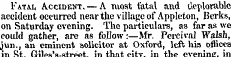
Vax&h Accident . — A most fatal and deplorable accident occurred near the village of Appleton , Berks , on Saturday evening . The particulars , as far as we could gather , are as follow : —Mr . Percival Walsh , jtin ., an eminent solicitor at Oxford , left his offices in St . Giles ' s-street , In that city , in the evening , in a horse and gig , for his residence at Appleton , a village in Berkshire , about seven miles distant . He called at the house of a friend on his way home , Mr . Ensworth , whom he left about seven o ' clock in the evening . About an hour afterwards he was picked upH quite dead , with his skull dreadfully
fractured , it is supposed from a kick from the horse , which was found a little further on , lying in a ditch , much bruised and hurt , and the gig broken to pieces . It is supposed that the horse , which is a high-spirited animal , must have taken fri g ht at something On the road . But this is only conjecture , and it is most probable that the real cause of the accident will never be known . The deceased was a young man of very extensive practice as a solicitor , highly respected in Oxford and the neighbourhood . He held several appointments , such' as clerk to the market commissioners , and several -trusteeships- of different roads . He has left a youngf widow and four children .
Untitled Article
i The Late ) Fire at Watton . —Committal tor I >' - cendiari 8 m .-4-Heetfokd , Saturday . —Thomas Wade , who was remanded on Friday , was fully committed for trial at th ! e next assizes . Watermen ! and Steam-boats . — At the Thames 1 ' olice-court ion Monday , Richard Ash , a waterman of Execution Dock-stairs , was fined 40 s . and , costs for addressing abusive and infamous language to Mi * . Thomas William Allen , master of the Waterman steam-boat , ? fo 6 , who stated that since the recent conviction of * Mr . Sims , the former master of- the boat , of manslaughter , by running down a boat and
causing the death of two persons , he could not pass the Tunnel-pier without being hooted and abused by the prisoner and his companions , to the great alarm of the passengers . The defendant attempted to justify himself by alleging that steam-boats always went by his plyin < riplace at such a furious rate as to endanger the lives of the watermen and tlie persons they were ferrying across the river . Mr . Bfoderip road the fellojv a lecture upon his ruffianism , which he insolently Jretorted upon and declared ho was no ruffian . He was led away cursing and using other bad languagei
Ihe late Fatal OrcmnExcE by Jvo . 6 Waterman- SteamkhJ . —Sfconrl Verdict of AfanslauqJeter . —On Monday , Mr . ! Baker , the coroner , resumed , and concluded an inquiry at the Gun , Gun Dock , Wapping , touching the ( loath of William Morgans , aged nineteen years , a seaman , who , together witli Edward Everest , lost his life on the 25 th of October last , in consequence lof the skiff in which they and four other persons were crossing the Thames from Kotherhithe <; o Wap . ping , being upset by the Waterman steamer ] No . 0 coming in collision with them . The coroner charged the jury that it was a clear case of negligence ; and the jury returned a verdict of manslaughter . During the time the inquiry was going on . the following letter , addressed " To the gentlemen of
the jury sitting on William Morgans , " was received through the post , and read to them by the coroner : — " Sirs—Mr . Brisco , mate of the Waterman Steamer Xo . 6 , has been dismissed from his situation fur giving an honestjevidenccatthe Central Criminal Court . If any of the captains or the crew of any of" those Iwats were to dare to give evidence of the reckless manner they j are compelled to navigate those boats , they would be instantly discharged . The rate that these boats navigate through the Tool is sixteen miles an hour . They can , and do , the slowest of them , go from Westminster-bridge to Woolwich ( eleven miles and a half ) , j in less than three-quarters of an hour , when making no stoppages . It is the owners who ought to be punishect . —Jcstitia . " One of the jury
stated that lie knew the circumstance alluded to in the letter was « i fact . TkeatmentIof Paltpek LrxATU'H . —The Anatomy Act . —On Monday forenoon , Mr . Wakley , M . P ., held an inquest at the Cross Keys , Bclton-street , St . Giles's , on the body of Mary Saunders , aged thirtyfive , a lunatic pauper . Deceased had been an inmate of St . Giles's jworlchouso , and in consequence of insanity , was removed , on the 9 th of October , to Warburton ' s Lunatic Asylum , Bcthnal-green , and in that institution died on the 22 nd ult ., of exhaustion consequent on extensive sloughing of the back . The body iras bvought back to the -workhouse , and , when seen by a relative , he found that it had bet ' n mutilated by dissection or some sort of surgical ' operation ,
and wishing | to know whether the mutilation had been done before or after death , he informed the coroner of the circumstance . A nurse- from Warburton ' s Asylum proved the admission of deceased on the Ktli of October , and her death on the 22 nd ult . lie also described the medical and other treatment -of deceased , which appeared satisfactory to the jury . A pauper of St . ] Giles s workhouse proved fetching the oody of decreased from Warburton ' s Asylum . The body was not | tlien mutilated . Two days afterwards it was taken ! to Middlesex Hospital by order ef the overseer * . Mr . Bennett , surgeon to the St . Giles ' s Infirmary , said when paupers died without " relations or friends , their bodies , by the Anatomy Act , could be removed liv order of the over-seers to " four licensed
schools of anatomy . The Coroner : In this ease there were relatives . Mr . Bennett : 1 was aware of it , but the overseers did not question me on the subject . Mr . liowden ; lecturer on anatomy at the Middlesex Hospital , said the body of deceased was received into that institution i ' rom St . Giles ' s workhouse on the 28 th ult . He saw it , and there were no mutilations or incisions on it . It was received under order of the coroner , and returned as unfit for the pui-poses of dissection on ; the next day . Wished for another body in exchange , ] but did not go to the workhouse for that purpose , butjto inquire into the cause of death in order to make his return to the inspector of anatomy . Coroner : Where were the amputations of the toes and incisions made < Mr . Rowden : In our . dissecting room . The Coroner : Have you the power to
return the body to the workhouse after dissections-are you not bound to bury it i Mr . liowden : It appears to me 1 have the poWcr of returning it to the persons who lawfully possessed it before dissection . The Coroner : Yon have power io send it to another licensed dissecting room , but not to return it to the workhouse . Mr . liowden : I sent the body back with the overseer's certificate . \ l made no return to tlie inspector of anatomy , for ! I am not bound to do so before I have l > veri twentyjfour hours in possession of a body . 1 thought it hard wo should have to pay the expenses of iutermentjwhen the , body was useless to us . Such expense would be £ 2 -is ., with some small gratuities to those that brought the body , which expenses the students pay . to us . After sonic further conversation the jury returned a verdict ot ^—Died from exhaustion , tlie result of natural rliseasr .
Ireland .-r-More Shocking Murders . — An attempt at murder was made on Tuesday night week at Tubber , in the King's County , when a small farmer named Patrick Curran was fired at and dangerously wounded . A horrible murder has been committed in the county of Sligo . On Tuesday evening week , us Mr . Samuel M'Kerin was sitting in his parlour reading , near the road leading from Branchfield to Sligo , he was shot by some base assassin through his -window , and su near was the murderer to his victim ! that the shot carried away a portion ol his head , and stretched him lifeless on the instant . — The Kilkenny Journal contains the following : —
" Mi'itDEii of a I ' atiier hy a hox . — I he inhabitants of Mullinahone have been just thrown into the greatest consternation by the perpetration : of a murder at which humanity shudders . Yesterday ( Tuesday ) morning , as William Shea , of Kilvemnon ( within five miles ofjCallan , on the Fethard road ) , was proceeding to spread a quantity of seed-wheat for his son-in-law , named Egaiv , who is sick of a fever , he was hindered from the performance of his charitable office by hisj son , Michael Shea , who struck him on
the head with a stone , and afterwards with a spade , and killed him on the spot . His skull is fraetured in the most frightful manner . It appears that voting Shea j had been at variance with his sister ' s husband , the aforesaid Egan , and hence arose the altercation , j The Mullinahone police were -speedily in attendance , but the parricide had fled : he attempted to drown himself , but was prevented by two men who happened to have seen him . An inquest was held on Wednesday , and a verdict returned according to the circumstances .
Brecon . —j-Dreadful Murder . —A dreadful murder was perpetrated on the night of the 6 th inst ., on a butter and provision dealer returning from Cardiganshire to this ] town . He left Brecon about eight o ' clock on Friday evening . He was in one cart , and his son , a lad about thirteen years of age , was driving another . It appears from the statement of the lad , that , about two miles from this town , they overtook a man , who asked his father what he would take a man to Lampeter for , and they agreed as to the price . When about half w ^ ay to Tricastle , the man , himself , and his father trot out and walked a little wav . The
man asked ; if they were near Frieastle , aim his father said they were little more than half way ( the distance is more than twelve miles ) . He then paid his father what he had agreed to pay for taking him , and advised ; the boy to get into the front cart and let him cover Mm with some straw and tarpaulin , which he did , and j he went to sleep . The horses weRt on until they came to the turnpike-gate , about a quarter of a mile from Tricastle . The boy might have been here some jlittle time asleep , when a man with a waggon canie up in the opposite direction and woke up the gatekeeper . This awoke the boy , who immediately inquired for his father , but he was not to be
found . The poor bov was much distressed , and the tollgate-keeper took him to an inn in the village . It was now about twelve o ' clock . In a very short time the waggoner returned , riding one of his " horses , saying he had found the man about a mile on , lying b \ the side of the road murdered . Assistance was given , and the body was brought in . At that time he w ; i > quite warm ; His death was occasioned-by ti pistolsnot , which passed through his hat , and entered hi :-head just over the right ear . The ball lodged in tin . head , and has since been extracted . Death must havt been instantaneous . —Sun .
The late Fatal Railway Accxde . vt at Notti . voiiam . —Death of Another ok the Sufferers . —Mr . James Bolestridge , landlord of the Three Horse Shoes publijc-hoiise , Derby-road , who was a passengei in the up train which met with so much damage a \ the time of the collision , died on Tuesday mornin ; . ' at his own house . It is now near four' weeka since the unfortunate accident took place , by which Mr . Bolestridge received the injuries from which he died . During that time he has been a great sufferer , and although he was attended by some . of the most eminent medical men in the town , nothing could be done by them to avert this new calamity . His injuries were principally internal . He was very generally respected , and * has left a wife and child . Mr . Edward Roberts , the gentleman who has had his leg amputated , and who was in the same carriage with Mr . Bolestridge , is still in a very precarious state . The other sufferers are doing well .
Frightful Accident . —On Tuesday a dreadful accident occurred to Mr . Starling , landlord of + ? f Trinity Arms , Swan-street , Borough , by foolishly jumping out of a gig . He was riding in a one-horse Dreak along Tiverton-street , Newmgton-causeway , when the horse shied at a pig in the middle of the road , and [ commenced plunging . Mr . Stirling , in a state of excitement , jumped out of the break and fell with his ri ght leg under him on the edge of the kerbstone , breaking Ida thigh-bone in two places .
Untitled Article
Death frou Starvation . —On Monday afternoon a lengthened iavestigation was entered into , before Mr . Higgs , coroner for the Duchy of Lancaster , and a jury of thirteen inhabitant householders , at the . Golden , Lion , Lower Edmonton , on view oftheremains of a man name unknown , aged fifty-two , whose death was occasioned by the want of food and exposure to the incle mency of the weather . R . Pugh , theiteeper of a lodging , house in Church-street , stated that he had known the deceased for the last three months . He was a native of Essex , and was an agricultural labourer . He was in the employ of Mr . Boards , fanner , of Edmonton bat had been for some months out of work . He had during that period obt . i > ' > ed a scanty pittance by
vending Congreve matches , balls of cotton ^ &c . About Wednesday or Thursday week last the police interifered with him , and threatened to apprehend him aa a vagrant , saying that his offering things for sale was merely an excuse for begging . Deceased was in consequence very frightened , and did not go out with bis basket again . He stopped at witness ' s house till the following Tuesday , when be absented himself , having till then , from the day the police spoke to him , livett upon stale crusts , which he got from other lodger ^ in exchanges for congreves , and the dregs of the tea-pot when others had done with it . On Saturday night last , about half-past ten o'clock , witness was
returning home , when he saw the deceased sitting on the ground in the street , crouched up in a comer . He asked him why he did not come to his house , ne replied because he had no money , adding that he was xevy cold and thirsty , and had a pain in his side . Witness assisted him home , when he made him some gruel , putting into it half a pint of ale , which deceased swallowed ravenously . Deceased was then put into a bed , and witness saw him no more alive . After a few remarks from the coroner on the distressing circumstances of the case , the jury returned a verdict , " Tliat the deceased died fnim want of the common necessaries of life and exposure to the cold . "
Alarming Fire at Brixton . —Wednesday morning , shortly before one o ' clock , a fire broke out in the house belonging to Mrs . Powney , town-carrier , situate at No . 7 , Crystal-road , North Brixton . The Waterloo brigade engine promptly attended , and was followed by the West of England one , and another from Southwark-bridge-road . There being a good supply of water instantly procured , the firemen set to wovk most vigorously , and befove two o ' clock they succeeded in extinguishing the fire , not , however , until very considerable damage had been effected *
Owing to the density of the smoke , the inmates in the upper part of the building had the greatest difficulty in escaping , and for some time it was believed that Mrs . Powney had been burnt to death , as she could not be found . Upon examining the premises after the fire was extinguished , no traces of any person having been burnt could be discovered ; the probability , therefore , is that she was from home at the time of the disaster . As to the origin of the fire , or whether or no the sufferer was insured , we could not learn during the exeitonient that prevailed .
The Attemtt to Poison a Whole Family . — In our last we gave the particulars of the first examination of John Wall , of Oadby , framework-knitter , on the charge of attempting to kill his mother , father , and brother , by administering arsenic to them , in order , it is supposed , to obtain possession of £ 300 , to which himself and his brother and sister were entitled on the death of their mother . Rumours were afloat , in the meantime , that he had been concerned in another'attempt of the same atrocious character , by which he sought to rid himself of the expense of maintaining an illegitimate child of his wife ' s , by the same means , and it was ascertained on inquiry that a few weeks prior to the attempt on the-life of his ' father , in other , and brother , the child had been taken sudilenlv ill , under suspicious circumstances . On the
prisoners examination on Wednesday , the legal evidence requisite for a committal in the first case was not produced ; and the second ease , the charge of attempting to poison the child , was then partiafly gone into , ft appeared that , on the 24 th of September , the prisoner's wife left home , leaving a child whom she had before her marriage with Wall , in tho care of a boy . During her temporary absence , the boy saw Wall put some -white powder into some milk which had been boiled for the child , and on telling him what he had seen , Wall reached down the salt from the chimney-piece , and said that was what he had put in the milk . As the evidence was incomplete on both charges , and it is anticipated that additional facts will be obtained , the prisoner was remanded to Monday . The prisoner maintains a dogged silence . — Leicester Slcrcuni .
Fatal Railway Accident . — A fatal accident occurred on Saturday morning last , on the line of the Newcastle and Carlisle railway , near Ryton station , about seven miles from Newcastle . As the luggagetrain , which left Newcastle at half-past six o ' clock for Carlisle , was proceeding at the usual rate , it ran into a cow which was straying on the line , and the force of the concussion was so great as to throw the engine and tender over a low embankment , the engine fallin g on its side , and the tender being- crushed up beside it . The stoker was fortunate enough to jump off just before the collision took place , and escaped with only a few slight bruises . The engineer
did not j ump off , and he was crushed to death between the engine and the tender . Had the accident occurred twenty yards further along the line , where the railway runs close to the river Tyne , the whole train would have gone into the water . The trucks Rulfered no injury , and but little displacement , and another engine having been brought , they were forwarded to their destination , and the subsequent trains experienced no delay . The engineer ' s name was Thomas Graham ; he was a steady experienced driver , but the morning was very dark , and the animal was not discovered until the engine was close upon it , too late to prevent the accident .
The Mi / rder vs Brecox . shire . — Further Particvlars . —The neighbourhood having been aroused by the intelligence of the above murder , the constables proceeded to the spot , where they found the body lying on its back , at the top of a short hill , with the " hat drawn over its face , and two small pools of Mood , which had Issued from a bullet wound two inches behind the right ear , the ball being afterwards discovered , on post mortem examination , to have penetrated the brain , and to have flattened against the skull , where it lodged on the opposite side . His waistcoat had been torn open with such violence as to break several buttons , and all his cash kad been extracted from the money pocket ; his watch and
several articles in other pockets -were untouched From all appearances it was evident that the fiendlike assassin had fired the fatal shot while walking up the ascent of the road , at the side of his unsuspecting victim , who mast have fallen forward on his right knee and forehead , and have been turned over on his back by the murderer for the purpose of plunder . Messengers were immediately forwarded to Brecon . On the intelligence reaching Mr . D . Rosser , landlord of the Bridgent inn , where the deceased ( whose name was David Lewis ) had been in the habit of putting up , the suspicion flashed across his mind that the deed had been done by a man namod Thomas Thomas , of Llansowel ,
Carraarthenthenshire , who had called at his house in b , drab macintosh , and had enquired for butter carts going to the vicinity of Ms home , about two hours before Lewis and his boy started . He accordingly caused a letter to be sent per mail to a respectable innkeeper in the neighbourhood of Llansowel , who immediately forwarded descriptions to the rural police of the county , several of whom were stationed near , hi the meantime inquiries had been made by the Brecon police , which strengthened the suspicion , and Mr . Superintendent Stephens , accompanied by the late superintendent , who knew Thomas from having had him in custody on I previous occasion , started off for Carmarthenshire ,
while printed descriptions were forwarded to all the adjacent districts and seaports . Having been detained making inquiries on the way , the Brecon police did not reach Llansowel until after ose o . ' c ' ° ^ on Sunday morning , when they found Thomas in . «* custody ofthe rural police , who had taken him under the following circumstances : —Acting on the information they had received , they had proceeded to his father ' s house , and found that lie had reached home at half-past eleven o ' clock ; they also ascertained that he had been seen in the " village , aw » deeming it likely that he would come home at n'S ' '' tho superintend ' ent stationed his men on the Iooeoutlvmg in wait himself with one of his men in »
, lane near his father ' s house . Soon after eight o'elocK they heard him coming down the lane , and passing one on each side of him , collared him at once . Bemf a very powerful young man , he succeeded in throw ing them both down , and after a severe strugg le on the ground , they were compelled to draw their cutlasses before he would surrender . During the stnigp be dropped a brace of pocket-pistols , which fortunately were not loaded , and in his pocket were io « na twelve bullets , caps , and some powder . Having beezi surrendered'to the Brecon police , he was brougin ob Sunda y to the station-house in that town , an " , "
Monday was taken to an adjourned Inquest , be ! " ' fore Thomas Batt , Esq ., tit the Camden Ap" * . Trocastle . From the evidence hfere adduced , it » r peared that he had nine days previously b ^ S ^ P ; pistols at an ironmonger ' s shop in Brecon , ana tna on Friday night he rode in a farmer ' s waggon a snort way out of town until overtaken by Lewis and ^ nw cart , when he made the bargain for conveyan ** Trecastle . The boy who had charge of the waggouand Lewis's little boy , swore most positively to hu » Identity ; and such a chain of circuiustantialeviaeu was made apparent , that the jury without J « 3 »*™ , returned a verdict of WUful Murder against Tnom » Thomas , who was therefore removed to the cquuvj gaol , to take his trial at the March assizes .
Daring Burglary . —On Monday night , * &e 9 ^ or early on Tuesday morning / the residence oi Rev . R . B . Gardiner , of Wadhurst , Sussex , wasmb glariously entered , and a quantity of vaiuame y and sundry other articles stolen theretroni . ^ robbery was effected by a person well _ f . cq Tth « with the premises . On the p rincipal . portion cwi ^ plate was engraven a stag ' s head , w'V ^ ajjtween the antlers , and the initials R . d . \_™ S . oa ; ther portion . A reward of £ 60 has been ottereu the conviction of the offender .
Untitled Article
< 3 ¦ THE NORTHERN STAR / | .... ^ December : 14 , ; 1 S 44 .
-
-
Citation
-
Northern Star (1837-1852), Dec. 14, 1844, page 6, in the Nineteenth-Century Serials Edition (2008; 2018) ncse-os.kdl.kcl.ac.uk/periodicals/ns/issues/vm2-ncseproduct1293/page/6/
-