On this page
-
Departments (1)
-
Text (5)
-
Untitled Article
-
Untitled Article
-

Untitled Article
-

^arliattwntarD SEttlsIttsm*. '
-

Untitled Article
Note: This text has been automatically extracted via Optical Character Recognition (OCR) software. The text has not been manually corrected and should not be relied on to be an accurate representation of the item.
-
-
Transcript
-
Note: This text has been automatically extracted via Optical Character Recognition (OCR) software. The text has not been manually corrected and should not be relied on to be an accurate representation of the item.
Additionally, when viewing full transcripts, extracted text may not be in the same order as the original document.
Untitled Article
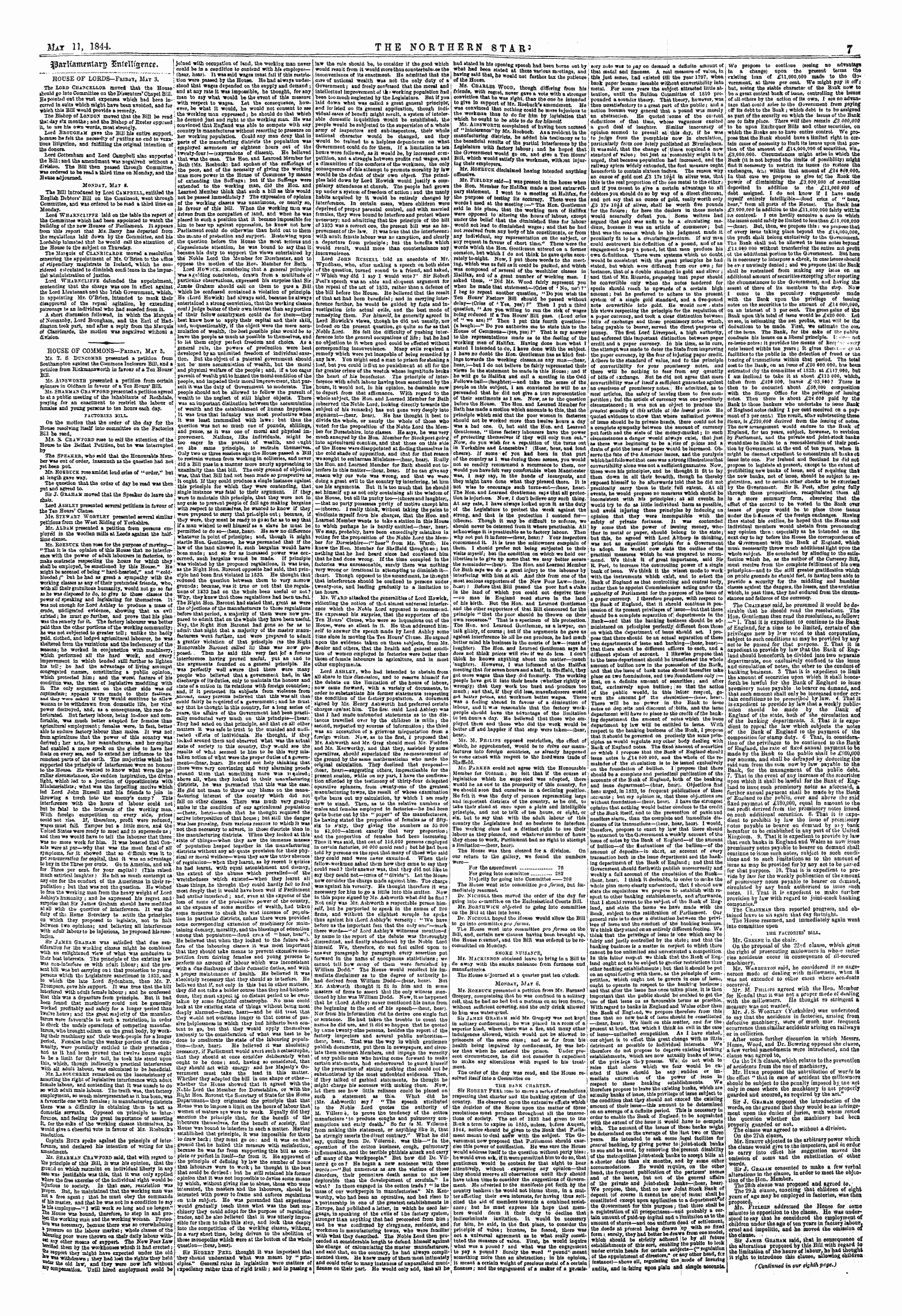
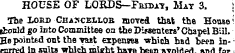
HOUSE OF LORDS-Fbtdjlt , Mat 3 . The XORD Ghascellob moved that the House ' - tfconld go into Committee oa the Dissenters'Chapel Bill . He pointed out the vast expenses -which hni been incurred in suits ¦ which might hare been avoided , and for vhieh thia Bill -would provide a remedy . The Bishop oMosdos moved tbat the Bin be read that day six months ; and the Bishop of Exeter opposed it ,-to use hiB o-wn Torda , moat strongly . Lord Beocghah gave the Bill hu entire support , because be felt the necessity of putting an end to vexations litigation , and fulfilling the original intention of the donors . Lord ( Tottenham and Lord Campbell also supported the Bill : and the amendment was negatived witboni a division . The Bill then passed through Committee , was ordered to be read a third time on Monday , and the Hiute adjourned .
MojfDAT , Mat * . Tbe BID introduced by Lord Campbell , entitled the English Debtors' Bill on the Continent , vent through ] Committee , and was ordered to be read & third time on i Slonday . j Lord WHAKvcnrrB laid on the table the repert of ] the Committee which had been appointed to watch the : building of the new House * of Parliament It appears j from Ibis report that Mr . Barry has departed from . the regulations laid down by the Committee , and his ¦ Lordship inimated that lie would call the attention of . the House to tbe subject on Thursday . , The 3 Iar § ais of Cla > tu caB . de moTed a resolution censuring toe appointment of Hr . O'Brien to the tfflce ; of stipendiary magistrate in Ireland , "which , be con- ' ridered pi ) eclated to diminifih confilenca is the impar- j Hal administration of justice . ';
Lord whaksclijtb defended the appointment , ; contending that the charge vasone in effect against the Lord Lieutenant and the Irish Grovarnment , which , ! ia appointing ilr . O'Brien , intended to mark their ] disapproval of the repeal agitation , by extending ; patronage t » an individual who had seceded from it . t A short diseusaion followed , in which the Marquis } of Jformanby , Lord Brougham , and the Earl of Had- dinjrton-toot part , and after a reply from the Marquis ol Clanricarde , the motion was negatived witfcont s j dlvision . i
Untitled Article
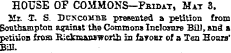
HOUSE OF COMMONS—Fmdat , Mat S . Mr . T . S . Dukcombe presented a petition from Southampton against the Commons Inclosure Bill , and a pctiuon from Rlctasansworth in favour of a Ten Hours * Bill . 2 dr- Ai > 'S"wtmiH presented a petition from certain spinners in -Oldhstn in favour of a Ten Hoars * Bill . ilr . SHABMA 5 Ceavtosd presented apetition agreed to at a public meeting of the inhabitants of Rochdale , praying lor an enactment to restrict the labour of females and young persons to ten hours each day .
PACioaixs sixx . On the motion that the order of the day for the Bouse resolving itself into committee on the Factories Bill be read , 3 Ir . S . Ceatttoxd rose to call tbe attention of the House to the Belfast Petition , but he was interrupted by The Speaker , who said that tbe Honourable Member was out of order , inasmnch as the question bad sot yet been . pnt . Mr . Kokbcck roseamidst loud cries of "order , " but at length gave way . The question that the order of day be read was then put asd agreed to . Sir J . Gsasas moved that the Speaker do leave the chair . Lord Ashlet presented several petitions in favour of the Tan Hours' Clause .
Mr . Sievast TVortlbt presented several similar petitions from the West Biding of Yorkshire . Mr . Aidam presented a petition from persons employed in the woollen mills at Leeds against the halftime clause . Mr . Boebcck then rose for tbe purpose of moving" That it 1 b tbe opinion of this House that so interference with the power of adult labourers in factories , to xssie contracts respecting the hours for "which they « haH be employed , "be sanctioned by this House . " He Eight be accused of being " hard-hearted , ' * and " coldblooded ; " but be had as great a sympathy Trith the vorkisg classes as any of their pretended friends , who , -with all their gratuitous humanity , 'would sot go so far as he was disposed to do , to give to these classes the
power of speaking and legislating for themselves . It was not enough for Lord Ashley to produce a mass of erode , undigested evidence , showing "that aa evil existed ; "he must go further , and prove that his plan was tbe remedy for it . The factory labourer "was better paid than the other portions of the 'working community ; he was not subjected to greater toil ; unlike the badly paid , dothed , and Iodge 4 agricultural labourer , he was sheltered from the variations and the Inclemency of the « easons ; T > e "worked in conjunction with machinery , which performed all the hard work , and every improvement in -which tended still further to lighten his toil ; be had the advantage of living amongst congregated masses , constituting a public opinion , ¦ which protected him : and the wont feature of bis
condition was , the vice- of legislative meddling 'with it The only argument on tbe other side w ad cqpt aztdxmi appeals were made to their feeling * , sad tiisj -rrcrc atkeU IT mey -would continue to alle-w ¦ woman to be -withdrawn from domestic life , her vital power destroyed , and , as a consequence , the race deteriorated- But factory labour , beisg in-door and comfortable , was much better adapted lor females than agricultural employment ; females were , is fact , better able to endure factory labour than males . It was sot from agriculture thst the power -ot this country was derived ; her arts , her manufactures , and her capital had enabled a mere speck on the globe to have her fleets on every sea , and to extend _ ber influence to the remotest parts of the earth . The majorities which had
supported the principle of interference -were no honour to tbe Bonsa . He - wanted to £ aow what were tbe peculiar eireamstaDees , the sudden inspiration , the divine light , which led to a junction of Oppositionists with Ministerialists ; what was the impelling motive which led Lord John Russell and his friends to join in throwing a torch into the enemy's camp ? This interference Tfith the hours of labour could sot but be fatal to tbe interests of the working man . With foreign competition on every side , prices coaidaot lisa If , therefore , profit were reduced , wages must fall Tamper but a little more , and the ITnited States were ready to meet and lo supersede us ; anfi then we -wonld have to tell the labourer that there ¦ Was no more work for him . It was boasted that Consols -were at par—why that was the most fatal of all
symptoms , for it showed that bo d fficult -was it to get remuneration for capital , that it was an advantage to bEy is the Three per c ? sts . Go to America , and a > k for Three per cent , for your capital . ' ( Thia raised much Batirical laughter ) He felt as much contempt zz zsy one for the conduct of the Americans in their repndiition ; but that was not the question . He-wished to fret the working man from the he 3 vy weight of Lord Ashley ' s humanity ; and he expressed his regret and surprise tbat Sir James Graham should have meddled at aD with tie question of interference . It was the duty of the Home Secretary to settle the principles on which they proposed to legislate , not to halt bEtween two opinions ; and believing all interference with adult labour to be injurious , be proposed hisresolutiGa .
air JaHes Ghaham -was satisfied tbat due cbbdderation for the walking classes might be -combined " * ith an enlightentd view of what was conducive to their best interests . The principle of the existing law Was non-iBterfere ce with adult kboar ; and the present bill was bu > carryicg on i that protection to young persons which the legislature sanctioned in 1833 , and to wLich the late Lard Sydenbam , then Mr . P . ^ bnmpson , gave his support It was trne that the bill interfered with adult female labour ; and he confessed that this was a departure from principle . But it bad been found that machinery could not be generally forked profitably and safely for a longer period than twelve hours ; and the great majoriiy of the manufacturers were favourable to such % restriction , in order to cheek the unfair operations of competing manufaciEKra , who brought odium on the great body , by -working their machinery aiid their work-people for a longer
Penod , Pemales being the weaker portion of the com-ELttnity , were peculiarly entitled to their protection ; tod a 3 it bad been proved tbat twelve hours ought to be a limit for their toil , he took Ms stand upon 1 Mb , which , though indirectly a practical interference with all aanU labour , was calculated to be beneficial . Mx . LA 30 tCH . EB 3 remarked on tbe inconsistency of asserting tbe right of legislative interference with adult female labour , and contending that it was onssfe to do bo with afiult male labour . The troth was , tbat factory employment , so much misrepresented as it h&BbaenjWas a favourite one with females ; in manufacturing districts there was a difficulty in . obtaining them te act as domestic servants . Opposed on principle to interference , and feeling the great importance of asserting it , for the sake of the working classes themselves , he " » ould give a cheerful vote is favour of Mr . Roebuck ' s resolution .
Captain B . OVS spoke against the principle of interference , and declared his intention of voting for the UEendmgnt . 21 r . Shabhas CsaTFPOED said , that with regard to Sib principle of Wi * Bill , it was his opinion , tbat the ground on which restraint on individual liberty is any ssairss justifiable was this , that it was only applied * fcere the frae exercise of the individual right would be i qaiious to society . In that case , restriction was Props . Bat , he maintained that the -working -man was ^ a free-agent ; that he must obey the commands ° J his master , and that he was sot in a-condition to say
* ehis employer— "I will woik so long and no loDger . "\ P * s Hou 3 e was bound , therefore , to step is asd pro- \ * £ the working man and the working womas . Protec- j 608 " * as accessary , because there was so overwhelming j * Pressure on the labour market ? whole classes of the i *** nrisgpoor were thrown oa tiieir daily labour with-?* J \ sny other means of « upp « rt . Tha JTewPoeiL&w ? aiSsd , them by the workhouses ¦ which it had erected ; i ~* appart they isigbt have expected nsder the old ] ?* " *« withdrawn ; they had lost tbe rights they held ] ™ Se the old law , and they -were sow left without **! emapeasattoB , Until hired employment could be ]
Untitled Article
| |
Untitled Article
| joined with occupation of land , the working man never could be in a condition to contend with his employer—{ hear , hear ) . It was said wages must fall if this restriction ware passed by the House . He had always understood that wages depended on the supply asd demand ; and at any rate It vras impossible , he thought , for any . man to aiy what would be the event of this measure with respect to wages . Let the consequence , howj ever , be what it would , he would not consent to see I the working man oppressed ; be should do that which , he deemed just and " right to tha working man . He was ; convinced that England was able to compete with any ; country in manufactures without resorting to pressnre on ¦ her working population . Could nny man deny that in i parts of the manufacting districts tbe population was > employed seventeen er eighteen hours out of ths { twenty-four !—( expressions of dissent ) . He l > elleved i that vu the ca * e . The Hon . and Learned Member for i Bath ( Mr . Roebuck ) had spoken of the sufferings of j the poor , and of the necessity of giving tbe working i nan more power in the House of Commons by means of extending tbe Soffrage ; but if the Suffrage were
extended to the working man , did the Hon . and Learned Member think that such a bill as this would sot be passed immediately ? The expression of opinion of the working classes was unanimous , or nearly so , in favour of this bill . Whes the working m-m was driven from the occupation of land , and when he was placed in such a position that it became impossible for him to bear up against oppression , he knew not how Parliament could do otherwise than hold out to them the mtans of preUction snd support . Bestowing upon the qiestion before the House the scat serious and dispassionate attention , he was bound to Bay that it became bis duty to support Uie views entertained by the' KoYle Lord tha Member for Dorchester , and to oppese tbe motion of the Hon . Member for Bath .
Lord HovncK . considering that a general principle was a gliding conclusion , drawn from a multitude of particular observations , expressed his surprise that Sir James Graham should call on them to pa * s & Bill which he confessed contained a violation of principle . He i Lord Ho wick ) had always aaid , because be always entertained a strong conviction , that the working classes coal j judge better of their own interest than any portion of their fellow countrymen could d « for them—they best knew how to apply their capital and their skill , and , unquestionably , if the object were the mere accumulation of wealth , She best possible plan wonld be to leave the people as much as possible to themselves , and to let them enjoy perfect freedom and choice . As a general rule , the powers of production were beat
• developed by an unlimited freedom of individual exerj tioc . But the object of a paternal government should ¦ not be * mere accumulation of wealth , but the moral I and physical welfare of the people ; and , if a too eager ; pursuit of wealth put to hazard tbe moral condition of the j people , and impaded their moral improvement , that pur-I suit it was the duty of Government to moderate . The i people should not be allowed to follow the pursuit of I wealth to the neglect of still higher objects . There j was an important distinction between the accumulation ! of wealth and the establishment of human happiness , j It was true that industry was most productive when : it was least trammelled with laws : but then tbe ; question was not so much one of pounds , shillings , ] and pence , as it was one of moral and physical
improvement . Nations , like individuals , might be too eager in the pursuit of wealth , and cught on the same principle , to restrain themselves Only two or three sessions ago the House passed a Bill to restrain women from working in collieries , and never did a Bill pasBin a manner more nearly approaching to unanimity than that bilL The only ground of objection was , that that Bill had sot been made so prospective as it ought If they could produce a single instance against this principle for which they were contending , that single instance was fatal to their argument If they were to maintain this principle , that they were sot in any case to prevent people of full age making bargains with respect to themselves , he wanted to know if they were prepared to carry that principle out ; because , if
. they were , they must be ready to go so far as to say that j if a man wished to sell himself as a slave be must be I permitted to do so —( hear , hear ) . He saw no difference j whatever in point of principle ; and , though it might ; startle Hon . Gentlemen , he was persuaded that if the : law of the land allowed it , sucb bargains would have ; been made ; and so far as increased power was cor-\ cerned , such bargains wouid be made . If principle ' , was violated by the proposed regulations , it was true , i as the Bight Hon . Baronet opposite had said , that principle had been first violated in JS 33 . He thought taat i reduced the question between them to very narrow grounds ; because , was it true or not that tberegula-: bonsof 1833 had on the whole been useful or not ?
Why , they knew that those regulations had bfaen ustfuL The Bight Hon . Baronet Bad stated that , great as were the objections of the manufacturers to those regulations before that period , a majority of them were now prepared to admit that on the whole they have been useful Nay , the Right Hon Baronet had gone so far as to admi * . tbat sight that a majority of tbe master manufacturers went further , and were prepared to admit & greater violation of that principle ( as the Right Bocosrsble Baronet called it ; than was now proposed . . Then he said this very fact | of a former interference havicg proved useful , put an end to tbe arguments founded on a general principle . He was perfectly well aware tbat there were many people who believed that a government had , in the
discharge of its duties , only to maintain the honour and ttate of a nation in its relations with foreign countries ; andj if it protected Its subjects from violence from abroad , miaj perrons believed that tills was all that cauld fairly be required of a government ; and be must say that he thought in this country , for a long aeries of years , the affaire of the Government had been practically conducted very much on this principle—( bear ) . They had acted on that principle , and that on all other matters it was sale to trust to the unaided and undirected tffjrU of individuals . He thought , if they louktd around them and observed what was the actual state of society in this country , they Wuuld see the results of what seemed to him to be this very mistaken notion of what were the proper duties of a
govern-: ment—( hear , hear ) . He could not help tiunking tbat | there were very convincing and very alarming proofs [ around ttem that something more was it faired ; above all , when they looked to tbeir manufacturing i districts , he was persuaded th&t this was the case I He did not mean to throw any blame on tbe manu-; tattoring interest of the country which did not fall on other classes . There was much very greatly ' ' amiss in the condition of our agricultural population ¦ —( bear , bear )—much that he thought required the ¦ active interposition of that house ; but still the danger \ was lbss prising , from Y&iloua reasons to which it was not then necessary to advert , in those districts than in ! the manufacturing districts . When they looked at this ' state of things—when they saw the immense masses
of population heaped together in tbe manafactttriug districts without any ad' quate provision for their physical or moral welfare—wben they saw the utt * r absence of regulation—when they learnt , as by recent ii qoiriea h 8 had learnt , with equal astonishment and dismay , the extent of the abuses which prevailed—of the wretchedneEs which existed—when they learnt all these things , he thought they conld hardly f » i ] to feel most deeply that it would have been well if Parliament had earlier interfered ; and , even at the expense of the loss of some of tbe productive power of the couBtry , at the expense of some sacrifice of wealth , bad taken some measures to check the V £ * t increase of population in particular districts , nnltss there were provided some corresponding extension of machinery for
maintaining decency , morality , and the blessings of education among that population—( loud ctub of " hear , bear ") . ¦ He believed tbat when they looked to the future Welfare of tbe labouring clasBts it was most important that they should take means to prevent excessive competition from driving females and young persons to perform an amount ot labour which was inconsistent with a due discharge of their domestic duties , and with a proper maintenance of health . He believed it was absolutely necessary that they thould so in terfere . He belitved tbat if , not only in this but in other matters , they did not take a bolder course than they had hitherto done , they must expect aj no distant period to be overtaken by some frightful catastrophe . No man could look at the existing state of things without being moBt
deeply alarmed—( hear , hear )—and be did tiust tbat they wuuld not continue longer in tbat course of passive helplessness in which they had hitherto been content to go , but that they would apply themselves Z 3 &lonsly to the consideration of what was beat to be done to ameliorate the state of the labouring population—( bear , hear ) . He believed Jt was absolutely necessiry , if Parliament would avert such a catastrophe , tkat they should at once conHider deliberately what ought to be done ; and , having so considered , that tcey should act with energy : and her Majesty ' s Government must take the lead in this matter . Whether they adopted the bill in one shape or other—¦ whether the House ahowsd that it agrted with the Xublts Lord tfee Member for Dorsetshire , or with the
RU . b . t Hon . Baronet tLe Secretary of State for the Home Department— they originated the principle that that Honsa was to impose a limit on tfee hours of labour that women of mature aje were to work- Equally did they sanction the principle that , for the benefit of the libourers themselves , for the benefit of society , that House was bound to interfere in such a matter . Having established tbat principle , it was impossible for them to draw back ; they most go on : and it was on that gronzfd that he hailed this measure with satisfaction , because he was far from supporting this bill as complete or perfect in itself—far from it He approved of the principle of denning by law the number of hours that labourers were to work ; he thought it the best
that could be devised : but be still retained bis former opinion that it was not impossible to devise some means by which , without giving rise to abuse , those who were interested , tbe masters and the labourers , Bhould be intrusted with power to frame and enforce regulations on tfcis Eubject . He was persuaded that experience would gradually teach them what was the best machinery they conld adopt for the purpose of regulating trades , and he also believed that it was utterly impossible for them to take this step , and look thus deeply into the competition of tbe workiDg daises , without , in a very short time , being driven to the abolition of these monopolies which were at the bottom of the whole question—( hear . hear ) .
Sir Eobebt Peel thought it was important that they shonid nnderstaHd what was meant by " principles , " General roles in legislation were matters of expediency raUaer tfcan of rigid troth ; and in putlog a
Untitled Article
law the rule should be , to consider if the good which would resuit from it -would more than counterbalai . ee tbe inconvenience of its enactment . He admitted that tbe care of national wealth was not the only duty of a Government ; asd freely confessed that the moral and intellectual improvement of tb ' ¦ working population had been too much neglected by tbe Legislature . But if you laid down what was called a great general principle " , snd in « isted on its general application , though individual cases of benefit mieht result , a system of intolerable domestic inquisition would be established , tha people would be subjected to the supervision of a whole army of inspectors 8 nd sub-inspectors , their whole national character would be changed , and they would be trained to a helpless dependence on what Government could do for them . If a limitation te ten hours were followed , as it woHld be , by increased
competition , and a struggle between profits rnd wages , and a dimunition of the comforts of the workmen , tbe only consequence of this attempt to promote morality by law would be the defeat of their own object The principles laid down by Lord Howick would justify a com * palsory attendance at church . The people bad grown up under a system of freedom of action : and tbe manly habits acquired by it would be entirely changed by interference . In certain cases , where obildren were deprived of proper parental control , and with married females , they were bound to interfere and protect where necessary ; and admitting tbat the principle of tbo bill of 1833 was a correct odo , the present bill was an improvement of the law . It was true tbat the interferenca with aault female labour was an exception , and clearly a departure from principle ; but the benefits which would result , would more than counterbalance any inconvenience .
Lord John Rcssell told an anecdote of Mt . Wyndham , who , after making a speech on both sides of the question , turned round to a friend , and asked , " Which way did I say I would vote 7 " Sir Robert Peel ' s speech was an able and eloquent argument for the repeal of the act of 1833 , rather than a defence of the bill before the House . Be believed thai tbe result of that act had been beneficial ; and in carrying interference further , he would be guided by facts and investigation into actual evils , and the best mode of remedying them . For himself , he generally agreed in Lerd Howick ' s views , though he did net usually , not indeed on tbe present question , go quite so far as that Noblo Lord . He felt the difficulty of pushing interference into tbe general occupations of life ; bat he had
no objection to it when good could be effected without corresponding inconvenience . Many evils required a remedy which were yet incapable of being remedied by any law . You might send a man to prison for stealing s loaf , but you could iiflict no punishment at all for the far greater crime of the wretch whose ingratitude broke tbe heart of his benefactor . The principle of interference with adult labour having been sanctioned by the bouse , it wonld not , in his opinion , be desirable now to depart from that affirmance . With regard to the whole subject , the Hon . and Learned Member for Bath ( observed the Noble Lord , looking directly towards tbe sutgect of his remarks ) has not gone very deeply into argument—( hear , hear ) . He has thought it best to divide the whole , or nearly the whole of those who
voted for the proposition of the Noble Lord the Membet for Dorsetshire , into classes . He says , he was very much annoyed by the Hob . Member for Stoekporfc goirg into agricultural counties , and that those on this side of the House wtre disappointed at finding themselves iu the cold shade of opposition , and that for that reason we sought to embarrass Ministers—( hear , hear ) . Really the Hon . and Learned Member for Bath should not interfere in this matter—( hear , hear ) . If ho can give any reason why our vote was wrong , and that we were doing a great evil to the country by interfering , let him use bis arguments . But it is too much that he should set himself up as not only containing all tbe wisdom of the House , but all its purity too —( cheers and laughter ) , —that no party possesses pnrity of motivo except him
—( cheer *) . I really think , without taking the pains to vindicate myself fro » n bis
Mr . Ward attacked the generalities of Lord Howick , ridiculing the notion of that almost universal interference which the Noble Lord appeared to recommend . He expressed his snrprise , that the supporters of the Ten Hours' Clause , who were so loquacious out of the House , were so silent in It . He then addressed himself to answer tbe speech made by Lord Ashley some time since in moving the Ten Hours' Chnse . He nrgued upon the evidence taken on these subjects , from Mr . Senior asd others , that the health and general condition of women employed in factories were better than taose of female labourers is agriculture , and in most other employments .
Lord Ashley , who had intended to abstain from all share in this discussion , and to reserve himself for tbe debate on the limitation of the hours of labour , now came forward , with a variety of documents , in order to substantiate his former statements respecting tbe condition of the factory population . A document signed by Mr . Henry Ash worth had preferred certain charges : ; pa nst him . The firei ( said Lord Ashley ) waa tbat I had mode unfounded statements as to tbe distances travelled over by tbe children ia mills ; the second , respected my sources of information ; the third was an accusation of a grievous misquotation from a foreign writer . Now , as to the first , 1 proposed that Mr . Ash-worth and Mr . Greg should meet Mr . Ftelden and Mr . Kenworthy , and that they , assisted by some
operatives , should superintend toe re-measurement of the ground by the same mathematician who made tbe original calculation . They declined that proposal—( hear , hear )—suggesting others , impractieable for the present session , while on my part , I have the confirmation afforded by the testimony of thirty-four delegated operative spinners , from twenty-one of tbe greatest manufacturing towns , the result of whose examination quite beats out my calculation , by which I am ready now to stand . Then , as to the relative cumbeis of males and females employed in factories—be bad been quite borne out by the " paper" of the manufacturers , he having stated the proportion of females oa of fiftysix to B xty , they giving the numbers as 55 000 to SI , 000—almost exactly that very proportion ;
and tbe proportion of females bad been increasing . Then it was said , tbat out of 116 , 000 persons employed in certain factories , 96 000 conld read ; but he bad been told by persons on tbe spot that many of those * who said they could read were never examined . When their fellow-workmen asked them how ihey came to say they coald read ? their answer was , that they did not like to say they ceuld not —( criea of "divide" ) . Let tbe House now consider tbe charge made against him . The charge was against hiB veracity . He tfeougbt therefore it was necessary for him to go a little into this matter . Now in this paper signed by Mr . A « hwortb what did he find ? Not only was Mr . Ashworlb a respectable person himself , but he purported to speak in the names of 200 firms , and without the slightest scruple be spoke
thus Egainst his ( Lord Ashley ' s ) veracity : " We have before us the important fact that the only ono" —mark these words—•• of Lord Ashley's witnesses mentioned by name in tke report of the debate was thr&roughly discredited , and finally abandoned by the Noble LoTfl himself . We , therefore , do not feel called npon to answer paragraph by paragraph every assertion put forward in the name ef anonymous Btotiftieians ; we cannot tell how many of them were furuiahtd by William Dodd . " The House would recollect his immediate disclaimer as to the degree of authority be had derived from William Dodd —( bear , bear ) . But Mr . Asbworlh thought it fit in him and in some masters of firms to assert that the only witness mentioned by him was William Dodd . Now , it so hanpened
tbat he ( Lord Ashley ) never mentioned his name from the beginning to the end of his speech—( hear , hear ) . Nor from his information did he derive one single fact or sentence . He had taken the trouble to count the names he did use , and it did bo happen that he quoted by name twenty-nine persons , besides the report of the factory inspectors and Beveral public authorities—( hear , hear ) . Tbat was the way in which gentlemen publish documents , put them in newspapers , and circnlate them amongst Members , and impugn tbe veracity of any public roan who having corns forward to make certain statements , had endeavoured to guard biniEeif by the precaution of stating nothing tbat could cot be substantiated by tbe most undoubted evidence . Then , if they talked of garbled statements , he thought be
might charge bis accusers with making them . Now , let them see bow little reliance coald be placed on such & statement as this . What did he ( Mr . Ash worth ) say ? "The speech attributed to tbe Noble Lord quotes the authority of M- Yillern e , to prove the tendency of the cotton manufacture to produce coughs and pulmonaTy consumptions and early death . ' So far is M . Villerme from making Ibis statement , or anything like it , tbat he Btrcngly asserts the direct contrary . " What he did say , quoting from Dr . Villerme . was this— "In the operation of the cotton business , congb , pulmonary inSimmatioo , and the terrible phthisis attack and carry off many of the workpeople . " But how did Dr . Villerire go on ? He began a new sentence with these words : — " Bat numerous as are the victims of those disorders , their premature death seems to me less
deplorable than the developement of scrofula / ' lo whst ? In those engaged in the cotton trade ? " is the mass of our workpeople in manufactories . " Mr . Kenworthy , who had been an operative , and had risen to a partnership in one of tite greatest establishments in Europe , had published a letter , in which he used language , in speaking of the evils ef the factory system , stronger than &ny thing tbat had proceeded from him ; and he was confirmed by clergymen , residents , and workmen in manufacturing towns , vrho were familiar with what they described . The Noble Lord then proceeded at considerable length to defend himself againBfc the charge , of calumniating the master manufacturers , and said , that , on the contrary , he had alway * compli mented tkem . He knew many of them most intimately and could refer to many instances of unparalleled munificence on their part He would only add , that all be
Untitled Article
111 J ? £ * iLU 8 0 Penfn 8 8 Peech had baeu borne out by ^ . IL ;^ t 8 v ated at thew various meetings , and of the Sonaa ! * ^ * ° QOt tvttthot * " P atlence frJ ^ - ^ h W 001 > ' tt » on * h " aHferiiig from his ? S £ mJTS IT * ' never 6 « e a vote with a stronger conviction triathe waa right , than the one he intended wJ ™« 2 J ? TO ° ' * Roebuck ' s amendment He was convinc « d that nothing could be mere injurions to 2 MrfTfS ^ i . ? f v te dofotilim by-Jogfairttoh that which he ought to be able to do for himelt Mr . AiNSWOKTH complained of having been accused n ^ STJi . ? - Roebuck ' As a resident t o the manufacturlDg districts , he added his testimony as to tISS i ^ t M' -toe Partial interference by the Legislature wiU , factory labour ; and he hoped that toe Government would go on , and give a Ten Hours ' Bill , which would satiafy the workmen , without injuring their employers .
Mr . ROERUCK disclaimed having Intended anything Mr . FiBtDEN said-i was present In the honse when the Hon . Member for Halifax made a most extiaerdlnary Btatement . I went to a meeting at Halifax , for the purpose of testing ita accuracy . These were the words I used at the meeting s—• ' Tiie Hon . Gentleman said in bis place , that the working men of Halifax were opposed to altering the hours of labour , except under the belief that the diminished time for labour would not lead to diminished wages ; and that he had not received from any body of Wb constituents , or from any individual , any representation on tbo BuHect , or any request in favour of ehort time . " These were the words which the Hon . Gentleman uttered on a former
occasion , but which I do not think he gave quite accurately to-night . Now , I pnt those words to the meeting , which was as fall as it conld be packed , and which was compoBod of { several of the wealthier classes in Halifax , and of a great number of working men . I asked them , •? Did Mr . Wood fairly represent you when he made that statement—( Ciie » of No , no' )?" I beg to repeat another queBtion , "Doyou wish the Ten Hours' Factor ? Bill should be passed without delay- ( Criea of 'Yet , yes ) ?• ' Then I put a third question , •« Are you willing to run the risk of wages being reduced if a Ten Houra'Bill pass . ( Loud cries of " we are ) V Then I pnt thia fourth qaestion-( a laugh )— " Do you authorise me to state this to the House of Cemmoris—( yes , yes ) ? " That is my answer
to the representations made as to the feeling of the working men of Halifax . Having done here what I stated I intended to do , I kave done with the subject . I have so doubt tMe Hon . Gentleman has bb kind feelings towards tbe workiDg classea ^ as any man—( hear , hear , )—but I do not believe he fairly ^ presented their views in the statement he made in this Houao ; and if he will go to Halifax and call a meeting in the Odd Fellowa-hall— ( laughter )—and take tbe sense of the people on this subject , I am convinced he will be as persuaded tbat he did not give a tru 9 representation of their sentiments as I am . Now , as to the question before tbe House . Tbe Hon . and Learned Member for Bath has made a motion which amounts to this , that the principle which said that the poor women in factories
should not be worked more tban twelve hours a day was a bad one . O , but said the Hon . ard Learned Gentleman , " these factvry labourers have the power of protecting themselves if they will only turn out . " Now , do you wish for a repetition of the turns out in Yorkshire and Lincasblre ? ( Hear , bear , and loud cheers ) . If some « f you had been in that part of the country as I was during those scenes , you would not ao readily recommend a recurrence to them , nor would you have felt very comfortable when Manchester was , I may say , is the hands of inaurgents , and they might have done what thoy pleased there . It ia not wise to encourage such turns-eut—( hear , bear ) . The Hon . and Learned Gentleman says that all protection is injurious . Now , I don't believe any such thing .
At any rate , I have always looked upon it as the duty of the Legislature to protect the weak against the BtroDg , and that ia the protection I contend for—( cheers ) . Though it may be difficult to enforce , we should never be deterred from it where practicable . AH ackuowlege it is practicable as to factory labour . Then why not put it in force— - ( bear , hear ) ? Your inspectors recommend it It is true tbe niillowners complain of them . I should prefer not beiDg subjected to their visits myself ; but the condition on which we hold our liberties is to give up some that we may better secure the remainder —( bear ) . The Hon . and Learned Member for Bath says we do a great injurj to tbe labourer by interfering with him at all . And this from one of the most & 3 alou 8 supporters of tbe New Poor Law— ( bear .
bear ) i Before that BUI passed the poor had a stake in the land of which you could not deprive them —no man in England need starve in tbe land of his birth . But tbe Hon . and Learned Gentleman and the other Buppottera of that Bill clamoured foe the principle " tbat the poor should be thrown on their own resources . " That is a specimen of his protection . Tbe Hon . and Learned Gentleman , aa a lawyer , can talk glibly , of course ; but if the arguments he gave us againat interference be ail he can produce , he bad much better mind his business in the courto of law— ( roais of laughter ) . Tbe Hon . and Learned Gentleman says he does not think prices will rise if we do less . I don't think he knows anything about tbe matter —( much
' aughter ) . However , I wus informed at the Halifax meeting that for seven hours and abatf , in Sbtffield , they got more wages than they did foimerly . The working people have got it into their beads ( whether rightly or wrongiyi that they work too hatd and produce too much ; and that , if they did less , manufacturers would get hattfj- prlctfl , and workmen better wages . There was a feeling abroad in favour of a diminution of labour , and it vr . is reasonable that the factory workpeople should have tbe advantage of tbe limitation to ten boars a day . Ho believed that those who employed them and those who did tbe work would be better off and happier if that step were taken —( hear , hear ) .
Mr . M . Philips opposed restriction , the effect of which , he apprehended , would be to drive our manufactures into foreign countries , as already happened to some extent with respect to the hardware trade of Sheffield . Mr . Parker could sot agree with the Honourable Member for Oldham ; he felt that if the course of legislation which he suggested was adopted , there would be an end to tbe prosperity of this country , for we should soon find ourselves in a declining position . He felt it was the duty ol persons representing large and important districts of the country , as he did , to take their siand at oucy upon a plain and intelligible principle , and not to talk of ten hours , or ei ^ ht , or six , but to say that with tbe adult labour of this country the Legislature bad no business to interfere . The working class liad a distinct right to use their labonr as tbey pleased , and whatever number of hours they chose to work , Parliament bad no right to attempt a limitation—( hear , hear ) .
The House was then cleared for a division . On our return to tke gallery , we found the numbers were— For the amendment 76 Fer going into committee 282 Jlnjority forgoing into Committee- — -208 The House went into committee pro forma , but immediately resumed . : Dr . Niciioll then moved tha order of the day for going into committee on the Ecclesiastical Courts Bill . Mr . Bortwwick objected to going into committee on tbe Bit ! at that lute hour . Dr . Kicholl hoped thu House would allow the Bill to go into committee pro forma . TLe House went into coiunitttee pro forma on the Bill , and , certain new clauses having been brought up , the House resumed , nnd the Bill was ordt-red to be recommitted on Monday .
SMOKE NUISANCE , Mr . MacKinnon obtained leave to bring in a Bill to do away with the smoke nuisance from furnaces and manufactories . The House adjourned at a quarter past ten o ' clock . Monday , Mat 6 . Mr . Roebuck presented a petition from Mr . Barnard Gregory , complaining thnt ho was confined in & solitary cell , that be had no bed but a matrass on an iron frame , without sufficient covering , and the only drink allowed to him was water-gruel .
Sir James Graham said Mr . Gregory waa not kept in solitary confinement ; ha was placed in a room of a superior kind , where there was a fire , and many other indulgences allowed , which would not be allowed to prisoners of the Bame class ; and so far from' his health being impaired by confinement , he was better than when he entered tbe prison . Under present circumstances , he did not consider it expedient to make any alterations with regard to bis treatment . Tbe order of the day was read , and the House resolved itself into a Committee on
TUB ' BANK CHARTER . Sir Robert Peel iosb to move a serita of resolutions respecting that charter and the bunking system of the country . He observed upon the extensive effects which the decision of tfee Bouse upon the matter of these resolutions must produce throughout all the transactions of society . The act of 1833 had given to the Back a term to expire in 1855 , unless , before August , 1814 , notice should be _ given to the Bank that Parliament meant to deal anew with tbe subject . Tha Government now proposed , that PArliament should exercise this power of notification . He was sure the House would address itself to tbe question without party bias : he would even aek , if it / were petmiUed him to do so , that gentlemen would be content fer tbat night to bear attentively , without expressing any opinion—that they should reserve all observations until they should
have taken time to consider the suggestions of Government . He adverted to the manifesto put forth by the country bankers : he would not blame them , in & matter affecting their own interests , for having thus solicited the kid of members towards a combined resistance ; but he must express his hope that members would deem it their duty to decline that indiscriminate invitation . It would be necessary for him , be Bald , in the first place , to consider the principle of value ; because , he feared , there was not & universal agreement bb to what really constituted the measnre of value . First , lie would inquire what was a pound ? and what was the engagement te pay a pound ? Surely the word " pound" meant something more tban an abstraction ; in bis opinion , it meant a certain weight of precious metal of a certain fineness ; and tbe engagement of a maker of a promis-
Untitled Article
sory note was to pay on demand a definite amount of that metal and fineneas . A real measure of value , in this just sense , bad existed till the year 1797 , when bauk paper became isauable without convertibility into metal . For some years the subject attracted little attention , until the Bullion Committee of 1810 propounded a sounder theory . That theory , however , waB then unsatisfactory to a great part of the public ; and a notion became very general that a pound was merely an abstraction . He quoted isome of tbe cm rant definitions of that time , whose vagueness excited a good deal of laughter . Similar inaccuracy of opinion seemed to prevail at j this day , if ha was to judge from the pamphlets ; now in circulation , particularly from one lately published at Birmingham .
It was said , that the change of times required a now standard of value ; but joist as reasonably might it be urged , that beeanse population had increased , and the railway Bytem widely extended , the foot measure ought henceforth to contain Bixteen inches . The reason why an ounce of gold cost £ 3 17 b 10 | d in silver was , that this is the real proportion of the one metal to the other ; and if you meant to give a certain advantage to all debtors you should do so by way of a direct discount ; , and not say that an ounce of gold , really worth only £ 3 17 s 10 h& of silver , shall be worth Sve pounds for the future ; for here the dealers in those metals would assuredly defeat you . ] Some writers had argued that gold vras anflt to be a circulating medium , besause it was an article of commerce ; but
tbat was tbe reason which in his judgment made it peculiarly fit to be a circulatinglmedium . If any man could controvert his definition of a pound , and of an engagement to pay a pound , let that man produce his own definitions . There were systems vshioh no doubt would be consistent with the great principles be had stated , but which were different from our own ; for instance , that of a double standard in gold and silver ; and . that of Mr . Ricardo , proposing tnat paper should be convertible only when the notes tendered for specie should reach to upwards of a certain high amount ; but he preferred to adhere to the present system of a single gold standard , and a five-pound not * convertible into gold . He would now <¦ state bis views respecting the principle for the regulation of
a paper currency , and took a clear distinction between bills of exchange and those promissory notes which , being payable to bearer , served the dhect purposes of money . The first Lord Liverpool , a high authority , had enforced thia important distinction between paper credit and a paper currency . In bis time , as in ours , tbe attempt was made to deter the State from improving the paper currency , by the fear of injuring paper credit . Adhere to the standard of value , and to the principle of convertibility for your promissory notes , and there will be nothing to fear from any quantity of bills of exchange . But he did not agree that mere convertibility was of itself a sufficient guarantee against an overissue of promissory notes , j He admitted , as to most articles , the safety of leaving them to free
competition ; but the article ef currency was one peculiarly circumstanced ; it was not an object to produce the greatest fuantily of this article at \ ihe lowest price . He quoted evidence to show that where unlimited powers of issue should be in private hands , there cauld not be a complete sympathy between the amount of currency put fortb and tbe state of tbe money-market ; in such circumstances a danger wonld always exist , that just as there was beginning to be a rise of pi ices and a drain of gold tbe issue of paper would be increased . Observe the fate of tbe American issues , and the paralysis which bad followed that case was a strong illustration that convertibility alone was not a sufficient guarantee . Now , these were his principles , and be j thought it fit to lay them down in all their breadth , though be thereby
expesed himself to be afterwards told that he did not practically carry them to their ] full extent . At all events , he would propose do measures which should , be inconsistent with bta principles ; at all events , he wonld try to do as little individual harm aa possible , and avoii injuring those principles by inducing an opinion that they were incompatible with the safety of private fortunes . It was contended by Bome that the power of issuing meney , whether in metal or paper , should belong to the state ; but this , he agreed with Lord Althorp in thinking , was not an expedient principle for a Government to adopt . He would now state tbe outline of tbe practical measures which he was prepared to recommend . We think it of great importance , said Sir
R . Peel , to increase the controuling power of a single bank of isBue . We think it tbe wisest mode to work with the instruments which exist , and to select the Bank of England as tbat controlling and central body , rather than to appoint Commissioners acting under the authority of Parliament for tho purpose of the issue of a p . tper currency . I therefore propose , with respect to tbe Bauk of England , tbat it should continue in possession of its present privileges of issue—but that there should be a complete separation of : departments in the Bank—and that tbe banking business should be administered on principles perfectly different from those on which the department of iasue should act I pro . pose that there should be an actual separation of these two departments of issue and banking—[ hear , bear )—
that there should be different officers to each , and a different system of account I likewise propose tbat to the issue department should be transfsraed the whole amount of bullion now in the possession of the Bank , and that tbe Issue of bank notes should hereafter take place on two foundations , and two foundations only : — first , on a definite amount of securities ; and after tbat , exclusively upon bullion ; j so that the action of tbe public would , in thia latter respect , govern tne amount jof the circulation—( be » r , bear ) . There will be no power in the Bank to issue notes on deposits and discount of { bills , and the issne department will have to place to the credit of the banking department tbe amount of notes which the issue department by law will be entitled to issue . With
respect to the banking business of tbe Bank , I propose tbat it should be governed on precisely tbe same principles as would regulate any other body dealing with Bank of England notes . Tbe fixed amount of securities on which I propose tbat tbe Baob of England should Issue notes is £ li 000 , 000 , and the whole of the remainder of tbe ch culation is to be issued exclusively on tbe foundation of bullion . I j propose that there should be a complete ond periodical publication of the accounts of the Bank of England , both of the banking and issue department—( hear , hear ) . Objections had beeii urged , in 1833 , to frequent publications of these accounts ; but my opinion is , that these objections are without foundation—( hear , hear ) , ij have the strongest opiniou that nothing would batter conduce to the credit
of the Bank itself , arid to the prevention of panic and needless alarm , than the complete and immediate disclosure of its transactions—( hear , hear , hear ) . I would , theiefore , propose to enact by law that there should be teturned to the Government a weekly account of the issue of notes by the Bank of England—of the amount of bullion—of the fluctuations of the bullion—of the amount of deposits—in short , aDj account of every transaction both in the issue department and the banking department of tbe Bank of England ; and that the Government should forthwith publish unreservedly and weekly a full account of the circulation of the Bank—( hear , hear ) . I think it desirable , in order to make the whole plan mere clearly understood ,- th&t I should now state tha regulations we propose to establish with
respect to other banking establishments , and afterwardB , that I should revert to the subject of tho Bmk of England , and state the terms we bftVe made with the Bank , subject to the ratification of ] Parliament . Our general rule ia to draw a distinction between the privilege of iseue and the conduct of the banking business . We think they stand on an entirely different footing . We tbink tbat tbe privilege of issue is lone which may be fairly and justly controlled by the state ; and that the banking business is a matter in respect to which there cannot be too unlimited and unrestricted a competition . In this latter respect we tbink that the Bmk of England ought not to be subject to greater restrictions than other banking establishmente ; but tbat It should be put on an equal footing with them , as the principle of
competition , which ought not to govern in case of l&auo , ought to operate in respect to the banking business ; and that after the issue has once taken place , it is then important that the public Bhould be enaiied to get the use of tbat issue on as favourabls terms as possible . With regard to banks In England and Wales other thau the Bask ef England , we propose therefore from this time that no new bank of issue should be constituted —( hear , hear ) . We limit on tbis matter , and for the present at least , that which I think an evil in the case of issue 1—unlimited competition . As I have stated , our object is to effsot tbis great change with aa little detriment as possible to individual interests . We therefore do not propose to deprivia existing banking establishments , which are now actually banka of issue , of the privilege tlity possess . We ; do not wish to raise that alarm which we fear would be
excited if there should be any i sudden or immediate extinction of tbe power of issue in respeot to these banking establishments . We therefore propose to leave the existing banks , which are actually bankB of issue , thiB privilege : of issue subjecUo tbe condition that they Bhould not exceed the existing amount of their issue—this amount to be determined on an average of a definite period . Thia is necessary iu order to enable tho Bank of Eoglandj to be acquainted with the extent of the issue it would ! have to compete with . The amount of the issues of these banks might be determined on the average of the jlast two or three years . He intended to ask some -legal facilitea for general banking , by giving power to ! joint-stock banks to Bue Bnd be &ued , by removing the ; present disability of the metropolitan joint-Btock banks to accept bills at a b&orter date than six months , arid by some other accommodations . He would require , on tbe other
band , tbe frequent publication of the partners names and of the issues , but not of the general affairs of the private and joint-stock banks—( hear , hear ) . We propose , then , that no new Joint Stock Bank of deposit ( of course -it cannot fee one ! of issue ) Bhallbe constituted except upon application to ft depaitmerit " of the Government for this purpose ; that there shall be a registration of ; all prospectuses—and probably & certain amount of paid-up iapital and a limitation as to the amount of abites—and one uniform deed of settlement , the deeds at present being drawn iup witli no fixed form : BUrely , they bad better be drawn from : one model , wbioh should be strictly adhered 1 to by . aU future establishments or to !* sort , enabling the public to look under certain beads for certain » nbjecta- ( " legulaUon of the appointment or dlreetow , " or any other bead , f « infltancej-above all , regulating tbe ^ mode of insuring audits , and inrlstiBg upon sWx aad simple accounta .
Untitled Article
We propose to continue ( seeing bo advantage in a change ) upon the present terms tb . 0 existing loan of £ 11 , 000 , 000 made to the Government , at three per cent . We might pay it off ; bat , aeeing the stable character of the Bank now to be a great central bank of issue , controlling the issues of all others by the action of ita own , I aee no advantage tbat could arise to tbe Government from paying off its debt to the Bank ; which debt is to be assigned as part of the security on which the issues of the Bank : are to take place . There will then remain £ 3 000 , 000 to be upon Exchequer Bills and other securities , oa which the Basks are to have entire control We propose that the Bank should have a limited right in certain cases of necessity to limit its issues upon that
portion ot the amount of £ 14 , 000 , 000 of securities , viz ., £ 3 , 900 , 000 . Circumstances might arise in which the Bank ( it is not beyond the limits of possibility ) might find it necessary to restrict its issues ( to restore the exchanges , &o . ) within tbat amount of £ 14 # 09 . 000 . In that case we propose to give to' the Bank the powo ' r of diminishing the £ 3 . 000 , 000 of securities deposited in addition to the £ 11 , , 000 of debt assigned . I do not know if I have made myself entirely intelligible—( loud cries of "hear , bear , " from all parts of tbe Bouse ) . The Bank has £ 3 . , 000 iaaddition to the £ 11 , 000 . 000 fairly within iis conltoul .- I can hardly conceive a case in which the issues conld safely be limited to less than £ 11 , 000 , 000 —( hear ) . But , then , we propose this : we propose that
of every issue taking place beyond the £ 14 , 000 , 000 , the profit shall belong exclusively to the Government Tha Bank shall not be allowed to issue notes beyond £ 14 , 090 . 000 without transferring the entire net profit oi the additional portion to the Government . But here it is necessary to interpose a check , in case idsues should be evi r unwisely denied ; and we propose tbat the Bank shall be restrained from making any issue on an additional amount of securities excepting after repotting the circumstances to the Government , and having the assent of three of ita members to the step . Now I come to the pecuniary engagements made with the Bank upon the privilege of issuing notes on tbe securities to the amount of £ 14 000 , 000 , on an interest of 3 per cent Tbe gross gains of tbe
Bauk upon this total of issue would be £ 420 000 . Let us see , in estimating the net profits , what will be the deductions to be made . First , we estimate the cos , of the issue . The Bank , for the sake of th .- public conduct * his issues oa a liberal principle . I ; o- « not re-i 88 ue-notes : it provides the means of feeej ; . ivcry note issued within ten yearB ; it gives theru .. « ^ r at facilities to tbe publio in the detection of fraud or tha tracing of transactions within that period . The total cost to the Bank , on an isaue of £ 20 000 000 , bos been estimated ( by the committee ef 1833 ) at £ 117 . , bat f am inclined to take it at about £ 113 000 , which , taken from £ 429 000 , leave ' s £ ' 03 , 0 * 0 ? Tbere la then to be deducted about £ 60 , 000 composition with the Stamp Office for the privilege of issuing
notes . Then there is about £ 24 . 000 paid by the Bank to those bankers who undertake to issue Bank of England notes ( taking I per cent received on a payment of 3 per cent . ) The result , after substracting these items , is £ 220 , 009 derived from the issuing of notes . The new arrangement would endure to the Bank of England , for ten years , subject , however , to revision by Parftament , and the private and joint-stock banks wonld also be liable to a reconsideration of their position by Government at the end of ten years , when it might be deemed expedient to concentrate all banks ot issue iBto one . For Ireland and Scotland he did nob propose to legislate at present , except to the extent of prohibiting new bankB of issue , and of rt quiring that the new banks , not of issue , should be subject to registration , and to certain other checks to be exercised by the Government . Sir B . Peel , after going folly through these propositions , recapitulated them all
in a more summary form , observing that the effect of the control to be vested in tbe Bank over issues of paper would be to place those issues under the iiflaence of the foreign exchanges . Having thus stated bis outline , be hoped that the House and individual members would abstain from pronouncing any opinion then : especially as he intended on the next day to lay before the House the correspondence of the Government with tbe Bank of England , which must necessarily throw much additional light upon the whole subject He concluded by alluding to tha satisfaction which he , as the author of the Currency Bill , must receive from tbe complete fulfilment of his own principles—and to the still greater gratification which on public grounds he should fee ! , in having been able to pravide a security for the middling and humbles classes against the dangers , the losses , and the anxieties which , in past time , they had endured from tbe circumatauces and failures of tbe currency .
The Chaiehbn said , he presumed it would be desirable tiiat he should road the resolutions . The Hon . Gentleman then read the resolutions , as follow : — " 1 . That it is expedient to continue to the Bank of England , for a time to be limited , certain of tha privileges now by Ipw voted to that corporation , subject to such conditions as may be provided by any act to be passed for that purpose . 2 . That it is expedient to provide by law that the Bank of England should henceforth be divided into two separate departments , one exclusively confined to the JBSUd and circulation of notes , the other to the conduct of banking business . 3 That it is expedient to limit the wnouht of securities upon which it shall henceforth be lawful for the Bank of England to issue
promisery notes payable to bearer on demand , and that such amount shall only be increased under certain conditions to be prescribed by law . 4 . Tbat it is expedient to provide by law that a weekly publication should be made by the Bank of England of tho state , both of the circulation and of the banking departments . 5 . That it ia expedient to repeal the law which subjects the notes of the Bank of England to the payment of the composition for stamp duty . 6 That , in consideration of the privileges to be continued to tke Bank of England , the rate of fixed annual payment to be made by the Bank to the publio shall be £ 180 , 000 per annum , and shall be defrayed by deducting tha said sum from the sum now by law pa \ able to tha
Bank , for the management of the public debt . 7 . That in the event of any increase of the securities upon which it shall be lawful for the Bank of England to issHe such promissory notes as aforesaid , a further annual payment shall be made by the Bank of England to the public , over and above tho said fixed payment of £ 180 , 000 , equal in amount to the net profit derived from the promissory notes issued on such additional securities . 8 . That it is expedient to prohibit by law the issue of promissory rotes payable to bearer oa demand by ai y bank hereafter to be established in any part of the Uaited
Kingdom . 9 . That it is expedient to provide by law that euch banks in England and Wales as now issue promissory notes payable to bearer on demand shall continue to issue such notes , subject to such conditions and to such limitations as to the amount of issue as may be provided for by any act to be passed for that purpose . 10 . That it is expedient to provide by law for the weekly publication of the amount ; of promissory notes payable to bearer on demand , circulated hy any bank authorised to issue such notes . II . That it w expedient to mako further provision by law with regard to joint-ssock backing companies . "
The Chairman then reported progress , and obtained leavQ to sit again that day fortnight . The House resumed , and immediately again went into committee upon 1 HE FACTORIES * BILL . Mr . Greene in the chair . Oa the proposal of the 22 id clause , which gives the right of prosecuting millowners in wbo .-e factories accidents occur in consequence of ill-secured machinery . . Mr . Wakburton said , he considered iS an ungenerous mode of dealing with millowners , when it was not extended to other cases where accidents occurred . . . Mr . M . Philips agreed with the Hon . Member for Kendal that it was not a proper mode of dealing with the , millowners . He thought so stringent a measure was not wanted . ...
Air . J . S . Wortley ( Yorkshire ) was understood to say that the accidents in factories , arising from defective machinery , were of much mor . frequent occurrence than , similar accidents arising on railways or in collieries . After some further discussion in which Messrs . Hume , Wood , and Dr . Bowring opposed she clause , a few verbal amendments were introduced , and tha clause was agreed to , On tho 24 . h clause , which relates to the prevention of accidents from the use of machinery , Mr . Hume proposed the subrtitution of worrte la tho effect " that in case of accident the millowners should be subject to the penalty imposed by , tne act only in cases where tlie machinery is not properly guarded and secured , as required by the act . "
Sir J . Gbaham opposed the introduction of the words , on the ground that they would bean infringement upon tke duties of juries , with whom rested the question whether the machinery had been properly guarded or not . . The clause was agreed to without a division . On the 27 th clause , ,. . Mr . Strutx objected to the arbitrary power which the clause would give to the inspectors , and in order to carry into effect his Buggestion moved Ibe omiBSMmof some and the fiubatitution ot other W a ? j . GnAiAM consented to make a few verbal alterations in the clause , in order to meet the objeotionofthc Hon . Member . . ¦ . _
The 28 th clause was proposed and agreed to . \ The 29 * h clause , enacting that children of eignfc years of age may be employed in factories , was : then proposed . , . ¦ ; _ ' Mr . Fieiden addressed the Honee for some miautes in opposition to the clause . He was understood to say tbat he considered the employment of children under the age often years in faowry labour , cruel and impolitic , and he moved the omission of theclause * . . * Sir James Gbahah said , that in eonseqnenee of the alterations proposed by this Bill with regard io the limitation of the hours of labour , he had thought it right to introduce this clause * aaiovnng chilorea ( Centinued in our eighth page *)
^Arliattwntard Settlsittsm*. '
^ arliattwntarD SEttlsIttsm * . '
Untitled Article
Mat _ 11 , 1844 . THE NORTHERN STAR' 7 ^ ' ~ " ~ " " " ¦ — ~ - ¦ ¦ ' " ;—* — ¦ ' ¦ I . — . — ¦ - ¦ - — i ' ' ¦ ' - ¦''¦ —¦¦ ¦ - ¦ ^ —¦ — ¦ .. . . _ . , ^ , „ _ , — ., «» i ,.. . , 1 . - — , i -.. -. . i . ii . ,... ¦¦ .. — . — i ., — ¦ ^ i- ^ ¦ - ¦¦ .- j i . - —i ^——< ... — ¦ . m ¦ ¦ ¦ ^ ^ -m ¦¦ - ¦ - , m
-
-
Citation
-
Northern Star (1837-1852), May 11, 1844, page 7, in the Nineteenth-Century Serials Edition (2008; 2018) ncse-os.kdl.kcl.ac.uk/periodicals/ns/issues/vm2-ncseproduct1263/page/7/
-