
On this page
-
Text (12)
-

Septembebj8,J850. THE NORTiiERji; STAR ....
-
Highway Uc-bbsr. e. Mistake.—The followi...
-

DESPERATE , AFFRAY,:,WITH . ..T . HE . P...
-
Abolttiox of Capital Pcxishmext.—The fol...
-
. . HPMEgQUS,RAILWAY Accident' on tub Gr...
-
Accidext ox the KoniH Kext Eailway.—At t...
-
Accident on the Great Northern Railway.—...
-

Eastern Counties Railway.—This company a...
-

THE RECENT ACCIDENT ON THE EASTERN COUNT...
-

The CATASinoruE on tub Eastern Counties ...
-

EUROPEAN INSTITUTIONS FOR THE RELIEF OF ...
-

Condition of the Ballast-Heavers. —A pub...
Note: This text has been automatically extracted via Optical Character Recognition (OCR) software. The text has not been manually corrected and should not be relied on to be an accurate representation of the item.
-
-
Transcript
-
Note: This text has been automatically extracted via Optical Character Recognition (OCR) software. The text has not been manually corrected and should not be relied on to be an accurate representation of the item.
Additionally, when viewing full transcripts, extracted text may not be in the same order as the original document.
: Death Of: The Bignop Ov. Jmeath. —Anot...
this part of Irelamt-no ; yacht sailed owned by a personof that Christian iiame --no ^ m or scale has been left at the Coast . Guard Detachment hear Horn Eock , nor have my men , or the fishermen along the coast , heard of or seen such amonster . ' .. I am sorry the public and the editor of the Cork Constitution should have been so shamefully hoaxed by persons from Bandon whose names are known . —I am , sir , your obedient , ' servaht , James Tbavkes , Lieut . Coast Guard . " ' " . . Ekphesestatiox op Cobb . — Mr . Serjeant Alurphy , " naving received confirmation from __ .. Tagan of Ms intention to retire as soon as the new registry shall be available , " has announced his intention to commence his canvass of the constituency of the" beautiful city" on his return in the
course of a few days . . _ . T _ _ Cuef-stbeet SavxsgsBakk . —The morning papers of Tuesday publish a correspondence between the Lord Mayor and the Chancellor of the Exchequer on the subject of the Cuffe-street Savings Bank . Pressed by the importunities of the unfortunate depositors , Mr . Iteynolds requests ' information as to the time when the sum voted by parliament will he in course of payment , to which application Sir Charles Wood replied , " That an in-• vestigation info the pass-books and accounts of individual depositors must precede any payment ; and the first step was necessaril y to appoint proper persons to conduct this inquiry . Till . tbis has been done no step whatever can he " taken for any payment . * * * Yon win recollect that in the resolution of the committee it is expressed that the sum to be voted by parliament should be in aid of
local subscriptions ; and this resolution , I . think , renders it necessary that an endeavour should be made to raise a subscription In Dublin for this purpose . " The Lord Mayor , in a lengthy letter , objects to charitable subscriptions , and says : — ' Hecollecting the case the plain case made out for full payment from the public Exchequer , I cannot , consistently with nay notions of duty and justice , be a party to any appeal to my fellow citizens for contributions tow a rds th e li q ui da tion of a debt which , in my judgment , is due by the entire nation . " After a lapse of six days , the Lord Chancellor replied , and , having expressed regret that Mr . Beynolds would not promote . the subscription , says — " I shall now take the necessary steps for investigating the claims of depositors , and the payment of such sums as the vote of parliament enables me to make . "
The Texast " League is Wexford . —The winter ' s campaign commenced on Monday at a great meeting held at Enniscorthy . The new movement numbers in its ranks nearly the whole mass of the Soman Catholic , aided by a large proportion ofthe Presbyterian clergy ; while the old one seems to be abandoned to the harmless guidance of Mr . John O'Connell and the half-dozen tradesmen who make liolyday every Monday at "Burgh-quay . The chair was taken by Mr . Thomas Meyler , of Harris-town . The principal speakers were—the Rev . Sir . Meyler , C . C . ; the Uev . Mr . Bogers , Presbyterian minister ; the Rev . Mr . Bell , Presbyterian minister : Mr . Power , the Bev ; Mr . Murphy , the Rev . Mr .
Devereux , parish priest ; Mr . Lucas , Dr . M'Knight , Mr . Waddy , & c . The speeches were exceedingly able , argumentative ,- and eloquent , and were received with enthusiastic applause . The resolutions were similar in their import to those recommended by the council of the League to be adopted at county meetings . The meeting , which did not terminate ¦ until half-past five o ' clock , was followed by a public dinner in _» u _ um * s hotel , which was attended by a great number of gentlemen who took part in the previous proceedings . ACCOUC-EJIEXX OF THS CO-XTESS OF C-AKEXDOX . —On Sunday morning , at the Vice-regal Lodge , P _ ee _ r _ Park , the Countess of Clarendon was safel y delivered of a daughter . The Countess and infant are solus on favoura . lv .
Repeal Associatiox . —The usual weekly meeting of the Association was held in Conciliation Hall yesterday , Mr . W . P . O'Connor in the chair . The rent for the week was £ 16 .. . 61 d ., -which included £ 516 s . contributed by Irishmen resident in Boston ; America . R . MOURED COIXISIOX BETWEEX THE POLICE A 5 D PEASAXisr . —The Kilkenny Moderator contains the following;— " Yesterday ( Tuesday ) a report was current in our city of a collision attended with the loss of life , having taken place on Monday morning at the Commons of Ballinsarrv , hetweenthe police
and peasantry . Iz is said that five of the constabulary went to escort the sheriff , or his bailiffs , in making a distress , and that an armed mob having attacked them the police fired , when one of the people was shot dead and several wounded . Jonx MncnEL—The Kilkenny Journal says , " The last account of poor Mitchel is supplied in aa Australian paper , which announces the arrival of the Neptune convict ship at Hobart Town , and states that John Mitchel has received his ticket of leave , and on account of Ms delicate health will be allowed to reside at Bothwell , where he can enjoy the societv of John Martin . "
Cnor LiFTiXG . —The Cork Constitution contains the following : — "At an early hour on Sunday morning a number of men assembled on the lands of Moadonnel , near Rathcormac , accompanied with horses and cars , and cut down a field of barley , which they carried off . The landlord in this case is the Hon . G . F . Colley , of Kildare , a gentleman who is highly spoken of as being an excellent landlord , allowing reductions to his tenantry when the season demands it , and draining and improving their lands at his own expense . List Saturday the agent of the Hon Mr . Colley ( Mr . Ross ) went on the land
and offered the tenant a reduction of twenty-five per cent , on . Ms rent for the year , and on its being refused he made another , offering him the entire of the green crops and a clear receipt if he would surrender , hut neither offer would be accepted . This is a very poor return to an indulgent landlord , which the honourable gentleman is well known to he . A lew weeks previous 300 men with reaping hooks went on some wheat lands in the same neighbourhood , where there were eight bailiffs in charge , and cut down and carried off all the wheat ft for cutting . The bailiffs , seeing the determination of'the reapers , thought it best to cut and run .
The iate Attack ox the Police at Exsisxagg Reibge . —Xothing further has transpired as to the authors of the assault on Wednesday night . Constable Kelly still remains alive , but there is no hope of recovery . The two other policemen are still seriously indisposed—indeed" one of them danger ouslyso . —Kilkenny Journal . Fatal Accidext ox Tux Coekaxd Baxdox Railway . —On Monday , at the Chetywnd "Viaduct , CastlewMte , the subcontractor , under Messrs . Fox and Henderson , for tho completion of tho Cork and Bandon Railway , commenced putting up the first
rib of the iron work in presence of . Mr . _ « i _ on , engineer of the company , and Mr . Ronayne . The rib cas hoisted to the top of one of the pillars , and was about being laid on its bed , when one of the men who had charge of the guide-rope suddenly let it out , by which -he weightof the rib was thrown on the sheer leg . The co-sequence was that the rib , weighing sixteen tons , gave way , and it fell to the ground with a dreadful crash , by which it was broken to places . One of the workmen underneath had his lead cut off bv the fall , as if he had been guillotined .
Septembebj8,J850. The Nortiierji; Star ....
Septembebj 8 , J 850 . THE NORTiiERji ; STAR . . . _/ . 7
Highway Uc-Bbsr. E. Mistake.—The Followi...
Highway Uc-bbsr . e . Mistake . —The following singular adventure is related in the French journals : —A p arty , of gentlemen met a few days since for a day ' s shooting , iu the neighbourhood of Montereau . The house in which the sportsmen spent the nig ht , was situated halfway up a declivity overlooking the high road . At about two o ' clock in the morning , one of the inmates hearing a noise , raised a cry that their vehicle was being stolen . The party were soon astir , and hearinga noise of wheels as of a coach going oif , seized their weapons and rushed out in pursuit of the thieves , whom they soon succeeded in coming up with , thanks to a cross cut . The first of the party on the spot immediately seized the horses * Leads , and stopped the carriage
s _ ort . The people iuside the carriage upon this immediately began to cry " Thieves !"—a degree of audacity at which our sportsmen grew exasperated , and cocking their guus ' they levelled them at the driver . The latter personage , together with the individuals inside the carriage , were seized with terror ni this demonstration , and precipitating themselves from their seats rushed off into a neighbouring coppice , where they were presently lost sight of . Congratulating themselves on the recovery of their carriage , the sportsmen returned with it in inumpn dead beaten , but swelling with pride at their exploit . It was now determined the carriage saoald be srrfcl y secured in the coachhousehut
, whai was their surprise at finding the place alreadv occupied by their own carriage , which the servant iad piaced tnere the ni gU , efo _ e without their J-iowk ( W . The cry of " thieves , " which they had considered as the height of audacitv on the part of IhetraveLers , was now accounted for , and the gentlemen thus interrupted in their journey were the Uuapde owners of the carria ge , which tbev had been but too gM to abandon , in order to save * their lives threatened l . y a blind of armed ruffians . The a _ air was serious , and in order to avoid the accus ? - iion of robbery on the republic ' s Mgbway , accompanied whu violence and other aggravating circumstances , n w as decaicd expedient before retirincr tt >
re . t ro _ nocK up the authorities , and apprise them Sfence Ce 0 awbicl 1 tbe > ' ^ for Iff Marshal HAYX _ .. _ A lo . t _ r fr 0 m pra ^ e , of the 3 / to says - - " The general arrived horelast n ght and this morning was seen walking on the promenade dressed inplam clothes , and accornoaniedbv an officer . He has the air of a dejected and desponding man . The treatment he experienced in London and Hanover , coming so suddenly upon his contemptuous dismissal by the master for whom he braved the censure of tlie world and of his own heart , has made a deep and melancholy impression npon the old man . He is about leaving for Gratz , Wiiere his familv is residing . "
Desperate , Affray,:,With . ..T . He . P...
DESPERATE , AFFRAY ,:, WITH . .. T . HE . POLICE " AT EtfHISNAGG , IRELAND . '
The Kilkenny Moderator brings the subjoined particulars of a . desperate affray between the police and a party of marauders , in which the former appear to have been the greatest sufferers : — "Asensation of the deepest horror ' and regret was spread'throughout our city on Thursday , ' the 19 th inst ., by the intelli gence having been carried here at an early hour of the morning , that three of the Stoneyford constabulary , -whilst on patrol , had been attacked at Ennisnagg , and beaten in such a brutal manner as to be left for dead by their assailants . It appears that at twelve o ' clock on the nig ht of Wednesday , constable Kelly , with sub-constable Arthur Holmes , and William Rear don ' proceeded
from the Stoneyford station , on patrol duty , and having had some cause of suspicion that an attempt at robbery ' was likely to be made at Ennisnaggmill , they took up a position under the shelter of some trees at the northern end of the old bridge of Ennisnagg , having the mill in view at about fifty yards distance . The night was , unfortunately , very wet , in consequence of which they were buttoned up in their watch coats , beneath which are worn their bayonets and cartr idge pouches , which cannot thus be readily got at . They carried their carbines , but thesej according to the regulation of the service , were not loaded . Having remained in this position for nearly an hour , they observed six men come towards them , having descended the hill on the left bank of the King ' s River , by a pathway leading from the new road to Kilkenny . Four of these men were a few yards in advance of the other two , and npon their approach the constable challenged them ,
civilly asking , what was their business out at that late hour . The fellows did not seem disposed to make any courteous answer ; but one of them , after a time , said , rather sulkily , that they were going to the fair of Bennet ' s-brid ge . This response , even more than the dogged mariner of the men , aroused the suspicion of Kelly . He told them they could not be intending to go to Bennet ' s-bridge , as they were turning their backs to it in the direction in which they were moving , and , interposing himself in their passage , he demanded that they should stand and account / or . themselves . Immediately two men seized him , one of them pinioning his arms and the other striking him . He called to his comrades to fix their bayonets , hut whilst they were in the act of doing so , and almost instantaneously , each , of them was seized , their arms p inioned to their sides by . the grasp of one fellow whilst the others forced their carbines from them and struck
them with them on the head . The struggle must have been a desperate one , as the roadway ofthe bridge was quite torn up by their feet , pools of blood lying about , and a portion of the parapet wall , in two p laces , broken down . Holmes succeeded in knocking down the man who had caught him , but he was immediately thrown upon him , and in their struggle upon the ground they grappled for the bayonet ,. with whieK they wounded each other ; Holmes having , he thinks , stabbed his assailant more than once , whilst he also received some stabs himself in theface , and the fellow bit his chin and nose , in a shocking manner . Reardon received a blow from a carbine behind , which knocked him over the parapet ofthe bridge , though not into the
water , and the force of the fall rendered him senseless . The two men who had been engaged in the encounter with , him then turned to aid their two friends in the attack upon the constable , who , being a strong and determined man , was making a fierce resistance . The poor fellow ' s great effort seemed to be directed to the getting of a cartridge out of his pouch for the purpose of loading his carbine , which he appears to have retained for a long time . The pouch was found open , and a . bloody mark , as if from his fingers , on tlie top of a cartridge , hut lie did ^ not succeed in getting it out , it may be supposed that when his original assailants were reinforced , as above stated , he was soon overpowered . His carbine was then . taken and broken by the blows
which it was used for the purpose of inflicting on his head , and , not satisfied with this , the ruffians jumped several times on the prostrate bodies of Kelly and Holmes , and tore stones from the parapet to hurl upon them as they lay bleeding and incapable . of further resistance on the road . The constable became insensible , but Holmes , though much injured , retained his senses throughout . He heard one of the ruffians exclaim to the others , after they had several times jumped on Kelly ' s body , and himself , * They are done for now ; run boys . ' " They then ran in the direction of Stoneyford ; and he , finding that his carbine lay by him on the road , by a desperate effort succeeded in loading and discharging it . There are two houses within less than twenty
yards of the place where the strugg le occurred , and the noise ofthe shot brought the inhabitants out to ascertain the cause . These people finding the policemen weltering in their blood , proceeded to get a horse and car , into which thej . lifted them , and conveyed them to the barracks of Stoneyford , scarcel y half a mile distant , where the professional assistance of Dr . Bradley was promptly obtained . Mr . Shirley , of Stoneyford ,, also despatched mounted messengers to the police of Kells , Gallon , and Kilkenny , who were immediately on the alert in search of the ruffians , but , unfortunately , without success . Early in the day Mr . Joseph Green , R . M ., and Colonel Wemyss , J . P ., with sub-inspector Trant and Fortescue , arrived and held an investigation
into the circumstances of the case , assisted by the Rev . Richard Pack , Mi . Prim , Ennisnagg , and other gentlemen of the locality ; . however , very little information was obtained , we believe , tending to throw a light upon the outrage , or reveal the parties concerned in it . Holmes and Heardon being both sufficiently collected , their statements were taken . They are in a . very precarious position , the back of the head of the latter being beaten in with the lock ofthe gun with which he " was struck , and all displaying otber wounds ; whist the former comp lains more of the pain suffered from the manner in which his limbs were mangled by the fellows jumping upon , him than of the bayonet stabs in the lace , of which there are two or three , and the
blows on the head , from which it is fearfully swollen . Poor Kelly ' s case was obviously the worst of all , and the doctor seemed to have little hope that he would survive . His head is mangled in the most shocking manner , and swollen to a great size , his ejes protruding and closed , up .. One of the wounds must have been inflicted with a sharp instrument , such as a billhook or hatchet , it being a severe cut across the side of the head and over the right eye . He was not altogether unconscious of the persons who were attending him on Thursday , but he could speak very little , and that very unconnectedly . He hore the highest possible character in tho constabulary force , and was held in much respect by his superior officers . "
Latest Pautic - lars , —A further investigation into the circumstances of this most unfortunate and mysterious transaction was made on Saturday last by Mr . Peter Blake , county inspector , but nothing further was ascertained tending to throw light on the occurrence . Sub-constables Holmes and Reardon , though shocking ly ill-used , are in a fair way of doing well ultimately , but we regret to learn that the medical gentlemen entertain scarcely any hope of constable Kelly ' s recovery . An extensive fracture has been found on the right side of the head , inflicted by a sharp instrument resembling a hatchet , and there also appears to be an extravasion of blood upon the brain ; , '
Abolttiox Of Capital Pcxishmext.—The Fol...
Abolttiox of Capital Pcxishmext . —The following is from the legislative message of Governor Seymour , of Connecticut : — " In the course of our legislation several attempts have been made to abolish the death penalty . The subject has , within a few years , assumed a practical bearing , which is beginning . o be felt in our courts Of justice . It is there we see the great difficulty which is often experienced in procuring a conviction at trials for homicide , rendered reraarkable : often for the evident guilt of the accused . The reluctance to render a verdict of guilt in such cases is undoubtedl y owin ° - in many instances , ' to the effect produced on the minds of jurors by the terrible nature ofthe
punishment , which requires blood for blood . On all occasions it is felt that the pity which is excited in behalf of those who have been found guilty of the crime , and sentenced to death , has the effect to cast doubt and suspicion on the Jaw itself . Thus , too , horror of the crime is sometimes lost in the sympath y for the victim , and the punishment affixed to the crime becomes an act of the grossest injustice ; and thus , too , when a victim has been launched into eternity , many find it difficult to discriminate between premeditated and legal murder . I submit to the legislature whether the time has not come when wc should blot from our statute book that relic of a barbarous age , and substitute instead thereof imprisonment for life . "
Seal Skixs . —A vessel belonging to Denmark , which has arrived in the docks from Flensburg and Copenhagen , has brought from the former place 45 , 843 salted seal skins , consigned to order . In addition to the very large number of this description of skins brought on this occasion , the importation is further of interest , as they would not previously to the alteration in the Navigation Laws have been admissible in this manner from Europe . Importation of Tallow . —It has been directed that the weig ht of tallow of and from the British possessions , landed under a duty entry , be taken fio-i the wharfinger ' s account , in the same manner
as is customary with respect to free goods , and that the wharfinger ' s account bo also adopted with regard to the amount of tare to be allowed . , A Ccke or a severe Skin Disease bt Hoiloway ' s Ointsiectam ) PttLS . - ^ -anies Jenkins , an agricultural labourer , residing iu a farm near Xewtown , suffered dreadfully from a most fearful disease of the skin , n Inch broke out in blotches iu various parts of his body ; the complaint was gradually impairing his constitution , ho bad become low spirited and nervous . He bad tried to obtwn relief by meuicrnes from two or three medical men , but tbeir remewav' ^ mf "f ! - " He then commenced taking Hollo-S- Vnn i an £ raI , bin"tbe Ointment well into the affected SSS ^ . 116 " now restored to perfect ___„ , , ___ his s ! an freed from all impurities .
. . Hpmegqus,Railway Accident' On Tub Gr...
. . HPMEgQUS , RAILWAY Accident' on tub Great "Westebn Railwat . — During the night of the 20 th instant a serious and alarming accident occurred on the Great Western Railway , near WoottOn Bassett . , This Company , among - the series of ' excursion " 'trains which they have been recently runnings announced one for Friday last from Bristol and Bath to the metropolis and back , and we learn that about eight hundred inhabitants of each city availed themselves of the' opportunity afior _ ed . \ In order' to facilitate arrangements , and prevent the necessity'for one inconvenientl y long and heavy train , it was determined to send on the passengers by two trains , one leaving Bath at about seven o ' clock , and the other
Bristol at about the same time , so as to leave an interval of about half an hour between thein . Itwas also intended to observe the same arrangement ; on the down journey , for which purpose the two trains were formed at the Paddington station ; but when the hour for" departure drew close , the excursionists began to pour in so rapidly and promiscuously that it was found impossible to separate the residents in Bath from those in Bristol , and they were allowed to take their places in either train . The trains were started with punctuality , and the first reached its destination at Bristol at before twelve o ' clock , and persons at the station awaiting the arrival of friends were told that the second train had been heard signalled at Swindon , and that it would be in in about
a quarter of an hour . It was not fated , however , that such should be tho case . The second train made its journey with regularity so far as Wootton Bassett , but at about 200 yards from that station a terrible collision took place with a horse-box which was on the down rail , and which , ae when the first train passed down the lino was clear , must have got into that position during the quarter of an hour or twenty minutes which had elapsed between the passing of tho two trains . The effect of the collision was most alarming , and had tho train been proceeding at its full speed it must have been direful , -he eng ine and tender were thrown off the line and run down the embankment into the field below , where the engineer and driver were thrown off with
violence , but fortunately did not receive much injury . The four first carriages followed the engine , and the whole train would doubtless have been drawn down but for the fortunate breaking of the chain which coupled the fourth and fifth carriage . The first carriage was turned over and over in its descent , and the passengers , who were thrown into the , utmost ' eonfusion , and many of whom were considerably injured , could not be extricated until the roof had been broken off with a sledge hammer . A lady , named Lewis , who was said to be the wife of the high bailiff of Bath , received a concussion , and was for a time insensible , but she is now happily considered out of danger ; a lady residing in the same city had her collar bone broken ; a third received
some severe injuries ofthe arm and side . Dr . TV . B ; Herapath and Mr . H . Biggs , of Bristol , received wounds ofthe head and contusions 'of the person , aiid several others were less severely injured .. The mail train arrived at TVootton at its proper time , but the down line had been so injured that it could not proceed . Mr . Brunei , the engineer , and Mr . Burton , of Bristol , superintendent of the company ' s police , were passengers by it , an d ren d ere d every attention to the sufferers . . After a delay of about three hours the mail train took as many of the excursion passengers and carriages as it could accommodate , and proceeded on its way to Bristol , where it arrived just before five o ' clock . How tho horsebox came to be upon the line remains at present
matter of conjecture . At about 200 yards west of the TVootton station is a siding , which , with the main line , is crossed at a little below its junction with the main rail by a footpath . During the day the horse box and a luggage truck were on this siding , arid the policeman whose duty it was to do so , expresses bis readiness to make oath that he " scotched " them ( fastened them by plugs ) so as prevent their accidentall y rolling from their position . The policeman having charge of the station has been given into custody . On Monday au inquiry into the cause of the accident was opened before the bench of magistrates at Swindon . Atthe conclusion of the inquiry , the policeman on duty at TVootton Bassett was convicted by the magistrates in neglect of duty , and sentenced to two months
imprisonments . The prisoner and one of tho porters swore that the horse-box which was broken into fragments by the engine of the excursion train , was on the siding properly " scotched , " when the first part of the excursion train passed down about twenty minutes before , and it appears probable that not knowing that the excursion train was in two detachments , and that the second one was to follow , the horse-box was afterwards shifted off the siding . The regulations ofthe company provide that every siding on the line shall be properly " scotched , " that is to say , that a large balk of timber shall be placed over the rails to prevent all egress from the sidings on to the main line , and it was the duty of the prisoner to see to this at all times .
] j _ TAL ACCIDEXT ON THE EDINBURGH AND GLASGOW Railway . — "William Robertson , one of the guards on the Edinburgh and Glasgow Railway , was accidentally killed on Friday forenoon , the 20 th inst ., in the neighbourhood of the Linlithgow station . The unfortunate man was the ^ uard of the train which arrived here from Edinbugh at twenty minutes past nine o'clock . He left Glasgow " in charge of the express train at half-past ten , and was last seen alive at the Falkirk station , where he was actively employed in the performance of his duties . On approaching the Linlithgow , station the break was applied in the usual manner , hut the guard was missed for
the first time , and on a search being made for him the small hox on which he sat on the top of one carriage was found to be empty , and his cap was discovered lying on the roof of a truck some distance further along the train . The cap was torn and spotted with blood , which showed that its owner had met with a serious accident . This surmise was speedily , confirmed by the discovery of his dead body lying stretched beside the rails , a few hundred yards westward from the station . The head arid face were dreadfully mangled , and from the extent and nature of the injuries received there can be no doubt that death was instantaneous . It is conjectured by some that while occupied on the top of one of the carriages , his
head came in contact with the arms of the signal post , which it appears approach nearer the train passing below than they should do ; but had this been the case , it is thought his cap must have fallen , not where it was found , but without the rails altogether , The more probable supposition is , that in a moment of . forgetfulness he neglected to stoop his head while passing below the iron bridge . which spans the line at this point , and was thus deprived of life . The body was taken to Edinburgh , where the poor man resided , by the eleven o ' clock train , and delivered over to his sorrowing family . The deceased was a , stout healthy ; man , about thirty-four years of age , was married , and the father of six children , the youngest not more than two months old .
Accidext Ox The Konih Kext Eailway.—At T...
Accidext ox the KoniH Kext Eailway . —At ten on Sunday night , an accident occurred at Stone-cross-jrate , by which , it is thought , one of the companyfs servants . will be rendered incapable for further duties . It appears that a man , employed as gate-keeper , was in the act of signalising " All right" for the up-train , due at the time mentioned ; and , before he succeeded in crossing the rails , he was met by the engine belonging to the down-train which passed over him , thereby fracturing Ms ribs ,, and frightfully mutilating his right arm and leg . The unfortunate man was conveyed to Guy ' s Hospital at an early hour next morning , with little hopes of recovery .
Accident On The Great Northern Railway.—...
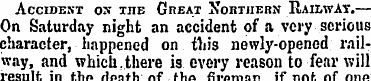
Accident on the Great Northern Railway . — On Saturday ni ght an accident of a very serious character , happened on this newly-opened railway , and which . there is every reason to fear will result in the death of . the fireman , if not of one or two . other persons who were unfortunately proceeding by the . train . It appears that a very heavy cattle train , the first , it is believed , that the . reat Northern authorities have run upon the line , on arriving at ^ the Hitchen station , had to be taken across . upon , the-down lino ,, to make room for two up trains , which were then due . At the time the cattle train was so driven unon tho down line the eight o clock down train from the King ' s-cross station was also due . . The red signal light was put
on , and a policeman was gent upon the lino with the lig ht to caution the driver of the down drain to stop . "Whether the driver of the down train saw the red signal , or whether the cattle train was in advance—that is , on the London side of the Hitchin station—is not stated , and appears not to have been very correctly ascertained . The result , however , was , that the down train ran with great violence into the two engines that were attached to the cattle-train , all three engines , each of which is estimated at about 42 , 000 value , being so materiall y damaged as hardly to be able to run again . The driver of tlie down train was thrown off the engine
before he could become acquainted with the danger of his position , and has sustained such severe internal injuries that fears wore entertained for his lire . The fireman had his leg broken , and a lady who was a passenger by the train , had several of her ribs broken , and another passenger sustained fractures of limbs . Many others were injured ; but , with the exception of those mentioned , they were not so severely damaged as to prevent their conveyance to . their respective destinations . The authorities have resolved on instituting a rigid inquiry with a view to ascertain the cause of the lamentable accident .
Eastern Counties Railway.—This Company A...
Eastern Counties Railway . —This company are prosecuting several country carriers for an extensive robbery of tarpaulins from the railway , amounting to about £ 100 .
The Recent Accident On The Eastern Count...
THE RECENT ACCIDENT ON THE EASTERN COUNTIES RAILWAY . rrn . j- ADJOURNED INQUEST . IhO adjourned investigation into the late fatal accident near Brentwood was proceeded with on Monday , at one' o ' clock , before . Mr . Lewis , the coroner . ; , Four of the deceased were buried on Saturday at Shentonfield , the parish in which the accident occurred ; the others- were given up to their friends at their request . The funerals were all at the cxponae of tho company . On Sunday , the accident was made tho subject of discourse in the churches and chapels of Brentwood .
I George Kirby , fireman , was the first witness examined : Was on the engine on the occasion ofthe accident on Thursday morning . Was at the break . John Snowdon was driving . He had the entire direction of tlie engine , except that tho guard was atthe foot plate . The guard had nothing to do with the working of the engine .. Tho morning was very fog jy ; one could not see before him more than thirty or forty yards at furthest . The whistle was sounded at Shentonfield station . It was also sounded between the two bridges from Brentwood , and again when the men were seen . The whistle was / sounded at tho Three Arch Bridge , which is the second bridge from Brentwood . Tliey were not going more than eight or ten miles at the most at this time being on the look-out they all
, saw the men at the same time at about twontv yards from them . , Put the break hard on . It wa ' s easy before . Saw Snowdon pull his lever over to reverse the engine . The men seemed to be standing in agroup . Snowdon pulled his lever over immediately on seeing the men . . In a moment after the men were struck down . Tho steam was shut off before , on the other side of tho second bridge . It was shut off because the morning was foggy , and the rails were , slippery ! , The engine was brought to a stand-still about 200 yards . from where tho accident' happened . Snowdon asked tho guard if they should go back or go on to tlie station . The guard said it was better to go on , as by doing so they would be able to do more
service . They were coming down ah incline . " . Does not know where , the incline commences . Had no knowledge that the men wore ballasting at this place . Has been on the lino the same time as Snowdon , about a month . Did not know that the line was generally being ballasted . Had been at work on the Birmingham and Gloucester line . Was not employed before on any other line as a fireman . Was a fitter on the Birmingham line . There was a fog signal at the . twelfth post after the accident occurred . Had no white head li ght up . Had no head or tail-light lighted . Has tho company ' s rules . The rule is to have a fog signal at the twelfth post on foggy days . That signal was up . Saw tlie ballast engine j saw it at tho
same time that he saw the men ; there was groat steam over the engine ; tho ballast engine had no lights ; they were not talking when the accident occurred ; the rails were wet , and they were going down an incline , which prevented them pulling up sooner than 200 yards ; would not undertake to say within what distance a train could be pulled up . James Jasson , second guard , examined . —Lives at Braintrec ; was with the train on Thursday morning ; was on the fourth carriage from the engine ; it consisted of two seconds , two thirds , one first , and a van ; left Ingateson at eleven minutes before eight ; took out his watch and looked ; they were a minute late ; the morning was very foggy when they got into Shentonfield ; they were ' coming at the rate of twenty-five to thirty miles between
Ingatestone and Shentonfield , After passing Shentonfield they slackened pace coming up the bank . Between Shentonfield and tho Three . Arch-bridge the driver whistled two or three times where there were men at work . The steam was shut off . at the Three Arch-bridge and the whistle was sounded . They came on and three whistles were blown . Witness then applied his break directly . The three whistles was tho proper signal . Knew nothing of the accident till he came to Brentwood . The train was brought to a standstill at about four posts from the Seven Arch-bridge . The incline commences at about half a mile from the Three Archbridge . They were coming at tho rate of ten or twelve miles an hour when the accident happened , Knew that men were ballasting on tho line , but did
not know that they were ballasting that morning . There is no certainty as to tho place where the men may be ballasting . Witness does not know that it is usual to give notice on this line where men are ballasting . Has not been upon any other line . They were two minutes before time when tho accident happened . They were just up to time at Brentwood . Their time at Chelmsford is twentyfive minutes to eight o ' clock . They were a minute late at Ingatestone . —The Coroner : If you were a minute late at Ingatestone , and were two minutes before time when the accident happened , you could not have come particularly slow on account ofthe fog ? Witness : Did not think they were coming at a greater speed than ho had mentioned . They took in water at Brentwood , and should be there a little before six minutes past eight on that
account . Edward MuinnEAD , driver of the ballast eng ine , examined : Was with the ballast engine on Thursday morning . Was at the foot-plate on the left-hand side ( the side nearest the bank . ) The engine was standing and blowing off steam . Was waiting to have the ballast trucks emptied . The signal man gave him a signal to go back ; witness sounded his whistle , and saw two ballast men on a truck which was not unloaded ; then heard a whistle from . the passengers train engine . Called out to the ballast men to clear the road , for the train was coming . Does not think they heard him . ; Saw the engine knock down one of the men against the step of ' his ( witness ' s ) engine ; almost at the same time the
engine went through the rest . Saw them lying dead when the engine passed . Tho train was not coming hard ; but could not say at what rate . Tho steam was , off ; The whistle was sounded , as ho thought , about thirty or forty yards off . That was the first time he heard it . The noise of his engine would most likely have prevented him from hearing any previous whistle ; thinks it would prevent any person from hearing . Has been on tho line about a month working the . ; ballast . engine . Has been working the line progressively . Does not think a driver . would know where ho was ballasting , The day before they were ballasting at Brentwood Station . Thinks a driver might expect to meet them at Brentwood Station , Has been , before
employed on tho Edinburgh and Glasgow lino for seven years and a half . It is not usual on that line to give notice where men' are ballasting . Docs not think men could see more than thirty yards before them . A man could not see either the Three Arch-bridge or the Seven Arch-bridge on Thursday morning . Did not intend to ballast at the place of the accident that morning . : His line , ( the down one ) was protected backwards and forwards by fog signals . The men could not have been on the line more than two or three minutes . They were laying down sleepers . This was on the down line . . Heard the breaksman tell the men the train was due . Tho men were , standing on the up line at tho time . Men very readily stand on the line thoy ought not ,. notwithstanding they may bo told not to do so .
Edward Dury , fireman ofthe ballast engine , examined—Was on the right hand sido . of . the engine . Was ordered to go back , and was doing ; so slowly when he heard the giiuger call out . He , turned round and saw the gauger hold up his hand . ' Did not know the train was coming till then . It was then but five or ' six yards distant . The blowing off ofthe steam from his engine prevented him from hearing . "Was for five years on the Great ; Western line . It is usual on that railway to give notice to tho drivers when any works are going forward on the line one is going . Never saw a notice . It is usual to hoar at tho stations along the lino when any works aro going on . ' ¦ -.... Several witnesses were examined , hut . their evidence exculpated the driver of the passenger train from all blame ..
The jury retired to deliberate about four o ' clock , and , after an interval of an hour and a half , returned with the following verdict : , " We find that the deatli of tho nine men was occasioned by misadveritnre , but at the same time express our regret that more caution had not been exercised for tlie protection of the men on tho line . "
The Catasinorue On Tub Eastern Counties ...
The CATASinoruE on tub Eastern Counties Railway . —Four ofthe bodies of the nine unfortunate men who were killed on the 19 th inst . by beinj run over by a train were interred in' the burial ground in the parishof Shentonfield , on Saturday last , that oeingtheparish in which the' shockin / : catastrophe occurred . The place jnwliich the bodies ofthe men were interred , s . about a mile and a half from Bro ' ntrt ^ feSSS wh P ^' »» i ™ hcrof persons attended the funeral . . The . coffins . were followed by a great includ tl
many persons , ing _ o men who had worked with the deceased on the Eastern Counties line . The other five bodies were previousl y carried away to the various places where the relatives of the unfortunate men resided , by whom they will be interred , ! Two only out of the nine were married men . The one has loft a widow and five children , and the olher a widow and two children . For the families of the two married it is understood that a subscription will bo forth * withraised , which , it is not doubted will be headed by the directors of the Eastern Cmmtics Company .
The . ' . Society ov Democratic and Social Pkoi'aoandism—The members of this society met atthe City Working Man ' s " , Hall , 2 G , Golden-lane , Barbican , on September 19 th , W . H . Cottle in the chair , ' when it was unanimously resolved that tho weekly meeting be held at' tho above place every Thursday evening , after the transaction of private business . The meeting adjourned until the following Thursday evening . Maxy - Rovixcial newspapers are publishing wood engravings of the building for the Great Industrial Exhibition of 1851 .
European Institutions For The Relief Of ...
EUROPEAN INSTITUTIONS FOR THE RELIEF OF THE POOR . The state of Europe in which the claim of the poor to relief is recognised as a legal right , and where systems of succour are administered under authority , are Denmark ,, Norway , Sweden , Mecklen . burg , Prussia , "Wurtemburg , Bavaria , the Canton of Berne , and lastly Great Britain .
, DENMARK . In Denmark each parish forms a distinct district for the management of its own poor . The rig ht to relief belongs to every one who is not in a condition to gain his living b y work , and who , without the aid of others , would be destitute of the necessaries . of life . The persons in whose favour the law acknowledges the obligation of assistance , are divided into three classes—the aged , sick , or infirm ; orphans , foundlings , and the children of parents unable to provide for their wants ; lastly , the families or individuals who cannot provide , by their labour , the supplies necessary for tbeir own subsistence , cr that of their children .
The poor of the first class are provided with nourishment , clothing , and medical attendance , either at home or in the parish poorhouse . The children , forming the second class , are placed in private families , where they are brought up or instructed at the expense of the parish , until they are old enough to be placed as apprentices , or go to service . The poor of the third class are so far relieved as they shall not experience actual want , but tbey are required to work according to their ability . The overseers find them employment ac ordinary wages ; where their earnings are not sufficient , a comp lement of gratuitous relief is afforded to the poor , not in money , but in provisions or clothing . The Danish law establishes it as a principle that every person who has received relief under the poor law contracts an obligation to repay the sum received to the
parish , and his chattels and the fruits of his labour are made answerable for this repayment . On the admission of any one to relief , an inventory of his effects are made out , and the parish'starap is affixed to every article . Whoever receives , whether by purchase or gift , any of the chatties so marked , is compelled , under penalty of a fine , to restore the same , or pay its value to the parish . The overseers have also a legal right of attaching any property of which the receiver of relief may become possessed at a subsequent period and inheriting in their official capacity the effects of those to whom they have made advances . Any individual refusing to pay his instalment of the debt . he owes to the parish may be compelled to work for the latter ; and , in case of attempting evasion , may be imprisoned . Begging is forbidden , and is punished with imprisonment .
The parochial funds , collected for relief are contributed to by the owners of land , by persons in trade , by domestic servants , and agricultural labourers—in' fact , by all who are not themselves chargeable to the common fund , under the condition , however , that the tax shall not be so levied as to reduce the payer himself to a state of want . Since the introduction of this system . into Denmark distress has sensibly decreased . The abolition of mendicancy , which , besides its demoralising influence , pressed with great weight on the rural popu . lation , is an immense benefit . On the otber hand ,
the small middle-class has fallen into difficulties , which increase every day . Sobriety , that restraint which a man left to himself places upon his own appetites as a safeguard against misery , is met with in a lower degree than formerly . The ties of family have also lost much of their strength . A man with a wife and four children may in Denmark earn I 2 s . a week . The labourer ' s food consists of rye , oatmeal , potatoes , coffee , butter , cheese , and milk . Provisions are cheap , and a family , where economy is observed , finds in the ordinary wages of labour a sufficient provision for comfortable subsistence .
NORWAY . In this country the aged and infirm , the sick of all descriptions , all who have not the means of providing for their own subsistence , are . domiciled with the proprietors and such other inhabitants of the parish as are able to support this charge . These more fortunate classes furnish maintenance and shelter to their distressed neighbours , who in eturn render such services as they are capable of performing . The distribution of this burden takes place according to the number of poor on the one hand , and to the extent and value of the different farms on the other . In each of these respects different
parishes present great diversities . In some the number of the poor is so small , that the same invalid is allotted in the course of a year to five or six farmers , who receive him by trust ., There are other parishes where the same family keeps the year through one of more of these guests , which the law and their own charity have imposed upon them . The wages of woikmen in towns vary from 6 ; . to 8 s . 6 d . a week . The agricultural labourers receive from 3 d . to 5 d . per diem , with lodging and board . The usual food of these classes consists of salted herrings , oatmeal porridge , potatoes , and coarse barley bread . Once or twice a week only this fare is eked out with a morsel oi lard or sailed meat . ,
SWEDEN . - Every parish in Sweden is by law compelled to maintain its own poor . The funds for this purpose are furnished by voluntary contributions , legacies , donations , the produce of fines , and a property-tax . M . rle Hartmansdorf , Secretary of State for Ecclesiastical Affairs , estimated in 1829 the number of individuals in receipt of relief at 63 , 318 among a population of 2 , 780 , 132 inhabitants ; which gives a proportion of one to forly-tsvo . The provisions of the law against those who , being able to work obtain assistance by fraudulent means , are very severe .
The wages of artisans are about tenpence a day , and of skilful agricultural . labourers sevenpence a day ; while the less skilful of the latter are receiving as little as fourpence and fivepence a day . In the southern provinces the agricultural classes live upon salt fish and potatoes . In the north a porridge and rye bread form the principal food . ' Now and then the artisans taste meat . Mr . Liddel , the English Consul at Cottenburg has estimated the annual domestic expenditure of a peasant farmer at 510 15 s , 4 d . In the families of the labourers about two-thirds of this sum would cover the expenditure .
MECKLENBURG . In the Mecklenburg every poor person has a right to relief . The aged and infirm are lodged and boarded , and the poor who are in good health may claim employment and a residence . ' Every inhabitant who is able is bound to contribute , to the relief fund . In the towns the subscriptions are voluntary , but when the amount thus raised is unqueal to , the expenditure , the overseers , who are namedby the magistrates , may demand more . T . > ie wages of artisans vary in the town s " , they range from 6 s . 8 d .
to 10 s . a week ; in the country they are about one third less . Besides their money wnges , the work men receive their board and lod ging from their em " ployers . The agricullurol labourers are rewarded by a sum of Si . CJ . per neck , with a dwelling , a garden , pasture for a cow and two sheep in summer , and forage for the animals in winter . With these advantages the labourer is able to live well , and frequentl y dines on meat , which in few ofthe European ' states finds its way to the table of the labourer .
PRUSSIA . In Prussia the law compels each town and village to take care of its necessitous inhabitants , provided that the latter have no kindred able to succour them . The territorial proprietors are made liable to the same obligation . The towns and villages have their own laws and customs in all that relates to the ad ministration of relief to the poor . These different communities have such a body called the armen direction ( board of guardians , ) whose duty is to superintend the collection of the funds , and their
distribution to several sub-committees , formed of citizens taken from different districts , called amen bczir & e . The principal source of funds is private charity . In Prussia their exists no law imposing the obligation to contribute to the relief of the poor ; the customs and spirit . of benevolence generally suffice . But when there is a deficiency , the poor-law administration comes upon the funds which were collected for oilier purposes , as lighting , paving , & c ., and from these supp lies the deficiency . Each province of Prussia lias its House of Industry , where
the poor are provided with employment suitable to their trade and abilities .
V . 'UIITEMBURG . The kingdom of Wurtemburg is one of the states whose inhabitants possess the ri g ht of receiving public assistance in distress . The population is divided into two classes , the freemen , and those who do not enjoy the droit de cite , called bersitzers the latter form a tenth' of the whole . The freemen , who have acquired their title by purchase or birth have the right to participate in the revenues of the district or parish of which tbey are members . The droit decile may be obtained hy ' paymen . of a sum inferior to ' that required for the right of freedom but that payment does not entitle the purchaser to the privileges of the citizens . Nevertheless , Whoever is unable to command the necessaries of life by
European Institutions For The Relief Of ...
trade or labour , or to obtain them by the assistance of fiiends , may claim the succour of the parish in which he had either of the rights just mentioned . If a man is too poor to purchase the lower right be is assigned by the police to some one . parish . The care of the poor is carried to a high degree of solicitude by the government , so that a death from want in time of dearth would entail the most ri gorous punishment on the functionaries who might be found chargeable with neglect of the deceased . A great number of parishes possess a fund called pixem corpus , arising from voluntary contributions and other casual sources , but princi pally derived from lands , which before the reformation were held by the catholic church , but which at that period , instead of undergoing confiscation by the government were set apart for the relief of the poor . In case of need recourse was had to an
old law , which permits magistrates to make a rate on the wealthy proportioned to their means and to the deficiency to be repaired . Persons in good health who apply for relief are required to work at moderate salaries . It is often difficult to find employment for the numbers who apply ; on this account , establishments have been provided in the capital and some other towns , where the applicants are occupied in spinning and other analogous labour . Most of the towns have their poor-houses for the reception of theaged and infirm ; where those
are wanted , the poor are received into all the houses of the inhabitants in turn , or farmed out in small establishments . The wages of the workmen in towns range from Is . 8 d . to 4 s . 2 d . per week , and in the country from 8 d , to 20 d . per week , beside board and lodg ing in each case . Workmen engaged by the year generally board and lodge with their emp loyers , receiving in towns from £ i 12 s . to £ 5 , and in villages from £ 1 15 s . to £ o 10 s . per annum . Women and children can gain from £ 3 10 s . to £ 4 I 0 j , per year ; so that the family is able to command sound nourishment , comprising meat once or twice a week .
BAVARIA . In Bavaria each town and village is bound by law to provide a house for the reception of the poof ^ except that in certain cases several villages are allowed to maintain a common establishment . The inhabL tants are required to contribute according to their means ; every person is bound to provide for his poor relatives , The aged and helpless poor are received into houses provided for them . The other poor , incapable of labour , whose physical condition does not require persona ! care , are assisted with
money . The healthy and able-bodied are maintained iii the bouses of industry ; their ill-conduct or idleness there is punished by the magistrates , Marriage is forbidden to persons without capital unless they have the permission of the authorities . The clergy who marry such persons without this permission are bound to furnish them with assistance in case of distress . This restriction is considered as having restrained population and pauperism in Bavaria within limits which otherwise they had long since transgressed . The labouring classes receive after therateof 3 d . per diem in the country , and from 8 d . to Is . 2 d
in towns . BERXE . The canton of Berne has from the seventeenth century admitted the principle of public and legal relief for the poor ; when there occurs a deficiency in the public revenues special taxes are imposed to make up the necessary sum . We omit here a detail of figures , which would carry scrupulous exactitude to monotony .
HOLLMD . In Holland the poor are chargeable to the different religious societies to which they are associated in each parish ; such is the leading principle of relief in that country . In case of the insufficiency of tho resources possessed by the congeegations , the distressed may apply to the magistrates , who redress the complaints . In many places there exists an authority of a civil c haracter , appointed to succour chose who do not properly belong to any religious society ; in others , the burgomaster or his deputies administer relief . The hospitals and orphan asylams are , for the most part , government establishments . Some are maintained wholly or in part by their own revenues . Admission is not
contingent upon religious opinions . Foundlings are maintained at the charge of lhc locality where they are exposed . There are three houses of industry , where the poor are admitted on application , under the condition of contributing to their own support by working according to their capacity . There arc besides in various towns industrial charitable institutions , where work is provided for those who are in circumstances of pressing want . Besides those there are establishments supported by societies for certain specific objects , some destined for the relief of women in childbed , others for distributing provisions , and , in winter , fuel to the indigent . In all cases the local authorities are invested with the right of visitation andcontrol over tho receipts and expenditure of these charitable unions . Their
officers are bound to furnish an annual statement to tho government in order that the same may appear in the report made on this subject to the States General . The average annual receipts of the hospitals and houses of legal charity amount to £ 100 , 247 . Tho average number of persons annually relieved is 241 , 513 . Pauperism appears to be on the increase iu Holland , which , after the canton of Berne , stands in the front rank of pauperism in Europe . Every one has heard of the Dutch agricultural colonies . The question has too often occupied public attention to render it useful to do more than mention them here . The amount of annual wages of a famil y of workers in Holland fluctuates between £ 10 10 s . and £ 19 , while in England it is more than double that sum .
Condition Of The Ballast-Heavers. —A Pub...
Condition of the Ballast-Heavers . —A public meeting of the ballast-heavers of the port of London was held at Hawkstone-hall , "Waterloo-road , on Tuesday , for the purpose of directing public attention to the wrongs and injuries suffered by them . The meeting was well attended , and many of the auditory were females , probably the wives of ballast-heavers . Mr . Thomas Flinn was called to the chair . Mr . II . Barthorp , the secretary of the committee , said if something was not speedily done for the . relief of the ballast-heavers the whole race would become extinct . The system had been productive of nothing hut ruin and wretchedness to
those who had the misfortune to be under its influence , and reflected nothing but disgrace on those who worked it . Under it the sober man had to stand unemployed , while the drunkard was taken in hand by the publican and work was given to him . He was one of their brother slaves once , but was fortunatel y rescued . Within 100 yards of the office of the coal-whi ppers there worked some time ago forty of the finest men this country could produce , but , in the course of one twelve-month , they were all swept away . Their employer was in the habit of selling them nrery ' . alo ; these fresh men coming from the country drank it copiously , and not one was now left . Medical men had stated that there
was more mortality among ballast-heavers than among any other class of men . Their days were spent in hard work and their nights in revelry . Great moral and social evils followed . Their wives , perhaps , kept a stall in the neighbourhood ; some resorted to chemical factories , where tho work was too hard even for men , and some resorted to a less honourable mode of obtaining a livelihood . In addition to this the ballast-heavers suffered from the system in a pecuniary point of view . The publicans , however , were not the only persons who were to blame . There was a class of men , consisting mainly of low lodging-house keepers , who came forward and offered to undertake delivery for a losg sum than the other agents did it for , and the
shipowners would then employ them . Upon this the old agents , the publicans , offered to do it as low , the ties of relationship prevailed , they . got back the agency , and made up for thoir loss of profit b y increased extortions upon tho men they employed . No man could hope for employment unless he was a drunkard the more he drank the more employment he would get . For a ballast-heaver to siarn the total abstinence pledge would be for him tosFgn the sentence of his own starvation . Hence they were nil drunkards , and the evil consequences of drunkenness necessarily followed . Those who had taken up this matter on behalf of the ballast-heavers , for the poor fellows could not- do it themselves , were endeavouring to destroy the ; system , and tho question was how they were to accomplish their object . They had already presented petitions to the House of Commons , aud to the Trinity House on the subiccti He believed that government were willing to
move in the matter , and if they did , and they brought in a bill , there would no doubt be great opposition on the part of those who were gaining by the present state of things . Such had also been the case with the coal whippers ; but they procured a petition signed by 10 , 000 persons , and their cause triumphed . And the ballast-heavers , whose condition was as bad as that of the coal-whippers was formerly , would also have tbeir evils remedied by legislation if their condition wore fairly brought bofore the public . Mr . Green then moved the adoption of a memorial to the Board of Trade , setting forth the evils under which tho ballast-heavers labour , and praying for an inquiry , and tl . at it go vcrnmont were then satisfied that tho evils ex ' s ed , they woiild introduce a bill to remedy them . Mr . Harper seconded it ; "' and after a . speech from Mr . West , tho memorial was unanimously adopted , and tho meeting then separated . ; . ' . ' . . '
AMERICA boasts of another " grand invention " in < ras-lighting . Puie-and cheap gas is said to be produced bv inserting into a red-hot retort i * hoc cylinder filled with naphtha , which is mslanUy Sgcu into permanent gas of twice the density of coal gas .
-
-
Citation
-
Northern Star (1837-1852), Sept. 28, 1850, page 7, in the Nineteenth-Century Serials Edition (2008; 2018) ncse-os.kdl.kcl.ac.uk/periodicals/ns/issues/ns2_28091850/page/7/
-