
On this page
-
Departments (1)
-
Text (9)
-

he sufferi f TRr^ENDOUS August 17,1850. ...
-
Tebm»- a*I03 of raa Gobham Case .—The r-...
-
TRr^ENDOUS CONFLAGRATI ON at GRAVESEND. ...
-
•A Wkaksess op the Chest aud Asthma cube...
-
LARSON S FAREWELL ADDRESS. assmMeftrhf H...
-
EMIGRATION TO AUSTRALIA. Mr. JohnLmm, a ...
-
Ay AsiBfltcAiY Abducxiox Case.—.Rebecca ...
-

Umfliria! pritanwM
-
SATURDAY, Auousx 10. ; HOUSE OF LORDS.—T...
Note: This text has been automatically extracted via Optical Character Recognition (OCR) software. The text has not been manually corrected and should not be relied on to be an accurate representation of the item.
-
-
Transcript
-
Note: This text has been automatically extracted via Optical Character Recognition (OCR) software. The text has not been manually corrected and should not be relied on to be an accurate representation of the item.
Additionally, when viewing full transcripts, extracted text may not be in the same order as the original document.
.The Tbkani Confebekok. A Long Discussio...
* . . 1 , „?« She appeared ' to ng rom h 0 * % h 0 ^ nS ? - ' her LoTand face presented the ap-SS 2 ffi * W * -- ' ** turned »** jj £ ? i LX n held over the flame of a strong fire . The i » wfissS ^ S men ment ^ S he was emp loyed by a mM » cjui Sm named divisiontoweeapoteg v " ™^^ , * » boi about one o ' clock o . m . on Fr «**• y ^ burnmg peri perfect health , wheni JJjyX , back . She air . air came over her , ?&*»* » ^ bad entered felt felt as if a qn anb ^ oi pa js ^ ^ ut es , and her her nostrils- Sb 61 ®^! , COrched in the manner fou found her ^ , f ? stated that the stalks of the des described . s "trWas at work were burned to a poi poU Wes wereshe ^ madesoft and Wacb < ilk cir cinder , anu tne r won ) aD ' s w ca *** tt ° ^ K 1 he bUut mU mortify . " ve were jfjJJjJJ * ,. has the following . — "A small size
r !*• = hriirht vellow cowur , anu auouc me in ; insect , Ot a or * . posea by formers to generate £ £ *^\ Te £ , 31 it has been ascertamed tbat 3 SBSiSSS-id bites the stalks immediately hh ^ iSSiw- ^ lrirtwwirti oflta ™ ™ tftto disease give , to say the leastofthem . no
S Sum for any additional alarm . The return a de described as being most abundant , and amply snffic ficient to enable the country to bear a partial oi damage of the crop , however the injury might affect in individuals . The Cork Reporter of Saturday has the fo following on the subject : — " This morning , a most i ntelligent and trustworthy gentleman told us that h in the neighbourhood of Blarney , severalfields in w which the symptoms of disease had appeared , nave , s since the rain of the last couple of days set in , I hegun to look healthy once more , and the oiseasea s stalks to acquire new verdure . " A fire , verv destructive in its consequences , broke ^ -out in Dublin on Monday morning- K ™**™ h discovered in the shop of Mr . Donnelly , the exten-- ave hosier , in ^ Westmoreland-street ; and , as it 1 "burned with great violence , tbe inmates were res-S ^ tb orWt difficulty , and the flames flavin *
extended to ° the adjoining premises « Tthe « gM Ifrwhange Insurance Company of London , tney we nf effeSly wbihfed until the two large boras were completely cpnsumedand some of ho Jdjomingonesslightlymjured . Th « pap ^ s of the Insurance Company were saved , and Mr . Donnelly s concerns were , it is said , amply insured . A destructive fire broke out m the Jtanturk ¦ Workhouse on Friday evening week , by which in a few hours the entire baddugof the mam house , the dining hall , kitchen , bake-house , mill , and a part of the southern wing was burned to the ground ; nothin" left of this fine building but the walls-a rjart ofthe bedding was saved ; no lives lost . The fire was accidental , and the building is insured . The funeral ofthe Earl of Dunraven took place on Saturday , the remains of tbe deceased nobleman rteintf deposited in the mausoleum erected by
himself in Adare churchyard . Over 4 , 0 UU persons are said to have assembled to pay the last tribute to his m emory . Lord Adare , now Earl of Dunraven , has arrived at Adare Castle . A great storm and high tide took place last week in the Lower Shannon . The tide overflowed some embankments and committed extensive ravages in the district near the new road in course of construction to Mungret . . Eleven convicts under sentence of transportation effected their escape from the gaol of Maryborough last week , and none of them have yet been arrested . The Harvest . —The accounts of the potato are ceneraUv less unfavourable ; but some , from Tip-Seraryand Wexford especially , are quite disheart-£ ni „« r A letter from Nenagh says- " The _ potato
croois more than fialfgone in ibis neighbourhood . On the other hand , a letter from Maeroom mentions thatthe poiatofieldsm tkatquarter , since the heavy rain , are again wearing a healthy appearance . The Cork Reporter has an account to the same effect from Biarnev , where , it is stated , " several fields in which tbe * symptoms of disease had appeared £ U since the ranf of the last few days begun to look healthy once more , and the diseased stalks to acauire new verdure . " Altogether the reports are more favourable than might nave been expected , as reeards the cereal as well as the potato crops . "Wheat is deficient in most parts of the southern and midland counties ; but appears to be a pretty feir crop in Down and other northern counties . Oats are everywhere a very fine crop .
Stjich > e of a MruTARr Officer . —Col . Beauchamp , an officer of long and distinguished service in the Peninsula , but for some years retired from the army , committed suicide at an hotel in Dawsonstreet on Sunday last , in a fit of temporary insanity , produced by a severe attack of erratic gout . Brat Sean Estate . —The mansion-house of Mr . Pntland , at Bray Head , with forty-seven acres of land , has been purchased for £ 7 , 500 by Miss Ball , sister to Judge Ball , who is at the head of the Loxetto Convent , at Ratbfarnham , near Dublin . Lord is
The Yacasi Ibish Eeebagb . — Donsany a candidate for the vacancy in tbe representative peerage , caused by the death of Lord Dunraven . Repeal Assocutios . —This body met on Monday at Conciliation Hall , Alderman Moran ( lord mayor locum tenens ) presiding . —Mr . John O'Connell , in addressin ° - the meeting , said the attention of the countrv was taken np by the Tenant League . It was likely to wield a fearful power ; and , withoai meaning to insinuate that it would use that influence for evil , a great responsibility would attach to it-. He guarded himself from saying that , from anvthing that had as yet occurred in tbe proceedings of the Tenant League there was danger ; bnt , recol lecting the consequences of the past , he was anxious
to impress upon the gentlemen connected with that iody tbat they ought rather to err on the side of caution than otherwise . He then alluded to the recent meeting of the League , the tone of which he praised highly . It should receive every possible aid Jrom tbat Association in getting up petitions , in tbe circulation of tracts , and in the details of constitutional agitation , —The rent for tbe week was £ 9 lis . Id . - Attack ox a Clrbgmas . —On Sunday , during the performance of Divine worship in the Mariners ' Church , Kingstown , a woman , whose name was subsequently ascertained to be Sarah Adams , entered the church mentioned , and took her seat near the reading desk . In a short time after she stood np and exclaimed , while the Rev . John Massy was reading " Silence , sir ! Why do yon lead the people astravf having no sacrifice ? " and rushing on
suddenly , she made a blow at his head wtta a stick , which be avoided by a sadden movement . She made three other blows at him before she could be seized -upon , when she was removed from the church ia tbe custody of a constable . The congregation was greatly alarmed , and the worship was interrupted for a considerable time . She was brought / up in custody on Monday before Mr . Tvyse , at the policeoffice , Kingstown , when upon tbe examination of witnesses it was ascertained that she was labouring under tbe effects of insanity . She pleaded guiltynttered some incoherent sentences evincing disappointment at not accomplishing the act she intended to perpetrate , and oh the information of the Eev . Mr . Massy , who only desired to have her placed under protection , she was committed , with the view to her removal to a-lunatie asylum . She declared she was a Roman Catholic , and had a mission to
error . EsEcctios . —The execution of Christopher , for the murder of the bailiff ( Hogan ) at Eagle-hill , took place at Ballyhricken . The culprit ascended the place of execution ( accompanied by the Rev . Messrs . Tracy and Kent , the sub-sheriff and governor ofthe gaoh & C . ) with a firm step , and addressed tbe people in ftont ofthe platform ..- He spoke in , the Wall tongue , and stated in effect that he was no more guilty of the crime for which he was then about to suffer than the reverend gentleman who attended him ! . He then knelt and prayed , stood up again , asked if his brother and other relatives were there , and told them to have no malice or ill-will to his prosecutors . The hangman then adjusted the rope , put a white capoverhisfeatures , pulled the fatal bolt , and in a moment Christopher was launched into eternity . A soldier fainted during the time .
Rescue op Cat » e sekbb pob Rest . —On Friday last , Mr . Thomas Scully , J . P ., with a party of bailiffs , made a distress for rent on his tenants at Gurtnagap , near TuIIaroane . He was proceeding to drive a number of cows to pound , when tbe tenants made a dash upon them , and carried off the cattle , in spite ofthe bailiffs . —Eilixnny Moderator . More Exiebuixasiok , —The Limenefc Reporter contains the following : —On Saturday lasi » the bailiffs of C . Trench , Esq ., and ofMiss ' Gascoigne , of Castle Oliver , accompanied by , his levellers , " demolished the house of Michael Hickeyof Tiermore ,
, parish of Ballinderna , and turned himself and clfldren put upon the world . They next visited the dweUing of James Biordan , near the red bog , which ft ^? S ^ ° v aboat - tbrow d ° * n ; wA the }^ Sf * * **• -tomato to desist when it waa inown that Riordan ' s wife was lying in fever A medical man was sent for from Kilfinan ; who declared her unfit ; to be ^ r emoved ; and consequently she has been suffered to have the shelter of her own house for- the ( present . at least . Biordan has eieht or nine helpless children , and his family has been living for over a century on those lands .
He Sufferi F Trr^Endous August 17,1850. ...
he sufferi f August 17 , 1850 . , THJ ! ifiRTRmpv ^
Tebm»- A*I03 Of Raa Gobham Case .—The R-...
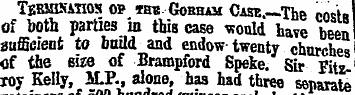
Tebm » - a * I 03 of raa Gobham Case . —The r-nsla of both parties in this case would hare been sufficient to build and endow twenty churches <} f the me of Brampford Speke . Sir Fitzroy Kelly , M . P ., alone , has had three sep arate retainers of 500 hundred guineas each , besides consultation fees , which , will bring up his snare to nearly £ 3 , QQ 0 . It is stated in legal circles , that the whole costs are upwards of £ 80 , 000 . It is , however pretty clear that tha Bishop of Exeter and the Rev ' Mr . Gorham are not the actual parties who are to hew the brant of the battta The money , it may be presumed , has been provided by the m ' gh and lowclnrcupartiea ,
Trr^Endous Conflagrati On At Gravesend. ...
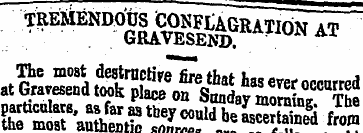
TRr ^ ENDOUS CONFLAGRATI ON at GRAVESEND . ' 0 N AT KSwssttsrirStt SsSW ^ ttaE ^ thewtnuow „ fni , ,, ad ^ Ueett HBokeissuin g from nm wen ? to ^ t ! - T *• afreet . Pen-Elm ? 8 il < ? "J " *' " ' and 8 aw « fla » e £ 5 £ ^ eath the weather boarding above SLPir v , Ddoff of &* nouse «> f Mr . Adlington , E * . 5 i ^ trBet * , He immediately gave the « HL ^ ?* » short 8 P <* of time the town g A me /» t ^ tber with those of the Custom-house , and of Mr . Plane ' s ( the mayor ) brewery , were on roe spot , and a supply of waterfrom the mains of the
water-works having been promptly got , every effort was made to subline the fire , which by this time had extended itself to the house adjoining Mr . Adlington s . The wind blew rather fresh from the southwest , sweeping the flames over the houses down the High-street towards the Town-pier . The engines , though well worked and abundantly supplied with water , gained no influence over the fire , which had at abont three o ' clock extended to seven nouses on that ( the western } aide ef the street . Ihe engine from Tilbury fort , accompanied by a body of troops , having now arrived , more vigorous , but equally unavailing , efforts were made to stay the further progress of the fire , which had at soon after three o ' clock crossed the street , seizing first upon the extensive premises
of Mr . loung , butcher . From there the flames spread to the houses all down the eastern side of the street , including the County Bank , the Savings Bank , the Kent Tavern , Brinchley ' s Distillery , & c . The High-street on both sides from tbe Town-hall downwards to within a short distance of the Town-pier was at / oar o ' clock completely enveloped in flames , which , when they involved the premises of Mr . Iroughtpn , tallow-chandler , and an oilshop and chemist ' s shop contiguous to it , formed an awful conflagration . At this time all hope of preserving a single house between tbe Town-hall and the pier was abandoned by all parties , notwithstanding that the Dartford and Rochester engines arrivedand a
pro-, digious rolutne of water was discharged on the whole line of burning houses on both sides of the street . There was fortunately sufficient time to save the cash-boxes and the securities and other documents of the County and Savings Banks , which were taken to the Custom-house , all the officers of which were actively engaged with the military , police , and townspeople in working tbe engines . Comparatively iittle property was saved from the fire , which , between five and six o ' clock , had completely destroyed twenty-four , houses ( as the annexed list will show ) on both sides of High-street , independently of several houses in Princess-street , and the courts leading out of High-street , between the Town-hall and the
Pier . A telegraphic communication from the railway-station , at the instance of the Mayor { Mr-Piane , ) having been made to the London-bridge station , a body of Fire-brigade and two engines were as soon as possible despatched from London , and arrived in Gravesend at about twenty minutes to seven o ' clock . The work of destruction was then done , the fire , having been providentially stayed in its progress down the High-street , aud extending backwards to Princess-street , by a change of wind to the north and westward at six o'clock . The assistance of tbe brigade , with their powerful engines and practiced skill , was , however , effectual in suppressing the fire still bursting forth from the mighty mass of ruins—all that remained of the property
destroyed , sad which is calculated to amount in value to £ 60 , 000 . -The bouses were insured , with the exception of those of Mr . Adlington ( where the fire originated , ) and of Mr . Day , chemist . They were almost all shops , and well stocked , and , in fact , were the principal houses of business in the town . Those totally destroyed are , on the eastern side of High-street—Mr . Spencer , chemist and druggist , tbe principal establishment of the kind in the town ; the Kent Tavern , recently purchased by a Mr , Temple , from London ; the shop of Mr . Bar ber , hairdresser ; of Mr . Butcher , pastrycook and confectioner ; tbe County Bank ; the Savings Bank ; ihe shop of Mr . Hay , bootmaker ; ditto of Mr . Cramp , butcher ; ditto of Mr . Young * butcher ;
gutted the Commercial Coffee and Dining-roorus , and extensively damaged Brinchley ' s Distillery , and the shop of Mr . Crofts , grocer . On the west side of High-street , the shops of Mr . Adlington , grocer ; Mr . Gregory , linendraper ; Mr . Fenwick , draper and tailor ; Mr . Kemp , hatter ; Mr . Pitman , grocer ; Mr . Barber , leather-cutter ; Mr . Read , tobacconist ; Mr . Tronghton , tallow-chandler ; Mr . Ilutton , linen-draper ; Mr . Newman , bookseller and stationer ; Mr . Jerry , eating-house keeper ; Mr . Day , chemist , were totaly destroyed . The house of Mr . Saunders , surgeon , was considerably damaged . In Princess-street , at the back of the western side of High-street , and in the-courts off High-street , within the range of the fire , there were destroyed
fourteen residences , several workshops , coachhouses , stables , and other oat offices . In the early part of the day it was rumoured that Mr . May , bootmaker , was missing , and that a man who sells crockery ware about the town as a hawker was killed in endeavouring to escape from a house in Princessstreet , in which he lodged . The first statement proved to be unfounded ; and it appears in reference to the hawker , that the poor man had suffered severe bodily injury , having fallen down a burning staircase . "He was removed to tbe workhouse in a dangerous state . The insurance offices which will be the principal sufferers are , as we learn , tbe Kent , tbe Sun , and the Phoenix , The loss by this terrible fire , as estimated by . the
surveyors of tbe various London insurance companies , who were engaged the whole of the day inquiring into the amount of property destroyed is £ 80 , 000- The principal offices that will suffer are the following : * - Kent Fire-office , £ 10 , 000 ; Globe , £ 8 , 000 : Royal Exchange , £ 8 . 000 ; Alliance . £ 8 , 000 ; Norwich , Union , £ 7 , 000 ; Phmnix . £ T 0 C 0 ; Mutual , £ 6 , 000 ; West of England , £ 5 , 000 ; Star , £ 3 , 000 ; Commercial , £ 2 , 000 ; making £ 65 , 000 . The general body of tradespeople and inhabitants ofthe toww & TC loud in their complaints against tbe corporation in not having an efficient corps of firemen and engines established after the warning they received by the two previous fires which , it will be recollected , consumed the greater part of the lower portion of
Gravesend . It is the general opinion ef tbe inhabitants of tbe town , that had the corporation telegraphed for the London engines when the fire was crossing lligh-street , instead of waiting three hours , which was actually the case , a very large portion of the property would have been preserved . Thelargest building , amongst the premises burned down was used as tbe London and County Bank . It occupied much ground on the east side of High-street , close to the Town-hall , and with its contents was insured for £ 10 , 000 . The clerks succeeded in saving the whole of the books , cash , and papers belonging to the bank . On "Wednesday a protracted inquiry took place before Mr . J . Plane , the mayor , Mr . R . Oaks , and a full bench of magistrates , at the Town-ball ,
Gravesend , regarding , the recent loss of property by fire . A vast amount of evidence was taken , and all the statements went to show that the fire broke out at a much earlier period than has been represented in the accounts that have appeared in the public journals of the accident , and establishing a ' most important fact—that the conflagration could have been easily checked . had the police and local firemen been enabled to engage auxiliaries to assist them ; instead of which , the labouring portion of the inhabitants refused to work at the engines on the grounds that they were not remunerated for the work they had done on the occasions ofthe two previous fires in . the town . It was a matter of much difficulty to decide from the statements where and on whose premises the fire originated . Mr , Adlington , the grocer , stated he was positive the fire did not originate in his premises ,, but . in the shoo of Mr . Bead , a tobacconist , which adjoined .
The premises were a kind of doable house , a mere lath anil plaster partition separting the two dwellings . . He added that when alarmed he went into his shop and distinctly saw the flames issuing through the partition from Mr .. Read's shop . Mr . Bead , ' the tobacconist , refuted the allegation made by Mr . Adlington , and called his wife and a young man who slept in the house on the night in question . Both asserted that Mr . Read's shop was perfectly free from fire at the time Mr . Adlington ' s shop was in a complete blaze . A number of persons who were on the spot at tho time tbe alarm was raised , spoke for each party . It was difficult , however , to form an opinion where the fire actually commenced . At the close of the evidence , the chairman said that after what had transpired it would be useless for the coroner to proceed with an inquiry as it . would answer no end , but impose a serious expense upon the borough . The court then broke up .-,. ¦
•A Wkaksess Op The Chest Aud Asthma Cube...
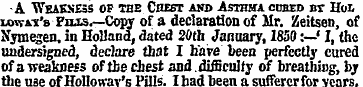
• A Wkaksess op the Chest aud Asthma cubed sr Hoi . iwme ' s Fms . —Copy of a declaration of Mr . Zeitsen , of Nymegen . in Holland , dated 20 th January , 1858 : — « I , the undersigned , declare that I have been perfectly cured of a weakness of the chest and . difficulty of breathing , by the use of Holloway ' s Pills . Ibad been a suffererfor years , and was unable to get the least relief from the various remedies I tried , until I took these inestimable Pills ; and I invite aU who . may be similarly afflicted to vise the same remed y without delay . ' Signed , C . Zeitses . They v > ay he taken in all cases of old coughs , colds , and asthmatical affections . .
Skw Diseases . —The numerous diseases termed' Skin Diseases' to which the human frame is liable—creating annoyances and compelling privations of the roost painful and harassing description—have ever bee » held by the acuity to be the most difficult to cure . Indeed , various n » ve been the remedies resorted to in ihe pubhc and pri-? ate practice , of . the professsion without any one having Been discovered either sure in its mode of operation or certain in its intended cfiects . For eruption of the skin the £ anuly Restorative , termed « Prampton ' sP 311 of Health , ' tsnotonlyone of the best remedies extant for effecting a «« am and speedy cure , but so exceedingly mild in its E * £ t te « wt dencate female ' , and children of safe ? . aa ? r age » m ? *•» * hi » medicine with perfect
Larson S Farewell Address. Assmmeftrhf H...
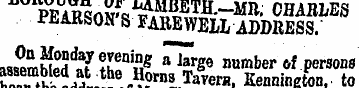
LARSON S FAREWELL ADDRESS . assmMeftrhf H g ^ e »» mber of persons wSSaL the orns Ta ™ ra , Kennington , to hear the address of Mr . Charles Pearson ou his re-S « h a ? . * t ^ P ^ ntation of the borough of S i . M i DouwON ^ the chair , supported by Mr PBinsoN , Mr . *»««« SiWr , M . r ., m . p . Wire , and many other of Mr . Pearson s friends and supporters . The Chairman , in opening the proceedings , stated that during the time Mr . Pearson had occupied a seat in the House of Commons his mind had been
, more especially directed towards a reform ofthe prison discipline , and his opinions not only upon this subject , but also upon others to which he had devoted his attention , had always been upon the right side . Ho had promised , when he was returned as the member for this borough , to come before his constituents at the end of each session , to give an account of bis stewardship , and to answer any questions that might be put to him . There had been no occasion , however , for him to adopt this course , and he now appeared before them , iu consequence ofill health , to resign the trust which the electors had reposed in him , and to bid them farewell . ( Hear , hear . )
Mr . Pearson then came forward , and was received with enthusiastic cheering . He stated that tho few preliminary observations which the chairman had thought it necessary to address to them , would relieve him ( Mr . Pearson ) from one portion of Ma duty on this occasion—viz ., to assert that during the period tbat he had the honour of holding a seat as their representative hehad directed his energies in the right channel , and that he bad not swerved in the slightest degree from the professions he had made when he solicited their suffrages . ( Hear , bear . ) Be now earnestly courted any question that any gentleman might think proper to put to him . Ho felt that it was a very important relation which had subsisted between him and the electors of
Lambeth , for a period of three years . That relation had now terminated ; but he might , perhaps , at some future period again present himself to this or some other constituency ; and how could any servant expect to get a new place unless he obtained a good character from his last master ? ( Hear , and laughter . ) He confessed tbat although nothing had occurred to compel him to appear before them , he courted investigation precisely in the same way as if he were again soliciting their favours . "When he came into this house a letter bad been placed in his hands from a gentleman , stating that he ( Mr . Pearson ) bad obtained a situation under government , and that although the fact had been concealed , it would by and bye peep out . Now , he begged to say it
cnaE any gentleman had heard this report , or any other report respecting tho cause of his retirement from tbe representation of this borough , , he should be obliged by his putting to him any question which might suggest itself to his mind . ( Hear , hear . ) The real motives which bad influenced him were stated in the farewell address which lie bad published , and if there was any person present who entertained any ill feeling towards him , he should be thankful if he would express it , in order that , he might have an opportunity of giving a reply , as he was anxious that his valedictory address should be delivered to those whom he might look upon as bis friends . ( Hear , hear . )—Mr . Pearson then resumed bis seat to await any questions which the electors mi sbt feel
disposed to put to him , and , after a pause of a few minutes , he continued hisaddress .--Tbey appeared to be all on one side , and he was happy to find that they were on his side . He would , therefore make his observations as brief as possible , and , at tbe same time , as much to the purpose as possible . His resignation had excited some surprise , and be was much afraid that this indicated that the state ' of morals in Parliament was at a very low ebb . ( Laughter . ) When he presented himself before this constituency he gave them a particular pledge , which he had since fulfilled , and this had excited surprise ! His friend in the chair had stated that ho promised to appear before the electors at tbe close of each session , and he implied tbat be had
not done so , as it was not necessary that he should . Now he must remind them , that bis friend had not done him justice on that point , for he ( Mr . Pearson ) had appeared before them uccording to promise , and bad on several occasions received the approbation of his constituents . He had since found , however , that his health had failed biro , and be felt he could not hold tho position of solicitor to the corporation , and at tho same time continue to be the representative of Lambeth . ( Hear , hear . ) He had moved , in the House of Commons , for a committee to inquire into the prison discipline of this country , and the house promised that a committee should be appointed . He , therefore , determined not to resign bis seat last session , but to remain in Parliament
another year , in order that he might appear before them at a time when he should be enabled to state that he had fulfilled the promise he had made to them when they chore him as their representative . ( Hear , hear . ) In a speech which he delivered on the loth May , 1819 , he publicly declared his intention to resign his scat when the committee , for which he had moved , should make their report . That report having been made , he had tendered his resignation . But he did not stand upon this circumstance alone . It might be recollected , that when he stood upon the platform at the day of his election , in the presence of Mr . HawesandMr . D'Eyncourt , he stated , in allusion to the subject of triennial parliaments , that he thought it would bo much
better if , instead of wasting all their energies in the endeavour to get what they could never obtain , they would put the principles in practice by resigning once in three years . ( Hear , hear ; and laughter . ) He now stood before them probably the only man living who had practically carried out the princi ples of triennial parliaments " . ( Hear , hear . ) On the 20 th of July , 184 T , he became the representative of this borough , and on the 25 th of July , 1850 , he bad issued an address , tendering his resignation ; so that he'had occupied his seat in the House of Commons exactly three years ; and . he had fulfilled those duties which he had promised to discharge when be solicited the honour of being returned . If , under these circumstances , any surorise had been
expressed at bis having resigned , it must be because it was unusual for persons in a similar position to carry out the pledges ' they made to their constituents . During the time he had been in Parliament he had always acted np to the principles he professed , and he would ask any man if they could find a single vote recorded in his name which was inconsistent with those principles . He had always advocated the extension of thesuffrage i and tho shortening of the duration of parliaments . He had been a warm supporter of the principles of civil and religious liberty to the utmost extent , which any individual could desire —( hear , hear)—and : he had also advocated the most perfect freedom in the exercise of the elective franchise . He had voted on every
occasion in a manner favourable to those objects , but he had voted upon still , more important questions— viz ., for . every improvement in our social condition . Hebad sided with those who had striven to check extravagantexpenditure . and to promote by all meansa just economy in all departments of the state . His great object was to get a reform , in the criminal code by means of tbe application of a sound system of prison discipline , and ( as hehad observed in the address which he had published ) although his exertions bad not been crowned with the-immediate success which bis enthusiasm bad pictured , he verily believed that in the character of their representative he had been enabled , in co-operation with other honourable members , to lav the foundation of
a rational system of prison discipline , which would prove at once deterring and reformatory , penal and humane , and which , while it was calculated to improve the mental and physical condition of our fellow-creatures , would , save the ratepayers some hundreds of thousand pounds . ! ,. ( Hear . ) , He ; was quite satisfied . that a system of prison discipline might be established , by which , useful and productive , labour . would be at once the instrument of punishment and reform , and which would compel the idle , the . vicious , and the profligate of this conntry to maintain themselves without the cost of a single shilling to the ratepayers , and enable them to take their station in society , instead of oscillating between plunder and prison . This was the end
he . had been endeavouring to accomplish , and : he would continue to do so for the remainder of his life . ( Cheers , ) In his address to the electors , bo spoke ofthe expenditure of the public money in the prison at Pentonville ; . and between the year 1846 and the present time he had done a great deal towards reducing tbat expenditure . The last report of the condition of that prison showed a great re ; dnction in the expenditure , and at the same timean improvement , in the discipline . It appeared tbat at the present , time £ C , 000 Jess was spent upon the prisoners ( taking tho average at COO ) at Pentonville than in the year 1847 . ( Hear , hear . ) The ; experi ence he , had gained during tbat period he bad been engaged in following out this subject bad convinced him that there was no use in opposing institutions in the aggregate , but tbat each man should layhold of one , and exert all his energies to caray oufc . sucb reiorms
as ne mignt tflinK desirawe . ( wear , near . ; This had been his feeling with regard , to the question of prison discipline . Now it might he asked why he had resigned his seat , seeing that no complaint , bad . been made against him ,, whilst complaints bad been made . against others and they did not resign . ( Laughter . ) . His clients of the corporation of London did not complain of him . ( No . ) His oonstituentshad not complained of him ; . ( No . ) Then why should he go ? .. His answer' was very , plain . Hehad stated that if be found , tho two offices : incompatible ho would ^ resign , and . ho bad therefore determined to do so as soon as the Report of the Committee , on Prison Discipline , should be published . Some people complained , 'that , he had not given notice of his . intention to retire fhufc he wouldassure those persona that he had adopted that course which ho considered most consistent with his ; duty . He had not whispered a word of his determination to resign until his address , was published
Larson S Farewell Address. Assmmeftrhf H...
which S * paper 2 . " and inthe fom of a P » r <} ' ImLo " ^ «»» Me-aU classes of peop le to be ' Sff " ^ with . the fact at one and the 5 K m ! ( Hear 0 He h 0 Ped they would now n . ? J 5 m v . , ret , re enjoying alt their good wishes , 'ffi ? e tot * . election-. he bad abstained from EH ? W i . the Proceedings , and the same KM feellnS wl » cb had then actuated him SlfT ™ ' him from expressing any opi-KiiiS ? reauIt - He had b <* n fw ™™ 71 ™* tne solicitor to the corporation of London , and he iXJSS . d himself as » P officer by proving his TSl as an un P officer . M >< 1 » f ^ ter a certain him „• .. ? corParation should think fit to honour allt ^ ^ ^ l ^ ^ « «• P" V * th ° assistance of he mi
a deputy , ght again endeavour K ' n ° P arhament ' ( Hear , hear ; and laughter . ) ue would rather receive one quarter of the salary awarded to urn and hold a seat in parlirment ; but tone candid , he had not been sufficiently careful in his early days , and therefore he must remain inhar-? w T . ° , ' L « < Ho did not he 3 i ^ e to say tnat vvniist in Parliament his expenses increased ano ms recepts decreased , so that at the end of a no ™ i f ? und he had S ained £ 300 less than he had nf ?„ n u \ l *? $ ° f Parliament . He left tho borough o Lambeth with great regret , but he had tendered bis resignation because he felt hi ' maeir impelled to uo so by an overwhelming necessity . They had conferred upon him a great honour in electing him their representative , and he should retire from the trust because he felt he was no longer able to digits
charge duties efficiently . As Byron had observed , w ? , vel * v difficult to pronounce the word " Farewell ; and before he Mr . ( Pearson ) attempted to do so be would sit down , in order that an opportunity might be offered to those gentlemen who had entered the room since the commencement of his speech to make any observation wMcli they might think necessary . ( Cries of "No , no , " and cheers , aD W Ah- . Pearson resumed his seat . ) Mr . F . Doulton then proposed a resolution to the following effect : —«« That this meeting highly appreciates the honourable conduct of . their late representative , Charles Pearson , Esq ., who , while enjoying the full confidence of his constituents , has resigned into their hands the trust they have reposed in him , when he felt himself unable from ill health to discharge its duties satisfactorily to himself . "
Mr . J . Babtmim seconded tho motion , which was carried unanimously . Mr . Alderman Sidsey , M . P ., and Mr . D . W . Wire , respectively addressed the meeting , eulogising Mr . Pearson ' s conduct as the representative of the borough . . A resolution was then passed , to the effect that Mr . Pearson be respectfully requested to have his address printed , and circulated amongst the electors . Mr . Pbarson said he should have much pleasure
in acceding to the request which had been made in this resolution , although it would not be a light task , considering that he was an extemporaneous speaker , aud only spoke according to tho dictates of his heart . Tho hon . gentleman then addressed a few concluding words , to the electors , and bavins bid them "farewell , '' retired . A resolution was afterwards passed to the effect that the ^ meeting pledged itself to support Mr . Pearson in any endeavours he mi ght make to carry out a reform in prison discipline ; and thanks having been voted to the chairman , the proceedings terminated .
Emigration To Australia. Mr. Johnlmm, A ...
EMIGRATION TO AUSTRALIA . Mr . JohnLmm , a printer , who emigrated from Lincolnshire in September last , and arrived at Adelaide , South Australia , on the J 2 tb January , aires a less prosperous account of the prospects for emigrants who are not mechanics or farm labourers , than previous writers . In a letter dated a month after his arrival , he says , speaking ofthe voyage ( in the ship Douglas ) , " Nearly aU the-passengers were attacked with cholera and diarrhoea , and twenty-six , died , one of whom was brother to Mr . Adcock , printer , of Melton Mowbray ; his son also was near dying , but has just recovered . After landing , I called upon Mr . Bdw . Woodroffe and Miss Bigg , formerly of Stamford , and at Mr . W . ' a house I saw the Stamford Mercury . " Speaking of tbe state of Adelaide , he says : —
The place is inundated with emigrants . Some of them are persons who hold respectable situations in England , such as head clerks in lawyers' offices : here they only get 80 s . a week , and imder-clcrks 14 s . to ISs . a week , and 'find'themselves . There are gentlemen ' s sous here who are aptnally driven to become bullock-drivers ; there are men in the Bush working on farms for Gs . and 8 s . per week with rations : one of my fellow voyagers had a situation offered him to take the management of a large farm , and lie stared when the master told hira that he would give him £ 2 G and his rations . The only parties wanted here are carpenters , brickla yers , masons , and joiners , but these will all be pulled down in their wages , for the place swarms with Germans , who work for 2 s , 6 d . a day , and ' find ' themselves . Ships are still arriving from England and Germany ; and when I tell you that the place ( meaning the
cit' of Adelaide ) is very much like Market Doeping . youmay guess its extent' There is only one street nt present , with straggling little wooden houses at the ends of tho proposed new streets : they are as yet only staked out , The city wiiJ be one square mile , or four miles round ; and a hil ' l has just passed the Government House here to make a railroad from tho city to the port—the cost is estimated to be _ £ 30 , U 00 . Hats made of cabbage trees and straw are principally worn here , and clothes are worth little or nothing . I hivve seen good black dress coats and surtouts sold for 6 s . and 7 s . each at the auction marts : there are three or four of these auctions overy night . White blouses are Is . 6 d . each , cotton socks 3 d . per pair ; blue and pink figured shirts 2 s . to 3 s . 3 d . each ; a dozen black hats sold for Is . 9 s . each ; therefore it is a folly for any one to lay out his capital in clothes . Boots and shoes are about the same
price as in England . Peaches for pies are 3 d . and 4 d . ptr dozen , grapes 4 d , per lb . ( beautiful ) , apples and pears l | d . each ; tobaccoo 4 s . per lb . ; eggs id . each ; beef and mutton 3 d . per lb ., prime joints ; sheep's pluck 3 d . ; calves ' pluck 6 d . ; onions 3 d . per lb ., and potatoes Cs . per cwt , ; hut they are douhle that price in November . A little wood cottage with only two rooms on the ground floor and no fire-grate , 9 s . per week . There are no bedsteads here ; aU use sofas with straw mattuasses . The sofas cost 20 s . each : they are made of cedar wood . I am boarded and lodged for I 2 s . ' per week , and was lucky enough to get work the first week I got here , and at the first place I inquired at ; but there are upwards of a score printers in the bush at bullock-driving , and hard-work it is to manage
sometimes six , eight , ten , or sixteen bullocks in one day , loaded with . copper ore from the Burra Burra Mines . I could show you drapers' assistants , clerks , and others who have not been brought up to a mechanical trade , breaking stones on tlie road , but they get 24 s . to 30 s , per week at it ;' it is , liowevev , no joke under a South Australian heat , particularly when we have a north wind : it is just like standing before the mouth of an . oven ,. Farm labourers are run down by the Germans , for both men and women reap the corn . . Our business ( printing ) is pretty good ; we get 9 d . per 1 , 000 for all the smaller types up to pica ,, for reprint copy as well as manuscript ; but as we work only eight hours a day , we cannot get more than 42 s , a week ; sometimes we have live or six over hours , at 9 d . per hour .
Mr . lunn describes the natives of Port Adelaide as the ugliest specimen of humanity he has ever seen , their heads resembling the monster heads through which the water spouts are carried to run the waterfrom the leads of our churches . —Stamford Mercury . . . . . , ;
Ay Asibfltcaiy Abducxiox Case.—.Rebecca ...
Ay AsiBfltcAiY Abducxiox Case . — . Rebecca Bernstein , who was compelled on Friday last to obey the ordenof the court and return to her relatives , from the companionship , of Jo . uberfc , has , it seems , been fully satisfied of the falsehoods by which this man gained her . On' Saturday , last , wrought up to frenzy by the disgrace which he bad entailed upon her , she undertook , with the aid of relatives and friends , to wreak a summary revenge . " She visitedJoubert . it his store , corner of Julia and TuhounitOUlas Streets ,
and invited him to walk with her , stating at the same time that she had escaped from the custody of her family ; , The father of Joubert ; . suspecting dahger ,. insisted that ho should not . leavo the house , but fcbetfellow deelaredithat he : would face the worldif Rebeccaiwere with liim , donned his best attire , and accompanied her . They proceeded to the corner of Annunciationand Race streets , followed at a short distance by three of her friends , who were there to aid ber in-case . of emergency . During tbe walk , Joubert communicated the fact , that he had . offered 1 , 000 dols . to an acquaintance , if he would assist him in . ngain taking her from the guardianship of her family . While thus conversing , Rebecca suddenly , threw off her bonnet , upbraided him in violent terms for his infamous course , told him that she was
satisfied of the falsehood of bis solemn oath that he was not of a negro , blood , nor a married man , and then , with a motion too quick to allow bis retreat , she drew a pistol from . her dress , presented it , and fired , tho . ball penetrating bis cheek and shattering the teeth of bis lelt jaw , . Joubert staggered , but the desperate girl findings her work but partially done , instantly drew another pistol and planting it directly in his face , pulled the trigger . The weapon failed to second her intention . It snapped , and her friends fearing violence from Joubert , immediately came up to her aid . One of them , pistol in hand ; advanced to tho wounded man and offered a fair combat ; but . Rebecca ; declaring that sho would vindicateher own cause , snatched the third weapon and Again essayed to shoot the late companion of ber flight . Joubert retreated as the infuriated girl
advanced , and he owes his life to the fact that she could not , with her ignorance of tbe weapon , - dis ' charge tbe load . A pariev here ensued in-this singular affair , and Joubert , before the crowd of persons assembled , declared that after Rebecca had left her home ho had but two interviews with her ; both in the presence of others . Ho . cxpressed himT self most penitent for . his intended crime and past deceptions ^ and avowed that he had received but his deserts .. These statements appearing satisfactory to the parties , they drove off in a carriage , leaving Joubert to seek relief foiv his wound . , One of the police camo upon the spot at tho close-of the affair , and attempted to arrest tho girl , but we understan / H that Joubert said that be had > no charge . ta EnMic , and . had-merited aUthat < liei , liad rcceiveay-upon which no further effort was made to detain , her . — New Orleans Bee . . , ¦ .. >¦ ' •(/ ... V . ' .-: !'> ¦ ¦!
s-AwiBAWAir tfheat . — An importation < ot . 4 , 73 * bags ; ot wheat . has taken pla « ie by ft vessel ar rived from Port Adelaide , Wo produce of . that fai distant colony .
Umfliria! Pritanwm
Umfliria ! pritanwM
Saturday, Auousx 10. ; House Of Lords.—T...
SATURDAY , Auousx 10 . ; HOUSE OF LORDS . —The house sat at one o ' clock , for the purpose of advancing bills a stage . On the motion of Earl Gn ' Aimju & B , the Customs Bill was read a ' second time , and ordered to be committed . On the motion ot the Earl of Mvoto , the Marlborough Mouse Bill , and the Duke of Cambridge's Annuity Bill , went through committee . i loDecrees of the Court of Cbanceay as to the Ileal Estate vested in Married Women , the National Gallery ( Edininir / rfrt Rill tho ftonsnli / inted
Fund Appropriation Bill , the Police Superannuation Bi , and the Portland Harbour and Breakwater Bill , also went through committee . The Summary Jurisdiction ( Ireland ) Bill was reported . ' The following bills were severally read a third time and passed : —The Turnpike Acts Continuance Bill ; tho Assessed Taxes Composition Bill ; the Fisheries ( Ireland ) Bill ; the Mercantile Marine ( No . 2 ) Bill ; the Grand Jury Cess ( Ireland ) Bill ; the Registrar of Judgments ( Ireland ) Bill ; and the Municipal Corporations ( Ireland ) Bill . The house then adjourned until five o ' clock on Monday .
BOUSE OF COMMONS . —The Speaker took tho chair in the new chamber at a few minutes past twelve o ' clock . The Crime and Outrage Act ( Ireland ) Continuance ( No . 2 ) Bill was amended , and ordered to be read a third time on Monday . The following public bills were read a third time and passed : —Tho Transfer of Improvement Loans ( Ireland ) Bill ; the General Board of Health ( No . 3 ) Bill , the Law Fund Duties ( Ireland ) Bill , and the Friendly Societies Bill . Inspection of Goit Mines Bill . —Upon the motion that this bill be read a third time .
Alderman Copeland opposed the bill , and declared that it would cost £ 20 , 000 a year to carry it properly into effect . Sir J . Wauislki : expressed his approval of the measure , as a precautionary one , likely to be very beneficial in preserving the lives of podr working men and not be in anywise oppressive towards the coal owners . Uo did not know how the public money could be better employed than in effecting the objects which the bill contemplated . Sir G . Grky denied that the bill would involve so large an expenditure as £ 20 , 000 a year . It would remove many of those causes which had hitherto given rise to accidents in mines , and in declaring his strong approval ef the measure , lie must be allowed to thank those coal owners who had assisted in framing its provisions . Mr . Hume also bore his testimony to tbe value of the measure , and told the house that so far from its being opposed by the coal owners , he knew as a fact that many of them were ready , to contribute towards tho expense of carrying it into effect . After a few words from Sir H . Wiiiouonur ,
Mr . Forster said this bill had been hurried through tbe bouse at a period of the session , and at hours of the night , which precluded all discussion , lie knew how useless discussion was at this period of the session when bills were passed through the house , of which members present hardly knew the contents , much less the public . Ho did not mean to offer any opposition to the passing of the bill , which was as harmless , perhaps , as any bill of tbe kind could be ; nevertheless , it was very important to caution the coal owners , and more especially the workmen , against relying upon it to prevent accidents in coal mines , iii tbe case of the large collieries , it could be of no use , because it could add nothing to the precautions already taken
to prevent accidents . Take the colliery with which he waa connected , ono of ths largest in the kingdom . They employed men of first-rate talent to watch over the safety of tho workings of the pits , and employed about 1 , 500 men and boys . Out of that number of men and boys the loss by accidents had not exceeded one in fifteen hundred per annum on an average of many years . The same ^ night be said of Lord Londonderry ' s , Lord Durham ' s , the Hetton , and tho other large concerns , where no expense or caution was spared in watching over the security of the pits . Then , with respect to the inferior collieries , would tho bill prevent accidents in them ? lie very much doubted , whether it would
not do more harm than good in their case byremoving a portion o £ , that responsibility which now rested entirely on the owners to the- shoulders of the inspector , This sort of legislation was becoming very fashionable in tho house , but he doubted the policy of-legislative interference in such matters , more particularly in this case where it was impossible to supply individual prudence by act of parliament . But he was anxious above all that the coal owners and workmen should understand distinctly that this bill can afford them no guarantee against accidents arising , as most of them do , from the want of care and rashness of the workmen . He should be thankful if accidents were not increased by the bill .
Mr . Wvu > considered that the great number of accidents which had happened was a sufficient reason for this bill , which he thought would bo a very great benefit not only to the workmen , but to the mine owner . It did not force the owners to adopt any particular measures of protection , "" but only oflbred to them suggestions for the preservation of life , and he thought few would take tho responsibility of neglecting those suggestions , seeing that tliey wouitl come from scientific men of great knowledge and experience , whose duty it would be to inspect mines . Ho should give tho bill his most cordial support . The bill was read a third time and passed .
The Exhibition of 1831 , —On the motion for going into committee on tho Copyright of Designs Acts Amendment Bill , Colonel Sibtuobp complained of the unsatisfactory replies he had received , both from the Chancellor of the . Exchequer and the First Minister of tho Crown , to the questions he had put to them respecting the expenditure of public money for the exhibition , of 1851 , and renewed his appeal to them togivetlio hoase a pledge that they would not sanction , cither directly or indirectly , ihe issue of any public money for the purpose oi assisting the exhibition of 1851 without the sanction . ef Parliament . Tlio CiiANCBUon of the Exchequer declined on principle ,. aS ; "he had . before declined , to give any pledge on the subject , but he had not the remotest idea tbat any public money wpuld be required for tho purpose of the exhibition . ' The Holyhead Harbour Bill passed through committee . ¦
The Savings-Bank Act - { 'Ireland ) Continuance Bill was successively read a second . time , committed , read a third time , and passed , the standing orders having been suspended for that purpose . Lord J . Rcssei . 1 , obtained leave to bring in a bill to amend the Church Building Act . The purpose of the measure he stated to be to carry eut certain recommendations of tho Subdivision of Parishes ' . Commission . The bill was now proposed to be introduced that it might be considered by . members and ! the public during the recess . . ; Tho bill was subsequently brought in , read ft first time , ordered to be printed , and to be read a second time on Friday .. ( A laugh . ) : The Engines for Taking Fish ( Ireland ) Bill and several other bills were brought down from the House of Lord s with amendments . The house adjourned at half-past two o ' clock .
. . MONDAY , August . 12 ; • - . ' HOUSE OF-LORDS . —The Earl of Cabusle moved the committal of the Portland Harbour and Breakwater Bill . * ' "' "'' . . ' .. ' . '• . . ' ¦ -, fLord Redesiule opposed the motion . . The House divided , and the numbers were—Contents , 18 ,- ' Non-Contents ^ 6 : ' majority for the Bill , 12 . - . - ¦• The Medical Charities ( Ireland ) - Bill was read a second time , with tbe understanding that it would not be further proccodbdw'ith this session . - The Duke of Cambridge ' s Annuity Bill arid the Marlborough House Bill were read a third time and passed . The Marquis of Cunmcarde moved the third reading of the Summary Jurisdiction ( Ireland ) Bill . . ¦¦ ¦ ¦
• A clause , proposed by the Earlof Lucas , giving two justices a power of -summary conviction , on complaint made against atenant of fraudulently removing his goods , was negatived on a division , the numbers being— Contents , ' 0 ; Non-Content ' s , 23 ; majority against the ' clause , 16 . ¦¦ " ¦ " . ; , : the bill was read a third time . Tho Marquis of Lanspowjte re-introduced the Crimes and Outrages ( Ireland ) Bill , which had been th ' rown out by tlie Commons on a point of foria . The bill was read ' s first time , and was to proceed through it ' s other stages ' on . -Tuesday , the standing orders'being ; suspended for that purpose . The Friendly Societies Bill was read a second time , 'Lord 'Redesdai 4 declaring himself strongly opposed to some of its provisions . : The report on Xorrf GlengaU ' s Securities ( Ireland ) Act ' "Amendment Bill was received ; ' the
amandnients to be- considered on- the' third reading . Their Lordships then adjourned . ! ' .,.. 'HOUSEOF . COMMONS . —TjlEjBISn COERCION Biiir—Oh the ' motion that the Crime and Outrage ( Ireland ) Bill'be read a thirdtimb , '' Mr . Gbokse Thompson rose to' movo that the bill be reaa a' third time tkaii ilay three months . He did' so '' 'because no ' . case had been made but for the contihuahce ' of tliia unconstitutional act , and ' oecause ho believed that , ' far from trariquillising Ire-[ land , it would ai m'the ' pe 0 ^ lo ' | ylth ' : a '' sirongarguinent to beiised against'the government , especially as there was no measure either now before the house or already passed , ; which went to the root of the grievances that this bill WaB proposed to deal with ; So far as the bill depeniledupon the votes of Irish members ; he admitted ifctwas carried ,- for on tbe last division , out of 33 Irish , members present in the house , 18 voted for tho bill , and only 15 against it . IC Irish members would only join with
Saturday, Auousx 10. ; House Of Lords.—T...
his party in voting for their common country such measures as circumstances required , more English members would vote with the members for Ireland on . ameliorative measures for that country . But at no time when his hon . friend the member for Montrose brought forward his' measure for improving the representation , did more than 17 Irish members vote with him . He thought , however , it would be better if both sides would now bury in oblivion their mutual neglect , and unite for the future in supporting measures that would be for tbe benefit of both islands , lie then referred to the circumstances connected with Ireland when the present Ministry c ^ me into ofSco . When the late lamented statesman , Sir Robert Peel ,
determined to remove the Corn-laws , he , with a high sense of honour resigned his seat as Prime Minister , and advised her Majesty to call to her counsels the noble lord now at tho head of the govern * ment . But from some reasons the noble lord was unable to form a government , and he could assure the noble lord it was a most fortunate circumstance he could not ; . for he ( Mr . Thompson ) had never heard tbe two individuals compared together without its being admitted on all hands that , in point of sagacity and decision , of wisdom to conceive , of firmness to cany out , and of parliamentary eloquence to expound his plans , public confidence was reposed , not in the noble lord , but in the lamented statesman , whom the
noble lord , by an tfnnatural combination with his political enemies , drove from power , and , to the misfortune of the country , bad ever since continued to hold office on sufferance . At that time there could be no doubt that in many parts of Ireland the people were in a disorganised state , and crime and outrage were alarmingly frequent . ; A bill to repress such a state of things was brought in by Sir Robert Peel ' s Government , and passed tbe House of . Lords without any objection . But when it was brought into this house , what was the conduct of noble lords and right hon . gentlemen now on thb Treasury Bench ? If they were right then , they were clearly wrong now . If they were right now , then the annals of political strife in this country presented no parallel to the conduct pursued by thopresent government with a view to unseat their political opponents , and obtain power for themselves .
when the bill was brought forward for a first reading , the noble lord and his friends stayed away , hoping that the then government would be delivered into the hands of the Philistines—the Protection party , headed by Lord G . Bentinck . On the second reading , the compact between the Whigs and the Protection party was completed , and the bill was opposed by every member of the Cabinet and holder of office in the present house , and the then existing government was overthrown . Now , if there was any member on the Treasury bench who valued his character for consistency and integrity , he was bound to get up and explain how it was that he thought a coercive measure unnecessary in 1846 , and that a more severe measure , was necessary in 1850 . The reason why the bill was opposed at that time was that remedial measures ought to precede measures of coer « cion . When the noble lord came into office he
struggled on for sixteen months without attempting measures of coercion , but things got worse , and remedial measures the noble lord had none . Indeed he ( Mr . G-. Thompson ) would maintain that so long as the church of Ireland existed as an exclusive and dominant church in tbe midst of seven millions oi people who dissented from its doctrines , all other measures would be in vain . In 1847 the noble lord was reduced to the abject and humiliating condition of proposing to the house substantially the same measure which be had rejected when brought in by the preceding government . He admitted that the government made out a strong case , and with overwhelming majorities they obtained their measure , having distinctly promised that remedial measures
should bo almost immediately brought in . That measure was now about to expire , and tbe present bill had been brought in to continue it . Had they made out a case for its continuance ? He found by the returns that 018 outrages had been reported to have been committed during the last six months of 1849 , and 726 during the first six months of 1850 . But they were informed by the right bon . baronet the member for Ripon tbat the increase of outrages in 1845 over 1844 , was 1 , 975 ; that is to say , the whole number of outrages in 1849-50 was 630 less than the mere increase of outrage in 1845 over the preceding year 1844 . Now , he asked Whether , if this had been tbe state of things in 1847 , would tbe noble lord have then proposed a coercive measure ? or if there had been no- coercive measure now in
existence , whether he would-now propose it ? In either case he thought the noble lord would frankly answer no ; and if he would not do it under such , circumstances , why did he propose it now ? He did not mean to say that this measure if passed would be oflfcoi great practica \ oppression . He believed that the noble lord who had charge of the interests of tbe country in Dublin weuld not call the act into operation without the clearest evidence that it was necessary ; but he maintained that its existence would do no good , that it would tend to irritate tbe popular mind , and in that way to injure the cause of good government . While , therefore , he had no sympathy with those who were driven by poverty to commit crime ; yet feeling tho measure was unnecessary and exasperating , he . would move that it be read a third time that day three months .
Mr . Mooijk said the honourable gentleman had passed a strong invective on Irish members and a warm eulogium on himself ; and had contrasted the indifference and apathy of Irish members with the activity and Zealand , diligence of himself and his friends . But if Irish members were indifferent to tho reforms contemplated by the honourable member for Montrose , he would remind tbe house that only three English members bad voted against the renewal of the suspension of the Habeas Corpus Act . He received the support ofthe honourable member with gratitude , though it would be more welcome if accompanied with less of self-laudation . ( Hear , hear . ) He had great pleasure in seconding the motion . Mr . M . J . O'Conneiii said that twenty Irish members bad voted for the motion ofthe honourable
member for Montrose ^—not seventeen , as the hon . member for the Tower Hamlets bad stated ; but if as many English members in proportion had voted for the motion it would have had a much stronger chance of being carried . He would oppose the bill now before the house ; but he must in common fairness say tbat this bill was not the same as was proposed in 1846—16 was the mildest coercive measure that bad ever been proposed , and for that reason he believed it had been the most effective in its results . , . . '' .
Mr . W . WitLiiiis said the measure intrcduced . by the late Sir Robert Peel in 1846 was , in his opinion , amuck milder measure than the present ; but at any rate both were obnoxious , and ho thought , as the noble lord , at the bead of the government thought in 1846 , that Ireland required remedial rather than coercive measures . But now be found that , after four years , Ireland was left entirely as she was ; nothing had been done to remedy , her grievances , and sbo was still governed by standing armies and coercive acts . Still , it he thought a single murder would be prevented by the passing of this act ho would be the last man to op . pose it , degrading as it was to Ireland . But what did these crimes proceed from ? It was the band
of the oppressed against the oppressor . They beard much of these crimos but there were other crimes as atrocious , of which they had heard nothing . Look at the eviction ' s which were so frequently taking place , by which hundreds of families were exposed to starvation—was that a condition of things that ought to exist ? The noble lord had the power , hy making a proper' relation . between landlord and'tenant , to'stay the hand of , the assassin , and stop the effusion of blood in Ireland . Hehad seen tbe condition of the serfs in the worst parts of Russia ; he had seen the several tribes of the North American Indians ; and he declared that tho condition of the Irish' and the state of their dwellings were worse than he had seen in either of
these places . And yet in the United States of America , wheve all men were equal , and whore parties flocked'from all'the nations of the earth to improve their condition , he found the Irish successfully competing with the English / the Scotch , tho Germans , tho French , and the Dutch . The only reason then , why they were so wretched at home was misgovornment ; and the noble lord would be much better employed in removing , that misgovernment , than in passing additional coercion : laws , of which they had had too many already . ; After a . few words from Sir A . Ahmsikomo , - in which we understood him to advocate the introduction of commerce , and manufactures into Ireland , with the abolition of the Irish church , as of more value than coercive measures , the house divided ^—
Forthetbirdreading .......... ....... 75 " 'ASSJflSt It ¦ MMIIIUtUMWMllillttltMII £ 1 '< ¦ ui ¦•¦ -- Majority —54 The bill was then read a third time and passed . Tho Copyright : of Designs Acts Amendment Bill was considered , as amended . The Lords' amendments-to the Ecclesiastical Commission Bill wer » agreed to ; , Business of tub SssBioH . —Bir Bskjanin Hail then called attention to the mode of transacting public business in that' house ; sHe conceived that , in ; a future session ^ time' 'might be better
economised than it bad been during tbe session now expiring ^ He did not desire to ceasure fiovwn »« n * , and Itill'less did ho think that . the ^ bers of this house wore to blame , for ; since the Mctorn Act had passed , no Parliament had showit itedf more desirous to forward the busines ^ < rf : tbe coun try . - Speeches had been ^ iSSedSSS and' there had'been but two ^ SJumbS while there l ^ X ^* *^** ^ * members to mak
-
-
Citation
-
Northern Star (1837-1852), Aug. 17, 1850, page 7, in the Nineteenth-Century Serials Edition (2008; 2018) ncse-os.kdl.kcl.ac.uk/periodicals/ns/issues/ns2_17081850/page/7/
-