On this page
-
Departments (4)
-
Text (13)
-
![JEJUNE 7, 1845. TH]B N0RThERN gYAR _____...](/static/media/periodicals/101-NS2-1845-06-07-PG001-SINGLE/Ar00316S_AYi2owa.png)
JEJUNE 7, 1845. TH]B N0RThERN gYAR _____...
-
Itoetr^
-
' TH ' THE MELANCHOLY MONTH OF MAY. Che ...
-

%xwU&
-
ESS ESSAYS m NATURAL HISTORY, &c. Bv C. ...
-
j I" the fomer account of the cayman her...
-
GEORGE CRUIKSHANK'S TABLE-BOOK. Juke. Th...
-
PUNCH-PabtXLVII. There are some excellen...
-

THE CHRISTIAN MYTHOLOGY UNVEILED. By Log...
-
THE BOOK OF THE POOR MAN'S CHURCH. Londo...
-

8gmmtttt? ant* ftoitMtnvt
-
FIELD-GARDEN OPERATIONS. For the Week co...
-

Clt M0
Note: This text has been automatically extracted via Optical Character Recognition (OCR) software. The text has not been manually corrected and should not be relied on to be an accurate representation of the item.
-
-
Transcript
-
Note: This text has been automatically extracted via Optical Character Recognition (OCR) software. The text has not been manually corrected and should not be relied on to be an accurate representation of the item.
Additionally, when viewing full transcripts, extracted text may not be in the same order as the original document.
Jejune 7, 1845. Th]B N0rthern Gyar _____...
JEJUNE 7 , 1845 . TH ] B N 0 RThERN gYAR ______
Itoetr^
Itoetr ^
' Th ' The Melancholy Month Of May. Che ...
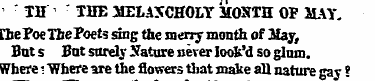
' TH ' THE MELANCHOLY MONTH OF MAY . Che Foe ThePoets sing the merry month of May , Bnt s Bat surely Nature sever Iook'd so glum . Where t Where are the flowers that make all nature gay ? Who Wherearethebees ? Alas ! they ' re all a hum . Where Where are the blossoms that should gem the bower » This This year they make a very sorry show ; For wb For what with boisterous winls and pelting showers The The buds are blown away before they blow . ^ Milton Milton alludes to zephyr gently playing WM WitbyonngAurora , f ! rilofinirthandglee ; If in tl If in the present rear they'd gone a Maying , ' The Theymusthavedonesowithaparapiiti " . Theyl They bid ns forth iu May to hear the note
On Of nightingale resounding through the plain ; Tbis ; Thlsyearweshouldhare neededagreatcoat ' As As a protection ' gainst the rattling rain . The 1 The murm'ring breeze is weR enough , no doubt , Th That gently dallies with fair Phoebe's carls ; Bat i Bat not so pleasant when it blows about Y < four latin rapid and successive whirls . Adie Adieu , duR month!—dark , dismal wet , and drear ' . W Who call thee merry , know not what they say ; Tho Thonltbe the greatest cheat in all theyear ! F , Farewell , most melancholy month of May . ' emu-shank ' s Table-Bool
%Xwu&
% xwU &
Ess Essays M Natural History, &C. Bv C. ...
ESS ESSAYS m NATURAL HISTORY , & c . Bv C . Vfi Wa . teb . tos , Esq . London : Longman and Co ., Pa Paternoster-row . (< ( Continuedfrom , tiic Northern Star o / 3 % Zlst . ) W We continue oar extracts frem Mr . WuERrox's ente entertaining book : — THE SOIXEAWS S ? ABSOW , OB TBBCSB . If Itehistoryisbutlittleknowntotheworldatlai-ge . and its i its identity is exposed to be called in question on account of t of the name which it erroneously bears . The bird to wis which I aRude is the passer soKtarww ; in English , the solitar taiy sparrow ; and in Italian , jM . ' ^ em « i ( " 6 wiit . * * Th The first time I ever saw this lonely plaintive songster wa wasingotngtohearioasshithemagniScentchnrchofthe
Je Jesuits at Rome . The dawn was just appearing , and the bh bird passed over my head in its transit from the roof of th < the Palace Odeschalchi , to the belfry of the church ofthe Tt Twelve Apostles , singingasitflew . I thought it had been th the Italian blackbird , with notes somewhat different from th those / Jfour own ; its song was partly that of the blackbird , ar and partly that ofthe storm-cock , but not so loud as the la last , nor so varied as the first . I found out my mistake is in due time ; and , on seeing that the bird was the true si solitary thrash , I paid particular attention to its habits . I It is indeed a solitary bird , forit never associates with any 0 other , and only with its own mate iu breeding time ; and e even then it is often seen quite aloue upon the house-top , i where it warbles in sweet and plaintive strains , and con-1 tinuesitssougasitmovesineasyfligbtfrMikTOoftoroof . The traveUer who is fond of ornithology may often see this bird on the remains ofthe Temple of Peace , and
occasionally in the Villa Borghese , but much more frequently on the stupendous rains of the Baths of Caracalla , where it breeds in holes of the waUs , and always on the Colosseum , where it likewise makes its nest ; and , in fine , at one time or other of the . day , oa the tops of most of the churches , monasteries , and convents within and without the walls of the eternal city . ' It lays five eggs of a very pale blue . They much resemble those of our starling . The bird itself is blue , with black wings and tail ; aud the blue of the body becomes lighter when placed in different attitudes . "Whilst I lodged in the Palazzo di Gregorio , this solitary songster haditswe ^ t iw the roof of the celebrated Propaganda , across the street " dei due Jlacelli , " and only a few yards from my window . I longed to get at it ; but knowing that the Romans would not understand my scaling the walls of the Propaganda , iu order to ^ r . ipagate the history of the solitary thrush , aud seeing at the came time that the hole at which the bird entered was
very difficult ox access , 1 deemed it most prudent to keep dear of the Propaganda , and to try to procure the uest from some other quarter . The many promises which Roman sportsmen had given aie , of Hie nest and eggs of the Military thrash , baring entirely failed , and I myself not bring able to go in quest of them , oa account of an attack of dysentery , which bore heavy on me , 1 despaired of obtaining the object of my -wishes ; aud I should have left Italy -sithotit other nest or eggs , had not the llcv . Mr . C < WM , vise-j » es 5 dent of the Scotch college in Rome , •^ sorted himself as bebad already often done , in ihecause of natural history . This learned and worthy gentleman , sent expressly for a nest to the vineyard of his college . It was found in the roof of the house , and had four eggs in it . The lad who took it bad succeeded in capturing the female bird . Having examined the poor captive as
siinntely as though I had been a custom-house officer , I Jun-ed it loose into the world again ; and , as it flew a way 1 hoped it would have better luck for the time to come . 1 ¦ sent the nest and eggs to England , by a different route -i ' rom that which . 1 raysfiii pw « ue < S . Had 1 taken them with me , they would have gone to the bottom of the Mediterranean Sea ; for in the wight of the ICth of June , 1 S 4 L , my sisters-in-law , Miss Sdmonstone and Miss Helen Bdmondstone , my little boy , my servants , and myselfj vrere wrecked off the Isle of iZiba . We bad only fifteen minutes t-y save our lives , before the vessel foundered , and we lost everything except the clothes on oar backs . Ihe solitary thrush is scan in all the countries of the East , up to Syria and Ssypt , and probably much farther oa . This bird is solitary to the fullest extent of the word .
We now return with Mr . W-ATEmos to England , and give the following singular account of THS POWERS 0 ? VrGETATJOK . In those good daysof old , when there were r . o cornfactors in England " to counteract that part of oar Redeemer ' s prayer , " Give ns this day our daily bread , 'by hoarding wp -vast stoves of grain , « ntil mouldincss and vermin have rendered it unfit for the use of man , there 5 tood at Walton HaU a-water-mill , tor the interest of the proprietor and the good of the country round . Time , the Teat annihilator of all human inventions , saving taxation and the national debt , laid this fabric low in ruins some
asty years ago ; aid nothing now remains to shovrthe s-aee -wtwre it once stood except a masswemillstoiie , which measures foil seventeen feet in circumference . The ground where the mill stood having been converted into aieadorv , this stone lay there unnoticed and unknown save by the passing hay-maker ) from the period of the mfll ' s dissoluti'in to the autumn of the year 1913 , when one of onr nat-eatitig wild animals , probably by way of a winter store , deposited a few imts tmuer its protecting cover . In the course of the following summer , a single ant having escaped the teath of the destroyer , sent up its verdant shoot through the bole in the centre of the prosmribent millstone .
One day I pointed out ibis rising tree to a gentleman who was standing by ; and I said , "If this young plant scape destruction , some time or other it wiU support the mUlstone , and raise it from the ground . " H « seemed to Scubt this . in order , lowever , that the plant might have a fair Hiznce of success , ! directed that it should be defended from accident and harm by means of s wooden paling . Year after year itincreased in size and beauty ; and when its expansion had entirely filled the hole in the centre of * i > f > nuHstc-ne , it gradually began to raise up the millstone itself from the seat of its long repose . This huge mass of Mone is now eight inches above the ground , and is entirely sapported by the stem of ihe nnt tree , which has risen to the height of twenty-five feet , and bears excellent fruit .
Strangers often inspect this original curiosity . « vhen I meet a visitor whose mild physiognomy informs me that Ms soul is proof against the stormy winds of politics , which now-a-days set aR the world in a ferment , I venture a small attempt at pleasantry , and say that I never pass this tree and millstone without thinking of poor old Mr . Bull , with a weight of eight hundred millions of pounds round bis galled aeck ;—frnraal source oi . speculation to a MaebiaveL bat of sorrow to a Washington .
CHANGES K » THE HABITS Or AS 1 HALS . M * tom-cat , apparently an excellent tnouser , will sometimes prefer dry biscuit to a mattoa chop . Sterne's ass seem ed to relisbmaearoon . Mdallassesrelisbinacarooii , we might doubt the fitness of the -Spanish proverb , "La miel no es para la bora del asno f Hcncy is not made for the mouth ofthe ass . Parrots in cages will puU off their own feathers , and eat them by the dozen . Blackbirds , < hh 9 Bgh on very short allowance , caused by the frosty earner , would not touch their favourite ivy berries , shidiwere thrown down in abundance for them in the cardan of my friend , Mr . London , of Bayswater . I knew a healthy old owl who took her confinement so much to ieart that she refused aBldndof food , and died at last for ^ attofit And , -svhen I was in the Mediterranean Sea , I awabrateiatbesbape ofman swallow pieces of raw fowl I which he had torn asunder , feathers and aR , ) with as fflaefc avidit * as Sr Robert Peel devours our incomes .
Mr . Wvteeton defends the account he formerly gave of the cayman , * which it appears lias been euesfioned bymorerecent writers , orratber a certain writer in Lardmr ' s Cahinct Cyclopedia . Mr . Water'O-v considers the carman tobe a lizard of an extra ordinary size . Crocodile is the eastern name , ana ^ jnW , or alligator , the -western name for this monstrous hard . De refutes the old fable of crocodiles bedding tearaovertheirYicthns , and devourin g their 5 jm young ; and relates some striking instances of : ae lerociiy of these monsters . Here is one : —
IHE CATMAS . In the year J & 3 SI carried tord CoHingWood ' s despatches ;* ** Oronogne to the city of Angostura , where the ipatS * governor , Bon FethxdeYndarte , resided . Icor T * sfoi « lea with him for some time afterwards . He was a ^ dier . of vast information in the natural history of the Jountry , anj had been a great explorer in his time . He awed m 3 a j , ^ ^ p 0 f Spanish Guiana , having made ; ' from his own personal snrrey of those regions iu early ^ e- On the breaking out of the revolutionary war , ^ hich , according to Canning ' s rambling specnlation , was to ^ jjjg atnonsand rqnjblies , tbis true Spaniard "'ugatfw King Ferdinand Til . Bnt fortune having de-**** against bin , he left the Oronoque , and retired to " - <* i = Jand of Santa Cruz ; where death closed his mortal faieer .
• * he Spaniards , who have more pleasure than pnrifan-^» m their composition , think it no harm , after they g re perfonntd the sacred duties of the day , to enjoy a j *? « n « aj erening , in gay attire , on the Alameda or •^ fc & c walk , where titers fegeaarally a band of music I
Ess Essays M Natural History, &C. Bv C. ...
had resorted to the walk attached to Augustm-a , and was in company with Governor Ynciarte , when he stopped on reaching a certain place , aud begged my attention to what he was going to relate . " Do ,, Carlos , " said he to me , mark the opening which leads to the Oronoque . " I was on this very spot , a great number ofthe inhabitants being present , when there suddenly came out of the river an enormous cayman . It seized a man close by me , and carried him off to the water , where it sank with him to appear no more . The attack was so sudden , and the animal so tremendous , that none of us had either time or courage to go the unfortunate man's rescue . "
J I" The Fomer Account Of The Cayman Her...
j I " fomer account of the cayman here alluded to , which appeared originally in the Wander , wgs , there is given the best crocodile story we ever read-so geod , that although the work in which it appeared has been published some years , we think it will interest our readers to transfer it to our columns . The story relates the capture of a cayman in the River Esscquibo in Guiana . About half-past five in the morning , the Indian stole oft silently to take a look at the bait . On arriving at the place he set op a tremendous shout . We all jumped out of oar hammocks , and ran to him . The Indians got there before me , for they had no chrthes to put on , and 1 lost two minutes in looking for my trousers and in slip ping into them .
Wefownd a cayman , tenfeet andahalf long , fast to the end of the . rope . Xotbing now remained to do , but to get him out of the water without injuring his scales , "hoc opus , hie labor . " We mustered strong : there were three Indians from the creek , there was my own Indian \ an , Daddy Quashi , the negro from Mrs . Peterson ' s , James , Mr . R . Edmonstone ' s man , whom I was instructing to preserve birds , and , lastly , myself . 1 informed the Indians that it was my intention to draw him quietly out of the water , and then secure him . They looked and stared at each other , and said I might do it myself , but they would have no band in it ; the cayman would worry some of ns . On saying this " conscdere duces , " they squatted on their hams with the most perfect indifference .
The Indians of these wilds hare never been subject to the least restraint ; and 1 knew enough of them to be aware , that if I tried to force them against their will , they would take off ; and leave me and my presents unheeded , and never return . Daddy Quashi was for applying to onr guns , as usual , considering them onr best and safest friends . I immediately offered to knock Mm down for bis cowardice , and he shrunk back , begging that I would be cautious , and not get myself worried ; and apologising for his own want of resolution . My Indian was now in conversation with the others , and they asked me if I would allow them to shoot a dozen arrows into him , and thus disable him . This would have ruined all . I had come above three huadred miles on purpose to get a cayman uninjured , and not to carry back a mutilated specimen . I rejected their proposition with firmness , and darted a disdainful eye upon the Indians .
Daddy Quashi was again beginning to remonstrate , and I chased him on the sand-bank for a quarter of a mile . He told me afterwards he thought he should have dropped down dead with fright , for he was firmly persuaded , if I had caught him , I should have bundled him into the cayman ' s jaws . Here then we stood , in silence like a calm before a thunder-storm . " Hoc res summit loco . Scinditur in contraria vulgus . " They wanted to kill him , and I wanted to take him alive . I now walked up and down the sand , revolving a dozen projects in my head . The canoe was at a considerable
distance , and I ordered the people to bring it round to the place where we were . The mast was eight feet long , and not much thicker than my wrist . I took it out of the canoe , and wrapped the sail round the end of it Now it appeared clear to me , that if I went down upon one knee , and held the mast in the same position as the soldier holds his bayonet when rushing to the charge , I could force it down the cayman ' s throat , should he come openmouthed at me . When this was told to the Indians , they brightened up , and said they would help me to pull him out ofthe river .
"Brave suuad ! " said I to myself , "' Audax omnia perpeti , ' now that you have got me betwixt yourselves and danger . " I then mustered all hands for the Inst time before the battle . We were , four South American savages , two negroes from Africa , a Creole from Trinidad , aud myself a white man from Yorkshire . In fact , a little tower of Babel group , in dress , no dress , address , and language . Daddy Quashi hung in the rear : I Showed him a large Spanish knife , which I always carried in the waistband of my trousers-. it spoke volumes to him , and he shrugged aphis shoulders in absolute despair . The sun was just peeping over the high forests on the eastern hills , as if coming to look on , and bid us act with becoming fortitude . I placed aR the people at the end of the rope , and ordered them to pull till the cayman appeared on the surface ofthe water ; and then , should he plunge , to slacken the rope and let hint go again into the deep .
I now took the mast of the canoe in my hand ( the sail being tied round the end of the mast ) and sunk down upon one knee , about four yards from the water ' s edge , determining to thrust it down his throat , in case he gave me an opportunity . I certainly felt somewhat uncomfortable in tbis situation , and I thought of Cerberus on the other side of tbe Styx ferry . The people pulled the cayman to tbe surface ; he plunged furiously as soon as he arrived in these upper regions , and immediately went below again on their slackening the rope . I saw enough not to fall in love at first sight I now told them we would run aU risks , and have him on land immediately . They pulled again , and out he came— " monstrum borrendum , informe . " This was an interesting moment . Ikeptinj position firmly , with my eye fixed steadfast on him .
By the time the cayman was within two yards of me , I saw he was in a state of fear and perturbation ; I instantly dropped the mas ^ sprung up , and jumped on his back , turning half round as I vaulted , so that I gained my seat with my face in a right position . I immediately seized his fore-legs , and , by main force , twisted them on his back ; thus they served me for a bridle . lie now seemed to have recovered from his suiprise , and probably fancying himself in hostile company , he begun to plunge furiously , and lashed the sand with his long and powerful tail . I was out of reach of the strokes of it , hy being near his head . He continued to plunge and strike , and made my seat very uncomfortable . It must have been a fine sight for an unoccupied spectator .
The people roared out in triumph , and were so vociferous , that it was some time before they heard me tell than to pull me and my beast of burden farther in laqd . I was apprehensive the rope might break , and then there would have been every chanceof going down to the regions under water with the cayman . That would have been more perilous than Arion ' s marine morning
ride" Delphini insidens -vada casrula sulcat Arion . " The people now dragged us about forty yards on the sand : it was the first and last time I was ever on a cayman ' s back . Should it be asked , bow I managed to keep my seat , I would answer—I hunted some years with Lord Darlington's fox hounds . After repeated attempts to regain his liberty , the cayman gave in , and became tranquil through exhaustion , I now managed to tie up his jaws , and firmly secured his fore-feet in the position I had held them . We had now another severe struggle for superiority , but he was soon overcome , and again remained quiet . While some of the people were pressing upon his head and shoulders , I threw myself on his tail , and by keeping it down to the sand , prevented him from kicking up another dust . He was finally conveyed to the canoe , and then to the place where we had suspended our hammocks . There I cut his throat ; and after breakfast was over , commenced the dissection .
George Cruikshank's Table-Book. Juke. Th...
GEORGE CRUIKSHANK'S TABLE-BOOK . Juke . This is a very good number of the Tahle-Book . The illustrations are , as usual , excellent , and the literary matter this month is more entertaining than in some of the preceding numbers . "A Legend of the Rhine" promises to he agood story ; " Florence Preserved" is a capital quiz , which will be well understood bythedonsof "highlife ; " "TheStageLover " is one of a series of amusing papers on stage charac ters , by the Editor ; "The Melancholy Month of Jfciy" will be found in our Poefs Corner ; " A Fabulous Character " describes the vulgar notion of what is an editor—his imagined happy life and all-potent rule ; his connexions and influence—social , political , literary , scientific , theatrical , & c . After describing the editor as he is supposed to be by the imaginative public , the writer next describes him as he really is .
as EorroE , as he figures in real life , is quite a different creature to what he figures in the public ' s Arabian imagination . He is , reader , like yourself merely a man ; and not , as you have gathered from fictions and reports , a Grand Junction of Rothschild and D'Orsay , with a branch of Dr . Johnson and Joseph Ady . On . the contrary , an Editor dresses plainly , keeps no stud beyond the owe or two he wears in his shirt , pays the income-tax with infinite grumbling when his salary allows him , but grumbles infinitely more when it does not ; is as fond of Champagne as any lady of fashion , but does not drink itas often , as it costs eight shillings a bottle ; sleeps on a mattrass stuffed with more straw and thorns than roses - rarely violates the edicts of FatherMathew , and
has no more victims than any one else who has a tailor . ? # # The thousand and one charms , too , that colour and gild his existence , consist , in cold truth , in his devouring—no matter what his tasteorappeHteniarhca quantity of raw manuscripts ; in answering questions about the colour of Prince Albert ' s hair ; in being insulted bv every other correspondent ; in making an enemy for life of every contributor whose article he rejects ; in being presented with " the lie" by any member ofthe aristocracy for saying he has acold when he has not ; in being eontinuaUy solicited to do miracles with his paper which Parliament and the seven wise men could not effect ; in being every other hour pestered for copy!—copy 1-ncopy ! and in stopping up to aR hours of the morning in a cold printing-ofiice correcting proofs . ¦
Reader , unless you have had an university education , like hard work , have a soul for scissors and paste , are fond of reading the debates , are addicted to late hours , and are partial to fllegible MS ., every-day abuse , and rheumatisms , remain as you are , and abjure printers devils as yon would impatient creditors . The romance about an editor maybe very flattering and agreeable , 'but > believe us , so it ought to be , to compensate in any measure for the prosy « a « ty .
Punch-Pabtxlvii. There Are Some Excellen...
PUNCH-PabtXLVII . There are some excellent illustrations in this uiontlis- part of Punch , particularly " Papa Cohden taking Master Robert a Free-trade Walk ;" Punch at the next Anti-Corn-Law League Bazaar ; " " The Greedy Boy who Cried for the -Moon ;" " Joey Hume ( the Call-bov of the House of Common ); " and "Punch at ' the Royal Academy . " ihree of the admirable Caudle Curtain lectures arc contained in this part , besides excellent articles on various subjects , including the one on " Sunday Pleasuring , " given in last week ' s Star . Of course there is also an abundant supply of jokes and fun of all sorts , in poetry , prose , and illustration . We recommend Punch to all who love wit and wisdom .
The Christian Mythology Unveiled. By Log...
THE CHRISTIAN MYTHOLOGY UNVEILED . By Logax MircnEix . London : B . J ) . Cousins , 18 , Duke-street , Lincoln ' s-inn-fields .
[ becond Notice . ] We return to this work for the purpose of stating a singular fact in connection with its publication—a fact which , in justice to the publisher as well as to the cause of free inquiry , should be made generally known . The author of "The Christain Mythology Unveiled" was a Scotchman by birth , and , according to present usages , a " gentleman , " because possessed of what is called an "independency . " He would , however , in a far different state of society—a state which , we trust , the future will see realised—have made Mod his claim to the title of " gentleman , " from the fact that he devoted his life to services of good for the benefit of his fellow creaturesand
em-, ployed his talents and money for the propagation of what he conceived to be the truth , and in aid of those who suffered for their advocacy of justice and freedom . The "Christain Mythology Unveiled " was first " published privately for the author" in the year 1840 , by the publisher of the present edition . This private edition was printed at the expense of the author for circulation amongst his friends , and having disposed of the copies in this way , Mr . Mnciiell applied to Mr . Cousins to print a second private edition . Circumstances , however , intervened to prevent Mr . Coesrss doing this , andsnbsequently a second private edition was printed by another party ; but we request the reader to note that the first private edition had the name of the publisher to it : the
second had not . The first bore the imprint" Printed for the Author by Benjamin D . Cousins , 18 , Duke-street , Lincoln ' s-inn-Fields ; the second was simply , " London ; Printed for the Author , " the without any publisher ' s name . Soon after second private edition was printed the author died , and Ah " . Cousins hearing of his death , determined to give to the public what had been previously confined to the knowledge of a few . He accordingly set about publishing the edition wluch we formerly noticed at some length , printing on the title-page , besides the author ' s name , his own as publisher . He commenced the publication of the work in threepenny numbers , so as to p lace it within the reach of all classes , and , if possible , ensure for it a large
circulation . Ihe first number was published , and the second number was in the press , when an article appeared in the Weekly Dispauh , announcing the death of Mr . Mitchell , and stating that he had bequeathed in his will the sum of Jive hundred pounds to any publisher who should have the moral courage to print and publish his " Christian Mythology Unveiled , " with the author ' s name , and the publisher ' s name , on the title-page . Mr . Cousins , with no thought , with no knowledge , of this legacy , had already commenced the publica tion ofthe work with his name in the imprint . The work was completed—no other publisher attempting to do what . Mr . Cousins had done : and then he advanced his claim for the legacy . Two gentlemen , hose in
w names we are possession of , were appointed execators , with whom was associated a third person of whom we shall spcakpvesently . The will , wttfovtw natclyfor the ends of justice , had been bungled in the making . One of the executors wasa witness to the will , with a legacy of £ 50 . To have acted as executor he most have thrown up his own legacyj' the law not allowing a witness to a will to be an interested party . He therefore declined to act . The other executors also declined acting . The carrying out of the provi sions of the will wag therefore left entirely to a Mrs , Nei . so . y , niece ofthe deceased , and by him appointed executrix in conjunction with the above gentlemen . This lady , wife of a Mr . Kelson , land-balifftothc Messrs . Broadwood , piano-forte makers , on the estate of Broadwoods , near Crawley , in the county of Sussex , is , as well as her husband , Scotch , inheriting all that religious bigotry ,
associated with a love ot the " siller , " so characteristic of a large number of the canny bodies ofthe ''land o' cakes . " To this lady Mr . Cousins made application for his five hundred pounds , and was met witha point blank refusal . "To give up the money , " he was told , "for the purpose contemplated in the will , would be to devote it to the service of the devil I" All the other provisions of the will would be complied with , but religious scruples prevented compliance with this one . Mr . Cousins attempted to argue his right , but he might as profitably nave " whistled jigs to milestones . " Self-interest and religious duty were too closely combined to permit the lady coming to any other decision than that of herself keeping the five hundred pounds—of course , all for the glory of God . ' Mrs . Nelson ' s conviction is , that " godliness is great gain ; " and the eloquence of a Demosthenes , combined with the reasoning of a Locke , would fail to change her convictions .
Mr . Cousins , of course , has what ia facetiously called his " remedy at law "—a remedy which usually turns out worse than the disease . Whether Mr . Cousins will prosecute his right by legal means we cannot say ; we believe , however , that he has no idea of abandoning his claim . Another matter we may mention . Along with the deceased ' s plate , furniture , & e ., there came into the possession of Mr . Nelson about 150 copies of the second private edition of the " Mythology , " which the deceased had directed should be given to the well-known publisher , Mr . EmxoniM W ' ilson , for
distribution . Whether Mr . Wilson ever received the beoks , we know not ; but the Nelsons informed Mr . Cousins that . it was their intention to burn them—an intention which there is but little doubt they have carried into effect . Such stupid and brutal bigotry in the present day is really astonishing . The facts wc have stated can add nothing to the merits of " The Christian Mythology Unveiled , " but when a liberal and enterprising man is plundered under the guise of " piety , " and robbed in the name of religion , as Mr . Cousins has been , it is only right that the facts should be made known .
The Book Of The Poor Man's Church. Londo...
THE BOOK OF THE POOR MAN'S CHURCH . London : Cleave , Shoe-Jane . When , in addition to one State Church , the people of this country are about to be taxed for the support ef another—for the endowment of Maynoothis , without doubt , the first step toward the endowment ofthe Irish Catholic Church-at such a time the extensive circulation of this little work is very desirable . From this book the people may learn of what they are defrauded for the support ofthe English establishment , and , we doubt not , that , so learning , they would at once solve the Maynooth question by deciding that if one State Church is a great evil , another such Church will but doable that evil . The Booh of the Poor Man ' s Church treats of the
following subjects : — Ihe unchristian character of a Church Establishment ; " " The persecuting spirit of the Church ; " "The mercenary character of the Church ; tithe encroachments ; how the rich parsons have defrauded the poorer ones ; the sale of livings ; robbery of thenoor by the clergy ; " "The indifference ofthe Clergy to their Duties ; " "The wealth of the Clergy and the voracity ofthe Bishops ;" " The Church condemned by herself . " The amount of information given on all these matters is astonish ing , considering the compass into which , it is crammed . As a work of reference it will be found invaluable . We had marked a lengthy extract , bnt can only find room for the Mowing : — The state clergy consist of : —
First , —The Puseyite clergy , who hold Roman Catholic doctrines with Protestant incomes . These are endeavouring to bring back into the church outward forms and observances which impress the senses ; such as crosses , images , pictures , flowers , candles , and bowings to the communion table . They also adopt fastings and observe saints'days—they claim apostolic descent ; and ascribe to the sacrament , and to the functions of their office , a vir tue very flattering to their own conceit , but entirely at variance with the principles of tlie Reformation and with that worship which is " in spirit and in truth . " Secondly , — The fox-hunting , ball-going , and race-frequenting clergy , who hold no doctrines at all , but who receive the incomes of the church . The respectable inhabitants of Canterbury have recently endeavoured to put down the races , because of the grievous evils which attend them , but their efforts have been frustrated by the clergy .
The bishops are generall y placed in f heir elevated stations hy the patronage of the nobility and the government ; and when so placed they look to their patrons for further promotion . A bishop , if he pleases the government , is removed to a more lucrative bishopric ; so that sometimes the same diocese has two or three bishops within a single year , none of whom seriously attend to its welfare , but tnsrely wait for a higher step , to obtain which they arenst unfrcquentiy led to act as dishonourable a part in the House of Lords as the mere placeman or pensioner , docs in the House of Commons .
lYhether we look at the State Church , then , in Hsongm —in its government—in its principles—or in its tendency ; whether we contemplate its priesthood—its ceremoniesits revenues—or its character , we defy any man to find a single feature of resemblance to it , in a New Tes tam ent Church . How striking is the contrast ! Light and darkness cannot be more dissimilar than are a scriptural congregation , termedachurch , and an ecclesiastical establish mentj denominated in like manner . And if to all thatwe have said , be added , the uniform hostility of the priesthood to the progress of public liberty and the diffusion of general knowledge , we shall have some tolerably accurate wotion o ? the evils of a church establishment . This excellent sixpenny-worth should be in the hands of every one ,
The Book Of The Poor Man's Church. Londo...
Death op Willuu Laimaw , Esq . —We have to record the death of Mr . Wm . Laidlaw , author of the exquisitel y simple and pathetic Scottish ballad Lucys FHttui ' , " ana various contributions to natural history and general literature , besides being peculiarly distinguished for his long and confidential interaoursc with Sir Walter Scott at Abbotsford . Air . Laidlaw died or . the 13 th MaV , at Contin , in the county , of Ross . His health , afwnvs delicate , had been in a siiattercd and precarious state for some years past , and a second attack of paralvsis in the course ot last autumn left little hope of permanent recovery . lie was still able , however , to continue his interest in passing events , and he retained his habitual benevolence and serenity to the last , dyin " in the midst of his family and relatives without a
pang or struggle . A mora amiable or affectionate man never passed to a hi gher state of existence . Some of the most eminent and gifted of the visitors at Abbotsford ( as Miss Edgeworth , Washington Irving , and Mr . Moore ) have recorded their impressions of Mr . Laidlaw ' s modest worth , aud there is scarcely a reader of "Lockhart ' s Life of Scott" in any part of the civilised world where genius or virtue is revered , who will hear without a sigh ofthe lossot that early and attached friend of the Great Minstrel , who was ever by his side for nearly twenty years—whe rambled with him on the banks of the lwce . d vn familiar and unrestrained confidence—who shared in the superintendence of all his rural plans and improvements—who wrote to his dictation some ot the imperishable scenes of his works—and who , at last , '
" when discord on the music fell , And darkness oh the glory , " was one ofthe few who watched over the latest manifestations , and the final eclipse of that greatest of contemporary minds . The deceased was a native of Selkirkshire , born m November , 1780 , at the farm of Blackhouse , situated on the Douglasburn , near Traquaiv . He v » as the eldest son of an extensive store-farmer , in whose happy family Sir Walter Scott is supposed by Mr . Lockhartto have witnessed some of those traits of genuine worth and primitive hospitality with which he has heightened his delineation of the home of Dandle Dinmont . The acquaintance of "the Sheriff" with Mr . Laidlaw soon ripened into atender affection ; and the latter , alter some reverses and disappointments , at length went to reside
permanently on the estate at Abbotsford , which he took entirely under his charge . Morning , noon , and night the poet and his friend might be seen planning out or improving plantations , buildings , and enclosures . Laidlaw knew the value of every acre of land , as Hogg remarked , and of every tree in the woods , with the characters of all the neighbours and retainers . He was the life and animating spirit of that interesting and classical property from 1817 till the death of Scott in 1832 , when the curtain fell on what might be considered a brilliant paseant , or dream of the morning , ending abruptly in blackness and desolation ! Mr . Laidlaw afterwards removed to the north , where his two excellent and affectionate brothers have been long resident as tenants of large pastoral farms ; and he was engaged successively as factor on the estates of Seaforth and Balnagown , both
in Rossshire . His health at length gave way , and he r etired to Contin—the family of Sir Charles Ross , of Balnagown having handsomely acknowledged their sense of his services , by settling upon him an annuity for life . His time was occupied in reading and studying botany , in which , as in most rural matters , he was a great enthusiast ; but he declined all efforts to engage him in writing a domestic life of Scott , or record of his intimacy with hire , for which lie might seem to be peculiarly well qualified . His thoughts and recollections , however , were seldom long absent from that memorable period of his life . He loved to dwell on the warm benevolence , and kindness of his great friend—on his marvellous genius and unconquerable spirit—and one of ihe hist sensations which death tore from the breast of William Laidlaw was the . image of his beloved Abbotsford . — Inverness Courier .
8gmmtttt? Ant* Ftoitmtnvt
8 gmmtttt ? ant * ftoitMtnvt
Field-Garden Operations. For The Week Co...
FIELD-GARDEN OPERATIONS . For the Week commencing Monday , June 10 th , 1844 . [ Extracted from a Diahy of Actual Operations on five small farms on the estates of Mrs . Davies Gilbert , near Eastbourne , in Sussex ; and on several model farms on the estates of the Earl of Dartmouth at Slaithwaitc , in Yorkshire , published by Mr . Novell , ' of Farnley Tyas , near Huddevsneld , in order to guide other possessors of field gardens , by showing them what labours ought to be undertaken on their own lands . The farms selected as models are—First . Two school farms at Willingdon and Eastdean . of
five acres each , conducted by u . Cruttenden and John Hams . Second . Two private farms , of five or six acres : one worked by Jesse Piper , the other by John Durabrell—the former at Eastdean , the latter at Jevington—all of them within a few miles of Eastbourne . Third . An industrial school farm at Slaithwaitc . Fourth . Several private model farms near the sameplace . The consecutive operations in these reports will enable the curious reader to compare the climate and agricultural value of the south with the north of England , The Diakv is aided by '' Notes and Observations " from the pen of Mr . No-well , calculated for the time and season , which we subjoin .
" The joys of these little ones shall be continually in the hoped for success of their labours ; their thoughts shall be turned away from what is evil to that which is good , " Nora . —The school fanns are adtivated by boys , wfo in return for three hours' teaching in the morning give three hours of their labour in the afternoon for the master ' s benefit , which renders the schools seuswroRTisa . We believe that at Famhj Tyas sLvsevenths of ihe produce , of the scluol firm will be assigned to the hoys , and one-seventh to the master , who wilt receive the usual school fees , help the boys to cultivate their land , and teach them , in addition to ' reading , writing , & c , to ' convert their prodwe into bacon , by attending to pig-keeping , which at Christmas may be divided , after paying rent aud lemj , amongst them in proportion to their services , awl bemade thus indirectly to reach their parents in a way tae most gratefid to their feelings . ] 9
SUSSEX . Honvixt—WiUi ngdon School . Boys digging for potatoes after tares . Eastdean School .. hoys digging , sowing white turnips , watering , picking off weeds and stones . Piper . Gathering flints . Dumhrell Digging , spreading ashes , sowing turnips , and mixing dung and mould . Tuesday—Willingdon School . Boys digging for potatoes , and turnips after tares , Eastdean School . Boys hoeing potatoes , gathering weeds for the pigs , turning over a mixen for wheat . Pips * . Boeing earroto . Dnmbrett . Digging up tare ground , hoeing carrots . WEOXESOAr— Willingdon School . Boys digging for turnips and potatoes after tares . Eastdean School . Bovs emptying privy pails , nipping the blossom
from potatoes , and thinning carrots . Piper . Drawing litter to the piggery , and mixing it with mould . DumbreU . Mixing dung and mould . ' fnvnsn . KY—Willingdon School . Boys planting potatoes . Eastdean School . Boys digging between potatoes , hoeing forward turnips , planting and manuring cabbages for winter . Piper . Turning the mixen . DumbreU . Digging up tare ground , manuring and hoeing carrots . Fbidav—Willingdon School , Boys earthing up potatoes . Eastdean School . Boys weeding wheat andoats , hoeing peas , and pouring tank liquid between the drills . Piper . Booing potatoes . DumbreU . Digging up tare ground , and hoeing carrots . Saturday— Willingdon School . Boys emptying the tanks . Eastdean School . Boys cleaning piggeiy and pails , watering carrots , and cleaning up . Piper . Hoeing onions . DumbreU . Mowing clover for hay .
TOBKSHinE , Slaithwaitc School . From ten to twelve boys drilling turnips , sowing broadcast , digging the tare ground , have planted 300 cabbages and watered them , with twelve rows of turnips . C . Varley , manuring ior and sowing turnips , ' mixing peat earth with manure . . C 0 W-FEF . DIX 0 . Willingdon School Cows fed in the stall on tares and clover . DimilrelVs . Two cows stall-fed with clover .
NOTES AND OBSERVATIONS . J Testative Analysis . —t" Nature at all times answers the questions that are put to her—and such questions are experiments . "—iicbi ? . ]—Unless you are instructed by chemical analysis as to the composition of the soil , you cannot apply-manure of any kind whatever to crops with unerring certainty ; neither can you apply on all occasions for information to the expert analyst but may you not cause aplant to assume its functions , and predict its own requirements ? Suppose you wish to take a particular crop from your field . Select an average space of two rods in such field—and introduce the crop you wish to be afterwards grown there . By applying the various manures indicated in known quantities to its different'parts , may \ ou not , by a minute attention to the progress of the crop find out what kind of manure will be acceptable , or the contrary ? The year following , the whole field may be cropped with more if not entire , certainty of success , with the same vegetable .
Rape . —fSeed sown , 1 peck broadcast ; or J peck of rape . and l ^ . peck of rye . J-This is a very valuable plant for soiling . When you have reason to fear that turnips sown after tares , might not attain to proper « ie , 8 ubstitoe ta # . Itinftybe sown'in drills * and hoed ; . hut i for soiling ; - sow-it broadcast from ' June to September . TheearJy / sowri i may becut in November , and again in ths foUwung spring ! The late sown will stand over wih ' terj and be the first green food in spring . " > A little rye " mwc'd ' with it will be an improvement ^ -. Cows , like sheep , greatl y relish this plant , neither does it communicate any ill taste to milk . Cut up the rejected woody stems and mix them with turnip ' or other wash . Acrbp of turnips may follow both , or winter ' wheat ' may follow those sown in June .
Field-Garden Operations. For The Week Co...
To TEST THE SinEXOTH or Guaso . —i" Guano , though no saint , works miracles . "—Pentvhui Seizing . }—Procure a few ounces of fresh burnt Jimc-stouc , reduce it to a fine powder , which introduce into a bottle perfectly dry in the inside , and keep it . well corked for future use , renewing it frequently . Take a tea spoonful of each sample of guano you wish to test , which place in separate cups , and add a spoonful of water , then measure , with a dry spoon , the same quantity of quick lime into each cup , m a moment , stirring quickly , and the sample that gives the strongest smell of hartshorn is the best guano ..
Hoe CoxTixuAiMr . —1 our crops being now generally above the ground , your principal attention ought to be directed to kcepinsr down the weeds by perpetual hoeing , and your turnips in particular must not be neglected . The triangular hoc , made at Birmingham , is undoubtedly best adapted for . turnip hoeing ; ior once cleaning of its three sides cleans three hoes , and the corners will nicely pick out the plants . Do not leave them too thick , and thus lose both in the quantity and quality of the crop . Where the rows are 27 inches apart , from 12 to 14 inches is near enough . Persons short in the back make the best turnip hoers , therefore careful boys may be employed . Very nice work it is too foe young girls ; may prevent many a consumption , and add to their bloom . After the hoc has performed its part , let the most promising plant be seized with ono hand and the inferior ones removed with the other .
T ] uyspr , \ xmG Swedes . —Fill up all intervals in the ridges of your turnips , or failing places on broadcast lands , with Swede plants . Let your planting stick never rest , keep its point to the root , and insert the plant so firmly that it cannot be nipped up by a slight pull ; and remember that the almost momentary act of placing a single plant may be the means , without further care , on your part , of providing C or 8 or lOfts . of solid food for your cow during dreary winter . On . ELBcmcm Awhbd to the Growth of Punts . —At the last meeting ofthe Royal Institution , the Rev . E . Sidney read a communication " On the Electricity of Plants in the several Stages of their Development . " At the commencement and at each
division of this communication , Mr . Sidney dwelt on his desire to be considered , not as the promulgator of any theory on theinfluence of electricity on vegetable growth , but as the cautious observer of important and instructive facts . The following six propositions were maintained : —First , electricity appears to exercise an influence on growing plants . After noticing the experiments of Maimbray , Nollett , Bertholon , Davy , and others , Mr . Sidney mentioned that ha had himself accelerated the growth of a hyacinth in the common glass jar by giving it sparks , on alternate days , from the machine . Secondly , fluids contained in vegetable tissues possess a high conducting energy , as compared with the ordinary substances found on the earth ' s surface . In
confirmation of this , several experiments were shown to prove the conducting energy of vegetable points . Tho fact was also stated that if was impossible to give an electric shock to more than one at each extremity of a circle of poisons standing on a grass plat . This the operator easily did when they transferred themselves to a gravel-walk . In the former instance , the current went across the grass , instead of being carried from ouehuman body to another . A jar , of forty-six square inches of coated surface , was discharged by a blade of grass in little more than four minutes of time , whereas it required three times that period to produce the same effect by means of a metallic needle . Mr . Sidney said , however , that probably the blade of grass had many points . Mr . Sidney a / so showed a drawing of Mr . Weekes ' s
electroscope with vegetable points , which Mr . Wcekes prefers to any artificial ones he has yet tried in the open air during the passage of a cloud . Thirdly , there are indications of adaptation to electrical influences in the differences of form of parts of plants in the different stages of their development . Thus the moistened germ of a vegetating seed becomes a good conductor . The ascending and descending portions are , in the majority of instances , pointed . Plants designed for a rapid growth have generally a strong pubescence . Those destined to meet the variations ofthe seasons have often thorns or prickles . As surincebecomes needed for other purposes , the pointed Is changed to the expansive form of the vegetable organ . As the period of'f ' ruitingapproaches , it seems
desirable that electricity should be carried off . Hence the hairs , & c , fall off or dry away . The apparent exception is that ofpappi , which have a special office tor conveyance of seeds . Gardeners put metallic hoops over fruiting melons which tends to take off electricity and shade them . Fourthly , Mr . Sidney inquired , whether there are not natural phenomena tending to confirm these views ? Vines and hops are said to grow rapidly during and after a thunderstorm , and peas to pod after a tempest . As to hops , these effects may be ascribed to the destruction of aphides , dsc , by the lightning ; but as these animals arc tenacious of life , the storm which destroys the parasitic insect , would probably also kill the plant which fed it . Again , it is observed , that there are no plants
wherever simooms , which appear to result from a highly electrical state ofthe atmosphere , occur . Mr . Brydone ' s observations of tte presence of electricity in the atmosphere of Mount Etna , in places where vegetation was absent , audits deficiency wherever vegetation luxuriated , also indicated theinfluence of plants in distributing atmospheric electricity . This was illustrated by an experiment with a cone of chalk , with a piece of moss on one part . The part without the moss brought near tho machine , only slightly affected the electrometer . The moss carried off the electricity entirely . Fifthly , Mr , Sidney suggested the inquiry , whether the forms and geographical distribution of certain species of plants did not indicate design with reference to their electrical pronertics
and uses . The prevalence of the fir tribes in high latitudes was noted . These trees are characterised by their needle-shaped foliage , and it was argued that the conducting power , with which this form invested them , might modify dryness and cold , and aid in the precipitation of snow . Mr . Sidney concluded by suggesting modes of applying electricity topractical agriculture and horticulture . First , with regard to the free electricity in the atmosphere . Having mentioned some experiments of Mr . Foster , of Finbrassie , on growing crops , Mr . Sidney described modifications of this arrangement made by Professor E . Solly , in his experiments at the Horticultural Garden , and by himself . The latter consist of wires suspended over the growing crop from other wires
which are . kept , parallel to the horizon by being fastened to insulatedrods . . Secondly , electricity artificially generated by the voltaic pile . Mr . Sidney has found that potatoes , mustard and cress , cinerarias , fuchsias , and other plants ; have their development , and , in some instances , then- productiveness , increased hy being madejo grow between a copper and a zinc plate connected by 3 conducting wire ; while , on the other hand , geraniums and balsams are destroyed , by the same ^ influence . Mr . Sidney at present believes that the application of electricity to vegetable growth may bemade available in horticulture . The question as to agriculture may be decided when more experiments are tried , and the philosophy of the experiments fully determined .
Sibaw as Manure . —I have heard farmers complain they had so much straw , they could scarcely make it into manure . In such a case I would recommend their adopting my plan of cutting it into chaff : with a two-horse power cutter ; by Wilks , of Sheffield , we can cut up about thirty-two trusses per hour . As my bailiff says , '' You may almost carry away a truss in your shooting-jacket pocket when it is cut up . " I find in practice , that it absorbs the urine as it falls , like a sponge , the liquid entering at both ends ofthe short cut lengths ,. decomposition takes place rapidly , the manure is more equally moist , and very soon made ; one cart load so created is equal to two of long
straw , so we save half our cartage—an important matter . It is quite clear that long uncut litter must remain dry until trodden down and broken longitudinally to admit of moisture , the best part of which is often washed away before the straw is in a state to absorb it . If you desire to keep your horses and stock clean , it is necessary to spread a little long straw on the chaff bed , the latter holding so much moisture . Our solid and liquid manure all goes into one tank , and is generally carried on the land in five or six weeks , occasionally piimpingsoinc ofthe liquid from the well on the top of the heap . —Mechi's Letters on . k-rici'iturc .
A Fact about Potatoes . —An intelligent farmer tells me he never loses his potatoes in dry or wet seasons since he has treated the sets or cuttings in the following manner : —As the eves or sets are cut , they are dusted with / ra & slaked lime ( slaked immediately befbre using ) until they arc coated with it all over . Ihe lime forms a paste over them , which prevents the moisture running or exuding , and thus removes the danger of shrivelling or rotting in a dry season like the last , when the results were forcibly illustrated . A portion of the field was planted with sets in the usual way ( without lime ) on an abundant dressing of farm-yard manure . These shrivelled , were slow in coming up , and were but a moderate crop ; on the rest of the field the limed sets were do
posited without manure—came up quickly and regularly—were an uniformly fine crop of large potatoes , superior in every respect to the dunged portion ; the limed portion received a dressing of two cwt . i per acre of Peruvian guano , applied at two intervals after the plant appeared . This'is tlie third season of so treating the potatoe sets . I have no doubt the same result is , partially produced hy the practice , of Mr . Dimmcry , a successful potatoe grower ( as quoted in Mr . Morton ' s book oh soils ) . ' Mr . D . spreads sbqt in the drills on which the sets arc deposited ^ In this case I imagine the soot adheres to tho' moist surface of the set and prevents the escape . of sap . Both soot and lime must act us a manure , perhaps by supplying carbon . The plan is deserving of trial , and seems reasonably advantageous . — Ibid .
¦ Extraordinary Pin * o ' BMAscE . —A short time since a performance' rather extraordinary in farm labour took place in the south of Devon . Mr . Dcwdney bet Mr . H . K . Skinner , of Whatcombe , North Huish , near Totnes , £ 1 , that he could not sow aevenhags of barley in one hour ; but withdrew the bet . " Mr . Skinner however was in the field , and did the work
Field-Garden Operations. For The Week Co...
in three minutes less than the time stipulated fin' *! Mr . II . K . Skinner has also sown cujlit hags and three quarters in one hour and thirteen i » ii . iites . over five acres of land on Great Aish Farm , the property of Henry Kingwell , Ksq ., in the parish ot -oiirli Brent 1—Exeter Flying Post .
Clt M0
Clt M 0
Advice Gratis . — Mr . Baron Alderson ami Mr . Justice Mnulc arc the most good-natured as well as the wittiest judges on the bench . Tho latter , some short time since , tried a man for bigamy , who pleaded a runaway wife as his excuse . 'Tliejudge told him before taking a second wife fie should have got a divorce from the first , and explained the whole process in a very familiar and single-minded manner . Every shade ofthe process was delineated , but not a word of the costs . It was as satisfactory as a hctiire on colours in the Blind Asylum . Mr . Baron Aiderson , whilst trying tho poor n-rctch Connor , dumped a word of advice to his brother coroner , M . Wakley .
Ihe latter , indignant at not having the murderer before him , adjourned his inquest on the victim sine die . " Tell Mr . Wakley , " says the learned baron , - ' when he next adjourns sine die hepwts an end to Ins authority in the matter , " Orakge I'kei ,. —The ultra Protestant party in Ireland declare Feel has proved himscll everything ; but Orange Peel . A Strange Want . —A country gentleman lias been advertising in tho Times for a " Double Brougham . " Lord Campbell has requested us tostafe , that he has one to dispose of , at any price , which has never been used on railways . Should his lordship succeed we shall debit him . with the price of an
advertisement . Correct Definition . —What is "free trade ?"Holding an Anti-Cora-Law-League Bazaar at Coventgaiden Theatre , and charging double the value for every article . — [ This is the " sliding-scale" upwards 1 ] What is Luxury ?—A candle would have been a luxury to Alfred ; a half-crown cotton gown to his Queen . Carpets , in lieu of rushes , would have been luxuries to Henry VII . ; glass windows in lieu of horn , to his nobles . A lettuce to Henry VIII . ' s Queen ; silk gloves and stockings to Queen Elizabeth ; and so on , " ad infinitum . " Charles Waterton , Esq ., author of several works on natural history , in an account of his family , tells that one of his ancestors , in the time of Henry VI ., " was sent into France by the King , with orders to contract a royal marriage , and was allowed 13 s . a day for his trouble and travelling expenses .
Kissiso wiTiiori Measure . —A Mr . John Joues , writing on the 27 th ult ., to his "dearBetsy , "a pretty Chcshn'C Abigail , subscribed himmlf her '' true lover , John Jones , with 2 , 000 , 000 , 000 , 000 , 000 , 000 , 000 kisses ' . " A Family Scese . — "What are you doing there , Jane ? " " Why , pa , I ' m goingto dye my doll ' s pinafore red . " '' But what havo you got to aye it ? " J'Heer , pa . " " Beer ! who on earth told you that beer would dye red ? " Why , ma said , yesterday , that it was beer that made your nose so red , and I thought . " " Here , Susan , take this cluid . "
Awtheb . — " Pa , doesn't all mean awn / thing f " " Yes , my son , it means the whole . " " Well , then , where the Testament says , ' Swear not at all , ' it means swear not at everybody , doesn ' t it V " John , put my horse in the waggon—I must go to the mill . " "Tuis is the Way the Money Goes . " —In the year 1843 , eight million one thousand four hundred and forty-nine pounds , one shilling , and fourpence , was spent by the people of this kingdom in tobacco ! —a tolerably round sum to " end in smoke . " If the weed had been worked into pigtail , rather more than half an inch thick , it would have formed a line Q 9 , 4 fQ miles long—long enough to go nearly five times round the world !
Peel , the "Solemn Swell . " —in a sentimental drama , played at a minor theatre in London , the chime of a boll caused one of the characters tfl fi-Velaim—'' Iknow that peal—the solemn swell , " < te . This was at once converted by the audience into an allusion to Sir Robert Peel , and produced much laughter and applause .. The Lord Chamberlain has , therefore , ordered that tho line shall be struck out , or so altered as to destroy the possibility of tbe Premier being laughed at as a " solemn swell . " Let both "Jonathan" and "John" Look Out ! —We understand that it is probable that a third
party is about to claim the territory disputed by England and America , termed the Oregon . Many natives of the sister isle say ^ that , from the name , there can be no doubt it originally belonged to the O'Regan's , aud when they get the " Repale" they are determined to obtain it for tlie " gim of the say . '' If it is good for nothing else to them , it may serve for an Irish Botany Bay , and when Dan is proclaimed King he can send his son John there as Governor , with Bishop O ' lliggins and Dillon Browne as his Councillors . When established they will expel the Saxons , Americans , and Indians , in the true spirit of Irish " conciliation . "
" One Trial is Sufficient . "— " Would it were lawful to marry two wives ! " exclaimed an enthusiastic young bachelor * desperately in love with a . couple of country cousins . " Try one to begin with , " was the rejoinder of a surly old Benedict . Important to Bachelors . —In tho comedy off "Time Works Wonders , " Douglas Jen-old says" Women are all alike . When they're maids , they ' res mild as milk . Once make ' em wives , and they ltam their backs against their marriage certificates andrt defy you . " Fact Worth Knowing . —An antidote for arsenidi has been discovered by Dr . Bunsen in the hvdrate & i
peroxide of iron , a simple preparation which ought tt < have a place on the shelves of every druggist in thin kingdom . Theatricals by Daylight . —A theatre is conn structiug at Leghorn , the cupola of which is composes of glass ; by this means representations by daylighjh will be attainable . A Rational Answer . —Diogenes , being asked whaia time a man should dine , replied , "A rich man wheie : he will , and a poor man when he can . " Please the Pigs . — -The curious colloquial phrasas * " please the pigs , " is a corruption of " please the Pyx / x , that is , the vessel containing the Eucharist , whioic was regarded as the divinity by believers in transusu
stantiation . Avarice . —In an old caricature of this detestaital vice , his satanic majesty is represented as convcyiiyii a miser to his realm , who during the journey makafc a proposal to supply tho abode with fuel at ft rcaSOlSO able rate . Wonoerfui , Accuracy!!!—In a weighty tome ic general geography , lately published , the author ( H <| II < Stein ) informs us , that" London lies on the serpentinti river , which discharges itself into the Thame ? . '' ' "Too Ignorant to be Entrustm wrrh b t Franchise . "—The mayor of a certain Welsh counfunf town recently issued the folIowngmandate- ^ "Desifesi you will ordur the widder Jenkins to pere befour iur at Town all tomorroh at A lavin , has I mey egsamnmn hur and pass hur hoam , has she is likeriye to be Vie v true balsam hear . "
To Gentlemen that "Can't Wait . "—A g \ g courted a lady for twenty-eight years , and ta t ! married her . She turned out to be a perfect viravira but died in two years after the wedding . "No * No said the bereaved one , in a self-gratulattng t < g t < "see what 1 have escaped hy a long courtship . " . " Broken-head Provident Society . —A hurabembej poor persons intend to form a Broken-head SociSoci for the purpose of raising a fund to compensate jate ] people whose crowns are cracked by gentlemen nen higher grade . Such an institution seemshecessicessi as . under the present lawi the poor man gets gets
"kicks , " and the Crown the "halfpence . " The Ladies . —A quaint writer says— " Ihavejave ; women so delicate that they are afraid to to for fear of the horses running away ; af ' raiaiVaiti sail , for fear the boat should overset ; and afra afra walk , for fear the dew might fall ; but I never sawr sav > afraid to get married . " Very Considerate . —A friend of the late Th < e Th » i Hood ' s , afflicted with the same mania , said , . . aid ,,, tears standing in his eyes , " Ah , poor fellow ^ low ^ from motives of generosity—wanted to enable dole th i dertaker to urn a lively Hood . " ;
Folly in the Wig . — At the beginning of thef thetecnth century the " wisdom" of ouranmtQpestQp ; evinced in the wearing of enormous wigs , c $ s , cq'i from thirty to forty guineas . Thieves were constconst ; . on the watch to plunder the wearers , hy imtfratatuatct them in the streets . " A most ingenious mode mode Mrs . Stone , in her Chronicles of Fashion ) was , ) was ,, thief to carry on his head a sharp ! x > y in aeon acc basket , who , in passing through a crowd , would would J tcrously seize and conceal the' mostattractiro-iotive-lo j periwig . "
Remorse or Conscience . —A decayed old 4 old m man , who ended his days iu the Gwitflwottgh rough house , boing on his death-bed , and . having sonug soma which hung heavy oh his mind , desiiyd tlie . vi tlie . vi i the parish might be sent for ,, who arriving in ing in the mystery was cleared by the paiiptrtellihrtcllinii that , " once upon a time , passing over a certai ) certai | i | men , hesriw two men putting down a . diwtioiwcctiorm and , waiting till they had done and left , ; he woi he woVi turned the post in aii opposife direction , andlii , andT always been a- 'heavy burthen on hisVconscicconscicc think how lhahy unfortunate travellers lie nas-he uaa the wrong way ! , '' A SrJr-EBFLt'Ous "WisHYr- ^ -At a recent public < public < < whore the Duke of Cambridge was—of cour 8 &« our 8 e > ir chair , Viscount . Ranelagh proposed theDuk ' e'sDuke ' ai and concluded by wkhing " Fiong ears to bita to hiii Highness . "
Split in Conciliation Hall . —Young Ireljng Irehli Old Ireland , it is said , have quarrelled ateUed abb '' Godless Education" scheme . If Peel has aid lias a t two factions by the ears , it is a master-stroke ostroke oo whereby the body of quiet people of IreU > f Ireka benefit . For has not the poet remarked that , id that ,, certain persons fall out certain other persaer pemx by their own ?"
-
-
Citation
-
Northern Star (1837-1852), June 7, 1845, page 3, in the Nineteenth-Century Serials Edition (2008; 2018) ncse-os.kdl.kcl.ac.uk/periodicals/ns/issues/ns2_07061845/page/3/
-