On this page
-
Departments (1)
-
Text (3)
-

Untitled Article
-

Untitled Article
-

!BTCITAXXTA'S GLORY.
Note: This text has been automatically extracted via Optical Character Recognition (OCR) software. The text has not been manually corrected and should not be relied on to be an accurate representation of the item.
-
-
Transcript
-
Note: This text has been automatically extracted via Optical Character Recognition (OCR) software. The text has not been manually corrected and should not be relied on to be an accurate representation of the item.
Additionally, when viewing full transcripts, extracted text may not be in the same order as the original document.
Untitled Article
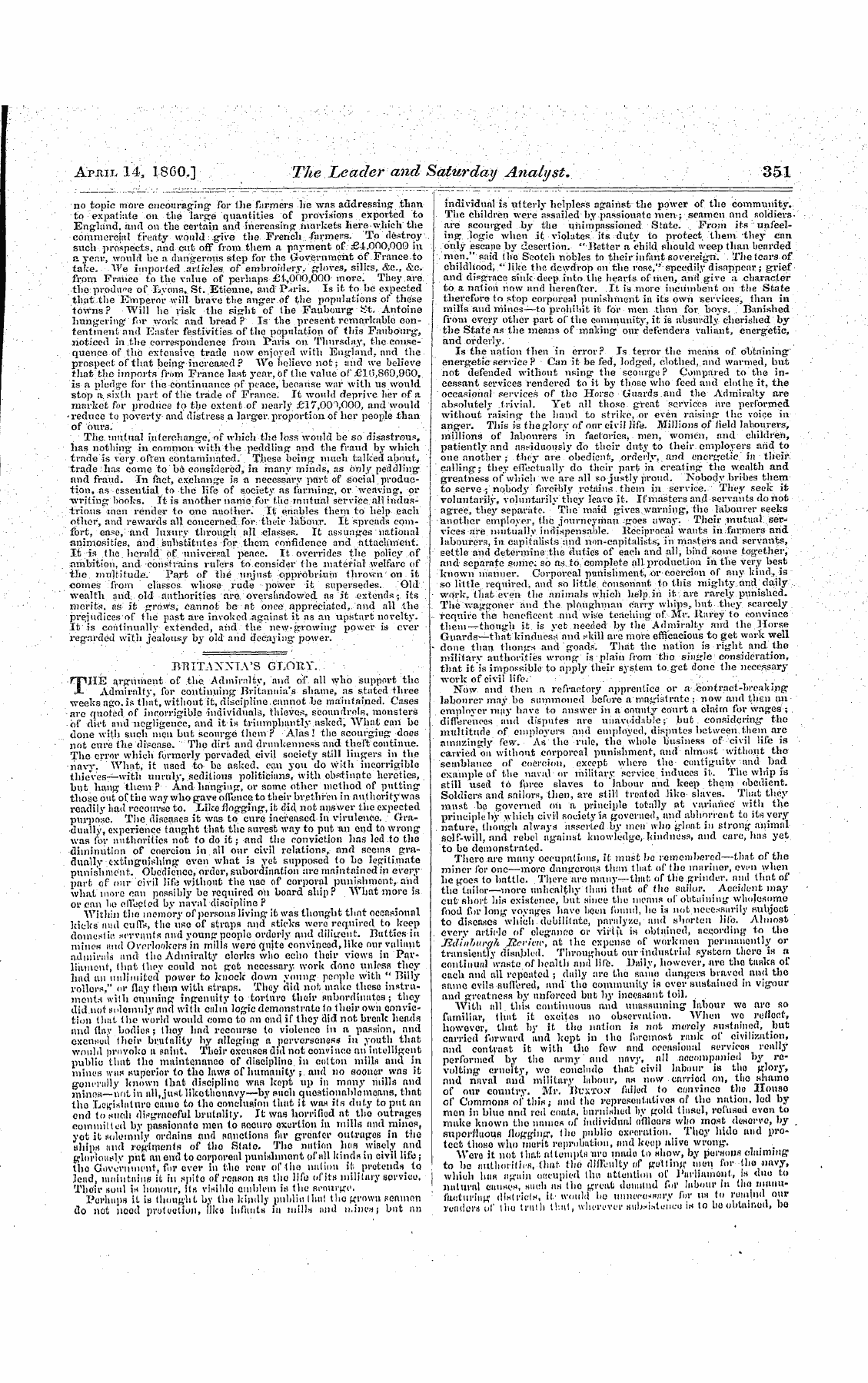
no topic more encouraging . f or the farmers he was addressing than to expatiate on the large quantities of provisions . exported to England , and on the certain and increasing markets liere which the commercial treaty would give the French farmers . To destroy such prospects , and cut off " from them a payment of £ 4 . 000 , 000 in a year , would be adangerous step for the Government of France . to take . We imported ' . articles : of embroidery , gloves , silks , < &c , &c . from France to the value of perhaps £ i , 000 , 000 more . They are the produce of Tivons , St . Etienne , and P .-u-is . Is it to be expected that the Emperor will brave the anger of the populations of these ¦
towns ? Will he risk the sight Gf tlie -Faubourg-St .-.- . Antoine hungering"for work and bread ? Is the present remarkable contentment anil Easter festivities of the population of this Faubourg , noticed in the correspondence from Paris on Thursday , the consequence of the extensive trade now enjoyed with England , and the prospect , of that being increased ? We believe not ; sine ! we believe that the imports from France last year , of the value of £ 1 ( 5 , S 6 O , 9 GO , is a pledge for the continuance of peace , because war with us would stop a . sixth part of the trade of France . It would deprive her of a market for produce to the extent . of nearly £ 17 , 00 ^ , 000 , and would reduce to poverty and distress a larger , proportion of her people than of ours . . ¦ .
The . mutual interchange , of which the loss would be so disastrous , lias nothing in comrnon with the peddling and the fraud by which ti-ade is very often contaminated . These being much talked about * trade has come to be considered , in many minds , as only peddling and fraud * In fact , exchange is a necessary part of social production , as essential to the life of society as farming , or weaving , or writin g hooks . It is another name for ( lie ¦ . ¦ mutual service all industrious men render to one another . It enables them to help etich other , and rewards all concerned for their labour . It spreads comfort , ease , and luxury through all classes . It assuages national animosities , and substitutes for them , confidence and attachment . It is the herald of universal peace . It overrides the policy of ambition , and constrains viilcvrs to consider the material .-welfare of
the nuiltitude . Part of thei .-unjust opprobrium thrown on it comes from classes whose rude power it supersedes . Old wealth and old authorities are overshadowed , as it extends ; its merits * as it grows , cannot be at once appreciated ,, and all the prejudices'of the past are invoked against it as art upstart novelty . It is continually extended , and the new-growing' power is ever regarded with jealousy by old and decaying- power .
Untitled Article
npiIE argument of the Admiralty , and of all \ ylio support the X Admiralty , for continuing Britannia ' s shame , as stated three weeks ago . is that , without it , discipline . cannot be maintained . Cases are quoted of incorrigible individuals , thieves , scoundrels , monsters of dirt and negligence , and it is triumphantly asked , What can be done with such men but scourge them ? Alas I the scourging _ does not cure the disease . The dirt and drunkenness-and theft continue . The error which formerly pervaded civil society still lingers in the navy . What , it used to be asked , can you do with incorrigible thieves—with unruly , seditious politicians , with obstinate hei-etics , but hang them ? And hanging , or some other method of putting
thoa , e out of the way who gave offence to their brethren 1 n authority was readily had recourse to . . ' Like flogging , jb did , not answer the expected purpose . The diseases it was to cure increased in virulence . Gradually , experience taught that the surest way to put an end to wrong was for authorities not to do it ; and the conviction has led to the diminution of coercion in . all our civil relations , and seems gradually extinguishing even what is yefc supposed to bo legitimate punish men t . Obedience , order , subordination are maintained in every part of our ' civil life without the use of corporal punishment , and what more can possibly be required on board ship ? What more is or can he effected by naval discipline ?
Within the memory of persons living 5 fc was thought that occasional kicks' nvid cuff * , the use of straps and sticks were required to keep domestic servants and younprpeople orderly and diligent . Butties in ininc'H mid Overlookers ' in mills were quite convinced , like our valiant ailmirnLs and tho Admiralty clorks who echo thoir views in Parliament , that they could not get necessary work done unless they had an unlimited ' power to knock down young people with " Billy rollers , " or flay them with straps . They did not make these instruments with ou ' nning ingenuity to torture thoir subordinates ; they did not solemnly nnrl with culm logic demonstrate to their own conviction thnt the world would come to nn end , if they did not break heads nnil flay bodies 5 they had recourse to violence in a passion , nnd cxeuMuil their brutality by alleging a perverseness m youth thnt
wnuhl provoke- 11 saint . Their excuses did not convince nn intelligent public that tho maintenance of discipline , in cotton mills nnd in . mines was superior ( o the laws oflmmiuiity ; , and » io sooner was it goniTiilly known lhafc discipline was kept up in ninny mills and lyiinoH— -nol in » ll , ju « Mikothonnvy—by puch quostionnblomqans , that tho Lx' | jf ! nhiluro ciinio to tho conclusion that it was its duly to put an end ' toHiioli disgraceful brulnlity . It was Ijorrifiod at tho outrages , eommiltod by passionate men to socuro exertion in mills nnd p ines , yot it solemnly ordains and sanctions far greater outrages in the ships 11 ml regiments of the Slate . Tho nation )\ i \ n wisel y and gloriously - put an end to corporeal punishment of nil kinds in civil life ; tho Government , for ever in the vonr of the nation it protend ^ to Jond , maintain ? it hi jwito of reason as tho life of its military service , Thoir soul in honour , its visible emblem is tho Ri-ourgo . Perhaps it is thought by tho kindly nuhliit Hint tho Krnwu penmen do not need promotion , like infants in mtll . s urn ! im ' ik'u ; but nn
individual is utterly helpless against the power of the community . The children were assailed by passionate men ; seamen and soldiers are scourged by the uhiinpassioned State . From its unfeeling logic when it violates its duty to protect , tliem they can only escape by desertion . " -Better a child should weep than bearded men . " said the Scotch nobles to their iufiint sovereign . The tears-of childhood , " like the dewdrop on the rose , " speedily disappear ; grief and disgrace sink deep into the hearts-of men , and give a character to a nation now and hereafter . It is more incumbent on the State therefore to stop corporeal punishment in its own services , than in mills and mines ^—to prohibit it for men than for boys . Banished from every other part of the community , it is absurdly cherished by the State as the means of making our defenders valiant , energetic , and orderly . Is the nation then in error ? Is . terror the means of obtaining energetic service ? Can it be fed , lodged , clothed , and warmed , but not defended without using the scourge ? Compared to the incessant services rendered to it by those who feed and clothe it , the occasional services of the Horse Guards and the Admiralty are absolutely trivial . Yet all those .-great services are performed without raising the hand to strike , or even raising the voice in anger . This is the glory of our civil life . Millions of Held labourers , millions of labourers in factories * men , women , and children , patiently and ns « duouslj r do their duty to their employers arid to one another ; they are obedient ; , orderly , and energetic in their ( Milling ; they effectually do their part in creating the wealth and greatness of which ' we are all so justly proud . Nobody bribes them to serve ; nobody forcibly retains . them in service . They seek it voluntarily , voluntarily they leave it . If masters and servants do not ; agree , they separate . The maid gives warning , the labourer seeks ' another employer , the journeyman goes away . Their mutual services are mutually , in dispensable . Keciprocal wants in farmers and labourers , in . capitalists and non-capitalists , in masters and servants , settle and determine the duties of each and all , bind some together , and separate some , so as , to complete all production in the very best known manner . Corporeal punishment , or coercion of any kind ,. is so little required , and so little consonant to this mighty .-and _ daily- . , work , that even the animals which help . in it are rarely punished . The " . waggoner " and the ploughman carry whips , but they scarcely require the beneficent and wise teaching of Mr . Itarey to convince them - ^ thoug h it is yet needed by the Admiralty and the Horse Guards- ^ that kindness and skill are more efficacious to get work well done than , thongs and goads . That the nation is right and the military authorities wrong is plain from the single consideration , that it is impossible to apply their system to get done the necessary worlc of civil life . •' ..- -. ' ¦ -. ;_'; , Now and then a refractory apprentice or a- / contract-breaking labourer may . bo summoned before a magistrate : now and then an . employer nijry have to answer in a county court a claim for wages ; differences and disputes are unavoidable ; but . considering the multitude of employers and employed , disputes between them are amazingly few . As the rule , the whole business of civil life is carried on without corporeal punishment , and almost without the semblance of coercion , except where the contiguity and ^ bad example of the naval or military service induces it ) . The whip is still used to force slaves to labour and keep them obedient . Soldiers and sailors , then , are still treated like slaves . That they must be governed on a principle totally at variance with the principle IVv which civil society is governed , and abhorrent to its very nature , though always asserted by men who gloat in strony animal self-will , and rebel against knowledge , kindness , and care , has yet to be demonstrated . There arc many occupations , if must be remembered—thnt of the miner for one—more dangerous than that of the mariner , even when he goes to battle There are many- ^ -thiit of the grinder , and that of the tailor—more unhealthy titan that of the sailor . Accident may cut short his existence , but since the menus of obtaining wholesome food for long voyages have been found , lie is not necessarily Kubjccfc to diseases " which ' debilitate , paraly / . e , and shorten life . Almost every article of elegance or vir'tfi ' is obtained , according to the JSdi ' nburc / fi Review , at the expense of workmen permanently or transiently disabled . Throughout our industrial system there is « continual waste of health and life . Daily , however , are tho tasks of each and all repeated ; daily are the sumo dangers braved and the same evils sufl ' ored , and the community is ever sustained in vigour and greatness by unforced but by incessant toil . . With nil this continuous and unassuming labour wo are so familiar , that it excites no observation . When wo reflect , however , thnt by it the nation is not merely sustained , but curried forward and kept in the foremost , runic of civilization , nnd contrast it with tho few nnd occasional Rervieos really performed by tho army and nnvy , "II accompanied by revolting 1 cruelty , wo conclude- - that civil labour is tho glory , nnd naval and military labour , ns now carried on , tlio fthaino of our country . Mr . Bux'fo . v fuilocl to convince the House of Commons of tliin ; nnd the reprosentalivofl of the nation , led by men in bluo and red coals , burnished by gold tinsel , rofused even to muke known tho names of individual officers wlio most ; dcHorvc , by superfluous Hogging , the public execration . Thoy hide- u » id protect thoso who morib reprobation , nnd koep alive wrong . Wore it not thai ; attynipltrnro made to hIiow , by porwoiifl claiming 1 to bo fiutliorilies .-l'lmt' tho dittlMilty of getting men for tho navy , which luiH again oRcupiort Iho attention of Parliament , in duo to natural camion , hu « 1 i n . s tho great iloniUnd foi labour in tlio numufiioturintf ( liHtriclH , it-- would l > o umu'fo .- 'Hin ' . v for uh to rwnind our rentiers nf tho trulli l ! : nt , wlifrcvor Hiil ^ i . it « iicii in to ho obtained , bo
Untitled Article
April 14 , 1 SCO- ] TJie Leader and Saturday Analyst . 351
!Btcitaxxta's Glory.
"BTCITAXXTA'S GLORY .
-
-
Citation
-
Leader (1850-1860), April 14, 1860, page 351, in the Nineteenth-Century Serials Edition (2008; 2018) ncse-os.kdl.kcl.ac.uk/periodicals/l/issues/vm2-ncseproduct2342/page/11/
-