On this page
-
Text (1)
-

Untitled Article
Note: This text has been automatically extracted via Optical Character Recognition (OCR) software. The text has not been manually corrected and should not be relied on to be an accurate representation of the item.
-
-
Transcript
-
Note: This text has been automatically extracted via Optical Character Recognition (OCR) software. The text has not been manually corrected and should not be relied on to be an accurate representation of the item.
Additionally, when viewing full transcripts, extracted text may not be in the same order as the original document.
Untitled Article
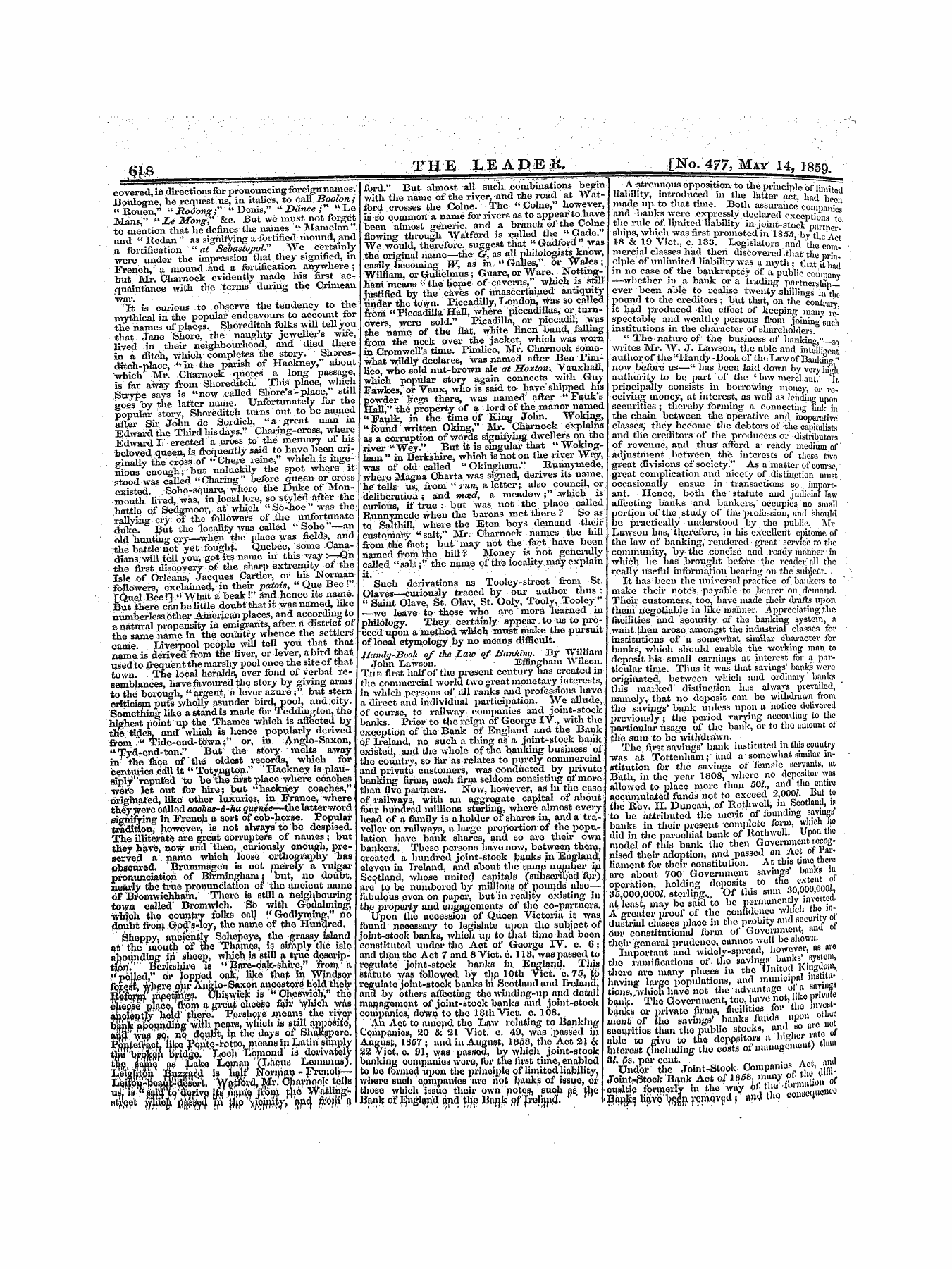
covered , in directions for pronouncing foreign names . Boulogne , lie request us , in italics , to call Boolon ; " Rouen , " " Rooong ; " " Denis , " " Ddnee , " "Le Mans , " " Le Mong , " &c . But we must not forget to mention that lie defines the names " Mamelon and " Redan" as signify ing a fortified mound , and a fortification " at Sevastopol . " . We certainly were under the impression . that they signified , in French , a mound and a fortification anywhere ; but Mr . Charnock evidently made his first acr quaintance with the terms during the Crimean
It is curious to observe the tendency to the mythical in the popular endeavours to account for the names of places . Shoreditch folks will tellypu that Jane Shore , the naughty jeAveUers wife , lived in their neighbourhood , and died there in a ditch , which completes the story . Shoresdftch-place , "in the parish of Hackney , " about which Mr . Charnock quotes a long passage ,
is far away from Shoreditch . Tins place , which Strype says is " now called Shore ' s-place , still eoes by the latter name . Unfortunately for the popular story , Shoreditch turns out to be named after Sir John de Sordich , " a great man in Edward the Third his days . " Charing-cross , where Edward I . erected a cross to the memory of his beloved queen , is frequently said to have been on-< nnaUy the cross of " Ghere reine , " which is uige-£ im , a Miomrh : but unhickily the spot where it
stood was called " Charing" before queen orcross existed . Soho-square , where the Duke ofMonniouth lived , was , in local lore , so-styled after the battle of Sedgmpor , at which " So-hoe" was the rallying cry of the followers . of the tmfortunate duke . But the locality waS called " Soho "—an oid h . untino' pry—when the place was fields , ^ and the battle not yet fought . Quebec , . some Canadians will tell you , got its name in this way : —Qn the first discovery of the sharp extremity ^ of the Isle of Orleans , Jacques Cartier , or his -N orman followers , exclaimed , in ' their patois , " Que 13 eci its
rCJuei Becl ] " What a beak ! " and hence name . But there can be little doubt that it was named , like numberless other American places , and according to a natural propensity in emigrants , after a district pf the same name in the coiiritry whence the settlers came . Liverpool people will tell yon that that name is derivedfrom the liver , or lever , a bird that used to frequent the marshy pool once the site of that town . The local heralds , ever fond of verbal resemblances , have favoured the story by giving arms to the borough , " argent , a lever azure ; " but stern criticism -outs wholly asunder bird , pool , and city .
Something like a stand is made for Teddmgton , the highest point -up the Thames which is affected by the tides , and which is henoe popularly derived from > ' Tide-end-tbwn ; " or , in Anglo-Saxon , " Tyd-end-ton . " But the story melts away in the face of the oldest records , which for centuries call it " Totyngton . " " Hackney is plausiply' reputed to be the first place where coaches were let out for hire ? but " hackney coaches , " originated , like other luxuries , in France , where theWere Called coohes-d-haquenee—^ the latter word eiffriifyinff in French a soft of cob-horse . Popular
tradition , however , is not always to be despised . The illiterate are great corrupters of names ; but they have , now and then , curiously enough , preserved a name which loose orthography has obscured . Brtunmagen is not perely a vulgar pronunciation of Birmingham j but , no doubt , nearly the true pronunciation oi the ancient name of "Btfomwiohham , There is still a neighbouring town called Bromwich . So with Godalming ; y \ fh \ ah the country folks call " Godlyming , ' ho doubt froni Gp <|' s-loy , the name of the Hundred , gheppy , ancjiontlY Schopoye , the grassy island at the woutli of the Thames , i $ sihvply the isle abounding in sheep , which is still a tyue description'"" Berkshireis " Baro-p ' akpshirc , " from a
,. ^ strenuous opposition principle of Hnuted liability , introduced m the latter act , had been made up to that time . Both assurance companion ! and banks were expressly declared exceptions to the rule of limited liability in joint-stock partner ships , which was first promoted in 1855 bv tlip" V « I 18 & 19 Viet ., c . 133 . Legislators and the com mereial classes had then discovered . that the principle of unlimited liability was a myth ; that it hail in no case of the bankruptcy of a . public company —whether in a bank or a trading partnership— . ever been able to realise twenty shillings in the pound to the creditors ; but that , on the contrary it had 2 > i' 6 duced the eiFeet of keeping many re . ' spectable and wealthy persons from joinincr sucli institutions in the character of shareholders °
" The nature of the business of banking , "—so writes Mr . W . J . Lawson , the able and intelligent author of the "Handy-Book of the Law of Banking " now before us—" lias been laid down by very hi ^' h authority to be part of the ' law merchant . \ principally consists in borrowing money , or receiving money , at interest , as well as lending upon securities ; thereby forming a connecting fink in the chain between the operative and inoperative classes , they become the debtors of the capitalists and the creditors of the producers or distributors of revenue , and thus afford a ready medium of
adjustment between the interests of these two great divisions of society . " As a matter of course , great complication and nicety of distinction must occasionally ensue in transactions so . important . Hence , both the statute and judicial law affecting banks and bankers , occupies no small portion of the study of the profession , and shoidd be practically Understood by the public . Mr . Lawson has , therefore , in his excellent epitome of the law of banking , rendered great service to the community , by the concise and ready manner in which he has brouirht before the reader all the
really useful information bearing on the subject . It has been the universal practice of bankers to make their notes payable to bearer on demand . Their customers , too , have made their drafts upon them negotiable in like mariner . Appreciating-the facilities and security of the banking system , a want . then arose amongst the industrial classes for institutions of a somewhat similar character for banks , which should enable the working man to
deposit his small earnings at interest for a particular time . Thus it was that savings' banks were originated , between which and ordinary' banks this marked distinction has always prevailed , ' namely , that no deposit can be withdrawn from the savings' bank unless upon a notice delivered previously ; the period varying according to the part icular usage of the bank , or to the amount oi the sum to be withdrawn . ...
The first savings' bank instituted in this country was at Tottenham ; and a somewhat similar institution for the savings of female servants , at Bath , in the year 1808 , where no depositor was allowed to place more than 50 / ., andjlie entire accumulated funds iipt to exceed 2 , 000 / . _ But to the Rev . II . Duncan , of Ro thwcll , m Scotland , is to be attributed the merit of founding savings banks iu their present complete town , which ic did iu the parocWl bank of Rothwcll . Upon the model of this bank the then Government recognised their adoption , and . passed on Ac t ot inlimncnt for their constitution . At this time the o are about 700 Government savings bnnw >»
ford . " But almost all such combinations begin with the name of the river , and the road at Watford crosses the Colne . The " Colne , " however , is so comnion a name for rivers as to appear to . have been almost generic , and a branch of the Golne flowing through Watford is called the " Gade . We would , therefore , suggest that " Gadford . was the original name—the G , as all philologists know , easily becoming W , as in " Galles , " or Wales ; William , or Guliehnus ; Guare , or Ware . Nottingham means " the home of cavenis , " which is still justified l > y the caves of unascertained antiquity binder the town . Piccadilly , London , was so called
from " Piccadilla Hall , where piccadiUas , or turnovers , were sold . " Picadilla , or piccadil , was the name of the flat , white linen band , falling from the neck over the jacket , which was worn in Cromwell ' s time . Pimlico , Mr . Charnock somewhat wildly declares , was named after Ben limlico , who sold nut-brown ale atHoxton . Vauxhall , which popular story again connects with Got Fawkes , or Vaux , who is said to have shipped his powder kegs there , was named af ter " Fauks Hall , " the property of a lord of the . manor named " Faulk , in the tune of King John . Woking , " found written Oking , " Mr . Charaoek explains dwell
as a corruption of words signifying ers on river " Wey . " But it is singular that " Wokmgham " in Berkshire ,, which is not on the river Wey , was of old called " Okingham . " Bumiymede , where Magna Charta was signed , der ives its name , he tells us , from " run , a letter ; also coiincil , or deliberation ; and meed , a meadow ;" -which is curious , if true : but was not the place called Runnymede when the barons met there ? So as to Salthill , where the Eton boys demand their customary " salt , " Mr ; Chai-nock nam . es the hill from the fact ; but may not the fact have been named from the hill ? Money is not generally called " salt ; " the name of the locality may explain
Such derivations as Tooley-street from St . Olav ^ s—curiously traced by our author thus : " Saint Olave , St . Olav , St . Ooly , Tooly , Tooley " we leave to those who are more learned in philology . They certainly appear . to us to proceed upon a method which must niake the pursuit of local etymology by ho means difficult . Handy-Book of the Law of Banking . By William John Lawson . Effingham ^\ llson . Tub first half of the present century has created in the commercial world two great monetary interests , in which sons of all ranks and px * ofessions have
per a dii-ect and individual participation . We allude , of course , to railway companies and joint-stock banks . Prior to the reign of George IV ., with the exceptipn of the Bank of England and the Bank pf Ireland , no such a thing as a joint-stock bank existed , and the whole of the banking business _ of the country , so far as relates to pm * ely commercial and private customers , was conducted by privat e banking firms , each firm seldom consisting of more than five partners . Now , however , as in the case of railways , with an aggregate capital of about four hundred millions sterling , where almost every
head of a family is a holder of shares . , and a traveller on railways , a large proportion of the population have bank shares , and so arc their own bankers . These persons have now , between them , created a hundred joint-stock banks in England , eleven in Ireland , mid about thc ' s ' anjfi number in Scotland , whose united capitals ( supscrili'ocl for ) are to bo numbered by millions of pounds also ^ - jfUbujo ' us oven on' paper , but in reality existing in the property a » d engagements of the co-partners . Upon the accession of Queen Victoria it was found necessary to legislate upon the subject pf joint-stock banks , which up to tliat timo had been constituted under the Act of Geovge IV . c . 6 ;
operation , holding deposits to t ^ 10 « nnnM 0 Z 35 j , 000 . 00 W . Btorlipgs . Of this sum 0 , Wg , at W , may be said to bo permanently »>»' A greater proof of the confidence wluch c » n dustrjal classes place in the probity and socunty oi oW constitutional form of Government , -ami oi their general prudence , cannot well be shown . Important and widely-spread , howovoi > , as a o the ramifications of tlio saving bwika Byetom , there are many places in the TJmtocl K . gdo » . having largo populations , and m unioipnl inrt t tions , " vhioK have not tho advantage , oU mv ^ bank . The Government , too , have not , Iiko v banfcs or private firms , facilities for tip invo ^ mont of tho savings' banks fliuds upoi iot c securities than the public stocks , ^^ "Vlof able to irivo to the doppsitws n l » gl >« " 1 ( l ( J ™ Cos ? ( Sofuding the costs of managoment ) tlmn 3 ; , 0 s . per oent . A -1 flnil Under tho JointrStook . Oompamos Act , JJ Joint-Stock ' Bank Act on » 68 . mmjf o ^ w ^ i oiisLbla formerly In tho way oi tho iovmUw Banks liijyb'boan removed aua tUq co » BHi ^
and then the Act 7 and 8 Viet . c . 118 , was passed to regulate joint-stock banks in . England . Thjs statute was followed by tlip 10 th Viet . c . 7 ^ , ti > regulate joint-stock banks in Scotland and Ireland , and by others affecting the winding-up and detail management of joint-stook banks and joint-stock oompanics , down to the 13 th Viet . 0 . 108 . An Aot to amend tho Law relating to Banking Companies , 20 & 21 Viet . 0 . 49 , was ! passed in Auguslt , 1857 ; and in August , 1858 , the Act 21 & 22 viot , 0 . 81 , was passed , by which joint-stpok banking conipanies woi * o , for tne first timo , enabled to bo formed upon the principle of limited liability , whore suoli cpinpanios are iu > t banlcis of iefcuo , or those which issue their own " notes , such 03 the Bank of IBjnglaAd find ^ 0 Banjs ojf Jveliuitf . fl ' rr ?
. ^ polled , " or lopped oak , like tlmjb in Windsor foresl , where 9 'ur ¦ AQ ^ -Soxon onoosto ^ li
Untitled Article
to GIB / FHK LEADED . [ ISTq . 477 , May 14 , 185 Q
-
-
Citation
-
Leader (1850-1860), May 14, 1859, page 618, in the Nineteenth-Century Serials Edition (2008; 2018) ncse-os.kdl.kcl.ac.uk/periodicals/l/issues/vm2-ncseproduct2294/page/14/
-