On this page
-
Text (2)
-

Untitled Article
-

Untitled Article
Note: This text has been automatically extracted via Optical Character Recognition (OCR) software. The text has not been manually corrected and should not be relied on to be an accurate representation of the item.
-
-
Transcript
-
Note: This text has been automatically extracted via Optical Character Recognition (OCR) software. The text has not been manually corrected and should not be relied on to be an accurate representation of the item.
Additionally, when viewing full transcripts, extracted text may not be in the same order as the original document.
Untitled Article
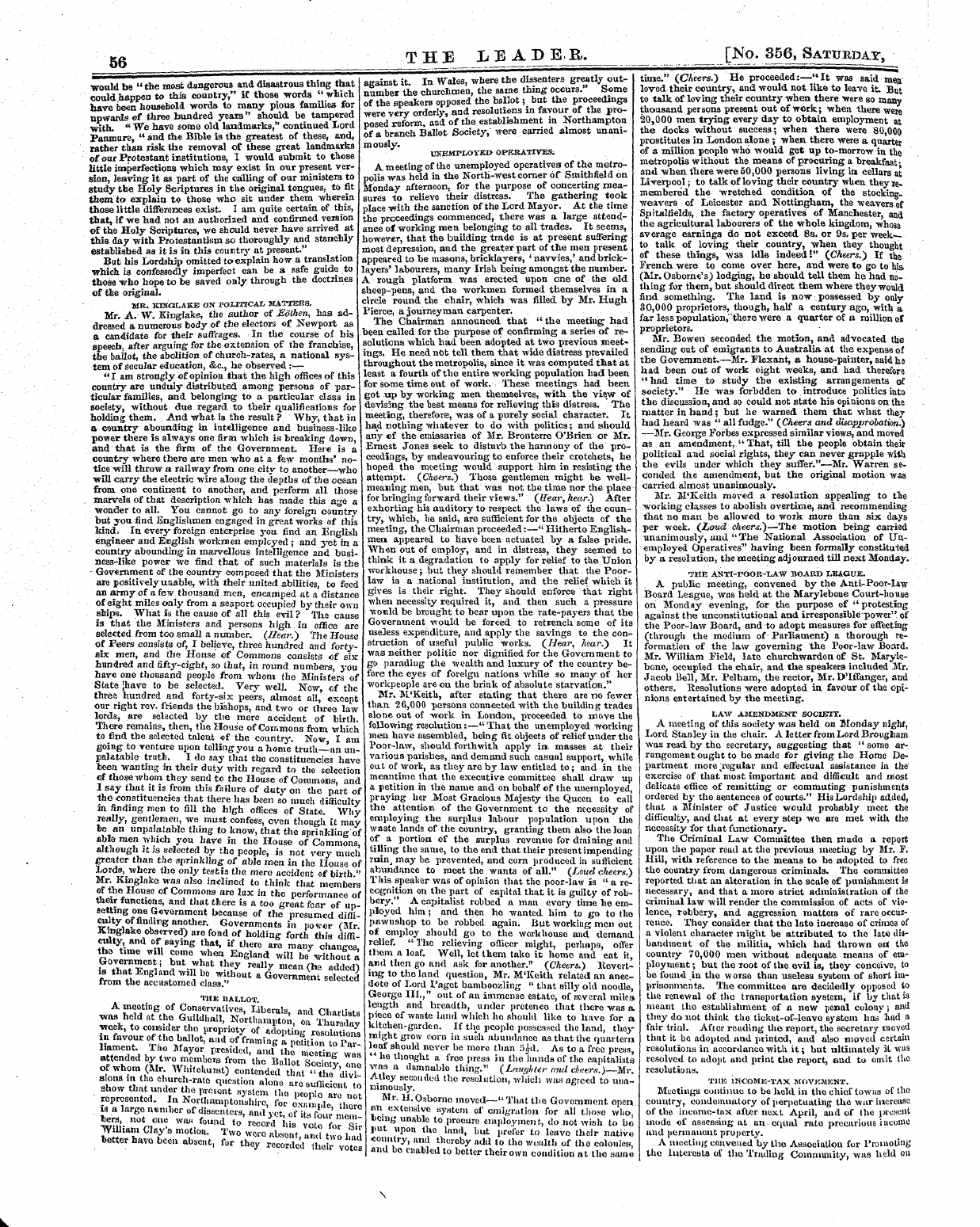
would be " the most dangerous and disastrous thing that could happen to this country , " if those -words " which have be « n household words to many pious families for upwards of three hundred years" should be tampered with . " We have some old landmarks , " continued Lord Panmure , " and the Bible is thft greatest of these , and , rather than risk the removal of these great landmarks of our Protestant institutions , I would submit to those little imperfections which may exist in our present version , leaving it as part of the calling of our ministeis to study the Holy Scriptures in the original tongues , to fit them to explain to those who sit under them -wherein those little differences exist . I am quite certain of this , that , if we had not an authorized and confirmed version of the Holy Scriptures , we should never have arrived at this day with Protestantism so thoroughly and stanchly established as it is in this country at present . "
But his Lordship omitted to explain how a translation which is confessedly imperfect can be a safe guide to those-who hope to be saved only through the doctrines of the original . BIB . KtNOLAKE ON POlITICAL MATTERS . Mr . A . W . Kinglake , the author of JEothen , has addressed a numerous body of the electors of Newport as a candidate for their suffrages . In the course of bis speech , after arguing for the extension of the franchise ,
the ballot , the abolition of church-rates , a national system of secular education , &c , he observed : —¦ " I am strongly of opinion that the high offices of this country are unduly distributed among persons of particular families , and belonging to a particular class in society , without due regard to their qualifications for holding them . And what is the result ? Why , that in a country abounding in intelligence and business-like power there is always one fir in which is breaking down , and that is the firm of th « Government . Here is a
country where there are men who at a few months' notice-will throw a railway from one city to another- —who will carry the electric wire along the depths of the ocean from one continent to another , and perform all those marvels of that description -which has made this age a wonder to all . You cannot go to any foreign country but you find Englishmen engaged in great works of this kind . In every foreign enterprise you find an English engineer and English workmen employed ; and yet in a country abounding in marvellous intelligence and business-like power we find that of such materials is the Government of the country composed that the Ministers are positively unable , with their united abilities , to feed
an army of a few . thousand men , encamped at a distance of eight miles only rom a seaport occupied by their own ships . What is the cause of all this evil ? The cause is that the Ministers and persons high in office are selected from too small a number . ( Hear . ) The House of Peers consists of , I believe , three hundred and fortysix men , and the House of Commons consists of six hundred and fifty-eight , so that , in round numbers , you have one thousand people from whom the Ministers of State [ have to be selected . Very well . Now , of the three hundred and forty-six peers , almost all , except our right rev . friends the bishops , and two or three law lords , are selected by the mere accident of birth .
There remains , then , the House of Commons from which to find the selected talent of the country . Now , I am going to venture upon telling you a home truth—an unpalatable trutli . I do say that the constituencies have beea wanting in their duty with regard to the selection « f those whom they send to the House of Commons , and I say that it ia from this failure of duty on the part of the constituencies that there has been so much difficulty in finding men to fill the high offices of Stato . Whv really , gentlemen , we must confess , even though it may le an unpalatable thing to know , that the sprinkling of able men which you have in the House of Commons , although it is lted the
seec by people , is not very much greater than the sprinkling- of able men in the House of Lords , where the only testis the mere accident of birth " Mr . Kinglake was also inclined to think that members of the House of Commons are lax in the performance of their functions , and that tliere is a too great fear of upsetting one Government because of the presumed diffi-K ? ifi ? irig T ther < Govern ™« ts in poVW ( Mr . % Weotema ) are fond of holding forth this diffi-SS ^™ % ea ym S « M » t , if there are many changes , r ™™ * £° ° H En S land wiU be without a Government ; but what they really mean ( he added )
TUB BALLOT . noting of Conservatives , Liberals , and Chartiata was held at tho Guildhall , Northampton , o , TlS £ v week , to com icier the propriety of adopt ing rwoluS llamcT" Tl ° M allOt ) ^ ? f frami » 6 * potltKp ™ of whom ( Mr White ) Z ^ Tttl ^^ £ siona m the church-rate question alone arc sufl dent to show that under tho present system iho pcopl " arc not represented . In Northamptonahh o , for IxaLu . le there is a largo nvmucr of dissenters , and vet of it * r « ., S . 'r' ™ ° * ° ™ 3 h s vo r cTslr WUhani day ' s motion . Two wora absent , awl two had letter have been absent , for they recorded the r votes
Untitled Article
against it . In Wales , where the dissenters greatly outnumber the churchmen , the same thing occurs . " Some of the speakers opposed the ballot ; but the proceedings were v « ry orderly , and resolutions in favour of the proposed reform , and of the establishment in Northampton of a branch Ballot Society , were carried almost unanimously . UNEMPLOYED OPKRATIVESi A meeting of the unemployed operatives of the metropolis was held in the North-west corner of Smithfield on Monday afternoon , for the purpose of concerting
measures to relieve their distress . Ihe gathering took place -with the sanction of the Lord Mayor . At the time the proceedings commenced , there was a large attendance of working men belonging to all trades . It seems , however , that the building trade is at present suffering most depression , and the greater part of the men present appeared to be masons , bricklayers , ' navvies , ' and bricklayers' labourers , many Irish being amongst the number . A rough platform was erected upon one of the old sheep-pens , and the workmen formed themselves in a circle round the chair , which was filled by Mr . Hugh Pierce , a journeyman carpenter .
The Chairman announced that " the meeting had been called for the purpose of confirming a series of resolutions which had been adopted at two previous meetings . He need not tell them that wide distress prevailed throughout the metropolis , since it was computed that at least a fourth of the entire working population had been for some time out of work . These meetings had been got up by working men themselves , with the view of devising the best means for relieving this distress . The meeting , therefore , was of a purely social character . It had nothing "whatever to do with politics ; and should any cf the emissaries of Mr . Bronterre O'Brien or Mr . Ernest Jones seek to disturb the harmony of the proceedings , by endeavouring to enforce their crotchets , he
hoped the meeting would support him in resisting the attempt . ( Cheers . ) Those gentlemen might be wellmeaning men , but that Avas not the time nor the place for bringing forward their views . " ( Bear , hear . ) After exhorting his auditory to respect the laws of the country , which , he said , are sufficient for the objects of the meeting , the Chairman proceeded : —" Hitherto Englishmem appeared to have been actuated by a false pride . When out of employ , and in distress , they seemed to think it a degradation to apply for relief to the Union workhouse ; but they should remember that the
Poorlaw is a national institution , and the relief which it gives is their right . They should enforce that right when necessity required it , and then such a pressure would be brought to bear upon the rate-payers that the Government would be forced to retrench some of its useless expenditure , and apply the savings to the construction of useful public works . ( Hear , hear . ') It was neither politic nor dignified for the Government to go parading the wealth and luxury of the country before the eyes of foreign nations while so many of her workpeople are on the briak of absolute starvation . "
Mr . M'Keitli , after stating that there are no fewer than 26 , 000 persons connected with the building trades alone out of work in London , proceeded to move the following resolution : —" That the unemployed working men have assembled , being fit objects of relief under the Poor-law , should forthwith apply in . masses at their various parishes , and demand such casual support , while out of work , as they are by law entitled to ; and in the meantime that the executive committee shall draw up a petition in the name and on behalf of the unemployed , praying her Most Gracious Majesty the Queen to call the attention of the Government to the necessity of employing the surplus labour population upon the waste lands of the country , granting them also the loan
of a portion of the surplus revenue for draining and tilling the same , to the end that their present impending r \ An may be prevented , and corn produced in sufficient abundance to meet the wants of all . " ( Loud cheers . ) This speaker was of opinion that the poor-law is " a recognition on the part of capital that it is guilty of robbery . " A capitalist robbed a man every time he employed him ; and then he wanted him to go to tho pawnshop to bo robbed again . But working men out of employ should go to the workhouse and demand relief . " Tho relieving officer might , perhaps , offer them a loaf . Well , let them take it home and eat it , and then and
go ask for another . " ( Cheers . ) lieverting to the land question , Mr . M'Keith related an anecdote of Lord Paget bamboozling " that silly old noodle , George III ., " out of an immense estate , several miles length and breadth , under pretenco that there was a piece of waste land which ho should like to have for a kitchen-garden . If tho people possessed the land , they might grow corn in such abundance as that the quartern loaf should never bo more than 5 Ad . As to a free press , "ho thought a free press in tho hands of tho capitalists vvns a damnable thing . " ( Laughter and cheers . )—Mr . Atlcy Hecoiuknl the resolution , which wan agreed to unanimously .
Mr . H . Osborno moved— " That the Government open an extcttflivc system of emigration for all tho . se who , being unable to procuro employment , do not wish to be 1 > ut upon tho land , but prefer to leave their native country , and thereb y add to tho wealth of the colonies , ancl bo enabled to better their own condition at the aamo
Untitled Article
time . " ( Cheers . ) He proceeded : — ' * It was said men loved their country , and would not like to leave it . But to talk of loving their country when there were so many thousand persons present out of work ; when there were 20 , 000 men trying every day to obtain employment at the docks without success ; when there were 80 , 000 prostitutes in London alone ; when there were a quartet of a million people who would get up to-morrow in the metropolis without the means of procuring a breakfastand when there were 50 , 000 persons living ia cellars at Liverpool ; to talk of loving their country when they iemembered the wretched condition of the
stockingweavers of Leicester and Nottingham , the weavers of Spitalfields , the factory operatives of Manchester , and the agricultural labourers of the whole kingdom , whose average earnings do not exceed 8 s . or 9 s ; per weekto talk of loving their country , when they thought of these things , was idle indeed 1 " ( Cheers . ) If the French were to come over here , and were to go to his ( Mr . Osborne ' s ) lodging , he should tell them he had nothing for them , but should direct them where they would find something . The land is now possessed by only 30 , 000 proprietors , though , half a century ago , with a far less population , " there were a quarter of a million of proprietors . ¦
Mr . Bowen seconded the motion , and advocated the sending out of emigrants to Australia at the expense of the Government . — -Mr . Flexant , a house-painter , said he had been out of work eight weeks , and had therefore " had time to study the existing arrangements of society . " He was forbdden to introduce politics into the discussion , and so could not state his opinions on the matter in hand ; but he warned them that what they had heard was " all fudge . " ( Cheers and disapprobation ^) —Mr . George Forbes expressed similar views , and moved as an amendment , " That , till the people obtain their political and social rights , they can never grapple with the evils under which they suffer . "—Mr . Warren seconded the amendment , but the original motion was carried almost unanimously .
Mr . Jl'Keith moved a resolution appealing to tie working classes to abolish overtime , and recommending that no man be allowed to work more than six days per week . ( Loud cheers . )—The motion being carried unanimously , and " The National Association of Unemployed Operatives'" having been formally constituted by a resolution , the meeting adjourned till next Monday .
THE ANTI-POOR-LAW BOARD LEAGUE . A public meeting , convened by the Anti-Poor-law Board League , was held at the Marylebone Court-house on Monday evening , for the purpose of " protesting against the unconstitutional and irresponsible power" of the Poor-law Board , and to adopt measures for effecting ( through the medium of Parliament ) a thorough reformation of the law governing the Poor-law Board . Mr . William Field , late churchwarden of St . Marylebone , occupied the chair , and the speakers included Hr . Jacob Bell , Mr . Pelham , the rector , Mr . DTffanger , and others . Resolutions were adopted in favour of the opinions entertained by the meeting .
LAW AMENDMENT SOCIETY . A meeting of this society was held on Monday night , Lord Stanley in the chair . A letter from Lord Brougham was read by the secretary , suggesting that " some arrangement ought to be made for giving the Home Department more ^ regular and effectual assistance in the exercise of that most important and difficult and most delicate office of remitting or commuting punishments ordered by the sentences of courts . " His Lordship added , that a Minister of Justice would probably meet the difficulty , and that at every step we aro met with the necessity for that functionary .
Tho Criminal Law Committee then made a report upon the paper read at the previous meeting by Mr . " £ . Hill , with reference to the means to be adopted ito free the country from dangerous criminals . The committee reported that an alteration in the scale of punishmeut is necessary , and that a more strict administration of tho criminal law will render tho commission of acts of violence , robbery , and aggression matters of rare occurrence . They consider that the late increase of crimes of a violent character might be attributed to the late diabandinent of the militia , which had thrown ont the
country 70 , 000 men . without adequate , means of employment ; but the Toot of the evil is , they conceive , to be found in the worse than useless system of Bhort imprisonments . The committee are decidedly opposed to the renewal of tho transportation system , by that is meant tho establishment of a new ponal colony ; and they do not think the ticket-of-leavo system has Imd a fair trial . After rending the report , tho secretary moved that it bo adopted and printed , and oIbo moved certain resolutions in accordance with it ; but ultimately it was resolved to adopt and print tho report , and to omit the resolutions .
TIHfi INCOMIi-TAX MOVKMKST . Meetings continue to bo hold in tho chief towns of tho country , condemnatory of perpetuating the war increase of the income-tax after next April , and of tho prenunt inodo of assessing at an equal rutc precarious income and permanent property . A meeting convened by the Association for Promoting tho lutcreatB of tho Trading Community , wua held on
Untitled Article
Kft THE LEADER . [ No . 356 , Saturday , ^ i . — ¦ -- ¦ - •¦ —_—————i^——^^—^^^^^^^^^ " ^^^ " ^ " ^ " ™ " ™ " ^^^^^^^^^^^^ m
-
-
Citation
-
Leader (1850-1860), Jan. 17, 1857, page 56, in the Nineteenth-Century Serials Edition (2008; 2018) ncse-os.kdl.kcl.ac.uk/periodicals/l/issues/vm2-ncseproduct2176/page/8/
-