On this page
-
Text (3)
-

Untitled Article
-

Untitled Article
-

Untitled Article
Note: This text has been automatically extracted via Optical Character Recognition (OCR) software. The text has not been manually corrected and should not be relied on to be an accurate representation of the item.
-
-
Transcript
-
Note: This text has been automatically extracted via Optical Character Recognition (OCR) software. The text has not been manually corrected and should not be relied on to be an accurate representation of the item.
Additionally, when viewing full transcripts, extracted text may not be in the same order as the original document.
Untitled Article
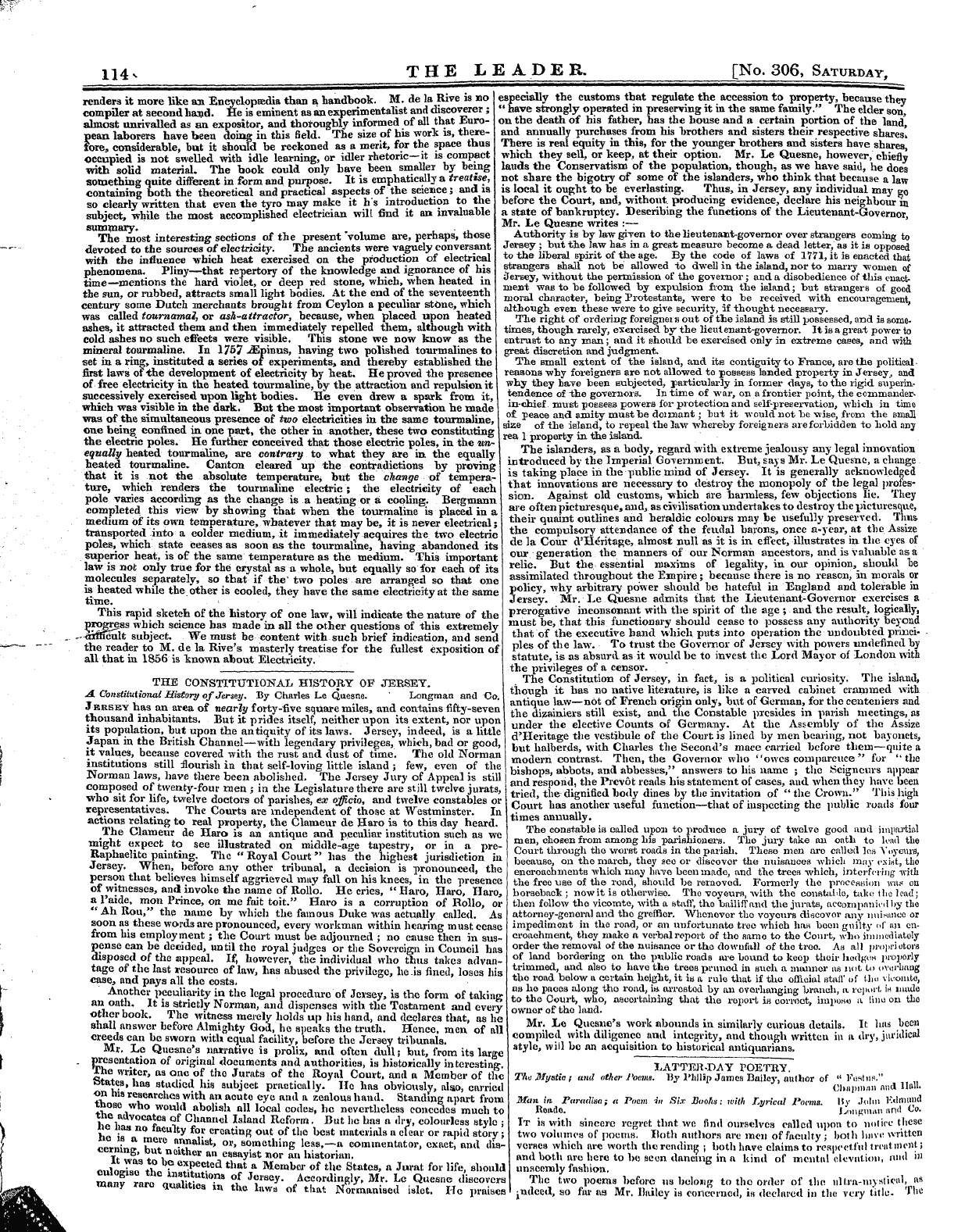
LATTER-DAY POETRY . Th < i Mystic ; and other Poems . My Philip Jamea Bailoy , author of " Fust us . " Chapman and Hall-Man in Paradise ; a Poem in Six Boofts : with Lyrical Poems . Hy John K < lmnnd Roado . JLongmiin » n < l Co . It is with sincere regret that we find ourselves cnllcd upon to notice these two volumes of poems . Uoth authors are men of faculty ; both have written versca which nre worth the rending ; both have claims to respectful treatments and both avo here to bo seen dancing in o kind of mental elevation , nrnl '" unaeennly fashion . The two poems before us belong to the order of the Hltra-niyHtU'iil , ftfl indeed , so fnr its Mr . Ikilcy is concerned , is declared in th <; very title . The
Untitled Article
renders it more like an Encyclopaedia than a handbook . M . de la Rive is no compiler at second hand . He is eminent as an experimentalist and discoverer ; almost unrivalled as an expositor , and thoroughly informed of all that European laborers have been doing in this field . The size of his work is , therefore , considerable , but it should be reck oned as a merit , for the space thus occupied is not swelled with idle learning , or idler rhetoric—it is compact with solid material . The book could only have been smaller by being something quite different in form and purpose . It is emphatically a treatise , containing both the theoretical and practical aspects of the science ; and is so clearly written that even the tyro may make it h s introduction to the subject , while the most accomplished electrician will find it an invaluable .
summary ... ... , The most interesting sections of the present " volume are , perhaps , those devoted to the sources of electricity . The ancients were vaguely conversant with the influence which heat exercised on the production of electrical phenomena . Pliny—that repertory of the knowledge and ignorance of his time—mentions the hard violet , or deep red stone , which , when heated in the sun , or rubbed , attracts small light bodies . At the end of the seventeenth century some Dutch merchants brought from Ceylon a peculiar stone , which was called tournamal , or ash-attractor , because , when placed upon heated ashes , it attracted them and then immediately repelled them , although with cold ashes no such effects wexe visible . This stone we now know as the
mineral tourmaline . In 1757 JEpinus , having two polished tourmalines to set in a ring , instituted a series of experiments , and thereby established the first laws of the development of electricity by heat . He proved the presence of free electricity in the heated tourmaline , by the attraction and repulsion , it successively exercised upon light bodies . He even drew a spark from it , which was visible in the dark . But the most important observation he made was of the simultaneous presence of two electricities in the same tourmaline , one being confined in one part , the other in another , these two constituting the electric poles . He further conceived that those electric poles , in the unequally heated tourmaline , are contrary to what they are in , the equally heated tourmaline . Canton cleared up the contradictions by proving
that it is not the absolute temperature , hut the change of temperature , which renders the tourmaline electric ; the electricity of each pole varies according as the change is a heating or a cooling . Bergmann completed this view by showing that when the tourmaline is placed in a medium of its own temperature , whatever that may be , it is never electrical ; transported into a colder medium , it immediately acquires the two electric poles , which state ceases as soon as the tourmaline , having abandoned its superior heat , is of the same temperature as the medium . This important law is not only true for the crystal as a whole , but equally so for each of its molecules separately , so that if the' two poles are arranged so that one is heated while the other is cooled , they have the same electricity at the same time .
This rapid sketch of the history of one law , will indicate the nature of the progress which science has made in all the other questions of this extremely « 3 officult subject . We must be content with such brief indication , and send the reader to M . de la Rive's masterly treatise for the fullest exposition of all that in 1856 is "known about Electricity .
Untitled Article
especially the customs that regulate the accession to property , because th ey " have strongly operated in preserving it in . the same family . " The elder son on the death of his father , has the house and a certain portion of the land ^ and annually purchases from his brothers and sisters their respecti ve shares ' There is real equity in this , for the younger brothers and sisters have shares , which they sell , or keep , at their option . Mr . Le Quesne , however , chiefly lauds the Conservatism of the population , though , as we have said , he does not share the bigotry of some of the islanders , who think that because a law is local it ought to be everlasting . Thus , in Jersey , any individual may go before the Court , and , without producing evidence , declare his neighbour in a state of bankruptcy . Describing the functions of the Lieutenant-Governor Mr . Le Quesne writes : —
Authority is by law grven to the lieutenant-governor over strangers coining to Jersey ; but the law has in a great measure become a dead letter , as it is opposed to the liberal spirit of the age . By the code of laws of 1771 , it is enacted that strangers shall not be allowed to dwell in the island , nor to marry women of Jersey , without the permission of the governor ; and a disobedience of this enactment was to be followed by expulsion from the island ; but strangers of good moral character , being Protestants , were to be received with encouragement although , even these wexe to give security , if thought necessary . Tie right of ordering foreigners out of tie island is still possessed , and is sometimes , though rarely , exercised by the lieutenant-governor . It is a great power to entrust to any man ; and it should te exercised only in extreme cases , and with great discretion and judgment .
Tlie small extent of the island , and its contiguity to France , are the political reasons why foreigners are not allowed to possess landed property in Jersey _ , and why they have been subjected , particularly in former days , to the rigid superintendence of the governors . In time of war , on a frontier point , the commanderin-chief must possess powers for protection and self-preservation , ¦ which in time of peace and amity must be dormant ; but it would not be ¦ wise , from the small size of the island , to repeal the law whereby foreigners are forbidden to hold any rea 1 property in the island . The islanders , as a body , regard with extreme jealousy any legal innovation introduced by the Imperial Government . But , says Mr . Le Quesne , a change is taking place in the public mind of Jersey . It is generally acknowledged that innovations are necessary to destroy the monopoly of the legal profession . Against old customs , which are harmless , few objections lie . They are often picturesque 3 and , as civilisation undertakes to destroy the picturesque ,
their quaint outlines and heraldic colours may be usefully preserved . Tlm& the compulsory attendance of the feudal barons , once a-3 ear , at the Assize de la Cour d'Heritage , almost null as it is in effect , illustrates in the eyes of our generation the manners of our Norman ancestors , and is valuable as a relic . But the essential maxims of legality , in our opinion , should " be assimilated throughout the Empire ; because there is no reason , in morals or policy , why arbitrary power should be hateful in England and tolerable in Jersey . Mr . - Le . Quesne admits that the Lietitenant-Governor exercises a prerogative inconsonant with the spirit of the age ; and the result , logically , must be , that this functionary should cease to possess any authority beyond that of the executive hand which puts into operation the undoubted principles of the law . To trust the Governor of Jersey with powers undefined by statute , is as absurd as it would be to invest the Lord Mayor of London with the privileges of a censor .
THE CONSTITUTIONAL HISTORY OF JERSEY . A . Constitutional History of Jersey . By Charles Le Quesne . " Longman and Go . Jersey has an area of nearly forty-five square miles , and contains fifty-seven thousand inhabitants . But it prides itself , neither upon its extent , nor upon its population , but upon the antiquity of its laws . Jersey , indeed , is a little Japan in the British Channel—with legendary privileges , which , bad or good , it values , because covered -with the rust and dust of time . The old Norman institutions still flourish in that self-loving little island ; few , even of the Norman laws , have there been abolished . The Jersey Jury of Appeal is still composed of twenty-four men - , in the Legislature there are still twelve jurats , who sit for life , twelve doctors of parishes , ex officio , and twelve constables or representatives . The Courts are independent of those at Westminster . In
actions relating to real property , the Clameur de Haro is to this day heard . The Clameur de Haro is an antique and peculiar institution such as we might expect to see illustrated on middle-age tapestry , or in a pre-Raphaelite painting . The " Royal Court " has the highest jurisdiction in Jersey . When , before any other tribunal , a decision is pronounced , the person that believes himself aggrieved may fall on his knees , in the presence of witnesses , and invoke the name of Rollo . He cries , " Haro , Haro , Haro , a l ' aide , mon Prince , on me fait toit . " Haro is a corruption of Rollo , or "Ah Rou , " the name by which the famous Duke was actually called . As soon as these words are pronounced , every workman within hearing must cease from his employment ; tlie Court must be adjourned ; no cause then in suspense can be decided , until the royal judges or the Sovereign in Council has
disposed of the appeal . If , however , the individual who thus takes advantage of the last resource of law , lms abused the privilege , he is fined , loses his case , and pays all the coats * Another peculiarity in the legal procedure of Jersey , is the form of taking an oath . It is strictly Norman , and dispenses with the Testament and every other book . The witness merely holds up his hand , and declares that , as he shall answer before Almighty God , ho speaks the truth . Hence , men of all creeds can be sworn with equal facility , before the Jersey tribunals . Mr . Le Quesne's narrative is prolix , and often dull ; lout , from its large presentation of original documents and authorities , is historically interesting . Ahc writer , as one of the Jurats of the Royal Court , and a Member of the states , has studied his subject practically . lie has obviously , also , carried on his researches with an acute eye and a zealous hand . Standing apart from those who would abolish all local codea , he nevertheless concedes much to tne artvocatea of Channel Island Reform . But he has a < h-v . nnlniirlfis * ««•„!„ .
he is " " ° facultv fo F coating out of the best materials a clear or rapid story ; ' J . * J' ° "MMdwt , ov , something less , —a commentator , exact , and discerning , but neither an essayist nor an historian . onlooSJf th « ? ? r ? that a Memb ° r » f the States , a Jurat for life , should Sf rare o ? nV ? ° ° / ? rsey- Accordingly , Mr . Le Quesne discovers many rare qualities xn the laws of that Normanised islet . Ho praises
The Constitution of Jersey , in fact , is a political curiosity . The island , though it has no native literature , is like a carved cabinet crammed with antique law—not of French origin only , but of German , for the eenteniers and the dijsainiers still exist , and the Constable presides in parish meetings , as under the elective Counts of Germany . At the Assembly of the Assize d'Heritage the vestibule of the Court is lined by men bearing , not bayonets , but halberds , with Charles the Second ' s mace carried before tliern—quite a modern contrast . Then , the Governor who " owes corn pareuce " for '' the bishops , abbots , and abbesses , " answers to his name ; the Seigneurs appear and respond , the Prevot reads his statement of cases , and when they have been tried , the dignified body dines by the invitation of "the Crown . " This high Court has another useful function—that of hispecting the public roads four times annually .
The constable is called upon to produce a jury of twelve good and impartial men , elioeen from among his parishioners . The jury take an ontli to load the Court through the worst roads in the pariah . These men are called ] os Voyeurs , because , on the march , they see or discover the nuisances which m « -iy oxint , tho encroachments which may have been rnn . de , and tho trees which , interfering with the free vise of the road , should bo removed . Formerly iho procession was on borsebaclc ; now it is otherwise . Tho voyeurs , with tho constable ) , take tho lead ; then follow the vicomte , with a staff , the bailiff and the jurats , accompanied by tho attox'ney-gonoral and tho greffier . Whenever tho voyeurs discover any nni « anco or
impediment m tho road , or an unfortunate tree which lias boon guilty <> f an encroachment , they make a verbal report of tho sanio to tho Court , wlio innncdintoly order the removal of the nuisance or tho downfall of the tree . Ab all pr <> i > riotoi' 8 of land bordering on the public roads are bound to koop their hetlgoH properly trimmed , and also to have the trees pruned in such a manner as not to oviirliang the road below a certain height , it in a rule that if tho official stall" of Mm viuointo , as ho paces along tho rond , in arrested by an overhanging branch , a rejiorL in nnido to tho Court , who , ascertaining that tho roport is correct , impose a lino on tho owner of tho land . Mr . lie Quesne ' s work abounds in similarly curious details . It has been compiled with diligence and integrity , and though written in a dry , juridical style , will be an acquisition to historical antiquarians .
Untitled Article
! 14 , THE LEADER . [ No . 306 , Saturday ,
-
-
Citation
-
Leader (1850-1860), Feb. 2, 1856, page 114, in the Nineteenth-Century Serials Edition (2008; 2018) ncse-os.kdl.kcl.ac.uk/periodicals/l/issues/vm2-ncseproduct2126/page/18/
-