On this page
-
Text (1)
-

Untitled Article
Note: This text has been automatically extracted via Optical Character Recognition (OCR) software. The text has not been manually corrected and should not be relied on to be an accurate representation of the item.
-
-
Transcript
-
Note: This text has been automatically extracted via Optical Character Recognition (OCR) software. The text has not been manually corrected and should not be relied on to be an accurate representation of the item.
Additionally, when viewing full transcripts, extracted text may not be in the same order as the original document.
Untitled Article
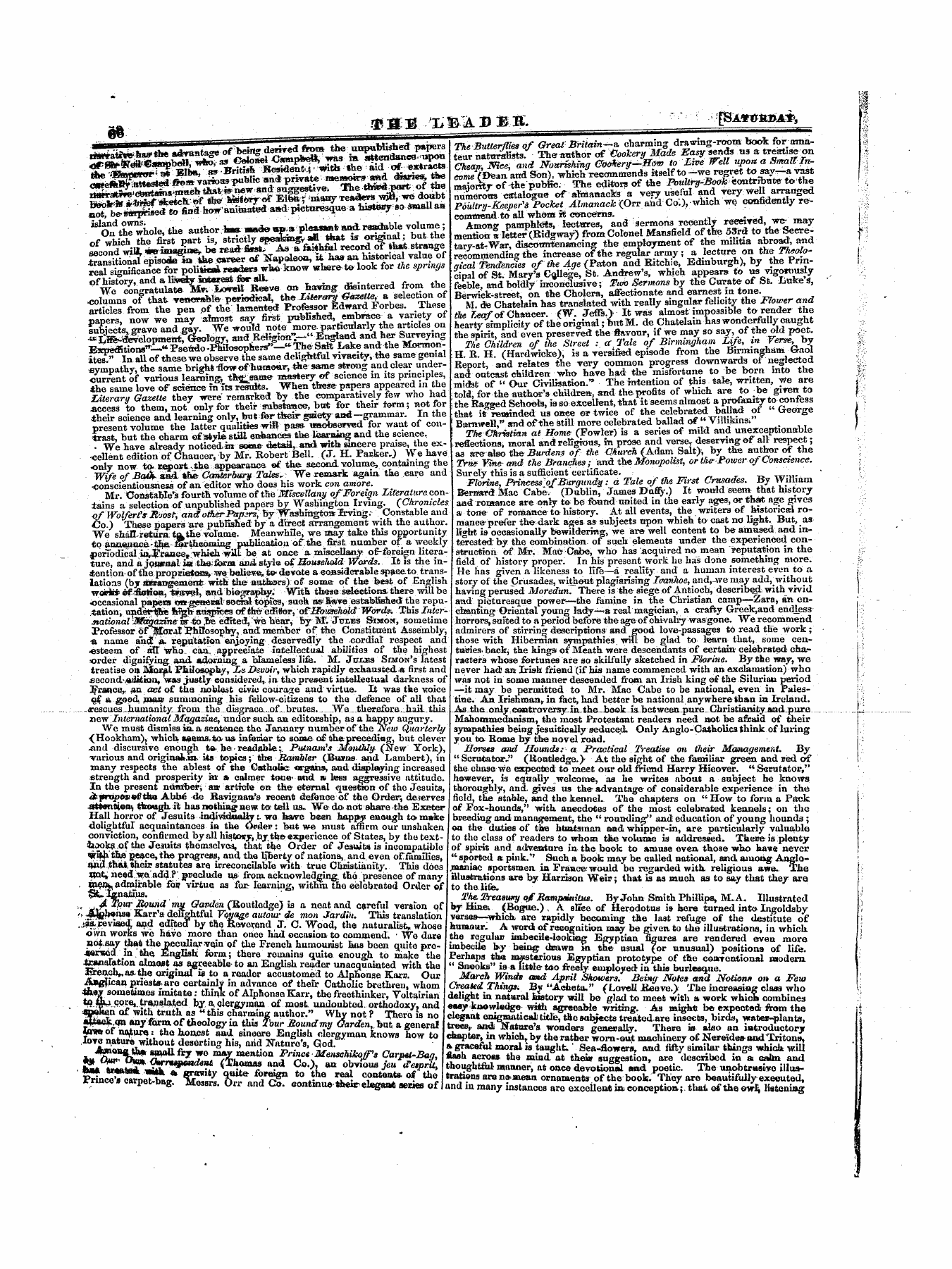
SSSMPKfflSSfftSsS ^ ^ nthlwhole , tte author , ! ^ «^« P » pl ««« fe ******** ™ } j of wMch the first part is , str ictly speaWgvall tiwt is original ; but the ? LZaTiti £ VE * £ m > be rea * fi ^ s ^ As a faithful reeord of that strange SStSepfsSe ^ he career of Kapoleou , it ha * an historical value of Sal Sficance for politie s * readers who know whereto look for the springs of history , and a liis ^ int erest for alL . We congratulate WlicmjB Reeve on jtovmjT disinterred from the columns of that venerafete periodical ! , the . tot *« ry Gazette , a selection of articles from the pen . of the lamented Professor Edward Forbes . These papers , now we may almost say first published , embrace a variety of Subjects , grave and gay . We would note more , particularly the articleson -is ^ eiopmen ^ i ami
Expeditions"' -- " Psetrdo-Philosophers' — ~ xne oare -ase we **«* suites " In all of these we observe the same delightful vivacity , the same genial sympathy , the same bright flow of hamoor , the same strong and clear undercurrent of various learning ; , thef same mastery of science in its principles , the same love of science in its results . When these papers appeared m the Literary Gazette they were remarked "by the comparatively few who had Access to them , not only for their substa-nce , btrt for their form ; not for their science and learning only , but for tbeir gaiety and—grammar . In the present volume the latter qualities wiS pass usobserved for want ol contrast , but the charm of a * yte still enhances the learning and the science . and with sincere the
• We have already noticed ire some det » a , praise , excellent edition of Chaucer , by Mr . Robert Bell . ( J . H . Parker . ) \ Vehaye only now to . repast the appearance , of the second volume , containing the Wife of BaA and the Canterbury Tales , We remark again the care and ^ conscientiousness of an editor who does his work con aniore . Mr . Constable ' s fourth volume of the Miscellany of Foreign Literature contains a selection of unpublished papers by Washington Irving . ( Chronicles of ' Wolferts Roost , and other Pap&s , ^^ by Washmgto » Irving : Constable and Co . ) These papers a , re published by a direct arrangement with the author . We shall return t ^ the volume . Meanwhile , we may take this opportunity to anaaimce the fartneoming publication of the first number of a weekly oirtoreilitera
f > erTodical uM ? ranee * which wUL be at once a miscellany « n - ture , and a journal h * the : form and . style of Household- Words . It is the intention- of the propnietocs , webelie * e > to * devote a considerable spaeeto translations ( bj aanrangenienfe with tlie- attthors ) of some of the best of English worfc * © f ^ fiction , t » av ? l , and biography . With these selections , there will be occasional papens * o » geaeBal'socTal topics , such n » fee established ! the reputation , underline fcfeh axispices of ( She editor , of "Household Words . This International Magazine mio , * b edtted , we he > r , by W . Jur . ES Simon , sometime Professor of ^ brat PJijuosophy , and : member of lie Constituent Assembly , u name ahcE a , reputation enjoying deservedly the cordial respect and esteem of aflT who . can . appreciate Intellectual abilities of the highest and blameless life Simonlatest
order dignifying , adorning a . M . Jotjes ' s treatise oil MaraL Philosophy , La , Devoir , which rapidly exhausted a first and second-. edition , was justly considered , in the present intellectual darkness of France ,, an act of the noble 3 t civic courage and virtue . It was the voice of a good , yaasp summoning his fellow-citizens to the defence of all that rescues ,, humanity , from the disgrace-of .. brutes .. r We _ . therefore , huii . this mew International Magazine , under such an editorship , as a happy augury . We must dismiss in . a sentence the January number of the New Quarterly ( Hookham ) , which sterna , to us inferior to some of the . preceding , but clever . and discursive enough to . be readable . ; Putnam ' s MoiUldy ( New York ) , 'various and originafc . uL its topics ; the Rambler ( Burns and Lambert ) , in many respects the ablest of the Catholic ; -organs , and displaying increased
strength and prosperity m a calmer tone < and a lees aggressive attitude . In the present number ^ aw article on the eternal question of the Jesuits , * fc prop ©* « tf the Abb £ de Rayignanfe recent defence of the Order ; deserves -attention ^ though it has nothing ) new to ; tell us . We do- not share the Exeter Hall horror of Jesuits individuall y i vra hare been happy enough t& make delightful acquaintances in the Order : but we must affirm our unshaken conviction , confirmed by all hiafcoiry , , bjthe experience of States , by the textfcooka of the Jesuits themselves , that the Order of Jeauita is incompatible W& th # peace , the prqgrees , and the liberty of nations ,,, and , even of families , and thai , their statutes are irreconcilable with true Christianity . This does W » t » need wa add P preclude us- from , acknowled g ing , tho presence of many tnejk admirable foif virtue as for : Teaming , withm the celebrated Order of
? au -Ignatius . Jl Tpur Round m % Gavden ( Routlodge ) is a neat and careful version of 4 ^ Qh « n s 9 Karr ' a delightful Voyage autaur de man Jardiu . This translation jaflLjcevised ; and edited by thq Ravorend J . C . Wood , * © naturalist whose own works we have more than once had occasion to commend . ¦ We dare oof say that the peculiar vqin of the French humourist has been quite pro-• aenwd in . the English : form ; there remains quite enough to make the tcanslation almost as agreeable to an English reader unacquainted with the French ,, aa the original is to a reader accustomed to Alphonse Kara . Our Anglican priests , are certainly in advance of their Catholic brethren , whom wht inucacela 01 Ai
• auwBuuwH : ^ K pnonse Jvarr , the trecthinker , V oltairiun * # . « u , pre . traflsLMied by , a , clergyman of most undoubted , orthodoxy , and * ni&mo £ with truth as this charming author . " Why not P There is no mwkm any form of theology in this Tour Sound my Garden ,, bnt a genera ! Jam of nature : the honest and sincere English clergyman knows how to lore nature without deserting his , arid Nature ' s , God . AwQua th * awaUft 7 wo may mention Prince MensaUkoff ' a Carpet-Bug , toOw ^ itonqpndenA ( Thomas ana Co . )> an obvious jeu tPetprit , w « Ma « mk w * k A armhy quite foreign to the real contents- of the fnnco 0 carpet-bag . Messrs . Orr and Co . continue theiireWad aeries of
The Butterflies of Great Britain—a . charming awing-room amateur nattmrtttts . The author ^ of Cookery Made Easy sends u 3 a treatise on Gtawi mee , and Nourishing Cookery-Koto to L ™ e Well upon a Small In-££ , 7 Wand Son ) , whtch -Vecotnmends itself to-we regret to say ^ -a vast maioferof thepubKc . The editors of the Poultry-Booh eontrrbute to the numerous catalogue of armanacks a very useful a ^ nd very ^ 11 arranged Poultry-Keeper ' s Pocket Almanack ( Orr and Co . ) , which we confidently recommend to all whom ife c&nceirna . Among pamphlets , fectwres , and sermons recently reeevred , we _ may mention alette / cRidgway ) from Colonel Mansfield of the 53 rd to the Seere-K . rr . ^ . WM . discoxmtenancinff the employment of the militia abroad , and fheolo
recommending the increase of the regular army ; a lecture on the - aical tendencies of the Age ( Paton and Ritchie , Edinburgh ) , by the Principal of St . Mary ' s College , St . Andrew ' s , which appears to usjigofously feeble and boldly inconclusive ; Two Sermons by the Curate ot bfc . Jjuttes , Berwick-street , on the Cholera , affectionate and earnest in tone . M de Chatelain has translated with really singular felicity the Flower and the Leaf of Chaucer . ( W . JeflTs . > It was almost impossible to render the hearty simplicity of theoriginal ; but M . de Chatelain has wonderfully caught the spirit , and even preserved the flavour , if we may so say , of the old poet . The Children of the Street : a Tale of Birmingham Life , m Verse , by H R H ( Hardwicke ) , is a versified episode from the Birmingham ^ Gaol Report , and relates the very common progress downwards of neglected and outcast children who have had the misfortune to be born into the midst of " Our Civilisation . ' * The intention of this tale , written , We are told , for the author ' s children , and the profits of which are to be given to the Ragged Sehoots , is so excellent , that it seems almost a profanity to confess that ifr Teminded us oaee or twice of the celebrated . ballad of George Barnwell" « nd of the still more celebrated ballad of " Villikms ;
, The Christian at Home . ' ( Fowler ) is a series of mild and unexceptionable reflections , moral and religious , m prose and verse , deserving of alt respect ; as are also the Burdens of the Church ( Adam Salt ) , by the author of the True Vm * and the Branches ; and the Monopolist , or the-Power of Conscience Surely this is a sufficient certificate . , „ .,,. Florine , Princess of Burgundy : a Tale of the First Crusades . By William Bernard Mac Cabe . ( Dublin , James Duffy . ) It would seem that history and romance are only to be found united in the early ages , or that age gives a tone of romance to history . At all events , the writers of historical romance prefer the dark ages as subjects upon which to cast no light . But , as light is occasionally bewildering , we are well content to be amused and interested'by the combination of such elements under the experienced
construction of Mr . Mac Cabe , who has acquired no mean reputation in the field of history proper . In his present work he has done something more . He has given a likeness to life—a reality and a human interest even to a story of the Crusades , without plagiarising ItranJioe , and ,-wemay add ^ without having perused Moredun . There is the siege of Antioch , described with vivid and picturesque power- —the famine in the Christian camp—Zara , an enchanting Oriental young lady- —a real magician , a craf ty Greek , aud endless ^ horrors , suited to a period before the age of chivalry was gone . We recommend admirers of stirring descriptions : and good love-passages to read the work ; those with Hibernian sympathies will be glad to learn that , some
centuiiries . back , the kings of Meath were descendants of certain celebrated characters whose fortunes are so skilfully sketched in Florine . By tae ^ way , we never had an Irish friend ( if bia name commenced with an exclamation ) who was not in some manner descended from an Irish king of the Silurian period —it may be permitted to Mr . Mac Cabe to be national , even _ in Palestine . An Irishman , in fact , had better be national anywhere than in Ireland . As the only (^ txovexsyia the . book is between pure Chriatiaiiifcy and pure Mahonxmedanism , the most Protestant readers need not be afraid of their sympathies being jesuitically seduced . Only Anglo-Catholics think of luring you ta Rome by the novel road .
Horses and- Hounds : a Practical Treatise on their Management . By " Scrutator- " ( ltontledge . ) - At the sight of the familiar green and red or the chase we expected to meet our old friend Harry Hieover . " Scrutator , " however , is equally welcome , as he writes about a subject he knows thoroughly , and . gives us the advantage of considerable experience in the field , the stable , and the kennel . The chapters on " How to forma Pack of Fox-hounds , " with anecdotes of the most celebrated kennels ; on the breeding and management , the " rounding" and education of young hounds ; on the duties of the huntsman and whipper-in , are particularly valuable to the class of readers to whom tfee volume is addressed . There is plenty of spirit and adventure in the book to amuse even those who have never " ¦ sported a pink . ' Such a book may be culled notional , and among Anglomaniac sportsmen in France : would bo regarded with religious awe .. The illustrations are by Harrison Weir ; that is as much as to say that they are to the life .
The . % reaau * y of Mampainitue . By John Smith Phillips , M .. A . Illustrated by Hiue ; ( Bogue . ) , A slice of Herodotus is here turned into Ingoldsby veraes—which are rapidly becoming the last refuge of the destitute of humour . A word of recognition may be given to the illustrations , in which , the regular imbecile-looking Egyptian figures are rendered even more imbecile by being ; drawn m the usual ( or unusual ) positions of life . Perhaps the mysterious Egyptian prototype of the conventional modern . " Snooks" is a little too freely employed in this burlesque . March Winds and April Showers . Being Notes and Notion * on a Few Created Things . By "Acheta . " ^ LoveU Reeve . > The increasing class who
delight in natural history will be glad to meet with a work which combines easy knowledge with agreeable writing . As might be expected from the elegant enigmatical title , tike subjects treated are insects , birds , water-plants , trees ,, ami Nature ' s wonders generally . There is also an introductory chapter , in which ,. by the rather worn-out machinery o £ Nereides-and Tritona , & graceful moral is taught . ' Sea-flowers , and fifty similar things whid * will saah across the mind at their suggestion , are described in a aalta and thoughtful- manner , at once devotional and poetic . The unobtrusive illustrations are no mean ornaments of the book . They are beautifully executed , and in many instances are excellent in . conception ; thai of the owl ; liatening
Untitled Article
dr book for " ^ tf ^ I / lB&BmB . " [ SAWimA ^
-
-
Citation
-
Leader (1850-1860), Jan. 20, 1855, page 66, in the Nineteenth-Century Serials Edition (2008; 2018) ncse-os.kdl.kcl.ac.uk/periodicals/l/issues/vm2-ncseproduct2074/page/18/
-