
On this page
-
Text (4)
-
Untitled Article
-

Untitled Article
-

Untitled Article
-

Untitled Article
Note: This text has been automatically extracted via Optical Character Recognition (OCR) software. The text has not been manually corrected and should not be relied on to be an accurate representation of the item.
-
-
Transcript
-
Note: This text has been automatically extracted via Optical Character Recognition (OCR) software. The text has not been manually corrected and should not be relied on to be an accurate representation of the item.
Additionally, when viewing full transcripts, extracted text may not be in the same order as the original document.
Untitled Article
to pioneer the conquests of settlement and commerce ; and it is to be hoped that Sir Roderick and his coadjutors will have sufficient influence over the less exalted official mind of our day to procure the requisite authority and support for General Haug and his companions . Luckily , the Colonial department has for its chief a man who is distinguished from the ordinary class of minds by a generous intellect , and we hope to see some conspicuous portion of the territory which Science proposes to annex to the lands of civilized life named after the Minister of the day , " Newcastle . "
Untitled Article
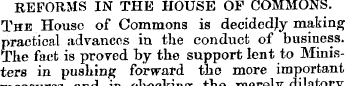
REFORMS IN THE HOUSE OF COMMONS . The House of Commons is decidedjy making practical advances in the conduct of business . The fact is proved by the support lent to Ministers in pushing forvrard the more important measures , and in chocking the merely dilatory resistance of the Opposition . Thus the Incometax Bill has been got through the House of Commons with an unexpected facility , notwithstanding the manifest array of mere oppugnance . The project for continuing the Government of India but instead
has to undergo a lengthened debate ; of permitting the whole time to be absorbed by that one subject , for a week or a fortnight , as would have been the case in former sessions , the adjournment over a couple of days at a time enables the enthusiasts of Opposition to let their effervescence subside , while other public affairs are carried forward , and probably we shall arrive at the ultimate conclusion of all the debating on that one measure as soon as if we had allowed the House to work itself up at each stage into a fortnight ' s fury ,
Another practical improvement , for not enforcing the exclusion of strangers from all parts of the House during a- division , is smaller , but not unimportant in its kind . The traditional practice of sending away all " strangers" in order that they may not watch a proceeding which is afterwards carefully announced to the world in its minutest details , was not only theoretically absurd , but it caused hindrance and confusion in the reports of whatpassedimmediately afterwards . But perhaps the greatest effect of the last
regulation will bo felt by members themselves , who are henceforward to be allowed two minutes clear time after the order for a division , before the division is to be taken . It has been the growing custom in the House to divide employments , and thus great relief is obtained . The members divide themselves during the day into select committees , each devoted to particular objects ; and in the evening they divide the advocacy into two or more sides ; and the art of dividing employments is carried even into the labour of attention , each
party attending only to the arguments on its own side . The arrangement has the advantago of more than ever convincing those who listen ; while the other side is able to enjoy , without interruption , precisely the corresponding advantages . Another interesting division of employments consists in that which allots the speaking to one set of members , and the voting to another ; and this last will be greatly facilitated by the now regulation . Lord John RushcII , for example , who spoke against the Irinh Church and did not vote , would have plenty of time to make Iuh oscapo ;
while the members outside , who had nothing to do with tho arguments , but only voted , will have had plenty of time to oomc upon tho field . It is probable even that some expansion to the range of members will bo facilitated , and it will bo an interesting calculation to know how far they may range , and yet get back in time . We have a strong conviction that , by a skilful adjustment of signals , swift footed mombern might vonture as far as tho second lamp poHt in Parliament-street . Onoo establish the privilege , however , and it may bo extended . Tho roeent institution of tho electric telegraph at the Opora Houae , in
connexion with the Houses of Parliament , ought not to bo forgotten ; it only wants a tubular railroad at high-pressure speed between tho grand tier and the lobby , with tho electric ; telegraph , to prolit both Opera and members , by permitting them to continue their lounge in the theatre of Hong , and yet perform the " wliolo dut-y of inomborH" in the theatro of law , by being trajoctcd into the lobby at tho proper moment . A Lord George Bontinck , however , will bo needed to make regulations for keeping tho course clear , as thorn will bo grout danger of confuniou near the "inning powt jtmt before Ihe expiry of tho two minutes . '
Untitled Article
ALEEKEP HALESKEPASTEER . Some time ago , in the mysterious column of the Times , appeared an inquiry for an Ale " ekephaleskepasteer ; and subsequently in the same column appeared a reply , announcing that the mysterious being was in the right place , and exhorting the enquirer to wait till June . June has come , and with it Aleekep hal&jkepasteer . We look for the " mister wight" with curiosity , supposing that it must be some fugitive creditor , an injured husband , a lovely and confiding woman , a political conspirator , an Oriental seer—when , lo ! it stands confessed—a hat I The ingenious inventor has resorted to the contrivance for drawing attention to his wares . * " Ale " ekephaleskepasteer , " " implying , " as a circular inforrna us , " a title for the protection of the head from the sun's influence . " How a lawyer would relish this power of title . 1 It "is an invention for the ventilation of hats , and embraces that perfection and comfort , lightness and softness , so long fruitlessly sought for . " This illustrious stranger has been a " theme of conversation or lecture ; " but , with pride we say it , it has undergone " the
severest ordeals of the medical and scientific profession . " ISow , the severest ordeal for a hat implies something very violent — kicking , for example ; and it proves great intrepidity and confidence in the inventor , that he should assemble a conclave of medical and scientific professors on purpose to kick his model hat . " In this discovery , " we are told , " rests the whole secret and cure for baldness "—by favour of
Aleekephaleskepasteer you may be bald , or not , at pleasure . Thus commerce in its extremity , and to attract attention amidst the innumerable crowd of competitors , is obliged to resort to every extravagance of invention , in title , in method of advertising , almost in the demeanor of the tradesman . The consumer sits in a kind of seraglio of producers , each courting his attention by every conceivable grace . One vendor comes before you when you seek another ; " and , when he called another , Aphra came . " And when we call for Augarde , Melton comes !
But need we wonder at these devices in hats , when we observe exactly the same device in what the Chinese call " religion-business , " or in the trade of philanthropy ? However benevolent the object of an Exeter-ball meeting may be , its promoters do not despise the advertisement of some name or illustrious curiosity . A week or two sinoeit was advertised that the Archbishop of Canterbury would preach at a particular church , and by way
of attracting an audience , of " drawing a house , the advertisers stated that they had authority to announce that Mrs . Beecher Stowe would be amongst the congregation . Evidently the promoters of tho charity for which the sermon was to bo preached , counted that the congregation would not care to come to worship unless the stage-manager threw in the additional attraction of a good stare at Stowe .
Untitled Article
"A S'i'RANGEH" IN PARLIAMENT . This supremely dull Parliamentary week wns to have boon relieved lust night by interpellations on the Turkish question ; in tho " Lords at the instance of Lord Clanricarde , and in tho Commons , on tho motion of Mr . Luynrd , whoso dabdt was expected with tho interest which uncontrollable reading and visits to the British Museum compel ; but tlio " public service" had to bo consulted ; and as Admiral Dundas had sailed from Malta for tho Dardanelles , for reasons which nobody in
this Holf-governed country know anything about , not oven Mr . Layard , tho only man in the House who can swear to the identity of MonschikoiT—it was agreed to ]) osti > one all interrogatories about tho matter , and to leave " business" to progress , as it could . The Lords wasted three or four hours in lacerating Mr . Koogh , because , notwithstanding indiscreet speeches in Ireland , ho readily accepted the offer to join an English Government ; and tho Commons busily employed fivo hours in getting " stages" of Hills on—no doubt serving tho nation , certainly not amusing anybody .
The other Eastern question — the Govornmont India Hill — has not become very engaging as yet . Tho speaking on Monday and Thursday was good , but hardly interesting . Mr . Blackelt , who resumed the debate on Thursday , could not nmko a bud speoch ; but be has not yet ho far trained bis clovomoss into the ways of tho House as to talk in that relieved stylo which gratilies attention , -incidentally convincing , but first of ull , interesting . Mr . John Phillimore , who resumed on Monday , wita full of knowledge , which ho poured out ceaselessly for throo hours x—Sir Charles
Wood not only makes , but is tne cause of long speeches But Mr . Phillimore is too forensic and rhetoricAl as yet , and must hit on a lower key if he wishes to become a Parliamentary personage—which clearly he does . By and bye , we shall get into real debates on India : for the first time in living memory , we shall have a Parliamentary discussion in which votes will depend on the speaking . But up to this time it is prologue , and all the speaking , after Mr . Bright ' * crushing reply to Sir Charles Wood , which delayed the bringing in of the Bill , was a mistake . Sir J . W . Hogg was palpably premature in his elaborate defence of the body over astutel but
which be has so long and so y presided ; , apart from that point , the defensive oration , as a speech to the jury , with that earnestness which would distinguish a distinguished counsel pleading for himself , was worthy of the cause and the occasion , and , had the House been otherwise than nearly empty , might have produced some effect to balance the conclusions accepted by a large majority from Mr . Bright . The House was empty ; it was emptied by Sir Charles Wood , filled only partially for Mr . Bright , and has been kept empty up to last night , ever since . Mr . Phillimore spoke for three hours , all about Sir Charles ' s 150 , 000 , 000 fellow subjects—and the 150 , 000 , 000 ought to know of these indications of Interest in them—to about thirty
men ; Mr . Blackett to about fifty ; Mr . Danby beymour to about twenty , including six ministers : among them , Sir William Molesworth , as usual , asleep ; Sir J . Hogg to about fifty ; Mr . Hume to the same number . On Monday there was no excuse for this slack attendance , but on Thursday there was : for wasn't it the Ascot-night , and didn't the Opera-lobby telegraph inform the loungers in those delightfnl precincts that it was only Wishy , or only Washy ; and who would go and hear Washy in reply to Wishy ? And it should be understood that even those who did
attend didn't pay attention . Thus Mr . Hume spoke from his usual corner , and immediately below him , on the Treasury-bench , sat Mr . Strutfc and Mr . Robert Lowe ; and the two officials were so remiss as to chat in utter . indifference of the orator who was gesticulating ovor their heads , so that Mr . Hume had to stop , losing his temper for the first time in his life , and to request them to leave their seats , causing a great scandal , tempered by much grinning , in which
Mr . Strutt excelled . As to Mr . Danby Seymour , no one listened to him , and when Mr . Blackett , at a later hour in the evening , apologized for and withdrew Mr . Seymour ' s charge , that the Globe aud Morning Chronicle were paid for their friendship by the Government , the House waa not aware that any such accusation had been made , But they liked the news , and the apology , and laughed at the appropriateness of Mr . Blackett apologizing for such an insinuation .
Other matters have interfered with the Indian debates . The season is at its height , and the Commons House is full of young nobles who must dance , and dine , and do other things in the season ; and then , it is always a slack week during the Ascot races . Tho races ought to have accounted to Mr . Cobden for tho " No House , "—practically a count-out against Mr . Cobdon . The young nobles were all down on tbo Heath , and the iniddle-aged gentlemen of business who came down to Westminster , on Tuesday , to kill time between the hours when they had finished all their letters and interviews , and the hours when they could
dine , did not need much persuasion from the Whips to go away again . Who wanted a Houso on that boautiful evening ? No one . And tho nation gained by tho losa of a day . Mr . Cobdon , with his Pegu motion , would have uselessly raised the Indian question on an incidental point ; and an to Mr . Isaao Butt , with hia motion fbr inquiry into the intimidating qualities of Irish priests , tbo discussion on such a question would have occasioned new mischief in religious contentions , which no letters of Lord Aberdeen , in the way of snubs of Lord John Russell , would bo able to allay . Mr . Cobden would not , or ' could not , sco these points t and with his usual tact , ho confessed openly to his silly vexation , on Wednesday , and made complaints which everybody , and particularly our principal door-koeper , Lord Charles
KussoII , heartily laughed at . It was a curious study , that evening , between throo and four , in the members ' vestibule , to watch tho manoeuvres wlifch so happily , resulted . It is a groat mistako to snpposo tho Government alono accomplished the " No House . " Mr . Hayter was warmly aided by tho Opposition j oven Mr . Butt did not look , as he kept a respectablo diatanco from tho door , very anxiou * to provoko the inevitable war of bigots . Nobody , in fact , wanted to go in , but Lord Dudley Stuart , who had a police motion on tho paper , in obodionco to some of those wretched parochial importunities to which ovory metropolitan member is exposed ; and Mr . Cobdon , who bad a vaHt pile of papers under bis arm , and was ready , after an evening ' s reading , to turn India ineido out ; and Mr . Hume , who dreads a
Untitled Article
508 T H E LEADER , [ Saturday ,
-
-
Citation
-
Leader (1850-1860), June 11, 1853, page 568, in the Nineteenth-Century Serials Edition (2008; 2018) ncse-os.kdl.kcl.ac.uk/periodicals/l/issues/vm2-ncseproduct1990/page/16/
-