On this page
-
Text (3)
-
Untitled Article
-
Untitled Article
-

Untitled Article
Note: This text has been automatically extracted via Optical Character Recognition (OCR) software. The text has not been manually corrected and should not be relied on to be an accurate representation of the item.
-
-
Transcript
-
Note: This text has been automatically extracted via Optical Character Recognition (OCR) software. The text has not been manually corrected and should not be relied on to be an accurate representation of the item.
Additionally, when viewing full transcripts, extracted text may not be in the same order as the original document.
Untitled Article
• For the sake of securing as many votes m possible , ¦ to GIBSON consentedto add to the first resolution Swords "as early as may be with reference to the ^ irity of the public revenue / ' After the Chaitoei ,-s of the Exchequer had made some explanations , ¦ ^ d warned the House not to come to any precipitate ^ solutions of the kind now proposed , and not to pledge themselves to measures which might endanger the financial position of the country , the House divided on the resolutions , and the numbers were as follows : —' For the first ( proposing the abolition of the paper duty ) • • • • • • • • 10 > 7 Against it . . . . ¦ • • • • • 195 h Majority . , . . . r— -88 For the second ( proposing the abolition of the stamp duty ) . . ...... 100 Against it . . • • • • • • • • 199 Majority . . ... —99 For the third ( proposing the abolition of the advertisement duty ) . 116 Against it . . . .... .... . 181 ° Majority .... . 65 HOUSE OF LOEDS . Lord Redesdai / e moved for copies of the forms of writs used for the summoning and prorogation of theconvocation of the clergy for the province of York , on Monday , and stated that the object of his motion was to procure the same privileges for the clergy of the province of York with respect to convocation as were enjoyed by their brethren of the province of Canterbury . The Archbishop of Yoke explained the course pursued by his predecessor and himself with respect to the summoning of convocation in the province of York , resting his defence entirely on the fact that he had followed precedent . He added that the address of Lord Eedesdale should have his best consideration . After some farther discussion , Lord Redesdale withdrew his motion . Lord Derby * in reply to the Bishop of London , stated that he could not , without further consideration , undertake to say what course the Government would pursue with respect to appeals in matter of doctrine . The Bishop of London proposes to bring in a bill enabling the bishops to consider and decide on doctrine , transmitting their decision to the Judicial Committee of the Privy Council by way of advice . Egypt and Tprket . ;—In the House of Commons , on Tuesday , in reply to a question put by Mr . Andekson" , the Chancem-ob of the Exchequee said he had great pleasure in informing the House that the dispute between the Porte and the Pasha of Egypt had terminated ; that Her Majesty ' s Government had received official notification that a complete adjustment of thoir differences had taken place , the Porte having conceded to Abbas Pasha the power of capital punishment for a term of seven years , and the Pasha having accepted that compromise as perfectly satisfactory .
Untitled Article
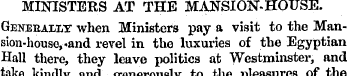
MINISTERS AT THE MANSION-HOUSE . Genebally when Ministers pay a visit to the Mansion-house , « and revel in the luxuries of the Egyptian Hall there , they leave politics at Westminster , and take kindly and generously to the pleasures of the hour . Premiers talk of anything but their policy , compliment anybody but one of themselves , and run as gracefully and gaily through a course of pleasant commonplaces as thoy have through the courses of dinner and dessert . But now and then fate favours us with
an exception , and a Premier has been known to speak oracularly from the seat of honour at the jovial table of a Lord Mayor . One such event happened on Saturday . The reigning potentate of the city gave a grand banquet on that day to her Majesty ' s Ministers . To moot these high stato functionaries , his civic lordship invited soveral other lords and gentlemen , who , together with their ladies , made a showy spectacle in the
groat hall famous in the annals of good dinners . Thoro wcro tho Duko of Cambridge , who inherits a kind of festal kingship ; tho Fronch ambassador , Walewski , the liorald of peace , and a « hoal of other ambassadors , Hooretavies , and charge * d ' affaires ; a groat company of members of the Commons , of tho Tory and Protection-Whi g persuasions ; and u miscellaneous host of city Pcoplo .
Tho routino of royalist toasts was preserved , the J'uko of Cambridge replying for himself and tho ' Royal Family *> the Duko of Northumberland and ¦•^ Wl Combormoro acknowledged " tho Navy and Army , " tho totter hoping that in the hour of need tho good citizons of London would place more rolianco 011 tll ° swords and lwyonots of our troops than on tho ^ 'solution * of the , Peace Society "—a heavy shot , which ' « wno cheorcd and others folt bound to laugh at . Then WMnotho toast of tho ovoning— " Tho Earl of Derby nna her Mujosty's Ministers . "
A « a innttor of course tho Earl of Dorby maUo u * g reply . Abstracting tho opening compliments , his H Poech may bo divided into two parts , tho first being a stron g ana uniatoutioma argument against tho Militia
Bill ; the second a vague , misty , undecided criticism on , and supplement to , Mr . Disraeli's amazing Budget Speech . Translated into concise terms , the first part of Lord Derby ' s speech said : —Our avowed policy is peace . We accept the presence of foreign ministers here not as a compliment , but as " a mark of adhesion to that policy which pi * ofesses an absolute and entire non-intervention in the internal affairs of other countries . " There are . elements of internal discord , it is true , in other states ; and ours at-least is not the Utopian age when we can do without organized national
defence ; bub " throughout Europe and throughout the world there is a general desire on the part of all nations to extinguish at once the slightest spark which may appear to threaten external convulsion , or to endanger the general peace . " ( Loud cheers . ) The exertions of all countries will be used to put a " friendly extinguisher" upon the first elements of strife ; and if any one power , without provocation , made a hostile attack on another , that power would be universally reprobated . Not content with that strong testimony in support of Mr . Cobden ' s theory of peace , Lord Derby kindly furnished a yet stronger : he
said" I am confident that there is an enlightened feeling arising jqow among all Governments and amon g all nations —that there is a growing conviction that their interests , their honour , their welfare , and their real glory , are better p romoted by developing their internal resources , by fostering the domestic industry of their people , b y promoting the enjoyment , the wealth , and the prosperity of their subjects , than by any dreams of military glory , however brilliant , or by any prospect of aggressive conquests , however dazzling ? ' ( Hear and cheers . )
After a few more words on the " primary importance" of commercial intercourse , he opened up his second subject . This was no less a theme than the Chancellor of the Exchequer and his Budget Speech : — " Not many days have elapsed since a right hon . friend of mine ( the Chancellor" of the Exchequer ) , in a speech which fully and amply refuted the unworthy notion that a man of wit and genius cannot grapple with the ordinary details of statistics—that a man possessing high , ability , a
vivid imagination , ; andjjreat ejoduence , cannot master the driest commercialarid " finaiiCTar ^ opies ^ jxiost ably and most eloquently demonstrated to ' an aamiring House of Commons the great ^ progress which our trade and commerce have made in recent years , and snowed how the reduction of duties imposed upon foreign commerce has produced a largely increasing-consumption , and consequently greatly increased enjoyment on the part of the consumers ? without affecting the revenue . "
But there was " one topic" which that " right honourable friend" did not touch on , namely , the effect which may he produced on those large classes who , though mainly producers , are also consumers . This is indefinite enough , but as he proceeds matters amazingly complicate . Government , it is hinted , ought not to confine its attention to one class , but solve this problem— " how to reconcile apparently conflicting interests—so that , while giving no undue advantage to one class of our follow citizens over another , it may promote the interests of all , and by mutual concessions and by mutual compromises may blend the interests of all in one harmonious whole . "
Starting from this point , he ran round tho circle of ideas it suggested , delivering an elaborate essay on the principle of British government , and saying things which we , certainly , shall not willingly let die—especially the church compromise . " In fact , tho whole Hystomof government in every constitutional country is a system of compromises and concessions—not of unduo compromises , not of unworthy concessions—not of compromises of principle for tho sako of expediency , but of compromises botweon conflicting oxpedionts , and mutual concessions between apparently conflicting intoroats . ( Hoar , hoar . ) Tho whole Hystcm of our
Constitution ia onp groat compromise . Tho Throne itself ia based upon acompromiso botweon arbitrary monarchical power and thoso befitting and dignified restrictions which arc imposed by constitutional Governments upon the minds of Monarchs . Our House of Lords is a compromiso botweon an horoditary exclusive aristocracy ami a body partaking of tho advantages of tho institution of nobility at tho saino timo that it is enabled to claim this groat advantage—that it is daily , or at least yearly and p <> rpotuaUy , recruited from tho ranks of tho people , thus blending tho aristocracy and tho commonalty . (' Hoar , ' and choora . ) Tho House of Commons is u system of compromiso botweon that in fluonco which ia exorcised by tho lug her
olassos of noeioty and tho restrictions imposed by paruai exclusion , botwoon those olomonts on tho one hkIo ami llio democratic power of tho people on tho othor , by wJuou amplo and full moans aro givon to tho expression ot ovorv popular Hcntirnont and of ovory popular vtysh . J . I 10 Uhurcu of England —long may Providence preserve it to us I ( Cheers)— is a compromiso , and a most valuab o compromiso , botwoen tho unrestrained powor of spiritual dominion and tho abnoluto dopondonco of tho clergy upon inocaprico of tho ilookfl over whom they aro called to proHum . Our wholo system in a system , of covuproniiBOH , aiul lio dosi , administera ' tho arduous post of cojuluctmij tho vu « t ana complicated affairs of this groat uwipiro who known > iow flMv to adiust tho variouH portions of tho great maciuno , mutual chocks
involving ' this complicated machinery ot and balancoH , by tho removal of one of which the action ot eomo othor part wight , perhaps , bo moro rapid , but tno
whole machine would be disordered and disarranged .. ( 'Hear , hear , ' and cheers . ) It would , my lord , be an easy task for a Minister to avail himself upon every occasion of every gust of popular opinion—to scud before the gale , and to congratulate himself upon the rapidity of his progress , reckless and regardless in what direction that gale is blowing , and whether it is bearing him upon a lee-shore , or upon a dangerous rock , with the more certain destruction the more rapid may be his progress . But the aim of the noble science of statesmanship surely must be to use the popular elements as the valuable breeze which fills : the
sails—not setting your course in tie teeth of the wind that blows , nor scudding blindly before it , but availing yourself of that breeze to speed you on your destined course , and with a steady hand upon the wheel , and with mind and eye fixed upon , one single object—^ lie safety of the good ship , the crew , and the priceless cargo—to consider , not the rapidity of your progress , but the certainty of the course you are pursuing . Then , by the application of the doctrine of opposing forces , let the wind blow from the north or from the south , the steady hand at the hslm may speed the vessel on her destined course , whether that course be east or west . " ( Loud cheers . )
He knew that such a course was not likely to be at all times popular , but he trusted that his countrymen would more consider the steadiness than the rapidity of the progress ; and that if a Ministry acted for itself and upon its own convictions , those convictions would , in the long run , force themselves on the sympathy and support of the people . Count Walewski responded in the name of " the Foreign Ambassadors . " We beg especial attention to his speech , as to a reflective mind it discloses many things . He
said" Besides , the presence in this assembly of the representatives of foreign powers is the most palpable proof of the amicable relations which , so happily exist between Great Britain and the European continent—What do 1 say?— -Between Great Britain and the whole world . In vain , certain alarmists endeavoured to trouble the public mind at the beginning of this year , and to spread a belief that the political horizon was becoming covered with clouds . These cross-grained pessimists ( malencontreux pessimistes ) have found but few echoes ; and from the opening of Par « liament , in , both , houses , eloquent and justly esteemed voices ( turning towards Lord Derby ) have shown the value of their vain declamations . No , I do not hesitate to affirm , tliat the political horizon ia nowhere overcast ; the
eloquent speech , whieh . you have just heard cannot leave a doubt in your minds on this subject . As to France in particular , I venture to hope that the Ministers of her Majesty the Queen , now present ( turning towards Lord Derby and Lord Malmesbury ) will not contradict me if I affirm that at no period have the relations between England and France been of a more satisfactory nature , and that a better understanding has never subsisted between the two governments as to the solution of all the questions now pending botli in the Old World and the New . " After he had sat down , he rose again , and proposed " the prosperity of the city of London . " To drink , said he , to the prosperity of tho city of London , is to drink to the peace of the world , for they are inseparable . t
Lord Lonsdalo replied to the House of Lords ;' the Marquis of Salisbury proposed " the Lord Mayor ; ' * and Mr . Disraeli responded to " the House of Commons" and his own name : —• " I may say of that House—and I see many of my brethren present of contrary political opinions to those which I hold—that it ia a true republic . ( Laughter . ) I believe , indeed , it is tho only republic that exists founded upon tho principles of liberty , equality , and fraternity ( renewed laughter ); but liberty is there maintained by order , equality is mitigated by good taste , and fraternity takes
tho shapo of cordial brotherhood . ( ' Hear / and cheers . ) I am suro , thoroforo , I may say for tho members of tho JTousn of Commons , whothor present or absent , whatever may bo thoir political opinions or their party feelings , that they would agree upon this occasion in expressing tho gratification which thoy all fool whon they avo remembered by thoir ancient frinnd and ally , tho city of London . ( Cheers . ) In tho city of London , in troublous times , thoy havo noug ht and found refugo . Thocity of London has assisted them , in vindicating their privileges ; and I bolipvo I may say for them that thoy uro prepared rit nil tirruis to uphold tho privileges of tho city of London . ( ' Hear , ' and clieorH . )"
He wound up with n not very happy compliment to tho " representative" of tho Lady Mayoress , whom ho puimhtgly willed a representative institution more ontitled , at that moment , to their gratitude than tho Hous . 0 of Commons . As tho Chancellor of tho Exchequer is II , wit of renown , men wore bound to laugh at his bad pun , and thoy did laugh . Civic toasts and speeches wound up tho evening .
Untitled Article
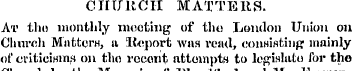
CHURCH MATTERS . At tho monthly meeting of tho London Union on Church Matters , a Iteport was read , consisting mainly of criticising on tho recent attempts to legislate for the Churoh by tho Marquis of Blundford ami Mr . Frowon . Wo ncod only add , that they recommend total abstinence from all * thmlur attempts , rightly assorting , that synodical action alono will furnish the truo means of remedying existing oviIk . Bufc as Government may obtain a majority tit tho ensuing election , and uppro-t priafco tho biU of tho Marquis of Blundford , tho Com - mittee lay down tho following lino of action : —»
Untitled Article
MAY lg , 18 S 2-J JTHEtlADIE , : : ' : 'W .
-
-
Citation
-
Leader (1850-1860), May 15, 1852, page 457, in the Nineteenth-Century Serials Edition (2008; 2018) ncse-os.kdl.kcl.ac.uk/periodicals/l/issues/vm2-ncseproduct1935/page/5/
-