On this page
-
Text (1)
-

Untitled Article
Note: This text has been automatically extracted via Optical Character Recognition (OCR) software. The text has not been manually corrected and should not be relied on to be an accurate representation of the item.
-
-
Transcript
-
Note: This text has been automatically extracted via Optical Character Recognition (OCR) software. The text has not been manually corrected and should not be relied on to be an accurate representation of the item.
Additionally, when viewing full transcripts, extracted text may not be in the same order as the original document.
Untitled Article
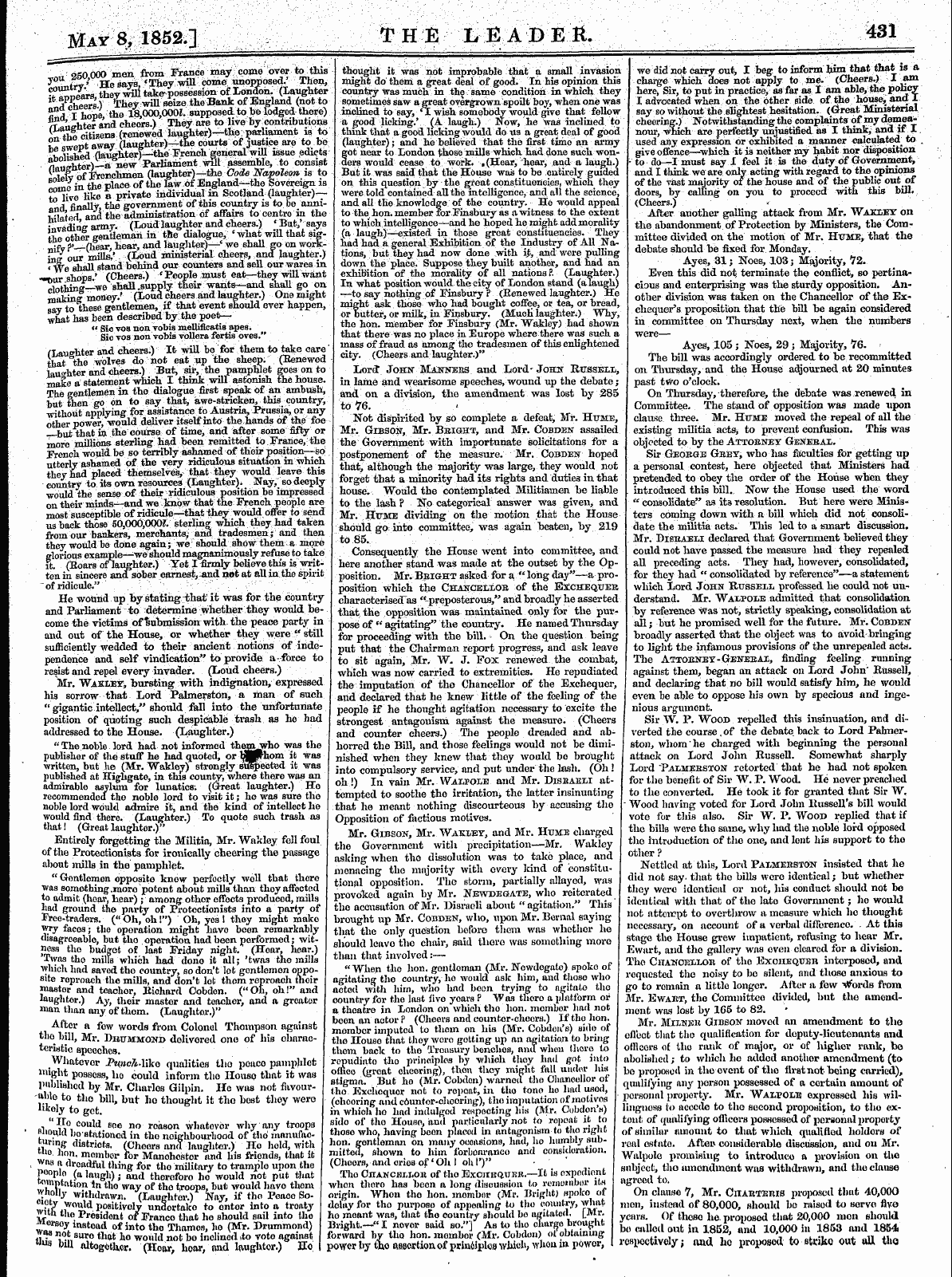
« ,, 250 OOO men from Erance may come over to ^ thig y « fVv' He says , < They wUl come uiiojmosed . ' Then , fc SpeaU they will take possession of London . ( Layghter KeTrs V They will seize the Bank of England ( not to Sd'Stthe l | GQO , O 0 O ? , suppo 36 it 0 belodgoithore ) Setter and cheers . ) They are to ^ hve by contnbutions Shi citizens ( renewed ^ laught ^ - ^ pftrUament ^ to Je swep t away ( laughter ) - ^ the courts ofjustice are to be Liiatod flailghter)—theOFrench general will issue edicts Xuffhter )—^ » ew Parliament will assemble , to consist Tiplv of Frenchmen ( laughter)—the Code Napoleon is to nnme in the place of the law of England—the Sovereign is to live like a private individual in Scotland ( laughter )—fl « dfin allythe g overnment of tMs country is to
beainu-, , ZiUtpA and the administration of affairs to centre in the SdSff army . ( Loudslaughter and cheers . ) ' But , ' says the other gentleman in the dialogue , ' what will that sig-* . jf v p »_ _( lfear , hear , and laughter)— ' we shall go on work-\ ne our mills . ( Iibud ministerial cheers , and laughter . ) < We shall stand behind our counters and sell our wares in ~ mir shops . ' ( Cheers . ) ' People must eat—they will want clothing—we shall . supply their wants—and shall go on making money . - ( Loud cheers and laughter . ) One might say to these gentlemen , if that event should ever happen , what has been described by the poet" Sic vos non vobis melUfleatis apes .
Sic vo 3 non vobis ypllera fertas oves . " / Laughter and cheers . ) It will be for them to take care that the wolves do not eat up the sheep . ( Renewed lauo-hter and « heers . ) But , sir , the pamphlet goes on to make a statement which I think will astonish the house The gentlemen in the dialogue first speak of an ambush , but then go on to say that , awe-stricken , this country , without applying for assistance to Austria , Prussia , or any other power , would deliver itself into the hands of the foe but that in the course of timej and after some fifty or more millions sterling had been remitted to France , the
French would be so t erribly ashamed of theirposition— -so utterly ashamed of the very ridiculous situation in which they had placed themselves , that they would leave this country to its own resources ( Laughter ) u Nay , so deeply would the sense of their ridiculous position be impressed on theirminds- ^ -and wei know that the French people are most susceptible of ridicule ^ that they would offer to send us back those 50 , 000 , 000 ?/ sterling which they had taken from our bankers , merchants ; and tradesmen ; and then they would be done again ; we should show them a more glorious example—we should magnanimously refuse to take it . ( Roarsi of laughter . ) ^ et I nrmly believe this is writton in sincere and sober earnest ,-and not at all in the spirit
ofridicule . " He wound up bystatingibhat it was For the country and Parliament to determine whether they would become the victims of Submission with the peace party in and out of the House , or whether they were" still sufficiently wedded to their ancient notions of independence and self vindication" to provide a force to resist and repel every invader . ( Loud cheers . ) Mr . Wakley , bursting with indignation , expressed his sorrow that Lord PalmerstOn , a man of such " gigantic intellect , " should fall into the unfortunate position of quoting such despicable ti * ash as ho had addressed to the House . ( Laughter . )
" Thenoble lord had not informed themjrho was the publisher of the stuff he had quoted , or bjHwhom it was written , but he ( Mr . Wakley ) strongly suspected it was published at Highgato , in this county , where there was an admirable asylum for lunatics ; ( Great laughter . ) Ho recommended the noble lord to visit it ; ho was sure the noble lord would admire it , and the kind of intellect lie would find thero . ( Laughter . ) To quote such trash as that ! ( Great laughter . )" Entirely forgetting the Militia , Mr . Wnkley fell foul of the Protectionists for ironically cheering the passage about mills in the pamphlet . " Gentlemen opposite know perfectly well that thoro was something . more potent about mills than thoy affected
to admit ( hoar , hear ) ; among othor effects produced , mills had ground the party of Protectionists into a party of Free-traders . ( " Oh , oh !") Oh , yos ! they might mako wry faces ; the operation might havo been remarkably disagre eable , but the operation had been performed ; witness the budget of last Friday night . ( Hoar , hoar . ) Twos tho mills which had dono it all ; 'twas the mills which had saved tho country , so don't lot gontlemon opposite re proach the mills , and don't lot thorn reproach thoir master and teacher , Biohard Oobdon . (" Oh , oh ! " and laughter . ) Ay , their master and teacher , and a greater man than any of thorn . ( Laughter . )"
After n few words from Colonol Thompson against tlio bill , Mr . Duummond dolivored one of his chnracterintic speeches . Whatever Puntc 7 i-Y \\ co qualities tlio pouco pamphlet might possess , ho could inform tlio Housp that it was published by Mr . Charles Gilpin . He was not favourable to tho bill , but ho thought it tho best thoy were "K oly to get . " IIo could boo no reason whatovbr why any troops Bnou , lcl bostationod in tho neighbourhood of tho manufaociist
" *« nff ncta . ( Cheers and laughter . ) Ho hold , with " > o . non . member for Manchester and his friends , that it waij ft dreadful thing for tho military to tramplo upon tho poopio ( a laugh ) and thoroforo ho would not put that ^ Vi lon ln t ^ o way of tho troops , but would havo them wholly withdrawn . ( Laughter . ) Nay , if tho Poaoo So" j , 7 , « wjd positively undertake to enter into a troaty "L « i « io Prosidoat of Franco that ho should sail into the ^ oreoy instead of into tho Thames , ho ( Mr . Drummond ) Jj ,. " ° . buto that ho would not bo inclined ito voto against "us bill nltogotUw . ( Hoar , hoar , And laughtor . ) Ho
thought it was not improbable that a small invasion might do them , a great deal of good . In his opinion this countrv was much in the same condition in which they sometimes saw a great overgrown spoilt boy , when one was inclined to say , ' T wish somebody would give that fellow a good licking . ' ( A laugh . ) Now , he was inclined to think that a good licking would do us a great deal of good ( laughter ); and he believed that the first time an army fd t near to London those mills which had done such woners would cease to work . . ( Hear , "hear , and a laugh . ) But it was said that the House was to be entirely guided on this question by the great constituencies , which they were told contained all the intelligence , and all the science , and all the knowledge of the country . He would appeal
to the hon . member for Finsbury as a witness to the extent to which intelligence—and he hoped he might add mo r ality ( a laugh)— -existed in those great constituencies . They had had a general Exhibition of the Industry of All Nations , but they had now done with it , and were pulling down the place . Suppose they built another , and had an exhibition of the morality of all nations ? . ( Laughter . ) In what position would the city of London , stand ( alaugh ) —to say nothing of Finsbury ? ( Renewed laughter . ) He mi ght ask those who had bought coffee , or tea , or bread , Or butter , or milk , in Finsbury . ( Much' laughter ) Why , the hon . member for Finsbiiry ( Mr . Wakley ) had shown that there was no place in Europe where there was such a mass of fraud as among the tradesmen of this enlightened city . ( Cheers and laughter . )"
Lord" John Manners and Lord-John Russeli , in lame and wearisome speeches , wound up the debate ; and on a division , the amendment was lost by 285 to 76 . ' Not dispirited by so complete a defeat , Mr . Hume , Mr . Gibson , Mr . Bbight , and Mr , Oobden assailed the Government with importunate solicitations for a postponement of the measure . Mr . Cobden hoped that , although the majority was large , they would not forget that a minority had its rights and duties in that house . Would the contemplated Militiamen be liable to the lash ? No categorical answer was given , and Mr . Hume dividing on the motion that the House should go into committee , was again beaten , by 219 to 85 .
Consequently the House went into committee , and here another stand was made at the outset by the Opposition . Mr . Bbight asked for a " long day "—a proposition which the Chancelxob of the Exchequer characterisedTas " -preposterous , " and broadly he asserted that the opposition was maintained only for the purpose of " agitating" the country . He named Thursday for proceeding with the bill . On the question being put that the Chairman report progress , and ask leave to sit again , Mr . W . J . Fox renewed the combat , which was now carried to extremities . He repudiated
the imputation of the Chancellor of the Exchequer , and declared that he knew little of the feeling of the people if he thought agitation necessary to excite the strongest antagonism against the measure . ( Cheers and counter cheers . ) The people dreaded and abhorred the Bill , and those feelings would not be diminished when they knew that they would bo brought into compulsory service , and put under the lash . ( Oh ! oh !) In vain Mr . Walpole and Mr . Disbaeu attempted to soothe the irritation ^ the latter insinuating that he meant nothing discourteous by accusing tho Opposition of factious motives .
Mr . Gibson , Mr . Waki / ey , and Mr . Hume charged the Government with precipitation—Mr . Wakley asking when the dissolution was to take place , and menacing the majority with every kind of constitutional opposition . The storm , partially allayed , was provoked again by Mr . Newdegate , who reiterated tho accusation of Mr . Disraeli about " agitation . " This brought up Mr . Cobden , who , \ ipon Mr . Bernal saying that the only question before them was whether he should leave the chair , said thero was something more
than that involved : — - " When the hon . gentleman ( Mr . Nowdogato ) spoko of agitating tho country , ho would ask him , and those who acted with him , avIio had boon trying to ngitato the country for tho last iivo years P Was thoro a platform or a thoatro in London on which tho hon . mombor had not been an actor P ( Ohoera and eountor-chocrs . ) If tho hon . mombor imputed to them on his ( Mr . Cobdon ' e ) Bido of tlio IIouso that thoy woro gotting up an agitation to bring thorn back to t ho Trousury bonchos , and whou thoro to into
repudiate tlio principles by which thoy had got office ( great cheering ) , then they might fall under his stigma . But ho ( Mr . Cobdon ) warnocl tho Chancellor of ( ho Exchequer not to repeat , in tho tono ho had used , ( chooring and cduntor-ohooring ) , tho imputation of motives in which ho had indulged ronpocting hi « ( Mr , Gobdon ' H ) sido of tho Houho , and particularly not to repeat it to those who , having boon placed in antagonism to tho nghfc hon . gontleman on many occasions , had , ho humbly submitted , shown to him forbonranco and consideration . ( Cheers , and cries ofOh ! oh ! ' )"
' Tho OiiANCfli , j . on of tho ExciruQuKK . — It in oxpodionfc when thoro has been a long diHOUBHion to reinonibor itH origin . When tho hon . mombor ( Mr . Bright ) upoko ot delay for tho purpose of appealing to tho country , what ho meant was , that tno country should bo agitated . [ Mr . Blight . — "I novor said so . " "} As to tho ohar ^ o brought forward by tho hon . member ( Mr . Oobdon ) ot obtaining power by tho assertion of principles which , whon in . powor ,
we did not carry out , I beg to inform him that that is a charge which does not apply to ine . ( Cheers . ) I ^ am here * Sir , to put in practice / as far as I am able , the policy I advocated when on the other side of the house , and X say so without the slightest hesitation , ( Great Ministerial cheering . ) Notwithstanding the complaints of my demean , nour , which are perfectly unjustified as I think , and if I used any expression or exhibited a manner calculated ^ to give offence— -which it is neither my habit nor disposition to do—I must say I feel it is the duty of Government , and I think we are onl y acting with regard to the opinions of the vast majority of the house and of the public out of doors , by calling on you to proceed with , this bill . ( Cheers . ) *
After another galling attack from Mr . Wakley on the abandonment of Protection by Ministers , the Committee divided on the motion of Mr . Hume , that the debate should be fixed for Monday . Ayes , 31 j Noes , 103 ; Majority , 72 . Even this did not , terminate the conflict , so pertinacious and enterprising was the sturdy opposition . Another division was taken on the Chancellor of the Exchequer ' s proposition that the bill be again considered in committee on Thursday next , when the numbers
were— Ayes , 105 ; Noes , 29 ; Majority , 76 . The bill was accordingly ordered to be recommitted on . Thursday , and the House adjourned at 20 minutes past two o ' clock . On Thursday , therefore , the debate was renewed , in Committee . The stand of opposition was made upon clause three . Mr . Hume moved the repeal of all the existing militia acts > to prevent confusion . This was objected to by the Attobney Genebax . Sir Geqbge Geet , who has faculties for getting up a personal contest , here objected that Ministers had pretended to obey the order of the House when they introduced this bill . Now the House used the word
" consolidate" as its resolution . But here were Ministers coining down with a bill which did not consolidate the militia acts . This led to a smart discussion . Mr . Diseaeli declared that Government believed they could not have passed the measure had they repealed all preceding acts . They had , however , consolidated , for they had " consolidated by reference "—a statement which Xord John Russeil professed he could not understand . Mr . Wai-pole admitted that consolidation
by reference was not , strictly speaking , consolidation at all ; but he promised well for the future . Mr . Cobden broadly asserted that the object was to avoid-bringing to light the infamous provisions of the unrepealed acts . The Attobney-Genebax , finding feeling running against them , began an attack on Lord John' Russell , and declaring that no bill would satisfy him , he would even be able to oppose his own by specious and ingenious argument .
Sir W . P . Wood repelled this insinuation , and diverted the course , of the debate back to Lord Palmerston , whom'he charged with beginning the personal attack on Lord John Russell . Somewhat sharply Lord "PalmebsTon retorted that he had not spoken for the benefit of Sir W . P . Wood . He never preached to the converted . He took it for granted that Sir W . Wood having voted for Lord John Russell ' s bill would vote for this also . Sir W . P . Wood replied that if the bills were the same , why had the noble lord opposed tho introduction of the one , and lent his support to the other ?
Nettled at this , Lord Palmebston insisted that he did not say . that tho bills were identical ; but whether they were identical or not , his conduct should not bo identical with that of the late Government ; ho would not atteirpt to overthrow a measure which ho thought necessary , on account of a verbal difference . . At this stage the House grew impatient , refusing to hear Mr . Ewart , and tho gallery was oven cleared for a division . Tho Chancei / lob of tho ExonEQUEn interposed , and requested the noisy to bo silent , arid those anxious to go to remain a little longer . After a few " words from Mr . Ewakt , the Committee divided , but the amendment was lost by 165 to 82 .
Mr . Milwbb Gibson moved an amendment to tho eflbot that tho qualification for deputy-lieutenants and officers of tho rank of major , or of higher rank , be abolished ; to which ho added another amendment ( to bo proponed in tho event of tho iirat not being carried ) , qualifying any person possessed of a cortain amount of personal property . Mr . Wampolb expressed his willingness to accede to tho second proposition , to tho extent of qualifying officers possessed of personal property of similar ninount to that which qualified holdors of real crituto . After- considerable discussion , and on Mr . Walpolo promising to introduce a provision on tho subject , tho amendment was withdrawn , and tho clause ugrcoil to .
On clause 7 , Mr . Ciiabtetus proposed thut 40 , 000 mon , instead of 80 , 000 , should bo raised to servo nv . o years . Of those ho . proposed that 20 , 000 mon should bo called out in 1852 , nnd 10 , 000 in 1853 and 1854 respectively ; and , ho proposed to strike out all tho
Untitled Article
' : : MA ^ ; 8 , f ^^ 431
-
-
Citation
-
Leader (1850-1860), May 8, 1852, page 431, in the Nineteenth-Century Serials Edition (2008; 2018) ncse-os.kdl.kcl.ac.uk/periodicals/l/issues/vm2-ncseproduct1934/page/3/
-