On this page
-
Text (1)
-

Untitled Article
Note: This text has been automatically extracted via Optical Character Recognition (OCR) software. The text has not been manually corrected and should not be relied on to be an accurate representation of the item.
-
-
Transcript
-
Note: This text has been automatically extracted via Optical Character Recognition (OCR) software. The text has not been manually corrected and should not be relied on to be an accurate representation of the item.
Additionally, when viewing full transcripts, extracted text may not be in the same order as the original document.
Untitled Article
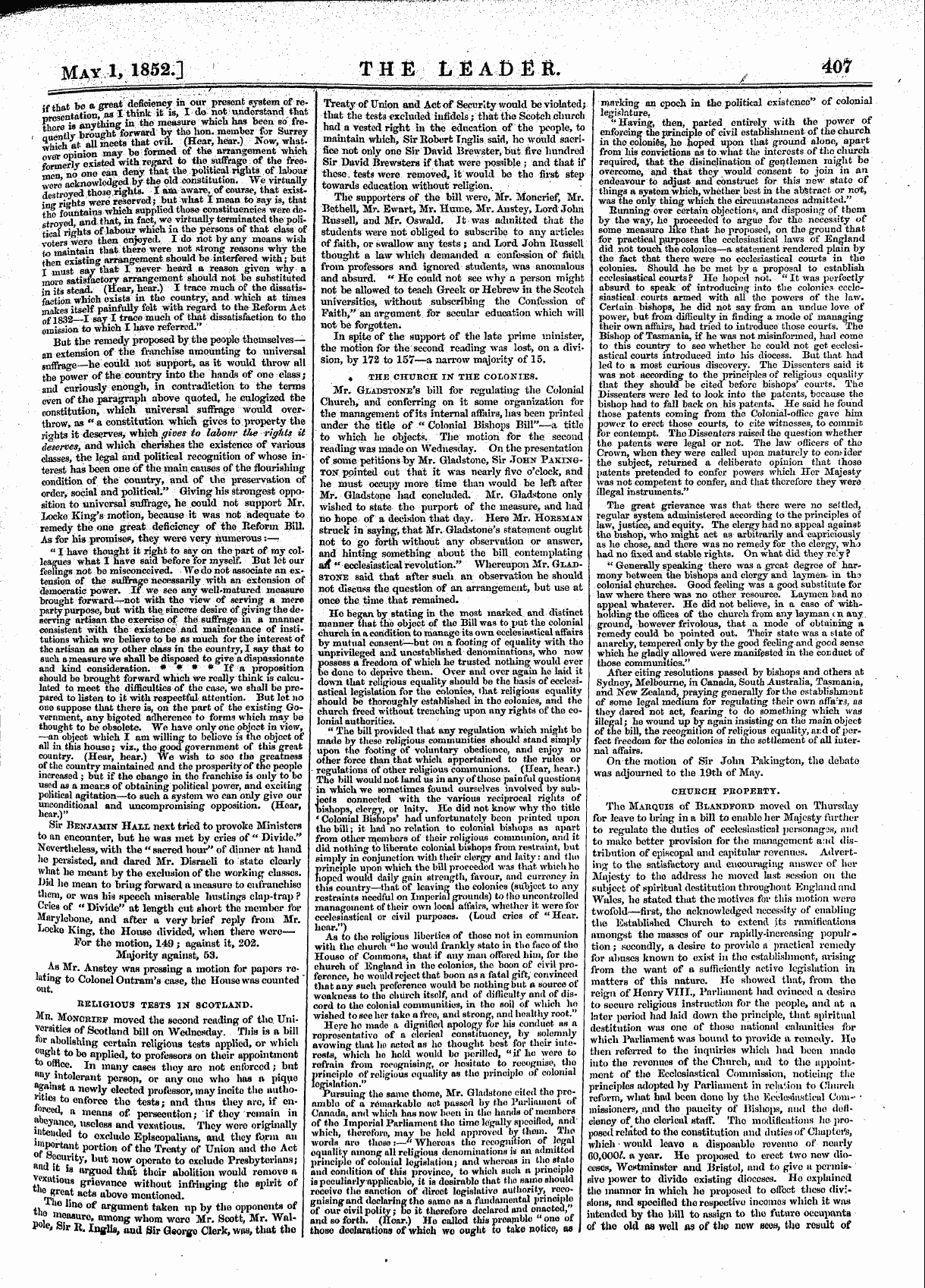
;( that bo a great deficiency in ^ our present systenvofre-StSonfas X think it is , I do not understand < Jat Finrfl is anything in themeasure which has been so fre-W 1 V brbueht forward by the hon . member for Surrey fficK ^ SSets that evil ( Hear , hear . ) Now , what . VAiroDinion may be formed of the arrangement which ( Zrmeilv existed with regard to the suffrago of the freernpa no one can deny that the political rights of labour rave acknowled ged by the old constitution . We virtually ^ pstroved those rights . I am aware , of course , that existintr rights were reserved ; but what I mean to say is , that the foaintains which supplied those constituencies werede-Itrnved and that , in fact , we virfcuauy terminated the
political riffhts of labour which in the persons ot tbat class ot voters were then onjoyed . I do not by any means wish to maintain that there were not strong reasons why the then existing arrangement should be interfered with ; but T must say that I never heard a reason given why a more satisfactory arrangement should not be substituted in its stead , ( ttear , hear . ) I trace much of the dissatisfaction which exists in the country , and which at times makes i tself painfully felt with regard to the Beform Act of 1832—I say I trace much of that dissatisfaction to the omission to which I have referred . "
But the remedy proposed by the people themselvesan extension of the franchise amounting to universal suffrage—he could not support , as it would throw all the power of the country into the hands of one class ; and curiously enough , in contradiction to the terms even of the paragraph above quoted , he eulogized the constitution , which universal suffrage would overthrowvas " a constitution which gives to property the rights it deserves , which gives to labour the rights it
deserves , and which cherishes the existence of various classes , the legal and political recognition of whose interest has been one of the main causes of the flourishing condition of the country , and pf the preservation of order , social and political . " ( living his strongest opposition to universal suffrage , he could not support Mr . locke King ' s motion , because it was not adequate to remedy the one great deficiency of the Reform Bill . As for his promise ? , they were very numerous : —r
" I have thought it right to say on the part of my colleagues what I have said before for myself . But let our feelings not be misconceived . We do pot associate an extension of the suffrage necessarily with an extension of democratic power . Ir we see any weli-matured measure brought forward-r-not with the view of serving a mere part y purpose , but with the sincere desire of g iving the deserving artisan the exerciso of the suffrage in a manner consistent with the existence and maintenance of institutions which wo believe to be as much for the interest of
the artisan as any other class in the country , 1 ^ say that to such a measure we shall be disposed to give a dispassionate and kind consideration . •¦•' ' *' , * * If a proposition should be brought forward which we really think is calculated to meet the difficulties of the case , \ ro shall be prepared to listen to it with respectful attention . But let no one suppose that there is , on the part of the existing Government , any bigoted adherence to forms which may be thought to bo obsolete . We have only one object in view ,
—an object which I am willing to behove is the object of all in this house ; viz ., the good government of this great country . ( Hear , hear . ) Wo wish to seo the greatness pf the country maintained and the prosperity of the people increased ; but if the change in tho franchise is only to be used as a moans of obtaining political power , and exciting political agitation—to such a system wo can only give our unconditional and uncompromising opposition . ( Hear , hear . )"
Sir Benjamin Hall next tried to provoke Ministers to an encounter , but he was met by cries of " Divide . " Nevertheless , with the " sacred hour" of dinner at hand ho persisted , and dared Mr . Disraeli to state clearly wliat he meant by the exclusion of the working classes . Did . he mean to bring forward a measure to enfranchise them , or was his speech miserable hustings clap-trap ? Cries of " Divide" at length cut short the member for Mnrylebone , and after a very brief reply from Mr . Locke King , tho House divided , when there were—For the motion , 149 ; against it , 202 . Miyority against , 53 . Aa Mr . Anstey was pressing a motion for papers rolating to Colonel Outram ' s case , the House was counted out .
RELIGIOUS TK 8 TS IN SCOTLAND . Mn . Monorief moved the second reading of tlio Universities of Scotland bill on Wednosday . This is a bill «> r abolishing certain roligions testa applied , or which ought to bo applied , to professors on their uppointmont 0 ° > nco . In many cases they are not enforced ; but "ny intolerant person , or any ono who lias a piquo against a newly elected professor , may inoito the
autho-Jities to enforce tho tests ; and thus they are , if oniwced , a means of persecution ; if they remain in weyanco , useless and vexatious . They wore originally ntendod to exclude Episcopalians , and they form au "nportant portion of tho Treaty of Union and tho Act securit y , but now operate to exclude Presbyterians ; ' «« it iB argued thai thoir abolition would remove a vmnious grievance without infringing the spirit of "' Offreat acts above mentioned
. A « e hno of argument taken up by the oppononts of no measure , among whom wore Mr . Scott , Mr . Wai-V ° m , air R . Inglfc , ttn ( i sir Qeorgo Clerk , was , that the
Treaty of Union and Act of Security would be violated ; that the tests excluded infidels ; that the Scotch ' . church had a vested right in the education of the people , to maintain which , Sir Robert Inglis said , ho would sacrifice not only one Sir David Brewster , but five hundred Sir David Brewsters if that were possible ; and that if these , tests were removed , it would be tho first step towards education without relierion .
The supporters of the bill were , Mr . Moncrief , Mr . Bethell , Mr . Ewart , Mr , Hume , Mr . Anstey , Lord John Russell , and Mr . Oswald . It was admitted that the students were not obliged to subscribe to any articles of faith , or swallow any tests ; and Lord John Russell thought a law which demanded a confession of faith from professors and ignored students , was anomalous and absurd . "He could not see why a person might not be allowed to teach Greek or Hebrew in the Scotch
universities , without subscribing the Confession of Faith , " an argument for secular education which will not be forgotten . In spite of the support of the late prime minister , the motion for the second reading was lost , on a division , by 172 to 157—a narrow majority of 15 .
4 THE CHURCH IN THE COLONIES . Mr . Gladstone ' s bill for regulating the Colonial Church , and conferring on it some organization for the management of its internal affairs , lias been printed under the title of " Colonial Bishops Bill "—a title to which he objects . Tim motion for the second rending was made on Wednesday . On the presentation of some petitions by Mr . Gladstone , Sir John Paking-TON pointed out that it was nearly five o ' clock , and he must occupy more time than would be left after
Mr . Gladstone had concluded . Mr . Gladstone only wished to state the purport of the measure , and had no hope of a decision that day . Here Mr . Hobsman struck in sayiiig , that Mr . Gladstone ' s statement ought not to go forth without any observation or answer , and hinting something about the bill contemplating arf ^ ecclesiastical re volution . " Whereupon Mr . Gladstone said that after such an observation he should not discuss the question of an arrangement , but use at once the time that remained .
He began by stating in the most marked and distinct manner that tho object of the Bill was to put the colonial church in a condition to manage its own ecclesiastical affairs by mutual consent ^—but on a footing of equality with the unprivileged and unestablished denominations , who now possess a freedom of which he trusted nothing would ever be done to de pr ive them . Over and over again he laid it down that religious equality should be the basis of ecclesiastical legislation for the colonies , that religious equality should be thoroughly established in tho colonies , and the church freed without trenching upon any rights of the colonial authorities .
" The bill provided that any regulation which mi g ht bo made by theso religious communities should stand simply upon the footing of voluntary obedience , and enjoy no other force than that which appertained to the rules or regulations of other religious communions . ( Hear , hear . ) Tho bill would not land us in any of thoso painful quostions , in which we sometimes found ourselves involvod by subjects connected with the various reciprocal rights of oishops , clergy , or laity . He did not know why the title ' Colonial Bishops' had unfortunatel y boon printed upon tho bill ; it had no relation to colonial bishops ^ as apart from other members of their rolnjiouo communion , and it did nothin g to liberate colonial bishops from restraint , but
simply in conjunction with their clergy and laity : and tho }> rin ciplo upon which the bill proceeded was that which ho loped would daily gain strength , favour , and currency in this country—that of leaving tho colonies ( subject to any restraints needful on Imperial grounds ) to the uncontrolled management of their own local affairs , whether it wore for ecclesiastical or civil purposes . ( Loud cries pf " Hear . hear . " ) As to tho religious liberties of thoso not in communion with tho church "ho would frankly state in tho face of tho Houflo of Commons , that if any man offered him , for tho church of Eneland in tho colonies , tho boon of civil
proferonco , ho would reject that boon as a fatal gift , convinced that any such proforenco would bo nothing bub a source of woakness to tho church itself , and of difliculty and of discord to tho colonial communities , in tho soil of which ho wished to see her take a free , and strong , and healthy root . " Here ho mado a dignified apology for his conduct as a ropro » ontiit , ivo of a dorioal constituency , by solemnly avowing that ho acted as ho thought best for thoir interests , which ho hold would bo perilled , "if ho wore to refrain from recognising , or hesitate to recognise , tho principlo of religious oquality as tho principle of colonial legislation . " JPursuincr tho samo thome , Mr . Gladstono cited the
pronmbln of a romarkublo act passed by tho Parliament of Canada , and which has now boon in the hands of members of tho Imperial Parliament ; tho time legally specified , and which , therefore , may bo held approved byjhom . The wordH are those : —'' Whorons tho recognition of legal equality among all religious denominations in an admitted principle of colonial legislation ; and whereas in tho state and condition of thin provinco , to which such a principlo is peculiarly applicable , it ia desirable that tho saino should rocoivo the sanction of direct legislative authority , recognising and doclaring tho same as a fundamental principlo of our civil polity ; bo it therefore declared « . nd enacted , and so forth . ( Hoar . ) Ho called this preamble " ono of thoso declarations of which wo ought to take notice , as
marking an epoch in the political existence" of colonial legislature , " Having , then , parted entirely with the power of enforcing the principle of civil establishment of the church in the colonies , he hoped upon that ground alono , apart from his convictions as to what the interests of the church required , that the disinclination of gentlemen might be overcome , and that they would consent to join in . an endeavour to adjust and ' construct for this new state of things a system which , whether best in the abstract or not , was the only thing which the circumstances admitted . " Running over certain objections , and disposing of them by the way , ho proceeded to argue for the necessity of some measure like that he proposed , on the ground that
for practical purposes the ecclesiastical laws of Eng land did not touch the colonies—a statement rendered plain by the fact that there were no ecclesiastical courts in the colonies . Should he be met by a proposal to establish ecclesiastical courts ? He hoped not . " It Was perfectly absurd to speak of introducing into the colonies ecclesiastical courts armed with all the powers of the law . Certain bishops , he did not say from an undue love of power , but from difficulty in finding a mode of managing their own affairs , had tried to introduce those courts , Tho Bishop of Tasmania , if he was not misinformed , had come to this country to seo whether ho could not get ecclesiastical courts introduced into his diocess . But that had led to a most curious discovery . The Dissenters said it
was not according to the principles of religious equality that they should be cited ! ^ before bishops' courts . The Dissenters were led to look into the patents , because the bishop had to fall back on his patents . He said he found those patents coming from the Colonial-office gave him power to erect those courts , to cite witnesses , to commit ; for contempt , The Dissenters raised the question whether the patents were legal or not . The law oflicers of tho Crown , when they were called upon maturely to contider the subject , returned a deliberate opinion that those patents pretended to confer powers which Her Majesty was not competent to confer , and that therefore they were illegal instruments . "
The great gr ievance was that there were no se ' tled , regular system administered according to the principles oi law , justice , and equity . The clergy had no appeal against ; the bishop , who might act as arbitrarily and capriciously as he chose , and there was no remedy for the clergy , who had no fixed and stable rights . On what did they re ! y ?
" Generally speaking there was a great degree of harmony between the bishops and clergy and laymen- in tho colonial churches . Good feeling was a good substitute for law where there was no other resource . Laymen bad no appeal whatever . He did not believe , in a caso of withholding the offices of the church from any layman en any ground , however frivolous , that a mode of obtaining a remedy could be pointed out . Their state Avas a state of anarchy , tempered only by the good feeling and good sense which he crlaalv allowed were manifested in the cod duct of
those communities . " After citing resolutions passed by bishops and others at Sydney , Melbourne , in Canada , South Australia , Tasmania , and New Zealand , prayin g generally for the establishment of some legal medium for regulating their own afTa rJ , as they dared not act , fearing to do something which was illegal ; he wound up by again insisting on tho main object of the bill , the recognition of religious equality , ard of perfect freedom for the colonies in the settlement of all
internal affairs . On the motion of Sir John Pakington , the debate was adjourned to the 19 th of May .
CHUKCH PBOPEBTY . The Marquis of Blandfoiid moved on Thursday for leave to bring in a bill to enable her Majesty further to regulate the duties of ecclesiastical personagas , uml to make better provision for the management and distribution of cpificopal and capitular revenues . Adverting to tho satisfactory and encouraging answer of her Majesty to tho address he moved last session on the subject of spiritual destitution throughout England and Wales , ho statod that the motives for this motion were twofold—first , the acknowledged necessity of enabling the Established Church to extend its ramifications
amongst the masses of our rapidly-increasing population ; secondly , a desiro to provide n practical remedy for abuses known to exist in tho establishment , arising from tho want of a sufficiently active legislation in matters of this nature . Ho showed that , from tho reign of Henry VIII ., Parliament lind evinced a desiro to securo religious instruction for tho people , and at a later period had laid down tho principle , that spiritual destitution was ono of thoso national calamities for which Parliament was bound to provide a remedy . Ho then referred to the inquiries which had been mado into tho revenues of tho Church , and to tho uppointmont of tho Ecclesiastical Commission , noticing the
principles adopted by Parliament in religion to Church reform , what had been done by tho KccloHiosticul Commissioners , o-nd . tho paucity of Bishops , and tho doncioncy of tho cloricul et « ff . Tho modifications he proposed related to tho constitution and duties of Chapter ' s , which ¦ would leave a disposable rovonuo of nearly G 0 , 000 £ . a year . Ho proposed to erect two now diocosch , WcHtminHtor and Bristol , and to give a permissive power to divido existing dioceses . Ho explained the inunnor in which ho proposed to oftect theso divisions , and specified tho respective ineomos which it was intended by tho bill to assign to tho future occupants of the old as well as of tho new ecoa . tho result of
Untitled Article
: MmM -i 852 i : ;< : ¦ '¦ ¦; ' , ; Tli $ ti 0 AV £ & , ¦ . ' , ¦ ' : / 4 o »
-
-
Citation
-
Leader (1850-1860), May 1, 1852, page 407, in the Nineteenth-Century Serials Edition (2008; 2018) ncse-os.kdl.kcl.ac.uk/periodicals/l/issues/vm2-ncseproduct1933/page/3/
-