On this page
-
Text (1)
-
![¦ ' . , » TSTo 421, April 17, 1858.] THB...](/static/media/periodicals/101-CLD-1858-04-17-001-SINGLE/Ar00900S.png)
¦ ' . , » TSTo 421, April 17, 1858.] THB...
Note: This text has been automatically extracted via Optical Character Recognition (OCR) software. The text has not been manually corrected and should not be relied on to be an accurate representation of the item.
-
-
Transcript
-
Note: This text has been automatically extracted via Optical Character Recognition (OCR) software. The text has not been manually corrected and should not be relied on to be an accurate representation of the item.
Additionally, when viewing full transcripts, extracted text may not be in the same order as the original document.
The Trial Of Bernard. The Trial Of Simon...
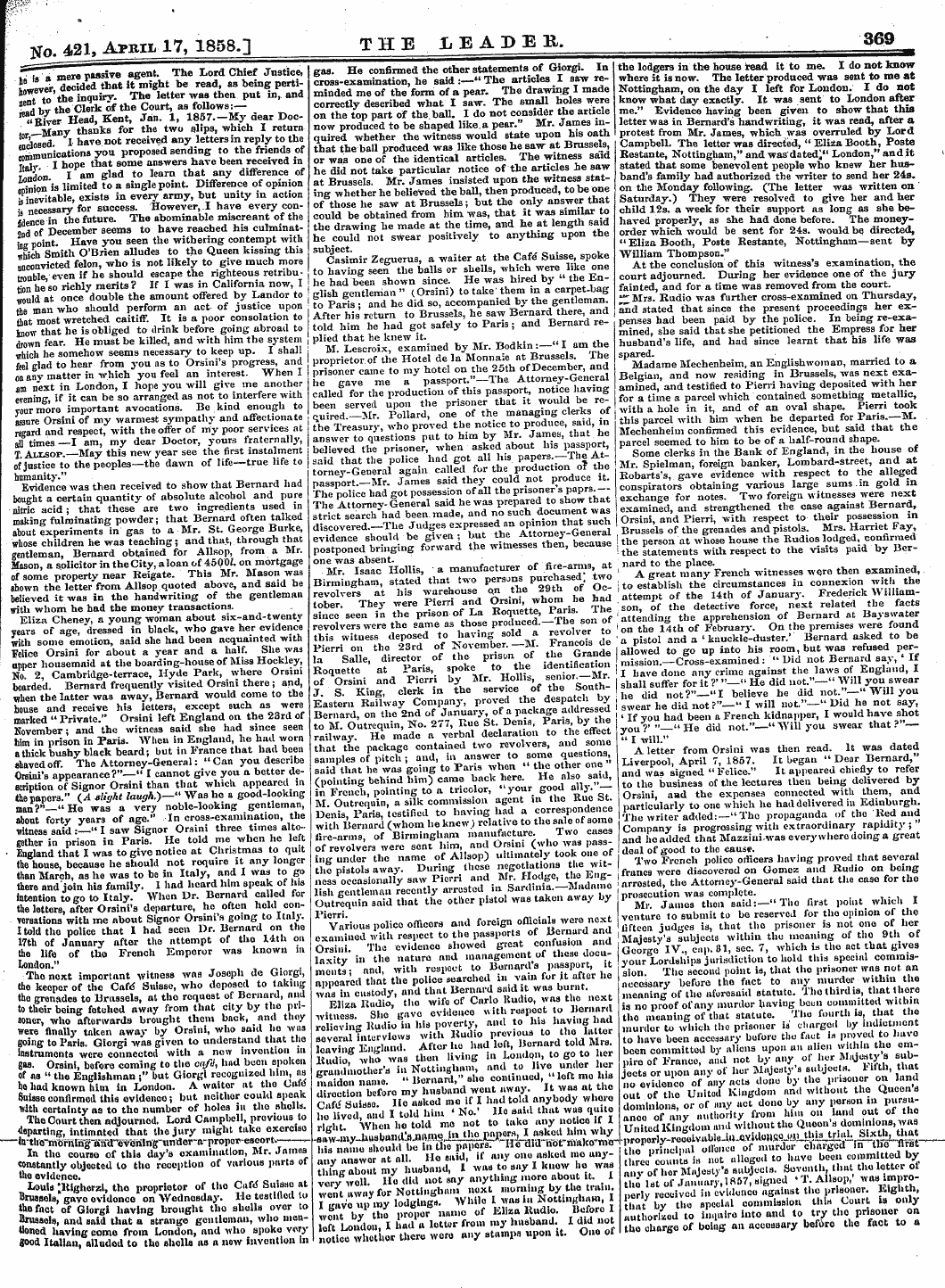
r ~ f « a mere passive agent . The Lord Chief Justice , JJJL er , decided that it might he read , as being perti-M to the inquiry . The letter was then put in ,, and l » d bv the Clerk of the Court , as follows : — « Eh-er Head , Kent , Jan . 1 , 1857 .-My dear Doc-» r---Many thanks for the two slips , which I return losed I have not received any letters in reply to the S munications you proposed sending to the friends of Ttftlv I hope that some answers have been received in T ndon I a ™ £ lad to learn that an ^ difference of minion ' is limited to a single point . Difference of opinion ¦ « inevitable , exists in every army , but unity in action I necessary for success . However ,, I have every conidence in the future . The abominable miscreant of the 2 nd of December seems to have reached his culminattae point . Have you seen the withering contempt with which Smith O'Brien alludes to the Queen kissing this nnconvicted felon , who is not likely to give much more trouble , even if he should escape the righteous retribution he so richly merits ? If I was in California now , I would at . once double the amount offered by Landor to the man who should perform an act of justice upon that most wretched caitiff . It is a poor consolation to know that he is obliged to drink before going abroad to drown fear . He must be killed , and with him the system , which he somehow seems necessary to keep up . I shall j feel glad to hear from you as to Orsini ' s progress , and on anv matter in which you feel an interest . When I am next in London , I hope you will give me another evening , if it can be so arranged as not to interfere with your more important avocations . Be kind enough to assure Orsini of my warmest sympathy and affectionate regard and respect , with the offer of my poor services at all times—I am , my dear Doctor , yours fraternally , T . Allsop . — May this new year see the first instalment of justice to the peoples—the dawn of life—true life to humanity . " Evidence was then received to show that Bernard had bought a certain quantity of absolute alcohol and pure nitric acid ; that these are two ingredients used in making fulminating powder ; that Bernard often talked about experiments in gas to a Mr . St . George Burke , whose children he was teaching ; and that , through that gentleman , Bernard obtained for Allsop , from a Mr . iu & ^
Mason , a solicitor in me ^ iiy , a »« " * » " « " >¦« " » * " *¦ " ^ -e ~ of some property near Reigate . This Mr . Mason was Bhown the letter from Allsop quoted above , and said he believed it was in the handwriting of the gentleman with whom he had the money transactions . Eliza Cheney , a young woman about six-and-twenty years of age , " dressed in black , who gave her evidence With some emotion , said she had been acquainted with Felice Orsini for about a year and a half . She was upper housemaid at the boarding-house of Miss Hockley , No . 2 , Cambridge-terrace , Hyde Park , where Orsini boarded . Bernard frequently visited Orsini there ; and , when the latter was away , Bernard would come to the house and receive his letters , except such as were marked " Private . " Orsini left England on the 23 rd of November ; and the witness said she had since seen him in prison in Paris . When in England , he had worn 8 thick bushy black beard ; but in F rance that had been ahavedoff . The Attorney-General : " Can you describe Orsini ' s appearance ?"— " I cannot give you a better description of Signor Orsini than that which appeared in the papers . " ( . A slight laugh . )— " Was he a good-looking man ? " » He was a very noble-looking gentleman , about forty years of age . " In crossrexamination , the witness said : — " I saw Signor Orsini three times altogether in prison in Paris . He told me when lie left England that I was to give , notice at Christmas to quit the house , because he should not require it any longer than March , as ho was to bo in Italy , and I was to go there and join his family . 1 had heard him speak of Ins intention to go to Italy . When Dr . Bernard called for the letters , after Orsini ' a departure , ho often held conversations with me about Signor Orsini ' s going to Italy . I told the police that I had seen Dr . Bernard on the 17 th of January after the attempt of tho 14 th on the life of the French Emperor was known in London . " TUonpxt important witness was Joseph de Giorgi , the keeper of tho Cafe * Suisse , who deposed to taking the grenades to Brussels , at tho request of Bernard , and to their being fetched nwuy from that city by the prisoner , who afterwards brought them back , and they were finally taken away by Orsini , who said ho was going to Paris . Giorgi was given to understand that tho inatrumonta were connected with a now invention in 8 M . Orsini , boforo coming to tho cctfd , had been spoken of as " the Englishman ; " but Giorgi recognizod him , ns 1 ) 6 had known him in London . A waiter at tho LnM SniaBoconfirmed this evidence ; but neither could speak with certainty as to tho number of holes in tho Hholls . Tho Court thon adjourned . Lord Campbell , previous to departing , intimated that tho jury might take exorciuo —ta ^ tarmWfilngWd ^ oWrita In tho course of thia day ' s examination , Mr . Jainoa constantly objected to tho reception of various parts of tho evidence . Loula ; illghensl v tho proprietor of tho Cufrf Siusho at BruBsola , gave evidence on Wednesday . He test idea to the fact of Giorgi having brought tho shells over to Brussels , and said that a strange gentleman , who mentioned having como from London , and who apoko very good Italian , alluded to tho sheila aa a now invention in
¦ gas . He confirmed the other statements of Giorgi . In cross-examination , he said : —" The articles I saw reminded me of the form of a pear . The drawing I made correctly described what I saw . The small holes were on the top part of the ball . I do not consider the article now produced to be shaped like . a pear . " Mr . James inquired whether the witness would state upon his oath that the ball produced was like those he saw at Brussels , or was one of the identical articles . The witness said he did not take particular notice of the articles he saw at Brussels . Mr . James insisted upon the witness stating whether he believed the ball , then produced , to be one of those he saw at Brussels ; but the only answer that could be obtained from him was , that it was similar to the drawing he made at the time , and he at length said he could not swear positively to anything upon the subject . „ „ , „ . , Casimir Zeguerus , a waiter at the Cafe Suisse , spoke to having seen the balls or shells , which were like one he had been shown since . He was hired by " the English gentleman" ( Orsini ) to take'them in a carpet-bag to Paris ; and he did so , accompanied by the gentleman . After his return to Brussels , he saw Bernard there , and ( told him he had got safely to Paris ; and Bernard replied that he knew it . M . Lescroix , examined by Mr . Bodkin : — " I am the proprietor of the Hotel de la Monnaie at Brussels . The prisoner came to my hotel on the 25 th of December , and he gave me a passport . "—The Attorney-General called for the production of this passport , notice having been served upon the prisoner that it would be ret ired _ Mr . Pollard , one of the managing clerks of the Treasury , who proved the notice to produce , said , in answer to questions put to him by Mr . James , that he believed the prisoner , when asked about his passport , said that the police had got all his papers . —The Attorney-General again called for the production oT the passport . — Mr . James said they could not produce it . The police had got possession of all the prisoner s paprs .--The Attornev- General said he was prepared to show that strict searclThad been made , and no such document was discovered . — The Judges expressed an opinion that such evidence should be given ; but the Attorney-General , postponed bringing forward the witnesses then , because nnp wns A . T > seilt- at
Mr . Isaac Hollis , a manufacturer of fire-arms , Birmingham , stated that two persons Purchased two revolvers at his warehouse an the 29 th of October . They were Pierri and Orsini , whom he had since seen in the prison of La Roquette , Pans . 1 he revolvers were the same as those produced . —The son ot , this witness deposed to having sold a revolver to Pierri on the 23 rd of November . —M . Francois de la Salle , director of the prison of the Grande Roquette at Paris , spoke to the identification } of Orsini and Pierri by Mr . Hollis , senior .-Mr . J S King , clerk in the service of the South- j Eastern Railway Company , proved the despatch by j Bernard , on the 2 nd of January , of a package addressed ] to M . Outrequin , No . 277 , Rue St Denis , Pans , by the railway . He made a verbal declaration to the effect that the package contained two revolvers , and some samples of pitch ; and , in answer to some questions , said ' that he was going ' to Paris when » the other one " ( pointing behind him ) came back here . He also said , in French , pointing to a tricolor , " your good ally . — M . Outrequin , a silk commission agent in tho Kue bt . Denis , Paris , testified to having had a correspondence with Bernard ( whom he knew . ) relative to the sale of some lire-arms , of Birmingham manufacture . Two cases of revolvers were sent him , and Orsini ( who was passing under the name of Allsop ) ultimately took one of the pistols away . During these negotiations the witness occa sionally saw Pierri and Mr . Hodge , the English gentleman recently arrested in Sardinia . —Madame Outrequin snid that the otfter pistol was taken away by Pl Various police officers and foreign officials were next examined with respect to the passports of Bernard and Ors . The evidence showed great confusion and la ty in the naturo and management of these doeumoi ta- and , with respect to Bernard ' s passport , it Seared that the police searched in vain for it after he was in custody , and that Bernard snid it was burnt . Eliza Rudio , the w ife of Car liudio , was tho next £ i £ > r , v , 2 X ^ rsfzfitt IS o who was thon living in London , to go to her at ^^ v ^ s ^ ^^ i ^ $ sfi ^ n ? Jtt « w & $ & ? £ he lived and I told him No . ' Ho said that waa quite rifiht . When l > o told mo not to take any notice if I hi » name should be in tho papers . Ho aid not rtmKo mo any anawor at all . Ho mud , if any one asked mo anything " bout my husbnnd , 1 «*• to any I know ho was very well . Ho did not my anything more about it . I wont aw «« y for Nottingham noxt morning by tho tram . ImxvTxw S lodging * . While I waa in Nottingham , I ! St bJ K prope ? i » mo of Klta . Budlo . Betow I lof London , I had » letter from ray husband . I did not notl « e She lw there woro any stamps upon » t . Ono of
the lodgers in the house read it to me . I do not know where it is now . The letter produced was sent to me at Nottingham , on the day I left for London . I do not know what day exactly . It was sent to London after me . " Evidence having been given to show that this letter was in Bernard ' s handwriting , it was read , after a protest from Mr . James , which was overruled by Lord Campbell . The letter was directed , " Eliza Booth , Poste Restante , Nottingham , " and was'dated , " London , " and it stated that some benevolent people who knew her husband ' s family had authorized the writer to send her 24 s . on the Monday following . ( The letter was written on ' Saturday . ) They were resolved to give her and her child 12 s . a week for their support as long as she behaved properly , as she had done before . The moneyorder which would be sent for 24 s . would be directed , " Eliza Booth , Poste Restante , Nottingham—sent by William Thompson . " At the conclusion of this witness ' s examination , the court adjourned . During her evidence one of the jury fainted , and for a time was removed from the court . ^ Mrs . Rudio was further cross-examined on Thursday , and stated that since the present proceedings her expenses had been paid by the police . In being re-examined , she said that she petitioned the Empress for her husband ' s life , and had since learnt that his life waa spared . Madame M echenheim , an Englishwoman , married to a Belgian , and now residing in Brussels , was next exaamined , and testified to Pierri having deposited with her for a time a parcel which contained something metallic , with a hole in it , and of an oval shape . Pierri took this parcel with him when he departed for Paris . —M . Mechenheim confirmed this evidence , but said that the parcel seemed to him to be of a half-round shape . Some clerks in the Bank of England , in the house of Mr . Spielman , foreign banker , Lombard-street , and at Robarts ' s , gave evidence with respect to the alleged conspirators obtaining various large sums in gold m exchange for notes . Two foreign witnesses were next examined , and strengthened the case against Bernard , Orsini , and Pierri , with respect to their possession in Brussels of the grenades and pistols . Mrs . Harriet Fay , the person at whose house the Rudios lodged , confirmed i the statements with respect to the visits paid by
Ber-| naru lu luc piaLc . . ' A great many French witnesses were then examined , 1 to establish the circumstances in connexion with the attempt of the 14 th of January . Frederick Williamson , of the detective force , next related the facts attending the apprehension of Bernard at Bayswater on the 1 . 4 th of February . On the premises were found a pistol and a ' knuckle-duster . ' Bernard asked to be allowed to go up into his room , but was refused permission . —Cross-examined : " Did not Bernard say , ' If I have done any crime against the laws of Eng land , 1 shall suffer for it ? ' " — " He did not . " — " Will you swear he did not ?"—" I believe he did not . "— " Will you swear he did not ?"— "I will not . "— " Did he not say , ' If you had been a French kidnapper , I would have shot y 0 U ?• » » He did not . "— " Will you swear that ? — " I will . " , . A letter from Orsini was then read . It was dated Liverpool , April 7 , 1857 . It began " Dear Bernard , and was signed " Felice . " It appeared chiefly to refer to the business of the lectures then being delivered by Orsini , aad the expenses connected with them , and particularly to one which he had delivered in Edinburgh . The writer added : —" Tho propaganda of tho Red and Company is progressing with extraordinary rapidity ; and he added that Mazziniwas everywhere doing a great deal of good to tho cause . Two French police orlicers having proved that several francs were discovered on Gomez and Rudio on being i arrested , the Attorney-General said that the case for the I prosecution was complete . Mr . James thon said : —" The first point which I venture to submit to bo reserved for the opinion of the fifteen , judges is , that tho prisoner is not one of her ' Majesty ' s subjects within tho moaning of tho 9 th of ! George IV ., cap . 01 , sec . 7 , which is tho act that gives ! your Lordships jurisdiction to hold this special cominis-I sion . The second point is , that tho prisoner was not an accessary before tho fact to nny murder within the meaning of tho uforesnid statute . The third is , that there is no proof of any murder having been committed within tho meaning of that statute . Tho fourth is , that the murder to which tlio prisoner ia charged by indictment to havo been accessary before tho fact ia proved to huvo been committed by aliens upon an alien within the empire of Franco , and not by any of her M « jo « ty . 8 subjects or upon any of her Majesty ' s aubjec h . 1- nth , that no evidence of any acts done by the prisoner on land out of the United Kingdom and without tho Queen ' a dominions , or of . my act done by any person in pursuance of any authority from him on land out of tho United KlnJdom and without tho Queen ' s dommiona . vvaa -Xrly ^ tho principal offoiioe of murdor charged in the first T r JZ Ita I . not alleged to have been » om tied by nnv of hor Majesty ' s subjects . Seventh , that the letter of the lat of J « nuary , 18 ft 7 signed T . Allsop , ' was . Improperly received in evidence against the prisoner , lulghth that by tho apocial commission thl * Court ia only authorized to Inquire into and to try tho priaonor on tho charge of boing an acccaaary before the foot to a
¦ ' . , » Tsto 421, April 17, 1858.] Thb...
¦ ' . , » TSTo 421 , April 17 , 1858 . ] THB IEAPEB . 369
-
-
Citation
-
Leader (1850-1860), April 17, 1858, page 9, in the Nineteenth-Century Serials Edition (2008; 2018) ncse-os.kdl.kcl.ac.uk/periodicals/l/issues/cld_17041858/page/9/
-